Cable Joints & Terminations HV
How To Resolve Rising Fault Current Levels On Your Overhead Network
May 4th, 2021- Special thanks to Jonathan Hopkins (Sales Director) at S&C Electric Company for the kind permission to republish the following article.
S&C Electric Company
S&C Electric Company is a leading provider of switching, protection and control solutions for medium voltage electric power systems. Headquartered in Chicago, S&C is applying its heritage of innovation to address challenges facing the world’s power grids and thus shaping the future of reliable electricity delivery. The mission of S&C is to continually develop new solutions for electricity delivery, fostering the improved efficiency and reliability required for the intelligent grid.
Resolving Fault Current Levels
Are You Experiencing Rising Fault Current Levels On Your Overhead Network?
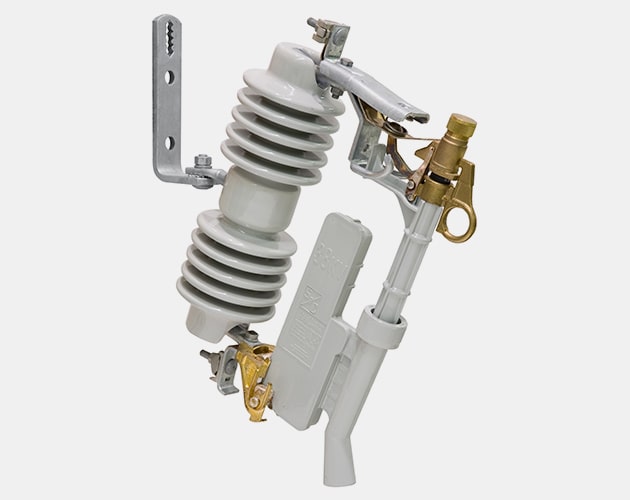
This could cause miscoordination and existing assets to exceed recommended symmetrical fault ratings. The Fault Tamer, Fuse Limiter from S&C Electric safely addresses this issue by combining the function of a conventional fuse with the benefits of a current limiting fuse.
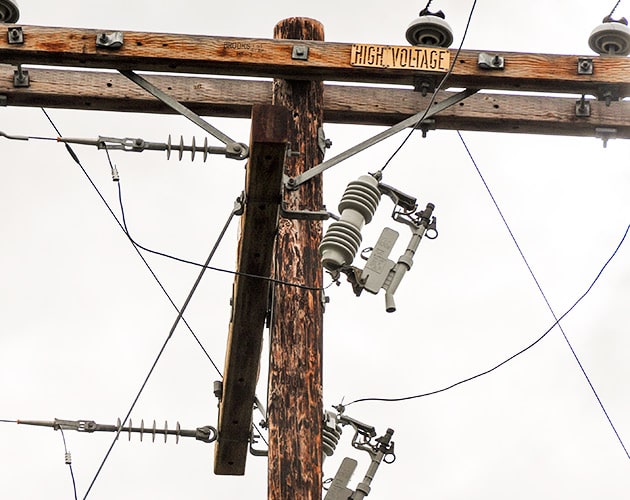
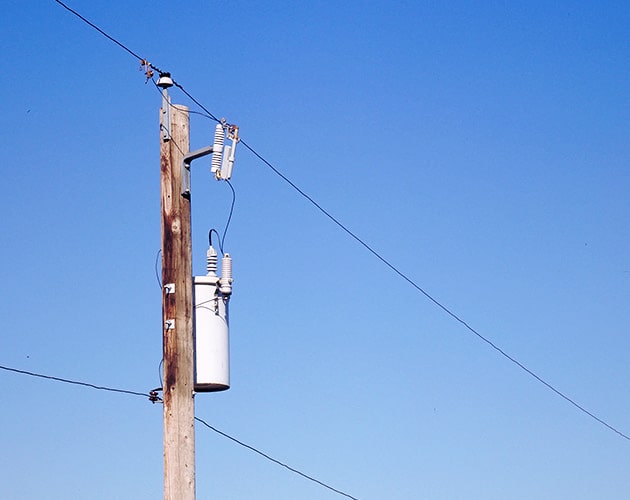
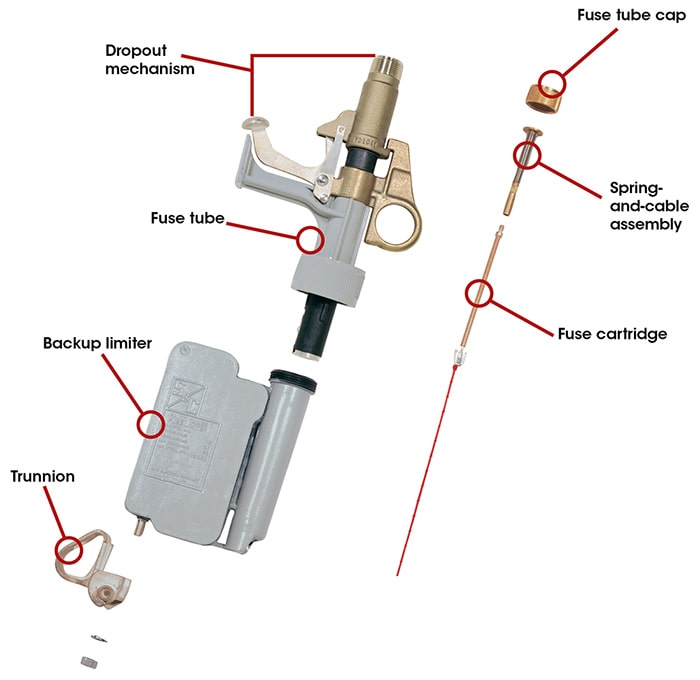
The S&C Fault Tamer combines the functionality of a conventional fuse cutout and a backup current-limiting fuse in one powerful, easy-to-install package for the protection of new or existing overhead pole-top transformers up to 25kV.
S&C Electric Company’s Fault Tamer is manufactured in accordance with a quality system certified to ISO9001:2000.
S&C Electric Fault Tamer, Fuse Limiter Variations
- 98021-D, 15 kV, 110 kV BIL
- 98072-D, 15 kV, 125 kV BIL
- 98022-D, 25 kV, 125 kV BIL
- 98052-D, 25 kV, 150 kV BIL
- 98053-D, 25 kV, 150 kV BIL
S&C Electric Fault Tamer Fuse Limiter
S&C Electric Fault Tamer
product FEATURES
Fault Tamer provides many features and benefits above those of traditional fuse cutouts and cutouts used in combination with backup current-limiting fuses.
Improved Transformer Protection
- Ideally suited for protecting single- or three-phase transformers through
- 100 kVA single-phase at 15 kV
- 167 kVA single-phase at 25 kV
- Excellent continuous, hot-load pickup, and cold-load pickup capabilities.
- High surge withstand capability. Allows arrester to be mounted on transformer tank without increasing the chance of nuisance operations due to lightning.
Energy Limitation
- Minimizes equipment damage
- Reduces chances of catastrophic transformer failure from internal high-current faults.
- Minimizes bushing and tank damage due to external primary faults.
- Improves service continuity
- Provides complete coordination with upstream lateral fuses.
- Provides complete coordination with substation instantaneous relay settings.
- Enhances power quality
- Minimizes voltage dips that can cause sensitive electronic equipment to shut down.
Operational Characteristics
- Dropout action.
- No parts expelled during circuit interruption.
- Complies with Australian Spark Production Standard AS 1033.1-1990. Ideal for installation in areas prone to grass fires.
Handling Characteristics
- Easy to install/remove using extendo stick. No climbing or bucket truck needed to re-fuse . . . unlike conventional backup current-limiting fuses.
- Retrofits into all vintages of S&C Type XS Fuse Cutouts.
- Operable with Loadbuster®, S&C’s Portable Loadbreak Tool.
Ratings Data
| 50/60-Hz Ratings | |||||||
| Voltage, kV | Amperes, RMS | ||||||
| System Class, ANSI (IEC) | System Maximum | BIL | Cont. | Interr., Sym. | |||
| 60 Hz | 50 Hz | ||||||
| Three- Phase♠ | Phase-to-Neutral | Three- Phase♠ | Phase-to-Neutral | ||||
| 15 (12) | 15 | 8.7 | 15 | 8.7 | 110 | 20 | 12 000 |
| 15 | 8.7 | 15 | 8.7 | 125 | |||
| 25 (24) | 29 | 16.8 | 26 | 15.1 | 125 | ||
| 29 | 16.8 | 26 | 15.1 | 150 | |||
| 29 | 16.8 | 26 | 15.1 | 150 | |||
| 22/38 (20.8/36) | – | 22 | – | 20.8 | 150 | ||
| ♠ Also applies to phase-to-phase applications. Applications involving single-phase transformers connected phase-to-phase, as well as three-phase applications require the use of a Fault Tamer in each lead. | |||||||
Operation
On low magnitude faults, just the inexpensive fuse cartridge operates — similar to a conventional fuse cutout. Fault Tamer drops open, providing visual indication that it has operated.
On high-magnitude faults, both the fuse cartridge and the backup limiter operate. The fusible element in the limiter melts in multiple locations, creating myriad series arcs that promote an initial rapid increase in arc voltage. The increased arc voltage efficiently limits current to a small fraction of the prospective peak current. Fault current is driven to zero in a controlled fashion, as the fusible element burns back and arc energy is absorbed by the surrounding sand.
Fault Tamer® Fuse Limiter | Fault Interruption — How It Works
FAULT TAMER FUSE LIMITERS
TIME-CURRENT CHARACTERISTIC (TCC) CURVES
| Curve Type | Ampere Ratings | Fuse Type | TCC Number |
| 15kV to 38kV System Voltages | |||
| Minimum Melting | 3, 5, 7, 10, 15, 20 | Fault Tamer | TCC Number 450-8 |
| Total Clearing | TCC Number 450-8-3 | ||
| S&C Electric Standard Speed (12kV to 22kV System Voltages) | |||
| Minimum Melting | 1, 2, 3, 5, 7, 10, 15, 20 | Fault Tamer | TCC Number 123-8 |
| Total Clearing | TCC Number 123-8-3 | ||
Thorne & Derrick
T&D are Specialist Distributors to UK Distribution Network Operators (DNO’s), NERS Registered Service Providers, ICP’s and HV Jointing Contractors of an extensive range of LV, MV & HV Jointing, Earthing, Substation & Electrical Eqpt – this includes 11kV/33kV/66kV cable joints, terminations and connectors for both DNO and private network applications.
Contact our UK Power Team for competitive quotations, fast delivery from stock and technical support or training on all LV-HV products.
All international sales enquiries can be serviced and supplied by our Export Power Team.
Key Product Categories: Duct Seals | Cable Cleats | Cable Glands | Electrical Safety | Arc Flash Protection | Cable Jointing Tools | Cable Pulling | Earthing | Feeder Pillars | Cable Joints LV | Joints & Terminations MV HV

Green Hydrogen A Renewable Energy Technology
April 30th, 2021
This article has been republished with the kind permission of Jules Daly | Marketing & Communications Manager at Powersystems Ltd (High Voltage Electrical Engineering).
About Powersystems
Powersystems was established in 1977 to provide industrial customers with the expertise that only the local electricity board previously offered. 40 years on Powersystems are still supporting some of their first customers a testament to the service provided. Continued support of these industrial customers and increased activity in the grid connections and renewable energy markets has been the core of Powersystems success.
Powersystems reviews Green Hydrogen as a renewable energy technology and some of the challenges the sector faces as we wait for the Hydrogen Strategy publication from the UK Government this year.
Hydrogen is the lightest element of the periodic table and the most common substance in the world. It can be used as feedstock, fuel or energy carrier and does not emit CO2 when burnt, that is why you often hear about its high potential for decarbonising the economy.
Now, as nations come forward with net-zero strategies to align with their international climate targets, hydrogen has once again risen up the agenda for the UK and Australia through to Germany and Japan.
Potentially hydrogen could soon power trucks, planes and ships. It could heat homes, balance electricity grids and help heavy industry to make everything from steel to cement.
But doing all these things with hydrogen would require staggering quantities of the fuel, which is only as clean as the methods used to produce it. Moreover, for every potentially transformative application of hydrogen, there are unique challenges that must be overcome.
In order to meet the 2050 decarbonisation policies and targets, the UK requires deployment of new technologies in traditional roles. One of these is the innovative technology around the uses of Green Hydrogen.
- Powersystems update on The Climate Change Committee (CCC) has launched what it describes as the world’s first ever detailed route map for a fully decarbonised nation
- The Sixth Carbon Budget(2033-2037) charts the decisive move to zero carbon for the UK
What is Hydrogen?
Hydrogen is an explosive and clean-burning gas. Since the weight of hydrogen is less than air, it rises in the atmosphere and is therefore rarely found in its pure form, (H2).
In a flame of pure hydrogen gas, burning in air, the hydrogen (H2) reacts with oxygen (O2) to form water (H2O) and releases energy.
The energy released enables hydrogen to act as a fuel. This energy can be used with relatively high efficiency.
Hydrogen can be made by splitting water with electricity (electrolysis) or by splitting fossil fuels or biomass with heat or steam, using “reforming” or “pyrolysis”. Any CO2 can be captured and stored.
Hydrogen can be stored, liquified and transported via pipelines, trucks or ships. And it can be used to make fertiliser, fuel vehicles, heat homes, generate electricity or drive heavy industry.
Hydrogen is usually considered an energy carrier, like electricity, as it must be produced from a primary energy source.
In a hydrogen economy, hydrogen would be used in place of fossil fuels, which currently provide four-fifths of the world’s energy supply and emit the bulk of global greenhouse gas emissions. This could aid climate goals because hydrogen only emits water when burned and can be made without releasing CO2.
What is Blue Hydrogen?
Blue hydrogen is when natural gas is split into hydrogen and CO2 either by Steam Methane Reforming (SMR) or Auto Thermal Reforming (ATR), but the CO2 is captured and then stored. As the greenhouse gasses are captured, this mitigates the environmental impacts on the planet. Simply put, hydrogen is considered blue when the emissions generated from the steam process are captured and stored underground via industrial carbon capture and storage (CSS).
What is brown/black hydrogen?
Brown hydrogen is produced from fossil fuels and currently accounts for around 95 per cent of global production. The oldest way of producing hydrogen is by transforming coal into gas. This gasification process converts fossil-based materials into carbon dioxide, carbon monoxide, and hydrogen. Gasification is achieved at incredible high temperatures without combustion, with a controlled amount of oxygen and/or steam. The carbon monoxide then reacts with water to form carbon dioxide and more hydrogen via a water-gas shift reaction.
Generated via coal gasification syngas and hydrogen can be separated from the other elements using absorbers. It is the result of a highly polluting process since both CO2 and carbon monoxide cannot be reused and are released in the atmosphere.
What is Pink hydrogen?
Hydrogen obtained from electrolysis through nuclear energy is coloured pink.
Hydrogen from Biomass
Hydrogen can also be produced from Biomass via gasification. Depending on the type of biomass but also on the use of carbon capture and storage technologies net carbon emissions can be lower using these technologies
What is green hydrogen?
Green hydrogen is produced using electricity generated from renewables such as solar energy, biomass, electricity (e.g., in the form of solar PV or via wind turbines), instead of fossil fuels. And currently accounts for 1% of overall hydrogen production.
Green hydrogen has the potential to provide clean power for manufacturing, transportation, and more — and its only by-product is water. With green hydrogen, zero carbon emissions are produced. It is in essence the gold standard of hydrogen in the clean energy sector.
Why is Green Hydrogen a Big Deal?
Green hydrogen is one of several potential low-carbon fuels that could take the place of today’s fossil hydrocarbons. Admittedly, hydrogen is far from ideal as a fuel. Its low density makes it hard to store and move around. And its flammability can be a problem.
However, the case for hydrogen is clear; the UK requires a zero-emission fuel that is well understood, has extensive regulations and standards in place, is readily scalable and which can be used across multiple energy vectors. Hydrogen is that fuel. In the next decade alone, research by the Fuel Cells and Hydrogen Joint Undertaking (FCH JU) indicates that hydrogen could reduce CO2 emissions by 1.7 million to 6.3 million tonnes by 2030, supporting the further deployment of 1,800 MW to 9 GW of wind and 830 MW to 4 GW of solar.
There are major technical and economic hurdles to meeting the UK’s Net Zero goals without hydrogen, particularly for heating and transport applications
The country’s gas grid supplies 3x more energy than the electricity grid today, and the transport sector accounted for over 1/3rd of final energy consumption in 2019. While there is significant renewable power generation potential in the UK, notably from offshore wind, electrifying all heating and transport is likely to be an unsurmountable challenge by 2050. Mass electrification would require and overhaul of the current energy system, and massive scale up of batteries, improved transmission systems and smart metering. Alternatively, hydrogen can be integrated into current energy distribution and end-use systems, and utilize high renewables potential in the UK by converting green electrons into green molecules, that can be widely transported and stored seasonally. Mechanisms to store significant volumes of energy are important for coping with extreme environmental events.
Hydrogen is already widely used by industry, so technical problems to storage and transport are not insurmountable. The opportunity for green hydrogen to be applied across a wide range of sectors means there is a large number of companies looking at harnessing and benefiting from a hydrogen fuel economy. The most significant of these are the oil and gas firms (who are increasingly facing the calls to cut back on fossil fuel production). Big oil’s interest in green hydrogen could be critical in getting the fuel through to commercial viability. Cutting the cost of green hydrogen production will require massive investment and massive scale, something the oil majors are uniquely positioned to provide.
Green Hydrogen Projects & Pathways
Hydrogen offers a pathway to revitalise manufacturing capabilities in the UK and improve the skill base for workers. The UK was a leader in discovering hydrogen and creating fuel cells, and today has several world leading manufacturers and supply chain businesses that with the right support could become global leaders and engines of economic growth for the UK economy. Using hydrogen, the UK could also become a global Centre of Excellence for hydrogen mobility and transport across land, maritime and aviation sectors.
- A recent report published by Powersystems highlights that hydrogen produced with renewable electricity could compete on costs with fossil fuel alternatives by 2030
- UK regions are taking steps to capture the scale of the hydrogen opportunity. Scotland has pro-actively driven hydrogen investment and support for regional initiatives, including the BIG HIT project in the Orkneys, this multi-partner plan involves the Port of Cromarty Firth together with SHFCA members ScottishPower (ScottishPower has created a new business division dedicated to delivering green hydrogen) and Pale Blue Dot, as well as other partners including Scotch whisky producers Glenmorangie, Whyte and Mackay and Diageo. This new green hydrogen hub in the Highlands will see Scotland leading the way for the integration and deployment of hydrogen technology and decarbonisation of local industry.
- Britain’s largest “green” hydrogen production facility is to be built on the outskirts of Glasgow under plans unveiled by ScottishPower. The energy group has submitted a planning application for a 20 megawatt electrolyser next to the UK’s largest onshore wind farm at Whitelee. The electrolyser will use surplus renewable electricity from the wind farm as well as power from a proposed new 40 megawatt solar farm and a 50 megawatt battery storage project to split water into hydrogen and oxygen.
- ScottishPower, through its recently launched Green Hydrogen Business, has signed an agreement with Global Energy Group at their Port of Nigg site to work together to identify processes and plant that could be powered by green hydrogen.
- The H100 Fife project is designed to be a real life test of the use of hydrogen for heating homes. The idea is to build a facility in Levenmouth, Fife, that will use offshore wind power to generate hydrogen from electrolysers.
- In Wales, the government has recently launched a consultation on developing the hydrogen energy sector in Wales
- Across the country, local businesses in East Anglia are partnering with LEPs and local councils to assess opportunities to leverage the region’s rich offshore wind experience to accelerate the hydrogen transition.
- Announced in February and March 2021, The National Grid currently has two UK Projects underway; FutureGrid, which is trialling hydrogen mixes in off-grid pipelines and Project Union, which is exploring the development of a UK hydrogen ‘backbone’ joining together industrial clusters around the country.
- Equinor and SSE Thermal have unveiled plans to develop a 100% hydrogen-fuelled power station in the UK’s Humber region – and it’s believed to be a world first.
- Powersystems recently reported on the global race to produce hydrogen offshore. Wind generation reached its highest ever level, at 17.2GW on 18 December 2020, while wind power achieved its biggest share of UK electricity production, at 60% on 26 August 2020. Yet occasionally the huge offshore wind farms pump out far more electricity than the UK needs. What if you could use wind energy to make hydrogen?
Is the UK late to the Green Hydrogen party?
Given that on the 8 July 2020, the road map was unveiled by the European Union to promote green hydrogen “as a key priority to achieve the European Green deal and Europe’s clean energy transition.” It is seen as a technology which can bridge the gap between electricity production from renewable energy and the goal of decarbonising a large share of the EU’s energy.
Similar policy developments are underway in the likes of Australia, Canada, Japan, Netherlands, Germany, France, Portugal and the US – the pressure is on ministers to ensure that the UK makes early preparations to become a competitive exporter in the sector.
Presently we can only look at promises made as part of the Ten Point plan for a green industrial revolution announced in November 2020. The UK Government expects that driving the growth of low carbonhydrogen could deliver over GBP 4 billion of private investment in the period up to 2030. The UK Hydrogen strategy was due in March 2021
- The Nuclear Industry Council (NIC) and Nuclear Industry Association (NIA) published a roadmap outlining how the UK could co-locate electrolysis at 12-13GW of nuclear reactors. This commitment could enable the production of 75 TWh of green hydrogen by 2050, the bodies claim
- The UK Hydrogen and Fuel Cell Association, has also published a roadmap this month, detailing a potential trajectory for the sector through to 2050. The roadmap has been backed by business giants including Rolls Royce and ITM Power and explores how the UK could target 80GW of green hydrogen capacity by 2050.
- Powersystems recently shared on what we need to know about hydrogen on climate change and decarbonisation in the UK ahead of COP26 In November 2021
What about hydrogen vehicles?
Alongside oil and gas firms, renewable developers see green hydrogen as an emerging market, with offshore wind leader Ørsted last month trumpeting the first major project to exclusively target the transport sector in Denmark. The eye-catching Toyota Mirai helped fuel early hopes that hydrogen fuel-cell vehicles might vie with electric cars to take over from the internal combustion engine. But as the EV market has boomed, the prospect of hydrogen being a serious contender has faded from view, at least in the passenger vehicle segment. There are roughly 18,000 hydrogen fuel-cell cars in the world today and 31,000 forklifts, compared to more than 373,600 plug-in electrics up to December 2020.That said, pundits still expect hydrogen to play a role in decarbonizing some vehicle segments, with forklifts and heavy-duty trucks among the most likely to benefit.
Powersystems looks at the most ambitious shake-up in the bus sector in a generation. The 5-year new funding investment aims to deliver 4,000 new British-built electric/hydrogen buses to provide clean, quiet, zero-emission travel.
The NHS outlined plans to trial hydrogen-powered ambulances in London later this year. The organisation is sourcing retrofitted hydrogen combustion technology from ULEMCo and pairing it with battery technology from Promech Technologies.
Jaguar Land Rover (JLR) updated its business strategy to fully electrify Jaguar models by 2025, with another ambition to begin testing hydrogen fuel cell electric prototypes in the UK this year.
Toyota, Daimler and BMW are leading a group of 13 companies across the world, investing $10 billion over the next decade in developing hydrogen technology and infrastructure. Government investment also has a role to play.
Bath Area Trams Association (BATA) has announced that it is in detailed discussions with American transportation system manufacturer TIG/m and consultants TenBroeke Engineering for a wire-free hydrogen tram project.
Powersystems reports on Hydrogen or electric vehicles? Why the answer is probably both – The distinct virtues of the two main emerging types of greener transport mean both are likely to flourish, depending on the requirements of different types of user.
In Northern Ireland, the first three hydrogen fuel cell double decker busses entered service on Northern Ireland a further 142 buses to come.
In the North East – Teesside, which produces most of the UK’s current hydrogen, a hydrogen transport Centre of Excellence is being set up and funded by the government, with local leaders having even wider hydrogen economy aspirations.
The Government has announced £30m of investment in EV and hydrogen technology to help launch studies into the creation of a UK lithium supply chain, improvements in battery safety and the re-use of car batteries. The Department for Business, Energy and Industrial Strategy (BEIS) revealed the plans, which include a project to extract lithium from hard rock in Cornwall as well as studies into hydrogen storage and the development of solid-state batteries.
What is Green Hydrogen? In order to combat climate change we need to adopt electrification as a clean and sustainable energy solution.
Video by Scottish Power | Iberdrola
Leading sector for UK job creation
Green hydrogen has the potential to become a leading sector in the UK for job creation and exports.
The UK is currently a global leader in the manufacture and design of hydrogen electrolysis systems, with decades of expertise in hydrogen storage, transportation, and combustion technologies. These include the world’s first PEM electrolysis Gigafactory built by ITM Power, membrane free electrolysers developed by CPH2, and high resiliency electrolysers built for the UK & French nuclear fleets by TP Group.
Other emerging technologies Include Solid Oxide Electrolysers currently under development by CERES Power and HiiROC’s plasma process technology.
➡ 74,000 jobs could be created from a commitment to hydrogen by the government and supported by appropriate measures
Supporting these highly specialised businesses and other innovative technology companies require highly skilled workers creating thousands of well-paid manufacturing jobs across the UK will provide a competitive advantage towards an emerging global market demand.
Longer-term private sector vision
These new projects may seem small in comparison to the UK’s broader transport, industrial and heat sectors. But it is clear that there is strong private sector support for longer-term, overarching initiatives that deliver an ongoing transition beyond initial pilots.
- The Green Hydrogen Catapult, for example, has convened seven big businesses under a shared mission to increase the world’s green hydrogen production fifty-fold by 2026 – in a move they claim will halve costs
- Business members of the Catapult include Iberdrola, Ørsted, ACWA Power, CWP Renewables, Envision, Yara, and Snam
- Away from the private sector, non-profit the Rocky Mountain Institute will provide support alongside the UN’s pre-COP26 ‘Race to Zero’
£320 billion could be generated by the Hydrogen industry for the UK economy
- Similarly, trade bodies including WindEurope and SolarPowerEurope received backing from Bill-Gates-backed Breakthrough Energy last year to form the Renewable Hydrogen Coalition
- And, while the Catapult is global and the Coalition covers all of Europe, the UK does play host to its own Hydrogen Taskforce, which includes the likes of Shell and BP
The Hydrogen Taskforce is a coalition of the hydrogen industry’s largest organisations that operate in and innovate across this sector. Its aim is to secure the role of hydrogen in the future energy mix.
The Hydrogen Taskforce is committed to working with Government to secure tangible support to aid the creation of infrastructure and delivery frameworks, helping the government to deliver on its promises to level up the regions and its Net Zero by 2050 commitments.
The Hydrogen Taskforce aims to enable the UK to become a world leader in the international application and service of hydrogen, to deliver excellence throughout the supply chain and create a globally attractive export.
All in all, it would seem that all of the ingredients are ready for the UK to begin dramatically decarbonising and scaling up its hydrogen sector. Over the coming weeks, all eyes will be on BEIS, pushing it to bring the Hydrogen Strategy to the table and understand the actions we now need to take as part of the Rollout plan for a UK hydrogen economy.
News: Powersystems have been awarded the electrical balance of plant works contract for South Kyle Wind Farm.

LV MV HV Electrical Safety Equipment & Arc Flash Protection Clothing | Renewables (Solar & Wind Onshore Offshore) | Battery Storage | Data Centres | Oil & Gas | Manufacturing | Substations Switchgear Transformers | Rail | Hazardous Areas
THORNE & DERRICK
SPECIALIST ELECTRICAL DISTRIBUTOR
Thorne & Derrick distribute the most extensive range of Cable Installation & Electrical Distribution Equipment to the Power Transmission & Distribution industry in the onshore and offshore wind, solar, rail, oil/gas, data centre, battery storage and utility sectors.
We service UK and international clients working on underground cables, overhead lines, substations and electrical construction at 11kV and up to and EHV transmission and distribution voltages.
- Key Products: MV-HV Cable Joints & Terminations, Cable Cleats, Duct Seals, Cable Transits, Underground Cable Protection, Copper Earth Tapes, Cable Jointing Tools, Feeder Pillars, Cable Ducting, Earthing & Lightning Protection, Electrical Safety, Cable Glands, Arc Flash Protection & Fusegear.
- Distributors for: 3M Cold Shrink, ABB, Alroc, Band-It, Catu, Cembre, Centriforce, CMP, Elastimold, Ellis Patents, Emtelle, Furse, Lucy Zodion, Nexans Euromold, Pfisterer, Polypipe, Prysmian, Roxtec.

LV – Low Voltage Cable Joints, Glands, Cleats, Lugs & Accessories (1000 Volts)

MV HV – Medium & High Voltage Cable Joints, Terminations & Connectors (11kV 33kV EHV)

Joints & Terminations for Network Rail 25kV Electrification Projects | PADS Approved
April 21st, 2021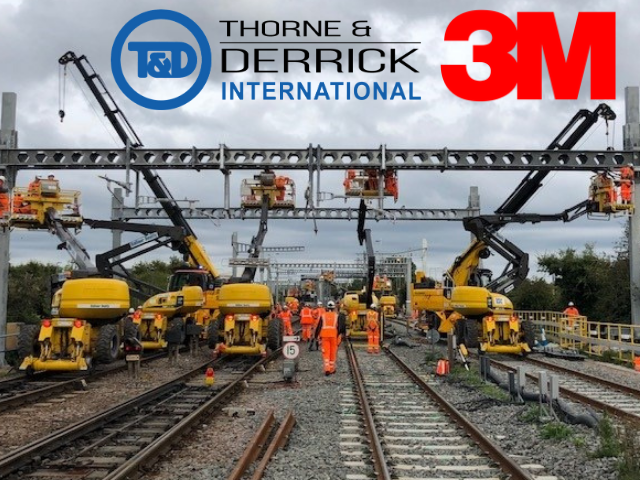
Joints & Terminations
The following 25kV Joints & Terminations manufactured by 3M Electrical utilising their innovative Cold Shrink Technology are Network Rail (NR) certified and PADS Listed as meeting the requirements for installation on their electrical infrastructure.
25kV single core cables are mainly used to carry 3-phase electrical power supplies from Network Rail trackside switching stations to the overhead line equipment on A.C electrified lines per cable specification:
NR/PS/ELP/00008 25/44kV MDPE High Voltage Power Cable
- Voltage Rating | 25/44kV
- Conductor | Class 2 Compacted Circular Stranded Copper
- Conductor Screen | Extruded Semi-conductive XLPE Bonded
- Insulation | XLPE
- Insulation Screen | Extruded Semi-conductive XLPE Strippable
- Bedding Tape | Water Swellable Semi-conductive Tape
- Screen | Copper Wire Screen 83sqmm
- Separator | Water Swellable Tape
- Cable Sheath | MDPE Graphite Coated

Joints & Terminations
Thorne & Derrick provide competitive prices and delivery from stock for a complete range of Joints & Terminations to suit NR/PS/ELP/00008 25/44kV cable.
3m cold shrink selection table
| 3M Electrical | Cable Accessory | PADS | Conductor Cross Section | Dia Over Insulation |
| 95-AC645-1-400/C | Joint | 054/064139 | 120-400sqmm | 31.5-53.8mm |
| 95-EB62-2 | Termination QTII | 054/064142 | 70-400sqmm | 33.0 – 53.0mm |
| 95-EP631-2 | Termination QTIII | 054/063136 | 240-500sqmm | 38.6 – 51.0mm |
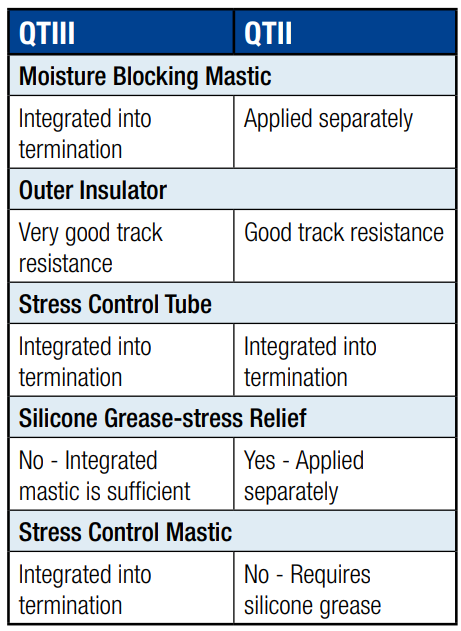
QTII v QTIII Termination Technology
➡ Enquire about our complete range of jointing and preparation tools for peeling and stripping of XLPE insulation, semi-con conductive layer and outer sheath cable jackets from medium and high voltage power cables up to 132kV.

Alroc Tools – Cable Jointing Tools (MV HV)

Rail Cable Accessories, Electrification
& Installation Equipment
Thorne & Derrick supply an extensive range of 400V-33kV Rail Cable Accessories & Power Distribution Sytems including feeder pillars to contractors undertaking Low Voltage Power Distribution, HV Electrification & Substations, DC Traction & Networks, OLE and Track Feeder Cable Renewals – a complete range of Network Rail PADS approved track terminations, cable joints, cable repair and connection products up to 25kV AC.
Full range of Cable Pulling Equipment & Products to ensure safe and efficient of rail cables in to cable ducts and containment infrastructure including cable troughs.

Stocking & Supplying | Duct Seals | Cable Cleats | Cable Glands | Electrical Safety | Arc Flash Protection | Jointing Tools | Cable Pulling Eqpt | Earthing & Lightning Protection | Feeder Pillars | Cable Joints LV | Joints & Terminations MV HV | Live Line Testers

Network Rail PADS Approved | Cable Joints, Terminations & Connections | Distributors & Stockists for 3M Cold Shrink | Nexans Euromold | Pfisterer CONNEX
Cooper Power | Bushing Interfaces & Separable Connectors Guide
April 8th, 2021
ANSI Connectors | Medium Voltage Power Cable Connectors for Transformers & Switchgear Bushings from Cooper Power Systems
Cooper Power Systems Separable Connectors (ANSI) & Bushings are rated for 15kV, 25kV and 35kV medium voltage power systems in accordance with the following ratings. More Reading | ANSI Connectors | Screened Separable Connectors from Cooper Power Systems
| 200 Series Connectors
Bushing Interface Type: A1 |
Cooper DB250, PPS24/250 | 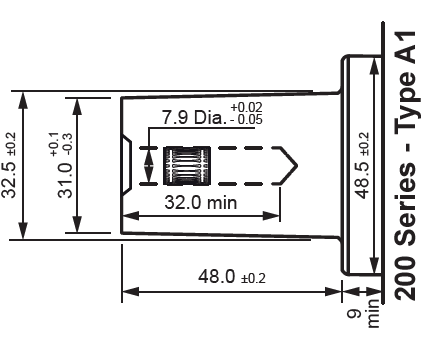 |
| Connection Type | 7.9mm Plug-in Pin Contact | |
| Max Voltage Rating | 24kV | |
| Max Current Rating | 250A | |
| Complies with | EN50180 & EN50181 | |
| Connectors | DE250 / DE251 / DS250 / DS251 | |
| 400 Series Connectors
Bushing Interface Type: B1 |
Cooper DB400, PPS36/400 | 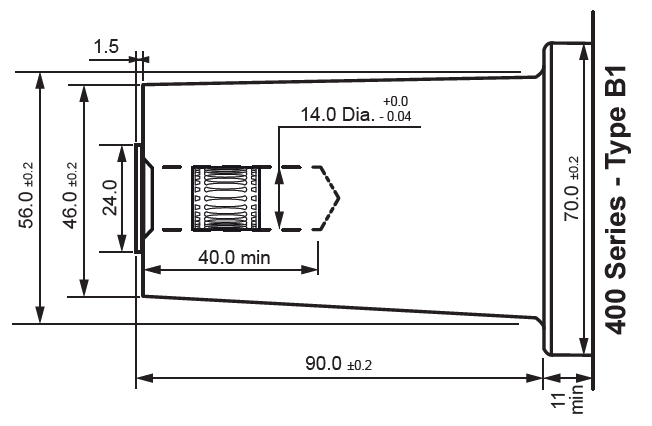 |
| Connection Type | 14mm Plug-in Pin Contact | |
| Max Voltage Rating | 36kV | |
| Max Current Rating | 400A | |
| Complies with | EN50180 & EN50181 | |
| Connectors | DE400 / DE436 / DT400P / DT436P | |
| 400 Series Connectors
Bushing Interface Type: C1 |
Cooper DB630, PPS36/630 | 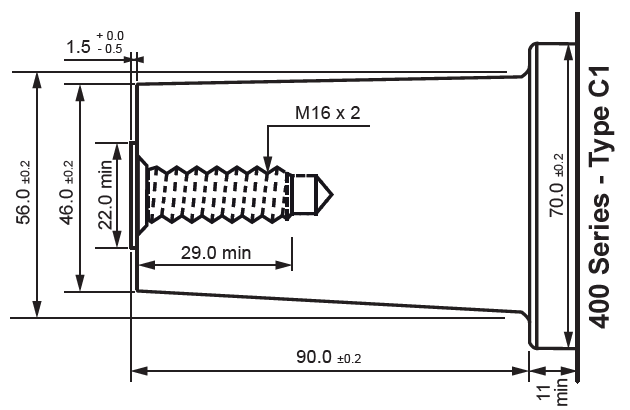 |
| Connection Type | M16 (Bolted) | |
| Max Voltage Rating | 36kV | |
| Max Current Rating | 630A | |
| Complies with | EN50180 & EN50181 | |
| Connectors | DTB624&636 / DTS624&636 / DTB1242 & DTS1242 | |
| Interface type C2 (1250A) also available upon request | ||
| 600 Series Connectors
Bushing Interface Type: D |
Cooper 15BT-OB | 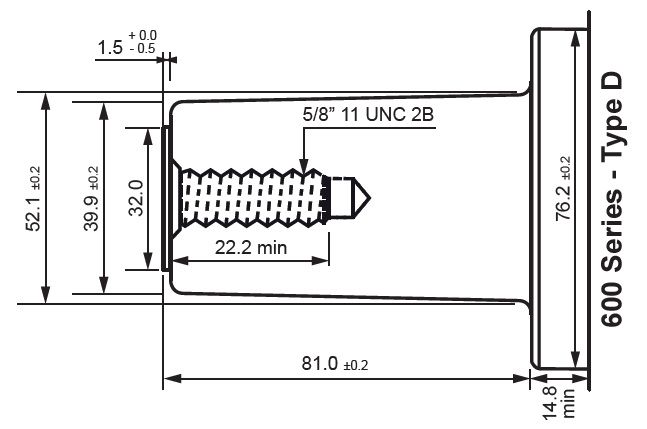 |
| Connection Type | 5/8 (Bolted), M16 also available | |
| Max Voltage Rating | 24kV | |
| Max Current Rating | 800A (Al) / 1250A (Cu) | |
| Complies with | HD629.1, IEC60525-4, & ANSI/IEE 386 & 404 | |
| Connectors | DE400 / DE436 / DT400P / DT436P | |
| Interface to D1 (800A) & D2 (1250A), EN50180 / EN50181 | ||
| 700 Series Connectors
Bushing Interface Type: E |
Cooper 35BT-OB | 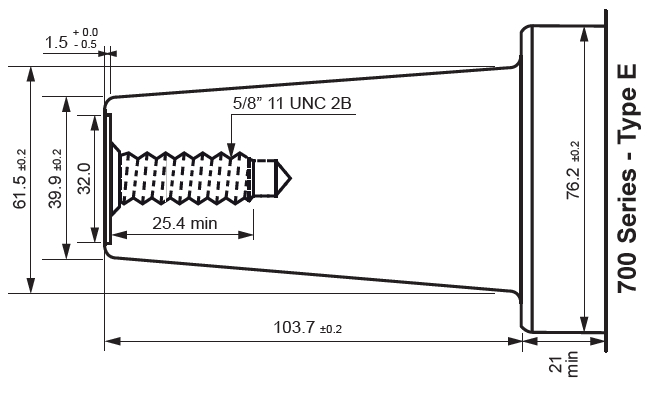 |
| Connection Type | 5/8 (Bolted) | |
| Max Voltage Rating | 36kV | |
| Max Current Rating | 800A (Al) / 1250A (Cu) | |
| Complies with | HD629.1, IEC60525-4, & ANSI/IEE 386 & 404 | |
| Connectors | 35BT Bol-T (DT635 / DT638) | |
| Interface to E1 (800A) & E2 (1250A), EN50180 / EN50181 Interface types F1, F2, & F3 also available upon request |
||
Thorne & Derrick
Contact us for Competitive Prices & Fast Delivery from Stocks for Heat Shrink, Cold Shrink & EPDM Rubber Connectors, Joints & Terminations up to 66kV.
Thorne & Derrick International are specialist distributors of LV, MV & HV Cable Accessories, Jointing, Substation & Electrical Equipment – servicing UK and global businesses involved in cable installations, jointing, substation, overhead line and electrical construction at LV, 11kV, 33kV, 66kV and EHV.
Stocking & Supplying | Duct Seals | Cable Cleats | Cable Glands | Electrical Safety | Arc Flash Protection | Jointing Tools | Cable Pulling Eqpt | Earthing & Lightning Protection | Feeder Pillars | Cable Joints LV | Joints & Terminations MV HV
Innovation : Heat-Shrinkable Joint with Triple Layer Tube By Nexans
March 30th, 2021
Nexans JTS Heat Shrink Joints
JTS Triple Wall Heat Shrink Joints
By Nexans
Simple & Shorter Installation Time with Reduced Risk of Failure
-
Republished Article From Transmission & Distribution - Australasian Power Technologies By Nexans Australmold
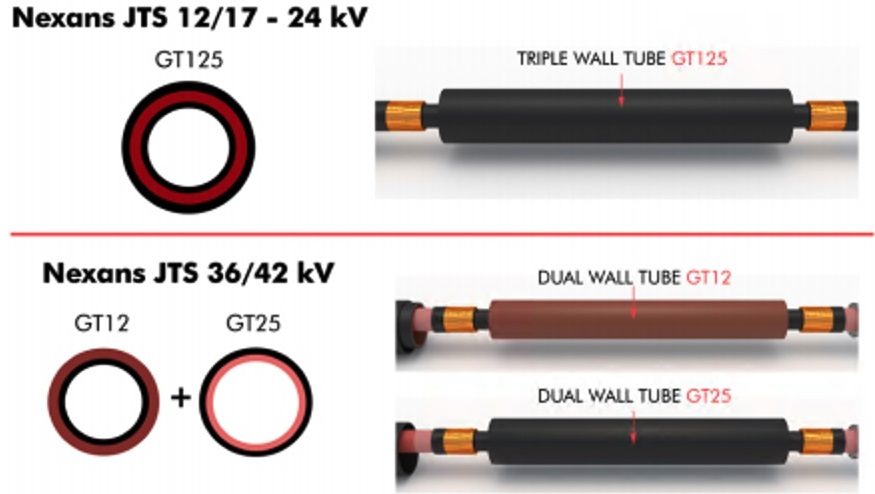
The Nexans Italy site of Offida launches the JTS, its new heat-shrinkable joint with triple layer tube. The triple layer heat shrink tube represents a technical innovation that allows MV cable jointers to heat only 1 tube instead of 3 for 12kV to 24kV applications, and 2 tubes instead of 3 for 36kV to 42kV cable jointing applications.
Nexans have reduced complexity and the time to install the cable joint, while improving the quality of the global connection by reducing its operations. The new range of Nexans JTS heat-shrinkable medium-voltage straight joints is compatible with MV single- or three-core polymeric cables with copper wire screen, copper tape screen or with aluminium tape screen.
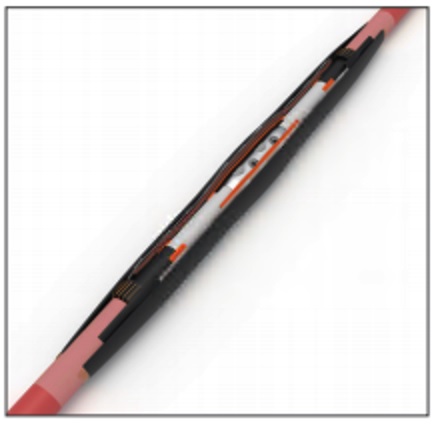
For 12kV to 24kV applications, the Nexans JTS 17/24 heat-shrinkable joint is the new high performance, compact and easy-to install joint: a single body with all electrical functions integrated!
The JTS 17/24 is using the Nexans “TRIPLE GT125”, an integrated stress control field, insulating and conductive tube, which can support voltage classes up to 24kV.
A double layer pad with conductive rubber inside and HK orange mastic outside ensure a Faraday cage and smooth the effect of the electrical field and of the voltage gradient in the connector area.
For ANZ customers, the electrical continuity of the screen is ensured by copper screened mesh and two mechanical shear-off screen links. Finally, the outer sheath is restored with heavy wall adhesive lined tubing. MC types are supplied with GPH® mechanical connectors.
For 36kV to 42kV applications, the Nexans JTS 36/42 heat-shrinkable joint is also a high performance, compact and easy-to-install cable joint: double bodies with all the electrical functions integrated!
The JTS 36/42 is using an integrated coextruded “stress control field + insulating” (DUAL GT12) nested in a coextruded “insulating + conductive” tube (DUAL GT25), which can support voltage classes up to 42kV.
All the rest is the same as the 17-24JTS.
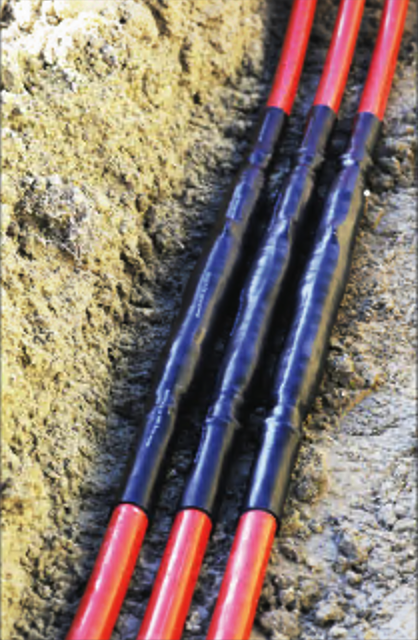
Nexans Italy in Offida has an extensive know-how in the fields of heat-shrinkable materials, as well as mastics. The heat-shrinkable (HS) technology dates from the 1960s. In Nexans, thanks to a strong R&D activity, the heat shrink technology has been improved and tailored for 50 years, according to the evolution of the market needs.
Today, Nexans produce a complete range of heat shrink tubes to cover Low (LV) and Medium (MV) voltage cable jointing applications up-to 52kV in our Extruders/Expanders lines, with diameters starting from 20mm till 300mm and up to 4 different layers.
Mastics for electrical use: the complete range of Nexans mastics have been developed and are manufactured totally in the company. They are produced by means of a 630 litre mixer in a dedicated part of the plant. Resins for electrical use, casting and insulating have been designed by Nexans Italy for more than 35 years.
Nexans R&D team of engineers and technicians use the most advanced tools and equipment to create, verify and test all our products among the different laboratories and material research centres of the Nexans Group.
Nexans Power Accessories Italy is well equipped to perform physical and chemical analysis of insulating, anti-tracking, and stress control materials, both for tubing and mastics. We supply jointer training and failure analysis for all our customers. In the electrical laboratory we can perform type test and routine test (PD measurement at hot and ambient temperature, heating cycles in air and water, humidity and salt fog). For steel wired armour cable and termite protection please contact your local sales office.
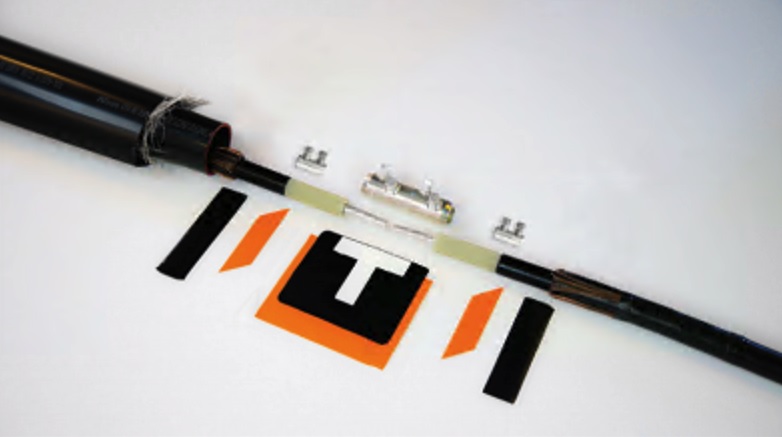
NEXANS JTS 17/24KV
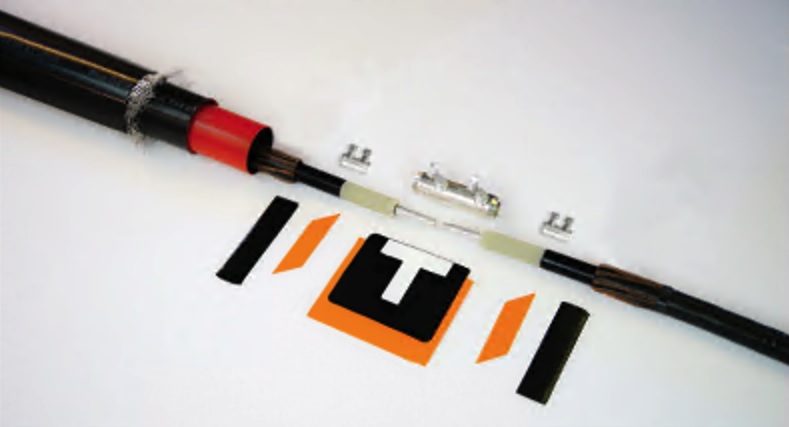
NEXANS JTS 36/42KV
Nexans JTS Heat-Shrinkable joint
Features & Benefits
- Tube nesting / positioning and parking issues eliminated => typical cable jointing errors eliminated
- Only one tube to shrink for the 3 functions (stress control – insulation – conductive) for voltage classes 12/17kV & 24kV
- Only two tubes to shrink for the 3 functions (stress control – insulation – conductive) for voltage classes 36kV & 42kV
- Reduced installation time / training time, with standard cable preparation tool work
- Simplified stress control with 2-layer plate as used with Nexans cold shrink joints => no need to conform the mastic before shrinking the tube
- Design adapted for all type and brands of mechanical / crimping connectors
Nexans JTS Heat-Shrinkable joint
highlights
- Short and slim design cable joint
- Quick and easy to install for medium voltage power cable systems
- Excellent electrical insulating properties
- Advanced screen connection and armour continuity of MV joint
- Heavy wall tubing for high mechanical strength and impact resistance
- Proof against water penetration and chemicals aggression
- Stabilised UV protection of the cable
- Halogen-free material content
- Compliant to reach regulations
- Premium technical support up to medium/high voltage classes
- Made in EU

Nexans manufactured Cable Accessories are in extensive service throughout the UK DNO power grid – the Euromold brand of separable connectors are approved and are approved by several DNO/IDNO operators dependent on the product, voltage and network.
Nexans joints and terminations are increasingly preferred and adopted by NERS Accredited Independent Connection Providers (ICPs) working on 11kV private networks.
Thorne & Derrick have an International Distribution Agreement with Nexans Power Accessories UK and are their main stockists and suppliers for their range of Heat Shrink Joints & Terminations up to 33kV.