Cable Joints & Terminations HV
High Voltage Enabling Works at Bryn Pica Eco Park Development
March 11th, 2021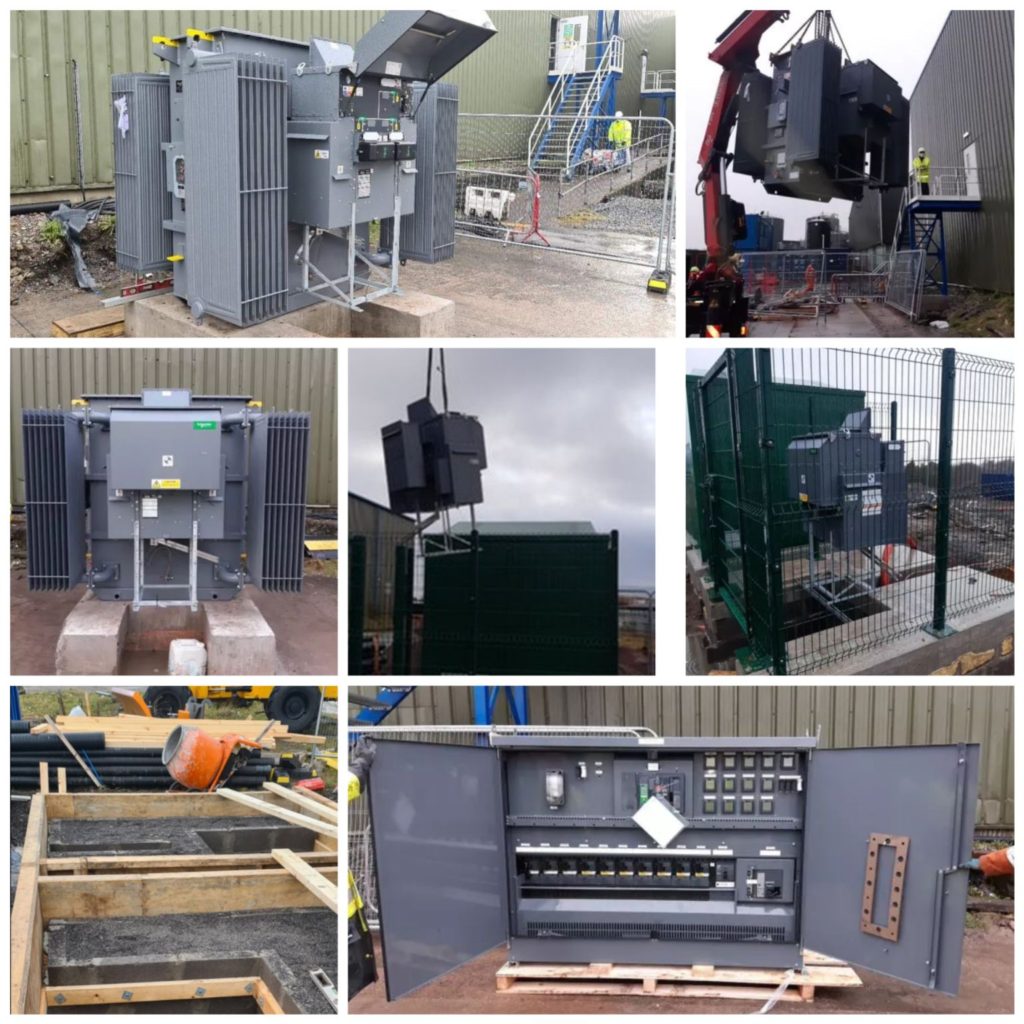
High Voltage Enabling Works at Bryn Pica Eco Park Development
High Voltage Enabling Works
-
Special Thanks To Tristian Jones For His Kind Permission To Republish
C&P’s high voltage company, C&P High Voltage Services have been busy this week completing the 1st phase of construction of a high voltage ring for the future development of a multi-million-pound Eco Park development for Rhondda Cynon Taf Council – the facility will be the first of its kind in the UK.
Once completed the electrical infrastructure will be extended into phase 2 to supply further factory buildings for future recycled materials production.
C&P High Voltage services division will provide enabling works which includes design, supply, install, test and commissioning for a 2MVA package substation, Ring Main Unit (RMU), HV cable system for a 2MVA package substation, Low Voltage (LV) cable system for Mattress recycling, visitor centre fence distribution board, feeder pillar to replace perimeter fence distribution board and Low Voltage (LV) cable transfers.
This week a smart feeder pillar was installed, along with a 2MVA transformer and RN2D close coupled RMU with VIP protection on the circuit breaker. This will allow for remote monitoring and operation through a BMS or website control platform.
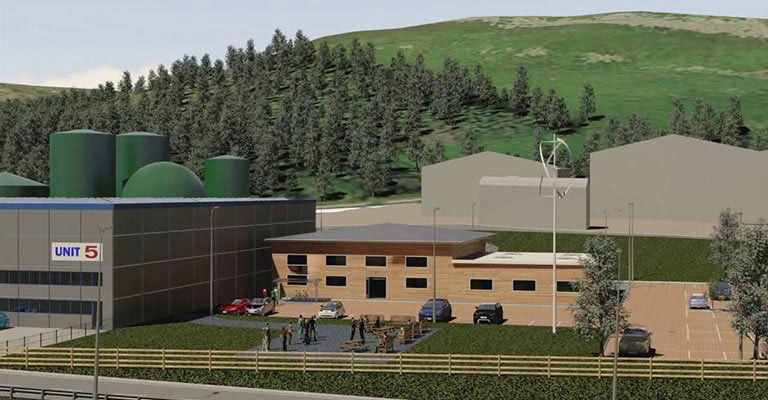
Eco Park Development – which would be the first of its kind in the UK
Over the past 18-months C&P has been rapidly expanding its high voltage services and maintenance activities, securing a number of critical projects and contracts across the UK.
David Demock, C&P’s High Voltage Engineering Director commented: “We are extremely pleased to partner with Rhondda Cynon Taf County Borough Council to deliver such an important phase for this prestigious project. We have been adding to our power engineering capabilities over the past few years which has assisted us to grow and offer clients such as Rhondda Cynon Taf Council even more value through our unique approach.
Using our own people, plant and highly experienced engineering solutions we are pleased that we can play a vital role in the development of the park. This will ultimately help to recycle more, protect the environment and create commercial opportunities and job creation in the Cynon Valley”.
About C&P High Voltage Services

C&P High Voltage Services provide a full range of high voltage electrical contracting services across a diverse range of customers. Their full turnkey high voltage engineering services cover design, installation, testing, commissioning, energisation, operation and maintenance for both new high voltage electrical installation and refurbishments for private networks up to and including 132kV.
High Voltage Services include:
• Design & Installation
• SAP Services
• Operation & Maintenance
• Jointing & Cable Installation
• Commissioning
• Fault Analysis & Management
• Voltages – 11kV, 33kV, 66kV, 132kV
• HV Testing up to 68kV – Substation, Transformer, Switchgear, Cables
• Consultancy & HV Safety
• Contestable New Electricity Connections
Thorne & Derrick
LV, MV & HV Jointing, Earthing, Substation & Electrical Eqpt
Thorne & Derrick International are specialist distributors of LV, MV & HV Cable Installation, Jointing, Duct Sealing, Substation & Electrical Equipment – servicing UK and global businesses involved in cable installations, cable jointing, substation, overhead line and electrical construction at LV, 11kV, 33kV and EHV.
THORNE & DERRICK Product Categories: Duct Seals | Cable Cleats | Cable Glands | Electrical Safety | Arc Flash Protection | Cable Jointing Tools | Cable Pulling | Earthing | Feeder Pillars | Cable Joints LV | Joints & Terminations MV HV

21st Century Costs of Underground Distribution
March 9th, 2021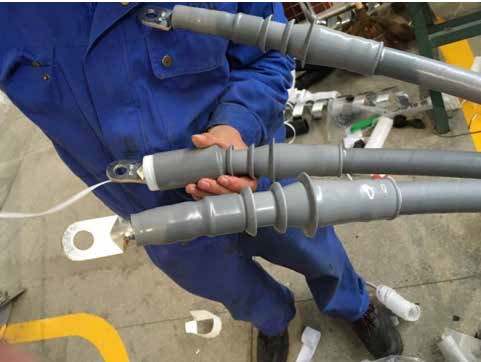
Today’s outdoor cable terminations are factory produced and tested. Source Ivan Jovanovic, Director of Engineering Specialty Products with G&W Electric and associate member of PDi2.
Underground Electric Distribution
The Cost of Underground Electric Distribution Is Coming Down
By Mike Beehler | Mike Beehler & Associates
Special thanks To Martha Davis for Kind Permission to Republish this Article
Advancements in material science, construction methods and emerging technologies make 21st century costs for undergrounding T&D assets much more attractive for planners and engineers than ever before.
The old “rules of thumb” about the higher costs of T&D underground are no longer valid.
The costs are now coming down.
Innovation and continuous improvement programs have positively impacted underground costs in the areas of design, construction, operations and maintenance of new and existing feeders, underground residential distribution (URD) and service connections.
The state-of-the-art experience and science of modern cable systems around the world suggest properly installed and operated underground cable systems can safely and reliably serve customers significantly longer than overhead line components.
In addition, data is starting to show dramatically lower operation and maintenance expenses over the life of underground assets. These results trend toward the achievement of net-positive lifecycle value for underground with dramatically better resiliency.
Utilities are evaluating these intriguing concepts and the current tangible costs while considering the harder-to quantify benefits of safety, reliability and aesthetics on behalf of their customers in diverse service territories.
Material Science And Cable Design
Advancements in material science have changed many parts of the electric distribution system and the industry. Utilities are closely monitoring these advancements. Significantly longer cable life can be achieved using innovative semiconducting and insulating materials.
Semiconducting shield materials with smoother surfaces reduce stress enhancements and semiconducting jackets provide continuous grounding to dissipate overvoltage conditions more quickly. Enhanced insulation materials have demonstrated significantly longer life under accelerated wet-aging conditions.
“These enhancements contribute to underground cables that now are projected to last longer than the traditional overhead line,” said Brent Richardson, senior end-use marketing manager for Dow and an executive board member of the Power Delivery Intelligence Initiative (PDi2).
For example, a recent review of state-of-the-art cable science by Chatteron et al. at the Fall 2019 IEEE Power & Energy Society’s Insulated Conductor Committee meeting summarized that cables can last well beyond 100 years, which far surpasses the average 50-year wood pole life quoted by the North American Wood Pole Council.
“Stronger cable designs on larger reels cut civil design and construction costs by reducing the number of manholes needed, traffic control and public disruption, the number of joints and terminations, and cable handling costs,” noted Matt Raymond, division manager of Haugland Energy and a PDi2 associate member.
Old accessory designs relied heavily on field preparation of joint and termination primary insulation that could not be routinely pretested. Now, components use controlled molded stress control and can be 100% factory tested. These designs also have various features that reduce installation time and the rigor of work in varied field conditions.
Today’s cable joints and separable connectors are fully submersible, enabling uninterrupted power distribution by underground cable systems during storm surges and flooding. This makes them ideal components for coastal environments and strategic undergrounding programs aimed at reducing power restoration times.
3D Design
Today, 3D designs of distribution standards linked to complete material lists of parts and components are becoming more common n the industry.
Dimensionally accurate 3D standards for equipment applied to geographically positioned mapping for roads and rights-of-way help utilities to improve infrastructure by streamlining modern underground design.
Engineers regularly monitor and test new models of pad-mounted transformers, switchgear, cable splices and terminations as they develop and enhance the standards to which their systems are built.

Low-cost cable installation in South Carolina. Source Brian Hunter, regional manager of TT Technologies and associate member of PDi2
Planners and engineers are finding ways to reduce the cost of underground systems as they design and build the grid of the future. Here are a few examples of cable system design specifications that can save cost and increase component life:
1. Reducing the amount of copper used in typical North American medium-voltage, three-phase cables with concentric wire neutrals reduces cost and increases power transmission capabilities by restricting circulating currents that heat the cable from the outside.
Using cross-linked polyethylene (XLPE) instead of typical linear low-density polyethene increases the maximum cable jacket temperature rating, enabling utilities to reduce the amount of copper in a concentric neutral wire cable design without concern a fault on the system will overheat and damage the jacket.
2. Using range-taking shear-bolt conductor connectors instead of compression connectors can lower costs and reduce the likelihood of common installation mistakes, especially in highly loaded circuit applications. Typical compression connectors require a different size connector and compression tools for each conductor size.
Range taking shear-bolt conductor connectors can be used for multiple conductor sizes and their set screw design, which shears off at a specific tightness (torque value), reduces installation time and automatically removes the conductor oxidation. Skipping oxidation removal is a common root cause of overheating issues with applications using low-cost aluminum conductors.
3. Utilities that typically specify extra-thick cable insulation (133% or higher) can save costs by limiting insulation thickness to 100% levels and achieve the same performance.
Field studies show 100% insulation systems can perform just as well as overinsulated cable, provided overvoltage protection like surge arresters are properly installed at transitions — from overhead to underground — multiway (three-plus) intersections and circuit end points.
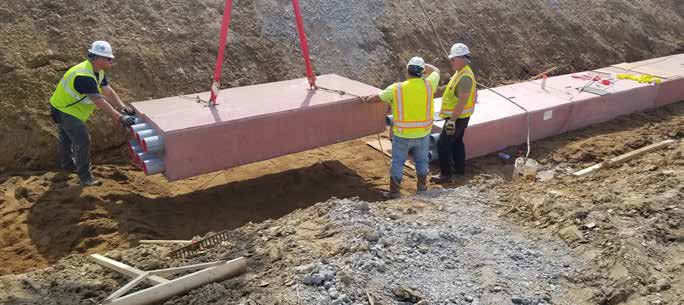
Precast duct bank installation. Source Forterra.
Construction Costs
The cost of installing underground cable in similar construction configurations can vary from as high as US$200/ft on the West Coast to as low as $20/ft in the southeastern U.S.
The cost of design and installation for underground cable systems can vary. Utilities like Dominion Energy Inc., Florida Power and Light Co. (FPL), Georgia Power, San Diego Gas & Electric (SDG&E), Pepco Holdings Inc. and WEC Energy Group Inc. have instituted strategic underground or underground system enhancement programs. In doing so, they have learned that regulations, population density, ground conditions and union vs. nonunion labor can contribute to unit-cost-per-foot differences.
WEC Energy provides a strong example of modern costs and benefits associated with a strategic undergrounding program, targeting approximately 2200 miles (3541 km) of distribution while concurrently installing automation equipment on 400 miles (644 km).
The costs for undergrounding are approximately $42/ft, as reported at the IEEE Insulated Conductors Committee meeting in late 2019. WEC Energy construction methods were 2% open cut, 50% plowing and 48% boring — demonstrating that new equipment designs and installation contractor methods continue to improve efficiencies.
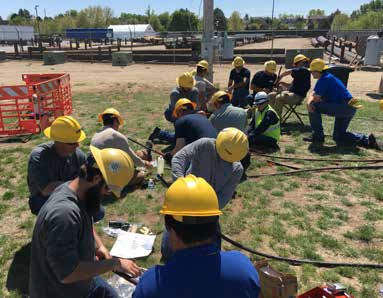
Installation skills training with immediate on-site factory-comparable testing and qualification. Source IMCORP.
According to the 2019 report, WEC Energy is on track to achieve 2% improvement in customer minutes interrupted (CMI) attributed to automation equipment and 16% CMI improvement because of strategic undergrounding. Reasons for undergrounding also vary. According to Martha Lachmayr, principal engineer of SDG&E, their major reasons for undergrounding are as follows:
1. Less frequent outages caused by exposed equipment
2. Beautification in the case of franchise agreements
3. Reduced risk of downed wires that could cause ignition in the high fire threat districts.
These utilities and their contractors developed innovative methods to take advantage of material, cable construction, design, installation, condition assessment and maintenance technologies to lower the life-cycle cost of underground systems.
While WEC Energy’s program is focused largely on more rural applications, other utilities are innovating on the urban front.
One example of an urban construction innovation is with precast manholes, equipment pads and duct banks that provide many schedule-related benefits and reduce the cost of construction.
“New developments in precast underground duct bank systems allow for burying utility lines more quickly and safely,” said Jeff Killin, vice president of engineered products for Forterra Inc. and a partner member of PDi2. “This means fewer crew members are needed in the trench and for less time, providing cost savings and reducing construction impacts.”
The traditional open-cut duct bank construction process requires multiple polyvinyl chloride (PVC) conduit runs that are stick built with individual sections of PVC conduit connected in sequence using PVC solvent cement. Then formwork is erected
around the installed conduits. Finally, thermal backfill or concrete is poured and must cure before work in the area resumes.
Added together, this traditional installation process is slow, labor intensive and subject to weather delays.
In contrast, precast duct bank sections consist of electrical conduits encased in engineered, prefabricated concrete sections, arriving at the jobsite ready for installation. Solvent cements are not required to join the sections, and no formwork, steel reinforcement or concrete is required. The need for concrete testing is eliminated at the jobsite, as quality tests are performed and recorded at certified precast concrete facilities.
Operations And Maintenance
From a lean-enterprise perspective, a large waste of human and material resources is overproduction, especially on non customer valued work. Utility financial overhead costs (that is, equipment procurement, specification, planning, switching order development and switching dispatch) as well as lead times (delays waiting for different work parties to complete sequential tasks) are substantial and difficult to track.
The importance of considering grid technologies that lower the frequency of waste-producing maintenance work orders cannot be overstated when comparing complete life-cycle costs. In evaluating public information from utility websites, Federal Energy Regulatory Commission (FERC) Form 1 and U.S. Securities and Exchange Commission (SEC) 10-K filings for five geographically diverse investor-owned utilities — namely,
The United Illuminating Co., FPL, Evergy, Arizona Public Service and Portland General Electric — the cost of underground distribution maintenance per mile is 3 times to 7 times lower than overhead. Year after year, utilities are reporting underground
Installation skills training with immediate on-site factory-comparable testing and qualification.
Even with traditionally low operating costs, the cost of maintaining underground cable systems can be dramatically decreased using proactive skills training and cable-condition profiling technology during construction and after damaging system events.
Cable system failure can occur years or decades after installation, but industry studies have found the root cause often is associated with installation or manufacturing issues.
“Over the last two decades, we have dissected thousands of field-installed substandard cables and accessories, and in nearly every case, there is evidence of a human or production anomaly precipitating the defect,” observed Ben Lanz, director of technology with IMCORP and an executive board member of PDi2.
“Once a failure occurs on aged cable, the fault location and repair process often create additional defects on both the subject and neighboring systems, thus dramatically increasing the cost of maintaining the system. Using 100% partial discharge testing at the factory and repeating this process in the field during commissioning can eliminate future operating and maintenance costs.”
In the case of post-installation damage from dig-ins or extreme operating conditions, implementing fault indicators, good operating practices and modern fault location techniques can dramatically minimize repair costs and additional system damage.
For example, after failures occur, good operating practices include confirming surge arresters are properly placed and using factory-test-comparable condition assessment techniques to profile repairs and neighboring lines for defects and degradation.
On aged cable systems experiencing repeated fault activity, cable-condition profiling technology can be used to extend the life by identifying weakened cable system components and directing lean work practices to only repair or replace what is necessary.
An example of such a program can be found in the T&D World article, “Managing Cable Assets,” by CenterPoint Energy Inc. (CNP). In this case study, CNP was challenged to address the reliability of approximately 18,000 underground residential distribution loops totaling 13,000 miles (20,922 km), where 27% of loops were comprised of cables causing 44% of the total system failures.
CNP used an all-capital process to assess the insulation condition of its cable systems. This process included a factory comparable partial discharge test, repairing all accessible components identified as substandard and scheduling any additional below-ground repair actions in the near future. By implementing this efficient process, CNP reported it had saved 65% of loop rehabilitation costs and achieved a 98% reduction in outages.
Evaluating Underground Options
Advancements in material science, construction methods and emerging technologies are lowering the 21st century costs of design, construction, and operations and maintenance of new and existing underground cable systems.
“The many benefits of undergrounding are obvious to today’s electric power consumers,” noted John Fluharty, II, a consultant with the Mears Group, a Quanta Services company, and a PDi2 executive board member. “As utilities across North America invest in a smart, reliable and resilient grid for the future, we believe undergrounding will increasingly emerge as the preferred alternative in many applications.”
Therefore, planners and engineers should evaluate underground distribution options on new construction and system upgrades based on careful study and a growing body of empirical data.
Acknowledgment
The author would like to thank the members of PDi2 for their contributions to this article, including Brent Richardson of Dow, Matt Raymond of Haugland Energy, Jeff Killin of Forterra, Ben Lanz of IMCORP, Ivan Jovanovic of G&W Electric Co., and Brian Hunter of TT Technologies.
MIKE BEEHLER is the national spokesperson for the Power Delivery Intelligence Initiative and is a registered Professional Engineer in AZ, FL, HI, TX, CO, KS, GA, and AL, a Fellow in the American Society of Civil Engineers, and a Member in IEEE and CIGRE. He has been married for 40 years, has four adult children and four grandchildren, and lives on Singer Island, Florida USA.
For More Information
Power Delivery Initiative (PDi2) | www.pdi2.org
Dow | www.dow.com
Haugland Energy | www.hauglandgroup.us/energy
TT Technologies | www.tttechnologies.com
Forterra | www.forterrabp.com
IMCORP | www.imcorp.com
Mears Group, A Quanta Service Company | www.mears.net
THORNE & DERRICK
Thorne & Derrick are national distributors of LV, MV & HV Cable Installation, Jointing, Substation & Electrical Equipment – servicing businesses involved in cabling, jointing, substation, earthing, overhead line and electrical construction at LV, 11kV, 33kV, 66kV and EHV. Supplying a complete range of power cable accessories to support the installation and maintenance of low/medium and high voltage power systems:
- Slip-on Cable Terminations
- Cold-shrink Cable Terminations
- Heat-shrink Cable Terminations
- Cable Joints – Heat & Cold-shrink
- Separable Connectors (Euromold)
- Surge Arresters & Switchgear/Transformer Bushings
Key Product Categories: Duct Seals | Cable Cleats | Cable Glands | Electrical Safety | Arc Flash Protection | Cable Jointing Tools | Cable Pulling | Earthing | Feeder Pillars | Cable Joints LV | Joints & Terminations MV HV
Preventing Costly Outages With Factory Grade Technology
March 9th, 2021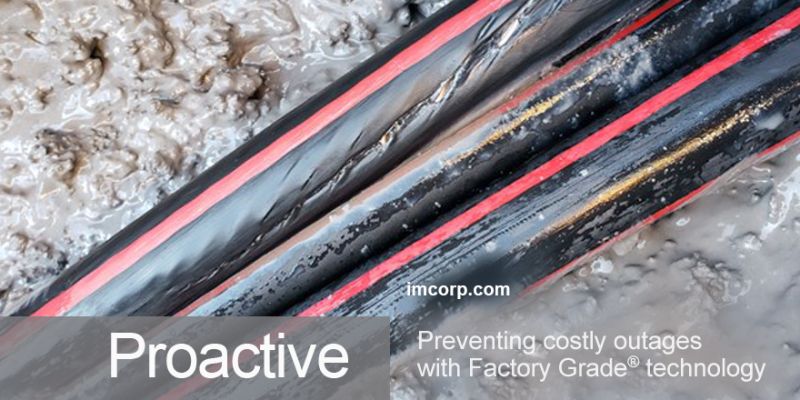
Preventing Costly Outages With Factory Grade Technology
Guest Article: IMCORP by Ben Lanz
uploaded by Natalie Lundie – Thorne & Derrick Supply Chain: Marketing Lead
IMCORP is a provider of underground power cable reliability services for medium and high voltage (5kV to 500kV) power cable systems for both aged and new cable installations.
IMCORP’s Factory Grade® technology will access MV HV Cable Systems, identify cable systems in need of rehabilitation allowing the customer to ultimately restore the cable system to like-new status.
➡ Did you Know? – Last year, on renewable sites, IMCORP identified 516 substandard cable terminations, 330 substandard cable splices, and 151 cable defects.
The featured image at the top of the page is a cable defect recently identified during our partial discharge testing at 300mw solar site. During our testing of this ~1000-foot-long buried cable IMCORP discovered this defect at ~753-foot mark.
A costly Power outage avoided
IMCORP offline Factory Grade® assessments can be capitalized, as part of a cable life extension program. Additionally, our assessment is non-destructive and is a cost-effective alternative to wholesale cable replacement.
IMCORP enables clients to improve cable system reliability through asset life cycle management services including commissioning, maintenance, and retirement.
Avoiding cable system failures and high O&M costs begins with understanding how cable failures occur and having the ability to detect these defects in advance of a breakdown.
IMCORP is the technology leader in Medium & High Voltage Power Cable Systems life cycle condition assessment and performance – IMCORP have been helping their clients achieve maximum cable reliability for more than 20 years and have assessed over 130,000 5kV to 500kV cable systems spanning in excess of 160 million feet.
Thorne & Derrick
T&D are Specialist Distributors to UK Distribution Network Operators (DNO’s), NERS Registered Service Providers, ICP’s and HV Jointing Contractors of an extensive range of LV, MV & HV Jointing, Earthing, Substation & Electrical Eqpt – this includes 11kV/33kV/66kV cable joints, terminations and connectors for both DNO and private network applications.
Contact our UK Power Team for competitive quotations, fast delivery from stock and technical support or training on all LV-HV products.
All international sales enquiries can be serviced and supplied by our Export Power Team.
Key Product Categories: Duct Seals | Cable Cleats | Cable Glands | Electrical Safety | Arc Flash Protection | Cable Jointing Tools | Cable Pulling | Earthing | Feeder Pillars | Cable Joints LV | Joints & Terminations MV HV
Partial Discharge 5 Common Questions
March 8th, 2021
Partial Discharge
An Introduction To The Causes & Effects Of PD
-
Thanks to Mo Cowhig Managing Director at Northern Power Services Ltd for the permission to republish
1. What Is Partial Discharge?
Partial discharges (PD) are small, localised breakdowns in the insulation in HV equipment and cables. PD does not span the whole insulation, hence ‘partial’. PD activity is an indicator of issues inside and outside the insulation. Testing for PD activity provides an early warning of a potential insulation failure.
2. What Causes Partial Discharge?
PD can be caused by one or a combination of factors. Faults in the manufacture of the insulation, not apparent when new, can lead to PD after being put into service. Poor installation and maintenance can also lead to PD. Ageing and stresses over time, combined with environmental factors, can cause PD.
3. How Do We Detect Partial Discharge Activity?
Partial discharge can be classified into three types. PD can be external on the surface, internal to the insulation and where sharp protrusions lead to corona activity.
Each of these sources require different detection methods. PD activity leads to the generation of a range of different energy types including heat, audible sound, ultrasonic sound, radio waves and transient earth voltages.
By detecting these different energies, and eliminating background noise, we can detect the presence and severity of PD activity. We use special instruments to detect these energy types and in combination determine the presence of PD.
4. Why Survey For Partial Discharge?
The effects of PD can be highly detrimental to the insulation medium. PD changes the nature of the insulation which gets increasingly worse over time.
Left unchecked, the insulation can become unable to withstand the stress of high voltage and a complete failure occurs. This final breakdown is catastrophic causing large scale damage to equipment and a danger to personnel.
It is accepted that over 80% of sub-station failures are caused by PD. These failures are entirely preventable by regular surveying for PD.
5. Do I Need To Interrupt My Supply?
Different equipment require different methods. For the purpose of an initial PD survey the equipment needs to be energised, so no outage is required. If PD is detected a more in depth study may be required.
Introduction to Partial Discharge Training Course
NEW – Introduction to Partial Discharge
A one day training session, carried out at your site. The training is aimed at engineers, facility managers and anyone new to partial discharge.
Topics covered include:
- What is partial discharge
- Causes of partial discharge
- Why test for partial discharge
- Detection techniques
- Practical – use of a hand held detector
Northern Power Services Ltd is a UK based expert in condition assessment and monitoring of electrical infrastructure. They work closely with you as an integral part of your asset management plan.
 For More Details Contact Information Below:
Maurice D Cowhig
Founder & Managing Director
[email protected]
Thorne & Derrick
Specialist Electrical Distributor
Established since 1985, T&D International based in the UK distribute the most extensive range of LV, MV & HV Cable Jointing, Terminating, Pulling & Installation Equipment – contact us today for a competitive quotation.
Key Products : MV Joints & Terminations, Access Chambers, Cable Cleats, Duct Seals, Cable Transits, Jointing Tools, Feeder Pillars, Cable Duct, Earthing & Lightning Protection, Electrical Safety, Cable Glands, Arc Flash Clothing Protection & Fusegear.
Distributors for : 3M, Pfisterer CONNEX, Nexans Euromold, Elastimold, Catu, Roxtec, Emtelle, Centriforce, Lucy Zodion, Alroc, Cembre, Prysmian, Ellis Patents, ABB & Furse.

T&D Providers Of Jointer Training Courses By Pfisterer CONNEX & Nexans Euromold
Identifying Workmanship Issues With Factory Grade Technology
March 8th, 2021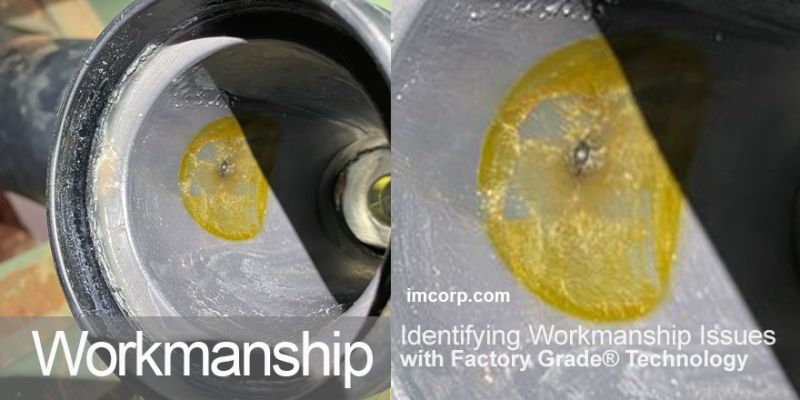
Identifying Workmanship Issues With Factory Grade Technology
Guest Article: IMCORP by Ben Lanz
uploaded by Natalie Lundie – Thorne & Derrick Supply Chain: Marketing Lead
IMCORP’s Factory Grade technology proven 100% effective in identifying workmanship issues and providing Precision Reliability feedback to utility clients and their contractors.
We all know that foreign objects, contamination, or moisture in any medium voltage cable accessory or component will certainly lead to a shortened lifecycle.
An oversight in cleaning and inspecting this 600AMP TBODY during its installation was recently discovered during partial discharge testing at a solar site.
Partial discharge detected, below the manufacturer’s standards led to an inspection of the termination connector which yielded a Hex nut pressed into the wall of the TBODY. That’s right a Hex head nut was causing PD, but maybe more interesting is this had been in service for 2 months prior to IMCORP’s QA testing and had previously passed a VLF test.
Had this cable termination faulted it would have caused the site owners significant financial loss in revenue.
A critical step in the installation is to decontaminate and inspect any medium voltage connections before landing them was clearly missed here!
IMCORP is the technology leader in Medium & High Voltage Power Cable Systems life cycle condition assessment and performance – IMCORP have been helping their clients achieve maximum cable reliability for more than 20 years and have assessed over 130,000 5kV to 500kV cable systems spanning in excess of 160 million feet.
Thorne & Derrick
T&D are Specialist Distributors to UK Distribution Network Operators (DNO’s), NERS Registered Service Providers, ICP’s and HV Jointing Contractors of an extensive range of LV, MV & HV Jointing, Earthing, Substation & Electrical Eqpt – this includes 11kV/33kV/66kV cable joints, terminations and connectors for both DNO and private network applications.
Contact our UK Power Team for competitive quotations, fast delivery from stock and technical support or training on all LV-HV products.
All international sales enquiries can be serviced and supplied by our Export Power Team.
Key Product Categories: Duct Seals | Cable Cleats | Cable Glands | Electrical Safety | Arc Flash Protection | Cable Jointing Tools | Cable Pulling | Earthing | Feeder Pillars | Cable Joints LV | Joints & Terminations MV HV