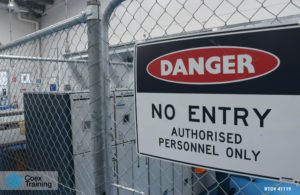
Thorne & Derrick are working with Coex Training (RTO# 41119) in Australia to promote their Hazardous Area & High Voltage Switching Training Courses.
WHAT TO EXPECT AT COEX HIGH VOLTAGE Switching COURSEs
Coex Training’s High Voltage Courses cover everything from basic electrical theory all the way through to physically conducting an HV switching program in our training substation.
While some of the basic electrical theories discussed in the course may already be familiar to some, it is a great way for those that have spent some years out of their apprenticeship to refresh their memory. Coex also goes through applicable electrical standards and legislation for high voltage activities, addressing areas such as competency requirements for HV Operators and explaining why you can’t start switching with a certificate alone.
Coex trains students on the importance of gaining permission from the network entity that owns the installation, as well as the individual responsibilities a High Voltage Switching Operator and Electrician has. We fully explain the duty of care of your employer and your duty of care as an employee.
High Voltage Switching Questions Answered
The courses will assist students in their understanding of a variety of electrical equipment fault ratings and the equipment’s capabilities. These learnings are crucial in helping you truly understand the limitations on what your equipment can and can’t do. Some questions that will be answered in the course are as follows:
Where does the fault current come from?
What do the numbers on the nameplates of the equipment actually mean? (With regards to fault rating, heat rating and mechanical stress rating of the equipment)
What is the most effective way of using my PPE equipment?
What are the limitations of PPE?
PPE is your last line of defence when equipment protection systems fail. The highest rating PPE we typically use in Australia for the distribution HV Switching is an incident energy level of approx. 40 calories per square centimetre. Anything above that level can be manufactured to protect you from the heat but not the percussion wave.
It is limitations like these that are extremely important to fully comprehend and understand, so as not to put yourself or others in danger. This is another reason why the Coex High Voltage course is so necessary.
Additional skills learned in the courses are to do with administration procedures, in particular, the writing and understanding of permits.
Frequently asked questions include:
How is a permit put together?
What permits are out there?
When should you use an access permit?
When should you use a vicinity permit?
What does a ‘powerline corridor permit’ actually entail?
How do we accurately test permits?
It is important to understand how permits work so that you are not breaking any laws or isolation practices when switching, and more importantly, keeping everyone working under the HV isolation safe.
A good way of keeping yourself in check when dealing with permits and correct procedures is also having good knowledge and understanding of Switching Programs. You will be instructed on how to create and write accurate switching programs, giving you the skills to put one together in a way that ensures you and the people you’re isolating for are kept safe.
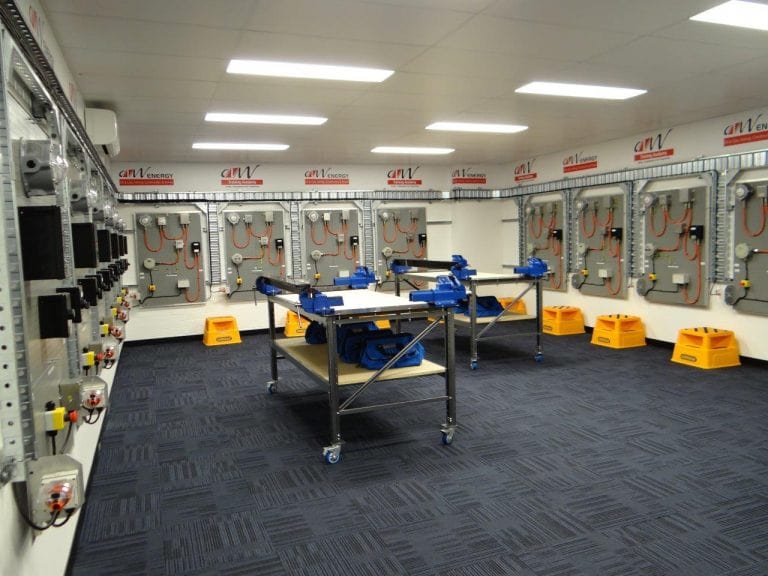
Once you have practised writing up different programs for different switching scenarios and network configurations in the course, you will then be given the opportunity to practically apply that knowledge by carrying it out in our safe and controlled substation.
Coex Training is an Australian based Registered Training Organisation. They offer Nationally Recognised Qualifications and non-accredited courses specifically designed to give students the competencies required to excel in their careers.
With a long history of providing training services to industries such as Resource, Infrastructure, Defence, Manufacturing and Construction, they pride themselves on their dynamic and student-focused courses which have been developed to meet the high expectations of students, employers and industry. Coex training have an extensive portfolio and can provide training across all levels: from general awareness through to Certificate and Diploma level qualifications. Their national scope enables them to tailor their programs to meet the varied needs of organisations and students located across Australia and the globe.
Coex High Voltage Switching Courses
JOINTERS BLOG
Subscribe now to our POWER NEWSLETTER– a monthly email circulation packed with news, projects, videos, technical tips, training information, promotions, webinars, career opportunities and white papers.
Includes access to our popular JOINTERS BLOG with contributions from utility professionals, linesmen and cable jointers working on MV HV EHV cables and overhead lines typically at 11kV, 33kV, 66kV and up to 132kV.
15,000+ Subscribers. ➡
THORNE & DERRICK
T&D are Specialist Distributors to UK Distribution Network Operators (DNO’s), NERS Registered Service Providers, ICP’s and HV Jointing Contractors of an extensive range of LV, MV & HV Jointing, Earthing, Substation & Electrical Eqpt– this includes 11kV/33kV/66kV cable joints, terminations and connectors for both DNO and private network applications.
Contact our UK Power Team for competitive quotations, fast delivery from stock and technical support or training on all LV-HV products.
The following Press Report has been developed byNexans, to introduce the newNexans EuromoldSmart Adapter for Sensor Installation
Kind Permission: Volker Dobeck
Marketing Communication Manager at Nexans Power Accessories Germany
Facilitating sensor installation
in power networks
The network distribution system is facing a rapid complexification on the once slow-paced LV grid.
To meet these new requirements, the distribution system operators will need to implement an accurate mesh of measurement of grid parameters as close as possible to the feeding points, enabling a real-time knowledge of network load and status.
Nexans believes, there is a way of meeting the need of enabling sensor installation closest to the feeding while keeping a simple interoperable approach irrelevant of switchgear, spacing and simplifying retrofitting.
As distribution networks move toward smart, the role of MV HV cable accessories suppliers, including separable connectors, becomes more and more crucial in ensuring a convenient/big-scale deployment of the smart grid.
IT’S EASY TO BE SMART WITH AN INTELLIGENT ADAPTER
The network distribution system is facing a rapid complexification pushed by the multiplication of connection of distributed production systems fueled by ever stronger national and international environmental objectives, causing additional and variable load on the once slow-paced LV Grid.
30/08/2019 – Facilitating Sensor Installation In Power Networks
These multiple connection points, be it delocalized generators such as photovoltaic clusters or punctual high-power rating consumers such as EV charging stations, have a local and adverse effect on grid stability, which renders a static load-managed grid design at best very costly, at worst very unreliable. Local authorities are not oblivious to the challenge that this new configuration will mean to the end consumer, as the requirements on quality of service and power feed-in control, as set out in the revised connection code of practice VDE-AR-N 4105. To meet these new requirements, the distribution system operators (DSO) will need to implement an accurate mesh of measurement of grid parameters as close as possible to the feeding points, enabling a real-time knowledge of network load and status.
Thankfully the recent years have seen a steady development of medium voltage low power sensors, which can be easily integrated into the network to supplement the traditional measurement transformers fixed in the substations. But is it really that easy?
A Headache in Perspective
Well, the answer is mitigated and can cause a lot of grey hairs to networks planners.
Indeed, the auxiliary plug-in voltage and current sensors offer a versatile solution to make almost any existing or new network smarter. But on the other hand, the grey areas in normalization have generated a wealth of solutions that are not always interoperable and can be troublesome to select.
Each link of the chain is well defined with regards to its own respective function – passive sensors have to comply to the instrument transformer standards IEC 61869, and power accessories have to comply to the HD 629 standard – but no standardization has been set forth to ensure that sensors and power accessories fit together. And so, planning of installation or retrofitting of equipment is very burdensome as each time every single parameter has to be fully checked in terms of:
Type of Switchgear:
AIS and GIS switchgears require different type of accessories, smart connector or termination, and thus different model of sensors
Sensor Interface:
Each accessory manufacturer can design its own interface for the piggyback connection, and thus a different model of sensorsSpace requirements:
Each switchgear has its own design of connecting bay, thus not any type of sensor/connector assembly will fit
Retrofitability:
Adding sensors to existing installation will require different installation conditions which have to be verified beforehand
All these pitfalls combined are the sure promise for a lasting headache and “open-heart surgery” on each substation as can be guessed.
A welcome relief for sensor installation
So, is there no other solution than Aspirin?
Nexans believes there is a way of meeting the need of enabling sensor installation closest to the feeding while keeping a simple interoperable approach irrelevant of switchgear, spacing and simplifying retrofitting.
This is achieved by moving the low power transformer measuring point outside of the switchgear and onto the transformer bushing by using a Smart Adapter pre-fitted with the required sensors (fig. 1).
Fig. 1: Smart Adapter KAA4/8 by Nexans EUROMOLD®
In this configuration, most of the complexity is gone (fig. 2).
Fig. 2: Connector arrangement on transformer bushing with cable outlet
One for all
On top of the transformer spacing is less of a worry, and the bushing interface is well defined.
The type of accessory or switchgear is no longer relevant.
There are no reworks needed for retrofitting, the adapted simple comes plug & play in between the existing accessory and bushing.
All for one
Any brand of sensor can be pre-fitted inside the adapter in factory.
The easy access to the interface allows for easy cabling and flexibility on site during installation.
Future Proof
Who knows what the future holds?
Although today the urgent needs call for network automation and power flow control, having an easy accessible and maintainable sensor array in the grid will enable for the digital revolution of the distribution nodes to come, with big data preventive maintenance applications, intelligent load management and other advanced network healing functions.
About Nexans
Nexans brings energy to life through an extensive range of advanced cabling systems, solutions and innovative services. For over 120 years, Nexans has been providing customers with cutting-edge cabling infrastructure for power and data transmission.
Today, beyond cables, the Group advises customers and designs solutions and services that maximize performance and efficiency of their projects in four main business areas: Building & Territories (including utilities, e-mobility), High Voltage & Projects (covering offshore wind farms, submarine interconnections, land high voltage), Telecom & Data (covering data transmission, telecom networks, hyperscale data centers, LAN) and Industry & Solutions (including renewables, transportation, Oil & Gas, automation and others).
Corporate Social Responsibility is a guiding principle of Nexans’ business activities and internal practices. In 2013 Nexans became the first cable provider to create a Foundation supporting sustainable initiatives bringing access to energy to disadvantaged communities worldwide. The Group’s commitment to developing ethical, sustainable and high-quality cables also drives its active involvement within leading industry associations, including Europacable, the NEMA, ICF or CIGRE to mention a few.
Nexans employs nearly 27,000 people with industrial footprint in 34 countries and commercial activities worldwide. In 2018, the Group generated 6.5 billion euros in sales. Nexans is listed on Euronext Paris, compartment A.
Nexans Power Accessories is the leading European specialised innovator, manufacturer and distributor of low, medium and high voltage accessories as well as connection technology for energy transmission and distribution networks. Longtime know-how and technological advance in cable connection systems was successfully transferred into high voltage applications.
Nexans Power Accessories provide a complete range of slip-on and cold-shrinkable accessories, e.g. premoulded EPDM rubber connectors and silicone terminations, epoxy bushings for transformers and switchgears and joints for power cables up to 170kV. For the international wind industry Nexans also develops and manufactures ready-to-install pre-assembled cable lengths and customized and factory tested cable bridges. An extensive range of additional equipment and a variety of dedicated installation trainings make Nexans a strong partner in the transmission and distribution of wind energy.
Two Times More Power. Jointers! Empower your CV and skill-set by grasping the 66kV Jointer Training opportunity. Jointers must currently be 33kV Competent and experienced to be ready to undertake the step-up to 66kV from 33kV.
Thorne & Derrick
Nexans Main UK Stockist & Distributor
Contact us for Competitive Prices & Fast Delivery from Stocks for Heat Shrink, Cold Shrink & EPDM Rubber Connectors, Joints & Terminations up to 66kV.
Thorne & Derrick International are specialist distributors of LV, MV & HV Cable Accessories, Jointing, Substation & Electrical Equipment – servicing UK and global businesses involved in cable installations, jointing, substation, overhead line and electrical construction at LV, 11kV, 33kV, 66kV and EHV.
Nexans Power Cable Accessories For Wind Energy Projects
by Chris Dodds T&D - estimated reading time 5 minutes
Nexans Offshore Junction Cabinet (OJC)
Offshore MV Junction Cabinets (Medium Voltage Up To 42kV)
T&D are UK Distributors for Nexans Power Accessories – this includesa range of medium and high voltage accessories including cable joints, terminations and connectors suitable for wind turbines on offshore and onshore energy projects.
Nexans Offshore Junction Cabinets (OJC) are designed to improve revenue streams for offshore wind power developments – the offshore junction cabinets are used as a disconnecting point for internal tower cable to external subsea array cables.
This can be used as a demarcation point between tower, transition piece and array cable related parties – Nexans OJC junction cable chambers are used as a connecting point for internal tower cable to external subsea arrays cables.
Nexans OJC can provide a convenient test point and can help with the earlier generation of power to help create revenue sooner.
The marine grade stainless steel cabinets is specifically suitable to be installed in severe offshore conditions.
The split cable gland plates allow to use pre-terminated and tested jumpers, reducing the installation time and increasing the quality of the cable installation.
Up to 42 kV
1250 A
Robust design with IP66 degree of protection (BS EN 60529:1992).
Short circuit tested acc. to DIN VDE 0278-626-1(HD 629.1 S2:2006 + A1:2008): 2009-07: Thermal short-circuit 25kA/1s, Dynamic short-circuit 62.5 kA.
➡ There are also 33kV onshore junction cabinets known as Nexans ONJC-S that are designed, tested and manufactured for onshore renewable projects that can be used as a disconnecting point for branching between grid and applications – for applications with MV-HV separable connectors up to 42kV (630A) according to CENELEC HD 629.1 S2.
Also: 33kV Cabinets Onshore
Nexans OJC Benefits
Medium/High Voltage MV HV Cable Cabinets
Suitable to be installed in the severe conditions of the transition piece prior to installation of the tower
Simplified interface management, clear division of responsibility
The chamber design is specifically suitable to be installed in the transition piece of the tower
High accessibility for ease of installation
Ideal test and demarcation point
Possible use of pre-terminated and tested jumpers to tower equipment
Time saving
Distance involved between hang off and switchgear mean time/cost offshore for cable preparation
Pre-terminated MV HV cable leads also saves space/complexity
Prepared and tested onshore, ready to plug and play
Project critical path activity, no delays for installer
Efficiency of operation which can be highly beneficial for planning the installation of the collector cables from the array, thus creating additional potential cost benefit
Accommodation offshore on the OSS maybe limited
REDUCTION OF INSTALLATION TIME (30%)
Nexans OJC Offshore Cabinets/Junctions
Nexans Power Accessories have studied the installation of subsea array cables in the offshore towers and have developed a system that gives the developer and installer certain advantages over other medium/high voltage cable connection methods.
By employing pre-terminated cable leads that utilise less expensive flexible cables, a developer may save money and an installer can save time on the preparation and testing of the medium voltage cable link between the MV transformer to MV switchgear and/or MV switchgear to the array cable.
By using a cable termination point near to the hang-off rather than taking the array cable directly to the equipment, an installer may also save time on the preparation of the array cable and spend less time in the tower dealing with the inconvenience of stripping longer lengths of arrays.
This results in less reliance on the weather giving a cost saving to the developer due to the implications of the waiting on weather charges as more work can be done onshore preparing and testing the equipment.
By saving time on the installation offshore, this would in our opinion, give an earlier completion date and thereby earning the developer revenue sooner.
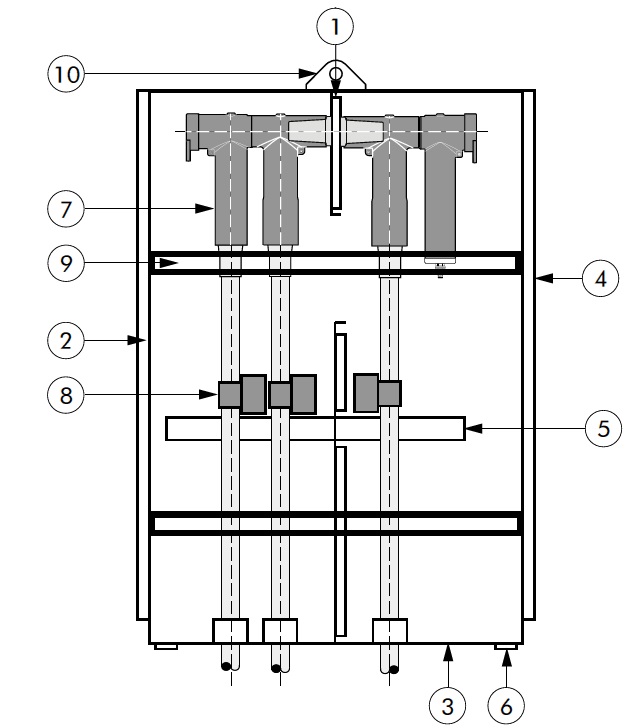
Aluminium bushing support plate to feed through switchgear/transformer bushings
Access panel for 2 array cable connections
Split cable gland plate incorporating 9 feed through sealed glands
Access panel for turbine connection
Earth bar on insulated standoffs
Cabinet secured by 4 x M16 internal base fixings
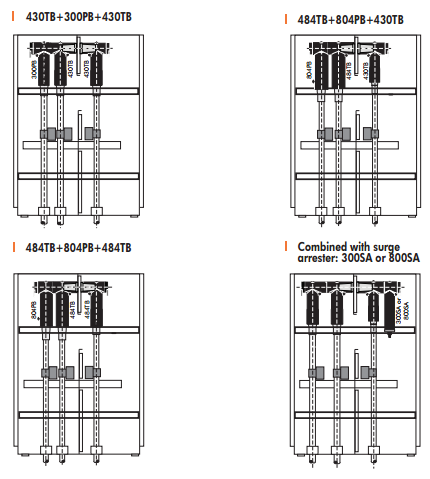
Different cable connectors and surge arrester combinations are possible
Cable cleats arrangement for 9 single core high voltage cables
Channels for mounting external accessories
Lifting eyes
Nexans Junction Cabinets & Separable Connectors – Possible Arrangements
Extension to larger cable sizes and additional array cables possible.
Junction cabinet can be equipped with different connector combinations.
Spare room at turbine connection to add surge arresters to protect tower equipment from high voltage surges.
Pre-terminated and tested jumpers to connect junction cabinet with tower equipment.
Offshore Junction Chamber Type
Voltage Um (kV)
Outer dimensions of chamber (w x d x h)(mm)
Fixing points
Conductor sizes (sqmm)
min
max
Nexans OJC1
42
600 x 800 x 1125
4 x M16
50
630
Thorne & Derrick
Thorne & Derrick are national distributors of LV, MV & HV Cable Installation, Jointing, Substation & Electrical Equipment – servicing businesses involved in cabling, jointing, substation, earthing, overhead line and electrical construction at LV, 11kV, 33kV, 66kV and EHV. Supplying a complete range of power cable accessories to support the installation and maintenance of low/medium and high voltage voltage power systems:
uploaded by Chris Dodds | Thorne & Derrick Sales Marketing Manager
Thorne & Derrick, UK Specialist Distributors of LV MV HV Jointing, Earthing, Substation & Electrical Eqpt, are delighted to be able to provide the following excellent Guest Blog and commentary geared towards reducing cable failure rates caused by poor workmanship and sub-standard MV cable preparation.
Critically, the article focuses on the importance of precise and careful treatment of the semiconductor screenon medium voltage power cables by the jointer or cable splicer. This insulation screen, is the semi-conductive layer of the medium/high voltage cable and provides a homogeneous even distribution of the electric field between the external insulation and metallic screen on the MV cable.
Typically, the insulation screen can be fully bonded or easy-strippable. The removal of the insulation screen is the most critical step during the cable preparation process and the the use of the correct jointing tools by a Competent Jointercan extend the service life of power cable systems and underground distribution networks.
Incorrect or sub-standard cable preparation is the primary cause for the failure of medium/high (MV-HV) cable accessories including joints, terminations and connectors.
By: Ben Lanz – Director, Applications Engineering at IMCORP
Witness the excellent square radial cut to the semicon layer of the power cable (arrow) in the photograph below.
Pictured: Square Semicon Screen Cut On Medium Voltage Cables – the semicon cable screen was removed using Speed Systems Screen Scoring Tools. MV cable type is ICEA 35kV strippable insulation shield design.
Square Semicon Screen Cut On Medium Voltage Cables
To File, Or To Sand?
Neither.
IMCORP, providers of diagnostic services for medium and high voltage power cable systems, have just finished an Accessory Performance Consultationfor a critical generation facility.
Expert cable condition analysis and power cable life cycle consulting services provided by IMCORP can prevent any systemic semicon cutback issues when a Factory Grade(R) site commissioning assessment is provided. This can prevent multiple costly cable system failures on medium voltage power systems.
Unfortunately, there was some ‘pick off ‘ (circle) that required some light localised sanding by the cable splicer.
This is how IMCORP remove cable failure producing defects andeliminate future O&M through Factory Grade(R) Certification and quality control assessment enabling a predicted 100 year life cycle of the cables.
In the UK it is normal to smooth-out the step down on the screen cut from the primary XLPE insulation using a rat tail file or aluminium oxide abrasive paper for sanding.
However international standards and jointer preferences vary on the subject.
Ben comments, “this semicon cut back was made for an IEEE 386 35kV separable connector which has a built in square step in the stress cone cable adapter that ideally needs to interface with a square semicon step made with a semi con scoring tool on a ICEA type strippable insulation shield. If the cable jointer bevels the edge it would require significantly more void filling grease which can be a risk factor for substandard performance in this type of medium voltage cable installation. We have a factory comparable partial discharge test for the field that we have used to test tens of thousands of these types of separable connector terminations. I can assure you that this technique in conjunction with installing the rest of the cable termination correctly will far surpasses the manufacturer’s PD performance expectations.”
♦ IEEE 386 Standard for Separable Insulated Connector Systems for Power Distribution Systems Rated 2.5kV through 35kV – IEEE 386 Standard covers the definitions, service conditions, ratings, interchangeable construction features and tests established for loadbreak and deadbreak separable insulated connector systems for use on power distribution systems rated 2.5kV through 35kV and 900A.
Removal of Semiconductor “Pick Off” On Medium Voltage Cables
Regarding the removal of the semicon ‘pick off’ contaminant from the MV cable which is circled in the picture, Ben recommended the following.
“At 35kV we recommend using a little 120 grit aluminium oxide sandpaper, but only at the location of the contaminant with a small circular motion at the tip of the thumb.”
“We never recommend sanding at this voltage class with a strippable insulation shield unless the cable cleaner will not remove the contamination,” adds Ben.
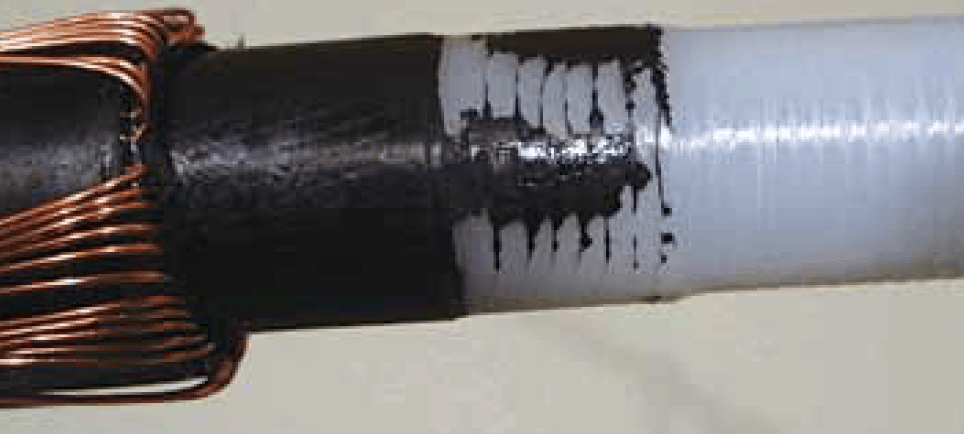
Here, the semi conductive layer has been left on the 11kV XLPE insulation which can cause surface tracking and eventual flash over.
The below cable preparation images clearly shows the straight and clean cut to the black semicon screen stepping down onto the 11kV cable insulation (XLPE) – here a constant force spring provides a straight edge for copper tape screen on the 11kV cable before installing the cable termination.
Image: David Baldock (HV Cable Jointer) – the insulation screen transition is perfectly smooth and clean achieved by a straight final cut.
The F Word
FAILURE– cable failures are disruptive and dangerous, but also avoidable.
Not all, but some.
Whatever your currency the financial cost of cable failure is overshadowed by the immeasurable cost inflicted in terms of loss of reputation.
Tony Haggis (Director at Tony Haggis Consulting Ltd) with 46 years experience in electricity distribution up to 132kV provided some professional insight.
“It looks like a very carefully executed screen cut and a nice neat job. However, one problem that occurs with this method is that the screen can lift slightly off the insulation when the upper part or the medium voltage cable screen is torn off at the depth cut. This results in a small void under the screen which can result in partial discharge.”
“In EoN Central Networks, we identified this as a root cause of MV cable failures after microscopic inspection. We changed the semicon screen cut method to using a small round file to make a circumferential groove at the screen off position which just exposed the white insulation below.”
Tony continues, “when the cable screen was pulled off there then was no danger of lifting the remaining screen. The result was a tapered transition on the screen. This eliminated failures due to discharge at the screen off position. Eventually, we moved to bonded screen and top quality bonded screen stripping tools which again provide a reliable screen off cut but more easily and quickly. Bonded screen was also lower cost than strippable.”
Delamination & PD
Ben replied on the issue of MV cable failures, “we taught the class how to remove the semicon while minimising the likelihood of delamination and the how to inspect for this issue. Fortunately, we will not have to guess if they followed our recommendations. The owner requires a third party factory comparable PD test (offline 50/60Hz PD test with better than 5pC sensitivity) on 100% of the installations and the installer is on the hook for repairs and retests. This is becoming the new standard for QA/QC!”
Tools Of The Trade
The new Alroc CWB/18-60-MVS cable jointers tool, with “stop” included, removes both the bonded semi-conducting screen without requiring lubrication while also creating a chamfer in a clean and reliable cable preparation process.
Here the cable jointer demonstrates the ease of simplicity of removing bonded semiconductor screen layer from 11kV Triplex cables with 300sqmm stranded copper conductor and XLPE insulation prior to terminating into medium voltage switchgear. The Ripley US02 is set at 1mm during this cable preparation process.
Cable accessories are only reliable if installed in accordance with the manufacturers jointing instructions and recommended cable stripping dimensions.
Precision engineered cable jointing tools are an essential part of the MV-HV jointers toolbox ensuring the accurate removal of cable sheaths, insulation and semicon screens on MV-HV cables.
Ben goes on to explain, “I agree that the semicon cutback is the most critical part of the cable termination and I agree that a smooth transition (chamfer or slope) is better than a step if the termination design has a smooth interface. However, this cut back was made for an IEEE 386 35kV separable connector as referenced above.”
However, jointers tools alone without the knowledge, expertise and skill of a Competent Jointer to use them are not worth diddly squat.
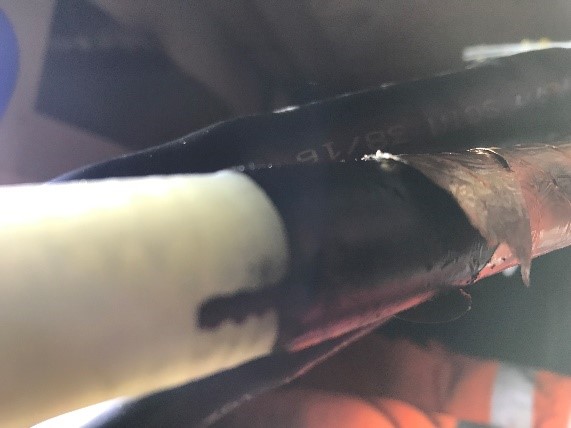
For instance the photograph below highlights the problem of unskilled labour, even if equipped with the correct cable jointing tools, inflicting catastrophic damage to MV-HV power systems through lack of training, experience and understanding of the criticality of semicon cutback.
Non-radial, rough and jagged semicon screens with protuding points at the cutback will cause cable termination or joint failure. Outage. Blackout.
Ben’s Bio
Ben Lanz
Ben Lanz is Director of Applications Engineeringat IMCORP USA and has expert technical oversight of power cable life cycle consulting (5kV-500kV).
Ben has published several technical papers on power system reliability, asset management, diagnostics and regularly presents on the topics. He is a Senior Member of the IEEE Power & Energy Society, a voting member of the IEEE Standards Society, and a member of the IEEE Dielectrics and Industrial Applications Societies. He has served as Chairman of the Insulated Conductors Committee (ICC) technical committees responsible for cable testing, cable reliability and surge arresters.
Who Are IMCORP?
IMCORP is the leading provider of power cable reliability assessment services for medium and high voltage (5kV to 500kV) power cable systems for both aged and new cable installations. Our Factory Grade® assessment is non-destructive, requires no hazardous materials, and is a cost-effective alternative to cable replacement. We identify the precise cable system Rehabilitation requirements, allowing the customer to Certify their cable systems to like-new condition. MV HV Power Cable System Reliability Solutions by IMCORP
Thorne & Derrick are national distributors of LV, MV & HV Cable Installation, Jointing, Substation & Electrical Equipment – servicing businesses involved in cabling, jointing, substation, earthing, overhead line and electrical construction at LV, 11kV, 33kV, 66kV and EHV. Supplying a complete range of power cable accessories to support the installation and maintenance of low/medium and high voltage voltage power systems:
SSE plc is involved in the generation, transmission, distribution and supply of electricity – with responsibility for 130,000 kilometres of overhead lines and underground cables plus 106,000 substations. The selection of Nexans Euromold cable connection products confirms their unrivalled reliability and performance track record for supporting the distribution of medium voltage electricity.
33kV Outer Cone Terminations
TG-NET-CAB-411 Review Date: November 2024
Extracted from SSE Joints and Accessories Catalogue for Cable Systems up to and including 33kV.
The Outer Cone Terminations that are Technically Approved are available in 2 types:C Type Interfaceand E Type Interface.
The Cable Termination Guide for Distribution Plant up to 33kV; TG-NET-CAB-425 will detail the type of Outer Cone terminations required for 33kV Switchgear and Ground Mounted Transformers.
33kV Outer Cone Terminations – C Type
SSEN Stock Number
Description of Item
Manufacturer Reference
Class 1 = 630A – Set of 3
022370
95 – 240 mm² Interface C Tee Connector
3X(M480TB/G-27-95.240-14.5 CW)
990042
300 mm² Interface C Tee Connector
3X(M480TB/G-30-120.300-14.5 CW)
Class 2 = 1250A – Set of 3
990043
400 – 500 mm² Interface C Tee Connector
3X(M484TB/G-37-400.630-14.5 CW)
990044
630mm² Interface C Tee Connector
3X(M484TB/G-43-400.630-14.5 CW)
990120
Test Rod Kit for C-Type Tee-Boot Separable Connectors (Set of 3)
800TR
33kV Outer Cone Terminations – E Type
SSEN Stock Number
Description of Item
Manufacturer Reference
1250A – Set of 3
022012
95 – 240 mm² Interface E Tee Connector
3X(M784TB/G-27-95.240-14.5 CW)
022201
300 mm² Interface E Tee Connector
3X(M784TB/G-32-120.300-14.5 CW)
022204
400 – 500 mm² Interface E Tee Connector
3X(M784TB/G-37-400.630-14.5 CW)
022141
630mm² Interface E Tee Connector
3X(M784TB/G-43-400.630-14.5 CW)
022041
33kV Dead End Plug
750BIP
Nexans Power Accessories manufacture Cable Connectors, Joints & Terminations for medium/high voltage cable networks up to 66kV in EPDM, cold-applied and heat shrink technology – their world-class UK Jointer Trainer Centre champions and promotes installer Competency through the delivery of tailored training courses to suit your requirements.
Contact us for Competitive Prices & Fast Delivery from Stocks for Heat Shrink, Cold Shrink & EPDM Rubber Connectors, Joints & Terminations up to 66kV.
Go to our Price List and contact us with your enquiries.
Heat Shrink Cable Accessories for 11kV Triplex Cables
Thorne & Derrick International are specialist distributors of LV, MV & HV Cable Accessories, Jointing, Substation & Electrical Equipment – servicing UK and global businesses involved in cable installations, jointing, substation, overhead line and electrical construction at LV, 11kV, 33kV, 66kV and EHV.