Electrical Safety
Safe & Secure Locking Systems For Explosive Atmospheres In The Rail & Utility Industries
October 11th, 2019
-
uploaded by Chris Dodds | Thorne & Derrick Sales Marketing Manager
Battery Rooms
Thorne & Derrick International, based in the UK, recently signed a Sole UK Distributor Agreement with regional exclusivity to the North East of England for the SecurEx range of ATEX & IECEx Certified access control and security products – these high security locking systems are specified to provide asset security against vandalism, theft and damage in hot-spot crime areas and workplace locations with potentially explosive atmospheres.
High Security, High Risk
Door Locking & Security Systems
Due to a recent spike in criminal activity on the UK rail industry there has been an urgent requirement to improve security and protection to critical sections of railway stations and infrastructure – this includes main battery rooms categorised as CNI sites.
The site is both a Critical National Infrastructure security risk with a potential explosive atmosphere risk due to the dangers of venting battery gas presenting flammable risks.
According to the ATEX Directive this location is categorised as a Zone 1 hazardous area location due to the incidence and duration of a flammable gas atmosphere likely to occur occasionally in normal operation. This could occur in the battery room because of repair, maintenance operations, or leakage as well as deliberate criminal intent.
61,000 crimes were reported on the UK Rail Network in 20187-2018 – 9% of criminal damage was attributed to Malicious Mischief, f1.
Obviously, this is a high security area requiring high security hazardous area doors and locking systems.
To combat crime and ensure site safety a Sx Ex Abryll in a SATE handle escape with LPCB Level 4 configuration was supplied – the lock was fitted to an Abloy High Security Steel door.
This lock is the only high security lock with ATEX & IECEx certification.
Product Information ➡ High Security Locks for Zone 1 ATEX Battery Rooms
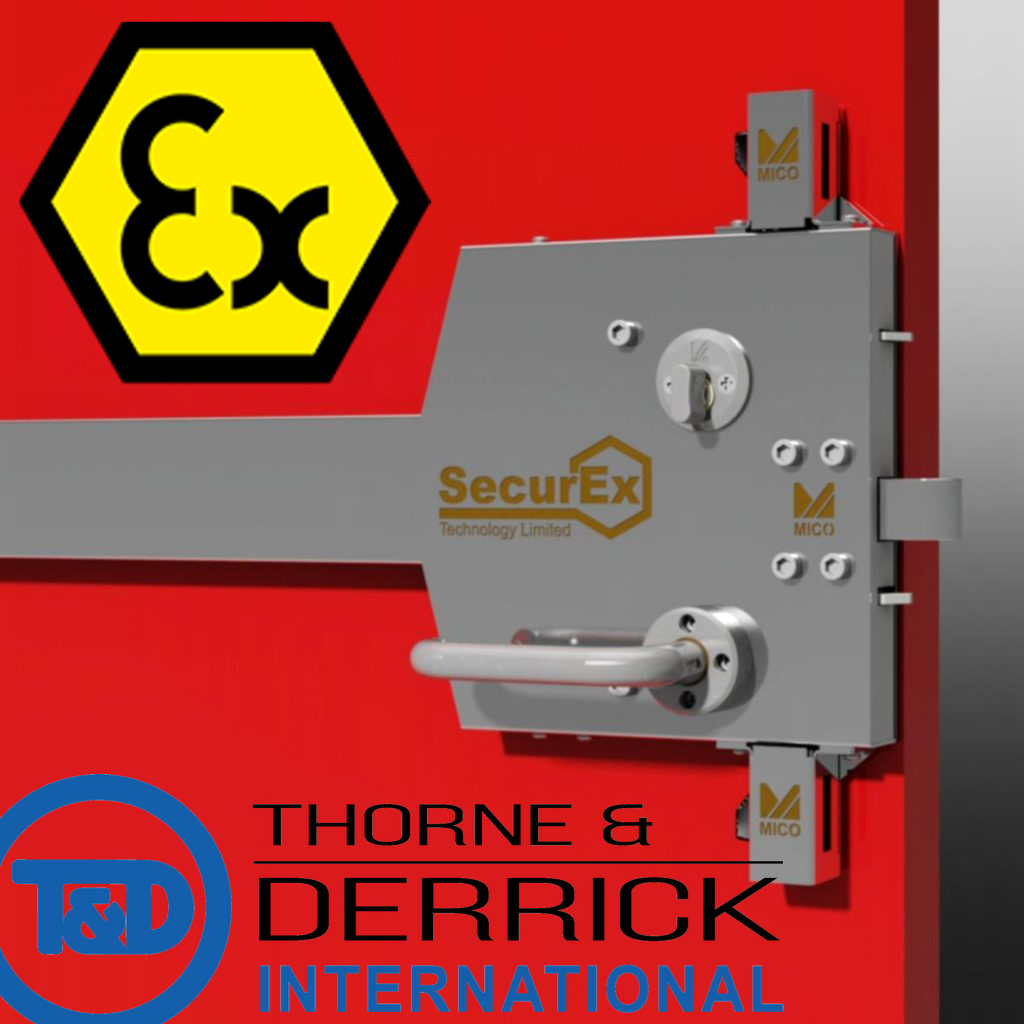
SX EX ABRYLL High Security Lock: Single Point Locking System can be configured with a multitude of functions including Panic and Emergency Escape, Mechanical and Electro-Mechanical Deadlocking. Certified for Ex Zones 1, 2, 21 and 22 hazardous areas.

Glossary
CNI: Critical National Infrastructure – national Infrastructure are those facilities, systems, sites, information, people, networks and processes, necessary for a country to function and upon which daily life depends. In the UK, there are 13 national infrastructure sectors including Transport.
ATEX: ATmosphères EXplosives – the ATEX directive consists of two EU directives describing what equipment and work space is allowed in an environment with an explosive atmosphere.
LPCB: Loss Prevention Certification Board – the leading international Certification Body in the fields of security and fire protection.
f1 Source Williams Rail Review – the Williams Rail Review was established in September 2018 to look at the structure of the whole rail industry and the way passenger rail services are delivered. The review will make recommendations for reform that prioritise passengers’ and taxpayers’ interests.
Further Reading
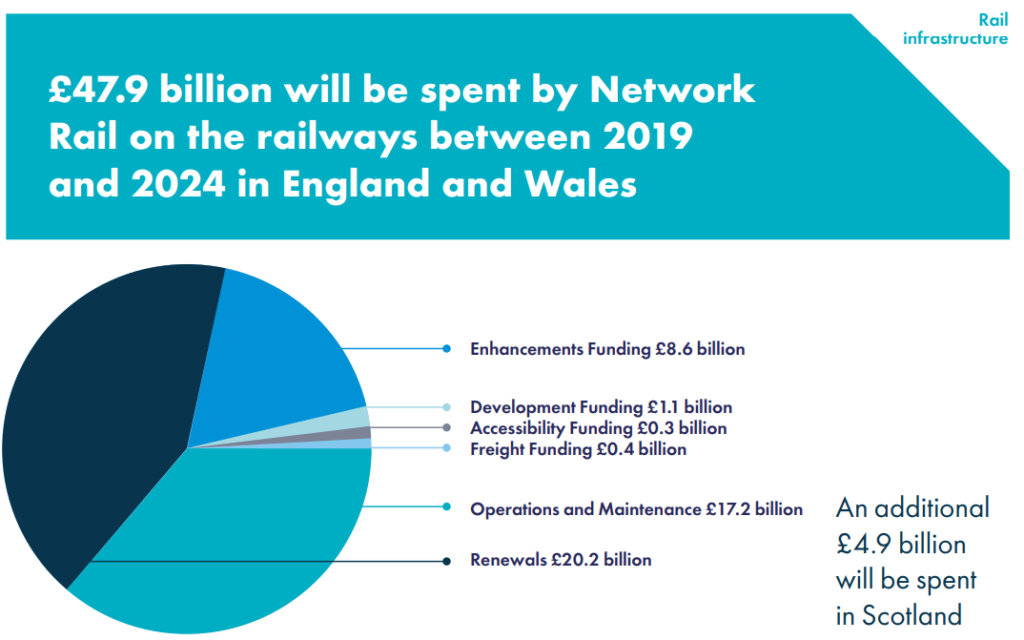
Credit: Williams Report

Rail Cable Accessories, Electrification & Installation Equipment
Thorne & Derrick stock an extensive range of 400V-33kV Rail Cable Accessories & Power Distribution Sytems including feeder pillars to contractors undertaking Low Voltage Power Distribution, HV Electrification & Substations, DC Traction & Networks, OLE and Track Feeder Cable Renewals – complete range of Network Rail PADS approved track terminations, cable joints, cable repair and connection products up to 25kV, including 3M Cold Shrink, Pfisterer CONNEX and Nexans Euromold products.
Full range of Cable Pulling Equipment & Products to ensure safe and efficient of rail cables in to cable ducts and containment infrastructure including cable troughs.
Thorne & Derrick are Approved Vendors to Network Rail and TfL.

VeriSafe AVT by Panduit | Safe & Sure Electrical Isolation
October 7th, 2019
Verisafe AVT: An Article by Panduit
Idea to Innovation: Inventions that Move the Industry
From the first product, a panel conduit that led to the name Panduit, we understood our engineers are the gateway to success and need free reign to investigate and innovate.
This is one of their stories.
 VeriSafe AVT: The Proof That the Power is Off – Story
Safety is everything.
So, be sure the power is off before you open electrical equipment and start handling wiring matters.
But how can you be safe and be sure the circuit is de-energized?
What if the only acceptable method is a complex testing process that potentially exposes you to the very danger you’re trying to avoid?
Here’s a story of how a team of engineers with fresh thinking and years in the lab resulted in an entirely new product – theabsence of voltage testers (AVTs) – and positive proof the power is off.
How To Test Voltage Using the Verisafe AVT
- Electrically isolate and lock or tag out the equipment you want to work on
- Put on appropriate Personal Protective Equipment (PPE)
- Test a hand-held meter on a known-live circuit to make sure it’s working
- Test for absence of voltage in the isolated equipment, both phase-to-phase and phase-to-ground
- Re-test the hand-held meter on a known-live circuit to confirm it’s still working (so… expose yourself to energised parts twice to make sure there’s no voltage? Yep.)
No Light Doesn’t Mean No Power
To understand why VeriSafe AVT is such a big deal, you have to understand 3 things:
- Contact with electricity is a leading cause of injury and death in the workplace
- Stored energy can remain in a circuit even after it’s shut off
- Hand-held testers require a slow, manual process that’s prone to human error and may expose workers to the very hazard the process is meant to protect them from
You might think a hard-wired voltage indicator would solve the problem – lights out means no power – but you’d be wrong.
Indicators warn when power is on, but no signal doesn’t guarantee that a circuit is de-energised. No light could mean the power is off, but it could also be caused by a faulty indicator or installation problems. How would you know the difference?
That uncertainty is why OSHA never recognised permanently installed voltage indicators and instead relied on the hand-held tester method. But that means in order to prove there’s no voltage in the de-energised circuit you have to expose yourself to a known-live circuit.
The very definition of irony!
Standards Before Sales
Having a new product is one thing.
Getting it accepted by the market is another thing altogether.
The team understood that without an official standard authorising their new absence of voltage tester nobody would adopt it.
So, the first challenge was figuring out how to convince the governing bodies that a new way to test was needed. The team turned to safety workshops with organisations like NFPA and IEEE to gather information about electrical accidents and gauge interest in a new solution.
Armed with accident data and feedback from safety professionals, the team then collaborated with UL to start work on a standard supporting this new, safer methodology.
But knowing inventions (and standards) take time, the team hit the lab and started working out the mechanics of how an AVT could work.
verisafe avt – Now, Safety is Just a Press Away
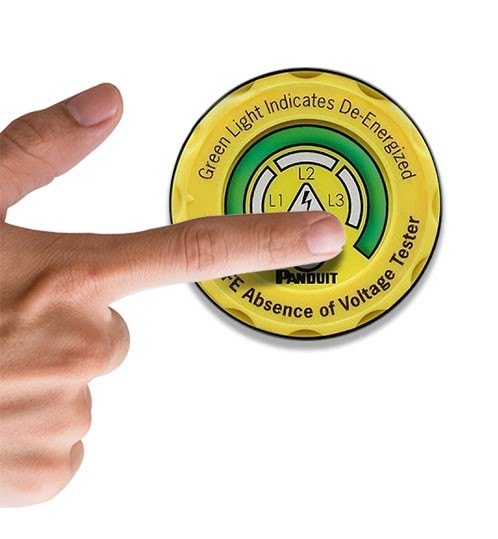
Through years of development and collaboration with industry groups, the team was able to reach proof of concept and eventually create an absence of voltage tester that performed exactly as they hoped. All that was left was for the new AVT product category to be defined in an industry-standard and for the safety requirements to be published.
In 2016, UL published the first-ever AVT safety and listing requirements in UL 1436.
In 2017, the VeriSafe AVT was released and now offers workers an easy, safer way to get positive proof the system is de-energized before accessing or working on electrical equipment.
Now, all it takes is a press of the test button, and a moment to wait for the green light. And, as everybody knows, green means go.

The Power to Provide Positive Proof
With over 60 years of infrastructure experience, our team recognized the need for a safer – and easier – way to verify a circuit is de-energized. The change our engineers had in mind was to eliminate exposure to live circuits – either by accident or during an absence of voltage test. That would mean no more hand-held meters, and no need to interact with known-live circuits as part of the test.
The idea was a self-powered, self-testing, permanently-mounted device that would emulate the traditional handheld testing process, without the need to open cabinets. Being self-powered and capable of testing its own connections, the AVT would be the first of its kind to give positive proof the circuit was de-energized.
Like many breakthroughs, it seems perfectly logical after the fact – why did it take so long?
Thorne & Derrick
T&D are Specialist Distributors to UK Distribution Network Operators (DNO’s), NERS Registered Service Providers, ICP’s and HV Jointing Contractors of an extensive range of LV, MV & HV Jointing, Earthing, Substation & Electrical Equipment – this includes 11kV/33kV/66kV joints, terminations and connectors for both DNO and private network applications.
Contact our UK Power Team for competitive quotations, fast delivery from stock and technical support or training on all LV-HV products.
Key Product Categories: Duct Seals | Cable Cleats | Cable Glands | Electrical Safety | Arc Flash Protection | Cable Jointing Tools | Cable Pulling | Earthing | Feeder Pillars | Cable Joints LV | Joints & Terminations MV HV
➡ Read: Isolate 99.999% Of Electrical Risks With Verisafe From Panduit
10 Important Precautions When Working On Low Voltage Energized Equipment
September 5th, 2019
10 Important Precautions When Working On Low Voltage Energized Equipment (photo credit – pacificsource.net)
With Kind Permission of: Edvard Csanyi (Editor-In-Chief & Electrical Engineer at EEP)
For most work, the electrical equipment must be de-energized because there is a high risk of injury to workers if they work on energized equipment. It may be possible to schedule such work outside of normal work hours to limit the inconvenience.
“Sometimes it is not practicable to completely disconnect low-voltage equipment before working on it.”
For example, it may be necessary to have equipment running in order to test it or fine-tune it. In such cases, the work must be performed by workers who are qualified and authorized to do the work. They must follow written safe work procedures.
You should observe the following important precautions when working on energized equipment, but note that these are not a substitute for proper training and written safe work procedures:
1. Think ahead
Assess all of the risks associated with the task. Plan the whole job in advance so that you can take every precaution, including arranging for help in case of paralyzing shock. Consider the use of a pre-job safety meeting to discuss the job with all workers before starting the work.
2. Know the system
Accurate, up-to-date information should be available to those who work on the system. This means that you should know all equipment installed according to the valid documentation (technical specifications, single line diagrams, wiring diagrams, block schemes etc.).
Be careful, sometimes equipment stated in documentation can differ from the one installed on site – due to the replacing of old (damaged) equipment with the new with similar characteristics.
3. Limit the exposure
Have live parts exposed for as little time as necessary. This does not mean that you should work hastily. Be organized so that the job can be done efficiently.
4. Cover exposed live metal
Use insulating barriers or shields to cover live parts. Plexiglas plates can be useful.
5. Cover grounded metalwork
Grounded metal parts should be covered with insulating material as much as possible. Very important.
To read on further and see the further 5 important precautions when working on low voltage energized equipment please visit Electrical Engineering Portal
Example of Slow Motion Arc Flash 100A Disconnect showing the impact of body position in arc flash. In the video, the door comes off in less than 2 cycles showing that Personal Protective Equipment (PPE) isn’t the only thing to consider when it comes to arc flash. Body position at the point of contact is also important.

Follow EEP – Electrical Engineering Portal
Edvard Csanyi

Electrical engineer, programmer and founder of EEP. Highly specialized for design of LV/MV switchgears and LV high power busbar trunking (<6300A) in power substations, commercial buildings and industry facilities. Professional in AutoCAD programming.
Follow Edvard on LinkedIn here
THORNE & DERRICK
Thorne & Derrick are national distributors of LV, MV & HV Cable Installation, Jointing, Substation & Electrical Equipment – servicing businesses involved in cabling, jointing, substation, earthing, overhead line and electrical construction at LV, 11kV, 33kV, 66kV and EHV. Supplying a complete range of power cable accessories to support the installation and maintenance of low/medium and high voltage power systems:
- Slip-on Cable Terminations
- Cold-shrink Cable Terminations
- Heat-shrink Cable Terminations
- Cable Joints – Heat & Cold-shrink
- Separable Connectors (Euromold)
- Surge Arresters & Switchgear/Transformer Bushings
Key Product Categories: Duct Seals | Cable Cleats | Cable Glands | Electrical Safety | Arc Flash Protection | Cable Jointing Tools | Cable Pulling | Earthing | Feeder Pillars | Cable Joints LV | Joints & Terminations MV HV
Arc Flash | 3 Articles from a High Voltage Specialist
August 1st, 2019
“30,000 Arc Flash Incidents per year” Source: ISHN
Arc Flash Articles
Thorne & Derrick International would like to thank Pat Mynett for allowing us to publish his series of Arc Flash articles – over the course of these articles we have discussed the definitions, dangers, statistics, causes, prevention and protection against arc flash.
Pat is CEO at HV Training and Consulting Pty Ltd and is a High Voltage Specialist.
➡ Read More:
PROGARM THE ARC FLASH SPECIALISTS
ProGARM are the leading UK manufacturer of high quality Arc Flash Clothing, Garments & Workwear – Thorne & Derrick work successfully with them Protecting Lives.
Thorne & Derrick are leading Specialist Distributors & Stockists of LV, MV & HV Cable Installation, Jointing, Substation & Electrical Equipment.

THORNE & DERRICK SPECIALIST ELECTRICAL DISTRIBUTOR
LV ♦ MV ♦ HV
Thorne & Derrick International, based in the UK, distribute the most extensive range of LV, MV & HV Cable Jointing, Terminating, Pulling & Installation Equipment – we service UK and international clients working on underground cables, overhead lines, substations and electrical construction at LV, 11kV, 33kV and EHV transmission and distribution voltages.
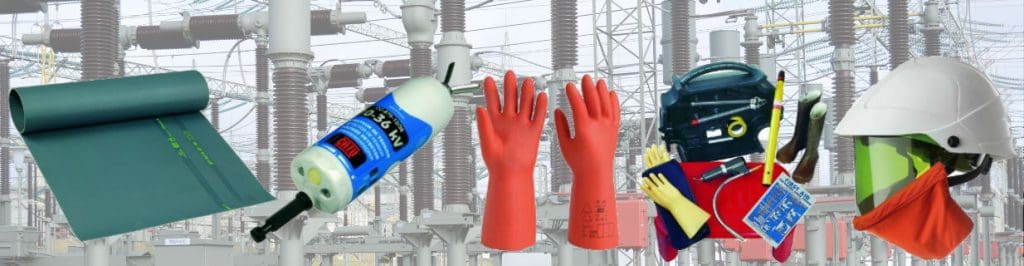
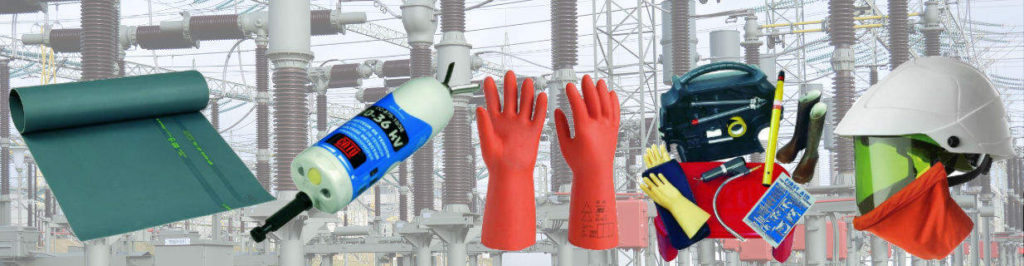
T&D, CATU Electrical Safety & Arc Flash Protection Specialists for SAP’s, Linesmen, Jointers & Electrical Engineers – Largest UK Stockist
INVITATION
Thorne & Derrick invite you to join LinkedIn’s largest LV-HV Electrical Discussion Group : Low & High Voltage Power, Cabling, Jointing & Electricals. Discussion subjects include cable installations, cable jointing, substation, overhead line and electrical construction at LV, 11kV, 33kV and EHV. Network, engage and promote your profile, company or products with over 10,000 influencers.


IEEE 1584 Arc Flash Standard | An Interview with Jim Phillips P.E., MIET
June 25th, 2019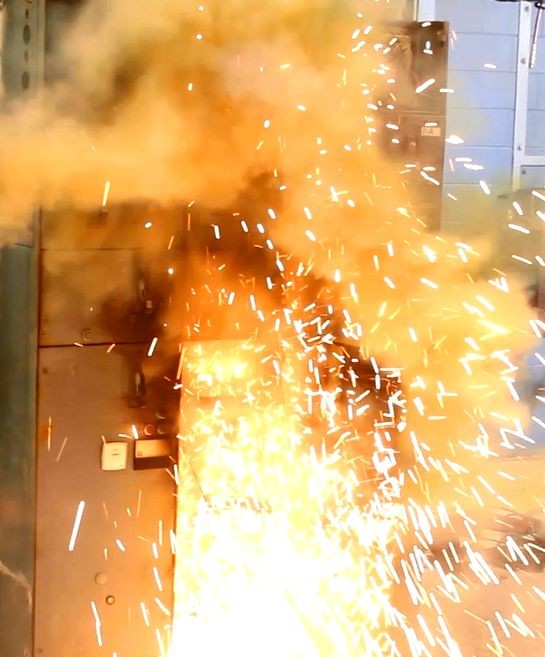
IEEE 1584
Arc Flash Standard
Special thanks to Rebecca Frain CMgr FCMI Tech IOSH (Managing Director – Electrical Safety UK Ltd) for allowing Thorne & Derrick to publish her interview with Jim Phillips regarding the new IEEE 1584 2018 Edition.
What Is IEEE 1584?
IEEE 1584, published by the IEEE Standards Association, is A Guide for Performing Arc-Flash Hazard Calculations.
This guide provides mathematical models for designers and facility operators to apply in determining the arc-flash hazard distance and the incident energy to which workers could be exposed during their work on or near electrical equipment.
By Rebecca Frain
This week I had the opportunity to interview Jim Phillips regarding the new IEEE 1584-2018 Standard and what to expect with some of the new changes. In addition to being Associate Director for Electrical Safety UK and founder of Brainfiler.com, Jim is also Vice-Chair of IEEE 1584 and International Chair of IEC TC 78 – Live Working.
IEEE 1584 – IEEE Guide for Performing Arc Flash Hazard Calculations was first published in 2002 and is the standard that defines the equations and methods used in many of the arc flash software packages used for arc flash risk assessments. The second edition was published towards the end of 2018 and is a real game changer.

RF: A question many of us have is why did it take 16 years to publish the second edition of this standard?
JP: It has been a long journey. The timeline had many phases during this epic project. The first couple of years were spent developing a test plan and raising money from contributors for this enormous (and expensive) project. This was followed by preliminary tests that we call “Scouting Tests” These were used to help define the direction of the entire testing program.
After the preliminary tests, it took several more years for the project team to complete the main arc flash tests and develop the new model. That phase of testing was completed in 2012 and included over 1800 new arc flash tests. Quite an accomplishment. The 2002 edition of the standard was based on around 300 tests.
After the testing and model development phase, the IEEE 1584 working group created a model review task group to review and validate the new model. This took several more years of effort. During that time there was lots of fine tuning to further improve the accuracy. We completed it all in 2016 when it was now time for the formal balloting process. An interesting side note, the new standard passed on the very first ballot – we were all amazed. However, there were also over 1000 comments from the balloters that we had to address. Needless to say, this took some time to resolve. The second edition of this landmark standard was finally published on November 30, 2019
RF: What has changed with the 2018 edition?
JP: (laughs). It’s actually easier to answer the question “What did not change?” The standard still has the same title. With only a few exceptions, just about everything else is very different. This means what you previously knew about the IEEE 1584 standard can be tossed out.
RF: What is the single biggest change?
JP: That one is easy. The introduction of electrode configurations. The 2002 Edition had only two configurations: 1) An arc flash in an enclosure and 2) An arc flash in open air. Both were based on the test electrodes in a vertical configuration.
There are now five different electrode configurations: Vertical electrodes in an enclosure (VCB) and in air (VOA) which are the same as the 2002 standard but we also have horizontal electrodes in an enclosure (HCB) and in air (HOA) and vertical electrodes in an enclosure terminating in an insulating barrier (VCBB). The idea is the new configurations provide greater flexibility for modeling actual equipment.
RF: How does that affect the risk assessment?
JP: Depending on where the arc flash occurs and the type of equipment, the orientation of the electrodes, can affect the trajectory of the plasma and incident energy that reaches the worker. There is some guidance provided in the 2018 Edition of the standard.
RF: I assume there are other big changes?
JP: Yes. There are adjustments for different enclosure sizes. The enclosure size can have quite an effect on the incident energy. If an arc flash occurs in a smaller enclosure, the arc energy is more focused resulting in greater incident energy reaching the worker. If the enclosure is larger, the energy is not as focused and less energy reaches the worker. As a result, the tests included new enclosure sizes and the development of an enclosure size correction factor for the calculations.
RF: Anything else?
JP: The standard now uses interpolation and extrapolation to fine tune the results and provide better accuracy. There is also a new more detailed calculation for determining the minimum arcing current during an arc flash. The past standard simply used a fixed 85 percent value to determine the minimum.
The new equations are much more complex including a thirteenth-degree polynomial with thirteen coefficients that are selected based on the voltage and electrode configuration. (I hope I didn’t scare anyone away with that comment) The good news is the software takes care of the difficult math for us. The list of changes goes on.
RF: How does this all affect the results from previous studies?
JP: I have a series of worksheets that I developed and use to illustrate the calculations and compare with the 2002 edition. Some calculation results are similar to 2002. However, some can be quite different. It has quite a bit to do with the electrode configuration and other factors such as enclosure size.
RF: Does this change way arc rated clothing and PPE is selected?
JP: The overall risk assessment process is the same as before. i.e. Arc rated clothing and PPE are selected with an arc rating sufficient for the calculated incident energy. However, the difference is with the incident energy calculations using IEEE 1584. The calculations and modeling have changed dramatically.
Arc rated protective clothing is based on the standards: IEC 61482-1-1 and IEC 61482-2. There are a few other IEC standards for arc flash protection as well. These standards are from the IEC TC 78 Committee that has a group of highly knowledgeable and talented experts from around the globe all working towards developing and maintaining product standards for greater worker safety.
RF: We are looking forward to hearing more about the 2018 Edition of IEEE 1584 on September 24 at the upcoming International Arc Flash Conference in Manchester.
JP: Thank You Becky! I am looking forward to it. See you soon!

Arc Flash International Conference -Manchester Airport Tuesday 24th September
Company Profile
Electrical Safety UK Ltd
Electrical Safety Management is our core business. We provide expert consultancy and advice for blue chip organisations across Europe concerned with the safe management of risk associated with all electrical work activities. ESUK provide a multi-faceted holistic approach including a full electrical safety management program, project management and policy documentation all bespoke to the client’s requirements including fully accredited and bespoke training courses and personnel assessment programmes.
Here at Electrical Safety UK, our team delivers a range of professional services to customers in a variety of Market sectors. The team prides itself on the quality of the services it delivers to companies at the heart of manufacturing, engineering, energy, food production and education in the UK and Europe.

ESUK Services include:
1 Electrical Safety Management – Specialist consultancy and advice concerned with the safe management of risk associated with all electrical work activities. ESUK offer a multi-faceted approach including a full electrical safety management program, full project management and policy documentation bespoke to a client’s requirements.
2 Electrical System Studies – ESUK are the UK’s foremost exponent of Arc Flash Technology and carry out a wide range of power system studies, including Fault Level Analysis to IEC and ANSI standards, Protection Coordination, and complex Arc Flash Risk Assessments.
3 Training – ESUK offer both accredited and bespoke training courses including City & Guilds, IOSH, Safety Pass Alliance, Energy and Utility Skills. ESUK are also registered with the EEIAS and CIPD for recognition and accreditation of bespoke training courses.
Contact Details
Electrical Safety (UK) Limited
2 Genesis Business Park
Sheffield Road
Rotherham
S60 1DX
Tel: 0800 652 1124
Tel: 01709 961 666
Email: [email protected]
LV, MV & HV Jointing, Earthing, Substation & Electrical Eqpt
Thorne & Derrick International are specialist distributors of LV, MV & HV Cable Installation, Jointing, Duct Sealing, Substation & Electrical Equipment – servicing UK and global businesses involved in cable installations, cable jointing, substation, overhead line and electrical construction at LV, 11kV, 33kV and EHV.
THORNE & DERRICK Product Categories: Duct Seals | Cable Cleats | Cable Glands | Cable Jointing Tools | Cable Pulling | Earthing | Feeder Pillars | Cable Joints LV | Joints & Terminations MV HV