Electrical Safety
June 30th, 2021
Safety Equipment Compliance
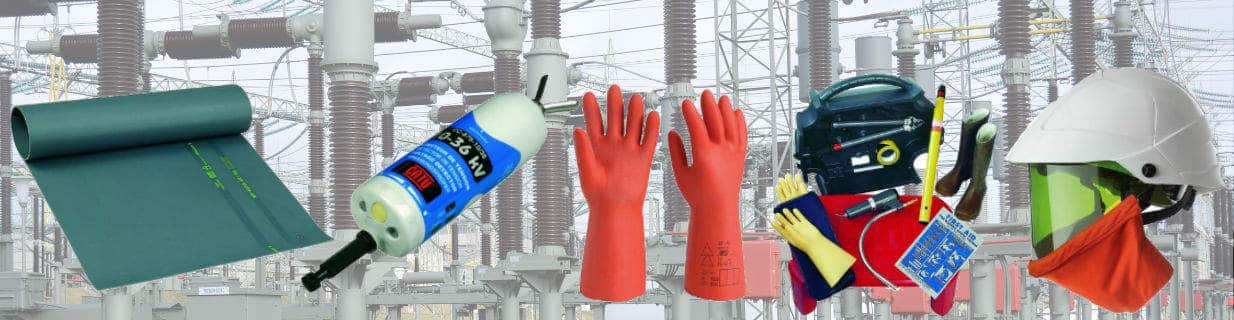
Operator safety depends on the conformity of the electrical safety equipment used during operations (PPE, CPE, Voltage Detector). In case of an accident, the employer may be held liable. Therefore, it is vital that the safety equipment and PPE used in your operations conforms with the correct regulations.
Track And Manage Compliance Of Your Safety Equipment
Safety Equipment REGULATIONS
The personal protective equipment have to be in compliance with the requirements of the European Directive :
- 89/391/CEE, on the introduction of measures to encourage improvements in the safety and health of workers at work.
- 89/655/CEE and 89/656/CEE, on the minimum health and safety requirements for the use by workers of personal protective equipment at the workplace.
- 89/686/CEE, on the approximation of the laws of the Member States relating to personal protective equipment (CE marking).
In practice, they define:
- The protections adapted to the kind of risk,
- The highest level of protection possible,
- The comfort, the ergonomics and the quality of the equipment,
- The annual verification of PPE by a competent individual.
The obligations for using PPEs in companies are defined by
the European Directive 89/656.

A secure Solution
CHECK ME – The all in one solution to track and manage the compliance of your safety equipment.
Your data is stored on secured servers, complying to the GDPR European directive, and all of your information is accessible 24/7 under your subscriber profile.
It’s a Fantastic solution tool for all the control and management challenges we face regarding our Safety Equipment such as PPE, PCE and Voltage detection.
 See full range of Arc Flash Clothing, PPE & Protection Garments

LV, MV & HV Jointing, Earthing, Substation & Electrical Eqpt
Thorne & Derrick International are specialist distributors of LV, MV & HV Cable Installation, Jointing, Duct Sealing, Substation & Electrical Equipment – servicing UK and global businesses involved in cable installations, cable jointing, substation, overhead line and electrical construction at LV, 11kV, 33kV and EHV.

Electrical | Gloves | Arc Flash Clothing | Arc Suits | Coveralls | Helmets & Visors
June 17th, 2021
Thorne & Derrick are working with Coex Training in Australia to promote their Hazardous Area & High Voltage Training Courses.
The following Article has been written by Craig Hagan from Coex Training and re-published with his kind permission. It outlines some of the most asked questions regarding the operation of high voltage equipment and using a switching program.
 Craig Hagan
ELECTRICAL TRAINING SPECIALIST
Job Description: Delivery of High Voltage and Electrical Training courses, specialising in the onsite delivery and integration of High Voltage Training to suit site requirements.

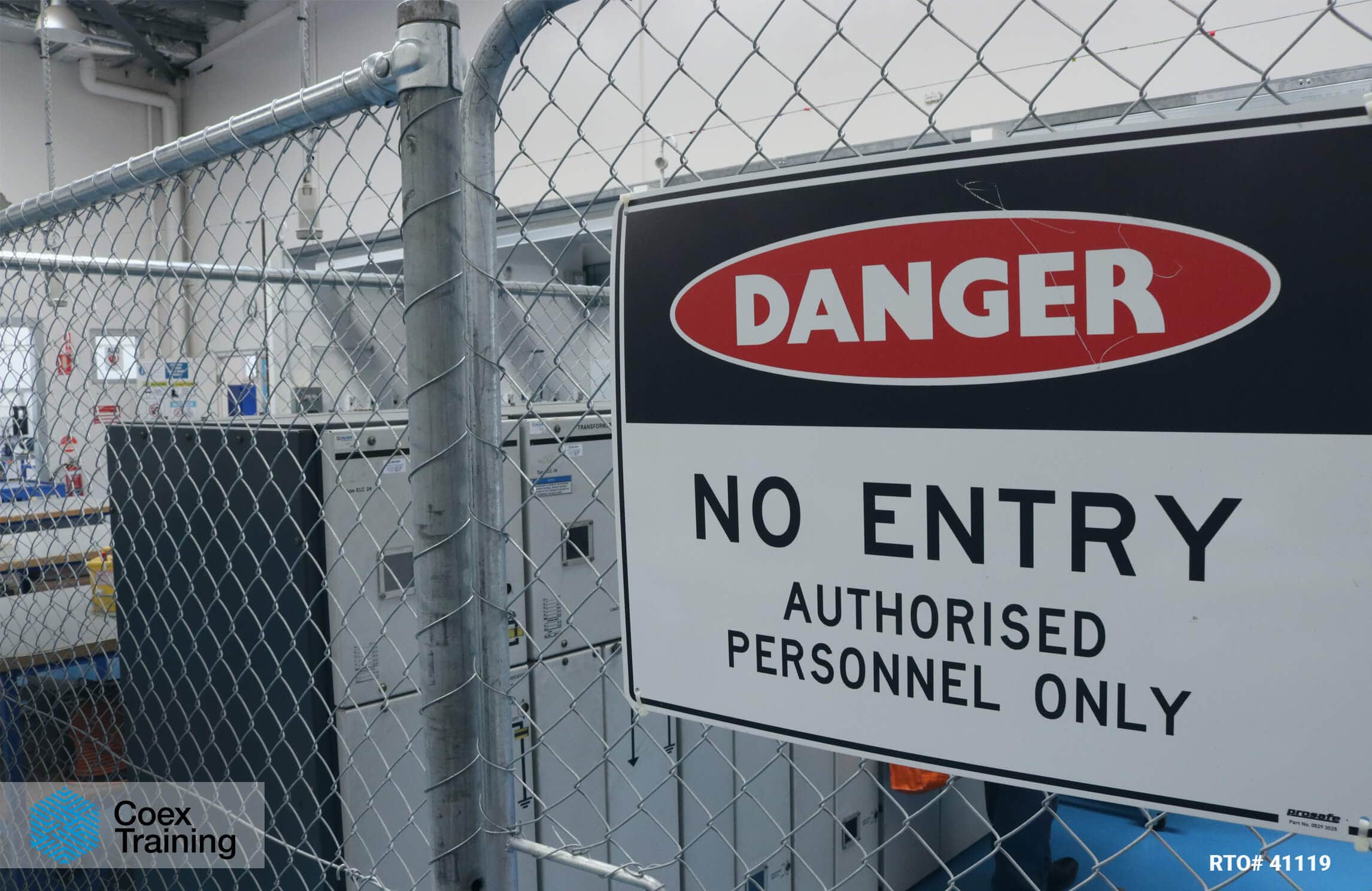
High Voltage Training | Do I Need A Switching Program?
A question I get asked regularly on the high voltage courses is ‘do I need to use a switching program every time I operate high voltage equipment?’
The short answer is no.
The idea of the switching program is to ensure isolation is carried out correctly with minimal chances of accidents. If you’re not accessing high voltage equipment, i.e. no one is going in under your isolation, there is no legal requirement for a switching program.
However, if people are going to access high voltage equipment, for example, a high voltage motor, then if they’re going to change that motor out, they must have access to the motor terminals, then this is high voltage access. Therefore, the isolation must be carried out according to a switching program, then a high voltage access permit will be issued and must be married up to that switching program.
If you were switching to shut an electric motor down, for example, a mechanical fitter can disconnect the gate box, there is no access to the high voltage terminations, then we don’t need to have a high voltage switching program written and used. The isolation can take place by opening a circuit breaker or contactor, making it your isolation point. If high voltage access is required, then you must have the program, it must be racked out and have an earth applied and is to be locked and then an access permit is issued. That’s the difference between the two isolations.
To write a switching program, you must be authorised by your organisation.
In a mine site, this must come from the mine manager in writing, otherwise, if you’re not on a mine site, it must come from a person who oversees the high voltage installation. They will give you the authority to switch and give you access to write switching programs and issue access permits.
Coex Training offers a variety of courses including hazardous area and high voltage training. Check out our course list to see which High Voltage course is right for you.
About Coex Training

Coex Training is an Australian based Registered Training Organisation. They offer Nationally Recognised Qualifications and non-accredited courses specifically designed to give students the competencies required to excel in their careers.
With a long history of providing training services to industries such as Resource, Infrastructure, Defence, Manufacturing and Construction, they pride themselves on their dynamic and student-focused courses which have been developed to meet the high expectations of students, employers and industry. Coex training have an extensive portfolio and can provide training across all levels: from general awareness through to Certificate and Diploma level qualifications. Their national scope enables them to tailor their programs to meet the varied needs of organisations and students located across Australia and the globe.
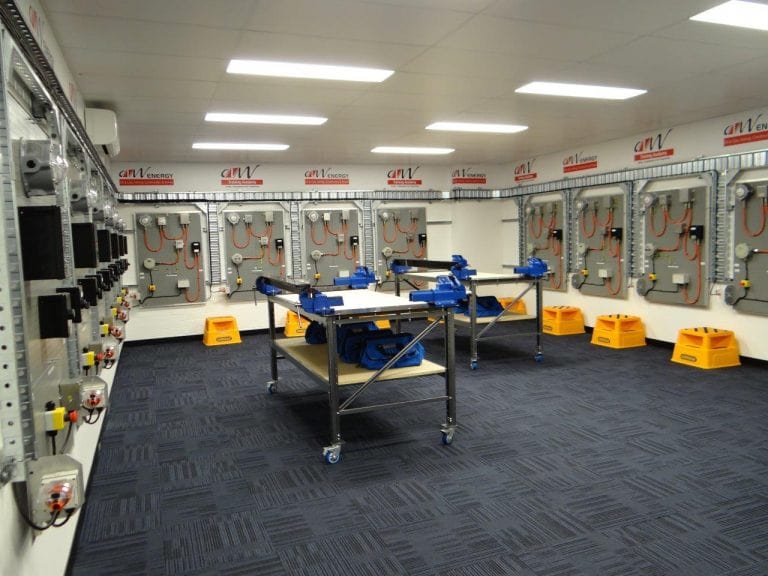
Coex High Voltage Switching Courses
JOINTERS BLOG
Subscribe now to our POWER NEWSLETTER– a monthly email circulation packed with news, projects, videos, technical tips, training information, promotions, webinars, career opportunities and white papers.
Includes access to our popular JOINTERS BLOG with contributions from utility professionals, linesmen and cable jointers working on MV HV EHV cables and overhead lines typically at 11kV, 33kV, 66kV and up to 132kV.
15,000+ Subscribers. ➡
THORNE & DERRICK
T&D are Specialist Distributors to UK Distribution Network Operators (DNO’s), NERS Registered Service Providers, ICP’s and HV Jointing Contractors of an extensive range of LV, MV & HV Jointing, Earthing, Substation & Electrical Eqpt – this includes 11kV/33kV/66kV cable joints, terminations and connectors for both DNO and private network applications.
Contact our UK Power Team for competitive quotations, fast delivery from stock and technical support or training on all LV-HV products.
Key Product Categories: Duct Seals | Cable Cleats | Cable Glands | Electrical Safety | Arc Flash Protection | Cable Jointing Tools | Cable Pulling | Earthing | Feeder Pillars | Cable Joints LV | Joints & Terminations MV HV

May 4th, 2021
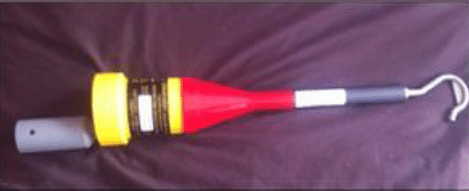
Safety Advice
Live Line Indicator
Action Required Following a Serious Incident
Withdrawal of the Metrohm HVD03/2D live line indicator from use by Network Rail staff.
- Issued to: All Network Rail line managers, safety professionals and accredited contractors
- Ref: NRA20-10
- Date of issue: 14/08/2020
- Location: National
- Contact: Linda Penfold, Professional Head Contact Systems (AC/DC) or Felix Langley, Professional Head of Power Distribution HV/LV
Live Line Indicator Safety Advice
Overview
The Metrohm HVD03/2D (PADs Number 094/007055) live line indicator shall be withdrawn from use by all Network Rail staff from the 14th August. Contractors and third parties are still permitted to use the HVD03/2D after the 14th August 2020 until a future date. Although where alternate live line indicators are available, they shall be used in preference to the HVD03/2D.
Until the HVD03/2D live line indicator have been completely withdrawn, the 3-metre rule will remain in place as in the Safety Advice NRA20-05. For devices that do not have a proving unit, a weekly check on a known live 25kV supply must be carried out as stated in the briefs.
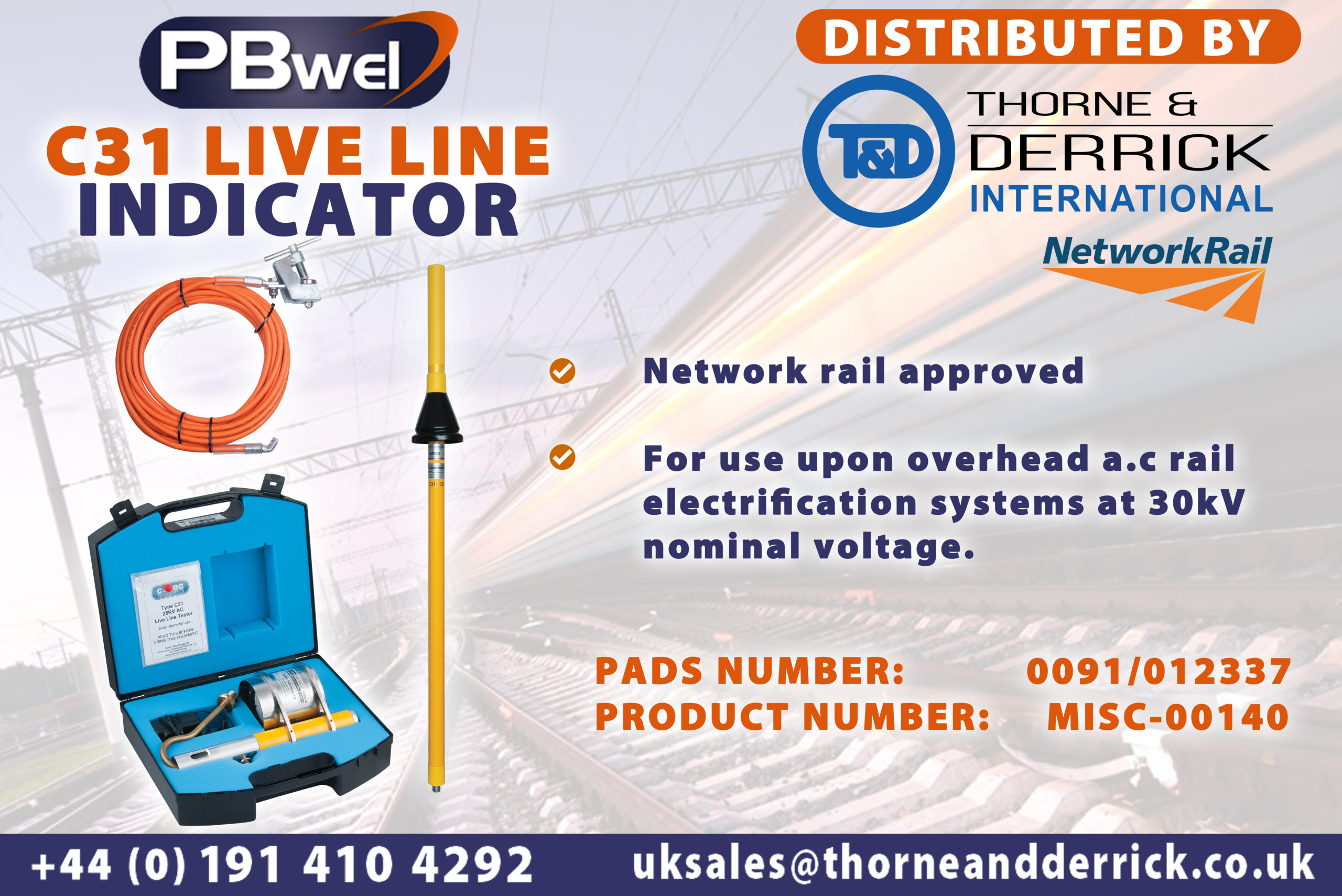
Staff should only use the following live line indicators:
The lifesaving rules and associated guidance for Test Before Earth and Test Before Touch on 25kV OLE must still be followed as in the Safety Advice NRA18-12.
Immediate action required
HVD03/2D live line indicators must be quarantined and not used by Network Rail staff after the 14th August 2020. Staff should only use live line indicators that they have been briefed to use. Always use live line indicators as instructed.
If at any point staff feel unsafe with any aspect of working on or about the 25kV OLE infrastructure and associated electrical safety risks they should discuss their concern with their supervisor.
Further Reading
Joints & Terminations for Network Rail 25kV Electrification Projects | PADS Approved
Cubis Systems Network Rail PADS Approved Access Chambers & Cable Protection
Network Rail Full Acceptance for Nexans Tee Connectors & Bushings for 25kV Power Transformers

Cable Troughs supplied to Network Rail and London Underground to support insulated electric cables used for power distribution and communication

PR by Chris Dodds Sales & Marketing Manager at Thorne & Derrick | 13.04.2021
Following extensive and successful field trial testing the Pfisterer range of Live Line Testers have now received Full Acceptance by Network Rail with Official PADS Approval – specifically this includes Pfisterer KP-Test 5HL Capacitive Live Line Testers for 25kV AC Rail Electrification systems.
The product authorisation by Network Technical Head Power Distribution HV/LV on behalf of the Network Rail Acceptance Panel (NRAP) permits the installation of the Live Line Testers on Network Rail controlled 25kV a.c. infrastructure as a separate device with approved live line poles for:
Pfisterer KP-Test 5HL Capacitive Live Line Testers | With UK specific insulating rod of greater than 600mm length| Pfisterer Part Number | PADS Catalogue No 0040/090157
Pfisterer KP-Test 5HL Capacitive Live Line Testers | Unit as a separate device without an integrated insulated pole | PADS Catalogue No 0040/090158
➡ Certificate of Acceptance PA05/06351 | Network Rail Certification
Thorne & Derrick are currently supplying this range of live line testers to several UK rail projects – we are Approved Vendors to Network Rail, CP6 Framework Delivery Partners and several HS2 Joint Ventures working on rail transport projects.
➡ For further information on Live Line testers by Pfisterer please refer to this download

Further Reading
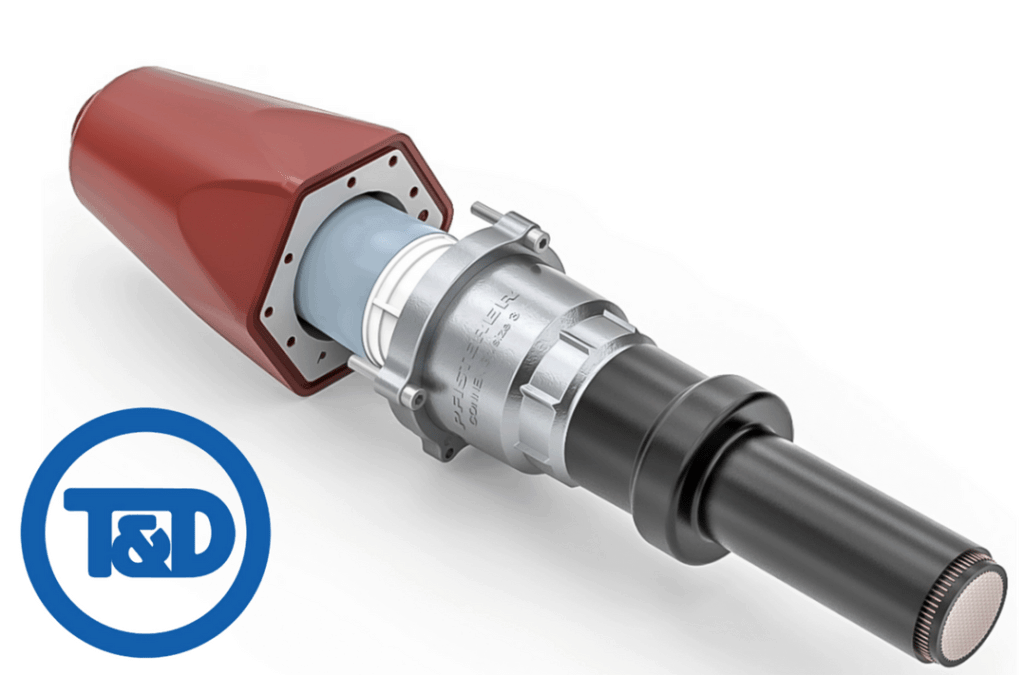
Pfisterer CONNEX PADS Approved | Thorne & Derrick supply from stock Standard and Customer Variants of the CONNEX Connector for the termination of 33kV/52kV medium voltage power cables into gas insulated switchgear with inner cone bushings.

Rail Cable Accessories, Electrification
& Installation Equipment
Thorne & Derrick supply an extensive range of 400V-33kV Rail Cable Accessories & Power Distribution Sytems including feeder pillars to contractors undertaking Low Voltage Power Distribution, HV Electrification & Substations, DC Traction & Networks, OLE and Track Feeder Cable Renewals – a complete range of Network Rail PADS approved track terminations, cable joints, cable repair and connection products up to 25kV AC.
Full range of Cable Pulling Equipment & Products to ensure safe and efficient of rail cables in to cable ducts and containment infrastructure including cable troughs.

March 30th, 2021
Author: Alex Smith, Technical Director at Flexible Conduit Manufacturer Flexicon
Commercial building contractors and data installers alike have a legal obligation to ensure that cables are suitably fire performance rated for the application and location.
According to its tenth annual data centre survey, the Uptime Institute claims that many operators admit that most downtime incidents could be avoided if they were to invest more in the resiliency of their facilities.
This not only apply to critical infrastructure affected by a mains power outage, but also extends to the appropriate protection of vital data and power cabling, especially in the event of a fire.
Let’s look at some of the common myths around fire protection performance and the array of differing standards in place, and details why operators should ensure that their cable protection meets all low fire hazard criteria requirements.
The background
In a data centre environment, all power cables seen as a possible cause of fire need to be jacketed in materials that provide the necessary fire protection for the given installation.
Commercial building contractors and data installers alike have a legal obligation to ensure that cables are suitably fire performance rated for the application and location and therefore, comply to the European cable fire standard, BS EN 50575. This includes classifications of ‘reaction to fire performance’ and considers heat release, flame spread and propagation, smoke production, flaming droplets and acidity.
BS 7671, commonly referred to as the 18th Edition Wiring Regulations, calls up EN 61386 for flexible conduit performance requirements, including fire. However, this standard for conduit systems, which was first published in 2008, only addresses non-flame propagation (self-extinguishing) – and no other fire performance properties such as enhanced flame retardancy, smoke and toxic fume emission are included.
This can give rise to a potentially dangerous situation where cables can be laid in flexible conduit that, by its standard, only needs to clarify if it is self-extinguishing and does not offer a comprehensive level of fire performance.
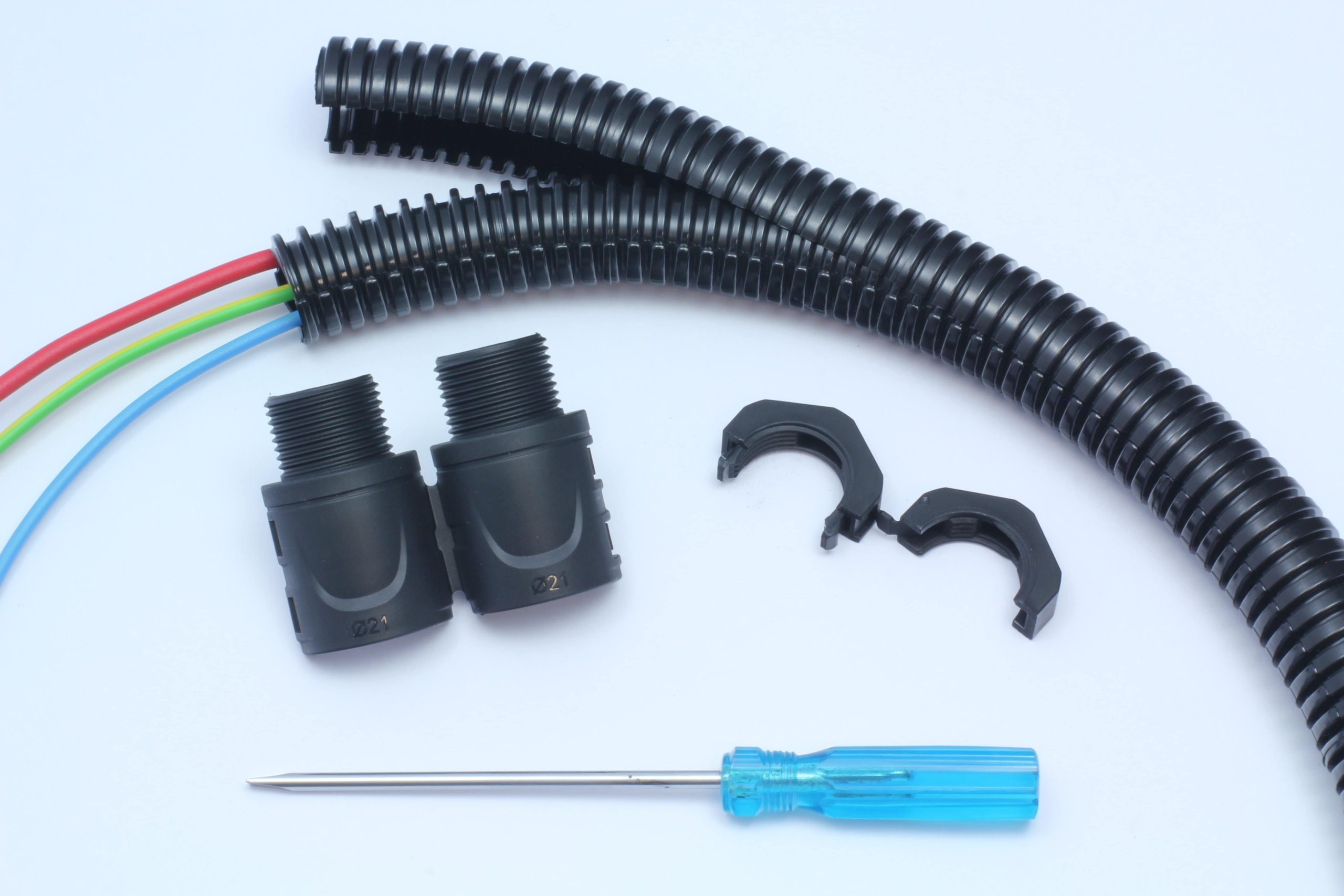
Flexicon Flexible Conduit
Fire hazard assessment
Fire hazard assessment is essential in buildings where there is a significant risk to people, processes or property, such as in a data centre or server room. This assessment should include possible sources and the likelihood of a fire starting and the consequences of such a fire including; evacuation and safety of people, loss of service and damage to equipment.
When assessing the fire hazard, suppliers should work with customers to assess the installation and environment that the conduit system will be used in. For example, in a data centre environment, factors such as high temperatures in confined server rooms should be considered. Also, conduit systems containing halogens, such as PVC, will give off chlorine acid gas in a fire that can destroy electronic equipment in another part of the building.
Almost all applications will require non-flame propagating (self-extinguishing) as called for within the UK wiring Regulations (BS 7671) and tested by means of the flame propagation test in EN 61386 as a bare minimum. Many customers will assume that this basic requirement will be met by any flexible conduit they specify, but this is not always the case.
Meeting low fire hazard specification
For a product to be classified as low fire hazard, it must display four clearly defined characteristics. It must be highly flame retardant, have low smoke emission, low toxic fumes and be halogen-free.
All metal conduit systems are an inherently low fire hazard as there is no plastic to burn, however, most conduit systems are now plastic coated or all plastic so their performance needs to be assessed.
Traditionally, Halogen Free conduits have been specified, often based on the common misconception that they offer comprehensive fire protection performance. Although such a conduit may prevent the generation of toxic gases in some settings, it does not mean necessarily that it is also flame retardant or have low smoke properties and may still be flammable if exposed to a heat source.
Add to this the fact that there is no single European classification standard for low fire hazard cable management products that defines terms, test methods and results expected, and it is easy to see why there is confusion in the industry.
Terms are commonly used which suggest that adequate fire protection is in place, when the product may only meet one of the four required facets. For example, ‘low smoke and fume (LSF)’ rated products may not address toxicity and ‘low smoke zero halogen (LSOH)’ specification may not address flame retardancy.
The good news, however, is that there are numerous flexible conduit solutions available that meet all four requirements for low fire hazard specification. Let’s examine what operators should be asking their supplier to demonstrate as proof of comprehensive fire performance.
Flame retardancy
First, a supplier must be able to demonstrate appropriate flame retardancy and there are a number of established test methods to prove performance.
Flammability – the measure of how difficult it is to ignite the conduit if it is exposed to a heat source – is often cited here. The minimum requirement is that the product is self-extinguishing, according to conduit system standard EN 61386. Here a vertical sample of conduit is exposed to a 1kW burner and must extinguish within 30 seconds of the removal of the flame with no flaming droplets.
To assess how flame retardant a material is, the normal test method is to measure the Limiting Oxygen Index (LOI) according to BS EN ISO 4589-2. This determines the percentage of oxygen that needs to be present to support combustion. The higher the LOI percentage, the greater the flame retardancy of the material.
Another method is to use a glow wire test, BS EN IEC 60695-2, which applies a glow wire to a plaque of material at 7500C, 8500C or 9600C.
Low smoke emission
If the conduit is involved in a fire, the smoke generated may obscure the vision of people trying to escape, or the firefighters trying to extinguish the flames. Any data center operator will therefore want to ensure that the flexible conduit specified provides superior protection if this scenario occurs, to ensure staff are afforded sufficient time to exit the building safely.
There are a number of fire tests, where a specified sample of material is burnt under controlled conditions in a given size smoke chamber and the smoke obscuration of a defined beam of light is measured.
Low toxicity
The generation of toxic gases may incapacitate people trying to escape from the fire, so appropriate protection must be provided at all times.
To test for toxicity, a specified sample of material is burnt under controlled conditions in a given size smoke chamber and the fumes are analysed for various gases. The concentration of each gas is then multiplied by its toxic potency to give a toxicity index.
If halogens, sulphur or phosphorus are present in a material, it is unlikely to pass the low toxicity tests.
Halogen-free
As mentioned, one of the main misconceptions is that a halogen-free material is automatically a low fire hazard product. The fact remains that a material cannot be considered as low fire hazard if it contains halogen, but as we have learned, without the accompanying low toxicity, low smoke and flame-retardant properties, it will not meet the full criteria.
Typical halogens are fluorine, chlorine, bromine and iodine. Chlorine is the most common in PVC, fluorine is present in fluoro-polymers and bromine appears in flame retardants. All of them produce highly toxic fumes and thick smoke if exposed to a naked flame; another reason why operators may have tended to rate this area of performance above other fire hazard properties.
Specification first
While fire performance is of prime concern, it is worth noting that specifying cable protection based on one property alone can be a costly mistake and the full range of environmental factors should be considered. These can include exposure to extremes of temperature, UV radiation, harsh chemicals, compression strength, abrasion resistance and the likelihood of water or dust ingress.
While many products may look the same, performance properties can vary greatly so customers should always check suitability and compatibility for their application and consider the installation as a complete end-to-end system.
Polypropylene, NFR (Non-flame retardant) is a commonly used material for data centre cable protection as it is halogen, sulphur and phosphorous free, so will not aid acid formation, but is highly flammable, and flame propagating.
In contrast, PA6 (nylon) is self-extinguishing, halogen, sulphur and phosphorous free.
The specifier should look for independent test results to back up the supplier’s claims rather than relying on un-substantiated jargon.
Retrofitting options
For existing installations, data centre operators may require new conduit systems to be retrofitted to ensure low fire performance properties are met.
Retrofitting cable protection has, traditionally, been a complex task, with the installer required to pull existing cabling through the open end of a conduit system.
Conduit system manufacturers are therefore developing enhanced retrofit options to make it easier and quicker to install cable protection.
Bespoke-designed cable protection
For more complex application requirements, customers should speak to their supplier to discuss bespoke options.
These could include conduit supplied in non-standard or pre-cut lengths, in larger or smaller diameters or with different thread termination or fitting options. 45- and 90-degree elbows can also be used to help maintain bend radius.
Additionally, more complex requirements, such as altering performance characteristics to meet a certain temperature requirement, compression strength or abrasion resistance or to achieve a greater fatigue life may also be considered.

Fire Resistant Cable Glands | Fire Resistant Cable Cleats
In conclusion
With so many areas to consider when assessing fire performance, it is important to work with a competent manufacturer or specifier. Specifying based on price alone, or by using standards that do not take all aspects of fire performance into account, could leave vital infrastructure vulnerable to failure.
Operators should expect their chosen supplier to be able to provide detailed evidence of the material properties, and the tests that they have conducted to ensure that all four criteria are met and that critical performance factors are maintained.
THORNE & DERRICK
Thorne & Derrick are national distributors of LV, MV & HV Cable Installation, Jointing, Substation & Electrical Equipment – servicing businesses involved in cabling, jointing, substation, earthing, overhead line and electrical construction at LV, 11kV, 33kV, 66kV and EHV. Supplying a complete range of power cable accessories to support the installation and maintenance of low/medium and high voltage voltage power systems:
- Slip-on Cable Terminations
- Cold-shrink Cable Terminations
- Heat-shrink Cable Terminations
- Cable Joints – Heat & Cold-shrink
- Separable Connectors (Euromold)
- Surge Arresters & Switchgear/Transformer Bushings
Key Product Categories: Duct Seals | Cable Cleats | Cable Glands | Electrical Safety | Arc Flash Protection | Cable Jointing Tools | Cable Pulling | Earthing | Feeder Pillars | Cable Joints LV | Joints & Terminations MV HV