Cable Jointer: Henry Kriek High Voltage Jointer at CBI Electric Power Installations
Cable Terminations
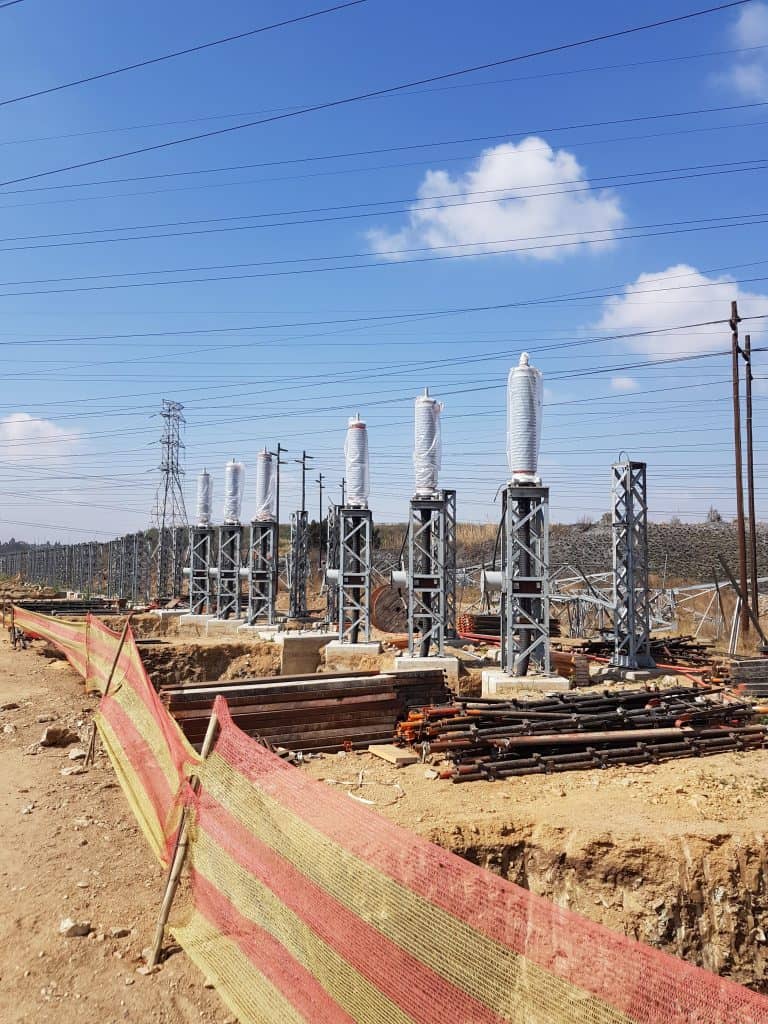
Raychem cable terminations using heat shrink technology can operate under severe environmental conditions for connecting and terminating MV HV cables in both indoor and outdoor applications.
Polymeric insulated cables of various designs and cross sections can be adopted with respect to shielding and metal sheath. Composite housings with different creepage lengths up to 50 mm/kV are available for the most common and also extreme pollution levels according to IEC 60071-1 and IEC 60071-2.
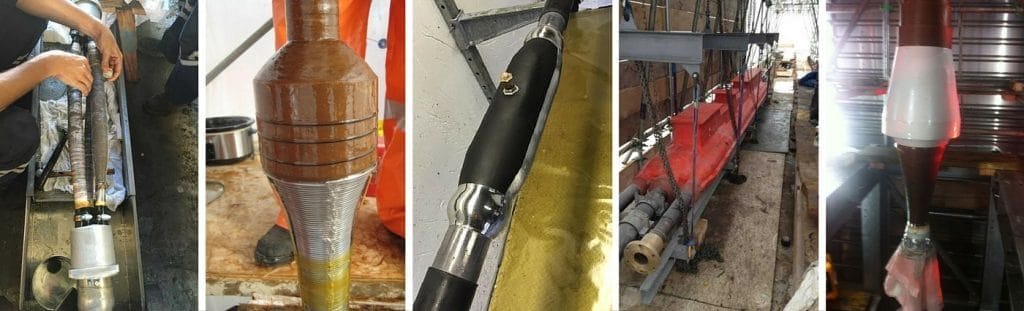
Brugg cable stripping tools were used by the cable jointer to strip tand prepare the single core high voltage 2500sqmm XLPE insulated cables.
High voltage products help enhance the safety, reliability and efficiency of power networks while minimising environmental impact in applications such as substations, power transmission, enabling smart grid and enhancing eco-efficiency.
Operating and maintaining high voltage systems requires experienced operatives with specialist skills.
CBI Electric African Cables
Since 1935, African Cables, now CBI-electric: African Cables designs and manufactures a comprehensive range of MV HV electric power cables at its Vereeniging factory.
CBI-electric: African Cables is the only cable manufacturer in Southern Africa to supply a range that meets any user requirement, irrespective of load. Included in this manufactured range are low voltage PVC/XLPE insulated cable; medium voltage XLPE; paper-insulated cable, aerial Bundled Conductor (ABC), ACSR and high voltage XLPE insulated cable.
Should you require any assistance with the selection or specification of MV HV cable joints or terminations please do not hesitate to contact us.
T&D distribute the most extensive range of LV, MV & HV Cable Jointing, Terminating, Installation & Cable Pulling Equipment – we service UK and international clients working on underground cables, overhead lines, substations and electrical construction at LV, 11kV, 33kV and EHV transmission and distribution voltages.
Uploaded By Chris Dodds – Thorne & Derrick Sales & Marketing Manager
Cable Terminations
Nexans MONO type MV cable terminations are heat shrink terminations consisting of a single-piece heat shrink tube – the anti track tube features integral stress control co-extruded into the heat shrink tubing suitable for terminating single core polymeric insulated cables, such as XLPE or EPR, with working voltage classes of 11kV, 24kV and 33kV.
Both Nexans MONOi (Indoor Termination) and MONOe(Outdoor Termination) contain sufficient material to terminate 3 single core cables i.e. 3 phase cable termination kits.
Nexans terminations are available in both heat shrink, cold shrink and slip-on type technologies for terminating cables into switchgear, transformers and pole-mounted applications – single core termination kits are available for MV cables with copper wire or copper screen and armoured/unarmoured construction. The cable termination accommodates both shearbolt cable lugs or crimp lugs.
Nexans MONOi
MV HV Heat Shrink Indoor Cable Terminations
Up To 33kV
The following table enables the selection of Nexans MONOi indoor heat shrink terminations for 11kV, 24kV and 33kV voltage cables:
Voltage Um kV
Indoor Cable Termination Nexans Type
Application Range (sqmm)
Termination L (mm)
11/12kV
3x12MONOi 1.95
25-95
260
11/12kV
3x12MONOi 1.240
70-240
260
11/12kV
3x12MONOi 1.400
185-400
280
11/12kV
3x12MONOi 1.630
400-630
310
24kV
3x24MONOi 1.95
25-95
320
24kV
3x24MONOi 1.240
70-240
320
24kV
3x24MONOi 1.400
185-400
340
24kV
3x24MONOi 1.630
400-630
370
33/36kV
3x36MONOi 1.95
25-95
420
33/36kV
3x36MONOi 1.240
70-240
420
33/36kV
3x36MONOi 1.400
185-400
440
33/36kV
3x36MONOi 1.630
400-630
460
Nexans MONOe
MV HV Heat Shrink Outdoor Cable Terminations
Up To 33kV
The following table enables the selection of Nexans MONOe outdoor heat shrink terminations for 11kV, 24kV and 33kV voltage cables:
3M Cold Shrink Terminations (QTIII) are shown terminating 12kV 3 core XLPE (polymeric insulated) cables onto copper busbar with double hole compression cable lugs – the Nexans LC (longitudinally corrugated copper) type cable without screen wires is effectively terminated “cold” i.e. without need for naked flames associated with conventional heat shrink type cable terminations.
3M medium voltage primary distribution cable terminations are extensively used in substations and cable vaults with confined spaces where the presence of potentially explosive atmospheres and flammable gas preclude “hot-working”.
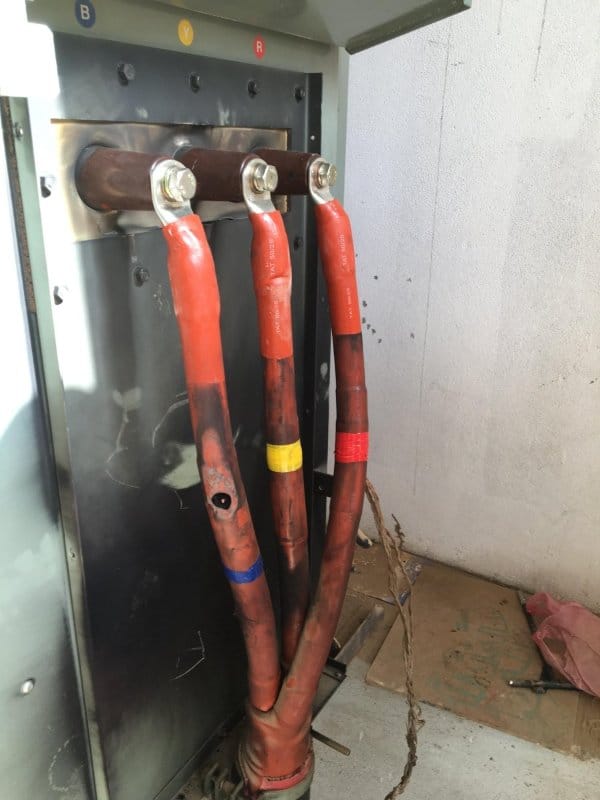
“Skirted” cable terminations feature integral rain sheds suitable for indoor (substation switchgear and transformer) or outdoor (pole-top mounted) installation. The 3 phases are clearly labelled using cable tags (Red, Yellow Blue) attached with conventional cable ties.
The MV feeder replacement project required the removal of an existing 400sqmm PILC medium voltage cable and installation of new 500sqmm XLPE single core cable system – the previous MV system under the cable terminations for grounding is obsolete and out of service.
Note the NEMA pad bolted connection – there is a ball stud on it which is used for applying your working grounds.
MV Shielding For Substation Cables
Longitudinal Corrugated Tape Shielding – a flat copper tape is corrugated at right angles to its length and then formed into a cylinder around the medium voltage cable core or inner cable sheath/jacket. LCT shield design enables rapid stripping and termination by the cable jointer. 3M GSK Shield Grounding Accessory Kits convert concentric neutral (CN) or jacketed concentric neutral (JCN) QT-II or QT-III Cold Shrink termination kits for use on longitudinally corrugated (LC) and tape shielded power cables.
Contact T&D to discuss your next MV Cable Jointing or Terminating application using 3M Cold Shrink.
Medium Voltage Primary UD LCT Shielded Cable
Allteck Line Contractors – specialised services for the high voltage electric power industry.
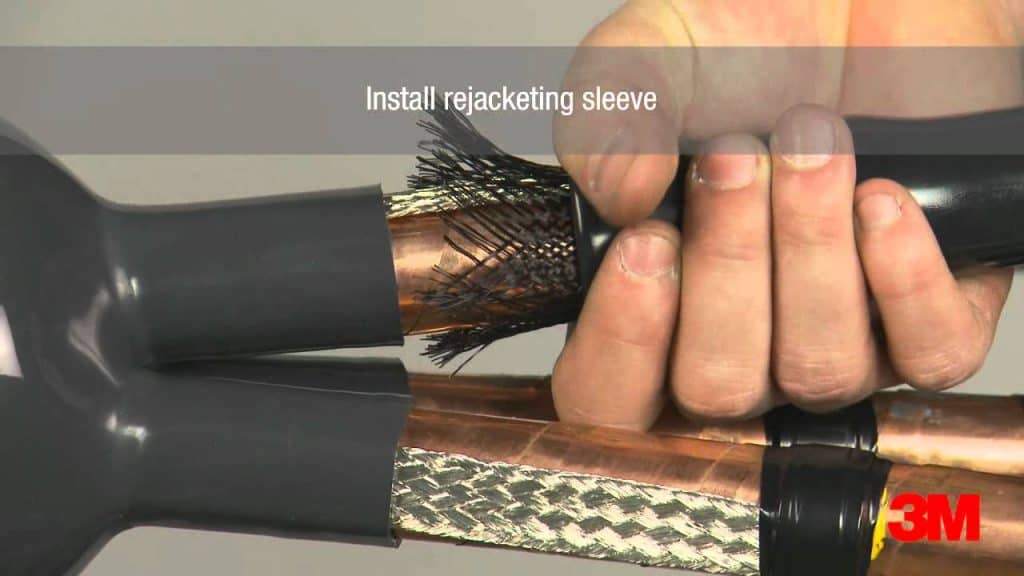
3M Termination Installation – sealing the cold shrink cable breakout and rejacketing the phases on 3 core medium and high voltage power cables without ground wires.
Should you require any assistance with the selection or specification of cable joints or terminations using 3M Cold Shrink on MV-HV cables please do not hesitate to contact us.
T&D distribute the most extensive range of LV, MV & HV Cable Jointing, Terminating, Installation & Cable Pulling Equipment – we service UK and international clients working on underground cables, overhead lines, substations and electrical construction at LV, 11kV, 33kV and EHV transmission and distribution voltages.
IMCORP – Providers of Factory Grade® technology, bringing MV HV power cable and accessory manufacturers’ QC reliability to field installations worldwide.
by Chris Dodds T&D - estimated reading time 5 minutes
OVERVIEW
0.1 Hz VLF test and IMCORP’s Factory Grade® technology are compared side-by-side at utility solar site CHALLENGE
VLF test passes cables, but cable terminations were still failing RESULTS
Based on distribution system experience, utility uses IMCORP’s Factory Grade® technology to identify workmanship defects and VLF test induced damage
A utility client of IMCORP asked them to commission medium voltage cable systems at a new generation facility after experiencing several MV cable termination failures.
The cable installation contractor had already tested the MV cable systems with a very low frequency (VLF) test.
Uninformed contractors often make a claim based on a common myth that ‘proper’ VLF testing would detect serious MV-HV cable defects while not harming healthy cable insulation or aggravating minor defects.
In addition, the misguided claim often states that passing a VLF test means the medium or high voltage cable system will deliver years of trouble free service.
Wrong.
Unfortunately the owner initially believed these commonly held myths, energised the MV power system and subsequently experienced several catastrophic failures that damaged switchgear, costing them significant down time and losses in generation revenue.
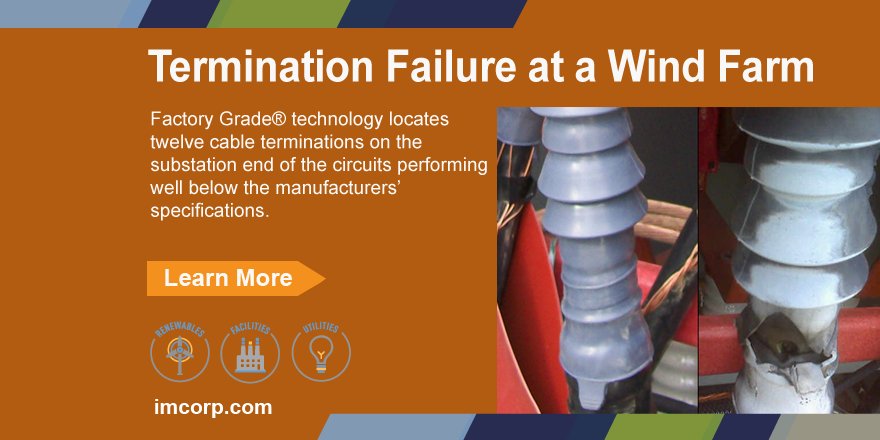
Substandard MV HV cable jointing and installation necessitated the replacement of multiple HV heat shrink cable terminations after a succession of in-service cable termination failures.
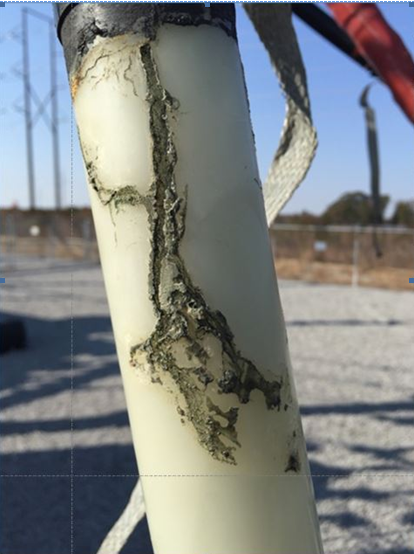
Pictured opposite the heat shrink anti-track tubing has been removed shown the tracking between the medium voltage heat shrink and XLPE cable insulation.
When the cable terminations were dissected the technician not only found cable jointer workmanship issues, including insufficient shrinkage of heat shrink layers, but clear evidence of damage caused by the VLF test that passed the medium voltage cable terminations a short time before.
Ben Lanz (Director, Applications Engineering at IMCORP) comments, “a VLF test passed this heat shrink termination. An offline 1.5Uo 50/60Hz PD partial discharge assessment with 5pC sensitivity identified this MV cable termination which is why we have the picture. The original installation defect and VLF test damage are plainly visible. This case along with many others is the reason IMCORP recommend a factory comparable PD test for critical medium/high voltage power installations and QC spot checks for newly trained cable jointers and installers of MV-HV joints, terminations and connectors. I acknowledge that a VLF test was the best the utility and power industry had 10 years ago but with the evidence we have now, I generally don’t recommend going over the operating voltage with a VLF test since it can not find most MV-HV cable detects found by a factory comparable PD test.”
The 2 most serious cable termination anomalies were small voids on the medium voltage XLPE cable insulation shield interface and “fall-in” cable insulation problem at the conductor shield interface.
Could a failure to remove the semicon screen from the XLPE insulation of MV-HV cables contribute to this type of cable failure?
Here, the semicon screen was removed sufficiently from the MV-HV cable using correct cable jointing tools. Most likely the VLF test burned a track in voids caused by insufficient void filling mastic at the semicon cutback and/or insufficient shrinking of the heat shrink tube with the green zinc oxide (ZnO) stress controlling layer on the inside of the cable termination.
MV Cable Termination Failures
Here, failure of the heat shrink stress control component of the cable termination was poorly placed in relation to the semi-conductor screen cut causing termination failure of the substation cables linked to a generation plant on an onshore windfarm.
Of course site standards and international working procedures vary but the following professional advice has universal methodology:
“There are three main components to reducing the risk of failure during the infant mortality phase of an installation’s life (bathtub curve): 1) Have policies that ensure you only procure high quality equipment 2) Ensure that equipment is installed by qualified, trained and experienced personnel who work to high standards 3) Commission it thoroughly with a view to exposing flaws and weaknesses and then correcting them. As has been proven many times before, thousands saved today may cost you millions tomorrow.”
Jason St Martin (Senior Electrical Inspector at DMIRS Building and Energy State of Western Australia)
Since 1985 T&D have serviced UK and international businesses involved in cable installations, earthing, duct sealing, jointing, substation, overhead line and electrical construction at LV, MV & HV.
Our customers are contractors, specifiers and end-users involved in cable installations, cable jointing, substation, overhead line and electrical construction at LV, MV & HV.
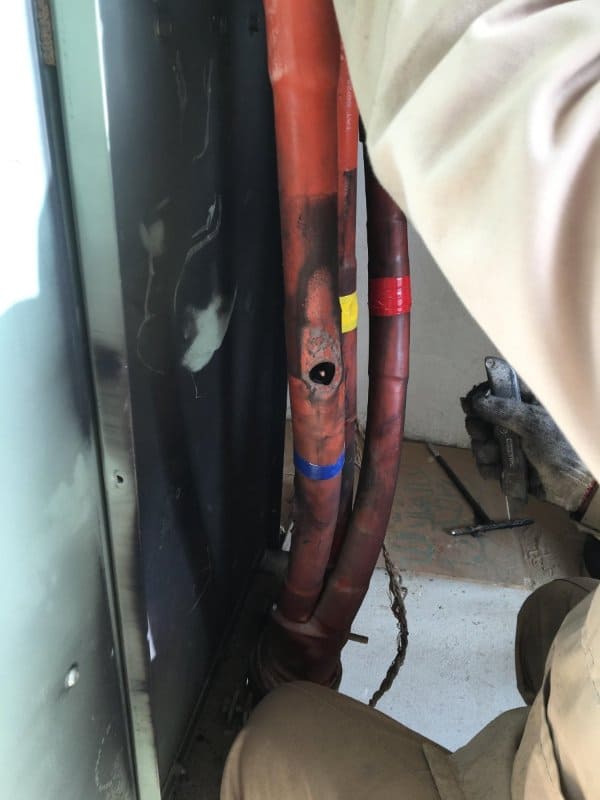
Medium voltage power cables can fail for several reasons – pictured below is a common installation error near the outer semicon screen cutback by the cable jointer on the heat shrink cable termination – the highest electrical stress point in an open air cable termination.
To prevent this IMCORP recommend MV HV Jointer Training coupled with a factory comparable partial discharge test after installation to provide feedback to the cable installer – 50/60Hz offline PD test with better than 5pC sensitivity.
Partial Discharge (PD) at the crossed cores of the HV cable causing failure of the heat shrink cable termination
The following LinkedIn Comments provide expert guidance and advice on how to remove fabric layers from MV-HV cables without jeopardising or compromising cable functionality.
Medium & High Voltage Cable Jointing
Cable type pictured is 15kV Medium/High Voltage power cable
15kV MV Primary UD EPR Cable Specification
Primary Underground Distribution Cable (Single Phase)
Aluminium Conductor 750 MCM
EPR (Ethylene Propylene Rubber) Insulation
Easy Strippable Insulation Shield
Application – Medium voltage primary underground distribution cable for conduit systems, direct burial, underground cable duct
Manufacturer – CME Mexico (CME Wire and Cable, Inc. was established in the USA in 1994 as a subsidiary of Viakable to serve customers in the US and Canada).
How To Remove Fabric Layers From MV HV Power Cables
David Lundin (Contractor Compliance Specialist at Western Power) – remove the cable fabric layer by gloved hand and clean away residual material with carbon tetra chloride or equivalent cable cleaners.
Erik Liljedahl (Site Intallation Manager on NKT HV High Voltage Cables) – carefully remove the band with a knife, be careful not to damage the cable conductor strands, then brush the conductor with a wire brush. This fabric is to prevent the inner semi-conductor to fall between the conductor strands during cable production and allows the XLPE insulation to move during heat treatment – this fabric is usually a present layer on 100kV-600kV cables but also 11kV-33kV.
Peter Hembry (Director at Hembry High Voltage Services) – unravel to the primary insulation and pull it against the blade of a sharp knife all the way around, then give it a quick lick of heat to catch any strands you may have missed.
Ben Lanz (Director, Applications Engineering at IMCORP) – unless this is an unusual cable design, the inner semi-conductor (conductor shield) layer should come off cleanly. Any residue can be typically wiped off with a lint free cloth. After you wire brush the aluminium oxide off the conductor and immediately apply the oxide inhibitor, you will be ready to apply the connector (either compression or mechanical shearbolt). If you are not familiar with MV and HV cable in general, I recommend jointer/splicer training.
Mark Jones (Renewables Marketing Manager at Synergy Cables USA Ltd)– box cutter with a new blade works well. Cut slowly while keeping tension by rolling it under itself.
David Tompsett (Project Engineer at Northern Ireland Electricity)– seen this conductor screen removed by using twine instead of a knife. Good clean edge and no risk of damage to the outer conductor strands of the MV-HV cable.
Glyn Moore TMIET (Electrical Tech / Construction Manager)– as previous comments to remove the fabric either under or over wrapped once you are square with your insulation pull the fabric onto a sharp blade away from conductor, bit of a flame from a heat shrink torch to remove loose fibres.
Darren Street (Cable Jointer at D+R Jointing Services Ltd) – sharp knife and a trained cable jointers touch (also blow it over with a gas torch to catch any wayward strands).
Ciaran McDowell (HV / LV Authorised Cable Jointer)– used it on high voltage tails in medium/high voltage transformers a few years ago. Use a sharp knife like a Stanley and pull the fabric under tension against the blade. This worked well just leaving a few threads to trim off.
Eoin MacQuaile (Junior Quantity Surveyor at Obelisk) – use a piece of twine and wrap it around the cable material and use a saw-like motion to heat and cut the fabric without scoring the aluminium. This method evenly cuts insulation and wrapping without damaging conductors.
Kevin Kruse (Vice President, Engineering and Technical Support)– I have completed many cable termination demonstrations and we were always made fun of because we used string, but this is safest method. Second is some of the tools like Speed Systems or Ripley Jointing Tools where you can set a safe depth just shy of the conductor diameter. Cable jointers should never use a knife or box cutter.
Tim Poirier (HV Systems Manager- North America TE Connectivity)– best method is to tear it and then using a cable splicing knife at the cut back tearing it against the blade being careful not to nick the aluminium if any strands of the fabric remain burn off with a heat shrink torch.
Justin Kelly (Underground Network and Cable Splicer at JEA)– knife work, the cornerstone of legitimate medium voltage cable splicing and jointing. This is why splicing has historically been taught in 4-5 year apprenticeships, not 6 week classes. Skill takes time.
Stephen Davies (Technical Policy Engineer – Western Power Distribution) – this should be pulled against a static knife edge by the cable jointer so as to not damage the aluminium conductor. It is a semiconductor woven tape that prevents the semicon extruded layer bedding between the aluminium strands.
➡ String is simple but effective for clean cutting without damaging underlying cable conductors.
MV HV Power Cables
Primary Underground Distribution MV Medium Voltage Cables
Primary UD MV Cable TR-XLPE / LLDPE, Concentric Neutral
Primary UD MV Cable EPR / LLDPE, Concentric Neutral
Primary UD MV Cable TR-XLPE / PVC, Concentric Neutral
Primary UD MV Cable EPR / PVC, Concentric Neutral
Primary UD MV Cable PILC Replacement, EPR/PE
Primary UD MV Cable TR-XLPE Insulated, Concentric Neutral
Primary UD MV Cable EPR Insulated, Concentric Neutral
High & Extra High Voltage Cables & Cable Systems
High Voltage Copper Cable, Smooth Aluminum Shield/Sheath, XLPE Insulation, HDPE Jacket, 69kV – 138kV
High Voltage Copper Cable, Wire and Tape Shield, XLPE Insulation, HDPE Jacket, 69kV – 138kV
High Voltage Aluminum Cable, Smooth Aluminum Shield/Sheath, XLPE Insulation, HDPE Jacket, 69kV – 138kV
High Voltage Aluminum Cable, Wire and Tape Shield, XLPE Insulation, HDPE Jacket, 69kV – 138kV
Extra High Voltage Copper Cable, Smooth Aluminum Shield/Sheath, XLPE Insulation, HDPE Jacket, 230kV
Extra High Voltage Aluminum Cable, Smooth Aluminum Shield/Sheath, XLPE Insulation, HDPE Jacket, 230kV
T&D are UK Main Stockist for Alroc Tools suitable for all types of LV MV HV cable preparation prior to installing cable joints, terminations and separable connectors.
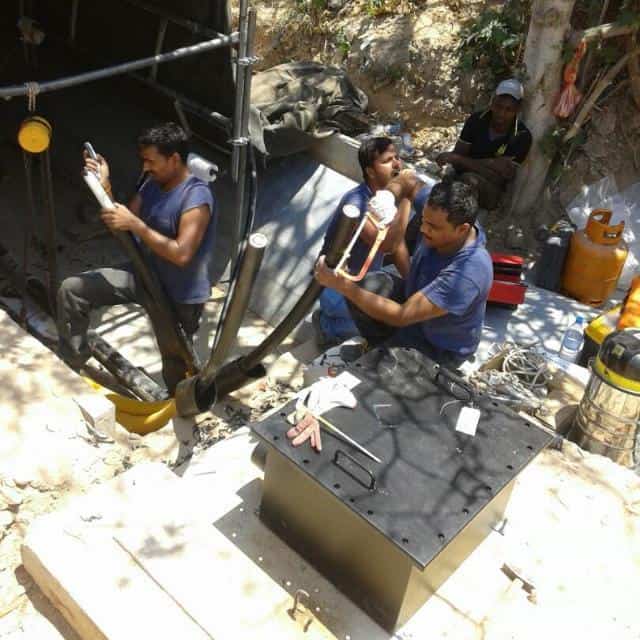
International standards and local practices vary considerably, here a Indian cable jointing team are shown using knives and hacksaws to remove cable sheath jacket and primary insulation from Prysmian 220kV to 550kV EHV cables. Image: Audhesh Giri (EHV Cable Jointer/Cable Supervisor)
Here a smooth finish to the XLPE insulation on a high voltage power cable has been achieved with use of a Makita sanding machine
THORNE & DERRICK are national distributors of LV, MV & HV Cable Installation, Jointing, Duct Sealing, Substation & Electrical Equipment – we service UK and global businesses involved in cable installations, cable jointing, copper earth tapes and substation earthing at LV, 11kV, 33kV and EHV.
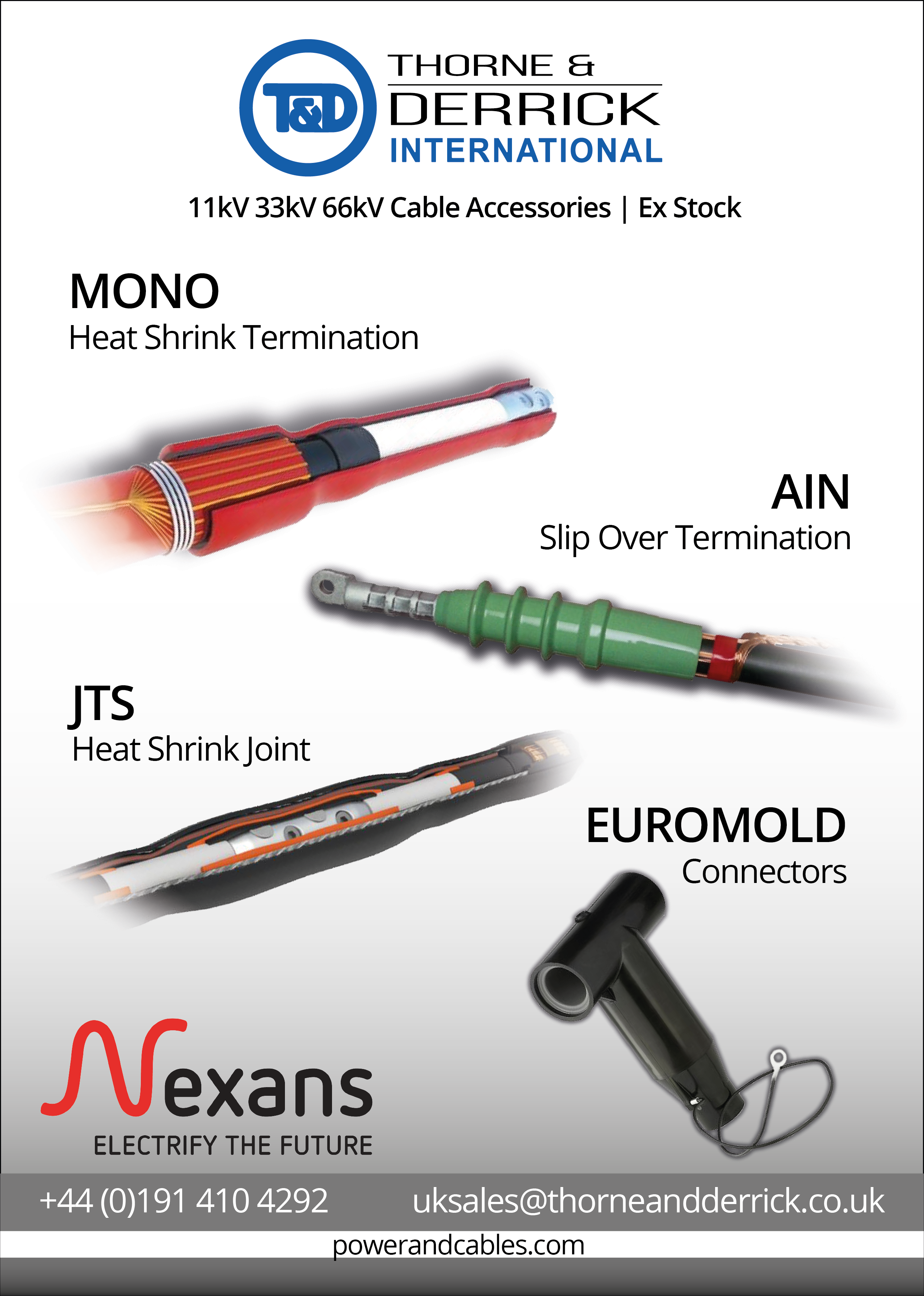
Based in the UK, are the Specialist Distributor for the Nexans Power Cable Accessoryrange of Screened Separable Connectors (Euromold), Cold-Applied (AIN AFN)& Heat Shrink Joints (JTS)& Cable Terminations (MONO) for Medium Voltage Power Systems up to 66kV; we hold extensive stocks and provide the most competitive commercial and technical levels of customer service in the UK.
Request a Quote Call Us: +44 (0)191 410 4292 Stokbord cable protection covers are rigid HDPE protection boards designed to be installed above buried cables in trenches. They are manufactured and designed by Centriforce to provide strong mechanical protection...
Restoring transformer termination integrity with LoviSil When a major site recently experienced a fault on an 11kV transformer termination, the challenge was clear: restore the system quickly and safely without the expense/disruption of full PILC cable replacement. Upon investigation,...














 cable termination failures.