Idea to Innovation: Inventions that Move the Industry
From the first product, a panel conduit that led to the name Panduit, we understood our engineers are the gateway to success and need free reign to investigate and innovate.
This is one of their stories.
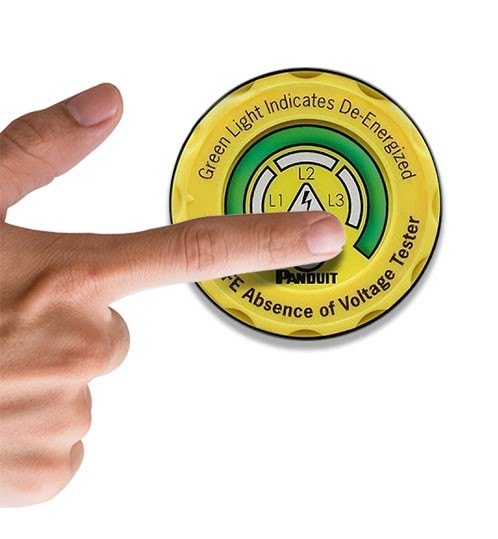
VeriSafe AVT: The Proof That the Power is Off – Story
Safety is everything.
So, be sure the power is off before you open electrical equipment and start handling wiring matters.
But how can you be safe and be sure the circuit is de-energized?
What if the only acceptable method is a complex testing process that potentially exposes you to the very danger you’re trying to avoid?
Here’s a story of how a team of engineers with fresh thinking and years in the lab resulted in an entirely new product – theabsence of voltage testers (AVTs) – and positive proof the power is off.
How To Test Voltage Using the Verisafe AVT
Electrically isolate and lock or tag out the equipment you want to work on
Put on appropriate Personal Protective Equipment (PPE)
Test a hand-held meter on a known-live circuit to make sure it’s working
Test for absence of voltage in the isolated equipment, both phase-to-phase and phase-to-ground
Re-test the hand-held meter on a known-live circuit to confirm it’s still working (so… expose yourself to energised parts twice to make sure there’s no voltage? Yep.)
No Light Doesn’t Mean No Power
To understand why VeriSafe AVT is such a big deal, you have to understand 3 things:
Contact with electricity is a leading cause of injury and death in the workplace
Stored energy can remain in a circuit even after it’s shut off
Hand-held testers require a slow, manual process that’s prone to human error and may expose workers to the very hazard the process is meant to protect them from
You might think a hard-wired voltage indicator would solve the problem – lights out means no power – but you’d be wrong.
Indicators warn when power is on, but no signal doesn’t guarantee that a circuit is de-energised. No light could mean the power is off, but it could also be caused by a faulty indicator or installation problems. How would you know the difference?
That uncertainty is why OSHA never recognised permanently installed voltage indicators and instead relied on the hand-held tester method. But that means in order to prove there’s no voltage in the de-energised circuit you have to expose yourself to a known-live circuit.
The very definition of irony!
Standards Before Sales
Having a new product is one thing.
Getting it accepted by the market is another thing altogether.
The team understood that without an official standard authorising their new absence of voltage tester nobody would adopt it.
So, the first challenge was figuring out how to convince the governing bodies that a new way to test was needed. The team turned to safety workshops with organisations like NFPA and IEEE to gather information about electrical accidentsand gauge interest in a new solution.
Armed with accident data and feedback from safety professionals, the team then collaborated with UL to start work on a standard supporting this new, safer methodology.
But knowing inventions (and standards) take time, the team hit the lab and started working out the mechanics of how an AVT could work.
verisafe avt – Now, Safety is Just a Press Away
Through years of development and collaboration with industry groups, the team was able to reach proof of concept and eventually create an absence of voltage tester that performed exactly as they hoped. All that was left was for the new AVT product category to be defined in an industry-standard and for the safety requirements to be published.
In 2016, UL published the first-ever AVT safety and listing requirements in UL 1436.
In 2017, the VeriSafe AVT was released and now offers workers an easy, safer way to get positive proof the system is de-energized before accessing or working on electrical equipment.
Now, all it takes is a press of the test button, and a moment to wait for the green light. And, as everybody knows, green means go.
With over 60 years of infrastructure experience, our team recognized the need for a safer – and easier – way to verify a circuit is de-energized. The change our engineers had in mind was to eliminate exposure to live circuits – either by accident or during an absence of voltage test. That would mean no more hand-held meters, and no need to interact with known-live circuits as part of the test.
The idea was a self-powered, self-testing, permanently-mounted device that would emulate the traditional handheld testing process, without the need to open cabinets. Being self-powered and capable of testing its own connections, the AVT would be the first of its kind to give positive proof the circuit was de-energized.
Like many breakthroughs, it seems perfectly logical after the fact – why did it take so long?
Thorne & Derrick
T&D are Specialist Distributors to UK Distribution Network Operators (DNO’s), NERS Registered Service Providers, ICP’s and HV Jointing Contractors of an extensive range of LV, MV & HV Jointing, Earthing, Substation & Electrical Equipment– this includes 11kV/33kV/66kV joints, terminations and connectors for both DNO and private network applications.
Contact our UK Power Team for competitive quotations, fast delivery from stock and technical support or training on all LV-HV products.
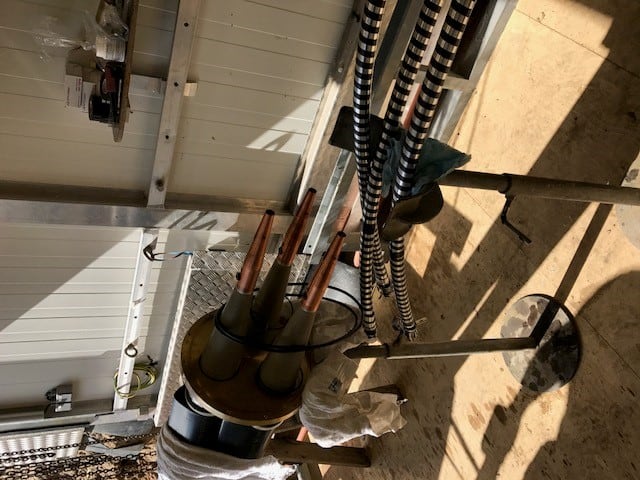
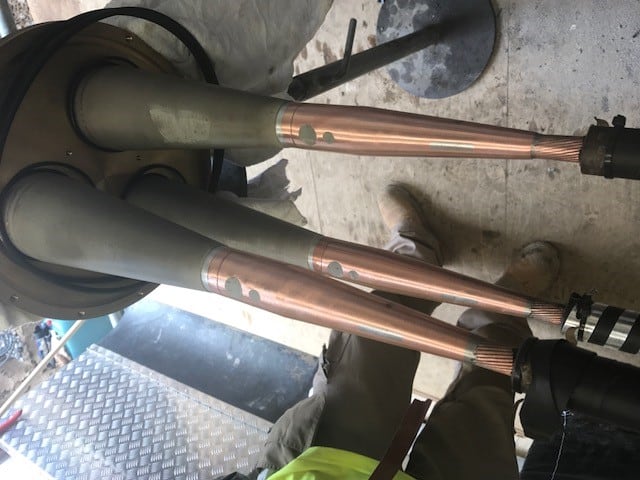
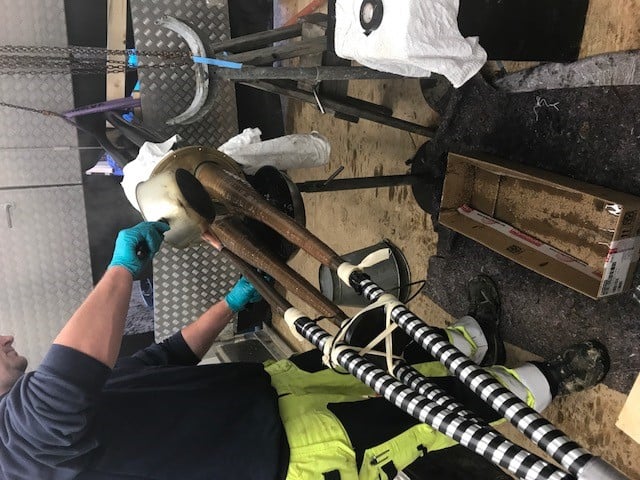
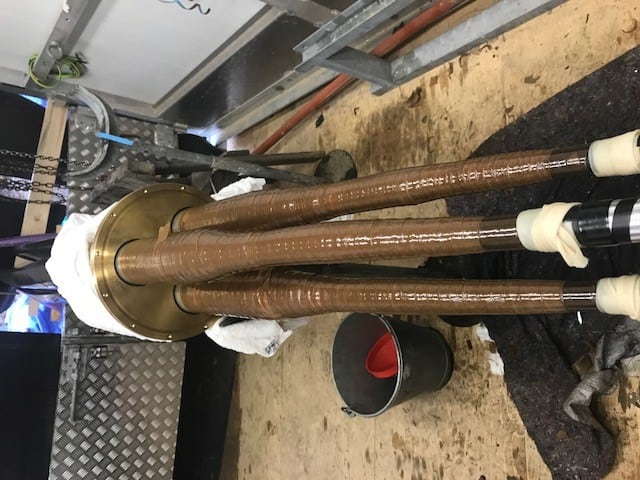
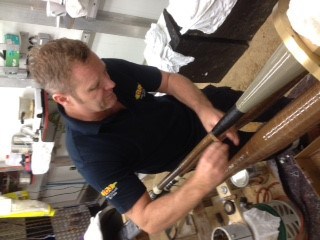
Image Courtesy: Emil Zlatev (Trainer & EHV Extra High Voltage Cable Jointer At Pfisterer)
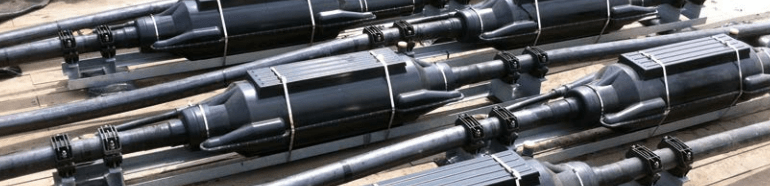
Pfisterer MV HV cable plugs and terminationsare suitable for all voltage levels and applications where medium or high voltage power cables must be reliably connected, terminated and distributed within the electricity supply industry.
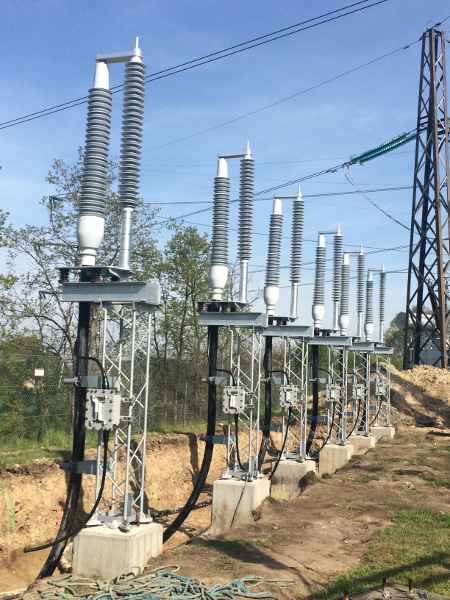
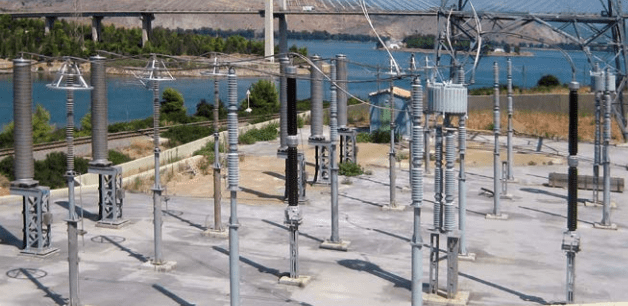
The self-supporting Pfisterer IXOSIL EST SUB design replaces conventional oil-filled or gas-filled outdoor terminations in substations. The supporting elements can be installed seperately on the substation steel structure while the cable termination can be fitted on the ground and then mounted in the supporting elements afterwards.
Subscribe now to our POWER NEWSLETTER– a monthly email circulation packed with news, projects, videos, technical tips, training information, promotions, webinars, career opportunities and white papers.
Includes access to our popular JOINTERS BLOG with contributions from utility professionals, linesmen and cable jointers working on MV HV EHV cables and overhead lines typically at 11kV, 33kV, 66kV and up to 132kV.
15,000+ Subscribers. ➡
Republished with the kind permission of Toni DringMarketing Executive at Ellis Patents
(World Leaders in the Design & Manufacture of Cable Cleats)
uploaded by Chris Dodds – Thorne & Derrick Sales & Marketing Manager
Ellis Patents
With concerns over climate change and fossil fuel security, the world is seeing a significant shift toward renewable energy sources. By 2040, it is expected that renewables could account for 30% of the world’s electricity supply.
Here in Europe, that could be as high as 50%.
One area of renewables which has seen significant growth and development is wind energy.
In the last 30 years, both onshore and offshore wind capacity have seen huge growth and the technology has developed at a fast pace. In fact, the latest turbine models produce 25,000 times as much power compared to the turbines used in the first ever commercial offshore wind farm 30 years ago.
The development of offshore wind turbines over the last 25 years is immense. (Graphic: Ørsted A/S formerly DONG Energy)
New Highs & Lower Costs
The cost of producing energy from wind is falling and relative to other sources, offers a viable renewable alternative. The cost of offshore wind has plummeted by almost 30% in the last two years and when compared to the future Hinkley Point C nuclear power station, costs just £40/MWh versus Hinkley’s expected £92.50.
This is an international trend too.
Globally, the portfolio of offshore wind projects rose 15% in 2019. Whilst Europe remains the largest single region, with significant installed capacity in the UK, Denmark, Germany and the Netherlands, there are significant project pipelines across North America & Asia.
As a world leader in the design and manufacture of cable cleats, Ellis Patents has been involved in ensuring safe cable installation practice on major windfarm projects across the globe. We’ve worked closely with operators, OEMs, EPC companies, cable manufacturers and cable installers, to ensure that we offer the best solution for their cable cleat requirements to safely retain and restrain LV MV HV cables in the event of a short circuit situation.
IEC 61914
As always, Ellis Patents greatest concern is to ensure that cable cleats are correctly specified to cope with the short circuit withstand requirements of the project. The formula below, taken from the International standard IEC 61914, can be used to calculate the forces between two conductors in the event of a three phase fault:
Ft = 0.17 x ip2 / S
Where:
Ft = force in Newton/metre (N/m)
ip = peak short-circuit current in kiloamps (kA)
S = distance between the centrelines of the conductors in metres (m)
Once Ft, in N/m, has been determined then the force for each potential cable cleat can be calculated. You can learn more about correctly specifying cable cleats here.
Cable Cleats IEC61914
When it comes to wind farm projects, there are often other considerations in addition to the usual short circuit concerns;
High Axial Requirements
When installing cables in the turbine tower, cable weight and the corresponding axial force on the cable cleat must be considered. By design, some cable cleats offer a greater axial load capability than others and therefore lend themselves more favourably to vertical installations.
Ellis Patents has the most extensive range of cable cleat designs on the market and as such, has a range of offerings suitable for vertical installations from stainless steel to polymeric products. With onsite facilities, we can offer testing to specific project requirements in addition to the IEC guidelines.
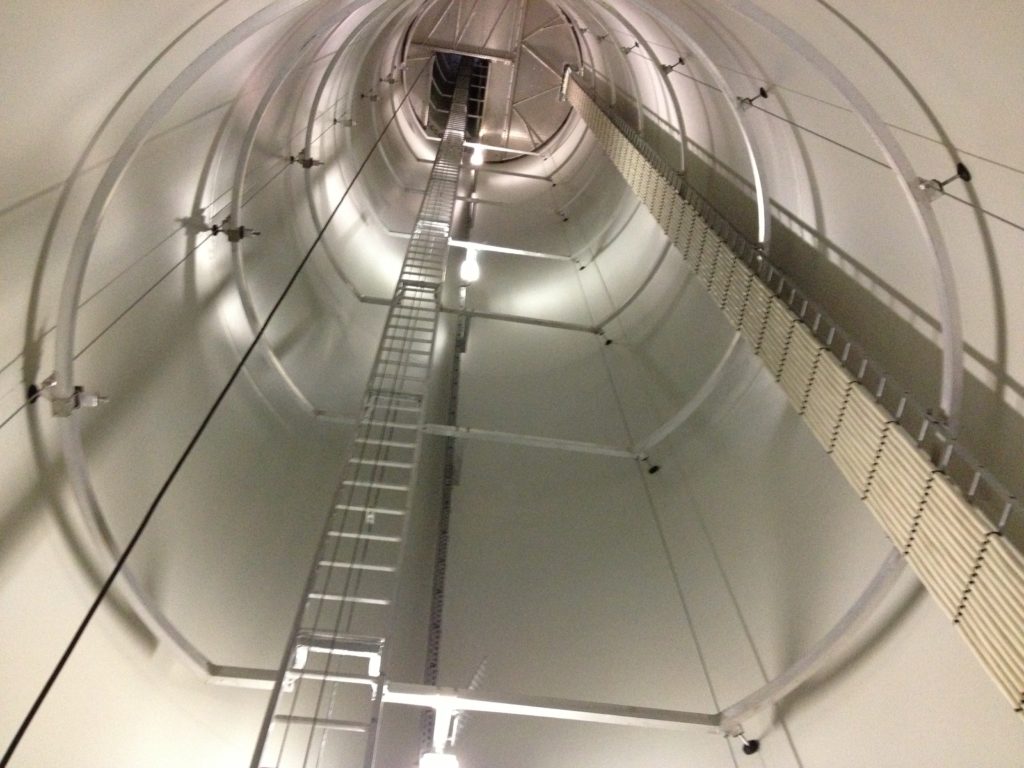
Inside Wind Turbine Tower. Image: Western Technology inc.
Restricted Installation Space & Installation Access
On a range of projects, installation space can be crucial. For wind farms, this could be an issue in the nacelle or inside the tower. No two Ellis Patents cable cleats look the same, offering the client a range of choices for installations.
For example, the Ellis Vulcan+ cleat has a very narrow design, meaning space between cable runs can be minimised. Equally important, the Ellis Emperor cleat offers a low profile design where available headroom is an issue.
Ellis Patents Vulcan Cable Cleats
Ellis Patents Emperor Cable Cleats
Cable Routing
On offshore windfarms in particular, large High Voltage (HV) cables have to take lengthy and complex routes to provide electricity distribution at 33kV and 66kV. In locations such as the Modular Offshore Grid (MOG), similar to large offshore substations, installers require an efficient, safe and cost-effective method to install their cables.
Belgian transmission system operator Elia has awarded Dredging International, part of the DEME Group, with a contract for the subsea cable installation for the Modular Offshore Grid (MOG) in the Belgian part of the North Sea. The installation scope includes the supply, installation and maintenance of the submarine power cables. The contract has been valued to approximately EUR 130 million. More info via offshoreWIND.biz.
Ellis Patents can offer Cable Guide Clamp – a product specifically designed for an offshore project. This cable support product offers a dual function as both a guide, eliminating the need for rollers, and a clamp. Designed with ease of installation at its core, Cable Guide Clamp is manufactured from a low friction polymer and offers a trumpet-like appearance to reduce contact surface area with the cable during pulling.
The wind sector will continue to grow, with a worldwide pipeline of projects already in the wings.
The development of floating wind turbine technology will also open up opportunities for deep-water areas, where fixed turbines are not feasible.
With an international network of distributors, Ellis cable cleats are tried, tested and trusted to safely secure cable on the world’s largest LV MV HV power and infrastructure projects. Please contact us for more information.
Subscribe today to ourPOWER NEWSLETTER & JOINTERS BLOG – a monthly email circulation packed with news, projects, videos, technical tips, training information, promotions, webinars, career opportunities and white papers
Thorne & Derrick are Specialist Distributors to the UK and international Offshore Wind & Renewable industry to provide safe and reliable LV HV Electrical Cable & Power Distribution Systems – we are highly customer responsive and absolutely committed to providing a world-class service.
We have an International Distribution Agreement with Nexans Power Accessories UK to supply their Heat Shrink and Cold Applied ranges of 11kV/33kV/66kV joints and terminations and Euromold brand of separable connectors.
Since 1985, we have established an international reputation based on Service, Integrity and Trust – contact us.
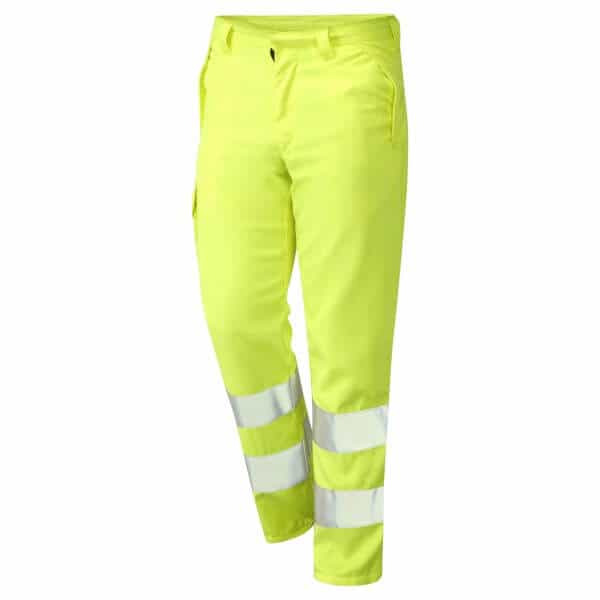
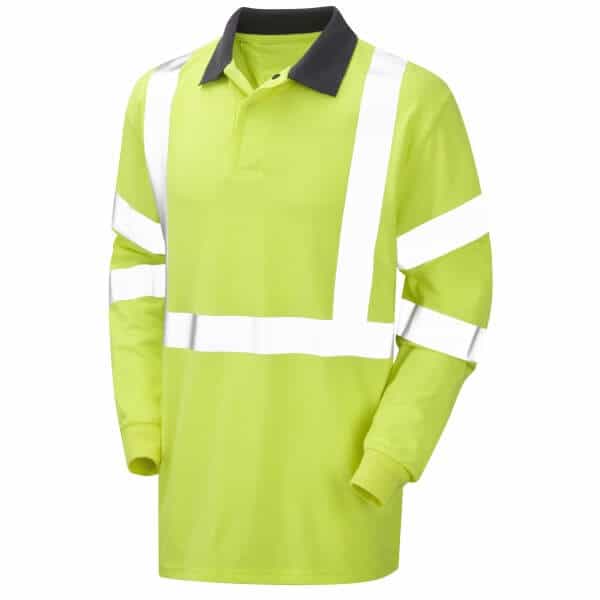
ProGARM is the leading UK manufacturer of high-quality flame-resistant Arc Flash coveralls, garments and workwear – they work successfully with their UK Distributor Thorne & Derrick to save lives and reduce accidents.
ProGARM is the only UK manufacturer concentrating on and specialising 100% in Arc Flash protection and Flame Resistant garments for industry.
The dangers of Arc Flash incidents and the importance of protection from these hazards has never been as significant as it is today. This prominence will continue to increase over the next few years.
With multiple cable strikes every day in the UK and numerous major Arc Flash incidents, businesses are looking at how best to protect their team with the right Arc Flash and flame resistant garments. The correct clothing can significantly reduce injury and save lives.
ProGARM is committed to continual research and improvement to innovate and develop their range as quickly as possible to bring you the best Arc Flash protection for your team.
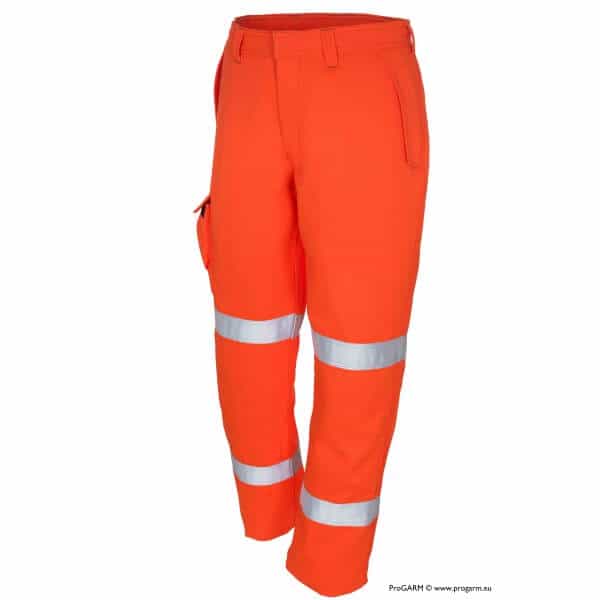
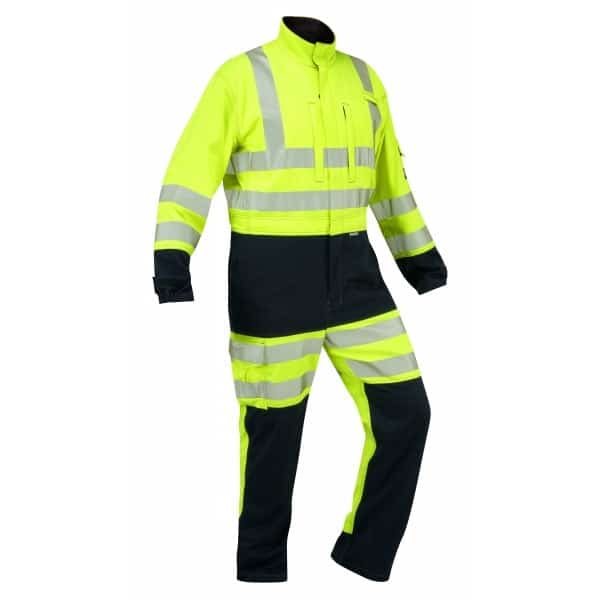
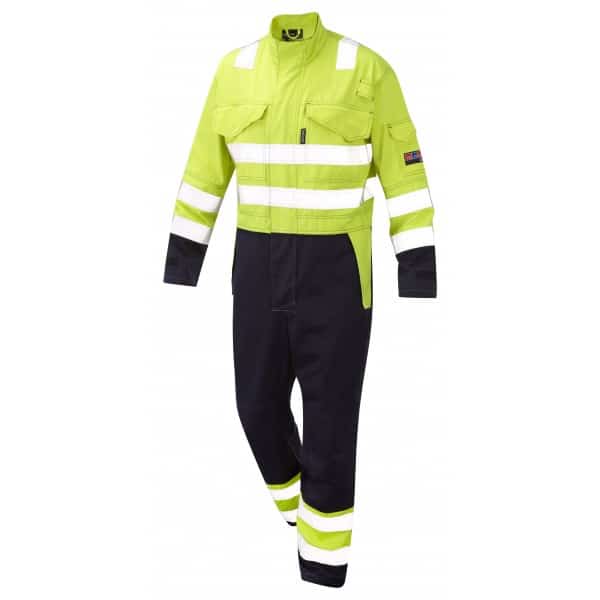
Designed specifically for the utility, energy and railmarkets, the 4658 is an alternative coverall to the 6458, which is also RIS compliant and manufactured using recently upgraded Hi-Vis Orange VXS+ fabric.
Featuring all the components found on the 6458 Arc Flash coverall, the 4658 brings style, practicality and protection for both the utility and rail sectors it has a range of adjustable elements, well-designed pockets and an ergonomic design for use with a harness.
Made from ProGARM industry-leading VXS+ inherent fabrics and Thermsafe™ components, this is a garment that’s with you for the long haul, offering not only practicality and comfort but great value for money. The 4658 comes with ProGARM’s lifetime seam guarantee, to give you that extra peace of mind and protection against arc flash.
Arc Flash Coveralls | ProGARM 4658
WHAT IS AN ARC FLASH?
An electric arc occurs whenever a circuit breaker, switch or isolator (Device) is opened and when there is current flowing in the circuit. However, most devices under normal operating conditions are designed to control the arc when opening or closing.
An arc flash may occur when the arc isuncontrolled and there is sufficient energy released to cause harm or damage.
Arc flashes occur both at high voltage and low voltage. There is little discrimination: low voltage arc flashes injuries are just as damaging at high voltage injuries.
Put simply: An Arc Flash is the light and heat produced from an electrical arc supplied with sufficient energy to cause significant damage, fire or injury.
WHAT ARE THE DANGERS OF AN ARC FLASH?
An Arc Flash can cause minor injuries, third-degree burns and potential death as well as other injuries including blindness, hearing loss, nerve damage and cardiac arrest. Fatal burns can occur when the victim is several feet from the arc. Serious burns are common at a distance of 10 feet – arc flash can generate heat 4 times greater than the surface of the sun.
The dangers of an Arc Flash
Arc Flash Learning & Resources
Thorne and Derrick are proud to be distributors of ProGARM arc flash coveralls and protection.
We can help – should you require arc flash calculators or advice on the type of clothing and protection available please do not hesitate to contact us.
Thorne & Derrick are national distributors of LV, MV & HV Cable Installation, Jointing, Substation & Electrical Equipment – servicing businesses involved in cabling, jointing, substation earthing, overhead line and electrical construction at LV, 11kV, 33kV, 66kV and EHV. Supplying a complete range of power cable accessories to support the installation and maintenance of low/medium and high voltage power systems:
Cable Jointer: Dean Wilson Owner Director at D C Jointing Ltd
Featured Manufacturer: NKT Cables
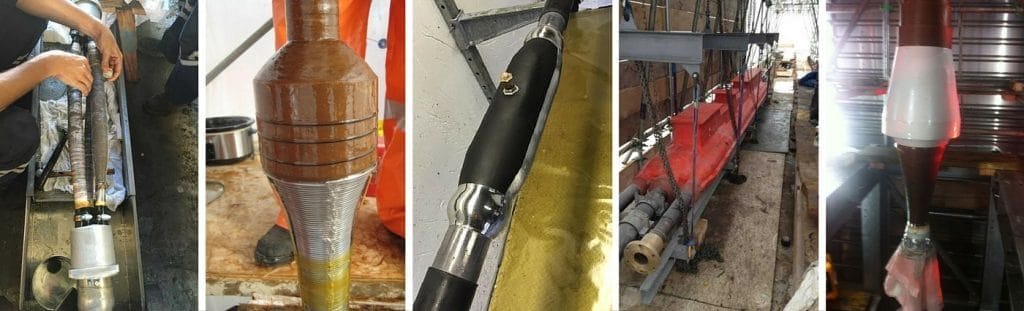
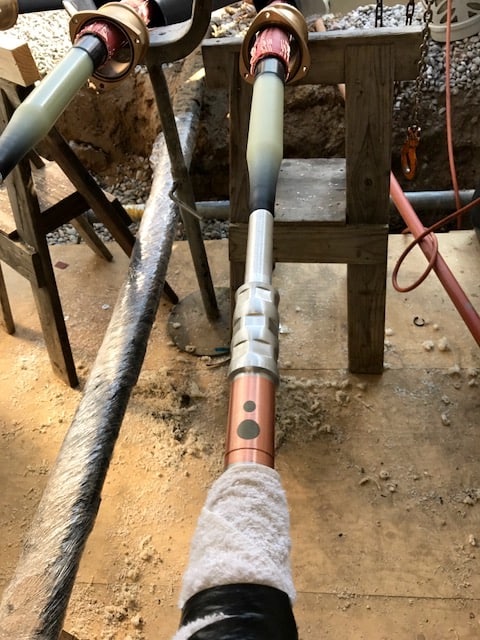
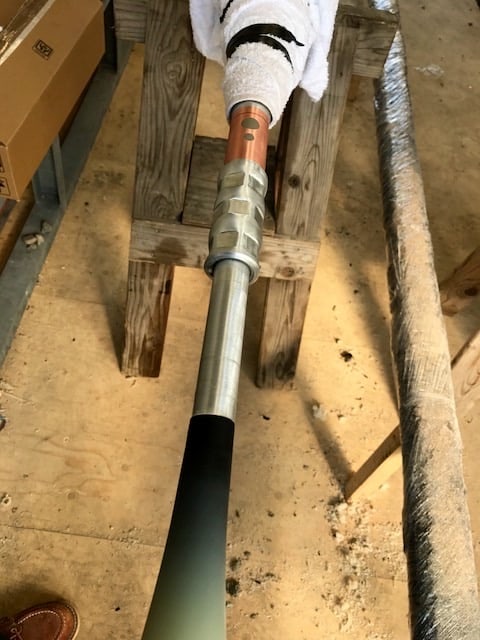
Weighted piano wire was used for the chamfer. Connectors are sweated on with solder. Hand skills are very important and not so much tooling for the oil.
Oil Cable
Sweated Ferrule & Paper Insulation Chamfered Prepared For Taping
XLPE Cable
Cable Crimped, Insulation Chamfered & Polished Prepared For Taping
XLPE Cable
Cable Crimped, Insulation Chamfered & Polished Prepared For Taping
Knitmesh screens applied over cores
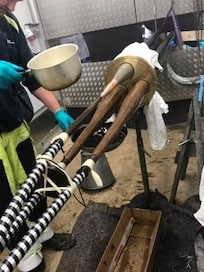
Basting with hot oil prior to taping
All three cores taped
Plumbed ready for vacuum
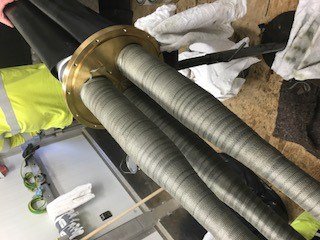
Opening up the lead
Cut
Cores
XLPE side ready for oil side
Connectors sweated
Basting as you are taping
Crepe taping
NKT cable Joints & Terminations Overview
Outdoor cable terminations (porcelain or composite)
Non-self-supporting outdoor cable terminations
Cable terminations for gas-insulated switchgears (GIS)
Should you require any assistance with the selection or specification of cable joints or terminations please do not hesitate to contact us.
Jointers blog
Subscribe now to our POWER NEWSLETTER– a monthly email circulation packed with news, projects, videos, technical tips, training information, promotions, webinars, career opportunities and white papers.
Includes access to our popular JOINTERS BLOGwith contributions from utility professionals, linesmen and cable jointers working on MV HV EHV cables and overhead lines typically at 11kV, 33kV, 66kV and up to 132kV.
klauke ekm60unv – universal cutting, crimping & punching tool The Klauke EKM 60 UNV is a versatile battery powered hydraulic universal tool engineered that can be used as a battery powered cable crimping tool and battery operated cable cutting tools that comes...
INDUSTRIAL LABEL PRINTING SOLUTIONS When clear, durable and professional identification is required across control panels, cable systems, production facilities and industrial installations, print quality, reliability and ease of use are critical. Cembre industrial label printers are designed to support...