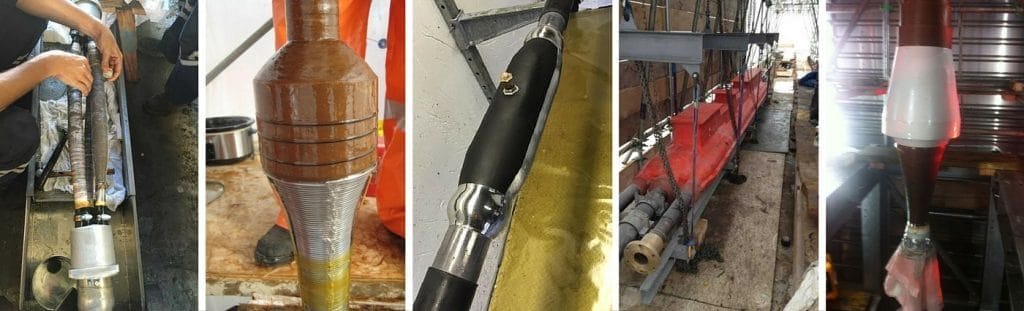
- Application: LV Cable Diversion 4 Core PILC to 4 Core Wavecon Straight Joint
- Cable Type: Wavecon Straight Joint
- Cable Jointer: Lee Richards Self Employed Cable Jointer
Jointing Waveform Cables
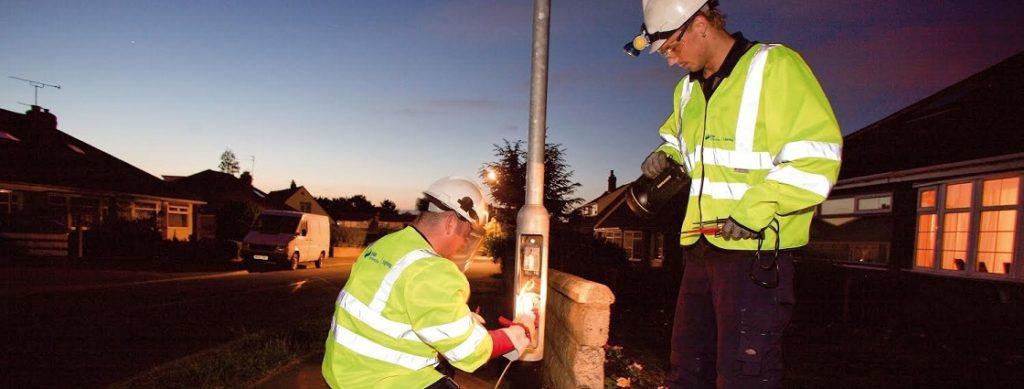
Here Lee Richards is shown carrying out some LV cable diversions for a private network customer – the installation required 4 x PILC to 4 core Wavecon joints and the cable jointing was assisted by Simon Pearson (Freelance HV SAP Electrical Engineer).


Thorne & Derrick Specialist Electrical Distributor
LV ♦ MV ♦ HV
T&D distribute the most extensive range of LV, MV & HV Cable Jointing, Terminating, Installation & Cable Pulling Equipment – we service UK and international clients working on underground cables, overhead lines, substations and electrical construction at LV, 11kV, 33kV and EHV transmission and distribution voltages.
- Key Products: MV-HV Cable Joints & Terminations, Cable Cleats, Sealing Cable Ducts, Cable Transits, Underground Cable Protection, Cable Jointing Tools, Feeder Pillars, Cable Ducting, Earthing & Lightning Protection, Electrical Safety, Cable Glands, Arc Flash Protection & Fusegear.
- Distributors for: 3M, ABB, Alroc, Band-It, Catu, Cembre, Centriforce, CMP, Elastimold, Ellis Patents, Emtelle, Furse, Lucy Zodion, Nexans Euromold, Pfisterer, Polypipe, Prysmian, Roxtec.

LV – Low Voltage Cable Joints, Glands, Cleats, Lugs & Accessories (1000 Volts)

MV HV – Medium & High Voltage Cable Joints, Terminations & Connectors (11kV 33kV EHV)

Cable Laying – Underground Cable Covers, Ducting, Seals & Cable Pulling Equipment
More…
T&D’s Power Blog covers: LV MV HV & EHV Transmission & Distribution, Substations, Switchgear, Cable Jointing & Termination, Cable Fault & Repair, Underground Cables.
arrow: Visit Power Blog


Steel Cable Hooks | Power Cable & Trailing Cable Support | BS7671 Regulations
Cable Hooks
by Tidi-Cable
The 18th Edition of the IET Wiring Regulations (BS7671) is effective as of January 1, 2019.
That means construction site managers, health and safety managers, electricians and electrical contractors need to be fully compliant and up-to-date with the new BS7671 wiring regulations – especially in relation to how cables are supported in the event of a fire whether using cable hooks, ties or hangers.
The new 18th Edition wiring regulations include updates designed to reduce the risk of death from the placement of hanging cables. The aim is to improve installation safety using the adequate placement of metal clips, hooks or cable hangers to support hanging power or trailing cables – this includes adequate, reliable and safe support for single and multi-core armoured (SWA) cables according to BS5467.
Other updates in BS7671 include new RCD protection requirements and recommendations for installing Arc Fault Detection Devices (AFDDs).
If you’re a construction site manager or a health and safety consultant or manager, it pays to be fully aware of the new wiring regulations – especially if you’re responsible for cable fixing installation across a site.
Electricians or electrical contractors installing, hanging or suspending electrical cabling will need to meet full wiring regs compliance by January 1, 2019.
This article explains what the new 18th Edition wiring regulations mean in terms of fixing and suspending electrical cables.

Picture by Hampshire Fire and Rescue. Via BBC.
BS7671?
Why Have The 18th Edition Wiring Regulations (BS7671) Been Changed?
BS 7671 (IET Wiring Regulations) sets the standards for electrical installation in the UK and many other countries. The IET co-publishes BS7671 with the British Standards Institution (BSI) and is the authority on electrical installation.
Known as Regulation 521.10.202, the aim of the new wiring regulations regarding the fixing of hanging LV cables is to reduce the risk posed by suspended cables in the event of a fire – typical cable hanging methods include hangers, hooks or conventional Ty-Raps, cable ties.
The change of wiring regs follows the tragic death of two firefighters at Shirley Towers in 2010 who became entangled in fallen cables.
Two firefighters also lost their lives in 2005 at Harrow Court Tower Block where one of the firefighters had become fatally entangled in fallen electrical cables.
The 18th Edition wiring regulations aim to avoid similar incidents. This is especially true with high-rise building developments, where fires have devastating potential – a priority for construction site managers or a health and safety consultant or managers.
The risk of fire on construction sites should also be a consideration when managing cables.
Although not common, when construction sites fires occur the materials exposed and contained within a site mean that fire can spread rapidly. Knowing how cables can be better managed can reduce to risk to workers on site as well as emergency service crews.
What Do The 18th Edition Wiring Regulations (BS7671) Require?
The new wiring regs come into effect in January 1, 2019.
The 18th Edition states that plastic fixings cannot be used as the sole use of holding up and hanging of cables. However, the IET states:
“Suitably spaced steel or copper clips, saddles or ties are examples that will meet the requirements of this regulations.” This means that plastic fixings such as hooks, hangers or cable ties can be supplemented with metal types – but that electricians and electrical contractors cannot rely exclusively on plastic clips, saddles or ties.
Temporary Cables
The 18th Edition wiring regulations apply to all types of cable installation and not just escape routes such as fire exits.
Regulation 521.10.202 now requires cables to be adequately supported against their premature collapse in the event of a fire. It applies to all types of cable that could fall in the event of a fire.
This means that cables fixed against a wall (that don’t cover a doorway) can be supported fully by plastic fixings as if the cable fell in a fire, it would fall to the corner of the corridor and not trap anyone.
What Type Of Cable Supports Does The 18th Edition Wiring Regulations Allow?
This part is left open to interpretation – Regulation 521.10.202 calls for ‘adequately supported’ cables – and we feel that it would be better if the IET would clarify with a clear definition of what ‘adequately supported’ means.
However, experts consider the new wiring regs call for metal cable supports to ensure compliance. This includes all cable supports such as cable trays, baskets, hangers and hooks.
Does The 18th Edition Ban The Use Of Plastic Cable Fixings?
Plastic fixings are not banned and can be widely used throughout the industry as a cost-effective way to manage cables. However, plastic cabling fixings can no longer be used as the sole means of securing cables in place. This will affect the sole use of products such as:
- Cable ties
- Cable clips
- Cable hangers
- Plastic conduit (with plastic fixings)
- Plastic trunking
- Plastic fixings holding up cable tray
- Plastic cable hooks and hangers
Existing plastic cable management solutions will need to be supplemented by metal fixings to ensure they’re not the ‘sole means of supporting’ cables.
Fire Safety Notice
The new range of Tidi-Cable steel cable support and hanging products are fully compliant with the new 18th Edition of the IET Wiring Regulations with effect from January 1, 2019. It is a legal requirement that plastic products must be supplemented with steel or copper fixings, preventing any risk of cables falling in the event of a fire.

Plastic Cable Ties Holding Up Cables
Does The 18th Edition Wiring Regulations Apply To Existing Cable Installations?
The Regulations apply to the design, erection and verification of electrical installations, as well as additions and alterations to existing electrical cable installations.
The good news for construction site managers and health & safety consultants/managers is that existing installations that have been installed in accordance with earlier editions of the Regulations do not need to be replaced.
This change is not retrospective and any installations fitted before 1st January may still be compliant.
The new regulations have been welcomed by the fire services. According to Charlie Pugsley of the London Fire Brigade’s Fire Investigation Team:
“We believe it’s essential [521.10.202] because … we’ve lost three firefighters in the course of firefighting operations, where the clips have become damaged by fire and cables have dropped and then crews have become entangled. We feel this is a really good, positive step to improve safety for our officers and also for the public”.

How has Tidi-Cable prepared for the 18th Edition wiring regulations (BS7671)?
Tidi-Cable is fully supportive of the 18th Edition wiring regulations.
Tidi-Cable has developed a range of metal cable supports and fixings to help ensure construction site managers responsible for electricians and electrical contractors are fully compliant of the new wiring regs.
The range of steel cable supports and fixings are re-usable, strong and effective for installing and pulling cables on construction sites.
Tidi-Cable have been developing these new products over the past 12 months in preparation for the new regulations – the high-quality cable fixing and hanging ranges are safe, easy-to-use and cost-effective while meeting 18th Edition wiring regulations.
Tidi-Cable have a range of products including Tidi-Hooks and Tidi-Hangers suitable for construction sites, factories, festivals, events and other industry sections – the S shaped cable hooks provide temporary cable support to construction site cable installations.

Tidi-Cable Tidi-Hooks
Tidi-Cable has been at the forefront of manufacturing cable management solutions for over six years and feel that the below additions to the range further secure their position in the cable support and fixings market. Benefits include:
- Full 18th Edition wiring regulations compliance. The new product range is 18th Edition compliant. Steel cable fixings and supports can be used either completely in the place of plastic products or use to supplement them.
- Heavy duty cable fixings. The added benefit of the metal cable supports is the versatility to support and fix heavier items such as armoured cables, pipework and compression hoses that often need to be managed properly to keep sites safe.
- Temporary and permanent installation. The steel cable supports are ideal for both temporary and permanent cables. Cable supports been created to manage temporary power and lighting distribution in order to keep leads safely above head height, and to help eliminate slip, trip and fall risks.
- Cable security. Pulling cables has its own problems and using hooks historically can be problematic in that cables often fall out of hooks. The customers asked for versions where cables can be contained more within a hook. Tidi-Cable are pleased that in the development of the new fire proof range they have addressed this issue by creating systems that keep cables secured in place.
Safe cable management is a priority at Tidi-Cable and Thorne & Derrick International.
As construction site managers, health and safety managers or electrical contractors looking to comply with 18th Edition wiring regulations, our products are compliant, trusted, easy-to-use and cost-effective.
With more sectors needing electrical cable management – from theatres to music venues with increased power and lighting demands – our ranges will ensure you meet the new wiring regulations.

LV, MV & HV Jointing, Earthing, Substation & Electrical Eqpt
Thorne & Derrick International are specialist distributors of LV, MV & HV Cable Installation, Jointing, Duct Sealing, Substation & Electrical Equipment – servicing UK and global businesses involved in cable installations, cable jointing, substation, overhead line and electrical construction at LV, 11kV, 33kV and EHV.
THORNE & DERRICK Product Categories: Duct Seals | Cable Cleats | Cable Glands | Electrical Safety | Arc Flash Protection | Cable Jointing Tools | Cable Pulling | Earthing | Feeder Pillars | Cable Joints LV | Joints & Terminations MV HV

Manufacturers of MULETAPE
Burn Through
The Case for MULETAPE vs. Rope
NEPTCO is a global leader in the manufacturing of materials used for the Detection & Pulling of Cables for a wide variety of commercial and industrial applications.
In this Blog, NEPTCO answer questions regarding their advanced specification MULETAPE which includes a comparison to using traditional cable pulling ropes.
 NEPTCO’s range of measuring and pulling tapes substantially reduce cable installation labour, materials and stock holding costs by providing a threading line, a measuring tape and a winch line all in one product – this reduces damage to underground plants, improves efficiency and enhances worker safety.
Q: What is “burn through?”
A: When polypropylene rope is pulled through PVC or polyethylene duct, the friction generated by the rope rubbing against the conduit wall creates enough heat to actually “burn through” the cable ducting or conduit – this can occur with or without cable lubricant
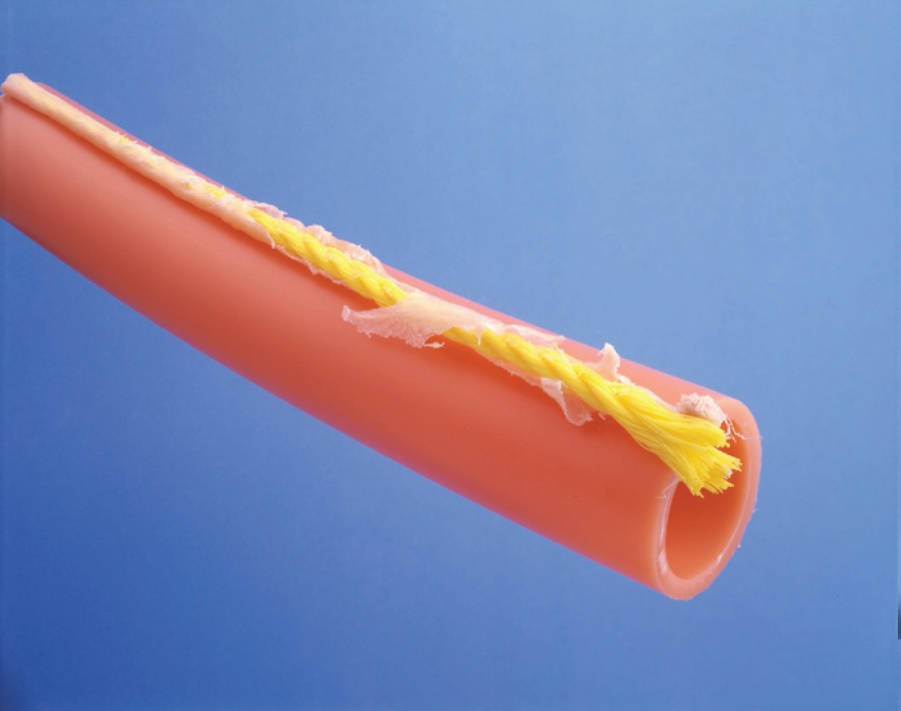
“Burn Through” caused by the friction from cable pulling rope.
Q: Why should this matter to me?
A: Aside from damaging the conduit or cable duct and creating opportunities, the jagged edges of the burned conduit pose a real threat to the cable installed by the contractor.
Cable surging through the damaged conduit or duct at an average rate of 100 ft. per minute will catch on the damaged areas of conduit, shredding the outer jacket. Fibre Optic cables are particularly vulnerable since the situation which can lead to excess tension and can cause micro-bending. As a result, the cable may fail prematurely, or simply not function at all.

A damaged cable as a result of using cable pulling rope.
Q: How does NEPTCO know these things happen? After all, you can’t see what’s happening underground!
A: NEPTCO has gone to great lengths to test this theory by duplicating installation conditions in the lab and in the field. Their research engineers designed the Duct Cut Tester to evaluate the performance of various conduit materials and winch lines under typical installation conditions.
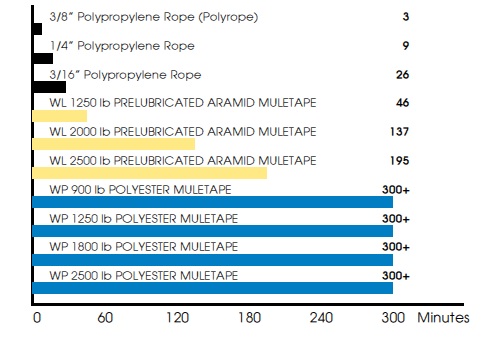
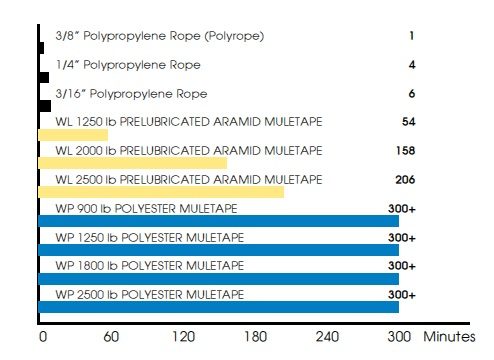
The results tabulated on the reverse side of this sheet are conclusive: pre-lubricated MULETAPE out-performs polypropylene rope in every installation scenario.
Q: Why does MULETAPE work so much better than cable pulling rope?
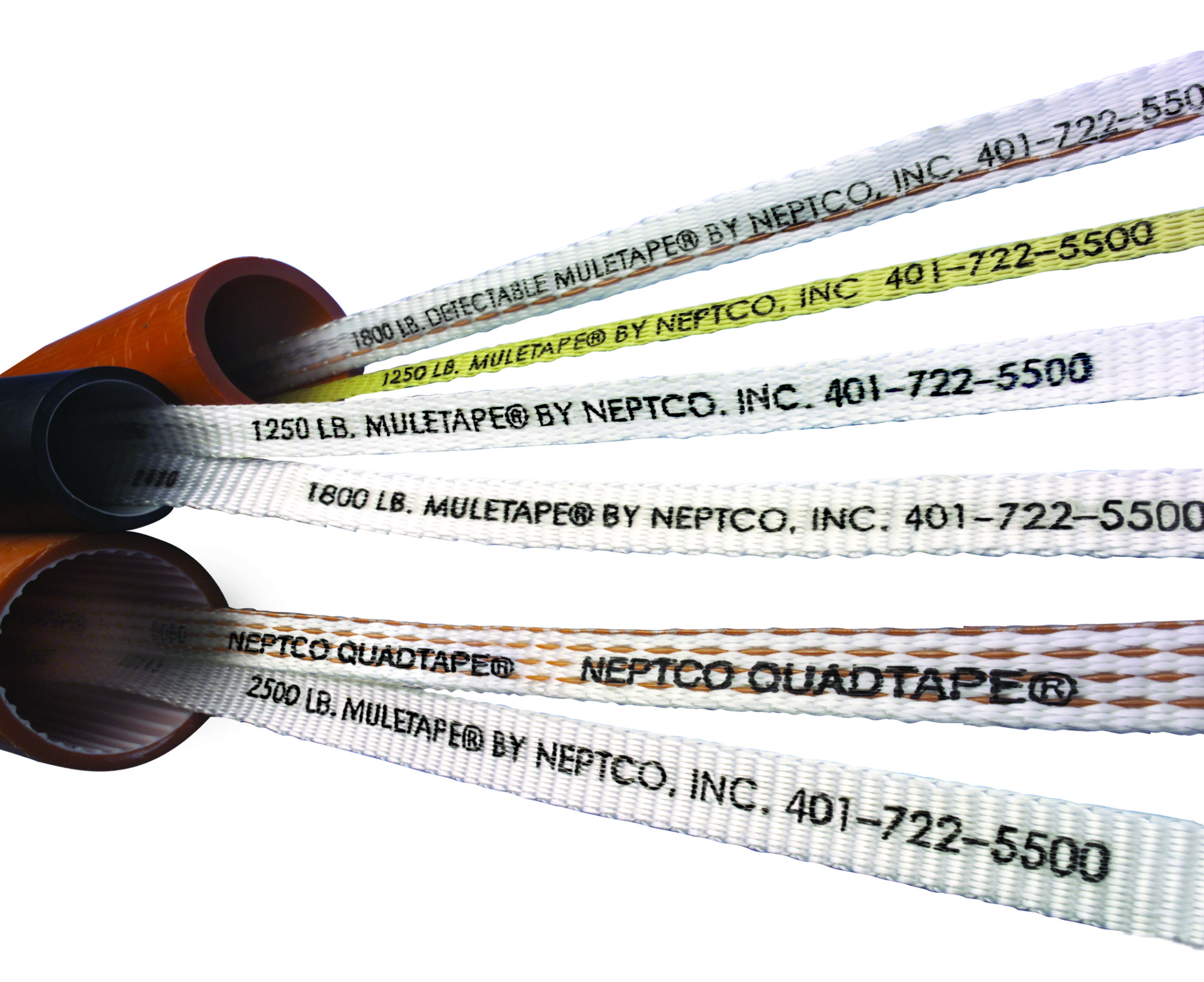
A: MULETAPE is pre-lubricated, which helps reduce friction and the heat it generates, but MULETAPE’s wide and flat profile is also important. A round rope will concentrate all heat and energy on the small area where the rope comes in contact with the innerduct. MULETAPE is flat, and therefore spreads this heat and energy across a wider area, reducing the chance of burn through.
 |
 |
| MULETAPE by NEPTCO | Cable Pulling
|

NEPTCO Duct Cut Tester
The charts below indicate the time elapsed before conduit experiences damage due to burn through:
Duct Cutting in Corrugated 1.5” ID HDPE Subduct
 |
Duct Cutting in Smooth Walled 1.5” ID HDPE Subduct
 |
Duct Cutting in Corrugated 1.5” ID PVC Subduct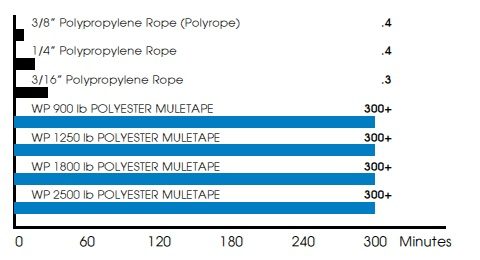 |
Duct Cutting in 2” Schedule 40 PVC 90° Subduct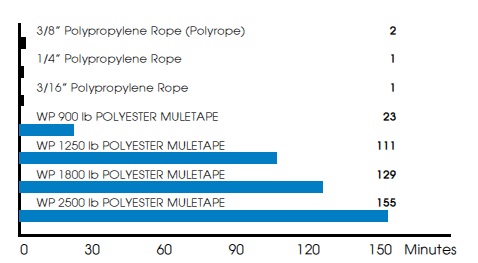 |
Q: Okay, I understand that burn through is a problem, but I’m still not convinced this is really happening in the field. Do you have any evidence that cable can actually be damaged in a real installation?
A: Absolutely. If you have ever experienced a rope breaking during a pull, it is caused by the cable getting snagged on a duct that has been burned through. The rope is usually narrower than the cable and pulling sock and is able to make its way back into the duct, however, because the cable and pulling sock are wider they may not be able to make their way back into the duct. When this happens, the tension rises, the pull becomes more difficult and the rope may break. This not only causes a health and safety hazard, the possibility that the cable is damaged is extremely high. In 1999, NEPTCO recreated a typical installation scenario in an above-ground test. The results were just as expected – the rope burned through the conduit in seconds, while the MULETAPE caused no damage.
To request a video of this experiment in CD or VHS format, please contact [email protected]
MULETAPE Features & Benefits
- Eliminates the potential for cable duct cutting
- Lower elongation reduces snap-back and enhances
- Worker safety reduces tension at the start of a cable pull
- Sequential footage or metric markings
- Reduces material, inventory and freight costs
- Cable pulling strength – 200 lbs. to 6000 lbs
- Patent pending

MULETAPE Ordering Information
| Item |
MULETAPE Part Number |
Strength (kg) |
Typical Bowline Strength (kg) |
Typical Muleknot Strength (kg) |
Pail Quantity (km) |
Approx Pail Weight (kg) |
Pails Per Pallet |
| 41271 |
WP400P |
182 |
86 |
136 |
1.4 |
6 |
27 |
| 41325 |
WP1800P |
818 |
377 |
636 |
0.4 |
6.4 |
27 |
Request Your FREE MULETAPE Sample
Our products substantially reduce cable installation labour, materials, and inventory costs by providing a threading line, a measuring tape, and a winch line all in one product. Reduces damage to underground plants, improves efficiency, and enhances worker safety.
You can’t miss this opportunity if you are a Utility Company or a Contractor. Weather you are looking for pulling tapes, or a tracer wire, before you invest a large amount, we are giving you the option to see our products look and feel.
MULEGLIDE Cable Blowing & Cable Pulling Lubrication
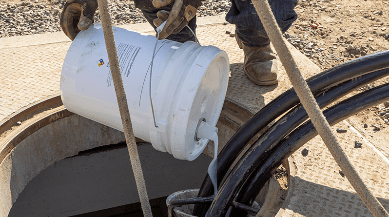
NEPTCO‘s long-lasting silicone cable blowing/pulling lubricant called MULEGLIDE is an ideal LV, MV & HV cable lubricant, available as low-viscosity Underground Cable Blowing Lubricant or MV HV Underground Cable Pulling Lubricant, which allows for swift and safe underground cable installation.
Further Reading
Cable Pulling & Laying Equipment
Suppliers & Distributors
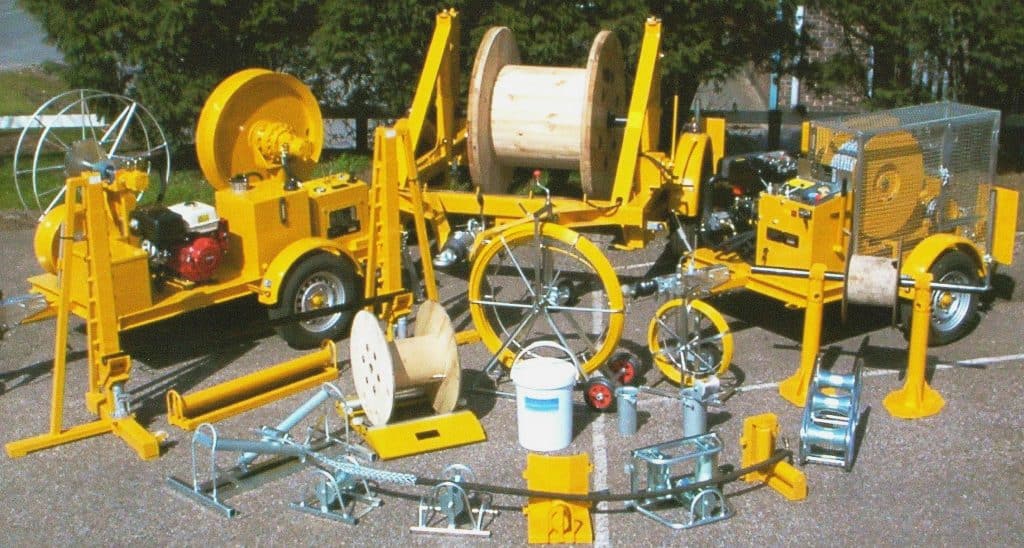
Thorne & Derrick distribute the most extensive range of Low & High Voltage Cable Installation & Electrical Distribution Equipment to the Power Transmission & Distribution industry in the onshore and offshore wind, solar, rail, oil/gas, data centre, battery storage and utility sectors – this includes the most extensive range of Cable Pulling & Cable Laying Equipment to enable the installation of low, medium and high voltage power cables into underground trench or duct.
We service UK and international clients working on underground cables, overhead lines, substations and electrical construction at LV, 11kV/33kV and up to EHV transmission and distribution voltages.
Key Products: MV-HV Cable Joints & Terminations, Cable Cleats, Duct Seals, Cable Transits, Underground Cable Protection, Copper Earth Tapes, Cable Jointing Tools, Feeder Pillars, Cable Ducting, Earthing & Lightning Protection, Electrical Safety, Cable Glands, Arc Flash Protection & Fusegear.
Distributors for: 3M Electrical, ABB, Alroc, Band-It, Cembre, Centriforce, CMP, Elastimold, Ellis Patents, Emtelle, Furse, Lucy Zodion, Nexans Euromold, Pfisterer, Polypipe, ProGARM, Prysmian, and Roxtec.
- Scope –single-source supply of extensive range of products
- Stock – a multi-million pound stock holding provides complete global supply solutions
- Staff – technical support from a trained, proactive and friendly team
- Delivery – UK stock turnaround with express logistics to all international destinations


Heat Shrink Sleeve For VFD Cables
Thorne & Derrick International, based in the UK, are Specialist Distributors of cable repair products used to re-instate damaged cable sheaths and jackets where the extent of damage to the cable does not necessitate the need to carry out a cable joint to the section of compromised cable.
What Are VFD Cables?
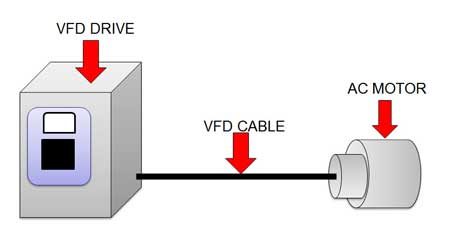
Basically, VFD cables distribute electrical power from AC drive systems to AC motors.
Variable-frequency AC motor drive output cables are subject to harsh operating settings characterised by high voltage spikes, high noise levels and adverse environmental conditions during normal service conditions.
Consequently, VFD cables must conduct not only the overall high power levels of the pulse-width modulated (PWM) signals but also the extremely high voltage which can occur when standing waves develop on the conductors. This high voltage can cause corona discharges to occur between the conductors of conventional cables, causing damage not only to the cabling itself, but also to the motors, bearings, drives and related equipment.
This damage can cause failure of the entire drive system, resulting in costly production downtime. Here, we present a simple but effective method of repairing cable sheath damage to VFD cables using cable repair tapes manufactured by 3M Electrical.
Why High Performance VFD Cable Is Important
Image : Belden
TEOF F-RFOU Offshore Cables
Armoured VFD Cables
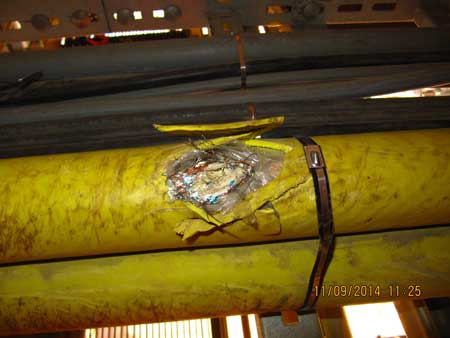
Pictured below is a Prysmian (P) TEOF F-RFOU P1/P8 VFD 1.8/3kV 3X150+3G35mm2 IEC 60332-3-22 2013 cable – the cable outer sheath has been clearly damaged.
CABLE REPAIR TAPEs
A recommended cable repair solution is to remove the outer VFD cable jacket 200mm each side of the damage so a confident and accurate assessment of the extent of cable damage can be ascertained.
Assuming cable damage is limited to the sheath and not caused impact into the cable wire armour or braid then a simple cable repair can be made using 3M Scotch 24 copper mesh shielding tape, 3M Scotch 2228 rubber mastic sealing tape and then cable sheath re-instatement using 3M HDCW heat shrink wrap-around cable repair sleeve.
Scotch 24 Tape
- Manufacturer: 3M Electrical
- Brand: Scotch Tapes
- Stock Code: 3M Scotch 24 Tape
- Product Category: Electrical Tapes
- 3M Scotch 24 Tape Application: All metal open weave shielding braid, conformable, temperature stable. Continue electrostatic shielding across splice.
- 3M Scotch 24 Roll Sizes:
- 1″ x 15′ (25 mm x 4,5 m)
1″ x 100′ (25 mm x 30,5 m)
2″ x 10′ (51 mm x 3,05 m)
Scotch 2228 Tape
- Manufacturer: 3M Electrical
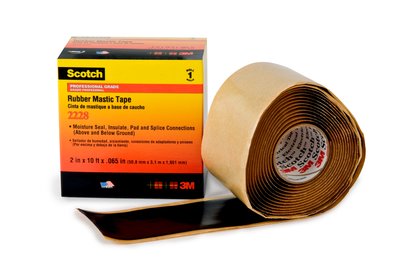
- Brand: Scotch Tapes
- Stock Code: 3M Scotch 2228 Tape
- Product Category: Electrical Tapes
- Sub Product Category: Insulation Tapes
- 3M Scotch 2228 Tape Application: Highly conformable, super stretchy in all weather applications; resists UV rays, abrasion, corrosion, alkalies and acids. Primary insulation for splices up to 600V. Protective jacketing.
- Max Temperature: 90°C / 194°F emergency overload of 130°C / 266°F
- 3M Scotch 2228 Roll Sizes:
- 2″ x 3′ (50 mm x 0,9 m)
1″ x 10′ (25 mm x 3,0 m)
2″ x 10′ (51 mm x 3,05 m)
LV Cable Joints (Low Voltage Cables)
Thorne & Derrick stock and distribute LV Joints in Cold Shrink, Heat Shrink or Resin Cast technologies – multicore and multi-pair cable joints are available for immediate backfill and energisation of Low Voltage power, control and instrumentation cables 600V/1000V 3.3kV.
Complete range of LV Cable Accessories ➡
Cable Breakouts | Cable Caps | Cable Lugs | Cable Cleats | Cable Trough | Cable Duct | Feeder Pillars | for 11kV/33kV/66kV networks see MV HV Joints & Terminations


Central Earth Terminal (CET)
Earthing System For SWA Wire Armoured Cables | Cable Glands & CETs
Thorne & Derrick International, based in the UK, continue to supply CET Central Earth Terminal cable gland plates to street lighting contractors for the termination and installation of BS5467 Low Voltage XLPE Insulated SWA Armoured 600V/1000V power cables.
The CET Earthing System is specified for the termination and bonding of all sizes of SWA armoured cables into confined spaces of street furniture – typical applications include street lighting columns, feeder pillars or traffic signs.
CET002 & CET003
The CET Central Earth Terminal is available in 2 designs – the CET002 and CET003 series of earth terminals offer an inherently strong and simple design which exceeds the BSI (Cable Gland) torque test, manufactured exclusively in zinc plated solid brass.
CEL offers a comprehensive range of earthing components that cater for all standard size armoured cables – the terminals are easy to use and install by the street lighting engineer.
All wire armour cable terminations are “made-off” from the front without the need of a spanner providing an effective earth bond.

CET002 Terminal
The Charles Endirect range of earthing terminals includes compression glands, CET’s, saddles, terminal blocks and gland plates for the earthing and bonding of all steel wire armoured (SWA) street lighting cables.
Pictured: Earth Terminal CET002 – shown terminating wire armoured cables with the armours in the splayed position.
Cable Glands BW CW
The CET system is complemented by a full range of BW brass cable glands and CW brass glands to BS6121 and stand off gland plates as well as the solid brass earth blocks – EB42 – frequently used on street furniture backboards.
- BW20, BW25 and BW32 Cable Glands
CET002 Terminal
- CW20, CW25 and CW32 Cable Glands
Fuses
CEL together with T&D stock and supply street lighting fuses to IEC 60269 (BS88), including LD (230V) and MD (400V) and LST (230V) versions of all current ratings.
These fuse sizes are designed to match up with CEL street lighting isolators and street lighting cut outs and can be supplied fitted to special order along with the pre-wiring of cable tails.
Pictured: Earth Terminal CET002 – shown terminating wire armoured cables with the armours in bent back position.
Charles Endirect Earthing Components
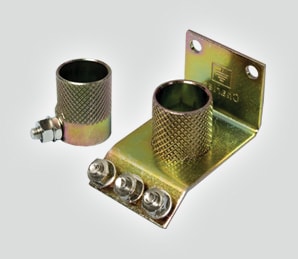

CET003 Terminal
CET (Central Earth Terminal) is the established street lighting industry standard for “stand-off” cable glanding and termination of XLPE insulated cables with steel wire armour (SWA) cables up to 70sqmm cross section area (circular stranded copper).
CET is an inherently strong and simple earthing design for single or multiple earth take-off points to suit all XLPE/SWA cables – designs allow splayed or bent steel wire armours using zinc plated solid brass terminal components.
SWA earthing glands are used by street lighting and traffic signal companies – the cable glands meet and exceed the BSI torque test for excellent electrical installation practices and earthing integrity.
Pictured: Earth Terminal CET003 – shown terminating wire armoured cables with the armours in the splayed position.
Central Earthing Terminals CET Advantages
- Inherently strong and simple design
- Exceeds BSI (Cable Gland) torque test
- Main terminal components are all zinc plated solid brass
- No loose fitting or easily omitted strands
- Single or multiple earth take-off points
- Comprehensive range, all standard cable sizes
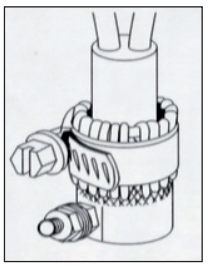
- Supplied complete with jubilee clip
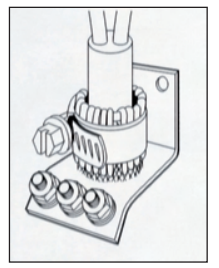
CET003 Terminal
Pictured: Earth Terminal CET003 – shown terminating wire armoured cables with the armours in bent back position.
A comprehensive range of Earth Terminals for bent back or splayed configuration termination of the wire armour of street lighting cables – single, double or triple earth saddles are available to install CET002 and CET003 to the equipment backboard.
Stand-off cable gland plates are also available manufactured from 2mm thick brass with fixing gland hole options to suit the installation – complete range of Street Lighting Equipment available including isolators, cut-outs, feeder pillars and solar belisha beacons.
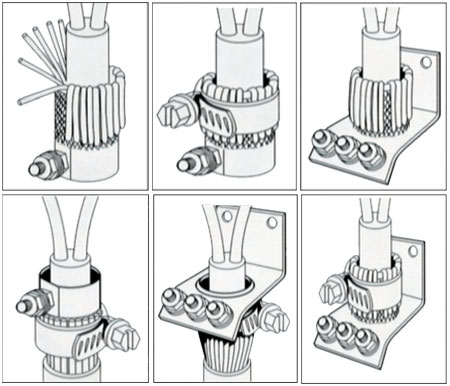
CEL Central Earthing Terminal Max Cable Size Accepted
➡ The following table enables the selection of the correct CET earth terminal to terminate and gland multicore (2, 3 or 4) core armoured power cables:
| SWA Wire Armours Bent Back Cables |
| Cable Size |
2 Copper Cores |
3 Copper Cores |
4 Copper Cores |
| 2.5sqmm |
002/6 |
002/6 |
002/6 |
| 4sqmm |
002/6 |
002/6 |
002/6 |
| 6sqmm |
002/6003/10 |
002/10003/10 |
002/10003/10 |
| 10sqmm |
002/10003/10 |
002/16003/16 |
002/16003/16 |
| 16sqmm |
002/16003/16 |
002/16003/16 |
002/35 |
| SWA Wire Armours Splayed Cables |
| Cable Size |
2 Copper Cores |
3 Copper Cores |
4 Copper Cores |
| 2.5sqmm |
002/6 |
002/6 |
002/6 |
| 4sqmm |
002/6 |
002/6 |
002/6 |
| 6sqmm |
002/6003/10R |
002/6003/10R |
002/6003/10R |
| 10sqmm |
002/10003/10R |
002/10003/10R |
002/16003/16R |
| 16sqmm |
002/10003/10R |
002/10003/10R |
002/16003/16R |
| 25sqmm |
002/16003/16R |
002/16003/16R |
002/35003/35R |
| 35sqmm |
002/35003/35R |
002/35003/35R |
002/70 |
BW Cable Gland Selection Chart
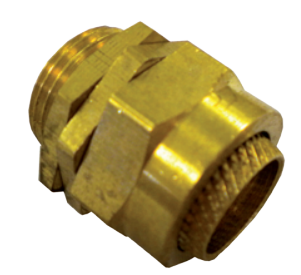
Standard brass compression glands to BS6121.
Suitable for SWA cable, complete with brass lock nut and PVC shroud. Will accept cable with maximum overall diameter as follows:
➡ The following table enables the selection of the correct BW Cable Gland to terminate and gland multicore (2, 3 or 4) core armoured power cables – the brass cable gland provides mechanical cable retention and termination of the steel wire armour up to 600V/1000 volts.
For the termination and cable crimping of the stranded copper cable conductors refer to the Cembre range of cable lugs.
| Cable Size sqmm |
2 Core Cables |
3 Core Cables |
4 Core Cables |
| 1.5sqmm |
BW20 |
BW20 |
BW20 |
| 2.5sqmm |
BW20 |
BW20 |
BW20 |
| 4sqmm |
BW20 |
BW20 |
BW20 |
| 6sqmm |
BW20 |
BW20 |
BW20 |
| 10sqmm |
BW20 |
BW20 |
BW25 |
| 16sqmm |
BW25 |
BW25 |
BW25 |
| 25sqmm |
BW25 |
BW25 |
BW32 |
| 35sqmm |
BW32 |
BW32 |
BW32 |

LV, MV & HV Jointing, Earthing, Substation & Electrical Eqpt
Thorne & Derrick International are specialist distributors of LV, MV & HV Cable Installation, Jointing, Duct Sealing, Substation & Electrical Equipment – servicing UK and global businesses involved in cable installations, cable jointing, substation, overhead line and electrical construction at LV, 11kV, 33kV and EHV.
THORNE & DERRICK Product Categories: Duct Seals | Cable Cleats | Cable Glands | Electrical Safety | Arc Flash Protection | Cable Jointing Tools | Cable Pulling | Earthing | Feeder Pillars | Cable Joints LV | Joints & Terminations MV HV