Arc Flash Protection
Latest Arc Flash Legislation & Regulation Explained By ProGarm
February 11th, 2020
ProGarm
Arc Flash Legislation & Regulation
-
by Mark Lant | Protecting Lives Through Innovative ARC Flash & Flame Resistant Clothing Solutions
Personal Protective Equipment (PPE) is acknowledged to be the last line of defence for workers, meaning that understanding the different standards governing PPE is of vital importance. Yet a study by ProGARM, arc flash protective clothing specialists, uncovered that 78% of industry workers were unfamiliar with the relevant legislation for protection of personnel against the hazards of arc flash incidents.
With so many different industries at risk of arc flash – a relatively misunderstood, but extremely common type of electrical explosion facing sectors from industrial electrical, to utilities, civil engineering and rail – Mark Lant, Technical Expert at ProGARM, explains the relevant legislation and guidelines to ensure managers and workers alike are up to date on the latest standard updates, and to ensure protection against the potentially fatal consequences of an arc flash.

Hazardex | this article was originally published in the February print edition of HazardEx magazine the UK’s leading publication for safety, health and hazardous area professionals. Register and sign-up here

Arc Flash Protection
IEC 61482-2
The first standard is IEC 61482. This is the overall standard covering protective clothing that protects against the thermal arc hazards of an electric arc, and covers many aspects of garment design and testing.
The thermal energy generated by an arc flash can reach temperatures of up to 19,000°C – up to four times hotter than the surface of the sun – and is the key element that distinguishes a ‘normal’ electrical blast from an arc flash blast.
To determine whether garments meet the requirements for this standard, all prospective PPE must pass one of two test methods: Open Arc or Box Arc.
These tests will measure the ATPV or the new ELIM ratings of a garment.
ATPV values are calculated from a prediction of the incident energy level of an arc flash, at which there’s a 50% probability that the heat transfer will cause the
PPE material to break open and expose the operative. However, the new ELIM ratings are measured to ensure a 0% probability.
It’s crucial to note that under the new ELIM testing, a product’s ELIM rating could be different from its ATPV rating, despite it being the same garment.
BS EN 1149-5
BS EN 1149-5 is the European Standard for garments that protect against electrostatic discharge in areas where there is a risk of explosion, and is most applicable to petrochemical and fuel distribution businesses. It states that workers must be provided with appropriate clothing consisting of materials which do not give rise to electrical discharges that can ignite explosive atmospheres. In other words – the outer fabric of the garments worn must be made from antistatic materials and cover all noncomplying materials.
The standard also states that non-dissipative materials (labels, reflective stripes etc.) must not exceed 50mm in length, unless they also pass the anti-static test.
RIS – 3279 – TOM
RIS-3279-TOM (formerly GO-RT 3279) is a high visibility standard that only applies to the rail industry in the UK, as opposed to the EU-Wide nature of other EN standards. The aim is to ensure that rail workers on or near the trackside are sufficiently visible to trains approaching at speed or any other traffic.
BS EN ISO 20471
Another standard concerning visibility is BS EN ISO 20471 specifying the requirements for clothing noticeability during the day and at night. It deals with things like illumination in car headlights and classifies garments based on the number of square meters of fluorescent fabric/reflective tape incorporated into the clothing. The BS EN ISO 20471 standard has replaced EN 471 which has now been withdrawn.
BS EN ISO 14116
BS EN ISO 14116 is the standard which has replaced the withdrawn EN533. It covers outerwear that would usually be worn over other protective garments. The objective is to ensure that, once in contact with the material, the amount the flame spreads and the time it burns are limited. This is tested using different codes; Index 1, 2 & 3, with each getting more rigorous as the numbers increase.
BS EN ISO 11612
The BS EN ISO 11612 standard replaces the now-withdrawn EN531 standard and applies to clothing intended for a wide range of application which offer limited flame spread and provide protection against various hazards including radiant heat, convective heat and splatters of molten metal. The standard requires that the material of a garment shall not ignite or melt and shall not shrink by more than 5% with mechanical strength and heat resistance at a temperature of 180°C.
There are several fabric tests within this EN standard, and the results of the tests are represented by the pre-fix letters A, B, C, D, E and F. The number after these letters indicate the performance of the fabric within this test. If a (0) is shown, then the fabric has not been tested or does not achieve the lowest value attainable with the test.
BS EN 13034
Protection against liquid chemicals falls under the bracket of BS EN 13034 which is in place to determine the garment’s resistance against small splatters or fumes of chemicals. This is achieved by chemical coating the garments in order to repel any contaminants and preserve the properties within the clothing. Testing for this standard consists of a ‘mannequin test’, in which the wearer must perform 7 basic movements and the permeability of the clothing to chemical is subsequently determined.
BS EN 14404
BS EN 14404 relates to trousers and coveralls which offer kneepad pockets to protect the wearer when kneeling. Knee pads are tested based on three properties – penetration resistance, force distribution and shock absorption. Two levels of protection can be provided according to BS EN 14404. Level 1 requires kneepads to provide protection against objects more than 1cm high. Level 2 requires pads to be able to withstand use under heavy conditions such as kneeling on stones in mines and quarries.
BS EN 343
Finally, BS EN 343 outlines the requirements garments must adhere to, with regards to protection against rain, snow, mist and ground moisture. BS EN 343’s icon shows an umbrella placed under two numbers that represent the X and Y values. The X value indicates the waterproofness and the Y value indicates the water vapour permeability. There are 3 classes for both X and Y values, with 3 being the highest and 1 the lowest.
This particular standard falls under the bracket of ‘self-certification’ meaning manufacturers are allowed to certify their own products. This is because the only risk to the wearer is getting slightly wet and is not life threatening.

Mark Lant has been a Sales Manager at ProGARM for almost seven years and was previously involved in the sales team for ASKAS, a workwear safety brand based in Hull. Due to his large range of experience in the sales world of protection wear, Mark is perfectly placed to educate on how to protect lives through Arc Flash and flame-resistant clothing.
Thorne and Derrick are proud to be distributors of ProGARM arc flash clothing and protection.
We can help – should you require arc flash calculators or advice on the type of clothing and protection available please do not hesitate to contact us.
Further Reading
- Electrical Safety – Arc Flash Accidents & Electrocution In LV-HV Installations
- Arc Flash Calculation – Selecting Clothing & PPE To Protect Lives Against Arc Hazard
- Arc Flash PPE | 7 Top Considerations

Arc Flash Clothing | Polo Shirts | Jackets | Coveralls | Trousers | Sweatshirts | Helmets
Arc Flash Learning & Resources

Thorne and Derrick are proud to be distributors of ProGARM arc flash coveralls and protection.
We can help – should you require arc flash calculators or advice on the type of clothing and protection available please do not hesitate to contact us.




THORNE & DERRICK
Thorne & Derrick are national distributors of LV, MV & HV Cable Installation, Jointing, Substation & Electrical Equipment – servicing businesses involved in cabling, jointing, substation, earthing, overhead line and electrical construction at LV, 11kV, 33kV, 66kV and EHV. Supplying a complete range of power cable accessories to support the installation and maintenance of low/medium and high voltage power systems:
- Slip-on Cable Terminations
- Cold-shrink Cable Terminations
- Heat-shrink Cable Terminations
- Cable Joints – Heat & Cold-shrink
- Separable Connectors (Euromold)
- Surge Arresters & Switchgear/Transformer Bushings
Key Product Categories: Duct Seals | Cable Cleats | Cable Glands | Electrical Safety | Arc Flash Protection | Cable Jointing Tools | Cable Pulling | Earthing | Feeder Pillars | Cable Joints LV | Joints & Terminations MV

Arc Flash PPE | 7 Top Considerations
February 3rd, 2020-
uploaded by Chris Dodds | Thorne & Derrick Sales Marketing Manager
The WRONG ARC FLASH PPE CAN COMPROMISE YOUR TEAM’S SAFETY

Personal Protective Equipment – There are lots of factors to consider when choosing and specifying the right arc flash PPE for your team. We highlight some of the areas that you might not have given as much thought, to help you make the best-informed decision for everyone involved.
This Blog gives an insight into some of the top considerations when it comes to PPE – delivered by experts ProGARM.
LAYERING
There can be serious consequences if arc flash protection (PPE) is compromised. All layers of clothing need to be considered when protecting against Arc Flash.
The material worn beneath an Arc Flash protective jacket is just as crucial as outer clothing.

Arc flash protective undergarments – The risk of mixing non-arc layers with arc-rated clothing
Making the right PPE choices for your team can be a real challenge. You must weigh up several factors: comfort, fit, durability and value for money to name but a few. But what can happen when you start to mix a variety of garments that offer different levels of protection or meet different standards?
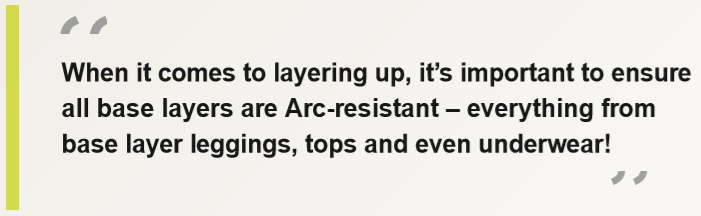
While flames caused by an Arc Flash may not actually come into contact with the skin through protective outer layers, the extreme heat from the Arc Flash can melt materials used to manufacture everyday undergarments such as nylon, cotton and polypropylene. This will inflict burns on an operative and potentially cause non-Arc Flash protective undergarments to melt into the skin underneath their PPE.
ARC FLash PPE
Flame retardant VS. ARC FLASH CLOTHING
Flame retardant doesn’t mean arc flash resistant.
With all the different safety standards surrounding safety clothing, it can be confusing understanding the extent to which each standard covers in terms of protection. We outline how Arc Flash clothing differs from flame retardant garments and the reasons why.
There are separate safety standards for Arc Flash clothing and fire resistance, meaning that the level of protection provided by fire-resistant clothing does not match that or arc flash resistant personal protective clothing.

Products certified from May 2019 onward will use the new icon, which is on the right.

INHERENT VS. TREATED FABRIC
Not all Arc Flash clothing is made using the same fabric types, we help you identify the difference between inherent and treated fabrics so you’re up to speed with the clothing choices available to you.
The two phrases regularly used when shopping for appropriate PPE clothing are ‘treated fabric’ and ‘inherent fabric’. Treated fabric is made from fibres which are not flame retardant by nature but have undergone a chemical process to add a fire-resistance quality to them.
Download the full guide here for more tips on Arc Flash PPE considerations.

ProGARM delivers ultimate arc flash clothing and protection, conforming with the relevant industry and EN standards ensuring protection from arc flash incidents for workers carrying out installation or maintenance of LV Low Voltage, MV Medium Voltage or HV High Voltage power systems.

Arc Flash Protection
The dangers of Arc Flash incidents and the importance of protection from these hazards has never been as significant as it is today. This prominence will continue to increase over the next few years.
With multiple cable strikes every day in the UK and numerous major Arc Flash incidents, businesses are looking at how best to protect their team with the right Flame Resistant garments and accessories, including arc-rated gloves. The correct clothing can significantly reduce injury and save lives.
ProGARM and Thorne & Derrick are committed to continual research and improvement to innovate and develop their range of arc flash clothing as quickly as possible to bring you the best Arc Flash protection for your team – this includes hand protection against flash incidents using arc-rated gloves.
WHAT IS AN ARC FLASH?
An electric arc occurs whenever a circuit breaker, switch or isolator (Device) is opened and when there is current flowing in the circuit. However, most devices under normal operating conditions are designed to control the arc when opening or closing.
An arc flash may occur when the arc is uncontrolled and there is sufficient energy released to cause harm or damage.
Arc flashes occur both at high voltage and low voltage. There is little discrimination: low voltage arc flashes injuries are just as damaging at high voltage injuries.
Put simply: An arc flash is the light and heat produced from an electrical arc supplied with sufficient energy to cause significant damage, fire or injury.
An arc flash can cause minor injuries, third-degree burns and potential death as well as other injuries including blindness, hearing loss, nerve damage and cardiac arrest. Fatal burns can occur when the victim is several feet from the arc. Serious burns are common at a distance of 10 feet – arc flash can generate heat 4 times greater than the surface of the sun.

The dangers of an Arc Flash
Arc Flash Learning & Resources
Thorne and Derrick are proud to be distributors of ProGARM arc flash coveralls and protection.
We can help – should you require arc flash calculators or advice on the type of clothing and protection available please do not hesitate to contact us.

Thorne & Derrick
Thorne & Derrick are national distributors of LV, MV & HV Cable Installation, Jointing, Substation & Electrical Equipment – servicing businesses involved in cabling, jointing, substation, earthing, overhead line and electrical construction at LV, 11kV, 33kV, 66kV and EHV. Supplying a complete range of power cable accessories to support the installation and maintenance of low/medium and high voltage power systems:
- Slip-on Cable Terminations
- Cold-shrink Cable Terminations
- Heat-shrink Cable Terminations
- Cable Joints – Heat & Cold-shrink
- Separable Connectors (Euromold)
- Surge Arresters & Switchgear/Transformer Bushings
Key Product Categories: Duct Seals | Cable Cleats | Cable Glands | Electrical Safety | Arc Flash Protection | Cable Jointing Tools | Cable Pulling | Earthing | Feeder Pillars | Cable Joints LV | Joints & Terminations MV
IEC 61482-2 2018 – Get Up To Speed With The New Arc Flash Standard
January 23rd, 2020
Arc Flash Protection
IEC 61482-2:2018
Article Courtesy of ProGARM Arc Flash Protection & Clothing
A new test standard for arc flash protection – IEC 61482-1-1:2018 – was introduced in May 2019, which means arc flash protective garments certified after May 2019 have to be tested under these new, more stringent conditions under the PPE regulation.
This is a result of the updates to the Arc Flash standard for garments, IEC 61482-2:2018, which was released in 2018.

This standard is significantly different to FR standard EN ISO 11612. It includes more rigorous and different requirements, and is the standard for garments to protect those at risk of Arc Flash. The latest update to the standard was in 2018 and contained a couple of important changes to the test methods with regards to the performance ratings of garments.
The new test results in a new way of rating arc flash clothing, ELIM (Energy Incident Limit), which will be used as a further arc rating performance property value and as a more stringent performance indicator of both fabric and garments.
♦ IEC 61482-1-1:2019 Live Working – Protective clothing against the thermal hazards of an electric arc – Part 1-1: Test methods – Method 1: Determination of the arc rating (ELIM, ATPV and/or EBT) of clothing materials and of protective clothing using an open arc.

ProGARM | Functional Arc Flash Clothing, Protection & PPE For Everyday Wear
As a result of this ProGARM have written a short guide to the new IEC 61482-2:2018 standard to highlight the key bits of information you need to be aware of when reviewing your PPE specification and the key terminology that you need to understand.
Choosing the right PPE for your team can be difficult and with all the standards to consider it can feel quite overwhelming. This guide aims to help people make a more informed decision about what PPE is best for you.
You can download the PDF guide via this link or see the attached pdf below.
Arc Flash Clothing | Polo Shirts | Jackets | Coveralls | Trousers | Sweatshirts | Helmets
With the recent changes to the IEC 61482-2 standard, ProGARM outline the key changes and unpack the details to help you understand the important information that impacts you.
SCOPE
Learn about what this standard covers and why it’s important to have an understanding of it when working with or near live electricity.
TEST METHODS
Understand the two test methods used within this standard and how they contribute to providing calorific and class values to identify the level of protection different products provide.
CALORIFIC VALUES EXPLAINED
ATPV, EBT50, ELIM. What’s the difference?
We explain the differences between each calorific value, how they are calculated and what to look for when specifying PPE for your team.
PROGARM, THE ARC FLASH SPECIALISTS
ProGARM are a the leading UK manufacturer of high quality Flame Resistant & Arc Flash Clothing, garments and workwear – they work successfully with their UK Distributor Thorne & Derrick to save lives and reduce accidents.
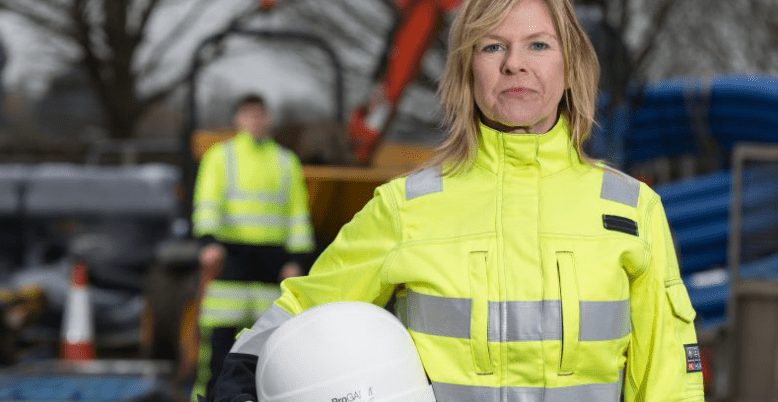
Thorne & Derrick are proud to be distributors of ProGARM arc flash clothing and protection.
We can help – should you require arc flash calculators or advice on the type of clothing and protection available please do not hesitate to contact us.
Further Reading
- Arc Flash Clothing – PPE To Protect Highways, Street Lighting & Utility Contractors
- Arc Gloves | New Arc Flash Dexterity Gloves from Protection Specialists ProGARM
- New Arc Flash Coveralls from Protection Specialists ProGARM
THORNE & DERRICK
Thorne & Derrick are national distributors of LV, MV & HV Cable Installation, Jointing, Substation & Electrical Equipment – servicing businesses involved in cabling, jointing, substation, earthing, overhead line and electrical construction at LV, 11kV, 33kV, 66kV and EHV. Supplying a complete range of power cable accessories to support the installation and maintenance of low/medium and high voltage power systems:
- Slip-on Cable Terminations
- Cold-shrink Cable Terminations
- Heat-shrink Cable Terminations
- Cable Joints – Heat & Cold-shrink
- Separable Connectors (Euromold)
- Surge Arresters & Switchgear/Transformer Bushings
Key Product Categories: Duct Seals | Cable Cleats | Cable Glands | Electrical Safety | Arc Flash Protection | Cable Jointing Tools | Cable Pulling | Earthing | Feeder Pillars | Cable Joints LV | Joints & Terminations MV
Arc Flash Learning & Resources
Thorne and Derrick are proud to be distributors of ProGARM arc flash coveralls and protection.
We can help – should you require arc flash calculators or advice on the type of clothing and protection available please do not hesitate to contact us.
Arc Flash The Basics
January 22nd, 2020-
By Cameron G. Clark: GE Specification Engineer. Contributed by GE Industrial Solutions
Do you know what an arc flash is?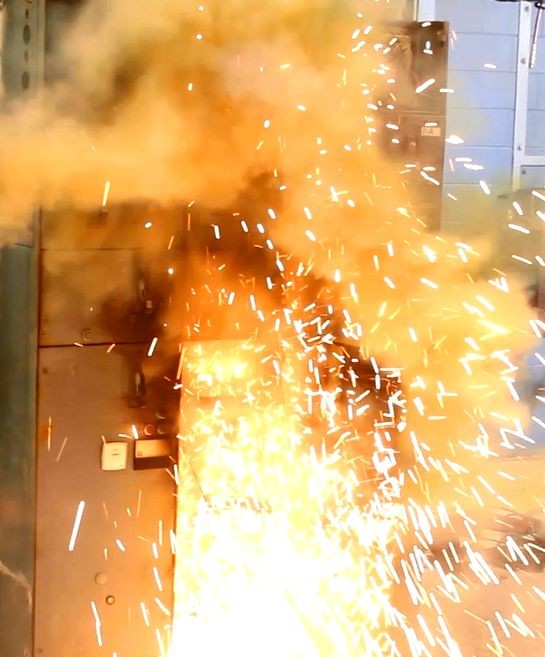
If not, keep reading.
The goal of this article is to give the reader a basic understanding of what occurs during an arc flash incident, and an understanding of some of the terms used in qualifying the danger associated with such events.
What is an Arc?
Most of us are familiar with an arc. The dictionary describes an electric arc flash as “a luminous bridge formed in a gap between two electrodes”.
An Arc Flash occurs during a fault, or short circuit condition, which passes through this arc gap. The Arc Flash can be initiated through accidental contact, equipment which is underrated for the available short circuit current, contamination or tracking over insulated surfaces, deterioration or corrosion of equipment and, or parts, as well as other causes.
An Arc Flash event can expel large amounts of deadly energy.
The arc causes an ionization of the air, and arc flash temperatures can reach as high as 35,000 degrees Fahrenheit. This is hotter than the surface of the sun.
This kind of temperature can set fire to clothing and severely burn human skin in fractions of a second at a significant distance from the event. The heat can also result in ignition of any nearby combustible materials.
Arc Flash temperatures can also liquefy or vaporize metal parts in the vicinity of the event such as copper, aluminum conductors or steel equipment parts. This material rapidly expands in volume as it changes state from a solid to vapor, resulting in explosive pressure and sound waves. The pressure wave can knock workers off balance or off ladders and even throw them across the room against walls or other equipment.
The sound blast can cause eardrums to rupture resulting in temporary or permanent hearing loss. Molten metal can be sprayed by the blast throughout the vicinity. Solid metal debris and other loose objects, such as tools, can be turned into deadly projectiles by the explosion. The bright flash from the event can result in temporary or permanent blindness.
All of these will most likely result in equipment damage as well as personnel injury, and possibly death.
“An Arc Flash event can expel large amounts of deadly energy. The arc causes an ionization of the air, and arc flash temperatures can reach as high as 35,000 degrees Fahrenheit. This is hotter than the surface of the sun”
Code Description
Section 110.16 of the 2008 National Electrical Code requires that electrical equipment be marked to warn qualified personnel of potential arc flash hazards. In order to accurately evaluate the dangers associated with arc flash we must quantify the hazard. The measure, which has been developed to assess arc flash events, is incident energy. This is the energy measured on a surface at a specified working distance from the arc flash location.
For low voltage equipment this is 24 inches, and approximately corresponds to the arm length of a typical worker. The unit used to quantify this energy is cal/cm2. A value of 1.2 cal/cm2 results in 2nd degree burns to bare skin, and 8 cal/cm2 in 3rd degree burns. The incident energy is inversely proportional to the square of the working distance, and directly proportional to the available fault current and duration of an arc flash event.
Some of the other factors which affect incident energy of an arc flash event are the short circuit current available, both from the utility and at specific bus locations in the distribution system, cable size and length, the type of over current protective devices, and the settings of those over current protective devices. The device settings directly influence the duration of thefault for a given value of arc fault current. For this reason there is interest by many, these days, in a temporary second group of setting which reduce the time a breaker takes to clear a fault when a person is working on energized equipment. This can often reduce the hazard significantly. General Electric offers this capability in the Reduced Energy Let Through mode (RELT) of the Entelliguard® TU trip unit.
“Those involved with the design, implantation and evaluation of electrical distribution systems mush have an understanding of arc flash hazards and how to evaluate the hazards as well as minimize or mitigate the hazard to the electrical worker.”
Arc Flash Studies
In order to identify the specific arc flash hazard at a given piece of equipment within a facility, an arc flash study must be performed. There are several software packages available, similarly to short circuit study and coordination study software packages, to facilitate this analysis by a qualified professional electrical engineer. In order to perform the arc flash study a short circuit and coordination study must first be performed or the results of these studies must be available to the engineer performing the arc flash study.
The result of the arc flash study will categorize the hazard at specific equipment based on the incident energy, as well as identify the Arc Flash Protection Boundary (this is the closest approach allowed before PPE must be worn). Inside the Arc Flash Protection Boundary a worker must be wearing the proper clothing, or Personal Protective Equipment (PPE). The main objective of the PPE is to limit the burns to the body resulting from an arc flash event, to a survivable level. (i.e .2nd degree or less).
“Those involved with the design, implantation and evaluation of electrical distribution systems must have an understanding of arc flash hazards and how to evaluate the hazards as well as minimize or mitigate the hazard to the electrical worker.”
Hazard Risk Categories as outlined in NFPA 70E are as follows:
| Hazard Risk Category | Clothing | Cal/cm² |
| 0 | Non-melting, flammable materials (ie untreated cotton, wool, rayon, or silk, or blends of these materials with a fabric weight of at least 4.5oz/yd² | N/A |
| 1 | FR shirt and FR pants of FR coverall | 4 Cal |
| 2 | Cotton underwear – conventional short sleeve and brief/shorts , plus FR shirt and FR pants | 8 Cal |
| 3 | Cotton underwear plus FR shirt and FR pants plus FR coverall, or cotton underwear plus two FR coveralls | 25 Cal |
| 4 | Cotton underwear plus FR shirt and FR pants plus multilayer flash suit | 40 Cal |
| Extreme Danger | No PPE available | >40 |
Arc flash gloves, arc flash boots and arc flash face protection appropriate to the hazard risk category must be used as well.
Arc Flash Hazard is a subject that is undergoing increased discussion and scrutiny in today’s safety conscious environment. The intent of the standards in this area is to provide an increased level of safety for the electrical worker.
Those involved in the design, implantation and evaluation of electrical distribution systems must have an understanding of Arc Flash Hazards and how to evaluate the hazards as well as minimize or mitigate the hazard to the electrical worker.
Further Reading
Electrical Safety – Arc Flash Accidents & Electrocution In LV-HV Installations
Arc Flash Calculation – Selecting Clothing & PPE To Protect Lives Against Arc Hazard
Arc Flash Clothing | Polo Shirts | Jackets | Coveralls | Trousers | Sweatshirts | Helmets
Thorne & Derrick
Thorne & Derrick are national distributors of LV, MV & HV Cable Installation, Jointing, Substation & Electrical Equipment – servicing businesses involved in cabling, jointing, substation, earthing, overhead line and electrical construction at LV, 11kV, 33kV, 66kV and EHV. Supplying a complete range of power cable accessories to support the installation and maintenance of low/medium and high voltage power systems:
- Slip-on Cable Terminations
- Cold-shrink Cable Terminations
- Heat-shrink Cable Terminations
- Cable Joints – Heat & Cold-shrink
- Separable Connectors (Euromold)
- Surge Arresters & Switchgear/Transformer Bushings
Key Product Categories: Duct Seals | Cable Cleats | Cable Glands | Electrical Safety | Arc Flash Protection | Cable Jointing Tools | Cable Pulling | Earthing | Feeder Pillars | Cable Joints LV | Joints & Terminations MV
Arc Flash Learning & Resources
Thorne and Derrick are proud to be distributors of ProGARM arc flash coveralls and protection.
We can help – should you require arc flash calculators or advice on the type of clothing and protection available please do not hesitate to contact us.
5 Arc Flash Risks for Solar Industry Personnel
January 15th, 2020
Arc Flash Risks And Dangers
Introduction to Arc Flash
The proliferation of solar panels used in industrial and commercial building is a reflection of the decreasing cost of the photovoltaic modules and the increasing interest in renewable energy sources. The widespread use of photovoltaic systems increases the risk of exposure to electrical safety hazards that are inherently associated to nonlinear power sources.
It is a well-known fact that the standard protection devices are inefficient in detecting short circuit faults in photovoltaic systems. In addition, it is now recognized that the maximum incident energy deployed by a DC arc flash in a photovoltaic system is higher, and in many instances significantly higher, than those estimated by using the guidelines given by the NFPA 70E and the CSA Z462-12 standards.
Use of the existing guidelines can result in personnel being exposed to much higher safety risks than previously thought – here we consider 5 Arc Flash risks prevalent in the solar industry.
This article has been republished with the kind permission of Ben Cass from SKANWEAR.
Arc Flash In the solar Industry
With government plans to significantly increase the amount of energy generated through sustainable sources well underway, and with solar panels recognised as one of the most accessible ways for homeowners to make the switch, the solar industry is booming.
However, this is also an industry that comes with notable risks, particularly in terms of arc flash hazards.
The risk is so pronounced within the solar industry in particular due to the DC circuits found within typical PV installations, which can both generate and sustain arcs.
DC circuits present a greater challenge than AC circuits due to the constant-current source rather than constant voltage, which makes calculating arc energies difficult.
So just what are some of the biggest Arc Flash risks for Solar Industry Personnel?
The design systems of PV installations pose one of the greatest risks as there are many types of intermittent connection that the system can create which may then generate series Arc.
For example, anything from compression wire connections to soldered joints to the actual connectors that attach to the PV modules are all capable of creating intermittent connections and generating series arc. Quite simply, Arc Flash can occur remarkably easily within the solar industry, resulting in greater risk for solar personnel.

At midday on 30 June 2018, solar power supplied 30 per cent of the UK’s electricity (Shutterstock). Via Independent.
News: The largest solar power plant ever proposed in the UK will be reviewed by the Secretary of State within the next six months. Cleve Hill solar farm will occupy the north coast of Kent and, if built, provide up to 350MW (megawatts) of generating capacity.
Arc Flash Heat
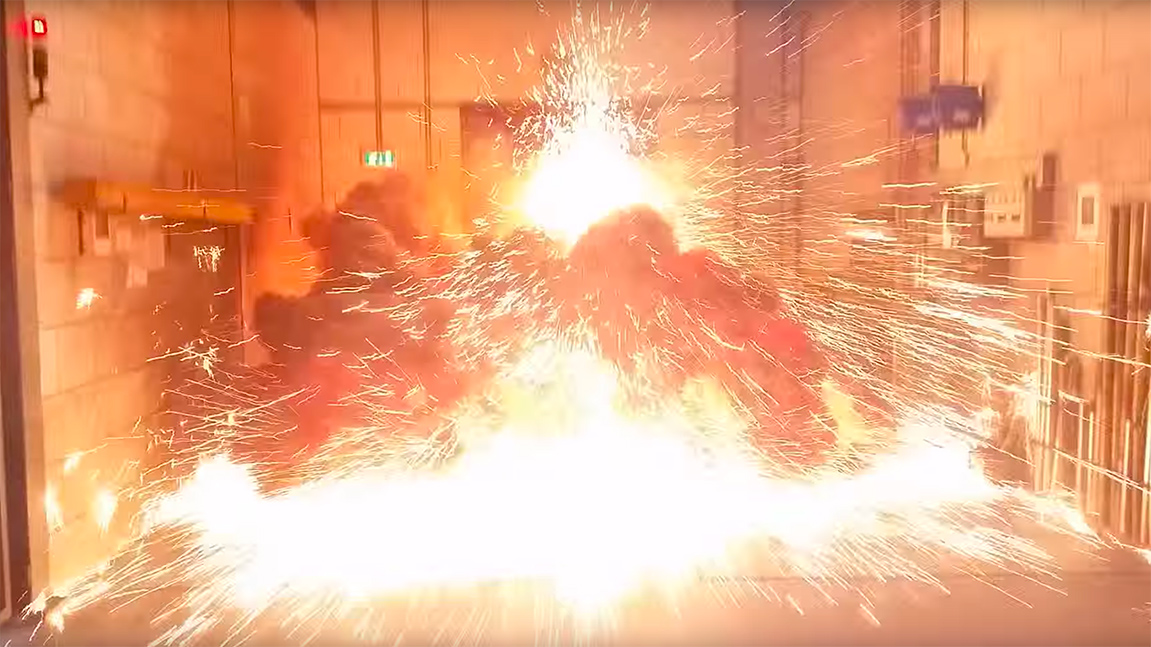
The types of Arc Flash that can be generated within the solar industry are another major risk. With arcs capable of reaching more than 3000 degrees Celsius in temperature, these arcs not only cause fires but can also melt materials such as glass and metals including copper and aluminium. This can subsequently ignite any combustible materials and items in the surrounding area. In the solar industry, it is not only the direct risks of arc flash that must be considered but also the many possible indirect risks, too.
An Arc Flash event can expel large amounts of deadly energy. The arc causes an ionization of the air, and arc flash temperatures can reach as high as 35,000 degrees Fahrenheit. This is hotter than the surface of the sun.
Injury and Fatality of Arc Flash
Arc Flash Risks
With the possibility of fire (in recent years there have been notable instances in the UK, USA, and Australia of PC installations causing fires along with significant damage to both domestic and commercial properties) and molten metal, injury and even fatality is a major risk for solar industry personnel. The best way to mitigate this risk is by wearing the correct Arc Protective Clothing equipment for the environment and identified hazards.
Dedicated arc flash PPE can minimise injury when worn correctly.
System Maintenance
Maintenance of equipment is undoubtedly one of the most effective ways to quickly identify system faults and reduce the chance of arc flash. However, due to the nature of PV installations, adequate system maintenance can be tricky, and a lack of thorough upkeep poses one of the greatest risks to solar industry personnel. With combiner boxes generally being located at a distance from each other, proper maintenance can involve disconnecting entire sections of the system at a time.
Required Action
Perhaps the greatest risk of all is the risk that solar personnel take inappropriate action when arc flash is determined to be most likely. With DC circuits, there are different Types of Arc Flash that can occur, with each requiring different action to be taken. With series arc, for example, a shutdown of power and significant reduction in circuit flow is needed. With parallel arc, however, conductors must be shorted simultaneously resulting in zero array voltage. Understanding system management is the key to safety.
If you are working on live Solar Panels there is a possibility an Arc Flash could happen.
Make sure you and your team are working safely on live electricity with Arc Flash and Flame Resistant Clothing, see our full collection here.

Solar Fires – DC Arc Faults. Arc flash is a dangerous risk among those in the power industry. Arc flash is an electrical breakdown of the resistance of air that results in an electric arc, which can occur where there is sufficient voltage in an electrical system and a path to ground or lower voltage.
THORNE & DERRICK SPECIALIST ELECTRICAL DISTRIBUTOR

The LV HV Specialists
Thorne & Derrick distribute the most extensive range of Cable Installation & Electrical Distribution Equipmentto the renewable energy sector – we service UK and international clients working on underground cables, overhead lines, substations and electrical construction at 11kV and up to and EHV transmission and distribution voltages.
- Key 11kV Products: MV-HV Cable Joints & Terminations, Cable Cleats, Duct Seals, Cable Transits, Underground Cable Protection, Copper Earth Tapes, Cable Jointing Tools, Feeder Pillars, Cable Ducting, Earthing & Lightning Protection, Electrical Safety, Cable Glands, Arc Flash Protection & Fusegear.
- Distributors for: 3M Cold Shrink, ABB, Alroc, Band-It, Catu, Cembre, Centriforce, CMP, Elastimold, Ellis Patents, Emtelle, Furse, Lucy Zodion, Nexans Euromold, Pfisterer, Polypipe, Prysmian, Roxtec.

LV– Low Voltage Cable Joints, Glands, Cleats, Lugs & Accessories (1000 Volts)

MV HV – Medium & High Voltage Cable Joints, Terminations & Connectors (11kV 33kV EHV)

Cable Laying – Underground Cable Covers, Ducting, Seals & Cable Pulling Equipment
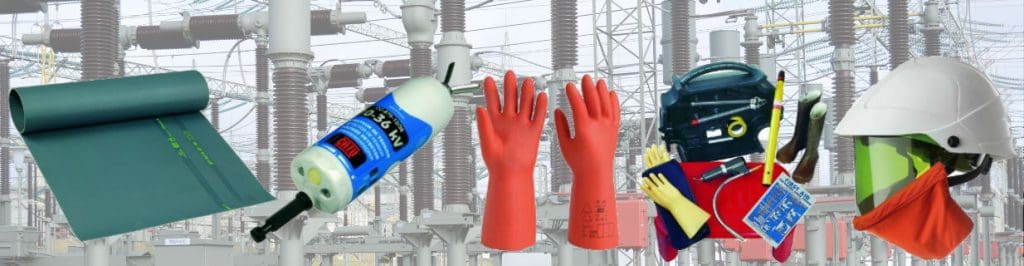
T&D, CATU Electrical Safety & Arc Flash Protection Specialists for SAP’s, Linesmen, Jointers & Electrical Engineers – Largest UK Stockist
Arc Flash Learning & Resources
Thorne and Derrick are proud to be distributors of ProGARM arc flash coveralls and protection.
We can help – should you require arc flash calculators or advice on the type of clothing and protection available please do not hesitate to contact us.