Cable Joints & Terminations HV
PILC Replacement & Cable Longevity
October 19th, 2018
PILC Replacement & Cable Longevity
-
Guest Blog: John M Perez - Director at Quanta Underground Power Services
PILC Cables
For many years now many companies across the utility industry have been in a race to remove and replace PILC type cables from their systems. The reasons that I hear most from engineers and system engineers for removing and replacing these cables are two-fold; no field talent or cable splicers capable of performing PILC cable joints, maintenance and construction, and fear of cable manufacturers discontinuing cable production.
While these are both valid arguments, the other side of the discussion must center around the longevity of both PILC cables and the newer rubber and XLP cable types that are used for PILC replacement.
As I am currently aware, the only XLP or rubber type cables that will fit into a 2 1/2″ – 3″ cable duct are newer compact conductor and thin-wall insulation cable. The oldest PILC cable that I have worked on and placed back into service was from 1923.
I am certain that the utility where this cable was installed received a proper return on the investment of this cable being installed and maintained. With this being said, the question becomes, what is the projected longevity of the newer compact type cables? Will they hold up for more than 80 years, or will they fail sooner?
Which would require greater maintenance and associated costs.
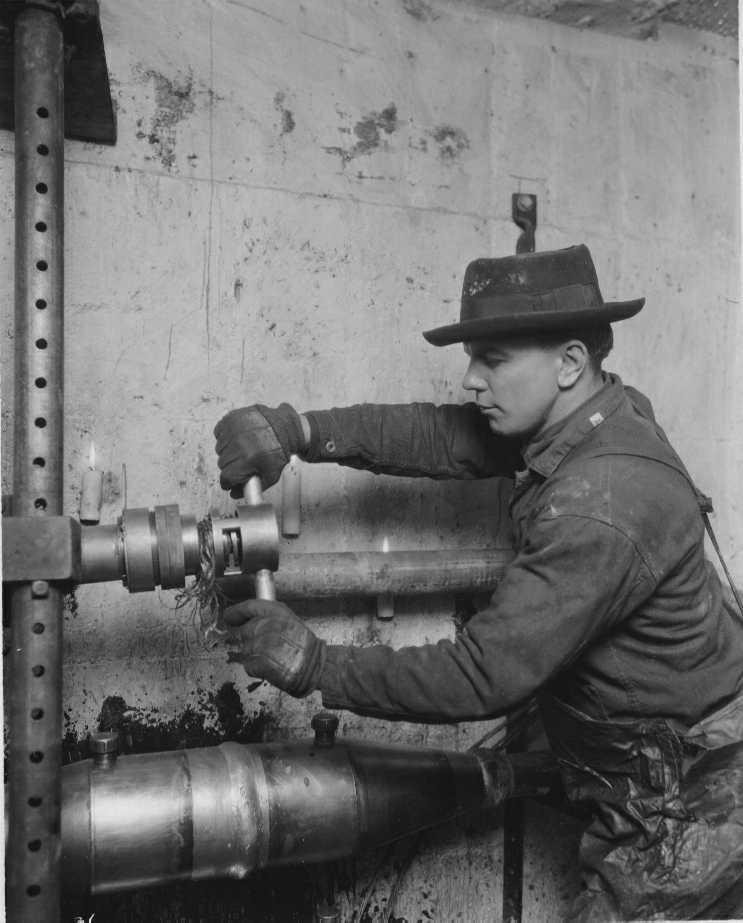
PILC Cable Splicing
Being intimately involved with PILC cable splicer training from candidate selection, to training, to cost per student, and cost per trainer (materials included), I understand the costs associated with this labor intensive type of cable splicer training that not all candidates may have the skills to complete.
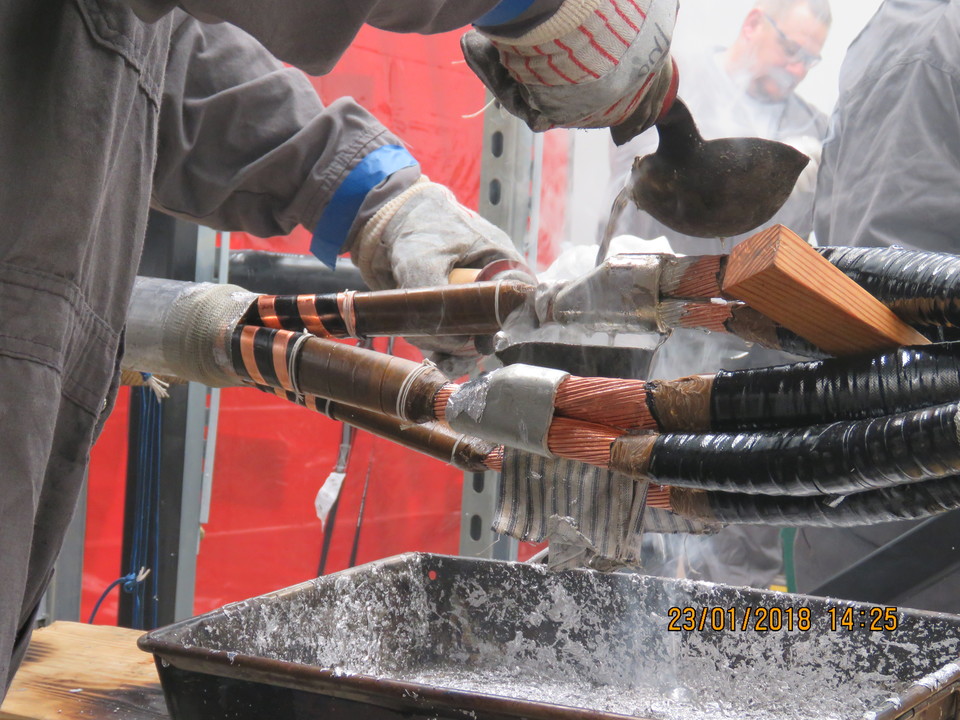
See how The Lazy Q Ranch in the US is a global centre of excellence for safeguarding and upholding the Craftsmanship of Splicing PILC Cables – read how James Craven (Chief Instructor at Quanta Services, Inc.) is passionate, proud and determined to skill-up the next generation of PILC Splicers.
So, the question now becomes, does the cost of training an employee to install, construct, and maintain a PILC cable system that is widely known to last for decades, greater than or equal to the cost of doing the same for rubber and XLP type cables?
While I have heard many arguments for and against, I still cannot place an actual dollar value on the differences. But, I would truly love to see some cost analysis that may have been previously performed. If any exist.
From my humble perspective, PILC is the more cost effective alternative.
The longevity of PILC cables seems to be unrivalled.
One of the reasons, I believe, that PILC cables stand the test of time has to do with the pride that most Cable Splicers take in their work.
Before anyone corrects me, I am very aware that the insulating properties of oil and paper around a copper conductor is almost unrivalled.
From proper installation, moisture testing, proper splicing, cable support, and bonding this work is performed at a different level by true Craftsman. The number of PILC Cable Splicers is low, this making us a fairly elite group. Now, this does not mean that all PILC Splicers are true Craftsman. Some Splicer, like in almost every trade, simply make it by. Limited quality.
Back to the original question; Is PILC or rubber and XLP type cables the better investment for cable longevity and reliability?
My conclusion, from a non-engineer, is that PILC cable will always be the winner. Hands down.
Other opinions welcomed.
MV Cable Accessories
Thorne & Derrick, Specialist Distributors of LV HV Cable Jointing & Electrical Equipment are leading UK Suppliers of 3rd Party Type Tested MV Cable Accessories (Nexans | 3M | Pfisterer Stockists). To promote MV Cable System Integrity, we have recently Partnered with BASEC – British Approvals Service for Cables – their MV Cable Approval Scheme is committed to combating Non-Compliant cables entering the market-place and introducing potentially catastrophic future O&M problems.

Cable Splicing At The Lazy Q Ranch
October 1st, 2018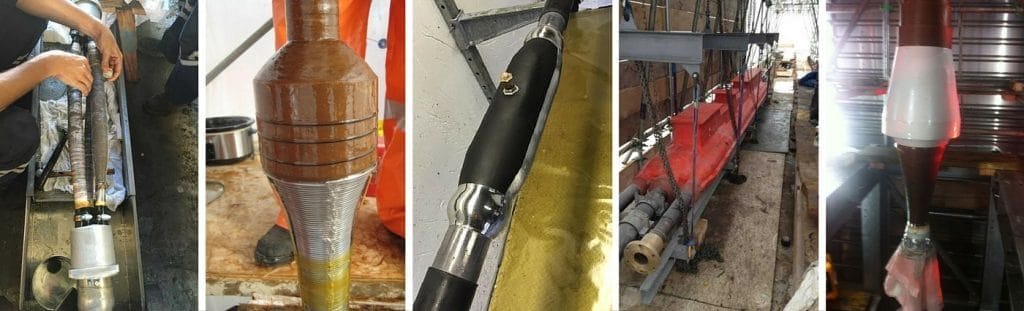
World-Class Cable Splicing Training
- Main Contributor – James Craven (Advisor at Quanta Services, Inc.)
- Uploaded – Chris Dodds (Thorne & Derrick Sales & Marketing Manager)
Training for Today to Meet Tomorrow’s Challenges
The following sequence of photographs provide a behind the scenes glimpse of Splicer Training at the Quanta Services Lazy Q Ranch, a state-of-the-art facility where the Art & Craft of Cable Splicing is alive and kicking. Nestled in the small town of La Grange where the Colorado River rolls and the Texan rattler hisses, the next generation of Cable Splicers are forged in the fires of their scorching hot pots of lead.
At the 2,200-acre campus Quanta employees receive hands-on instruction from passionate Master Trainers in a controlled environment focusing on safety, skill development and certifications. Quanta has even partnered with a local university to create a curriculum specific to their industry.
Setting Splicing Standards
Workmanship Rules OK!
Quanta do not set the standards – they raise the standards and lift the bar higher and then higher. There is no wriggle-room for the slightest splice error or even the most minor of measurement misdemeanour. Excellence is expected and why not?
James and the Lazy Q crew are changing the industry.
All practice splices and test splices are completely dissected as part of the curriculum – the test splices are actually cut into up to 10 or more pieces. The Splicer Assessor forensically checks the students submission – analysing tape application, scrutinizing measurements, checking connector and studying the lead seal and end wipes of the lead sleeve.
All images of cable splices and workmanship in this article were built by students.


RIP PILC?
Traditional cable Splicing skills are not dead or even dying out. PERIOD.
At least not Stateside.
Out on the range at Lazy Q, trainees are perfecting soldering, wiping and the complex intricacies of PILC Cable Splicing. Despite the 21st Century fashion for the grid to “Go Unleaded” as modern medium voltage power networks adopt polymeric cables there remains a demand for PILC Splicers with competent taping, soldering, wiping and compound pouring skills.
Yes, the prolific rise of Cold Shrink Splices has necessitated Jointer Training Centres to keep pace with cable manufacturing technology and introduce modules to cover the requirement to joint, splice and terminate MV cables using cold shrink as well as heat shrink accessories.
However, like it or not, with documented service lives of 60-80 years, PILC is here to stay.
Cable Splicing
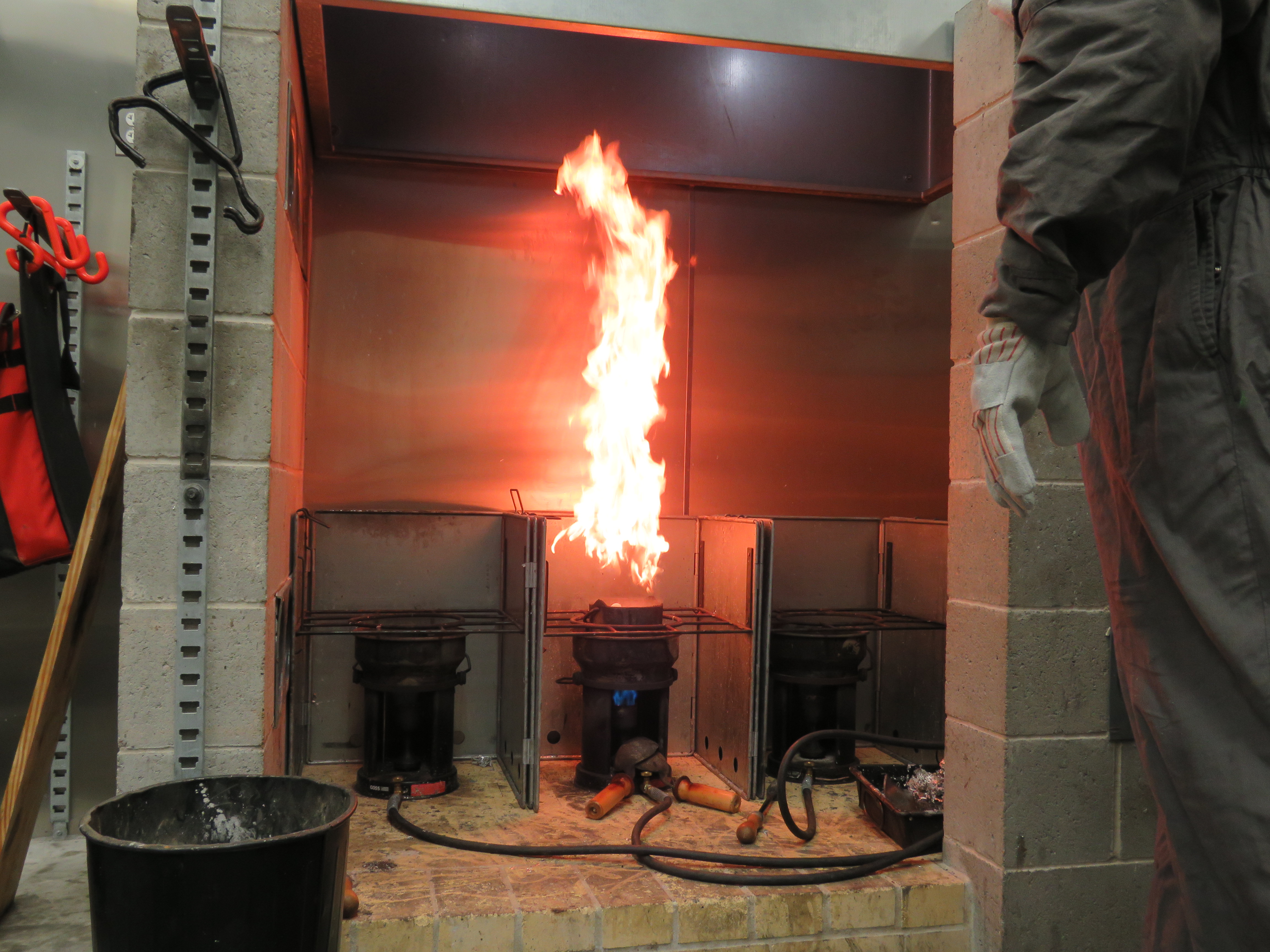
Student Splicers – here the trainees are cleaning down their lead pots in preparation for the 1/c 250 MCM lead splice. Using specialised cable splicing tools including soldering irons, melting pots, pouring ladles, tallow wiping cloths, lead ringers, compound kettles, stearine candles and paraffin dippers to perfect the wipe.
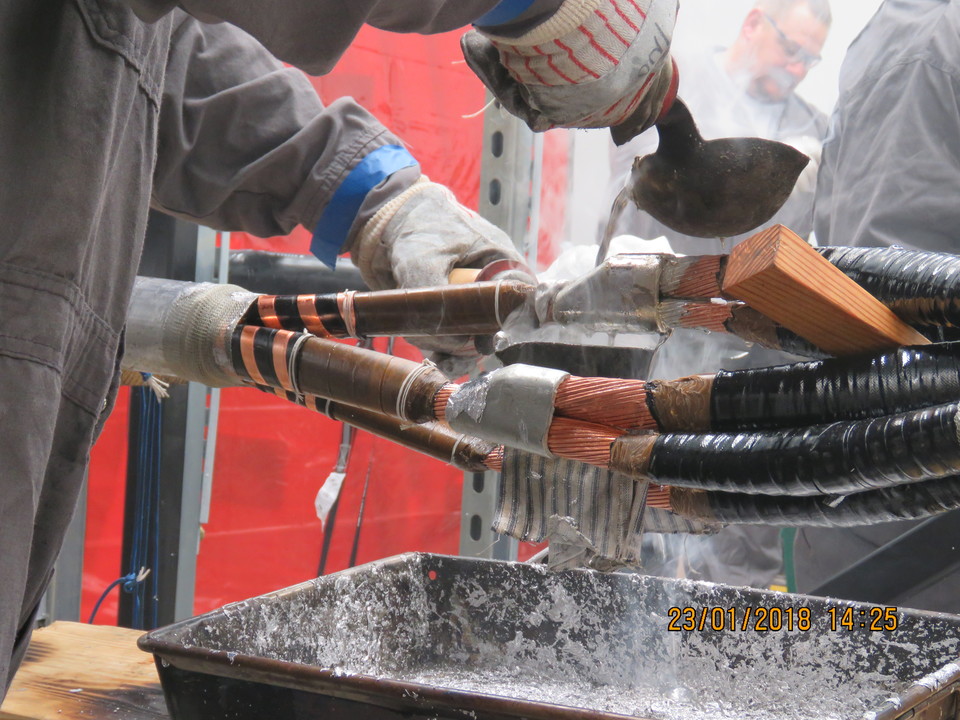
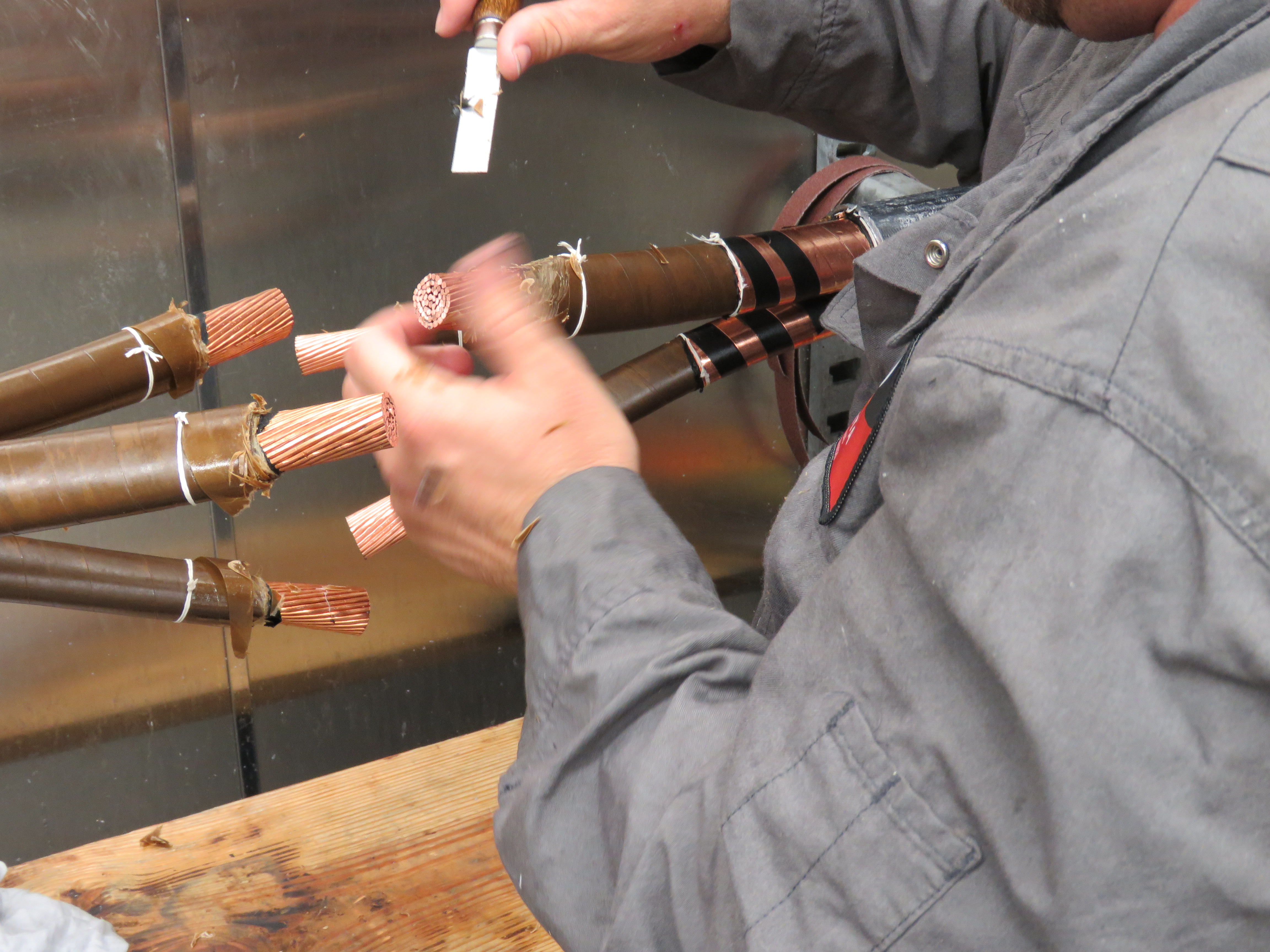
Pencilling Preparation – a student performs the cable pencilling in preparation for the 3 conductor sweat onto the practice cable splice. Safe knifework requires a steady hand, cool concentration and the manual dexterity of a surgeon. Because the power they’re supplying is electrifying and the Splicer must not lose control.
First, build the splice. Second, break the splice. Third, make the “Y” into a “V”.
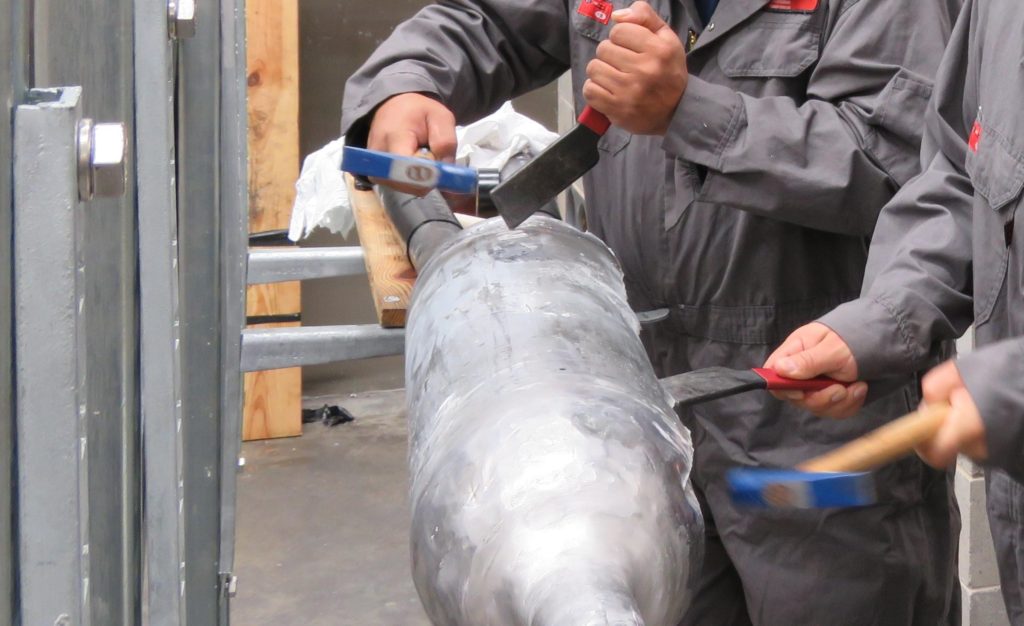
With the insulators in place, the “Y” is now a “V”.

Image: John Perez (Quanta Underground Power Services)
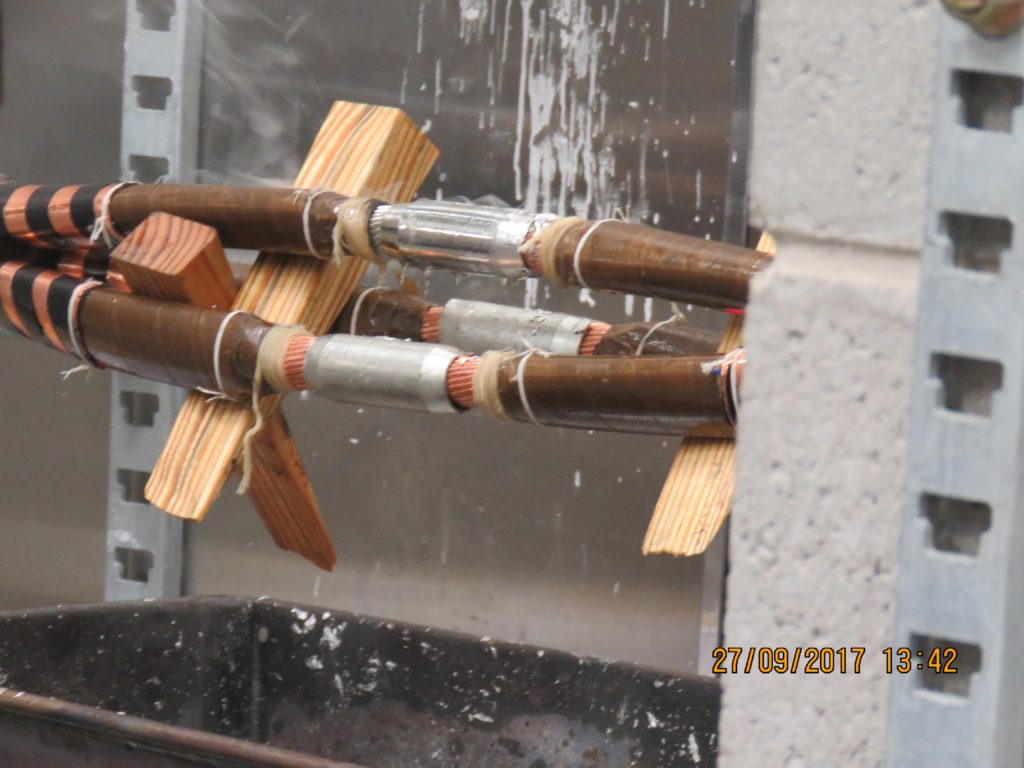

Practice Makes Perfect – a practice cable splice by one of the student Splicers that was done in preparation of the test splice – 3/c 500 MCM PILC cable splice. Splice integrity is crucial – localised lead corrosion permitting moisture ingress into cable insulation through cracks in the wipe area being a main precipitation of cable failure.

Student practicing cable preparation and set up for sweating the connector.
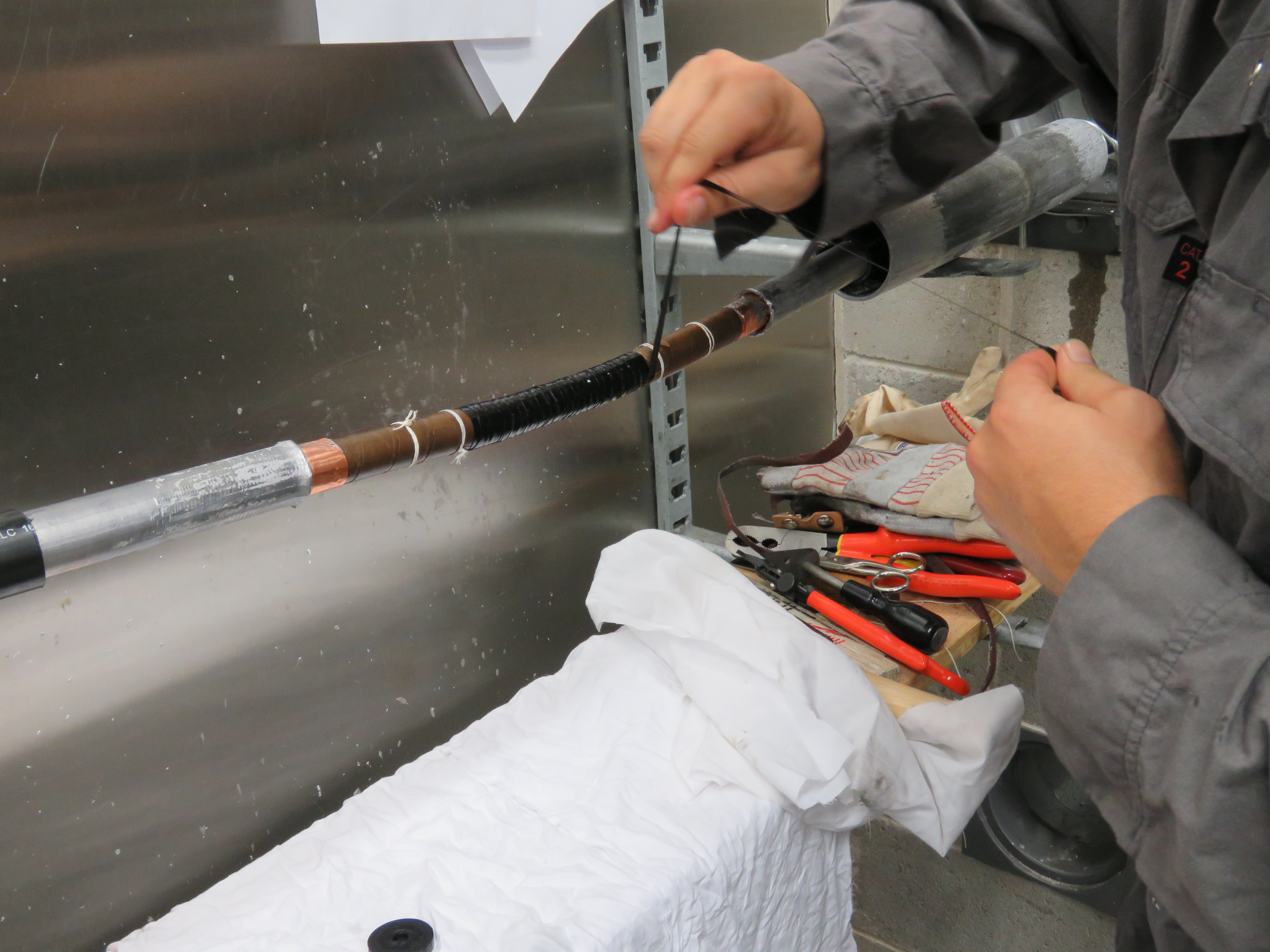
PILC Splicing – here the student is pre-taping to fill in the insulation layer across the core connector.
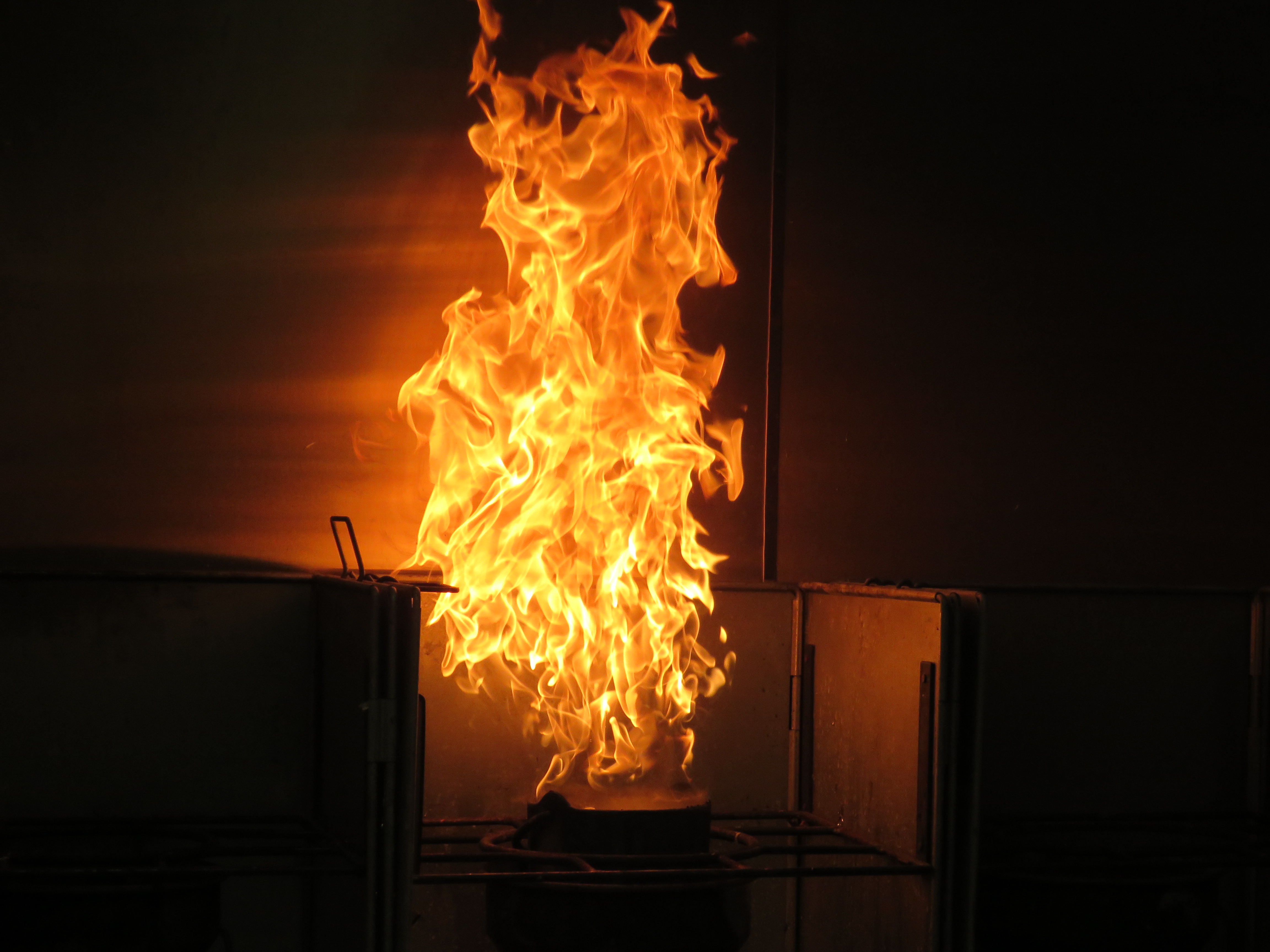
Lead Splicers Night Light – a hot pot of lead that is being cleaned with Stearine. Stearine is a product used to cool the lead and to help remove impurities.
About Quanta Services
Quanta Services has the knowledge and expertise to handle a full spectrum of MV HV Power projects. From the most straightforward, single-component installation to the most complex, multi-state project, Quanta can handle the job safely, efficiently and cost-effectively.

For Quanta, safety is the core that all their values centre around. Quanta will find a solution for every customer, but they will also find the option that protects their people, their customers and their communities.

Safety – Core Principal of Quanta Services
Lazy Q Ranch – Training facility
John Colson, founder of Quanta Services opened a training facility known as Lazy Q Ranch in August 2015 where the industry workforce could be trained under the strictest safety measures.
The Lazy Q Ranch is a world class training facility situated on over 2,100 acres focusing on safety education, skill development and certifications.
Training is available for electric power lineman on cutting-edge technology for all transmission structure types and up to 345kV. This area is powered by its own substation, completely separate from the power provided for the Ranch. Quanta Energized Services oversees this portion of the training facility, bringing proprietary technology techniques to the workforce.
The oil and gas section houses pipelines in all major diameters, a flow loop and underground testing capabilities. The pipeline area was designed to be flexible and allow for various diameter pipes to be brought in for integrity testing and training, making this a custom-solution for training on a challenging project.
The telecommunications village features a small town with homes at various stages of construction. This enables development training at all milestones of a project.
The Lazy Q Ranch evolves with the industry and was designed to mirror Quanta’s growth. As Quanta Services expand their service capabilities, so will the training facility.
Currently Quanta are offering the following training courses:
- AUT Technology
- Barehand
- Crane Training
- Directional Drilling
- Fiber Splicing
- Fundamentals of Pipeline Inspection
- Hot Stick
- I&R
- Inside Build
- Lineman Training
- Micro-Trenching
- MT & UT Training & Certification
- Pipeline Data Analyst
- Q-Inline Prep for Field Based Inspection
- Robotic Arm
- Safety Accident Investigation Workshop
- Tool Testing
- Weights & Forces
- Work Procedure Training
Thorne & Derrick Specialist Electrical Distributor
LV ♦ MV ♦ HV
T&D distribute the most extensive range of LV, MV & HV Cable Jointing, Terminating, Installation & Cable Pulling Equipment – we service UK and international clients working on underground cables, overhead lines, substations and electrical construction at LV, 11kV, 33kV and EHV transmission and distribution voltages.
- Key Products: MV-HV Cable Joints & Terminations, Cable Cleats, Sealing Cable Ducts, Cable Transits, Underground Cable Protection, Cable Jointing Tools, Feeder Pillars, Cable Ducting, Earthing & Lightning Protection, Electrical Safety, Cable Glands, Arc Flash Protection & Fusegear.
- Distributors for: 3M, ABB, Alroc, Band-It, Catu, Cembre, Centriforce, CMP, Elastimold, Ellis Patents, Emtelle, Furse, Lucy Zodion, Nexans Euromold, Pfisterer, Polypipe, Prysmian, Roxtec.

LV – Low Voltage Cable Joints, Glands, Cleats, Lugs & Accessories (1000 Volts)

MV HV – Medium & High Voltage Cable Joints, Terminations & Connectors (11kV 33kV EHV)

Cable Laying – Underground Cable Covers, Ducting, Seals & Cable Pulling Equipment
More…
T&D’s Power Blog covers: LV MV HV & EHV Transmission & Distribution, Substations, Switchgear, Cable Jointing & Termination, Cable Fault & Repair, Underground Cables.
HV Joints & Terminations – Brands & Jointer Training
August 31st, 2018
-
uploaded by Chris Dodds - Thorne & Derrick Sales & Marketing Manager
hEAT sHRINK Joints & Terminations
A myth pervades the UK contractor market that HV Cable Jointers MUST be re-trained and MUST be re-certified to install heat shrink cable joints and terminations according to the manufacturer/brand of kit.
Not true.
If a Jointer is conversant and competent to install Brand A of heat shrink product he is therefore conversant and competent to install Brand B, C, D….etc.
Since the development of heat shrink technology in the 1970’s competitor manufacturers have increasingly closed the gap between material quality and product performance.
This has been evidenced by the number of reputable manufacturers now able to provide 11kV and 33kV joints and terminations type tested by 3rd Party according to international recognised standard IEC60502-4.
Kits lists and installation instructions although not identical are very, very similar.
Vital to the life cycle performance and reliability of all HV Joints & Terminations operating at 11kV/33kV is the Jointers skill, experience and competency to execute cable preparation – essentially this involves the skilled use of specialist Jointing Tools to remove the outer cable sheath, semicon screen and insulation.
Typically, 90% of the installation time period for a heat shrink joint/termination is accounted for by the cable preparation process. The other 10% is “shrink-time”.
Let’s not underplay the Jointers need to possess excellent heat shrink techniques to shrink the kit components – this is clearly covered in all manufacturers Jointing Instructions and essentially provides recommendation on how to avoid scorching or over-heating of the tubes to achieve a smooth, wrinkle free installation.
Here, the flame is the name of the game and the torch-work by the Cable Jointer must basically involve heating but not burning the insulation, anti-track and stress control heat shrink tubes.
Trading Up, Down Or Sideways
Thorne & Derrick as a distributor at the sharp-end of the price point are exposed to increasing brand substitution with contractors brand affinity waning against a backdrop of tightening profit squeezes. Frankly, many brands are strong substitutes – heat shrink is heat shrink is heat shrink (up to a point) – and often brand loyalty is firstly commercial, secondly technical and thirdly emotional.
Price by itself should never decide the motive to buy. But generally price is the driver in the context of overall value for money and brand trust.
Last Words
In conclusion, Jointers skills are readily transferable across brands and contractors should not be prevented from attending site and installing HV Joints/Terminations purely on a brand basis – similarly if a commercial gain is to be secured from purchasing Brand A instead of any other Brand then the contractor should not be confronted by a doubt about the ability of their Jointer to correctly install that more cost-efficient value for money brand.
Discuss.
Stockists & Suppliers of MV HV Joints, Terminations & Connectors
Hover over our Interactive Electricity Grid to learn more about our product ranges – T&D are Specialist Distributors to DNO’s, ICP’s and NERS Registered Providers of LV, MV & HV Jointing, Earthing, Substation & Electrical Eqpt.
LV 600/1000V ◊ MV 11kV 33kV ◊ HV 66kV 132kV
T&D - CABLES ♦ JOINTS ♦ TERMINATIONS ♦ CONNECTORS ♦ GLANDS ♦ CLEATS ♦ CRIMPS & LUGS ♦ DUCT ♦ SEALS ♦ ARC FLASH PPE
EARTHING ♦ FEEDER PILLARS ♦ JOINTERS TOOLS ♦ CABLE CUTTING & CRIMPING TOOLS ♦ COLD SHRINK ♦ HEAT SHRINK ♦ FUSES
Has Cable Jointing Just Moved On? Discuss.
August 31st, 2018
Leading ICP – Independent Connection Provider
With Guest Comment by Reece James MIET
Co-Owner and Operations Director at Rock Power Connections
-
uploaded by Chris Dodds - Thorne & Derrick Sales & Marketing ManagerLets put the Cable Jointing cat amongst the pigeons……..
Question: Has Triplex Killed The Jointer?
The universally respected BICC Generation of crème de la crème Cable Jointers experienced on jointing XLPE, fluid-filled and gas type cables might bemoan the modern industry trend, or nose-dive, towards polymeric power cable systems.
Recently nicknamed the Triplex Tripe Age on Linked-In by a former BICC’er.
Paper Lead is in vogue no more, Triplex is the new PILC and Plastic is here to stay.
Face facts, it’s unstoppable but as we hurtle headlong down BS7870 street does that mean we can all become Jointers overnight?
Yes, we know plastic is damaging the Planet and is bad for our environment but is it also messing with our Jointers? Or is plastic fantastic?
Polymeric cables have become increasingly simpler to strip, prepare and joint but surely Competency remains vital to safeguard industry standards?
What role have the Jointer Training Centres to play in this?
The days of metal pots, compound buckets, burners with heater, whackers for backfilling, picks and shovels is long gone. It’s 2018.
The drift away from paper insulated lead covered cables (PILC) started last century with the almost global adoption of modern polymeric type cables – this has heralded the introduction of precision engineered Jointers Tools to ensure efficient cable preparation of medium-high voltage cables.
Allegedly this has removed the skill, dexterity and Craft out of the Art of Jointing Cables?
For what it is worth here’s my two penn’orth.
The “roll-up roll-up”, pay your £2K and in 4 days time you can start your new career as a Cable Jointer message is frankly undermining confidence, reputation and the earning potential of the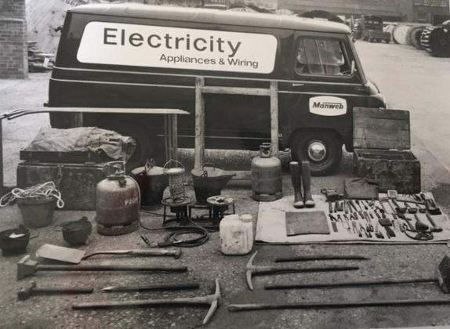 experienced Jointer.
Familiarisation is not Competency.
But the issued Paperwork can dupe some Recruiters sometimes into booking “Jointers” onto projects they are not yet adequately qualified or trained to undertake.
Many have not invested in the tool-set never mind the skill-set. Believe me, on an average day I receive 10-15 LinkedIn Direct Messages from non-electricians aspiring to become Cable Jointers under the influence of often misleading social media messages.
There is no fast-track to achieve the workmanship and skills levels of most of the Jointers we meet here on LinkedIn – Great Jointers and Great Guys.
Check them out on our Jointers Blog.
Sorry but some Training Centres will take “all-comers” while others screen/vet potential Trainees via CV scrutiny – that’s an important distinction.
Another more important stand-out for me is peer attitude – some will nurture, care passionately and graft daylong to maintain Jointing industry standards through the sharing of their extensive skills and experience with their staff. Supporting their career paths and fuelling their ambition while getting them to knuckle under and earn their spurs.
People like Reece James.
So to answer the question Has Cable Jointing Moved On?
Read Reece James thoughts:
“Ok I’m going to be controversial here but Cable Jointing has moved on.
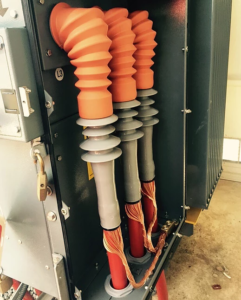
11kV Cable End Termination
As an apprentice trained DNO Cable Jointer who can work on old and new HV and LV lead cables, compound end boxes, do sweated cable joints and lead plumbing yes it did take years to learn the trade properly. However with new plastic Triplex cables, shearbolt connectors etc an experienced electrician can go on a short duration jointing course and learn how to joint / terminate cables to an excellent standard. I’ve shadowed a few of my staff before authorising them, giving them a few extra tips but the standard of there work is top notch. No, they are not fully rounded cable jointers like in the old days but on the cables they have been trained on and with on job experience there is no issue with the quality of there cable jointing work. It’s all down to the person and if they take pride in their work.
I remember the odd DNO trained jointer who did not care and turned out rough cable joints because they were in a rush. I just think it is unfair to tarnish all new (short training course) cable jointers with the same brush. I do however think there needs to be a minimum level of competence for someone doing these cable jointer training courses and in my experience a trained electrician is a good starting point!”
Meet Reece James MIET
♦ Bio
I am a highly motivated and experienced professional who is passionate about the electricity distribution industry and developing people. I have over 30 years experience in the electrical power industry, with the last 5 years as Operations Director of Rock Power Connections, which I Co-founded in 2012.
I have worked on various projects from LV connections to new EHV primary substation builds up to 400kV and have acted as Consultant Project Manager for many large developers, introducing competition, increased value and risk management for all their utility connections / requirements. I pride my self on my excellent customer service and relentless drive to deliver and exceed the customer’s expectations and my down to earth approach to business.
Developing my team and watching them succeed is one of my biggest motivations.
Who Are Rock Power Connections?
Rock Power Connections are power connection experts, specialising in independent electrical connections up to 33kV and DNO services up to 132kV – Lloyds accredited as part of the National Electricity Registration Scheme (NERS) and CHAS accredited.
Rock Power provides solutions from initial enquiry through design of electrical networks, construction (cable laying, jointing, substation installation), commissioning and final adoption of assets to DNO or Independent Distribution Network Operator (IDNO).
Working on behalf of a broad range of commercial developers to install new connections and repair / replace old equipment across sectors from retailers to residential, factories to farms – building and maintaining low, medium and high voltage cables and networks.

Thorne & Derrick – Stickists & Suppliers of MV HV Joints, Terminations & Connectors
Hover over our Interactive Electricity Grid to learn more about our product ranges – T&D are Specialist Distributors to DNO’s, ICP’s and NERS Registered Providers of LV, MV & HV Jointing, Earthing, Substation & Electrical Eqpt.
LV 600/1000V ◊ MV 11kV 33kV ◊ HV 66kV 132kV
T&D - CABLES ♦ JOINTS ♦ TERMINATIONS ♦ CONNECTORS ♦ GLANDS ♦ CLEATS ♦ CRIMPS & LUGS ♦ DUCT ♦ SEALS ♦ ARC FLASH PPE
EARTHING ♦ FEEDER PILLARS ♦ JOINTERS TOOLS ♦ CABLE CUTTING & CRIMPING TOOLS ♦ COLD SHRINK ♦ HEAT SHRINK ♦ FUSES
Triplex Terminations 11kV – NPG Northern Powergrid
August 28th, 2018
-
uploaded by Chris Dodds - Thorne & Derrick Sales & Marketing Manager
Cable Terminations
The following information is uploaded to assist in the selection and specification of the correct Triplex terminations to suit 11kV XLPE insulated cables with copper wire screen typically in accordance with BS7870 – the cable terminations manufactured by 3M Electrical are Cold Shrink type from the QTIII range of indoor cable termination kits.
These MV HV Cable Terminations are approved for use by Northern Powergrid (NPG) jointers and their framework contractors for the termination of 11kV Triplex cables – a complete range of Cold Shrink Terminations are available for 11kV, 33kV and 66kV single and 3-core cables with XLPE or EPR type insulation.
| Cold Shrink Termination | 92-EP621-1-NY43 | 92-EP631-1-NY44 | 92-EP641-1-NY45 | 92-EP641-1-NY52 |
| NPG Catalogue Number | 163660 | 163661 | 163662 | 163663 |
| Cable Termination (CSA) | 95sqmm | 185-300sqmm | 400sqmm | 630sqmm |
| Suits XLPE Insulation Diameter | 16.3-27.4mm | 21.1-38.9mm | 26.7-45.7mm | 26.7-45.7mm |
For Example:
Northern Powergrid NPG – Bill Of Materials For 11kV Triplex Termination Kit NPG163662
Cable Termination Kit List – Triplex Terminations
- SED T110-T 3M Cold Shrink Cable Termination Body x 3
- NEDL80 Sicame ML4/14/12 Earth Lug (Copper Wire Screens Pictured)
- NEDL19 Sicame HVTM1/3-12B Brass Cable Lug (Stranded & Solid Core Conductors)
- Jointing Instruction 2919-0
Earthing & Terminating
11kV Triplex Copper Wire Screens
Sicame ML4 range of mechanical cable lugs are designed for the termination of stranded/solid/circular conductor cores – also used for the termination of earth screen wires of MV-HV polymeric cables as a component of Triplex terminations kits.
The mechanical lugs are manufactured in copper alloy and suitable for jointing either copper or aluminium cored conductor – see complete range of Sicame cable lugs.
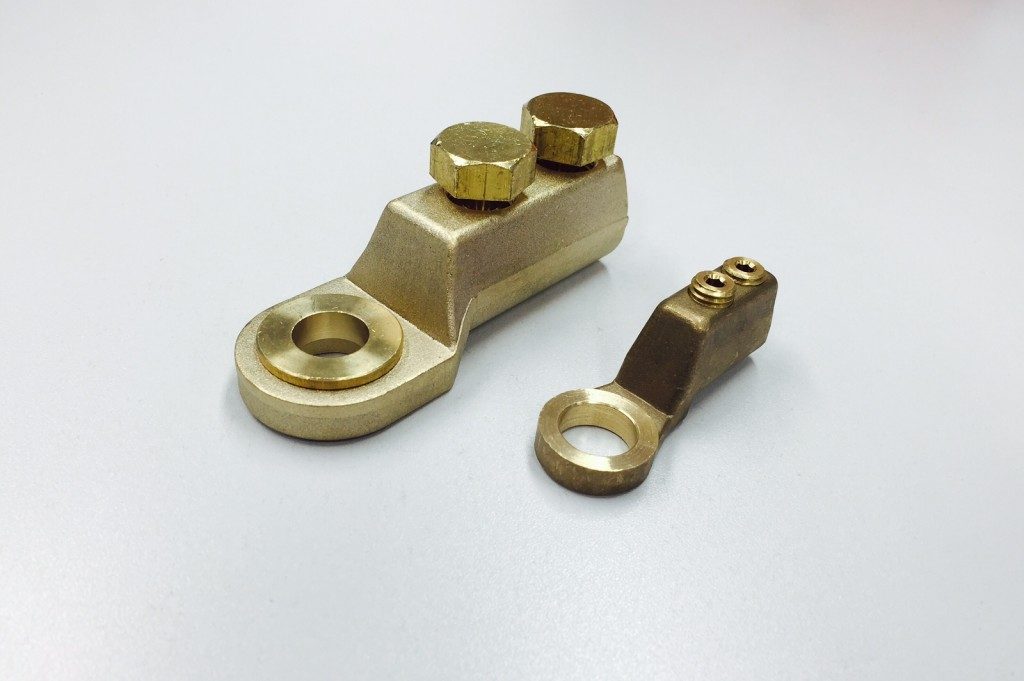
NOTE: Triplex cable terminations are supplied as sets of 3 – to terminate 11kV cables onto private networks using heat shrink cable terminations please go to Triplex terminations.

THORNE & DERRICK SPECIALIST ELECTRICAL DISTRIBUTOR
LV ♦ MV ♦ HV
T&D distribute the most extensive range of LV, MV & HV Cable Jointing, Terminating, Cable Pulling & Installation Equipment – we service UK and international clients working on underground cables, overhead lines, substations and electrical construction at LV, 11kV, 33kV and EHV transmission and distribution voltages.
- Key Products: MV-HV Cable Joints & Terminations, Cable Cleats, Duct Seals, Cable Transits, Underground Cable Protection, Cable Jointing Tools, Feeder Pillars, Cable Ducting, Earthing & Lightning Protection, Electrical Safety, Cable Glands, Arc Flash Clothing & Fusegear.
- Distributors for: 3M, ABB, Alroc, Band-It, Catu, Cembre, Centriforce, CMP, Elastimold, Ellis Patents, Emtelle, Furse, Lucy Zodion, Nexans Euromold, Pfisterer, Polypipe, Prysmian, Roxtec.

LV – Low Voltage Cable Joints, Glands, Cleats, Lugs & Accessories (1000 Volts)

MV HV – Medium & High Voltage Cable Joints, Terminations & Connectors (11kV 33kV EHV)

Cable Laying – Underground Cable Covers, Ducting, Seals & Cable Pulling Equipment
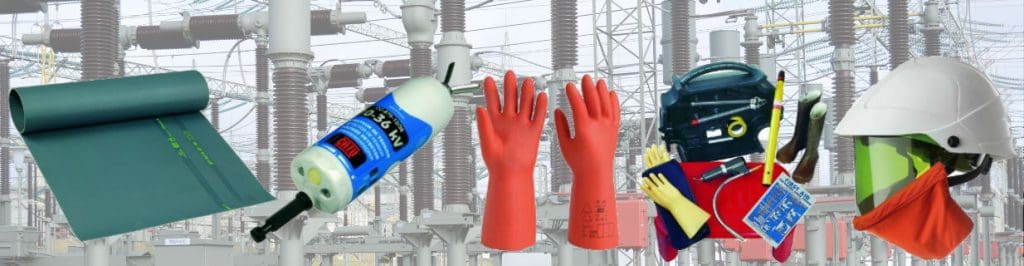
T&D, CATU Electrical Safety & Arc Flash Protection Specialists for SAP’s, Linesmen, Jointers & Electrical Engineers – Largest UK Stockist