uploaded by Chris Dodds - reading time 5 minutes

Hivotec Tools | Stocked, Supplied & Distributed in UK by Thorne & Derrick
Jointing 66kV cables requires special skills, special tool sets and specialist skilled Jointers – cable preparation by the HV Jointer must be accurate and perfect before the field installation of high voltage joints and terminations.
Whether installing heat shrink, cold shrink, slip-on or separable connectors, joints and terminations the removal of sheath, insulation and semicon screen must be precise and in accordance with the manufacturers jointing instructions.
Jointers preferences vary – they are usually personal and based on familiarity and the type of high voltage cables to be jointed. Leading manufacturers of jointing tools include Alroc, Boddingtons and Ripley a Utility Tool brand.
Some manufacturers, such as Pfisterer, produce their own recommended cable tool sets for use with their range of inner cone plug connector terminations on gas insulated switchgear and substations.
So we invited Chris Barker (HV & EHV Cable Jointer) to comment on his cable tool preferences for use with 66kV high voltage cables – Chris is an international class HV EHV Jointer conversant with XLPE and fluid filled joints and terminations. Competent and certified with Prysmian, ABB, Silec, Nexans, Pfisterer Ixosil, Raychem and 3M at 132kV.
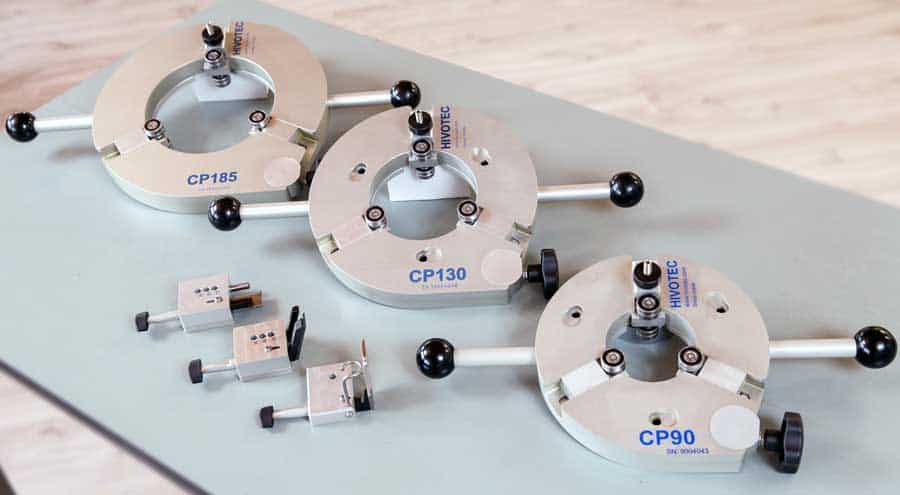
Hivotec CP90 CP130
Screen & Insulation Removal 33kV/66kV Cables
“I wouldn’t say there is a specific cable jointers tool set to hold for 66kV jointing – personally with the range of jointing tools I own I can confidently confront standard 11kV up to extra high voltage 400kV cables,” Chris comments.
“The Hivotec CP90 semicon peeling and insulation stripping tool with a cable diameter range of 40-90mm can be used to prepare both 33kV medium voltage cables and 66kV high voltage cables with bonded semicon and XLPE polymeric type cable insulation. The Hivotec CP90 provides a perfect transition between the cable insulation and bonded semicon.”
“To remove the PVC cable sheath the PG tools manufactured by Alroc provide clean circumferential and longitudinal cuts to the cable sheath without incurring damage to the cable construction – this tool can also be used to strip lead sheath covering from 33kV/66kV high voltage single core power cables. I would then use a jointers cable knife for tramlining.”
“Hivotec provide a complete range of modular MV HV Jointing Tools for the peeling and stripping of HV cables covering a diameter range from 40-185mm. The Hivotec tools are equipped with guiding rollers eliminating the requirement for greasing of cables,” adds Chris.
The cable peeling depth can be simply adjusted with the fine adjustment screw to provide smooth finish to cable insulation surface without need for additional regrinding or sanding.
Hivotec CP90 – Peeling and cable stripping tool for a diameter range of 40–90mm (optional drive)
Hivotec CP130 – Peeling and cable stripping tool for a diameter range of 80–130mm (optional drive)
Hivotec CP185 – Peeling and cable stripping tool for a diameter range of 130–185mm
Hivotec Unipower 34R – Gear transmission unit to drive Hivotec CP90 and CP130
The range of HV High Cable Jointing Tools manufactured by Hivotec – specified for the stripping and chamfering of insulation and peeling or removal of bonded semicon screens on high voltage power cables.
hIVOTEC CP90 HV Cable Tools – Main Technical Data
Range of High Voltage Cable Diameter
mm
40-90
Weight of Jointing Tool
kg
4.20
Maximum Semicon Peeling Depth
mm
2.0
Minimum Length Of Remaining Semicon
mm
70
Cutting Depth For Insulation
mm
3…35
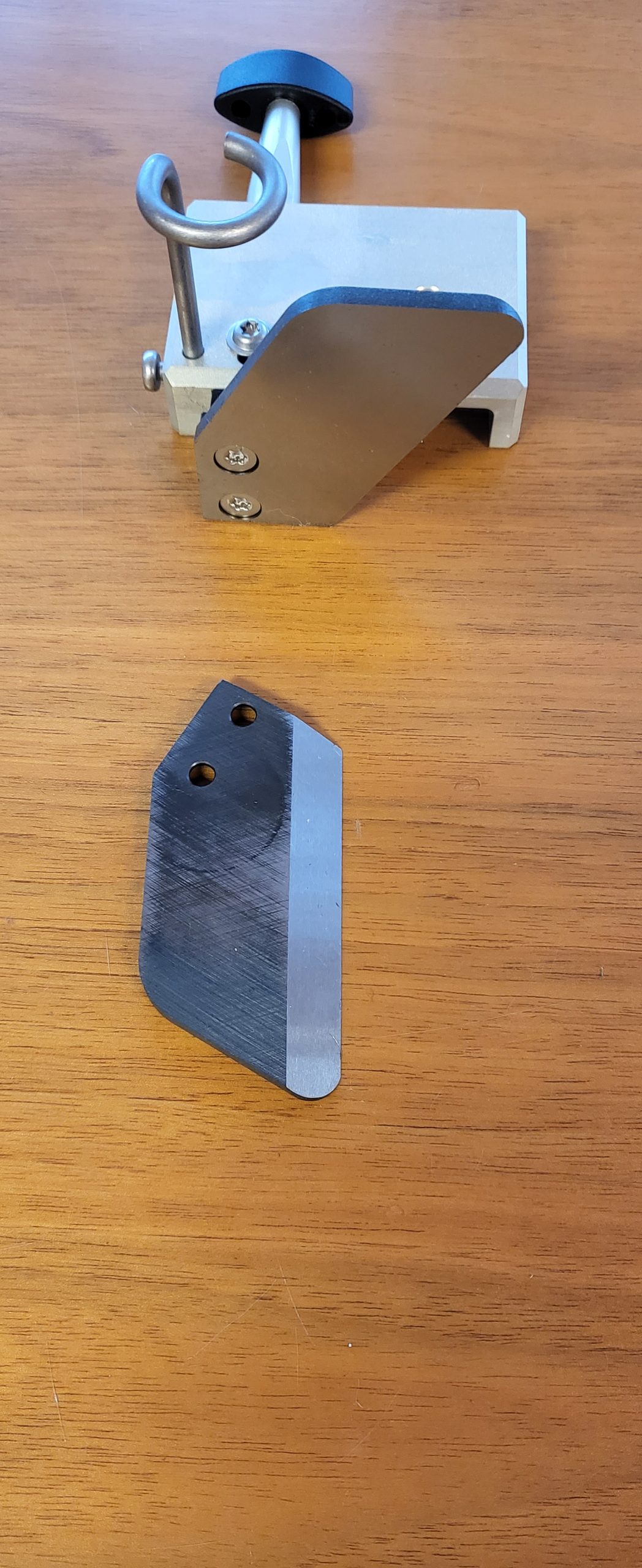
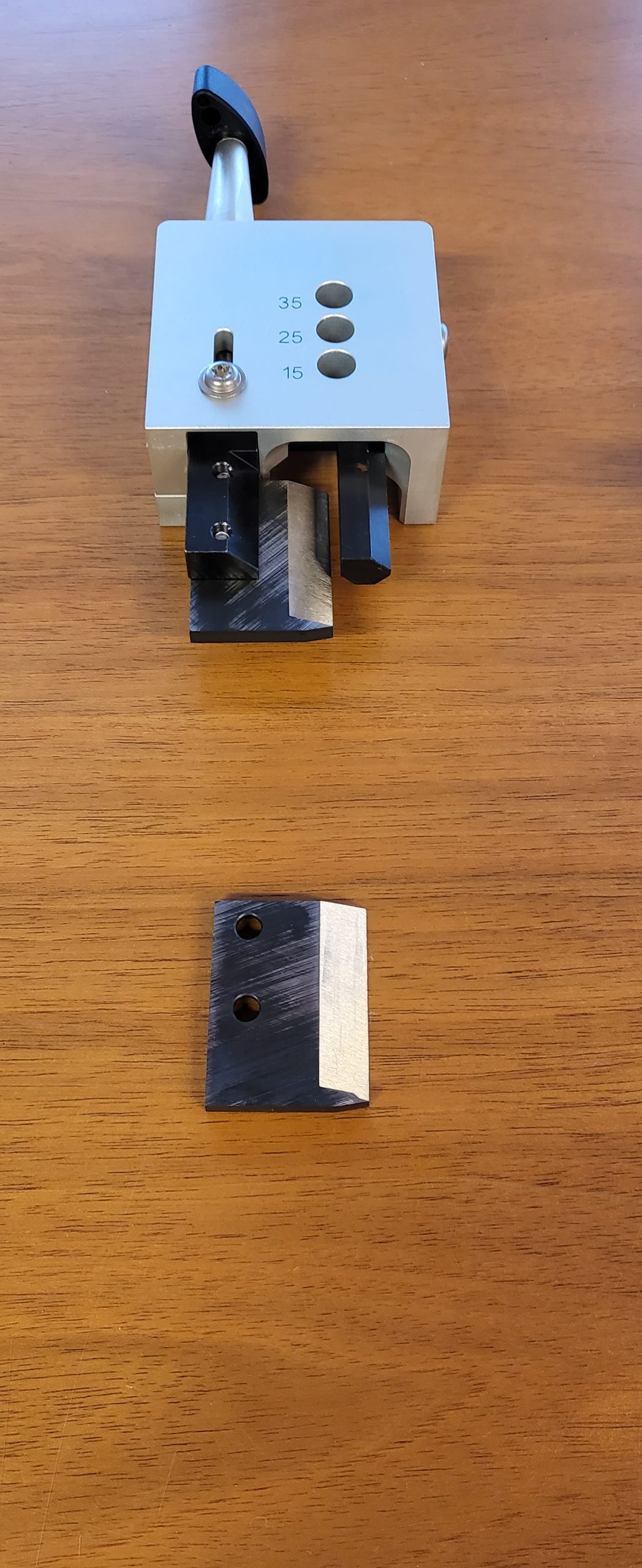
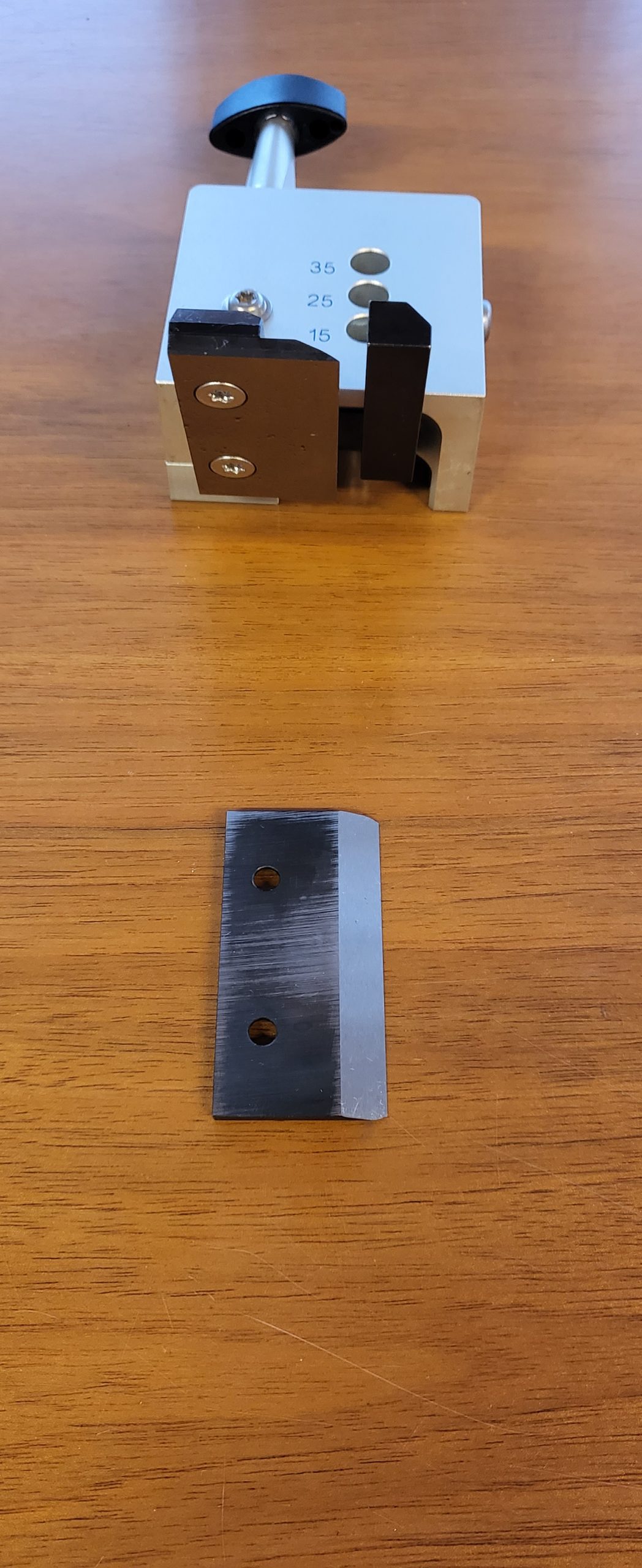
Spare Blades for Use with Hivotec Tools | Peeling, Insulation Stripping & Chamfering
Hivotec CP130 | Cable Jointing & Peeling Tool– here the high voltage power cable preparation tool is being demonstrated removing XLPE insulation from 150kV cable for an offshore wind farm project.
400kV Cable Jointing Tools
Here the Hivotec CP130 has been used to prepare a perfect EHV cable semicon cut back, high quality cable preparation installations mean minimal future O&M for cable accessories such as joints, terminations and connectors. Note the cleanliness of the cable insulation – all cables whether LV HV EHV should be carefully cleaned using cable cleaning wipes to remove any debris or contaminants from the cable.
T&D are Specialist Distributors of High Voltage Joints & Terminations to UK and international customers – we guarantee expert technical support across an extensive range of core products to joints, splice, terminate or connect medium and high voltage (MV-HV) cables.
LV MV HV 11kV 33kV 66kV 132kV Cable Tools for further info see: Cable Jointing Tools
uploaded by Chris Dodds - reading time 2 minutes
Jointing & Preparation Tools
Prysmian cable jointing tools include a complete range of cable sheath/jacket strippers specified to strip and remove the cable jackets on concentric neutral cables, flat strap neutrals and PILC cables including the Prysmian AIRGUARD range of Low Voltage & Medium Voltage Power, Instrumentation and Control cables – PG cable jacket and sheath strippers are suitable for low, medium and high voltage cable sheaths.
Prysmian Order Code
Cable Jacket OD Range Inches (mm)
Prysmian PG2-MV-2020
0.80-1.40 (20-36mm)
Prysmian PG3-MV-1018
1.00-2.00 (25-51mm)
Prysmian PG3-MV-2833
1.00-2.00 (25-51mm)
Prysmian PG4-MV-2833
1.85-3.00 (47-76mm)
Prysmian PG5-MV-3535
2.55-3.70 (65-94mm)
Prysmian PG6-MV-3535
3.14-4.90 (80-124mm)
Please note – the last number in the Prysmian part number indicates the cable tools blade depth – the first two digits indicate the depth in millimetres of cut for the circumferential cut and the last two digits indicate the depth in millimetres of cut for the longitudinal cut.
Example –Prysmian PG4-MV-2833 contains 4 circumferential blades to cut the cable sheath with a depth of 2.8mm and one longitudinal blade with a cable cutting depth of 3.3mm. Replacement blades are available.
T&D are Specialist Distributors of High Voltage Joints & Terminations to UK and international customers – we guarantee expert technical support across an extensive range of core products to joints, splice, terminate or connect medium and high voltage (MV-HV) cables.
The ATEX Directive covers an extensive and diverse range of equipment potentially including electrical equipment and cable accessories used on fixed offshore oil and gas platforms, in petrochemical plants, mines, flourmills and other areas where a potentially explosive atmosphere may be present – these are commonly referred to as “hazardous areas” and categorised according to the potential explosion risk into Zones under the European Directive known as ATEX.
In this post we clarify the situation with respect to the relationship between the product category “LV Cable Joints” and the European hazardous area ATEX Directive.
ATEX
A potentially explosive atmosphere exists when a mixture of air and flammable gases, vapours, mists, or dusts combine in a way that can ignite under certain operating conditions – this is referred to as a hazardous area and depending on the concentration levels this is categorised into Zones according to degree of risk as referenced below.
The ATEX Directive 2014/34/EU covers equipment and protective systems intended for use in potentially explosive atmospheres.
The Directive defines the essential health and saftey requirements and conformity assessment procedures, to be applied before products are placed on the EU market. It is aligned with the New Legislative Framework policy, and it is applicable from 20 April 2016, replacing the previous Directive 94/9/EC.
A Guidance document on the ATEX Directive transition from 94/9/EC to 2014/34/EU (371KB) is available as a download below, with a list of frequently asked questions and answers.
In very broad terms, there are 3 pre-conditions for the ATEX Directive to apply to the
electrical equipment and cable accessories for use in potentially explosive atmospheres and hazardous areas:
a) must have its own source of ignition; b) be intended for use in a potentially explosive atmosphere (air mixtures); and c)be under normal atmospheric conditions.
When used as directed, 3M cable joints and cable accessories do not have a source of ignition. The firing of an explosive atmosphere may be caused by a short circuit, but when installed according to 3M instructions, their cable joints (both resin and Cold Shrink) are safe against short circuits. To conclude, 3M cable joints and Cold Shrink accessories are not within the scope of the ATEX Directive.
Zone 1 – according to ATEX a place in which an explosive atmosphere consisting of a mixture with air of flammable substances in the form of gas, vapour or mist is likely to occur in normal operation occasionally.
Zone 2 – according to ATEX a place in which an explosive atmosphere consisting of a mixture with air of flammable substances in the form of gas, vapour or mist is not likely to occur in normal operation but, if it does occur, persists for a short period only.
3M Scotchcast 1402FR Cable Joints
Cable Joints
Why Specify & Install 3M Cable Joints?
Although cable joints are not formally certified according to ATEX there are several minimum specification and performance requirements for cable joints when being used to connect, repair or joint cables in hazardous areas.
Standard industrial cable joints will not provide adequate electrical insulation and mechanical protection – they utilise polyurethane resins which are not hydrocarbon resistant and will suffer chemical and molecular breakdown overtime when exposed to aggressive and corrosive atmospheres. Eventual failure of the cable joint will cause power outage and the need to cut-out the failed cable joint and re-joint using a suitable product.
3M LVI-3 type cable joints include specially formulated 3M Scotchcast 1402FR resin – this resin is hydro carbon resistant, flame retardant, halogen free and chemical resistant for use in hazardous area locations.
For this reason, 3M Scotchcast is the industry standard for hazardous area cable jointing and offshore cable joints where ATEX Directive stipulates Zone 1 or Zone 2 certified equipment must be installed – this range of cable joints suitable for power, control and instrumentation cables are approved and in service at LukOil, Royal Dutch Shell, Total, Chevron, Exxon Mobil and many other international onshore and offshore oil and gas exploration companies.
Article 500 of the National Electrical Code (NEC)
What Is NEC?
The National Electrical Code (NEC), or NFPA 70, is a regionally adoptable standard for the safe installation of electrical wiring, cables and equipment in the United States forming part of the National Fire Codes series published by the National Fire Protection Association (NFPA), a private trade association.
According to NEC, Hazardous (Classified) Locations (HL) are defined as areas where fire or explosion hazards may exist due to the presence of flammable gases, vapors, dusts or fibers/flyings. The 2014 National Electrical Code (NEC) – NFPA 70 categorises these locations by Classes, Divisions and Zones and imposes strict requirements for wiring methods in these locations.
Hazardous locations are broken into different categories called Classes and Divisions per the 2014 NEC Article 500 Hazardous (Classified) Locations, Classes I, II, and III, Divisions 1 and 2. The process of classifying a potential hazardous area workplace or location is often complex, so it is generally determined by the plant engineering staff. “Class I, Division 1” is the most hazardous classification, but “Class I, Division 2” is the type most common to cable users. The various classifications are summarised in the table below. Class I and II materials are further subdivided by the NEC into “Groups” (A, B, C, etc.) as shown.
However, the type of Group has no effect on the type of cable required – T&D can recommend suitable cable joints, termination or explosion proof cable glands and connectors for all Class and Division applications.
Explosive or ignitable gases or vapors are present under normal operating conditions
Explosive or ignitable gases or vapors are not normally present (but may accidentally exist)
II – Dusts
E: Metal dusts
F: Carbon dusts
G: Flour, grain, wood or chemical dusts
Combustible dust is in the air under normal operating conditions
Dust is not normally in the air in ignitable concentrations (but may accidentally exist)
III – Fibers & Flying
Textiles, wood chips, etc (ignitable but not explosive)
Easily ignitable fibers or flyings are handled, manufactured or used
Easily ignitable fibers are stored or handled.
Conclusion
Should you require specification or technical support to enable the selection for purchase of the correct 3M Cable Joint to joint low/medium/high voltage cables (LV-MV-HV) in hazardous areas please do not hesitate to contact us, this includes 11kV/33kV joints and terminations.
Thorne & Derrick hold the largest European stocks of 3M Resin Cable Joints and Cold Shrink cable accessories for use in potentially explosive atmospheres – we provide expert technical support, product specification and customer service to the UK and international oil, gas and petrochemical industries.
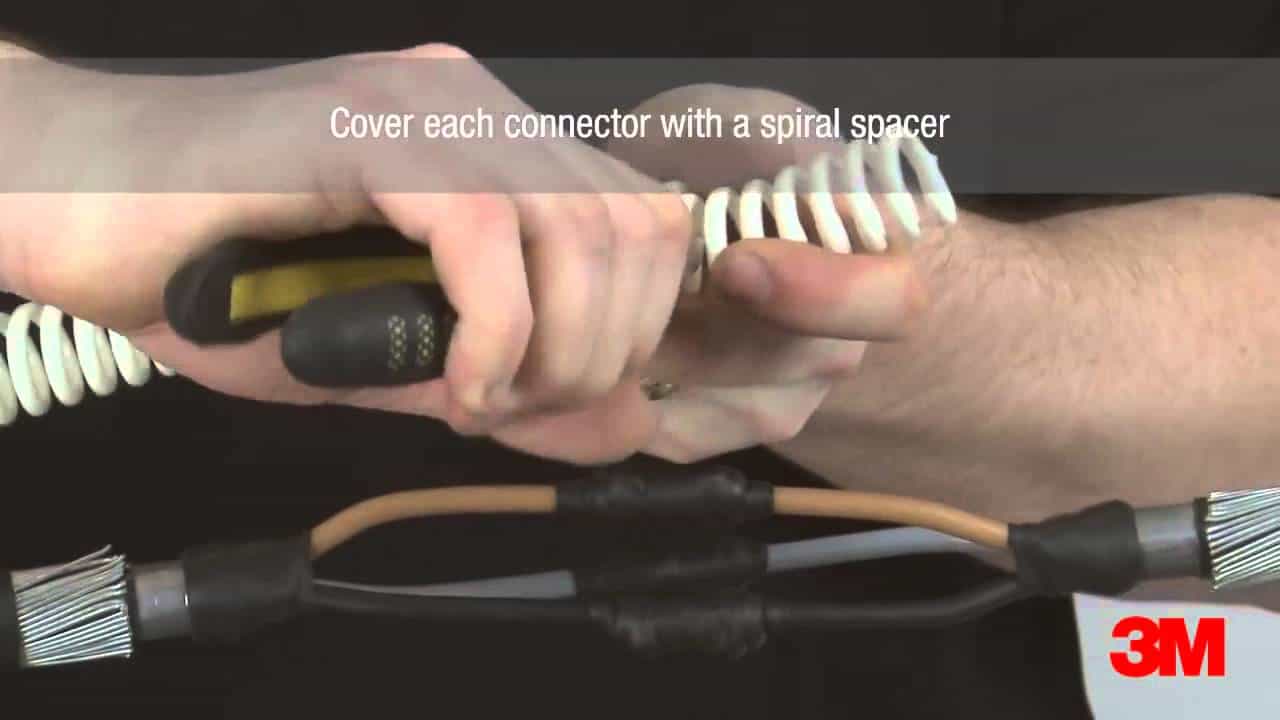
Installing Hazardous Area Cable Joints Using 3M Scotchcast Resin Jointing Kits
➡ Watch 3M Video
Cable Accessories & Electrical Equipment – ATEX Certified For Hazardous Areas
T&D are Specialist Distributors of Hazardous Area Lighting & Industrial Power Distribution products to UK and international customers – we guarantee expert technical support across an extensive range of core products with ATEX and IECEx certification for potentially explosive atmospheres.
Here, Stokbord Cable Covers are showing providing protection and covering high voltage 132kV power cables in an underground cable trench as part of an HV Cable Diversion project. Image: Prysmian.
T&D distribute the most extensive range of LV, MV & HV Cable Jointing, Terminating, Cable Pulling & Installation Equipment – we service UK and international clients working on underground cables, overhead lines, substations and electrical construction at LV, 11kV, 33kV and EHV transmission and distribution voltages.
Thorne & Derrick invite you to join LinkedIn’s largest LV-HV Electrical Discussion Group : Low & High Voltage Power, Cabling, Jointing & Electricals. Discussion subjects include cable installations, cable jointing, substation, overhead line and electrical construction at LV, 11kV, 33kV and EHV. Network, engage and promote your profile, company or products with over 10,000 influencers.
Thorne & Derrickare Approved Vendors to Saipem of LV, MV & HV Cables, Accessories, Jointing, Substation & Electrical Eqpt.
T&D provide an outstanding service to UK and international customers – we are highly customer responsive and absolutely committed to providing a world-class service.
We supply UK and international businesses involved in cable installations, jointing, substation, overhead line and electrical construction at LV, 11kV, 33kV, 66kV and EHV.
We provide global express delivery from stock at competitive prices.
What Is Arc Flash PPE and Why Is It Important? Arc flash PPE is specialist personal protective equipment designed to help protect electrical workers against the thermal hazards of an electric arc. It includes arc-rated clothing, protective helmets, face...
Voltage detectors are electrical safety instruments used to identify the presence or absence of voltage on electrical equipment and conductors. They are used by electricians, electrical engineers, utilities and maintenance teams working on low voltage (LV), medium voltage (MV)...










 The 2014 National Electrical Code (NEC) – NFPA 70 categorises these locations by