Blog
Nexans Successfully Achieves Electrical Type Test for 525kV DC GIS Cable Sealing End
May 20th, 2021
Nexans 525 kV DC GIS Cable Sealing End
Nexans has achieved electrical Type Test of a 525kV DC Gas Insulated Switchgear (GIS) Sealing End according to CIGRE TB 496 with the cooperation of Siemens Energy
In the frame of the high voltage direct current (HVDC) market, the cables with an insulation composed of cross-linked polyethylene (XLPE) have emerged in the last ten years and allowed the deployment of innovative electrical grids in Europe and worldwide.
Nexans’ ecosystem encompasses best-in-class partners who share our values, working together to continually deepen our ability to stay a step ahead of what the market needs.
GIS type ends constitute an interesting component in the HVDC links due to the flexibility and compaction they allow in the connection of cables of different structures, especially in congested spaces such as an offshore platform. It is also suitable for use in back-to-back mode, thus constituting a mixed joint (e.g. between cables of different technologies).
- Nexans developed a dedicated GIS cable sealing end for a 525kV DC XLPE cable system. The studies on electrothermal aspects of the interface resulted in an optimized accessory design. The solution consists in a Nexans GIS termination plugged in a Siemens Energy DC GIS enclosure both compliant with IEC 62271-209 standards dimensions.
- The validation of the solution has been successfully completed through an electrical 525kV DC VSC Type Test according to CIGRE TB 496. The test was accomplished in Nexans Calais high voltage laboratory under the certification of an independent third-party. This technologic breakthrough allows Nexans to offer competitive products for the deployment of HVDC links with direct connection to DC GIS.
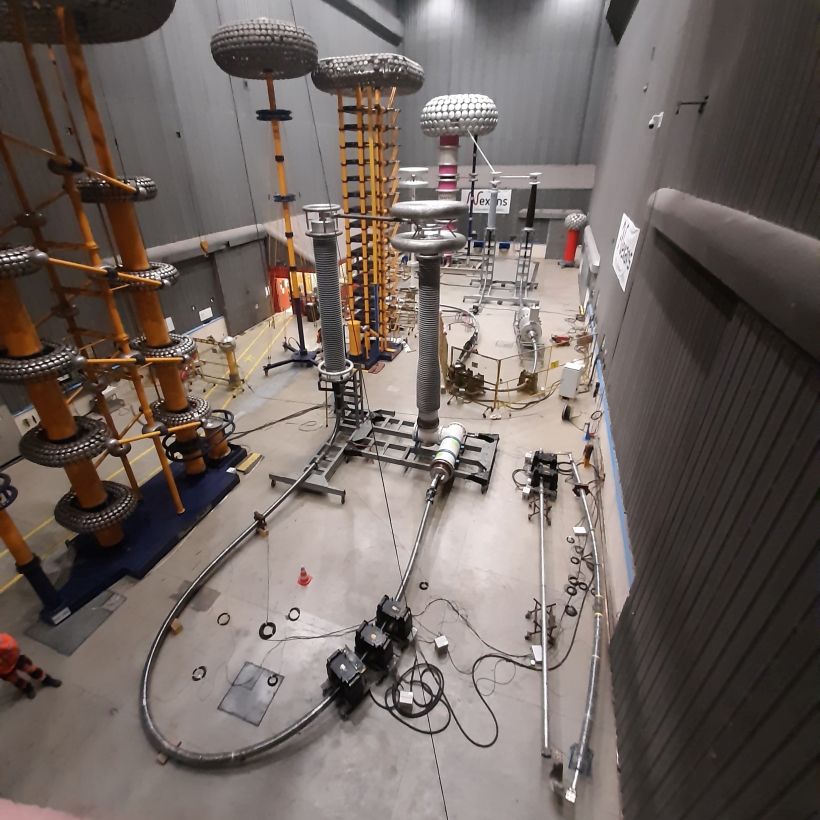
Nexans developed a dedicated GIS cable sealing end for a 525kV DC XLPE cable system.
At Nexans, we are leading the charge to the new world of electrification: safer, sustainable, renewable, decarbonized and accessible to everyone – connecting us all to new opportunities, technologies and behaviours that will build a better future.

Thorne & Derrick
Nexans Main UK Stockist & Distributor
Contact us for Competitive Prices & Fast Delivery from Stocks for Heat Shrink, Cold Shrink & EPDM Rubber Connectors, Joints & Terminations up to 66kV.
Go to our Price List and contact us with your enquiries.
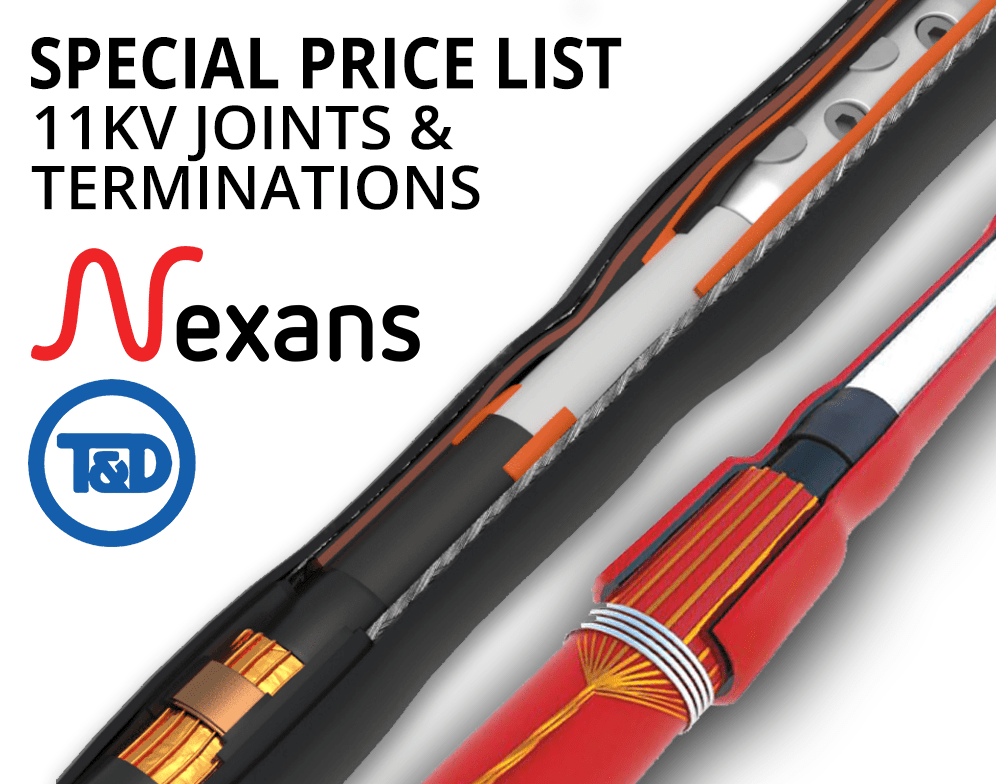
Heat Shrink Cable Accessories for 11kV Triplex Cables
Thorne & Derrick International are specialist distributors of LV, MV & HV Cable Accessories, Jointing, Substation & Electrical Equipment – servicing UK and global businesses involved in cable installations, jointing, substation, overhead line and electrical construction at LV, 11kV, 33kV, 66kV and EHV.
Stocking & Supplying | Duct Seals | Cable Cleats | Cable Glands | Electrical Safety | Arc Flash Protection | Jointing Tools | Cable Pulling Eqpt | Earthing & Lightning Protection | Feeder Pillars | Cable Joints LV | Joints & Terminations MV HV

Euromold MV HV | Cable Terminations, Connectors, Elbows & Joints
Five Steps to Landing a Wind Turbine Technician Role
May 20th, 2021
-
Special thanks to Freya Mortimer from Eden Scott for sharing the article
Wind Turbine Technician Role
It’s an exciting time for the wind power industry here in Scotland with the first ever floating wind farm opening on the 18th of October 2018 off the coast of Peterhead and millions of pounds being invested across the board into onshore and offshore wind developments. So what better time to finally break into renewables and make moves to become a wind turbine technician?
Eden Scott have put together a quick ‘how to’ guide covering the basics of preparing yourself for a wind turbine technician job. Whether you’re looking for an entry level position, or you are more experienced candidate looking to move from another industry, these top tips will help you get yourself ready and qualified.
Thorne & Derrick are leading Specialist Distributors & Stockists of LV, MV & HV Cable Installation, Jointing, Substation & Electrical Equipment to the Wind industry.
Complete range of MV Cable Accessories to suit wind energy power cables – this includes joints, terminations and connectors from manufacturers including 3M, Pfisterer, Nexans Euromold and Prysmian.

1. LEARN AND TRAIN
Whether you’re an experienced technician looking to change industries or looking for your first position, there are many companies are willing to train technicians on the job.
However, one of the most challenging parts of landing your first role can be building that initial experience and knowledge. If you’re worried that a lack of background in the industry is holding you back, there are a wide variety of options that will allow you to learn and develop those key skills.
Fife College offers a one year multidisciplinary renewable engineering technician course, and Ayrshire College offers a City and Guilds one year wind turbine technician qualification. Both of these are perfect for aspiring technicians with any level of experience outside of renewables; they will prepare you for the job and show you are ready to work and put your new knowledge into practice.
If a year of studying isn’t for you and you want to get stuck right in, there are quick courses that provide industry and technical insight to add to your existing skillset to give you that extra edge. For instance, the European Energy Centre for instance offer a SQA accredited two days long ‘Wind Power Qualification’ that can be taken online or at Napier University.
Sign up for renewable jobs here.
2. GET CERTIFIED
Academic courses are a beneficial, but not a necessary stage in targeting technician roles. However, certain qualifications, licenses and certificates are key requirements. Get a driving license if you don’t have one already; not only are a lot of sites in remote locations, but almost all positions will specify a license as a core requirement. You will often be expected to travel to different sites across the country. The good news is, some organisations offer car allowances or access to company vehicles, you just have to bring the license!
Specific turbine qualifications may need to be undertaken. For example, employers frequently look for wind turbine safety rules (WTSR) or Vestas certification. Requirements change role to role so it is crucial you fully read the job description. You can also find a niche and take training courses in specific types of turbine or blade. Although this limits the variety of positions you’d be qualified for, targeting a specific area can give you a strong chance when these opportunities arise.
Inevitably, many courses come with financial implications. They can be completed and paid for yourself on or offline, but some companies may put you through your training so it is crucial you express a will to build these skills from your first contact with the organization. This will show your commitment and puts you at less of a disadvantage against others who may already be qualified.

3. CLIMB!
Working at a height is an integral part of being a wind turbine technician. You also need to be physically fit, so taking up climbing as a hobby is a great way to keep in shape and simultaneously get comfortable with heights. There are plenty of recreational training centers such as Glenmore Lodge and EICA at Ratho that offer classes and certificates at all levels and have the facilities for you to just give it a go by yourself.
It’s also possible to build up some related height experience in completely different industries; taking up work or odd jobs doing window or gutter cleaning actually puts you in very similar environments and shows your capability working in them!
It’s also possible to pick up an industry qualification showing you know the ropes; this is especially beneficial if you’re from a more ‘hands off’ background. For instance, Talon NDT, who have sites in Edinburgh, Aberdeen and Blackpool, offer a variety of training including Industrial Rope Access Trade Association. If specifically targeting rope access roles, it’s commonplace for employers to look for this at level 1.
Specifically involving heights, employers generally require a CSCS work at heights card which can be taken by Construction Support at a variety of UK locations. As with other elements of learning on the job some employers can put you through these courses and certifications, but if you have the means to put yourself through them you’ll be at a strong advantage when applying for positions.
4. KNOW YOUR LINGO, KNOW YOUR FACTS
When applying or interviewing for jobs it goes without saying that some background research into the role and company is a necessary step. However, it is particularly important if you’re looking at entry level jobs or coming from a science or engineering background outside of renewables.
Showing you know what’s involved in the job, the names and details of the turbines, and how they work will not only make you better prepared when it comes to the interview, but show yourself as a knowledgeable candidate who is ready to learn more on the job. Make sure you have the right lingo to reflect your knowledge and interest in the industry; think turbines and blades, not windmills and fans…
If you’re looking into undertaking formal qualifications you will pick up this information on the course alongside more advanced knowledge, but this isn’t the only way to pick up the basics. There is a wide variety of information and easy to understand guides online explaining the ins and outs of turbines, such as on Good Energy’s website.
There are also of plenty wind power and renewable organisations you can follow on Twitter and LinkedIn, such as Scottish Renewables who regularly post updates and articles about the industry. The fresher and deeper your knowledge, the more appealing you are to hiring managers.

5. SHOW YOUR SKILLS
Make sure the right skills and keywords are on your CV.
This is particularly true for service engineers/technicians looking to move into renewables from another industry; a lot of companies are willing to train you up in the sector on the job, but will be looking to make sure the base skills are there.
Does the role look for knowledge of hydraulics or maintenance?
Make those skills clear. It’s worth remembering that this is for the benefit of both employer and candidate. It might be assumed within your current or previous sector that certain skills and experience come hand in hand with the amount of time served and your job title; but hiring managers might not know this. Make sure all technical experience is included even if it’s not related to the wind industry.
Don’t just focus on STEM experience; more and more roles are looking for demonstrable experience of basic IT. Generally this is Microsoft office programs such as Word and Excel, and even if you might not think it’s relevant, it’s worth indicating if you have an awareness and experience of this software.
If your tech skills are feeling a bit out of touch there are plenty of excellent tutorials on YouTube, or if there’s someone quite tech-savvy among your friends or family you could ask them for a quick refreshed course before your interview.
About Eden Scott

Eden Scott opened the doors of our recruitment agency in 2003; with eight consultants equipped with a computer, a telephone, and a passion for the trade. 17 years on, they’ve grown to be a leading Scottish recruitment agency with over 50 consultants, operating in offices across Edinburgh, Glasgow and Aberdeen.
Eden Scott deliver performance centric recruitment solutions specialising in over 20 different markets across permanent contract and temporary roles.
As well as recruitment, they also design and deliver assessment centres, create compelling digital recruitment campaigns and provide services specifically crafted for start-ups and early stage companies.

See how T&D support, supply and service the Renewable Energy industry.


Thorne & Derrick
T&D are Specialist Distributors to the Renewable industry sector of an extensive range of LV, MV & HV Jointing, Earthing, Substation & Electrical Eqpt – this includes 11kV/33kV/66kV joints, terminations and connectors for both DNO and private network applications.
Contact our UK Power Team for competitive quotations, fast delivery from stock and technical support or training on all LV-HV products.
Key Product Categories: Duct Seals | Cable Cleats | Cable Glands | Electrical Safety | Arc Flash Protection | Cable Jointing Tools | Cable Pulling | Earthing | Feeder Pillars | Cable Joints LV | Joints & Terminations MV HV

T&D Providers Of Jointer Training Courses By Pfisterer CONNEX & Nexans Euromold
Elmeridge Cables Limited Custom Made Cable Specialists
May 19th, 2021
Cable Specialists
A Guest Contribution
Elmeridge Cables Limited have been leaders in the production and distribution of custom made cables since 1987, supplying a wide range of low, medium and high voltage special cables and stock items to a growing worldwide market.
For almost three and a half decades, Elmeridge have predominantly been designing, producing and distributing low voltage custom made cables, for the following sectors and industries, including:
- Underwater Marine & Offshore
- Pumps & Sensors
- Oil & Gas
- Pipes & Drains CCTV Pushrod and Crawler Cables
- Cranes & Lifts
- Diving
- Fish Farming & Fisheries
- Medical & Science
- Railways & Trams
- Instrumentation & Control
- High Temperature & Thermocouple
- Aerostat (TARS)

Marine Cat5E Cable

Drain Pushrod Cable

Flexible Radar Cable

Rodent Resistant Rail Cable

Magnetometer Cable

Divers Communication Cable Blue

London Underground Fibre Optic Cable

Double Armoured Tow Cable

Medical Silicone Cable
We have supplied many underwater Marine and Offshore companies with our ‘Supreme Polyurethane’ which is Hydrolysis, UV, and Abrasion resistant.
This particular compound is incredibly tough, while remaining flexible, and can be ordered in various colours.
Elmeridge have produced 3 compounds that are termite-proof; our 3 cables spent 54 days in laboratory conditions in a termite mound with no adverse effects.
Compounds tested were Hytrel, Polyurethane, and Polyethylene.
Here are a few examples of special projects which we have been able to work on over recent years:
Elmeridge were able to supply the Spanish Navy with a 40-tonne breaking strain cable with the use of Kevlar aramidic yarn and two contra-helically wound layers of Nitronic 50 steel wire armour.
We have produced Rodent-resistant cables that were used in the Hong Kong Rail and underground system prior to 1st July 1997, before Chinese Rule.
Our pushrod cables for the Pipes & Drains sector have proved to be the toughest on the market today. With the rod cables in various sizes being pushed further than any others. We have worked in the sector for almost 30 years supplying some of the top companies in the UK.
Elmeridge have been asked to supply various cables over the years to F1, using compounds such as Hytrel for single core cables in many different colours. Their existing camera cables t were breaking down, and Elmeridge were able to provide a solution to prevent vibration degradation.
Elmeridge have produced a single 5km length of buoyant fibreoptic cable with a breaking load of 750kg, to view the condition of the culverts under London.
Elmeridge were asked to produce a 36-core umbilical cable for a ship’s radar system that could be flexed when traveling under bridges, without damaging the system and signal.
Elmeridge have been asked to produce two silicone cables for a medical company, the final solution was to place both cables together and produce one cable to minimize the diameter and to be as flexible as possible.
Elmeridge are capable of supplying many different types of Sensor Cables, some of which have vent tubes inside of various sizes.
Elmeridge had a great opportunity at the end of 2019/2020 to work with the British Antarctic Survey (BAS), supplying 8,000mtrs and 10,000mtrs of CTD (Conductivity Temperature and Depth) Cables for the RRS James Clark Ross and the RRS Sir David Attenborough.
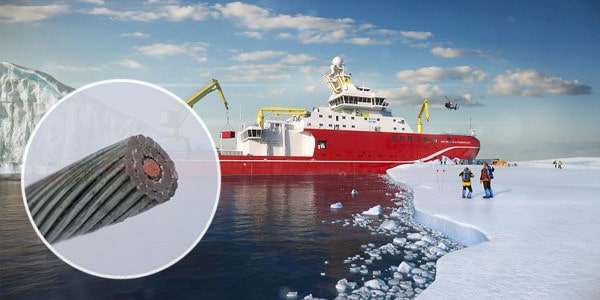
RRS Sir David Attenborough
Our current lead times for production are approximately 8 to 10 weeks, depending on the specification and elements required.
A recent project for the Royal Air Force was to supply a high-grade circular copper braid with a clear PVC sheath. This braid was attached to the aircraft during refuelling to prevent a build-up of static electricity, reducing the fire hazard by grounding out the aircraft.
Elmeridge have produced more than four thousand different types of special cables since 1987.
For all production and distribution enquiries, our knowledgeable team are here to help and support you throughout your project. Please get in touch by email [email protected] or make that call on +44 (0) 1273 391810.
THORNE & DERRICK
SPECIALIST ELECTRICAL DISTRIBUTOR
Thorne & Derrick distribute the most extensive range of Cable Installation & Electrical Distribution Equipment to the Power Transmission & Distribution industry in the onshore and offshore wind, solar, rail, oil/gas, data centre, battery storage and utility sectors.
We service UK and international clients working on underground cables, overhead lines, substations and electrical construction at 11kV and up to and EHV transmission and distribution voltages.
- Key Products: MV-HV Cable Joints & Terminations, Cable Cleats, Duct Seals, Cable Transits, Underground Cable Protection, Copper Earth Tapes, Cable Jointing Tools, Feeder Pillars, Cable Ducting, Earthing & Lightning Protection, Electrical Safety, Cable Glands, Arc Flash Protection & Fusegear.
- Distributors for: 3M Cold Shrink, ABB, Alroc, Band-It, Catu, Cembre, Centriforce, CMP, Elastimold, Ellis Patents, Emtelle, Furse, Lucy Zodion, Nexans Euromold, Pfisterer, Polypipe, Prysmian, Roxtec.

LV – Low Voltage Cable Joints, Glands, Cleats, Lugs & Accessories (1000 Volts)

MV HV – Medium & High Voltage Cable Joints, Terminations & Connectors (11kV 33kV EHV)
Cable Strikes | Strike to Low Voltage Cable
May 18th, 2021
Cable Strikes
Utility Strike Avoidance Group
USAG have published a range of documents to assist industry understanding of the root cause and contributory factors behind specific incidents. The aim is to improve industry standards and reduce the number of cable strikes.
Cable damage is often caused by excavating machines – hand held tools such as pneumatic drills, crowbars, pins, picks and forks also expose workers to potential sources of danger when digging around underground cables.
The next in the series is a safety alert thanks to Highway England regarding a strike to a low voltage cable during a new build housing project.
Incident Overview
Cable strike to a low voltage distribution network damaged by a third party at Hamilton, Leicestershire resulted in a power outage to residents. This network was installed and owned by another company GTC and is a low voltage LV distribution network embedded within the wider network footprint of Western Power Distribution.
USAG recommends if you are working in a relatively new build area you should check plans for the presence of low voltage network where there should be. Below is a copy of the plan for this location and you can see missing low voltage schematics from the plan on the eastern edge where new homes are built and occupied. If you come across this situation you should check for further asset owners. The usual distribution network owner for the area should be able to help you identify the network owner if there are no above ground markings or signage on substations.

Strike to Low Voltage Cable
Protecting Cables Against Strikes & Restoring Power Post-Strike
Thorne & Derrick have been distributors for 3M Electrical since 1985 and can provide a range of reliable and easy to install Cable Repair Products – this includes Scotch Tapes, Scotchcast Joints and Cold Shrink Tubes to provide effective re-instatement of cable sheath jackets on all types of LV MV HV cables in onshore and offshore locations with safe or hazardous area workplace classifications.

Cable Repair Products
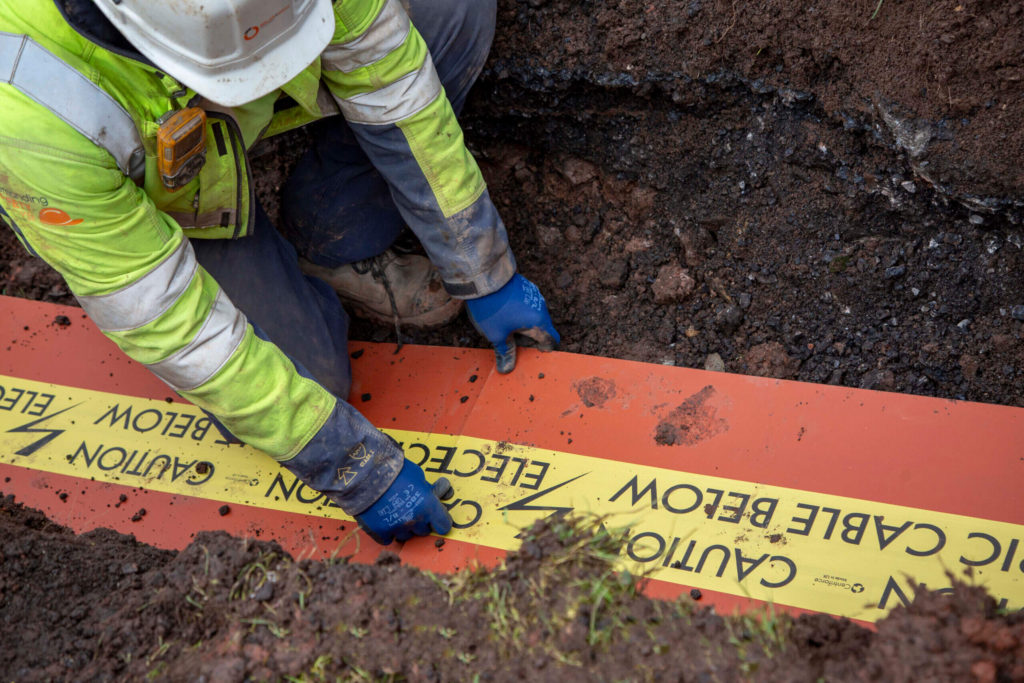
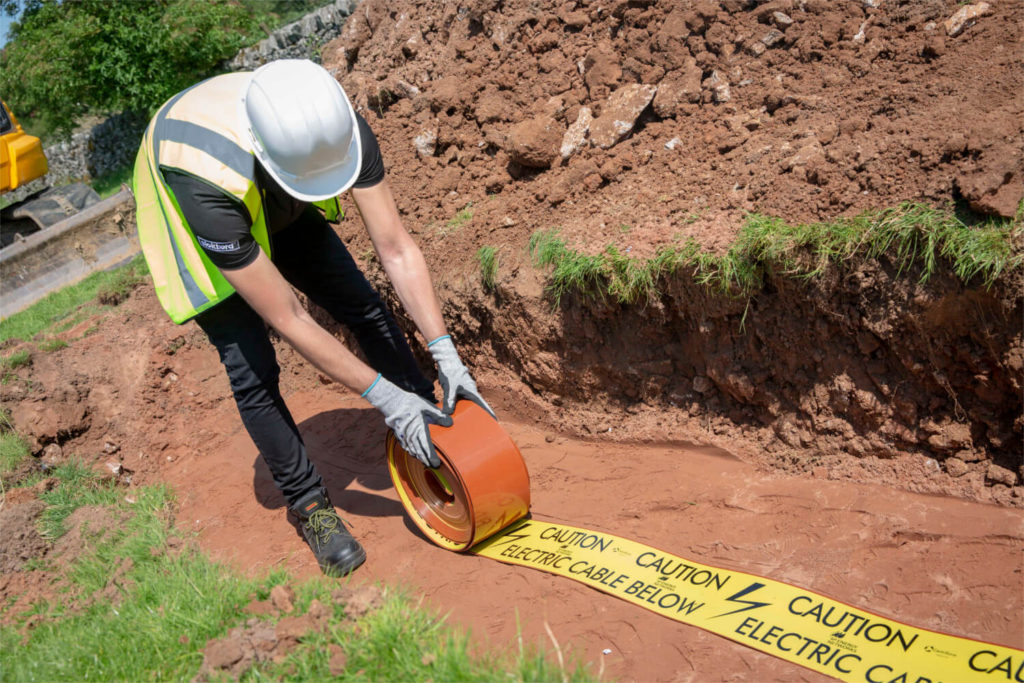
Our range of cable protection covers manufactured by Centriforce provide underground utility protection of LV MV HV cables including Tapetile (11kV) and Stokbord (33kV 66kV 132kV) – contact us to discuss Cable Damage Prevention Products including Dectamesh, the underground detectable warning tape for alerting excavators of the presence of buried cables and to prevent potentially lethal accidents during excavation.
Stokbord
Tapetile

Cable Strikes | Surface Cable Damage by Mower
May 18th, 2021
Cable Strikes
Utility Strike Avoidance Group
USAG have published a range of documents to assist industry understanding of the root cause and contributory factors behind specific incidents. The aim is to improve industry standards and reduce the number of cable strikes.
Cable damage is often caused by excavating machines – hand held tools such as pneumatic drills, crowbars, pins, picks and forks also expose workers to potential sources of danger when digging around underground cables.
The next in the series is a safety alert thanks to Highway England regarding surface damage to power cables during routine grass verge maintenance.
Surface cable Damage
Incident Overview
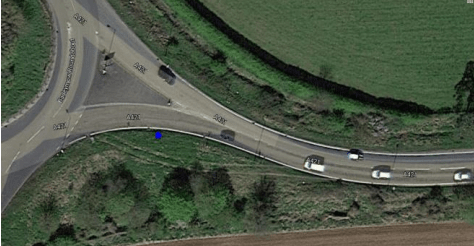
Electrical cable snagged by reform mower during grass cutting operation, 16 April 2020 at the Barley Mow junction A43/A421.
─ Electrical asset knockdown in same location on 28 June 2017 – made safe at that time (isolating and marking the location with a traffic cone)
─ Multiple grass cutting visits between June 2017 and April 2020 – no reported issues
─ A walkover on this occasion was undertaken and this is the same for all cuts – the cable was not observed, but sign frames were discovered and removed from site

Surface Cable Damage by Mower
| Cause Areas | Findings |
| Immediate Cause | Operators did not see any obstruction Cable was within the cut height of the mower |
| Underlying Causes | The cone used to mark the cable had been removed / damaged The passage of time between the knockdown and the incident may have permitted the cable to deviate from initial position, to be at a higher elevation |
| Root Causes | A cable was left on the surface where it could be compromised by grass cutting operations Standard operating practices at the time permitted an insecure method of highlighting the cable, albeit they did include the practice of electrically isolating the cable from the supply The grass cutting team were not advised of the potential of a cable No immediate permanent repair scheduled on the back of the temporary ‘make safe’ visit |

Cable Hangers | Cable Ducting | Cable Protection | Electrical Safety Equipment
The attending electrical crew isolated the cable at source, but left it ready for an imminent reinstatement – i.e. at the surface, marked with a traffic cone. This act prevented any later disturbance of the cable from causing any harm.
Grass cutting teams visually check the area, they located discarded sign frames, but missed the cable in the grass.
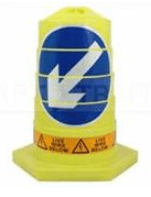
Working practice of the electrical teams has been enhanced by using more robust temporary bollards to highlight the hazard better. The bollard as shown may be placed provided with the directional arrow when replacing a permanent bollard, or plain yellow for a lighting column.
Protecting Cables Against Strikes & Restoring Power Post-Strike
Thorne & Derrick have been distributors for 3M Electrical since 1985 and can provide a range of reliable and easy to install Cable Repair Products – this includes Scotch Tapes, Scotchcast Joints and Cold Shrink Tubes to provide effective re-instatement of cable sheath jackets on all types of LV MV HV cables in onshore and offshore locations with safe or hazardous area workplace classifications.
Cable Repair Products
Our range of cable protection covers manufactured by Centriforce provide underground utility protection of LV MV HV cables including Tapetile (11kV) and Stokbord (33kV 66kV 132kV) – contact us to discuss Cable Damage Prevention Products including Dectamesh, the underground detectable warning tape for alerting excavators of the presence of buried cables and to prevent potentially lethal accidents during excavation.
Stokbord
Tapetile