Cable Pulling & Laying
Cable Pulling Explained | LV MV HV Installation
June 18th, 2026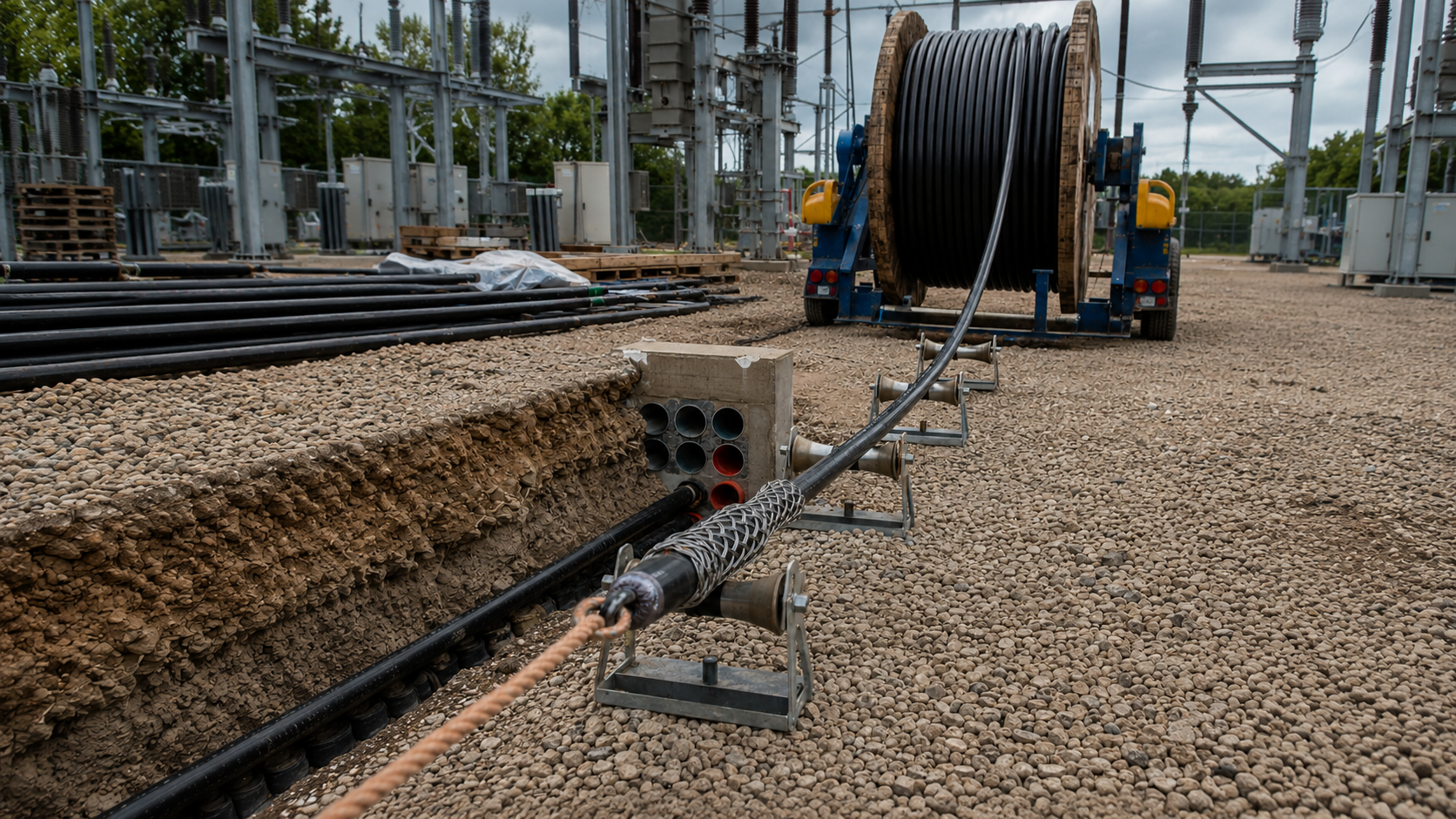
Cable pulling is the controlled process of installing electrical, power, telecoms or fibre optic cables into ducts, trenches, conduits, tunnels, cable troughs or containment systems. In LV, MV and HV power cable installations, cable pulling must be carefully planned to prevent damage to the cable sheath, insulation, conductor, screen or armour during installation.
For utilities, DNOs, electrical contractors, cable jointers, rail contractors, civil engineering teams, renewable energy projects and industrial power systems, correct cable pulling equipment is essential. The cable may be heavy, expensive, difficult to handle and critical to the future reliability of the electrical network.
Cable pulling is not simply a case of attaching a cable to a winch and pulling it into place. The route, bend radius, cable weight, cable diameter, pulling tension, drum position, cable rollers, cable socks, cable lubricants, duct condition and operator control all need to be considered before the installation starts.
Thorne & Derrick supply cable pulling and cable laying equipment for LV, MV, HV and EHV cable installations, including cable pulling winches, cable rollers, cable socks, drum jacks, duct rods, lubricants and cable protection products.
Quick Answer: What Is Cable Pulling?
Cable pulling is the process of installing a cable through a duct, trench, conduit, tunnel, cable tray or cable route using controlled pulling force. It is commonly used for power cables, telecoms cables, fibre optic cables, control cables and utility cables.
For LV, MV and HV power cable installations, cable pulling must be planned carefully because excessive pulling tension, poor route preparation, tight bends, damaged ducts or unsuitable equipment can damage the cable during installation. This can lead to sheath damage, insulation stress, future cable faults and expensive repair work.
What Is Cable Pulling?
Cable pulling is a method of installing cables by applying controlled force to move the cable from its drum into its final route. The cable may be pulled through an underground duct, across a cable trench, over rollers, through conduit, into a substation, along a tunnel, onto a cable tray or through a prepared cable containment system.
Cable pulling is used across many industries, including:
- Power distribution – LV, 11kV, 33kV, 66kV and 132kV cable installation.
- Substations – cable routes between transformers, switchgear, sealing ends and cable trenches.
- Renewable energy – wind farms, solar farms, battery storage and grid connection projects.
- Rail infrastructure – signalling, traction power, telecoms and power cable routes.
- Telecommunications – fibre optic and copper cable pulling through ducts.
- Industrial sites – factories, process plants, data centres and critical power systems.
- Civil engineering – underground cable ducts, trenches, chambers and utility corridors.
The aim is to install the cable without exceeding the manufacturer’s pulling limits or damaging the cable. This requires the correct equipment, a suitable route and trained personnel.
Why Cable Pulling Matters
A power cable can be damaged before it is ever energised. Poor handling during installation is one of the most avoidable causes of future cable problems.
Incorrect cable pulling can cause:
- Outer sheath damage from sharp edges, stones, ducts or poor roller positioning.
- Excess tensile stress on the conductor, screen, armour or cable structure.
- Insulation stress caused by overbending or incorrect route design.
- Water ingress risk if cable end caps or sheaths are damaged.
- Cable deformation from incorrect drum handling, poor support or excessive force.
- Future faults that only become visible after energisation or years of operation.
For high value MV and HV power cables, installation damage can be extremely expensive. It may result in failed testing, delayed energisation, cable replacement, outage risk or loss of manufacturer warranty.
This is why cable pulling should be treated as a controlled engineering process rather than a simple site task.
Cable Pulling Equipment
Different cable pulling jobs require different equipment. A short LV cable route may only need rollers, drum jacks and manual handling support, while a long MV or HV cable route may require winches, tension monitoring, cable socks, lubricants, bellmouths, duct rods and detailed pulling calculations.
View the full range of cable pulling and cable laying equipment.
Cable Pulling Winches
A cable pulling winch is used where the cable is too heavy, the route is too long, or the required pulling force is too high for manual installation.
Cable winches are commonly used for:
- LV power cables
- 11kV and 33kV MV power cables
- 66kV and 132kV HV cables
- EHV transmission cable installations
- Fibre optic and telecoms cable pulling
- Long duct routes and cable trench installations
A good cable winch allows the operator to control the pulling force and speed. For power cable work, tension monitoring is especially important because the cable manufacturer’s maximum permissible pulling tension must not be exceeded.
View cable pulling winches for LV MV HV power cable installation.
Cable Rollers, Socks & Grips
Cable rollers and cable socks are key parts of a controlled cable pull.
Cable rollers support the cable and reduce friction during installation. They help prevent the cable from dragging across the ground, trench edges, duct mouths, concrete surfaces or sharp obstructions. Rollers are especially important when pulling heavy LV, MV or HV cables across open trenches or into ducted routes.
Cable socks, also known as cable pulling grips, create the mechanical connection between the cable and pulling line. They are designed to grip the cable over a length of the sheath, distributing pulling force more evenly than a simple single-point attachment.
Correct selection matters because the wrong pulling grip, poor attachment or excessive force can damage the cable.
- Straight cable rollers support cable movement along the route.
- Corner rollers protect cable bends and route changes.
- Bellmouth rollers support cable entry into ducts.
- Cable socks provide grip for pulling cable into position.
- Swivels help prevent cable twisting during pulling.
Cable socks must be selected based on cable outside diameter, cable type, pulling force, route conditions and manufacturer recommendations.
Cable Ducts, Lubricants & Duct Pulling
Many LV, MV and HV cables are pulled through underground ducts. The duct protects the cable route, but it can also increase friction if the duct is dirty, undersized, damaged, obstructed or has tight bends.
Before pulling cable into a duct, the route should be checked carefully. The duct should be clear, correctly sized and suitable for the cable diameter and bend radius.
Cable ducting and duct condition are especially important because a cable can be damaged if it catches on a collapsed duct, poor joint, sharp duct edge or debris inside the route.
Cable lubricants are often used when pulling cables through ducts. They reduce friction between the cable sheath and duct wall, making the pull easier and helping reduce pulling tension.
After installation, ducts entering substations, buildings or plant rooms may also need sealing using duct seals to reduce water or gas ingress risk.
Pulling Tension & Cable Damage
Pulling tension is one of the most important factors in cable installation. Every cable has a maximum pulling tension based on its construction, conductor material, size and manufacturer instructions.
If pulling tension becomes too high, the cable may be damaged. This can happen when:
- The duct route is blocked or partially collapsed.
- The cable catches on a bend, joint or duct edge.
- The route has too many bends or too much friction.
- The drum is poorly positioned.
- The wrong pulling equipment is used.
- The cable is pulled too quickly or without monitoring.
- Cable rollers are missing, poorly positioned or unsuitable.
During motorised cable pulling, the tension gauge should be monitored continuously. If tension rises suddenly, it may indicate that the cable is obstructed, caught or dragging somewhere along the route. The winch should be slowed or stopped so the cause can be found before damage occurs.
A cable pulling record or protocol can also be useful, especially for larger MV, HV and EHV installations. This helps demonstrate that the cable was installed within acceptable pulling limits.
LV, MV & HV Cable Pulling
Cable pulling requirements vary depending on the voltage level, cable size, route and project type.
For high voltage cable projects, pulling equipment may be used alongside HV cable joints, terminations and connectors, cable ducting, duct sealing, cable cleats, cable jointing tools and electrical safety equipment.
Cable Pulling Checklist
Before pulling a cable, the installation team should check the cable, route, equipment and installation method.
The checklist should be adapted to the cable manufacturer’s instructions, site method statement, risk assessment and project specification.
Common Cable Pulling Mistakes
Cable pulling problems are often caused by poor planning, unsuitable equipment or lack of control during installation.
Common mistakes include:
- Pulling without checking the cable route – ducts, bends and trenches should be inspected before installation.
- Ignoring maximum pulling tension – pulling force must stay within the cable manufacturer’s limit.
- Using too few cable rollers – unsupported cable can drag, scrape or be damaged by edges and stones.
- Poor drum positioning – incorrect pay-out angle can increase tension and make cable handling harder.
- Not using cable lubricant where needed – friction can increase significantly in long or tight duct routes.
- Using the wrong cable sock – the pulling grip must suit the cable diameter and pulling load.
- Pulling too quickly – uncontrolled speed can make it harder to respond to rising tension or cable movement.
- Failing to record tension data – pulling records can be important for quality assurance and warranty discussions.
- Removing cable end caps too early – cable ends should remain protected from moisture and contamination until cable termination or jointing.
A safe cable pull is controlled, monitored and planned around the cable’s physical limits.
Related Cable Pulling & Installation Products
Cable pulling normally requires a complete installation equipment package rather than one isolated product.
- Cable Pulling & Cable Laying Equipment – complete equipment range for LV, MV, HV and EHV cable installation.
- Cable Winches – winches for pulling LV, MV and HV power cables where controlled pulling force is required.
- Cable Rollers – rollers for supporting cables during pulling and laying.
- Cable Socks – pulling grips for cable installation through ducts, conduits and trenches.
- Cable Lubricants – lubricants for reducing friction during cable pulling into ducts.
- Cable Duct – underground ducting for LV, MV and HV power cable protection.
- Duct Seals – sealing systems for cable ducts entering substations, buildings and plant rooms.
- HV Cable Joints, Terminations & Connectors – cable accessories used after cables are installed and prepared for jointing or termination.
Cable Pulling FAQs
Q: What is cable pulling?
A: Cable pulling is the controlled installation of cable through a duct, trench, conduit, tray, tunnel or cable route. It is used for LV, MV and HV power cables, fibre optic cables, telecoms cables and control cables.
Q: What equipment is used for cable pulling?
A: Cable pulling equipment can include cable pulling winches, cable rollers, cable socks, grips, swivels, drum jacks, drum trailers, duct rods, cable lubricants, bellmouths and cable protection products.
Q: What is a cable pulling winch?
A: A cable pulling winch is a mechanical pulling machine used to install cables where controlled pulling force is required. Cable winches are commonly used for heavy, long or high-tension cable pulls, including LV, MV and HV power cable installations.
Q: Why is pulling tension important?
A: Pulling tension is important because excessive force can damage the cable conductor, insulation, screen, armour or outer sheath. Pulling force should be monitored and kept within the cable manufacturer’s permitted limits.
Q: Why are cable rollers used?
A: Cable rollers support the cable during pulling and help reduce friction, dragging and sheath damage. They are used along trenches, ducts, bends and cable routes to control the cable’s movement.
Q: What are cable socks used for?
A: Cable socks are pulling grips used to attach a cable to a winch rope, draw rope or pulling line. They grip the cable over a length of sheath and help distribute the pulling force during installation.
Q: When should cable lubricant be used?
A: Cable lubricant should be considered when pulling cables through ducts, conduits or routes where friction may be high. It helps reduce friction between the cable sheath and duct wall, making the pull easier and reducing tension.
Q: What causes cable damage during pulling?
A: Cable damage during pulling can be caused by excessive tension, poor roller placement, sharp duct edges, collapsed ducts, stones, tight bends, poor drum handling, unsuitable pulling grips or pulling without monitoring the cable route.
Conclusion
Cable pulling is a critical stage in LV, MV and HV cable installation. The quality of the pull can directly affect the long-term reliability of the cable system.
A safe and successful cable pull depends on correct planning, suitable equipment, clean cable routes, controlled pulling tension, trained operators and careful inspection. Cable winches, rollers, socks, drum jacks, lubricants, duct rods and duct entry protection all play an important role in reducing installation risk.
Thorne & Derrick supply cable pulling and cable laying equipment for underground cable installation, substations, utilities, rail, telecoms, renewables, industrial sites and LV MV HV power cable projects.
High Voltage Cable Drum Trailers for Utility Projects
July 10th, 2025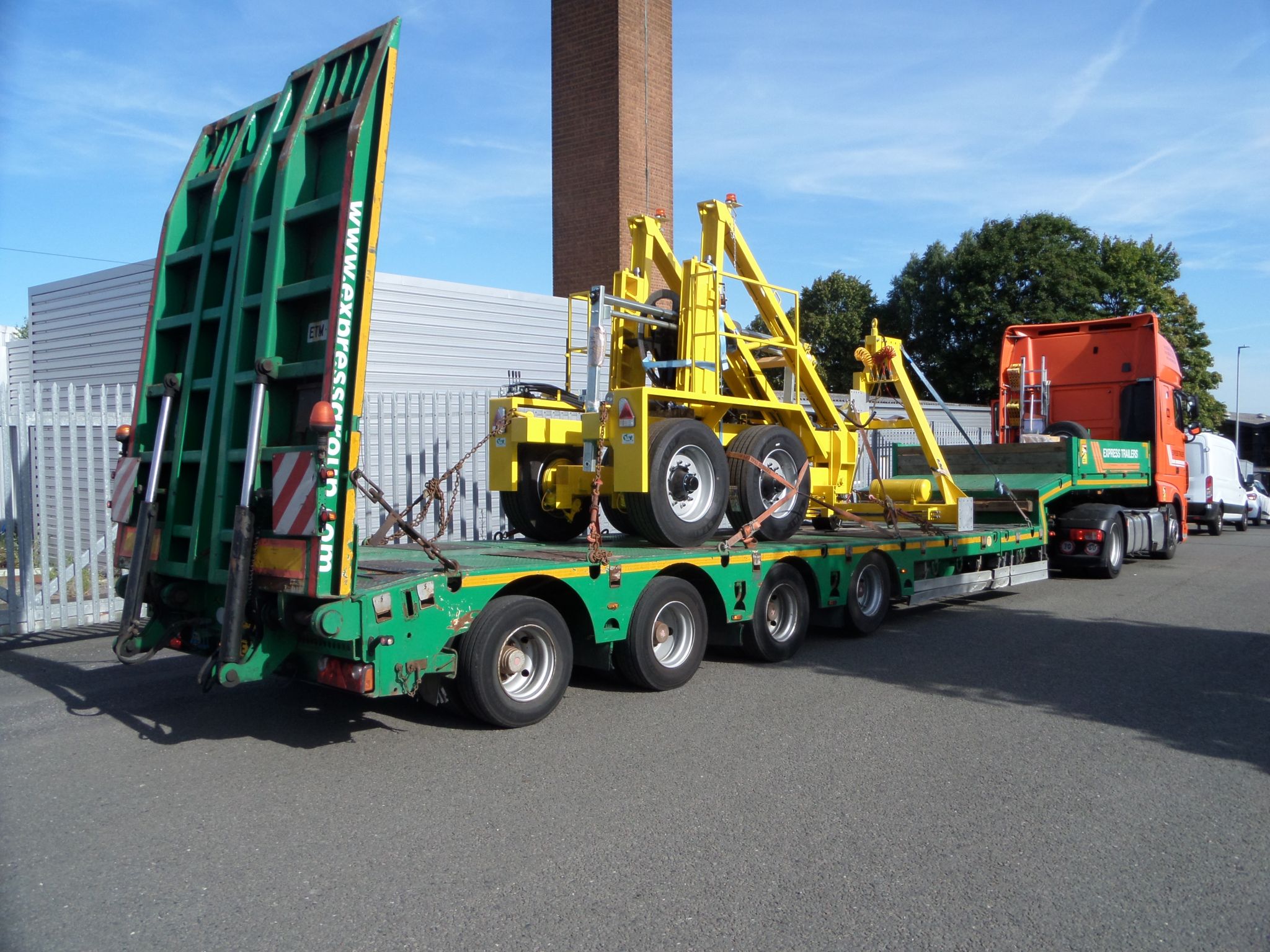
High Voltage Cables
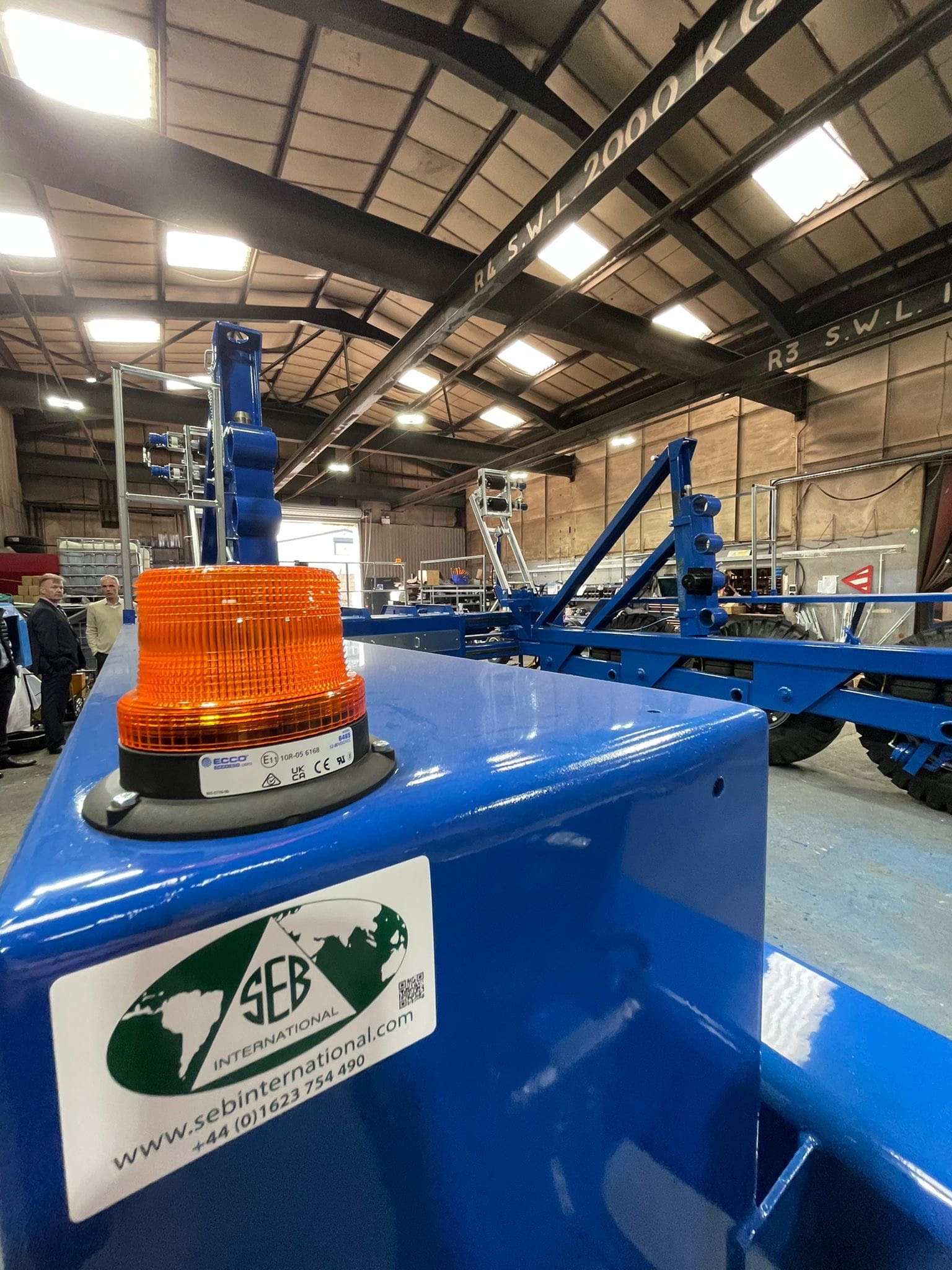
Kicking of H2 with another CD500 manufactured by SEB International Ltd to support Utility project cable-pulls at 132/400kV, bound for the Grid – this is our largest Cable Drum Trailer build to date. An outstanding achievement in UK manufacturing excellence and Distributor partnership to lead the powering of global projects.
Customised to client specification to handle HV Cable Drums – should you require assistance with the Pull-in, Cable Termination, Jointing & Energisation of HV Cable Networks please continue to contact our Team. With global electricity demand forecast to double by 2050, Thorne & Derrick are perfectly positioned to meet all your major project constructions and cable fault repair works – our business can now provide technical specifications, competitive pricing and delivery commitments to enable transformer, switchgear and overhead line connections from 600V to 66/132kV polymeric cables up to 2000sqmm.
Further Case Applications
- Cable Drum Trailer Manufactured for Major High Voltage Power Project
- Cable Drum Handling | Jack Towers for LV to EHV Cable Lifting & Site Handling

Cable Drum Trailer Manufactured for Major High Voltage Power Project
October 4th, 2024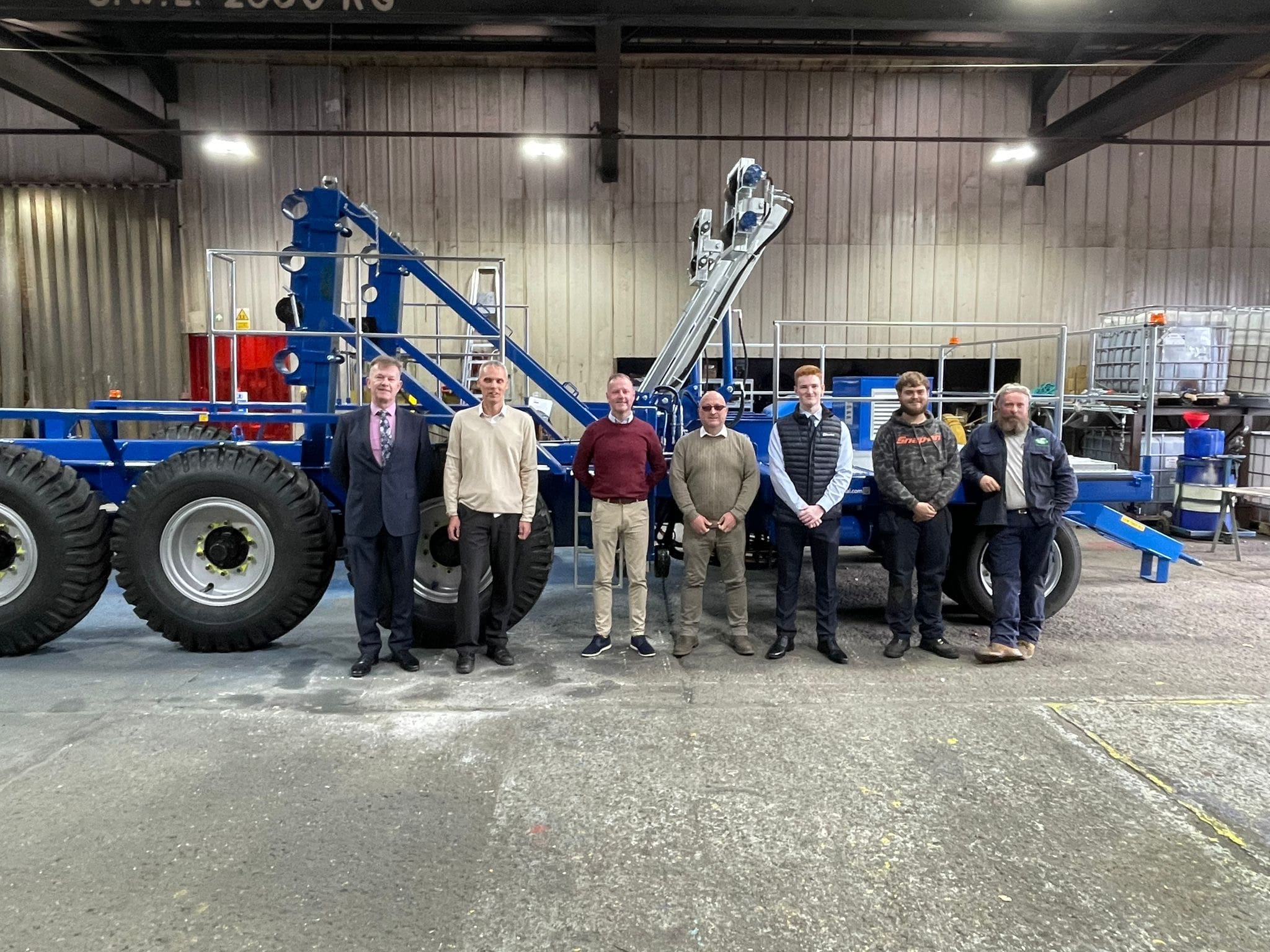
Pictured : L – R | Richard Derrick (MD T&D), Andy Smith (SEB Technical Sales Engineer), Chris Dodds (Sales & Marketing Manager T&D), Paul Millett (MD SEB), Regan Redpath (Apprentice Sales Engineer T&D), Kieron Clarke (SEB Junior Fitter) & Lee Mellors (Lead Multi Skilled Fitter.
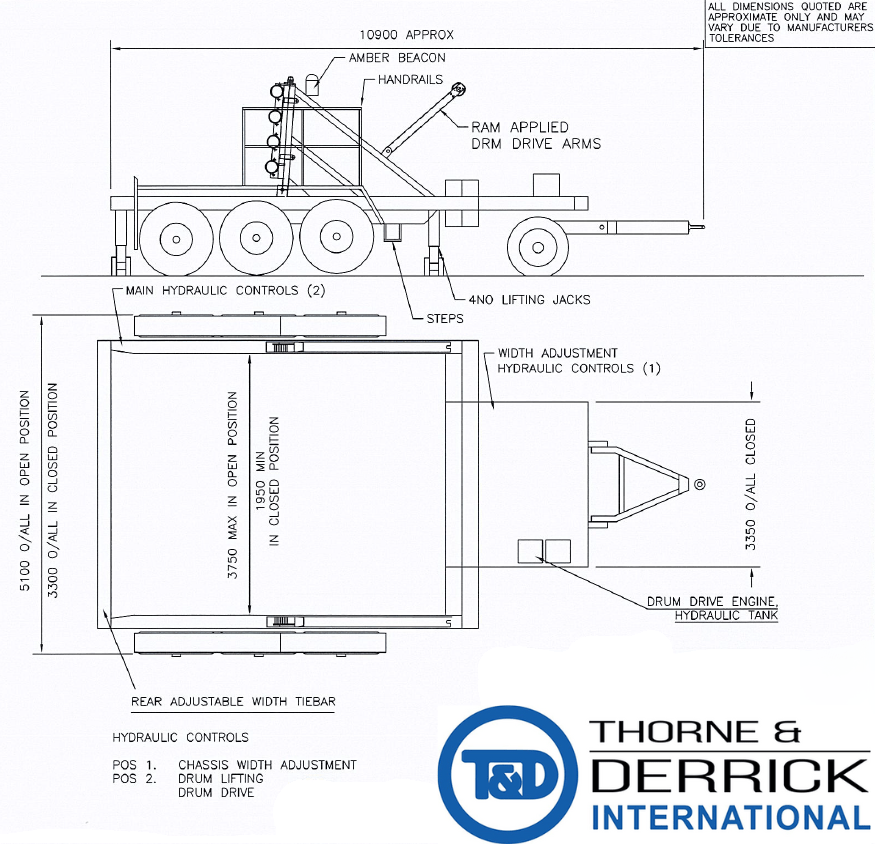
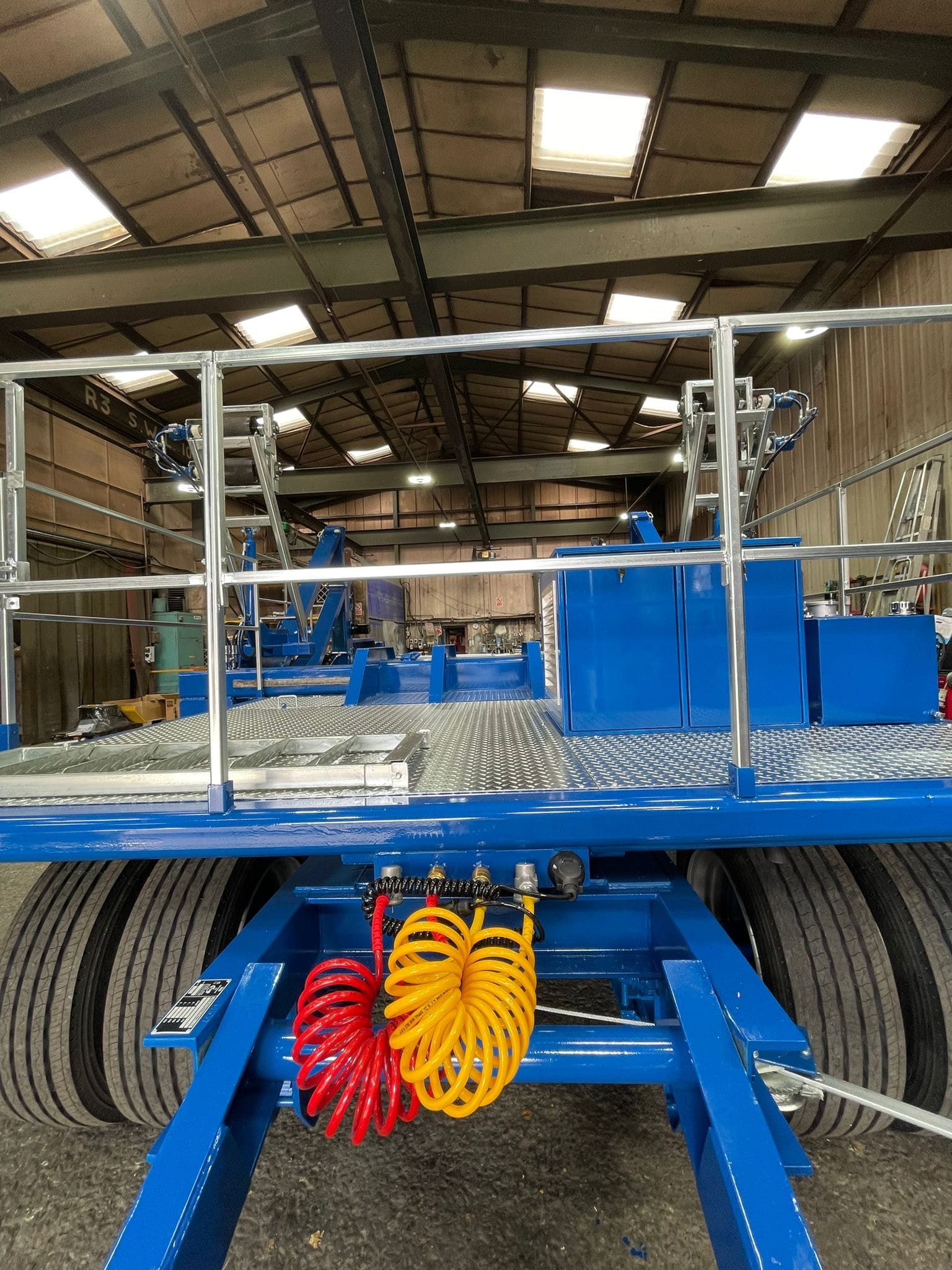
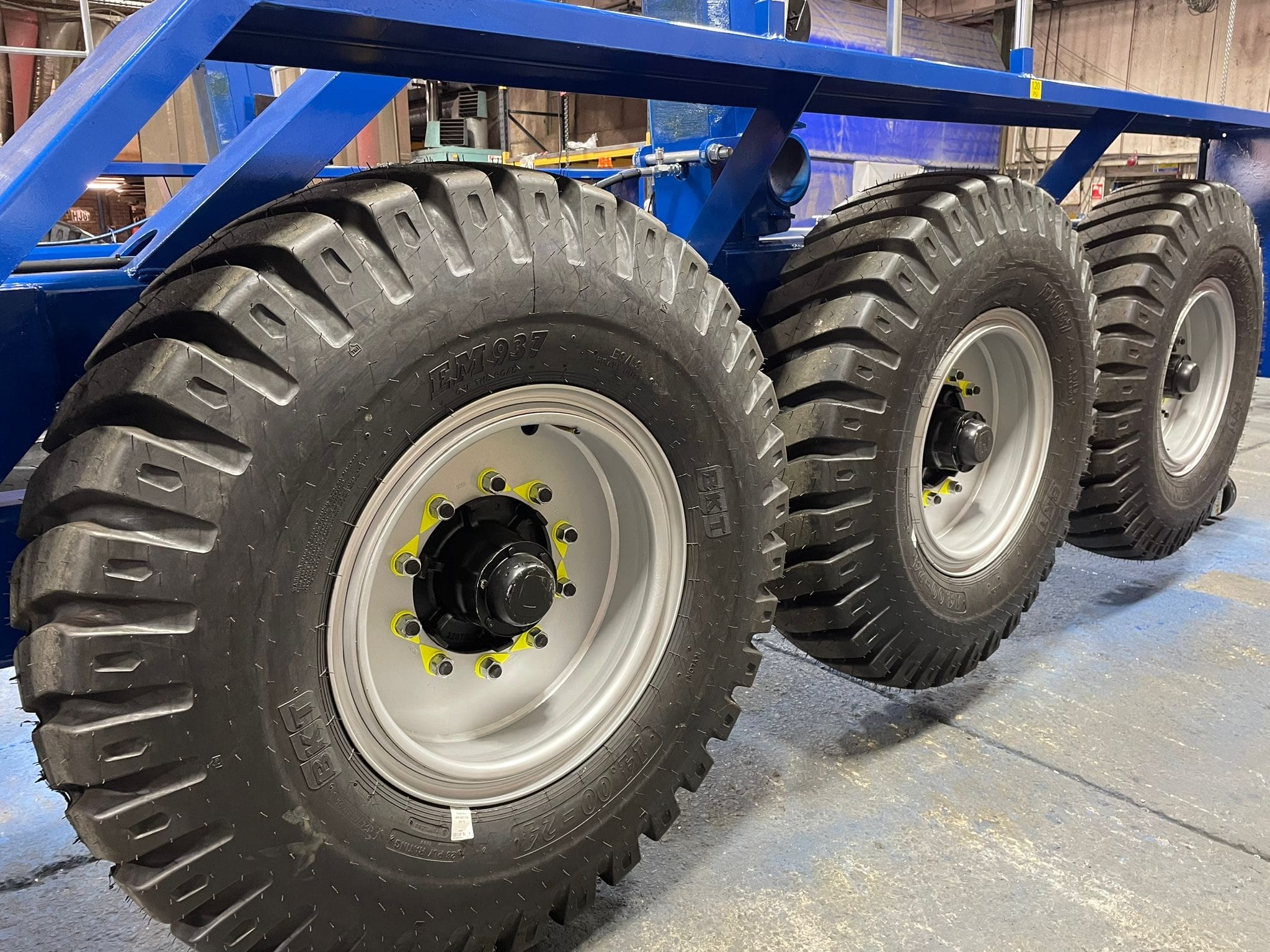
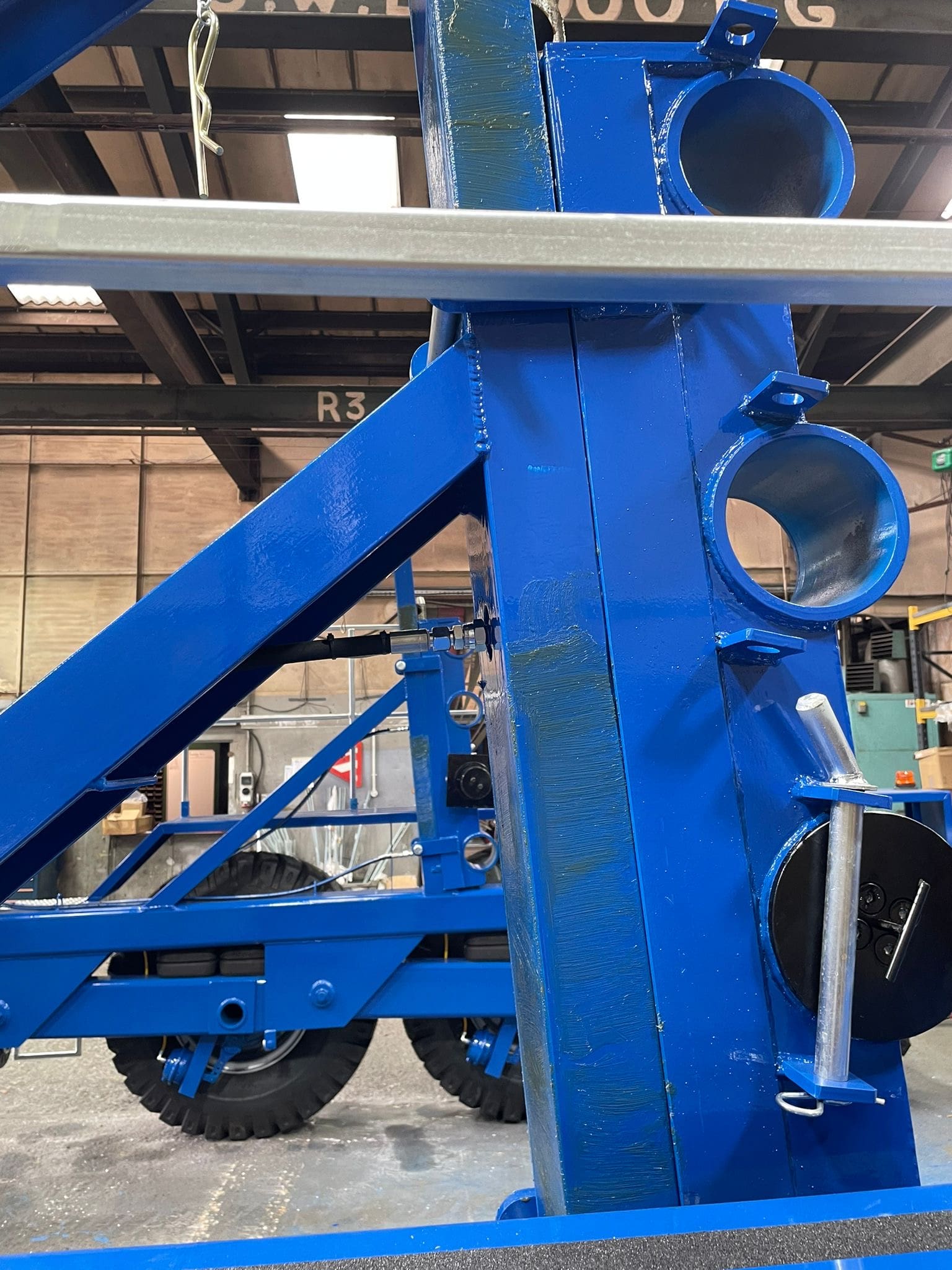
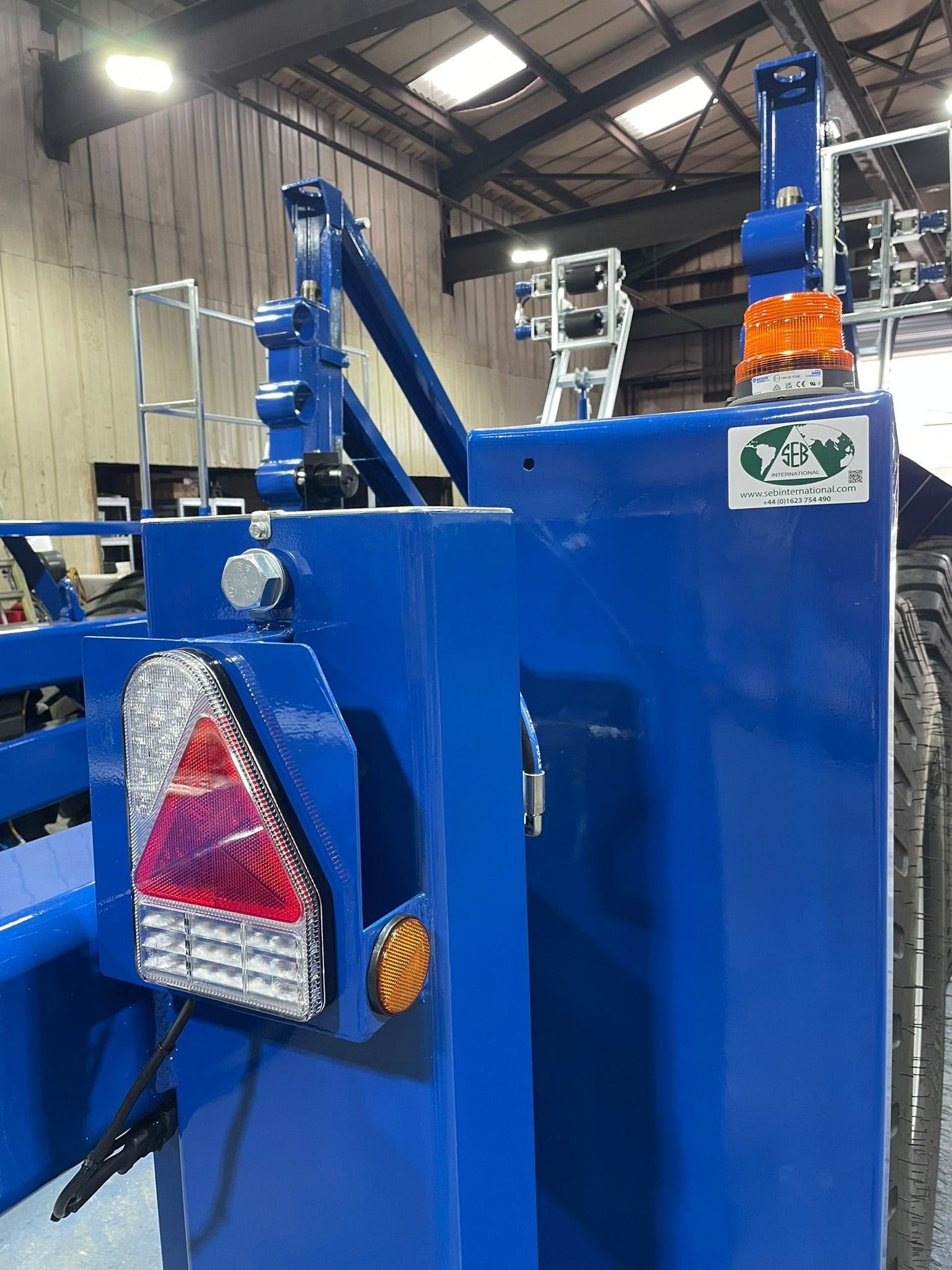
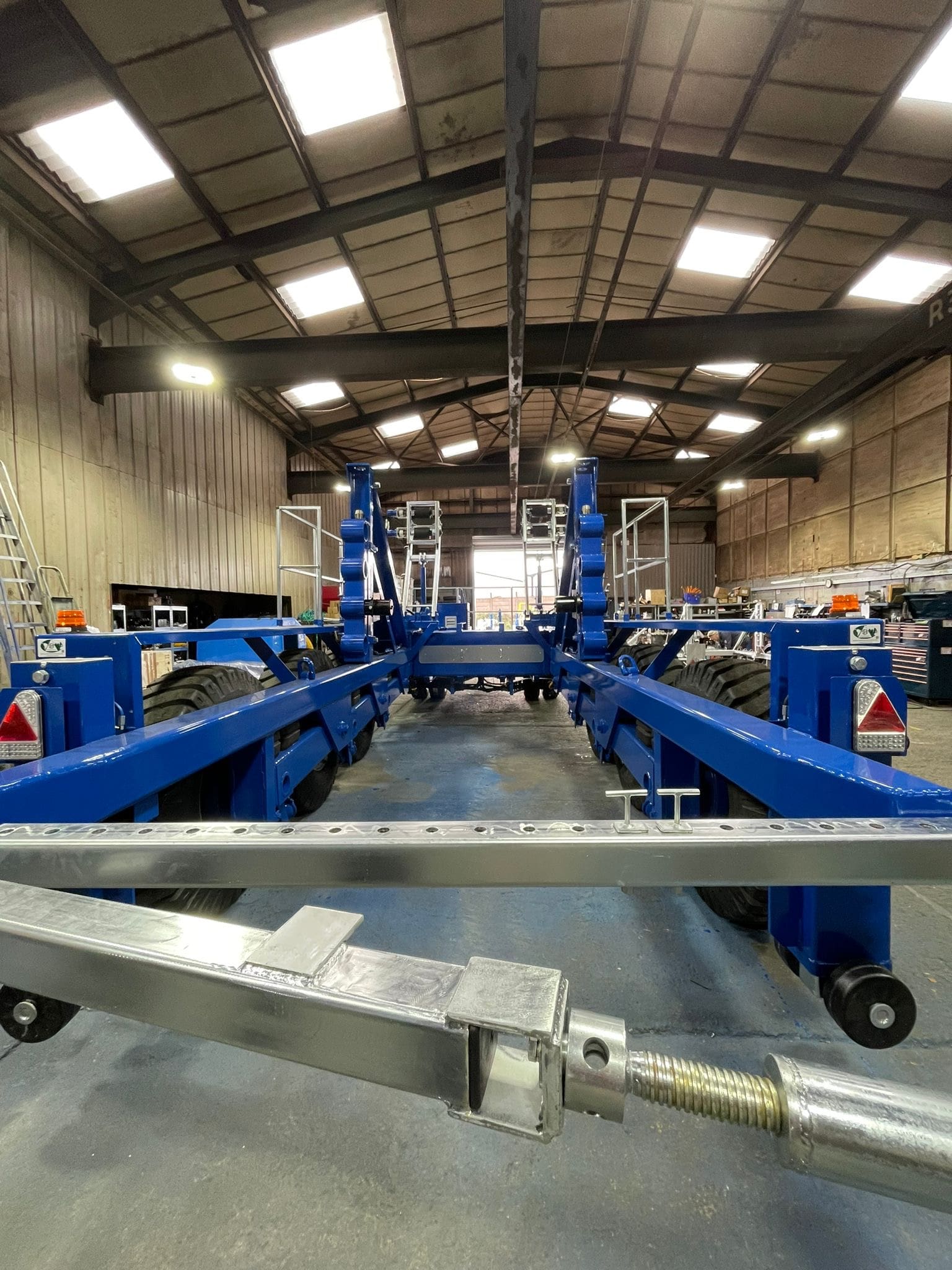
Thorne & Derrick, the leading UK Distributor for the SEB range of cable pulling and laying equipment, recently visited their facility to factory witness test the operation of their largest cable drum trailer manufactured to date – based on the standard CD980S Adjustable & Extendable Cable Drum Trailer the custom-design to a utility client specification provides operational simplicity, maximum power and ultimate reliability built-in. The trailer will safely handle and transport high voltage power cable drums (400kV) with a maximum drum width of 3.6 metres and drum height of 5 metres with a 50 Tonne payload.
Cable Drum Trailer Specification
| Unladen Weight | 15000kgs |
| Gross Weight | 65000kgs |
| Axle Load | 16250kgs |
| Bogie Load | 16250kgs |
| Payload | 50000kgs (MAX) |
| 0/ALL Width Max | 5100mm |
| Max Drum Dia | 5000mm |
| Min Drum Dia | 3300mm |
| Pintle Dia | 152mm 5OT MAX 127mm 5OT MAX |
| Rear Tyres | 14.00×24 |
| Front Tyres | 295×60 |
| Tow Eye | 76mm NATO |
| Brakes | 2 Line Air Brakes |
| Lights | Site Only – LED |
| Speed | 10 km/hr |
| Construction | All Steel |
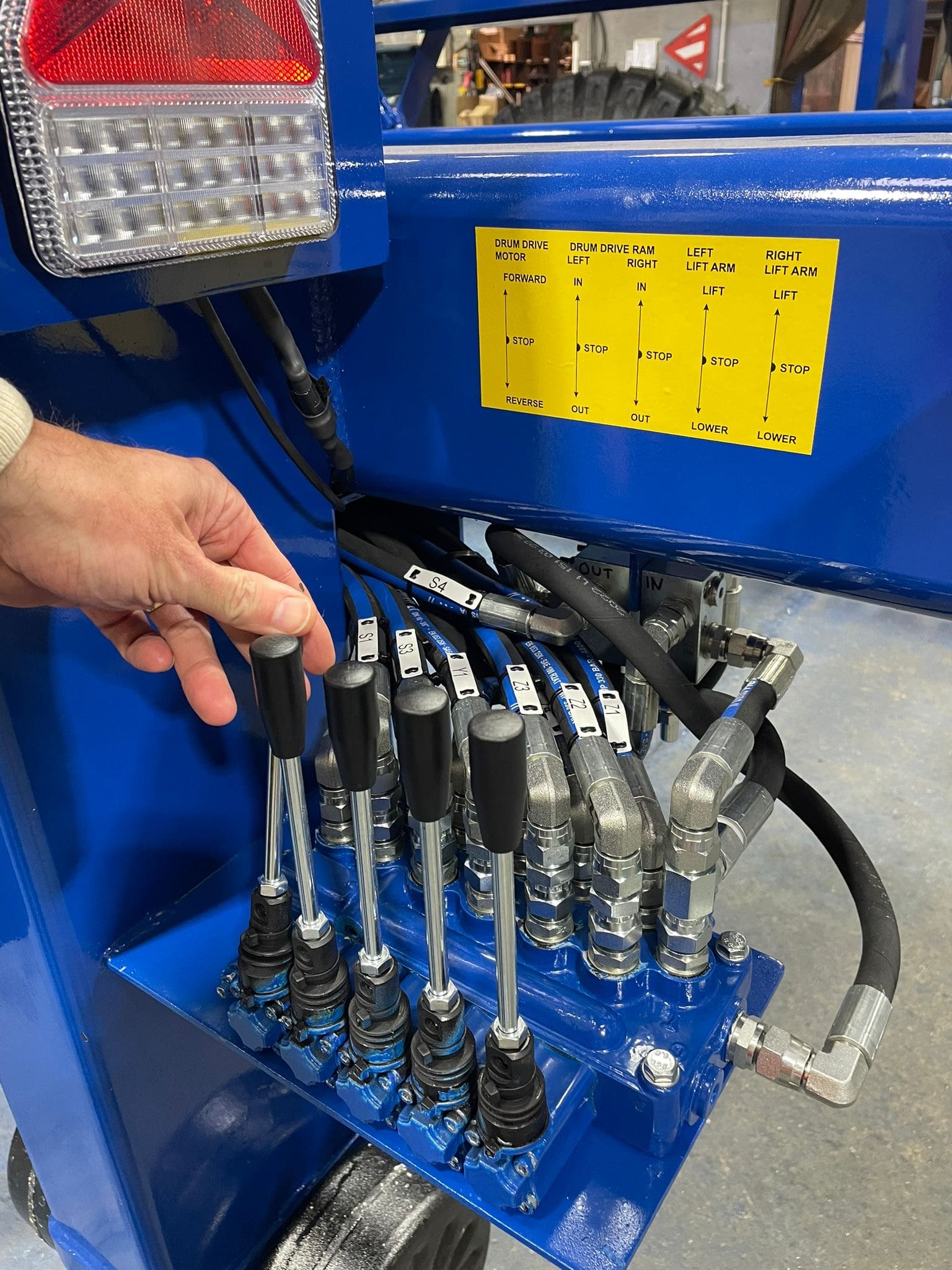
| Drum Lift | Diesel Engine Powered Hydraulic, Locked Mechanically In Raised Position & Standby Hand Pump |
| Extend/Retract Cassis Width | LWD702 Engine Powered Hydraulic Operation of Jacks & Hydraulic Rams Mounted At Front |
| Paint | Full Gloss |
High Voltage Cable Drum Trailer Diagram
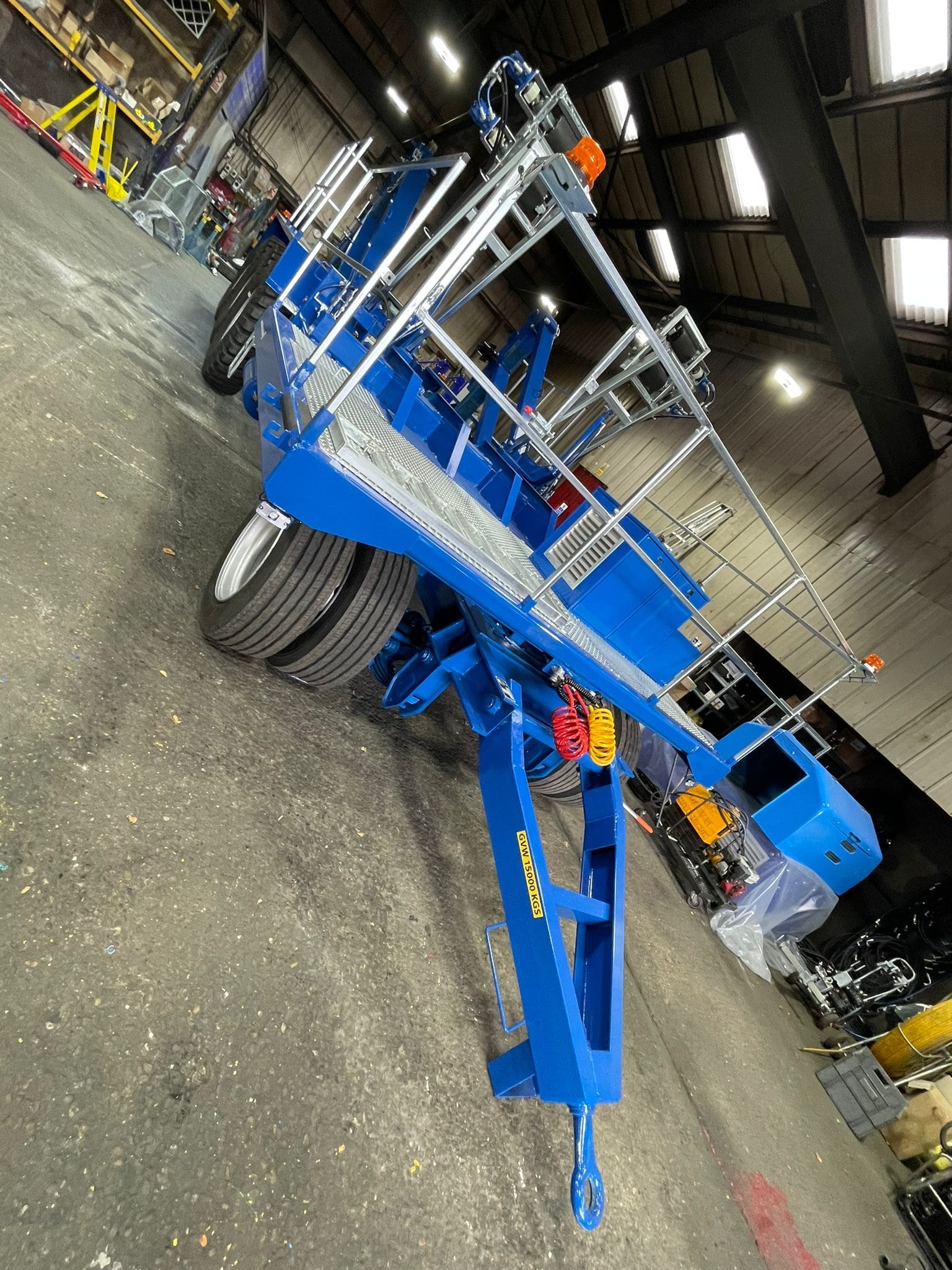
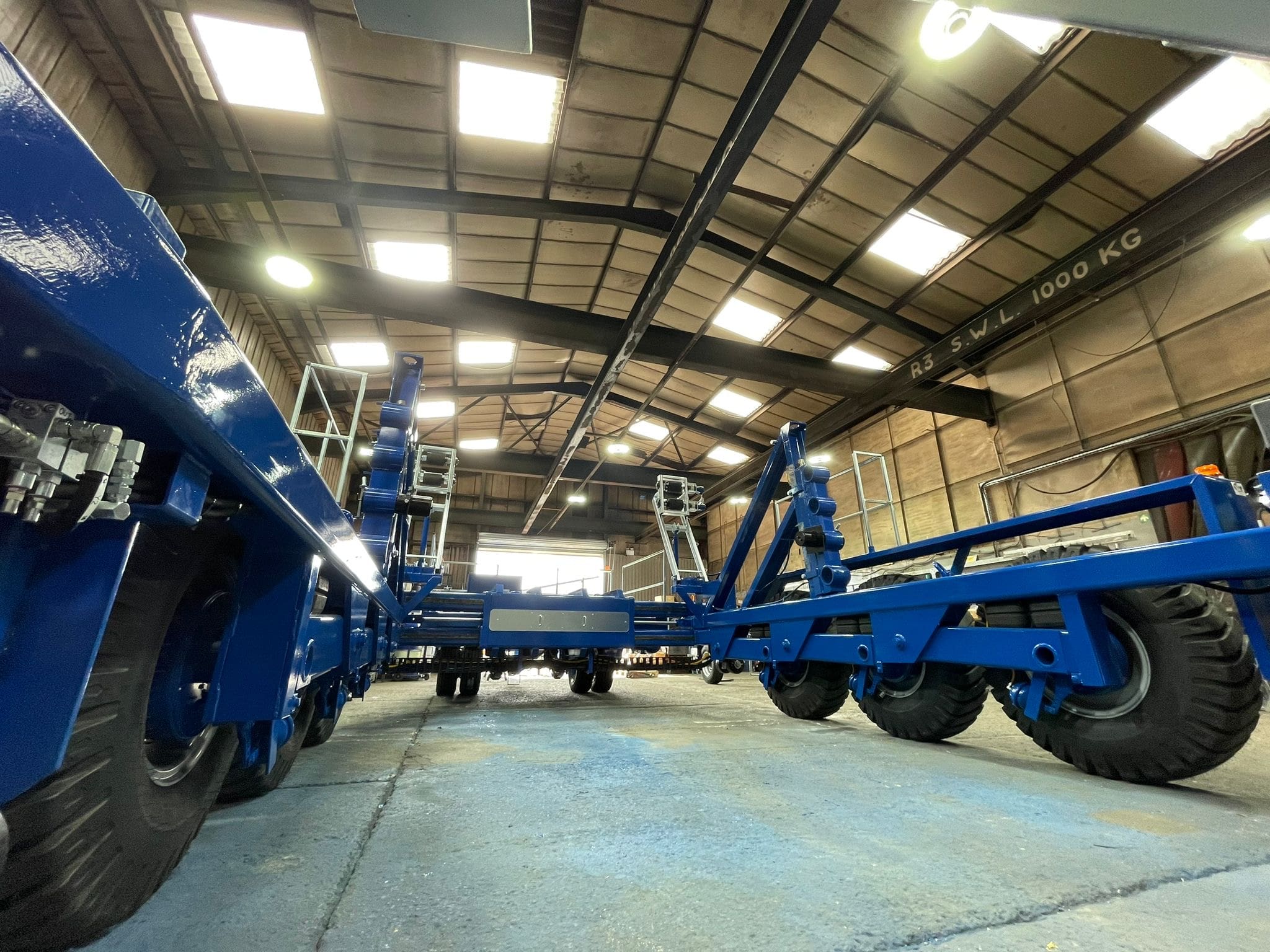
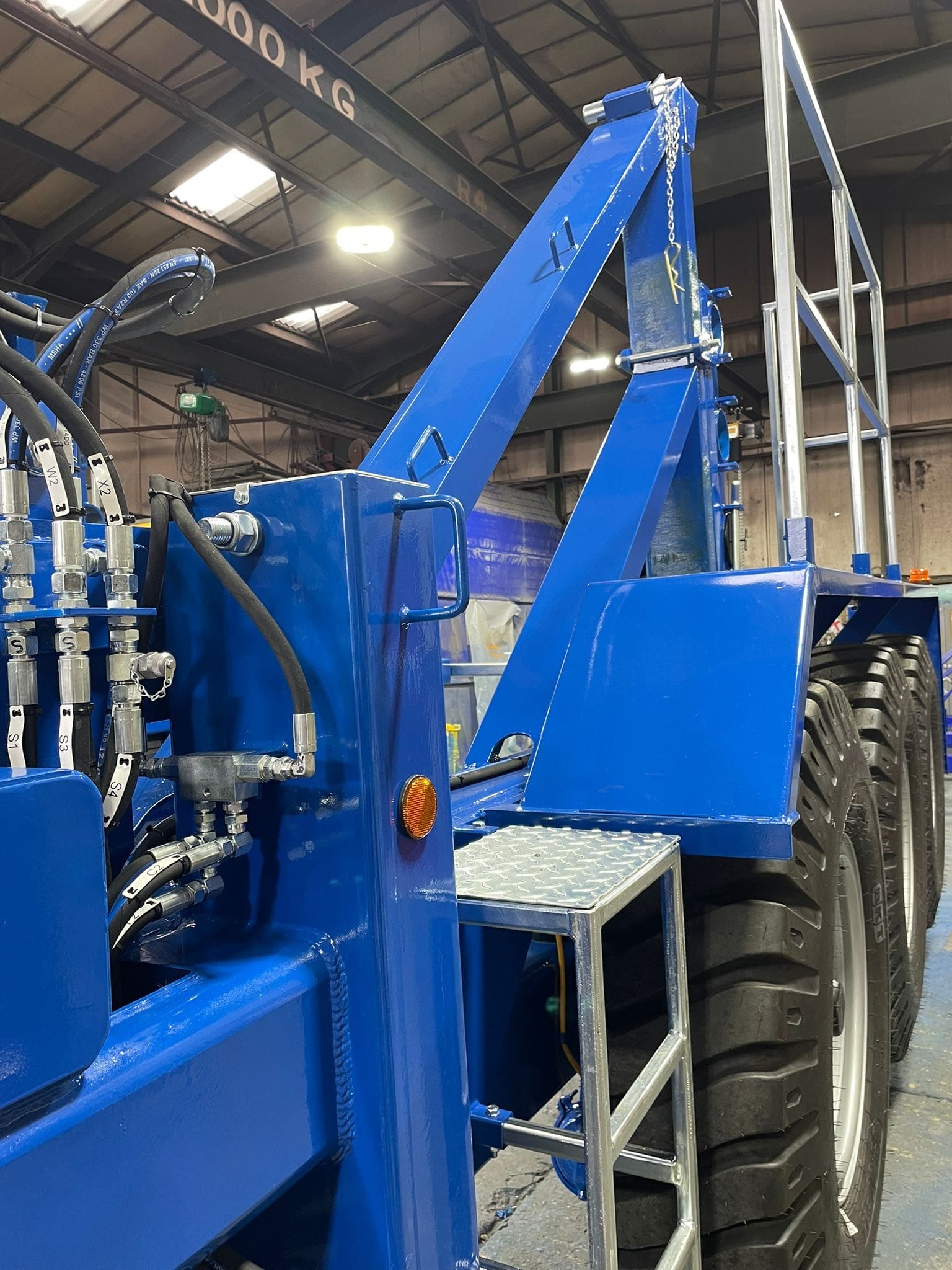
Video Gallery
VIDEO 1 – The cable drum trailer has already been raised off the ground using a diesel engine powered hydraulic system that powers 4no wheeled lifting jacks. The video shows the offside of the cable trailer being hydraulically opened to its full extent.
VIDEO 2 – This video shows the drive rollers turning, these are used to assist in turning the drum of the cable. It also shows the drive rollers which are mounted to a frame being moved forwards, this system applies the rollers to the drum flange, the rollers are then turned.
VIDEO 3 – Once the cable drum trailer has been loaded the pintles (the black tubes) are inserted into the drum. The video shows how the pintles are raised hydraulically, this is done on both sides of the drum trailer which raises the cable drum off the ground.
VIDEO 4 – This shows the nearside of the cable drum trailer being closed. Also, the silver bars across the back are the rear tie bars which are used to hold the rear of the trailer when a high voltage cable drum is installed, they are adjustable to suit any width of cable drum that the trailer can hold.
VIDEO 5 – This shows the diesel engine being started, the operation of the hydraulic control valve that raises the trailer off the ground and the cable drum trailer being lifted up.
Cable Pulling & Laying Equipment
Suppliers & Distributors
Thorne & Derrick distribute the most extensive range of Low & High Voltage Cable Installation & Electrical Distribution Equipment to the Power Transmission & Distribution industry in the onshore and offshore wind, solar, rail, oil/gas, data centre, battery storage and utility sectors – this includes the most extensive range of Cable Pulling & Cable Laying Equipment to enable the installation of low, medium and high voltage power cables into underground trench or duct.
We service UK and international clients working on underground cables, overhead lines, substations and electrical construction at LV, 11kV/33kV and up to EHV transmission and distribution voltages.

T&D distribute the complete range of LV-HV Cable Pulling and Laying Equipment including cable rollers, cable socks, drum jacks, drum trailers, cable lubricant, underground cable protection and conduit duct rod.

THORNE & DERRICK are Specialist Distributors of LV HV Cable Jointing, Earthing, Substation & Electrical Eqpt up to 66kV – this includes the most extensive range of Ex Stock Innovation Tooling to facilitate safe and reliable preparation, termination and installation of cables.
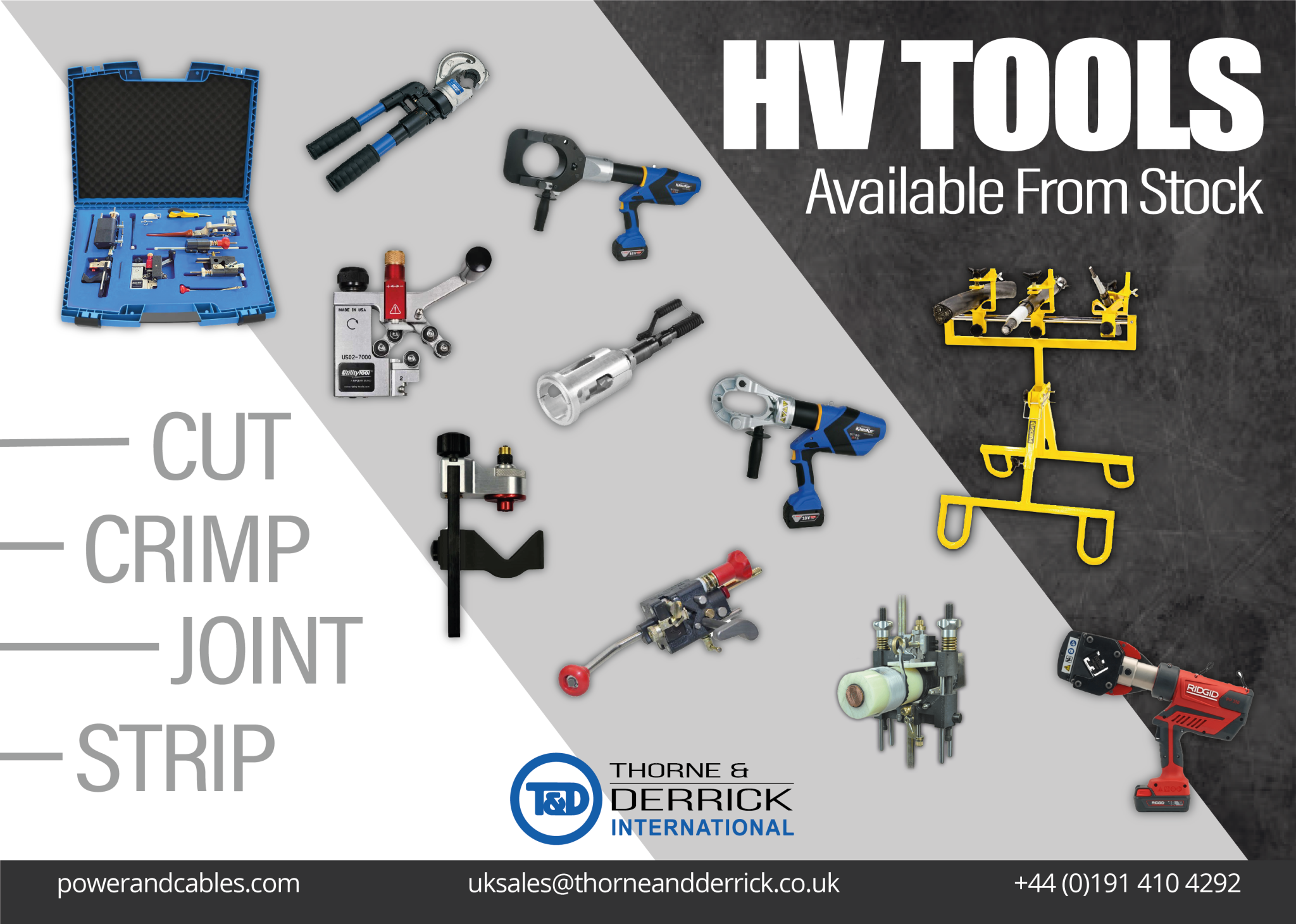
Cable Innovation Tools & Accessories for Low & High Voltage Power Systems

MV HV High Voltage Cable Joints | Cable Terminations | Cable Connectors
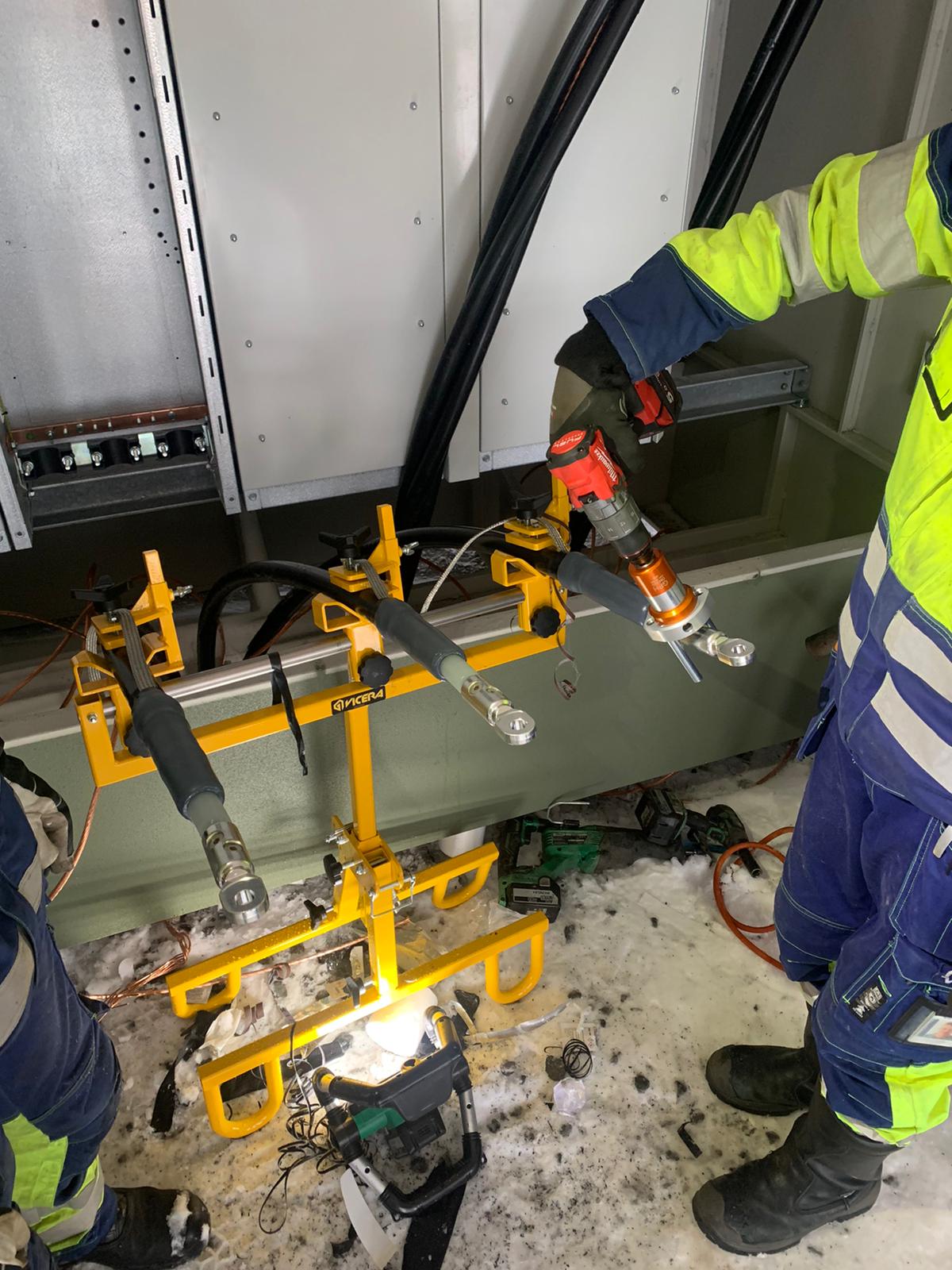
Guaranteed Stable Cables Using Vicera Stands for HV Cable Connections
June 2nd, 2023
Vicera Cable Stand Products | Supplied in the UK & Europe by Thorne & Derrick
Approved by & Used by Nexans | NKT | Ensto | Prysmian Group | TE Tyco
uploaded by Chris Dodds | Sales & Marketing Manager at Thorne & Derrick International
Thorne & Derrick are now Official Distributors for the Vicera range of Cable Jointing Stands – the introduction of this new product range is an excellent extension to our core ranges of Cable Jointing, Pulling Equipment & Preparation Tooling and we look forward to further supporting efficient, easier and more reliable power cable installations.
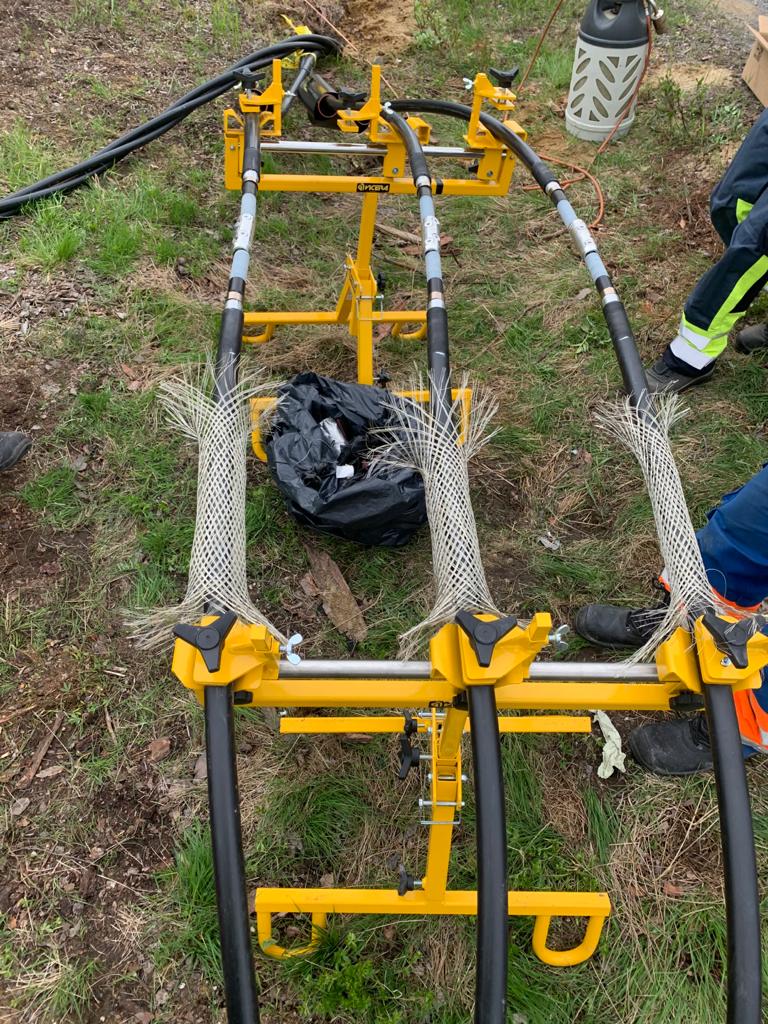
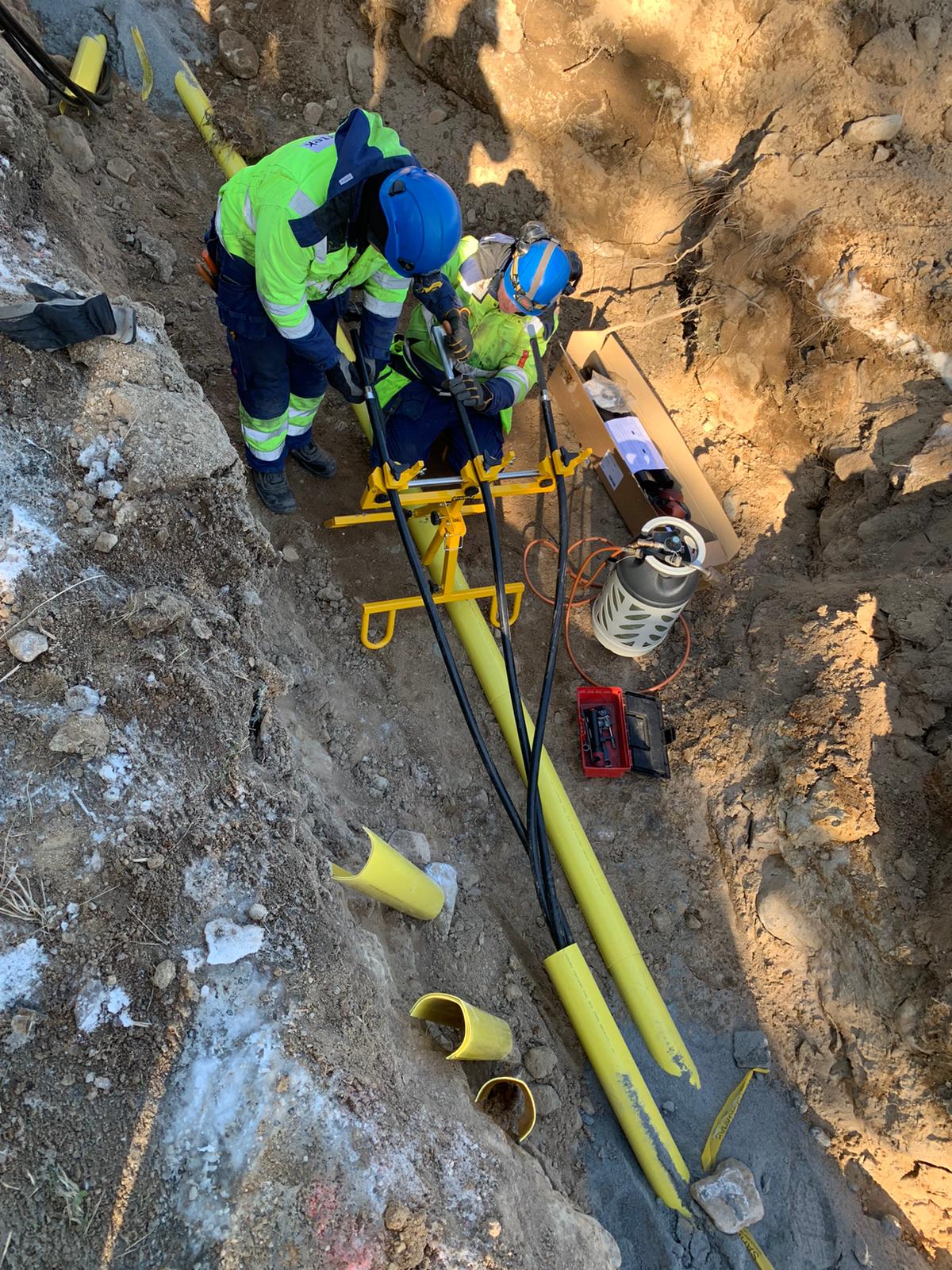
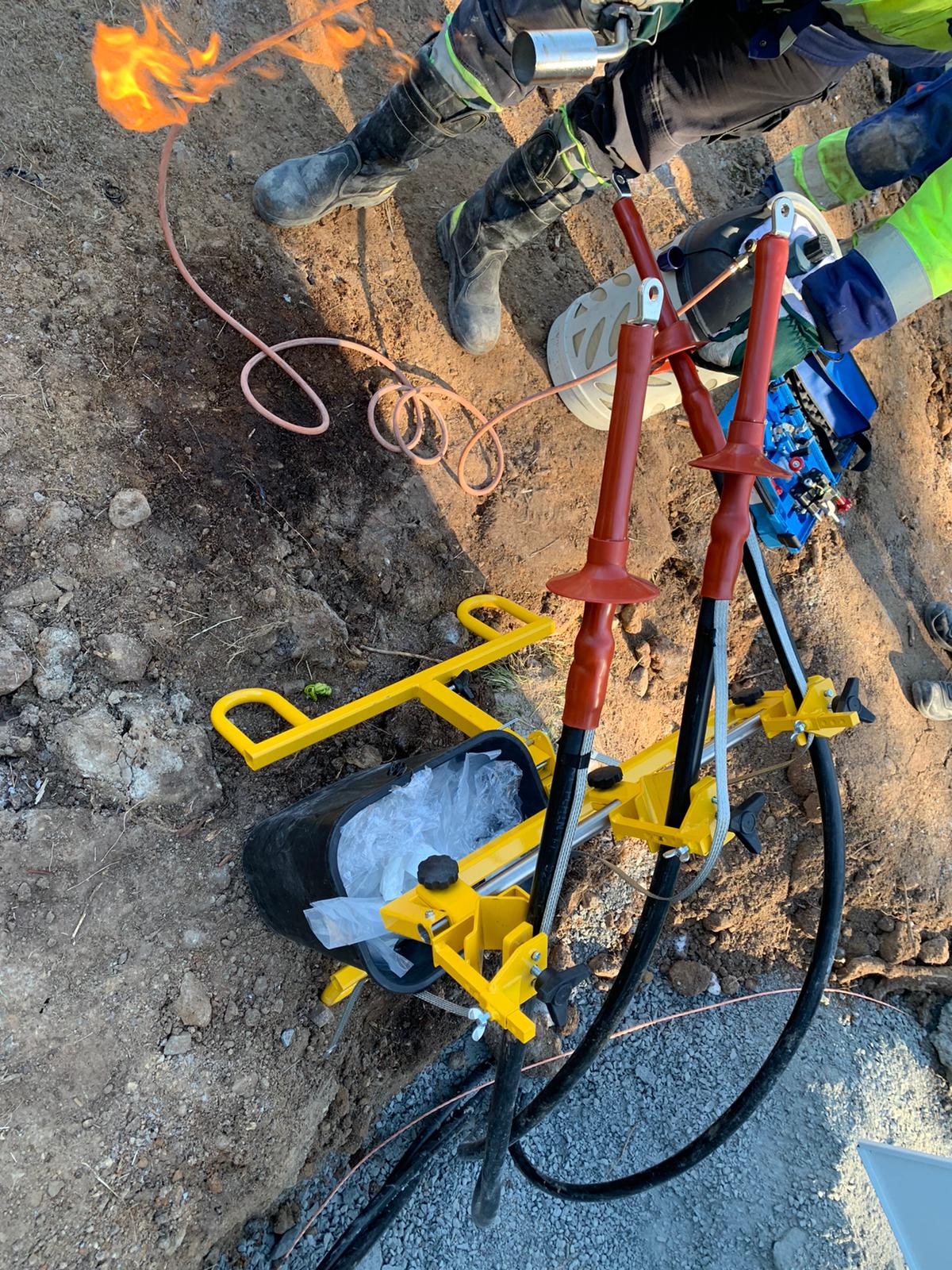
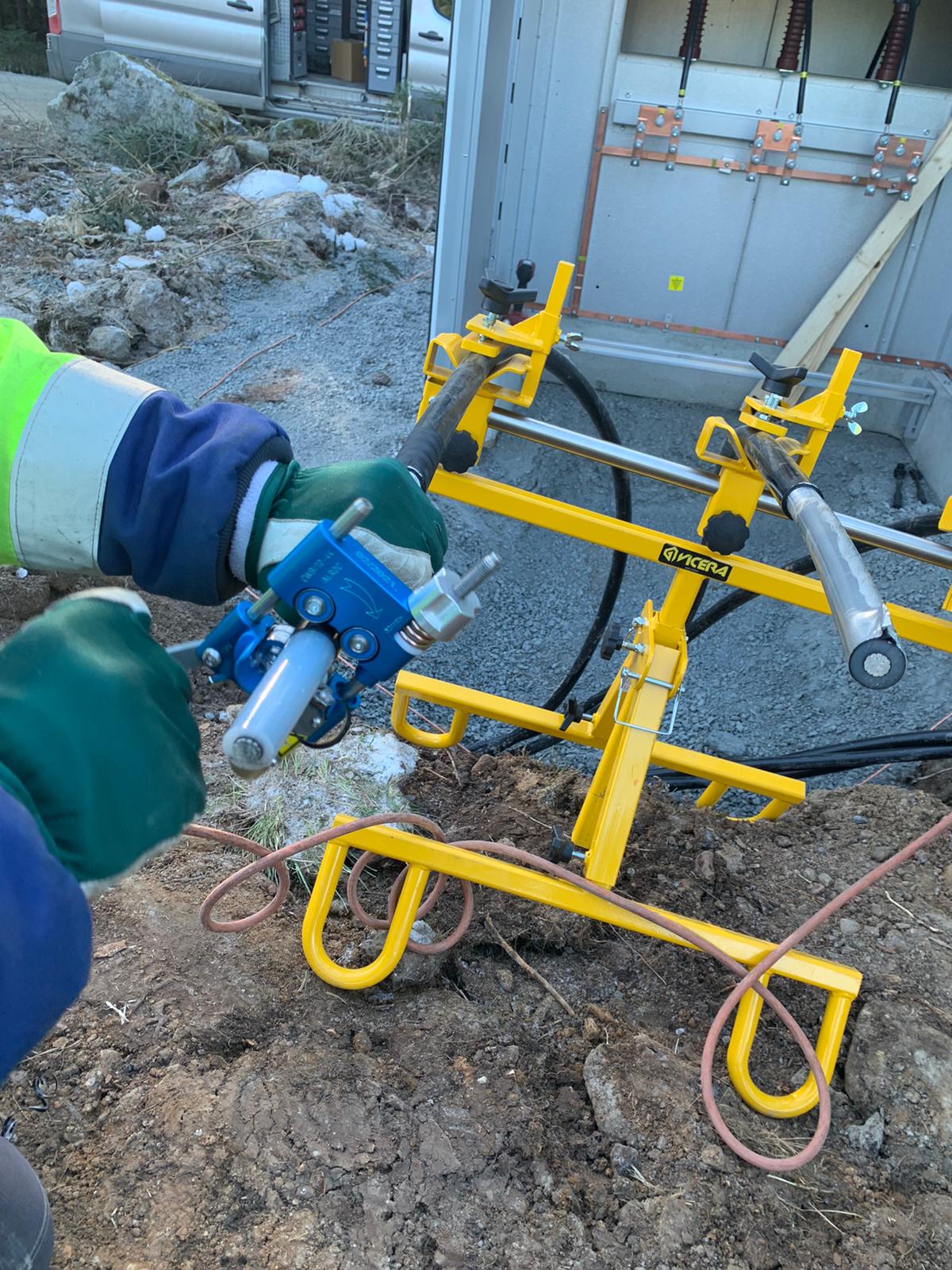
The Vicera range of Cable Stands are for both field or training centre use and provide safe and stable support of Low, Medium & High Voltage Cables – the cable stands are suitable for cable diameters 18-90mm with adjustable height.
The Cable Joint Stands feature stepless lateral and tilt adjustment and high strength clamps to prevent cable slippage or movement while jointing – secure and balanced cables when Jointers are undertaking highly skill-sensitive cable preparation prevents inadvertent damage to cables and future potential O&M reliability.
The cable support stands are rugged and durable for outdoor use in joint bays and trenches in all ground terrain conditions – this includes the support of 11kV/33kV/66kV cables to enable precise cable preparation by the Jointer prior to installation of joints, terminations or connectors on medium/high voltage power cables.
The Jointing Stands are used in the field to enable the completion of pole-top style outdoor terminations and also indoor substation Jointing & Termination installations.
APU2.0 Cable Stand | more info
Provides support and stability for LV HV Cables Ø 18–90mm
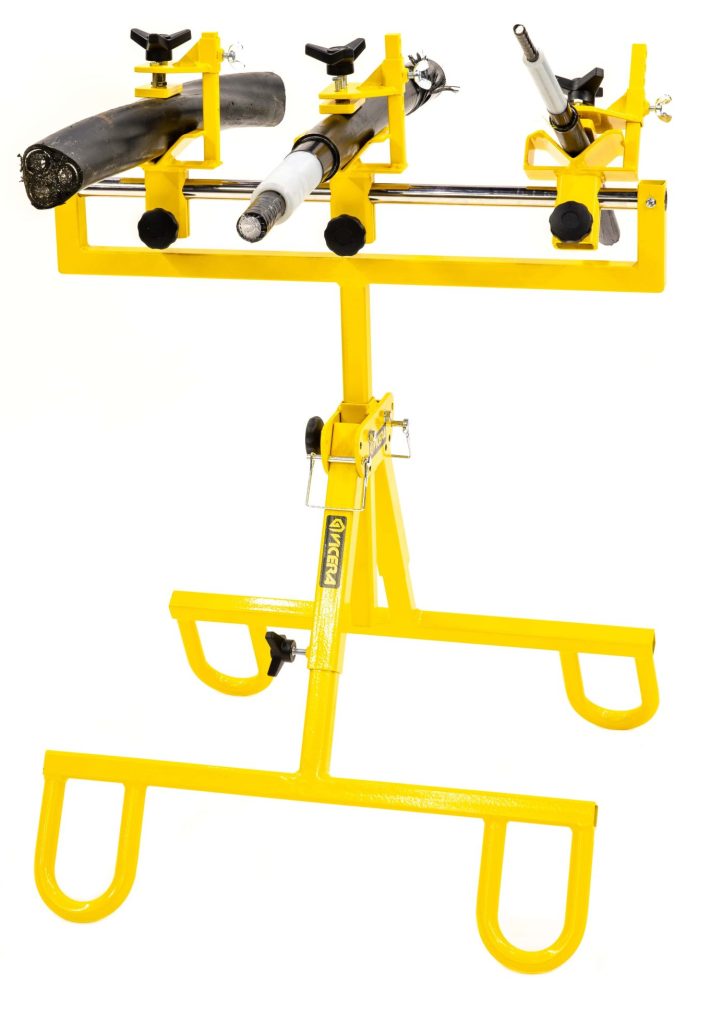
- Length: 180mm
Width: 730mm
Height: 720mm
Weight: 17kg - Very wide adjustment options
- Installation height 10” 57” / 25 cm 145 cm
- Sturdy clamps where the cables will stay in place
- Stepless lateral and tilt adjustment in clamps
- Suitable for all cables with an outer diameter of 5/8” 3,5” / 18mm – 90mm
- Suitable for almost any terrain
- Better ergonomics when jointing and terminating cables
- More efficient and easier to achieve best quality
- Risk minimisation during the preparation, jointing and termination of MV HV cables
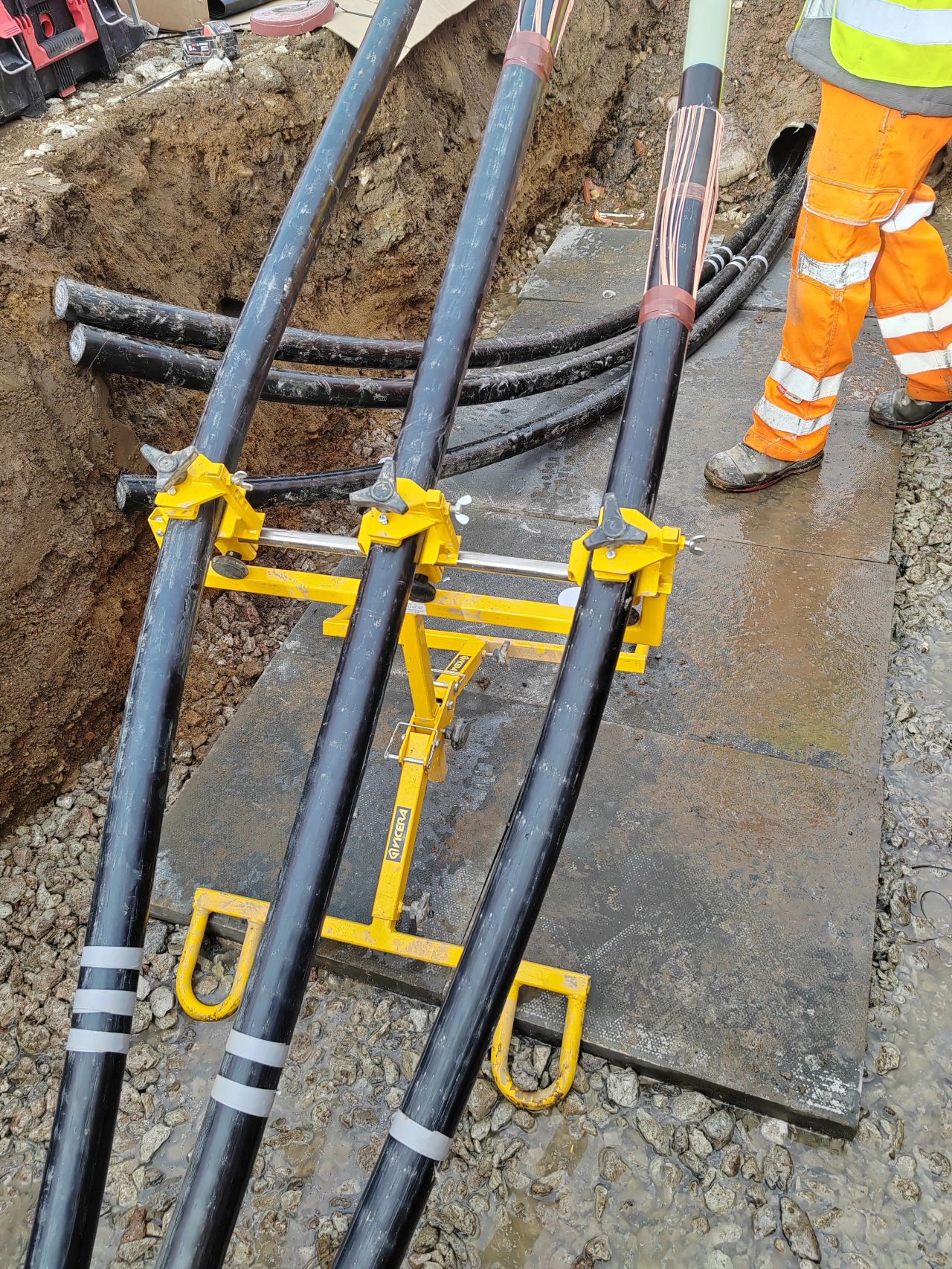
Image | JK Jointing Ltd
Pictured | Vicera APU2.0 | Here the APU2.0 is shown supporting 33kV BS7870 XLPE Copper Wire Screen single core 1000sqmm cables.
£590.00 + VAT + Delivery
Quantity Discount Available
Product Review
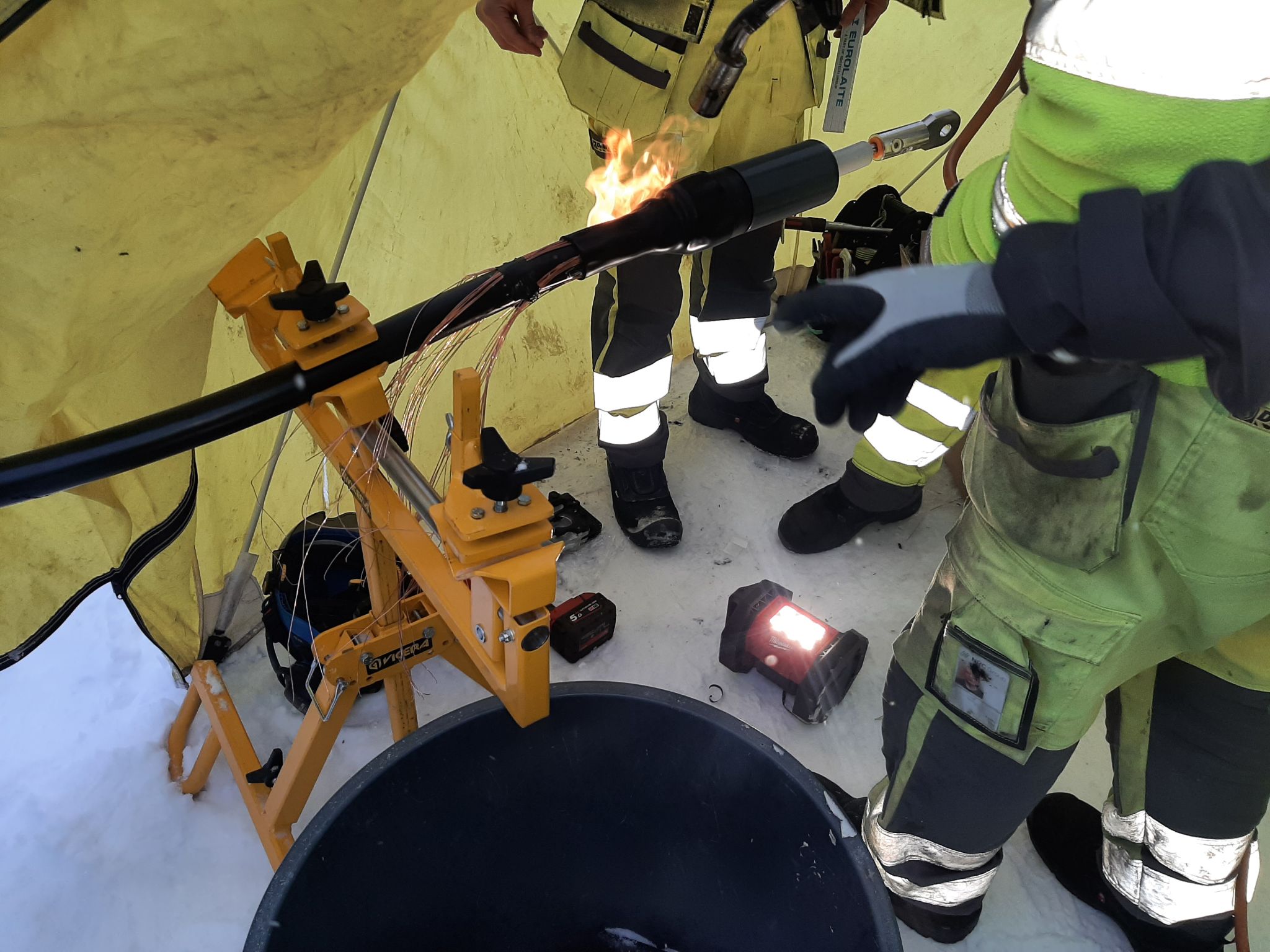
Pictured | Cable stand manufactured by Vicera providing support and stability to medium voltage cables undergoing the termination, connection and installation of Nexans Euromold type P909TB/G screened separable connectors.
💡 Bart Baeyens (Nexans Technical Customer Manager) – “the cable stands provide the necessary stable position to prepare any cable without issues, thanks to the weight and clever design. You can easily adjust height and position resulting on a comfortable position in every situation.”
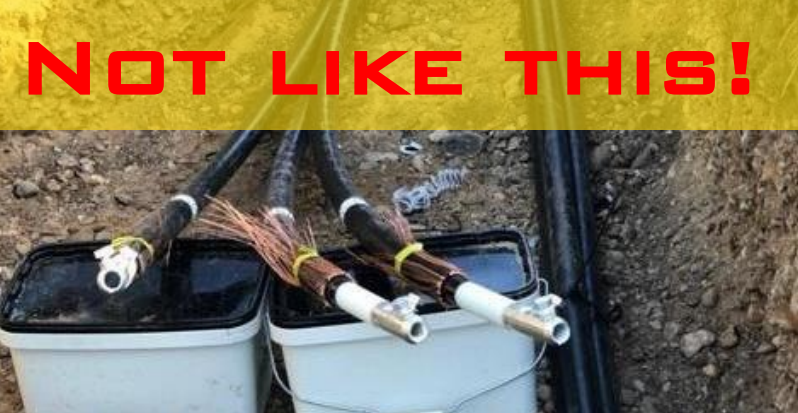
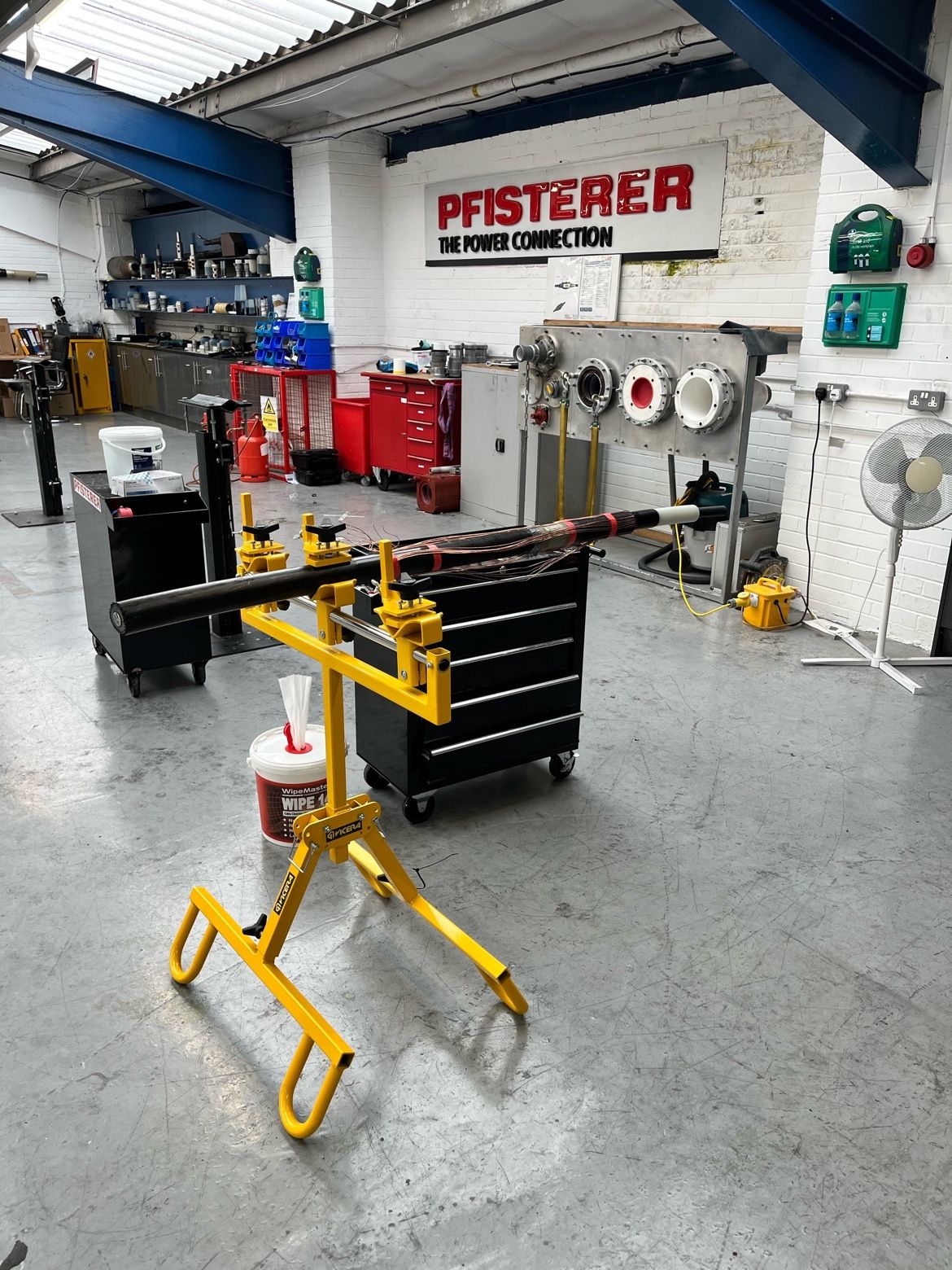
Pictured | The Vicera APU2.0 Cable Jointing Stand in place at the PFISTERER UK Training facility in the UK. Working alongside PFISTERER we can also assist in the CONNEX & SEANEX Certification of Jointers to support competency of workmanship and safeguard the integrity of medium/high voltage power cable systems across all industries – their UK Jointer Training facility is a global Centre of Excellence for Competency Certification up to 245kV.
Safe & Secure Cables with Vicera
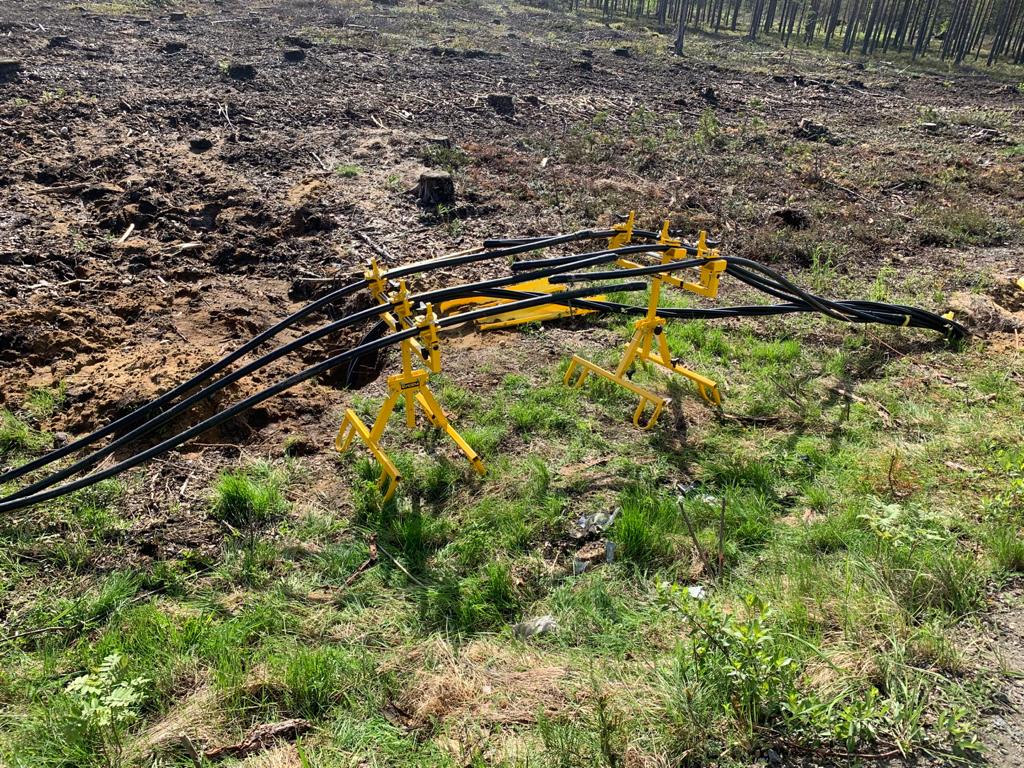
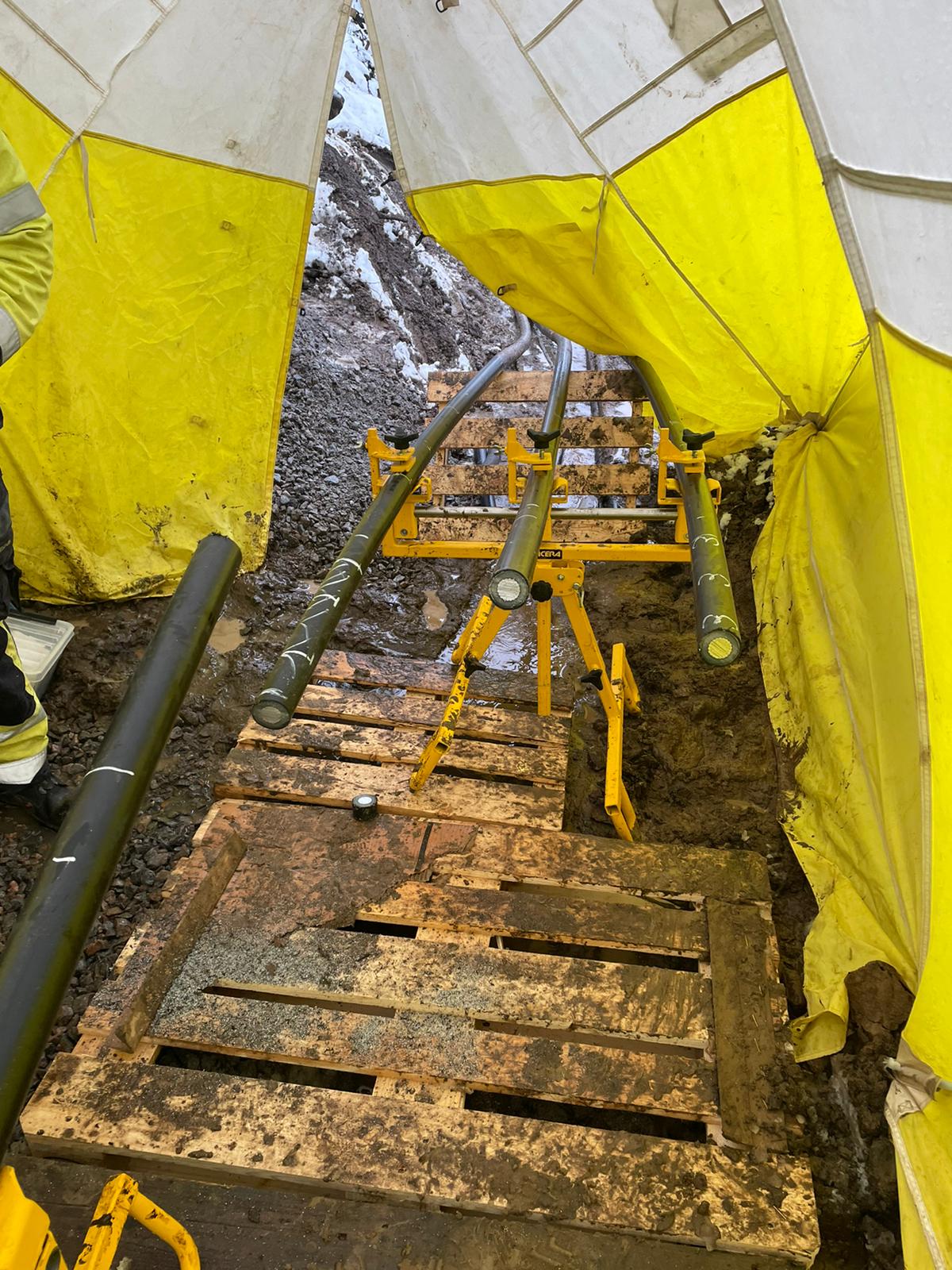
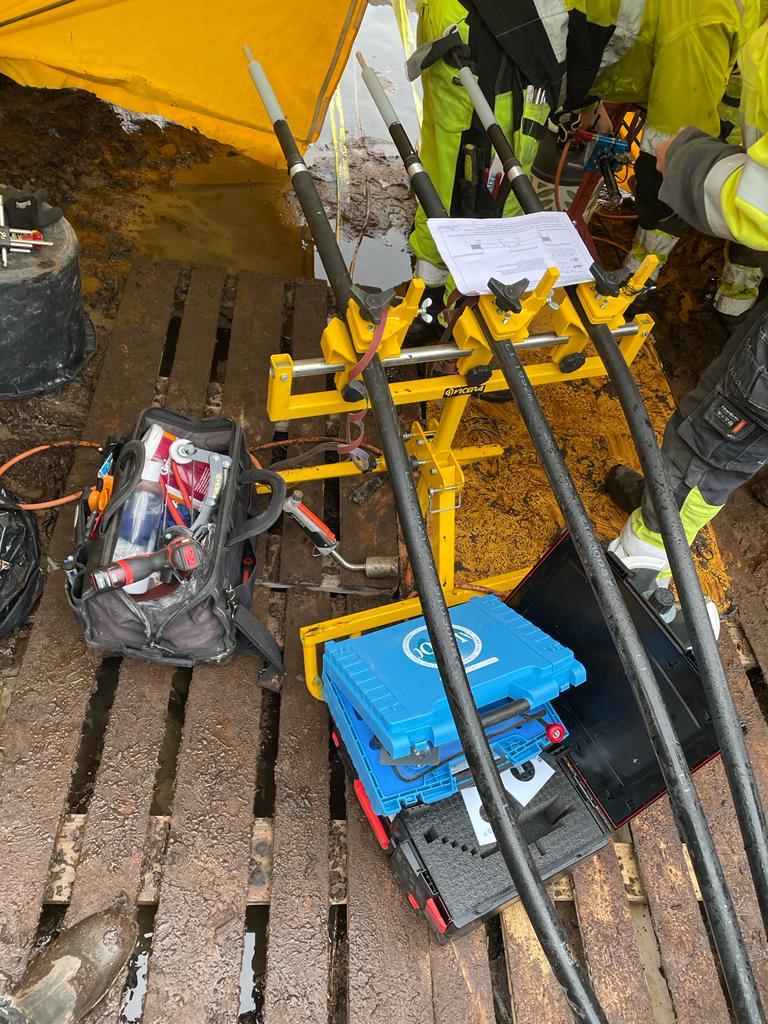
Thorne & Derrick distribute the most extensive range of MV HV Medium & High Voltage Cable Joints, Terminations & Connectors from manufacturers including 3M, Prysmian, Nexans Euromold, Elastimold, Pfisterer CONNEX & SEANEX.
We stock Heat shrink, Cold shrink, Push-on and Slip-over cable accessories enable the jointing, terminating and connection of 11kV-33kV-66kV cables to oil, air or gas insulated switchgear, transformers, motors and overhead lines distributing MV HV electricity.
Thorne & Derrick also supply from stock Jointing Tools to enable the Cutting, Crimping & Preparation of all onshore and offshore LV MV HV Cables – this includes the removal of sheath/jacket, screen, insulation and precision engineered procedures of the cable preparation process including chamfering, bevelling, grooving and shaving.


MV HV High Voltage Cable Joints | Cable Terminations | Cable Connectors | Distributed from Stock | UK & Export Sales
Telecoms Cable Winch Supplied to Full Fibre, Gigabit-capable Network Infrastructure
February 28th, 2023
-
uploaded by Chris Dodds | Sales & Marketing Manager at Thorne & Derrick
Customised Cable Winch
Working with client NGE, Thorne & Derrick have supplied a custom engineered Telecoms Cable Winch for the pulling and installation of fibre optic cables to the Liverpool Backhaul project – the cable winch will support the high-speed fiber infrastructure project which will connect all 6 local authority areas in the Liverpool Region, by delivering Gigabit internet connectivity to a diversity of key economic activities.
Thorne & Derrick have supplied the AW1000 is an extremely robust piece of engineered plant, designed specifically to cope with Fibre Optic and light cable pulls, which are becoming a mainstay in today’s economic environment, especially as Fibre Optic is being laid to cope with the increasing demand for broadband internet. The Winch is designed and manufactured by SEB International in the UK, to be simplistic in operation, and consequently the client installation team will find the winch is also straightforward to maintain and service.
The result is a product, which is cost effective, and will provide many years of service. The AW1000 will be an excellent investment and addition to the plant fleet of construction companies responsible for the installation and maintenance of fibre optical cabling systems.

Custom Cable Winch for Offshore Cable Pulling Project
Pictured : More information Customised & Refurbished 5 Tonne Cable Pulling Winch

This refurbished and customised 5 tonne cable winch was customised to enable the pull and installation of medium/high voltage power cables – the winch was delivered within 2 weeks from receipt of client order. The cable winch enabled the installation of cable runs up to 120 metres from the variable frequency drive (VFD) to the compressor junction box which goes from underground cable trench to above ground and onto the cable containment ladder racking system.
The cable winch modification was based on the standard SEB TW5000 version with additional cable tension dynamometer – the dynamometer continuously checks the cable pulling tension to ensure the forces do not exceed the recommended guidelines.
Cable Pulling Equipment
Thorne & Derrick distribute an extensive range of Cable Pulling & Laying Equipment to enable the safe installation of fibre and copper cables within the telecommunications industry. Safely installed cables reduces operational and maintenance requirements to the network and reduced service interruption to telecom cables, wires, ducts, cabinets and exchanges – products include cable spiking tools, conduit rods, cable lubricant, cable socks and rollers.