Electrical Safety
Electrical Workforce | Are There Problems In The UK Electrical Industry?
January 8th, 2020
The Electrical Workforce Ratio Guidance And Composition
-
Republished with the kind permission of Derek Thompson from Electrical Training Trust
SparkSafe Ltp has emerged from the Electrical Training Trust.
Established in 1998 by employers, Electrical Training Trust has championed the development of employer-Led Level 3 electrical apprenticeship training and adult worker upskilling.
Electrical Workforce Composition
We analysed eleven recent UK Public Sector construction projects with a combined value of circa £200 million to ascertain the composition of the electrical workforce.
The projects ranged in value from £500K to £60 million. Each of the projects is considered to be complex in scope as they:
- require significant coordination and cooperation with others
- make use of industrial pattern materials and techniques
- have an impact on the public
- involve professional design services
- require compliance with exceptional standards
- require a high-level health and safety management
SparkSafe workforce ratio guidance recommends a 50% minimum cohort of Qualified Electricians (QE) where complex electrical work is to be undertaken. None of the projects in the sample meets the proposed recommendations. Eight of the eleven projects are reported with a QE worker percentage between nil and 25%.
Summary of electrical work
- Three projects operated without a QE worker
- Four projects operated with a QE cohort of 15% or less
- One project (circa £30 million) relied on a 47% cohort of Apprentice Electrician (AE)
- The most significant value project (circa £60 million) was contingent on 75% of the electrical workforce operating below a QE licence level
Quality improvement and control measures are likely to be undermined when the model becomes over-reliant on disproportionate use of semi-skilled, under-qualified, or apprentice workers to carry complex and skilled tasks. Exceptions do exist. High-quality, close supervision, and other control measures may off-set the accumulation of defective work, reoccurring snagging lists, and latent defects. However, the trend, if unchecked, in this and other building service sectors, will continue to wither, an already ailing construction industry.
Historical toleration of this model has progressively shifted the Client prerogative to one of necessity and acceptance in terms of workforce composition in parts of the UK. Skilled labour shortages, lack of CPD drivers, and other demographic factors point to an industry that presently struggles to field a match fit team for industrial and commercial projects.
Extended supply chains and health and safety checks at the gate, have blurred Client insight into the occupational identity and qualitative make-up of the contractor’s workforce.
Nevertheless, projects are completed, commissioned, and eventually handed over.
So, what are the problems?
- A decline in quality and standards is widely reported throughout the industry. Clients are often forced to contend or accept failing and inconsistent standards by the industry to gain timely possession of their project.
- Failure to correct the problem means that it will become worse. The virtuous loop of sustainable skill training is replaced by a vicious circle which depletes the industry with a feed of semi-skilled and under-qualified workers.
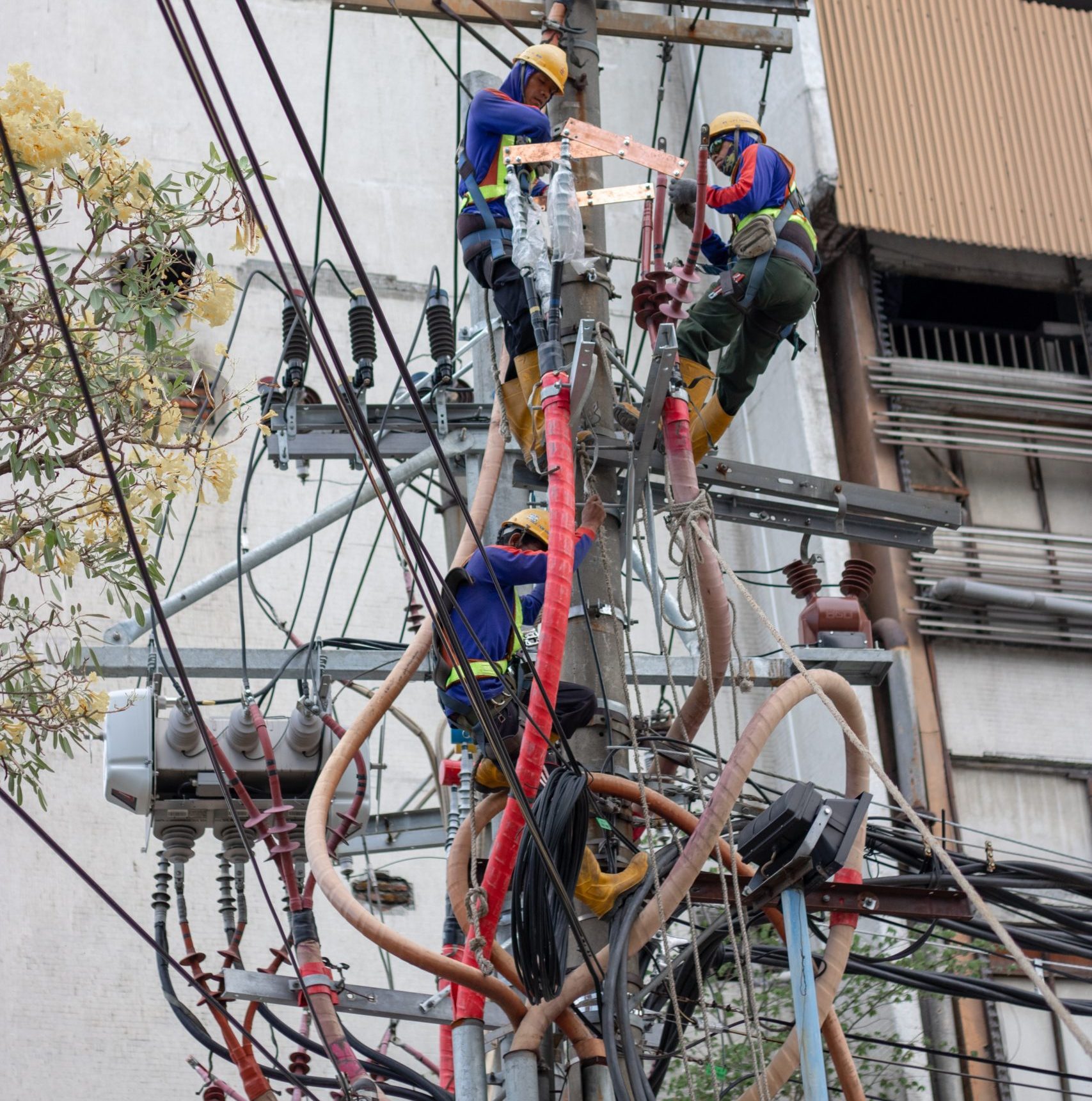
Photo : Electrical workers undertaking cable terminations by Hobi industri on Unsplash
Conclusion
The resolve of many responsible Electrical Contractors to maintain traditional standards has been eroded as other existing, and new enterprises adjust working practices to win contracts, build turnover and attempt to stay in business. Who could blame them! Discipline and restraint by the industry are poorly regulated. Insolvency and/or prosecution are the primary checks and balances for the UK electrical contracting industry.
Attempts at self-regulation have broken down as competitive instincts and market forces, compel the supply chain to find ways of getting around the national conventions of the industry. Industry-led, self-help efforts must continue. Responsible trade and industry bodies must be encouraged, supported and be subject to constructive criticism in their efforts to do the right thing. Nevertheless, the ultimate authority and influence over the behaviour and development of the industry is the Client.
The findings of our analysis flow from an absence of specification and scrutiny concerning the dynamics and composition of the contractor’s workforce ratio. A greater effort by specifiers and designers is usually placed on material specification. Whereas the competency of those who install those materials is often presumed and unchecked.
High spec materials and low-tech installers don’t make sense!
The striking imbalances across the sample projects are the immediate product of the industry, not the Client. However, by using their buying authority, responsible Clients can halt the decline, reinstate the virtuous loop, and help produce a much-needed win-win outcome for the UK going forward.
WORKFORCE RATIO GUIDANCE
Why was this developed?
Workforce ratio guidance aims to get the balance of manual electrical worker competencies right at site level. Client organisations and their professional representatives are often obliged to work on a trust basis regarding the flow and composition of an electrical contractor’s workforce. The issue of workforce composition and competency is often poorly defined or referenced in the specification and related documentation.
The number of “go-to” competent electrical workers in modern construction and maintenance contracts appears to have declined. Parts of the industry have become over dependant on under-qualified and unqualified electrical workers to meet tender budgets or overcome skills shortages. This shift means that the proportion of electrical competencies may not be matched to the requirements of the project.
We have produced the following ratio guidance as a quality improvement and social responsibility measure with the aim of stimulating productivity and performance. By including labour ratio competency requirements, specifiers will spur the industry towards sustainability in the construction industry.
Guidance on the Electrical Contractors Workforce Composition
Table 1 is aimed at addressing a typical complex multi-electrical service contract.
A Type Contract
| No. of Workers By Licence Type |
5 | 10 | 15 | 20 | 25 | 30 |
|---|---|---|---|---|---|---|
| QE | 2 | 5 | 7 | 10 | 12 | 15 |
| REW | 2 | 3 | 5 | 7 | 9 | 10 |
| AE | 1 | 2 | 3 | 3 | 4 | 5 |
We recommend that the electrical workforce should comprise of circa 50% Qualified Electricians (QE). A concession to make-up the balance of the required workforce by a mix and match approach from the Restricted and Apprentice Licence type should be made available. Note: A reasonable, contract-specific, pro-apprentice weighting should always be applied. We suggest that this should be not less than 20% of the required workforce.
Table 2 is offered in consideration of projects that are less complex regarding scope, value, coordination, risk and programme.
B Type Contract
| No. of Workers By Licence Type |
5 | 10 | 15 | 20 | 25 | 30 |
|---|---|---|---|---|---|---|
| QE | 2 | 3 | 5 | 6 | 8 | 9 |
| REW | 2 | 4 | 6 | 8 | 10 | 12 |
| AE | 1 | 3 | 4 | 6 | 7 | 9 |
This model indicates that circa one-third of the sub-contractors direct and indirect workforce should be fully qualified in line with the QE Licence type. A mix and match option similar to the A-Type concession is made available when it comes to determining the balance of the sub-contractors required workforce across the remaining Licence types.
Electrical EqUipment – Thorne & Derrick
Thorne & Derrick International are specialist distributors of LV, MV & HV Cable Installation, Jointing, Duct Sealing, Substation & Electrical Equipment – servicing UK and global businesses involved in cable installations, cable jointing, substation, overhead line and electrical construction at LV, 11kV, 33kV and EHV.
THORNE & DERRICK Product Categories: Duct Seals | Cable Cleats | Cable Glands | Electrical Safety | Arc Flash Protection | Cable Jointing Tools | Cable Pulling | Earthing | Feeder Pillars | Cable Joints LV | Joints & Terminations MV HV

Jointers blog
Subscribe now to our POWER NEWSLETTER– a monthly email circulation packed with news, projects, videos, technical tips, training information, promotions, webinars, career opportunities and white papers.
Includes access to our popular JOINTERS BLOGwith contributions from utility professionals, linesmen and cable jointers working on MV HV EHV cables and overhead lines typically at 11kV, 33kV, 66kV and up to 132kV.
15,000+ Subscribers. ➡ 
Electrical & Hybrid Vehicles | Improving Electrical Safety for the EV Industry
January 8th, 2020-
uploaded by Chris Dodds - Thorne & Derrick Sales | Marketing Manager

According to Mckinsey & Company under the current growth trajectory, EV producers could almost quadruple production in 2020, moving 4.5 million units, around 5 percent of the overall global light electric vehicle market.
This rapid increase in the number of electric and hybrid vehicles has introduced and imposed specific electrical safety regulations upon the EV industry.
For example in France, the electrical safety regulations are now codified according to UTE C 18-550 (♦) to provide clear legislative guidance on the responsibilities of the EV industry to prevent electrocution and electrical injury to workers.
Thorne & Derrick can support the implementation of electrical safety precautions with automotive manufacturers, dealership networks and garage repair specialists – products specifically designed to prevent electrocution of mechanics:
EV Safety Products
- PPE | Electric Arc Face Shields, Insulating Gloves & Undergloves
- Floor Protection | Insulating Matting
- LV Test & Measurement | Voltage Detection & Testers (12V to 1200V DC)
- LV Live Working Tools
- Lock Out Tag out & Warning Signs
- EV Electrical Vehicle Safety Catalogue
♦ UTE C 18-550 (Electrical safety instructions for operations on vehicles and motor vehicles with thermal, electric or hybrid motorization having on-board electrical energy).

Electrical Risk Prevention & Safety Kits for EV Industry
Thorne & Derrick stock and supply EV Kits for electrical risk prevention – contact us for further information or to place an order.
- CATU KIT-VE-S1 Obstacle Safety EV Kit
- CATU KIT-VEH EV Safety Signage Kit
- CATU KIT-VE-D EV Car Servicing & Breakdown Kit
- CATU KIT-VE-BCL Instruction Kit
- More Information

Safe Working On Electrical & Hybrid Vehicles
Catu Electrical Safety Equipment Stockists

Do you know that by 2030 electrical vehicle sales will represent 40% of the total sales in Europe & China? This impacts the maintenance approach and safety equipment requirements to enable the industry to work safely. Therefore, CATU as specialist manufacturers of Safety Equipment for the prevention of electrical risks has designed some dedicated kits including insulated tools for live operations, PPE for providing comfort of use and voltage detectors. Discover our complete solution set in the e-mobility brochure.
CASE STUDY
West Midlands Police approached Thorne & Derrick with a requirement for Electrical Safety Kits for forensic collision investigation at life changing and predominantly fatal road collisions. Training has been upgraded with vehicle examinations of electric / hybrid vehicles but no safety equipment had ever been provided. Thorne & Derrick rectified this EV safety shortcoming when the risk was identified by a new member of staff and the CATU KIT-VE-BCL has been adopted by the police force.

Based in the UK, Thorne & Derrick International are the largest Stockist Distributor of CATU Electrical Safety Equipment protecting workers on underground cables, overhead powerlines, switchgear and substations at LV, MV and HV.
Voltage Testers | What Are Your Options for Verifying Absence of Voltage?
October 22nd, 2019
Voltage Testers: An Article by Panduit
What are your options for VERIFYING Absence of Voltage?
Safety is everything.
Workers MUST comply with safety regulations that require a voltage verification test when servicing electrical equipment
But how can you be safe and be sure the circuit is de-energized?
What if the only method is complex and exposes you to the very danger you’re trying to avoid?
Find out how a team of engineers with fresh thinking and years in the lab resulted in an entirely new product – the absence of voltage testers (AVTs) – and positive proof the power is off.

Voltage Testers – Your Options
- Portable Test Instruments – Portable voltage testers are usually a hand-held device used to detect the presence and absence of voltage. They require a manual and time-consuming process, increasing the risk of human error. They are susceptible to user misinterpretation and process failures, which may expose workers to electrical hazards.
- Voltage Indicators – These are typically installed devices. When functioning properly, voltage indicators warn of the presence of voltage but do not guarantee its absence. When your voltage indicator is not illuminated, the system is de-energized. However, how can we be sure? There could be something wrong with the installation. There’s no way to know for sure that your equipment is de-energized with just a voltage indicator.
- VeriSafe AVT – Verisafe AVT uses active indications to tell you when your equipment is de-energized, so you know that the absence of voltage has been verified. The push of a button activates VeriSafe AVT’s automatic absence of voltage test. Here’s what the colour indicators mean when using the VeriSafe Absence of Voltage Tester…
- Red – There is a voltage present in your equipment
- Yellow – The absence of voltage could not be confirmed, be careful
- Green – Absence of voltage has been verified
For the task of verifying the absence of voltage, VeriSafe AVT is both a voltage tester + voltage indicator. Be sure the light is green with VeriSafe AVT.
Panduit VeriSafe – Absence of Voltage Tester
Verisafe is UNIQUE and safety is Important.
Panduit’s fully automated, permanently mounted and first-of-its-kind industry compliant tool, VeriSafe AVT – both indicates the presence and absence of voltage.

The VeriSafe absence of voltage tester minimizes risk by verifying the absence of voltage before equipment is accessed. VeriSafe’s automated process and single-step activation are standardized to avoid missteps in execution and sequence. It is further constructed to resist factors that could affect its accuracy and functionality – such as mechanical or electrical failures from wear, mechanical shock and environmental extremes.
Through years of development and collaboration with industry groups, the team was able to reach proof of concept and eventually create an absence of voltage tester that performed exactly as they hoped. All that was left was for the new AVT (absence of voltage tester) product category to be defined in an industry-standard and for the safety requirements to be published.
In 2016, UL published the first-ever AVT safety and listing requirements in UL 1436.
In 2017, the VeriSafe AVT was released and now offers workers an easy, safer way to get positive proof the system is de-energized before accessing or working on electrical equipment.
Now, all it takes is a press of the test button, and a moment to wait for the green light. And, as everybody knows, green means go.
With over 60 years of infrastructure experience, our team recognized the need for a safer – and easier – way to verify a circuit is de-energized. The change our engineers had in mind was to eliminate exposure to live circuits – either by accident or during an absence of voltage test. That would mean no more hand-held meters, and no need to interact with known-live circuits as part of the test.
Thorne & Derrick International, Specialist Distributors of Electrical Safety Equipment, are Panduit Partners.
Request your VeriSafe demo from Thorne & Derrick today.

Thorne & Derrick
T&D are Specialist Distributors to UK Distribution Network Operators (DNO’s), NERS Registered Service Providers, ICP’s and HV Jointing Contractors of an extensive range of LV, MV & HV Jointing, Earthing, Substation & Electrical Equipment – this includes 11kV/33kV/66kV joints, terminations and connectors for both DNO and private network applications.
Contact our UK Power Team for competitive quotations, fast delivery from stock and technical support or training on all LV-HV products.
Key Product Categories: Duct Seals | Cable Cleats | Cable Glands | Electrical Safety | Arc Flash Protection | Cable Jointing Tools | Cable Pulling | Earthing | Feeder Pillars | Cable Joints LV | Joints & Terminations MV HV
➡ More: VIDEO How To Verify Total Absence of Voltage By The Push Of a Button
Safe & Secure Locking Systems For Explosive Atmospheres In The Rail & Utility Industries
October 11th, 2019
-
uploaded by Chris Dodds | Thorne & Derrick Sales Marketing Manager
Battery Rooms
Thorne & Derrick International, based in the UK, recently signed a Sole UK Distributor Agreement with regional exclusivity to the North East of England for the SecurEx range of ATEX & IECEx Certified access control and security products – these high security locking systems are specified to provide asset security against vandalism, theft and damage in hot-spot crime areas and workplace locations with potentially explosive atmospheres.
High Security, High Risk
Door Locking & Security Systems
Due to a recent spike in criminal activity on the UK rail industry there has been an urgent requirement to improve security and protection to critical sections of railway stations and infrastructure – this includes main battery rooms categorised as CNI sites.
The site is both a Critical National Infrastructure security risk with a potential explosive atmosphere risk due to the dangers of venting battery gas presenting flammable risks.
According to the ATEX Directive this location is categorised as a Zone 1 hazardous area location due to the incidence and duration of a flammable gas atmosphere likely to occur occasionally in normal operation. This could occur in the battery room because of repair, maintenance operations, or leakage as well as deliberate criminal intent.
61,000 crimes were reported on the UK Rail Network in 20187-2018 – 9% of criminal damage was attributed to Malicious Mischief, f1.
Obviously, this is a high security area requiring high security hazardous area doors and locking systems.
To combat crime and ensure site safety a Sx Ex Abryll in a SATE handle escape with LPCB Level 4 configuration was supplied – the lock was fitted to an Abloy High Security Steel door.
This lock is the only high security lock with ATEX & IECEx certification.
Product Information ➡ High Security Locks for Zone 1 ATEX Battery Rooms

SX EX ABRYLL High Security Lock: Single Point Locking System can be configured with a multitude of functions including Panic and Emergency Escape, Mechanical and Electro-Mechanical Deadlocking. Certified for Ex Zones 1, 2, 21 and 22 hazardous areas.

Glossary
CNI: Critical National Infrastructure – national Infrastructure are those facilities, systems, sites, information, people, networks and processes, necessary for a country to function and upon which daily life depends. In the UK, there are 13 national infrastructure sectors including Transport.
ATEX: ATmosphères EXplosives – the ATEX directive consists of two EU directives describing what equipment and work space is allowed in an environment with an explosive atmosphere.
LPCB: Loss Prevention Certification Board – the leading international Certification Body in the fields of security and fire protection.
f1 Source Williams Rail Review – the Williams Rail Review was established in September 2018 to look at the structure of the whole rail industry and the way passenger rail services are delivered. The review will make recommendations for reform that prioritise passengers’ and taxpayers’ interests.
Further Reading
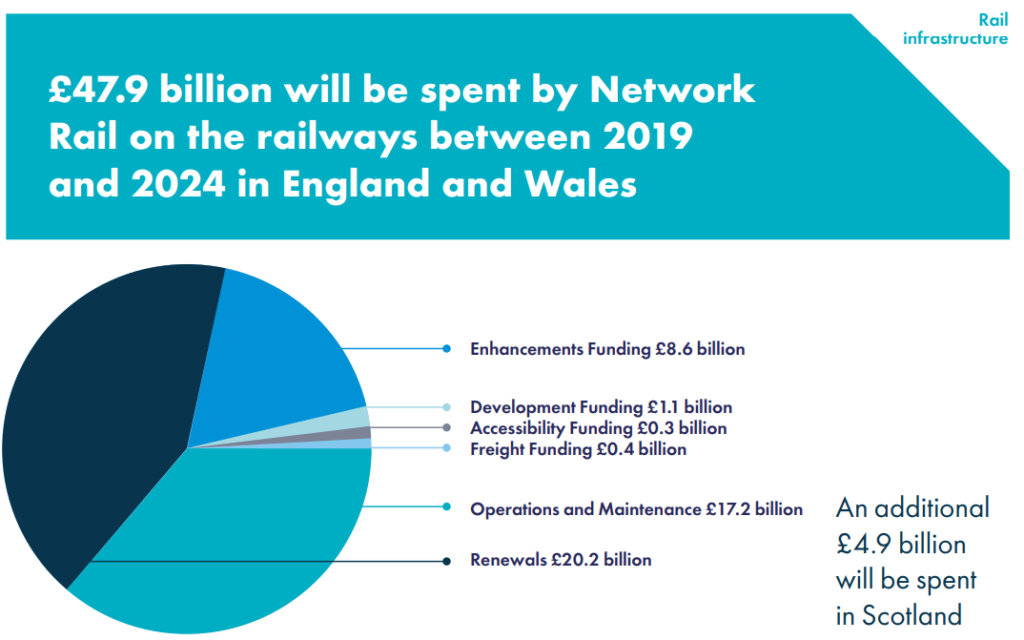
Credit: Williams Report
Rail Cable Accessories, Electrification & Installation Equipment
Thorne & Derrick stock an extensive range of 400V-33kV Rail Cable Accessories & Power Distribution Sytems including feeder pillars to contractors undertaking Low Voltage Power Distribution, HV Electrification & Substations, DC Traction & Networks, OLE and Track Feeder Cable Renewals – complete range of Network Rail PADS approved track terminations, cable joints, cable repair and connection products up to 25kV, including 3M Cold Shrink, Pfisterer CONNEX and Nexans Euromold products.
Full range of Cable Pulling Equipment & Products to ensure safe and efficient of rail cables in to cable ducts and containment infrastructure including cable troughs.
Thorne & Derrick are Approved Vendors to Network Rail and TfL.

VeriSafe AVT by Panduit | Safe & Sure Electrical Isolation
October 7th, 2019Verisafe AVT: An Article by Panduit
Idea to Innovation: Inventions that Move the Industry
From the first product, a panel conduit that led to the name Panduit, we understood our engineers are the gateway to success and need free reign to investigate and innovate.
This is one of their stories.
VeriSafe AVT: The Proof That the Power is Off – Story
Safety is everything.
So, be sure the power is off before you open electrical equipment and start handling wiring matters.
But how can you be safe and be sure the circuit is de-energized?
What if the only acceptable method is a complex testing process that potentially exposes you to the very danger you’re trying to avoid?
Here’s a story of how a team of engineers with fresh thinking and years in the lab resulted in an entirely new product – theabsence of voltage testers (AVTs) – and positive proof the power is off.
How To Test Voltage Using the Verisafe AVT
- Electrically isolate and lock or tag out the equipment you want to work on
- Put on appropriate Personal Protective Equipment (PPE)
- Test a hand-held meter on a known-live circuit to make sure it’s working
- Test for absence of voltage in the isolated equipment, both phase-to-phase and phase-to-ground
- Re-test the hand-held meter on a known-live circuit to confirm it’s still working (so… expose yourself to energised parts twice to make sure there’s no voltage? Yep.)
No Light Doesn’t Mean No Power
To understand why VeriSafe AVT is such a big deal, you have to understand 3 things:
- Contact with electricity is a leading cause of injury and death in the workplace
- Stored energy can remain in a circuit even after it’s shut off
- Hand-held testers require a slow, manual process that’s prone to human error and may expose workers to the very hazard the process is meant to protect them from
You might think a hard-wired voltage indicator would solve the problem – lights out means no power – but you’d be wrong.
Indicators warn when power is on, but no signal doesn’t guarantee that a circuit is de-energised. No light could mean the power is off, but it could also be caused by a faulty indicator or installation problems. How would you know the difference?
That uncertainty is why OSHA never recognised permanently installed voltage indicators and instead relied on the hand-held tester method. But that means in order to prove there’s no voltage in the de-energised circuit you have to expose yourself to a known-live circuit.
The very definition of irony!
Standards Before Sales
Having a new product is one thing.
Getting it accepted by the market is another thing altogether.
The team understood that without an official standard authorising their new absence of voltage tester nobody would adopt it.
So, the first challenge was figuring out how to convince the governing bodies that a new way to test was needed. The team turned to safety workshops with organisations like NFPA and IEEE to gather information about electrical accidents and gauge interest in a new solution.
Armed with accident data and feedback from safety professionals, the team then collaborated with UL to start work on a standard supporting this new, safer methodology.
But knowing inventions (and standards) take time, the team hit the lab and started working out the mechanics of how an AVT could work.
verisafe avt – Now, Safety is Just a Press Away
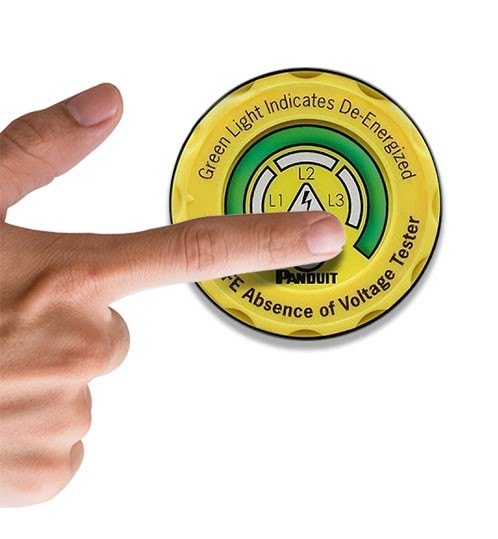
Through years of development and collaboration with industry groups, the team was able to reach proof of concept and eventually create an absence of voltage tester that performed exactly as they hoped. All that was left was for the new AVT product category to be defined in an industry-standard and for the safety requirements to be published.
In 2016, UL published the first-ever AVT safety and listing requirements in UL 1436.
In 2017, the VeriSafe AVT was released and now offers workers an easy, safer way to get positive proof the system is de-energized before accessing or working on electrical equipment.
Now, all it takes is a press of the test button, and a moment to wait for the green light. And, as everybody knows, green means go.
The Power to Provide Positive Proof
With over 60 years of infrastructure experience, our team recognized the need for a safer – and easier – way to verify a circuit is de-energized. The change our engineers had in mind was to eliminate exposure to live circuits – either by accident or during an absence of voltage test. That would mean no more hand-held meters, and no need to interact with known-live circuits as part of the test.
The idea was a self-powered, self-testing, permanently-mounted device that would emulate the traditional handheld testing process, without the need to open cabinets. Being self-powered and capable of testing its own connections, the AVT would be the first of its kind to give positive proof the circuit was de-energized.
Like many breakthroughs, it seems perfectly logical after the fact – why did it take so long?
Thorne & Derrick
T&D are Specialist Distributors to UK Distribution Network Operators (DNO’s), NERS Registered Service Providers, ICP’s and HV Jointing Contractors of an extensive range of LV, MV & HV Jointing, Earthing, Substation & Electrical Equipment – this includes 11kV/33kV/66kV joints, terminations and connectors for both DNO and private network applications.
Contact our UK Power Team for competitive quotations, fast delivery from stock and technical support or training on all LV-HV products.
Key Product Categories: Duct Seals | Cable Cleats | Cable Glands | Electrical Safety | Arc Flash Protection | Cable Jointing Tools | Cable Pulling | Earthing | Feeder Pillars | Cable Joints LV | Joints & Terminations MV HV
➡ Read: Isolate 99.999% Of Electrical Risks With Verisafe From Panduit