Special thanks to Paul Darlington from the Rail Engineer magazine for kind permission to republish this article
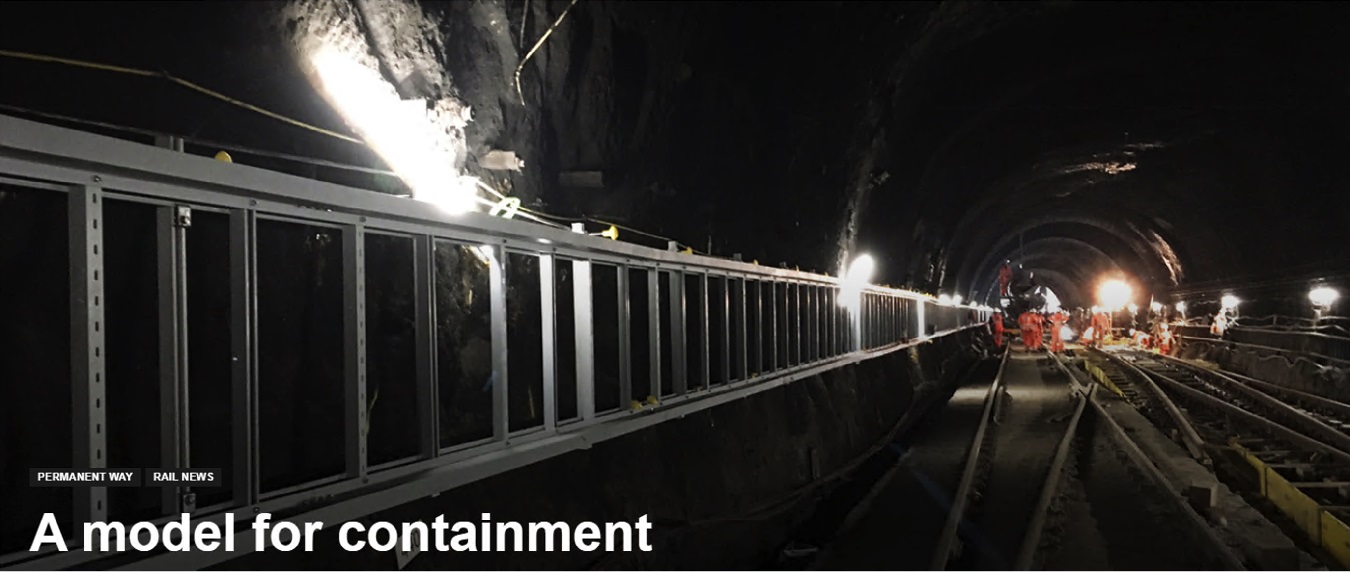
Data connectivity is vital for all aspects of society and industry, and is becoming increasingly important for railway operations. Signalling, electrification control, fixed and radio communications: all rely on cables running alongside the railway.
However, the integrity and value of these rail cables is only as good as the protection offered by the lineside cable route. Often overlooked or taken for granted, it is vital for the safe, efficient operation of any railway.
The primary function of any form of cable route is to protect the cables within.
Ideally it should provide mechanical protection, so it must be robust and stable, fire and vandal proof, capable of being opened and closed to maintain the cables or run new ones, be cost effective and safe to install, and require minimal maintenance.
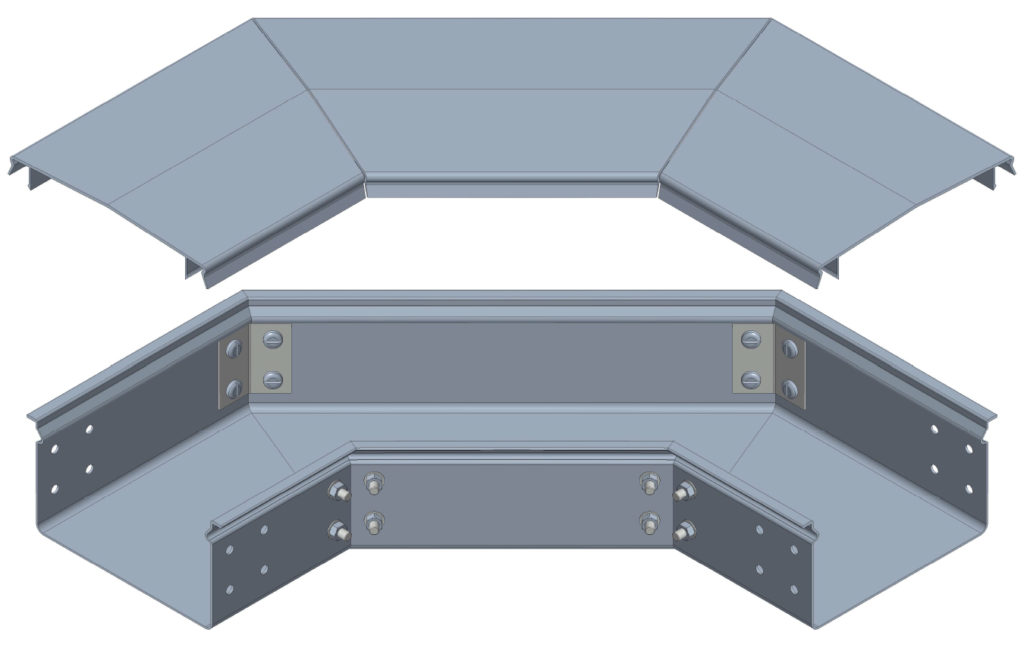
Cable routes can be constructed from a variety of materials and come in different sizes and shapes. Transition modules may be required along with ‘T’ junctions, bends and joint bays.
All these requirements are not easy to achieve and can conflict. An assortment of route types have been used over the years and the search for an ideal cable route is never ending.
An evolutionary approach
The first types of cable routes were open copper wires raised on wooden poles. With the introduction of overhead electrification, signalling and telecoms cables were run at ground level in some form of cable containment. On the majority of non-electrified lines or those with conductor rails, cables are now provided at ground or sub-surface level.
Wooden cable routes were used initially, but these soon rotted and have not been used for many years. Asbestos cable routes mounted on posts were then provided, but these didn’t offer much mechanical protection and introduced a health and safety risk.
One of the more successful systems was concrete ground-level troughing, generally known as GLT. With detachable lids, this has been used for many years and is supplied in various sizes, generally in 1m lengths.
It provides reasonable mechanical strength, although the natural walkway it forms encourages its use as a lineside pathway. It was not designed for this purpose and a misaligned lid can easily cause injury if walked on.
The weight of concrete troughing gives it reasonable stability, but makes it difficult to handle manually and its installation can require extensive possessions for off-loading.
Deeper and higher ballast shoulders have, in places, transformed the troughing into ballast retaining walls or totally burying it. Any displaced alignment may put strain on the cables within and make it even more hazardous to walk on. While concrete troughing is reasonably inexpensive for the protection achieved, it is costly to install with manual labour and requires frequent replacement of damaged lids
In the 1960s, to obviate many of the disadvantages of the precast concrete route whilst retaining its inherent advantages, a continuous slip-formed concrete route was trialled. A train with an earth plough formed a trench alongside the track. Concrete was then discharged from the train into the trench, after which the train made a further pass with a plough to create a trough in the concrete. Once dry, precast concrete lids were off-loaded.
This method removed much of the manual labour involved in construction, but required a site with soil suitable for the earth plough, precise control of the concrete mix consistency, accurate rate of discharge into the trench and consistent train speed. It was also found that an unplanned thunderstorm turned a near-finished length of route into a disaster area! The trial was abandoned.
Buried cables
In areas of theft risk, cables can be buried directly in the ground at a depth providing adequate protection. Installation is generally required immediately after the trench has been dug as heavy rain can collapse it prior to backfilling. Alternatively, a duct system can be buried prior to the cables being pulled through or, in the case of fibre cables, blown through with compressed air.
Any buried route is expensive to install – particularly with manual labour – and may require rail-mounted machinery for excavation. Gaining access to the cables requires careful selection of the breakout point locations, together with jointing bays. The chosen cable must be suitable for direct burial and it is not easy to subsequently connect into the cable route.
Another method of direct burial is by utilising a rail or vehicle-mounted mole plough.
This is a hydraulically controlled plough blade, with the cables fed through trackside conduits in the blade.
In the right situation the method has some advantages, but large cables can present problems as certain types of soil do not consolidate and can leave a damaged embankment or cess. The method requires careful planning and preparation, with robust buried service checks prior to the cable-laying.
It only takes one old signal base to break the plough and seriously delay the programme. In locations with sharp stones, additional cable protection is required with sheathing or sand backfill. However, ploughing small fibre cable ducts could be an answer for the future. We’ll come back to that later.
Plastic routes
Over the years, various sorts of plastic cable routes have been trialled for lineside cable containment. Unfortunately, they have generally not provided the required mechanical strength, especially when faced with ballast alongside the route. Plastic also contracts and expands as the temperature varies and it is not easy to incorporate adequate expansion mechanisms.
Railtrack had some success installing a 100mm plastic surface pipe with thermal expansion mitigation which was staked into the ground every few metres. This provided protection to a telecoms cable running between signal boxes on rural routes and is still in use 25 years later. This wasn’t suitable for larger volumes of cables on main lines and it wasn’t easy to provide regular cable breakout points.
Recycled polymer
Over the last ten years, cable routes made from 100% recycled polymers – such as polypropylene – have been introduced which offer similar high strength and impact resistance to traditional concrete, but are approximately five times lighter for the same size and far easier to cut.
A further enhancement – building on the problem of walking on narrow concrete lids – was the introduction of a combined cable route and safe walkway, also made from recycled polymer. Two routes with the equivalent capacity of two concrete troughs were located under a 700mm wide non-slip surface. The lids were constructed so that cables could be laid with half the route open. Fixings were also provided for a removable handrail and the ability to secure the lids to the troughing to deter cable theft.
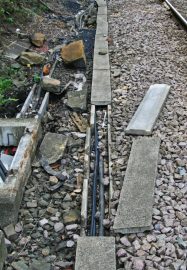
Following removal of the lids for installation purposes, there have been reports of a route’s sidewalls being deflected inwards due to the weight of the adjacent ballast, preventing the lids being replaced correctly.
This caused the lids’ outer edges to be unsupported and move unexpectedly under the weight of footfall, thus creating a trip hazard. This illustrates the need for maintenance of all cable routes and, in this case, to ensure the lids were securely attached to the sidewalls and not displaced from their correct positions.
Elevated troughing
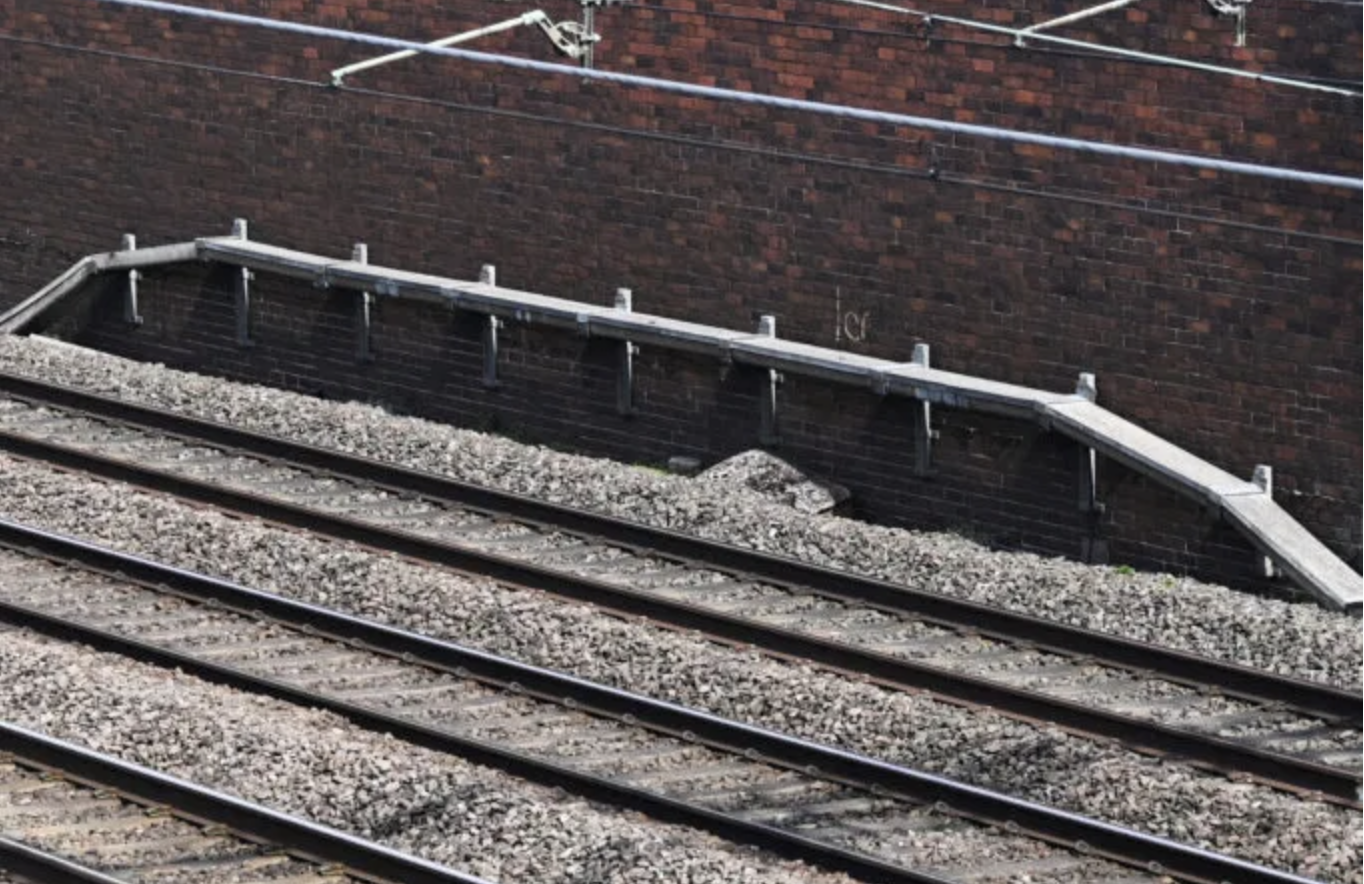
In cuttings susceptible to slippage, the toe cannot be excavated to accommodate a trough or buried route, so an elevated troughing route may be required, mounted on posts which only interfere with the soil formation at a minimal number of points. As well as early use of asbestos, elevated troughing has been constructed from a variety of materials over the years including timber, cement, glass-reinforced plastic, metal, recycled polymer and glass-fibre reinforced concrete (GRC).
Many elevated routes lose their alignment during their lifetime due to movement in the soil foundation and are particularly prone to damage as they form an obstruction to track work and make natural seats. Nevertheless, elevated GRC routes have, in particular, been widely used and are easy to transport and install.
Theft & vandalism
Vandalism and theft of copper cables have produced particular problems. Concrete routes may require lids to be fixed with metal clips or epoxy adhesive to deter theft.
In high-risk areas, cables have been sealed into GLT with concrete, but this is generally not recommended as cement can harm some cable sheath types and filling the trough route with concrete makes it unusable for other cables.
It is also expensive and labour intensive. Putting blobs of concrete in the trough is not good either as thieves have been known to cut and steal the intervening length, making it difficult to run a replacement cable.
Buried routes are quite effective as a deterrent if sufficient depth is maintained and the soil is well consolidated, although it has proved necessary in some locations to anchor the cables to prevent them being pulled from the ground using road vehicles.
Fibre cables – Trackside Conduit
When the national fixed telecoms network was deployed by Network Rail, a heavily armoured variant of the normal armoured optical fibre was chosen to deploy without any cable route. This was known as Double-Insulated Super Armoured Cable or DI-SAC which was approved for use where only optical fibre cables were required.
DI-SAC comprised 24 single-mode optical fibres divided equally into two stainless steel tubes, helically wound around a solid aluminium former, encased inside a medium-density polyethylene inner sheath and thick steel-wire armour, with a green over-sheath of fire-retardant ethylene vinyl acetate.
In walking areas and those prone to vandalism, DI-SAC was scratch-buried so it did not protrude above ground level. Nominally, it was secured into the ground every 40m, but this distance varied to prevent the DI-SAC being pulled onto the track. Its use without a cable route was questioned by many in the industry, but it saved the national fibre project several hundred million pounds. The cable was specially made in high volumes and is no longer commercially available.
Blown fibre
Fibre optic technology has now become the norm for telecoms transmission as it provides huge data transmission capability, solves the problem of inductive interference with long distance copper cables and has no theft value.
Fibre cables were traditionally installed in concrete trough routes in lengths of up to 2km. Selected fibres would be broken out to connect to the digital transmission equipment. Originally, such equipment would use local copper cable tails to provide connections to equipment such as telephones, data terminals, radio base stations and signalling interlockings.
With the introduction of all-IP (internet protocol) networks, fibre-borne digital signals right to the end device are now becoming the norm which has led to the concept of ‘blown fibre’ as an option.
This involves a composite material pipe incorporating several ducts of different sizes being installed either on the surface or buried. Bundles of fibres can then be blown into the duct using compressed air and further bundles can be similarly installed into different tubes at a later date, as required.
One drawback of normal routes is that new cables tend to be laid on top of existing cables in the route. When new signalling or telecom systems are brought into use, the redundant cabling remains in place and the trough becomes over-full. With fibre blowing it is relatively easy to remove fibre bundles and replace them should this be required.
Conventional troughing routes and copper cables are far larger than the blown-fibre solution and more expensive to install. As the blown-fibre duct can be coiled and directly ploughed into the ground using smaller machinery, it may be more cost effective and flexible than traditional buried routes.
Blown fibre has been trialled in Scotland for lineside installation, but is yet to receive national approval due to concerns with route expansion. At the very least, blown fibre may be a good option for fibre in buildings and stations.
So, the search for the ideal cable route and trackside conduit continues in order to maintain the integrity and value of the vital cables which support a safe, efficient railway.
Rail Engineer is the leading independent quality monthly magazine for engineers, project managers, directors and leading rail executive decision makers.
Besides publishing the latest up-to-date rail engineering news, our team of engineer writers report on the engineering and technical aspects of many of the major projects being undertaken day in, day out, above and below ground, and across the globe.
In the UK we work in close consultation with Network Rail, Docklands Light Railway and the Underground, where our team of rail engineers actively visit the project sites, meet project engineers and provide in-depth analysis on the engineering skills being used and the latest innovations.
From trams and fleet refurbishment to new rolling stock and high speed rail, the rail engineer reports on the engineering and environmental challenges for manufacturers and operators. Our engineers visit factories and depots, meeting with specialist engineers to bring you the latest engineering updates on all aspects of rolling stock, whether onboard technology or mechanical enhancements focussing on safety, energy and the passenger experience.
Paul Darlington joined British Rail as a Trainee Telecoms Technician in September 1975. He became an instructor in telecommunications and moved to the telecoms project office in Birmingham, where he was involved in designing customer information systems and radio schemes. By the time of privatisation, he was a Project Engineer with BR Telecommunications Ltd, responsible for the implementation of telecommunication schemes included Merseyrail IECC resignalling.
With the inception of Railtrack, Paul moved to Manchester as the Telecoms Engineer for the North West. He was, for a time, the Engineering Manager responsible for coordinating all the multi-functional engineering disciplines in the North West Zone.
His next role was Head of Telecommunications for Network Rail in London, where the foundations for Network Rail Telecoms and the IP network now known as FTNx were put in place. He then moved back to Manchester as the Signalling Route Asset Manager for LNW North and led the control period 5 signalling renewals planning. He also continued as chair of the safety review panel for the national GSM-R programme.
After a 37-year career in the rail industry, Paul retired in October 2012 and, as well as writing for Rail Engineer, is the Managing Editor of IRSE News.
Thorne & Derrick
Thorne & Derrick are leading Specialist Distributors & Stockists of LV, MV & HV Cable Installation, Jointing, Substation & Electrical Equipment to the Rail industry.
RAIL CABLE ACCESSORIES, ELECTRIFICATION
& INSTALLATION EQUIPMENT
Thorne & Derrick stock and distribute an extensive range of 400V-33kV Rail Cable Accessories & Power Distribution Systemsincluding feeder pillars to contractors undertaking Low Voltage Power Distribution, HV Electrification & Substations, DC Traction & Networks, OLE and Track Feeder Cable Renewals– complete range of Network Rail PADS approved track terminations, cable joints, cable repair and connection products up to 25kV, including 3M Cold Shrink, Pfisterer CONNEXand Nexans Euromold products.
Special thanks to Paul Darlington from Rail Engineer for kind permission to republish this article
MITA Powered by WIBE is a major multi-national company, operating in a wide range of sectors including Rail, Utility, Data-centre, Renewable, Oil & Gas and Process industries – the company’s extensive Cable Support range includes a market-leading range of GRP Elevated Cable Troughing & Accessories which are designed and manufactured in the UK.
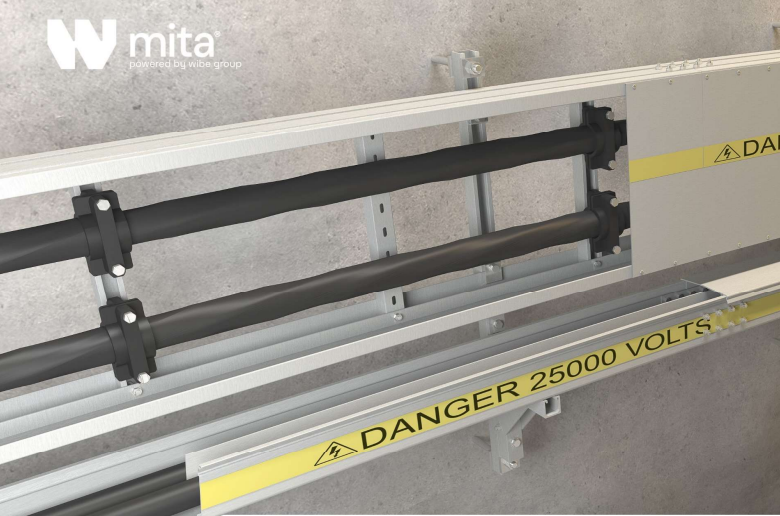
GRP elevated cable troughing is an especially useful containment system for rail.
Ground Level Troughing (GLT) is used in signalling and telecoms schemes for the cable connections to lineside equipment such as points, train detection, signals and radio sites.
However, in many places, GLT cannot be used due to the ground profile and steep embankments and cuttings. GRP is an ideal alternative for such locations and it is also essential for large current-carrying power cables, such as medium voltage 25kV trackside power cables.
MITA WIBE is the leading “fit & forget” Cable Troughing & Management Systemmanufactured in GRP with PADS Approval and specific material formula’s for trackside and tunnel applications on Network Rail infrastructure.
MITA are marker-leaders in the manufacture of GRP non-metallic troughing, GRP cable ladders,CABSYS cable trays, ducts, cable support channels and Fibastrut as the brand continues to lead the industry towards a sustainable future for a wide range of low (LV), medium (MV) and high voltage (HV) cable installation applications.
High quality manufacture
The MITA GRP is produced by pultrusion technology.
This uses a combination of unidirectional and cross-strand glass mat which is resin-impregnated and pulled through a hot die to produce a very solid, structurally sound profile with excellent mechanical rigidity.
Unlike some other troughing systems, MITA GRP does not contract or expand with heat causing the troughing route to distort. It is produced with a high quality of manufacture and modified by the use of additives to the resin, and with protection from ultra-violet light. The product is produced in either 3m or 6m lengths for easy transportation and installation.
MITA GRP is 70% lighter than steel and 90 times lighter than concrete; the cable trough is also corrosion resistant. It does not conduct heat and has excellent durability against adverse weather conditions. The rail cable management product offers excellent UV stability resulting in a cost-effective long-term solution.
The MITA GRP is provided in a wide range of trays, troughing and ladders which can support any type of cable – especially power and fibre cables which require a gentle bending radius. Unlike some competitors’ systems, MITA TM elevated troughing is provided with GRP support posts to increase its durability.
The troughing lids clip securely in place, providing cable theft protection. Further security can easily be added by installing stainless steel bands around the elevated route.
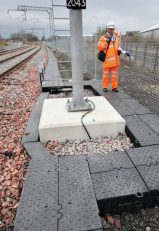
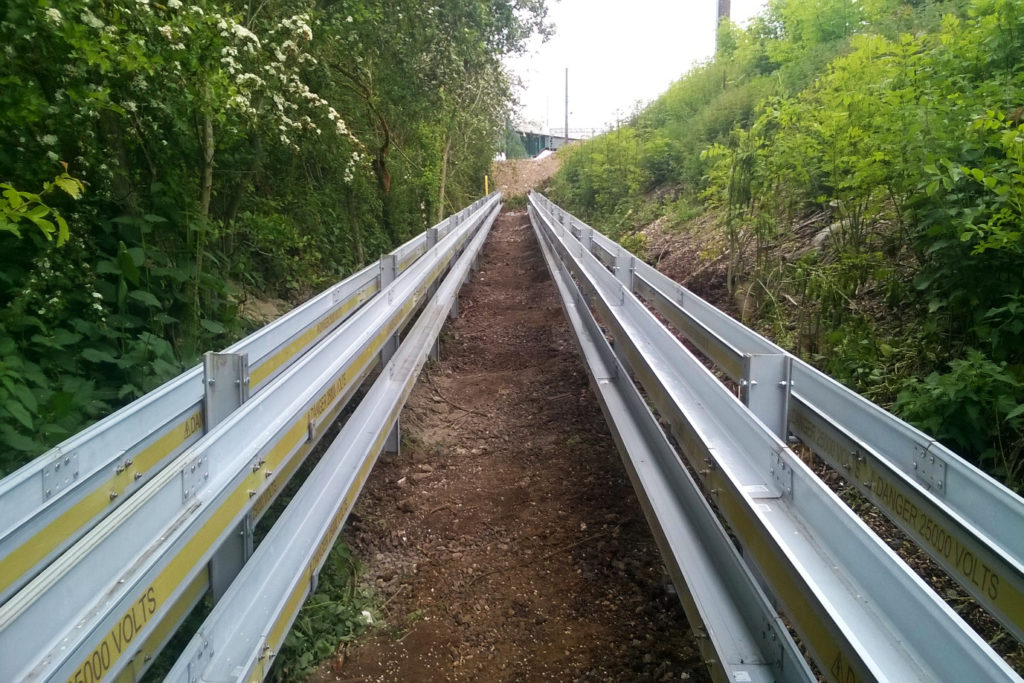
MitaTM GRP troughing in use on the East Coast Main Line
Network Rail approval
The MITA GRP elevated cable route has been fully approved by Network Rail under Certificate of Acceptance PA05/00442 issued in 2015 for use in locations unsuited to GLT. The Zero Halogen Low Smoke (ZHLS) version has also been approved for use in sub-surface stations and connecting tunnels.
Furthermore, the approval applies to a very impressive 42-page list of accessories, including bends, brackets, risers and transition/reducer pieces. Allowing connections to existing GLT cable routes, reducers are important and not always available in other cable containment systems.
London Underground has successfully used MITA GRP troughing. They were concerned that their sensitive signalling equipment was susceptible to contact by flakes of galvanisation from steel support systems and that their DC traction cabling system might create eddy currents within troughing ladders and supports if they were metallic.
MITA GRP troughing was chosen as it is non-magnetic and has non-conductive properties. The ZHLS version is also a requirement for London Underground’s sub-surface locations.
The cable containment system is not just used in rail, but has also been successfully employed in a wide range of industries including data centres, power industries, manufacturing, water treatment, food production, industrial buildings and oil and gas.
Working with GRP
Another particularly useful feature of the MITA GRP system is its ability to be integrated with the Bentley Raceway and Cable Management Building Information Modelling (BIM) tool.
This provides a complete layout, routing and material estimating function in a single, integrated system. It can be applied from the initial concept design through to detailed design and construction.
A user can create an accurate 3D model of the cable troughing route, making it easy to ensure that adequate space and clearances are available in confined locations, and for the detailed design and material requirements to be quickly and easily produced.
MITA GRP is a non-hazardous, inert product – the cable support system is lightweight and can be manually handled without difficulty, unlike concrete. In contrast to steel, GRP does not have to be deburred or given edge treatment before fitting, saving time and further reducing labour costs. During installation, any cutting, drilling, bonding and jointing can be easily undertaken and will not give rise to a hazardous situation, with any dust kept to a minimum.
Sample Components of the MITA GRP Troughing System
Andrew Sillars, Contractor Specification Engineer, says: “Having supported the specification of Glass Reinforced Polymer cable containment since 2005, I have experienced its unique features such as light weight, long-life durability, no deburring, no earth bonding and many more. All these advantages of GRP Cable Containment support a cheaper, quicker and easier-to-install system that gives a true fit-and-forget solution.”
Rail Engineer is the leading independent quality monthly magazine for engineers, project managers, directors and leading rail executive decision makers.
Besides publishing the latest up-to-date rail engineering news, our team of engineer writers report on the engineering and technical aspects of many of the major projects being undertaken day in, day out, above and below ground, and across the globe.
In the UK we work in close consultation with Network Rail, Docklands Light Railway and the Underground, where our team of rail engineers actively visit the project sites, meet project engineers and provide in-depth analysis on the engineering skills being used and the latest innovations.
From trams and fleet refurbishment to new rolling stock and high speed rail, the rail engineer reports on the engineering and environmental challenges for manufacturers and operators. Our engineers visit factories and depots, meeting with specialist engineers to bring you the latest engineering updates on all aspects of rolling stock, whether onboard technology or mechanical enhancements focussing on safety, energy and the passenger experience.
Paul Darlington joined British Rail as a Trainee Telecoms Technician in September 1975. He became an instructor in telecommunications and moved to the telecoms project office in Birmingham, where he was involved in designing customer information systems and radio schemes. By the time of privatisation, he was a project engineer with BR Telecommunications Ltd, responsible for the implementation of telecommunication schemes included Merseyrail IECC resignalling.
With the inception of Railtrack, Paul moved to Manchester as the Telecoms Engineer for the North West. He was, for a time, the Engineering Manager responsible for coordinating all the multi-functional engineering disciplines in the North West Zone.
His next role was Head of Telecommunications for Network Rail in London, where the foundations for Network Rail Telecoms and the IP network now known as FTNx were put in place. He then moved back to Manchester as the Signalling Route Asset Manager for LNW North and led the control period 5 signalling renewals planning. He also continued as Chair of the Safety Review Panel for the national GSM-R programme.
After a 37-year career in the rail industry, Paul retired in October 2012 and, as well as writing for Rail Engineer, is the Managing Editor of IRSE News.
Thorne & Derrick are leading Specialist Distributors & Stockists of LV, MV & HV Cable Installation, Jointing, Substation & Electrical Equipment to the Rail industry.
RAIL CABLE ACCESSORIES, ELECTRIFICATION
& INSTALLATION EQUIPMENT
Thorne & Derrick stock and distribute an extensive range of 400V-33kV Rail Cable Accessories & Power Distribution Systemsincluding feeder pillars to contractors undertaking Low Voltage Power Distribution, HV Electrification & Substations, DC Traction & Networks, OLE and Track Feeder Cable Renewals– complete range of Network Rail PADS approved track terminations, cable joints, cable repair and connection products up to 25kV, including 3M Cold Shrink, Pfisterer CONNEXand Nexans Euromold products.
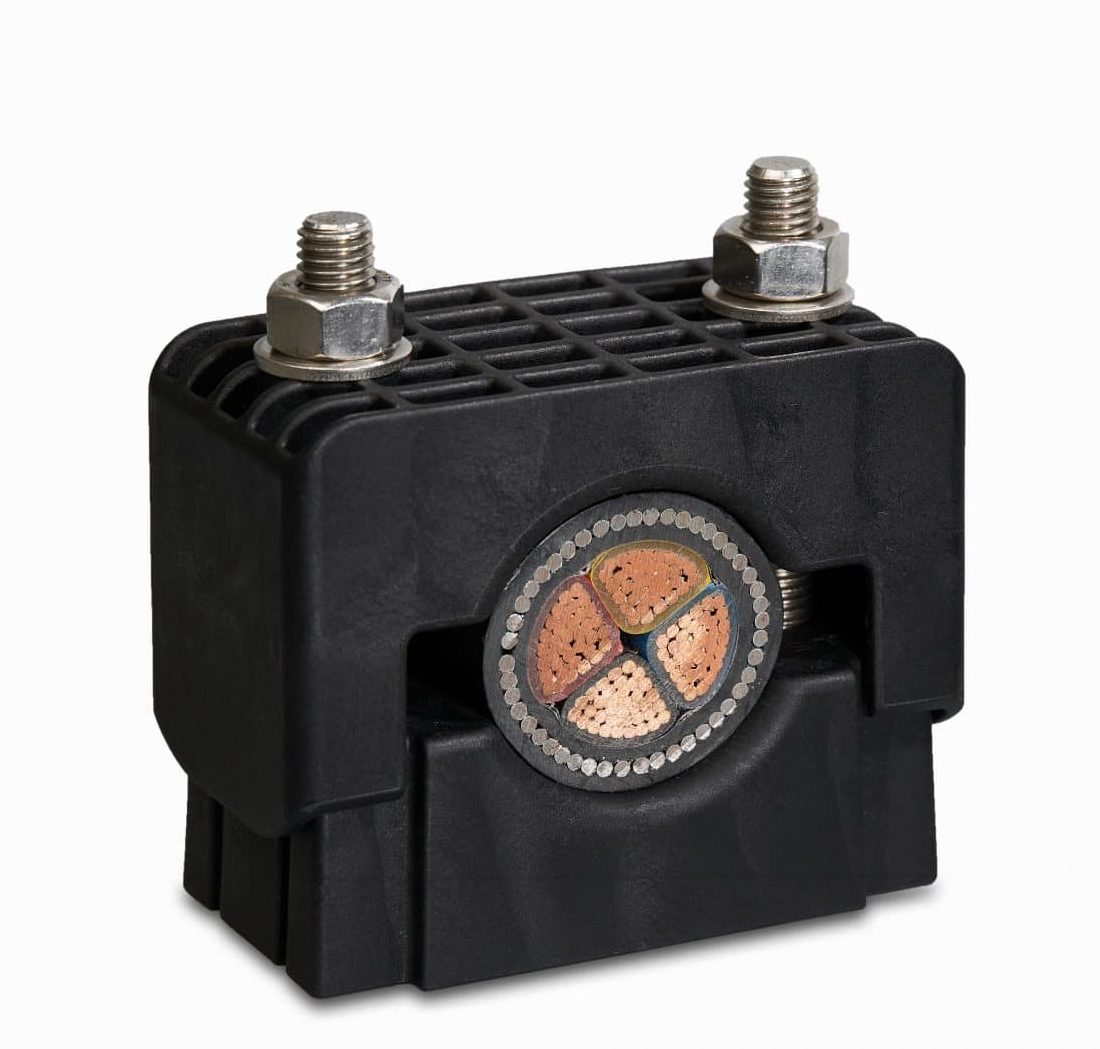
Ellis Solus Single Cable Clamps for Cleating Cables
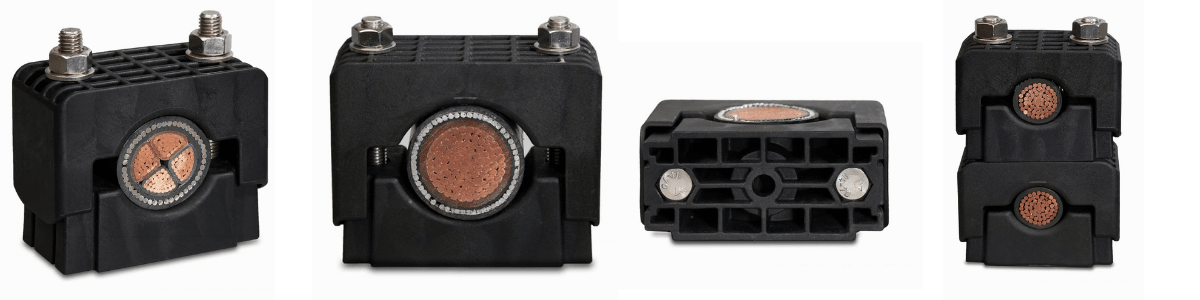
Ellis Patents have boosted the strength of their cable clamps and cleats range with the launch of Solus single cable clamps. This range of non-metallic single cable clamps are suitable for cables from Ø25 to Ø75mm. Designed, developed and manufactured in-house by Ellis, Solus cable clamps are made from a high strength, glass-filled nylon and joins Trident – a trefoil clamp – as part of their expanding non-metallic product range.
Single Cable Clamps
Features
Short circuit & mechanically tested in accordance with IEC61914
Cleats manufactured from high grade heat stabilised polymer
Suitable for indoor, outdoor and harsh environments
Long design life
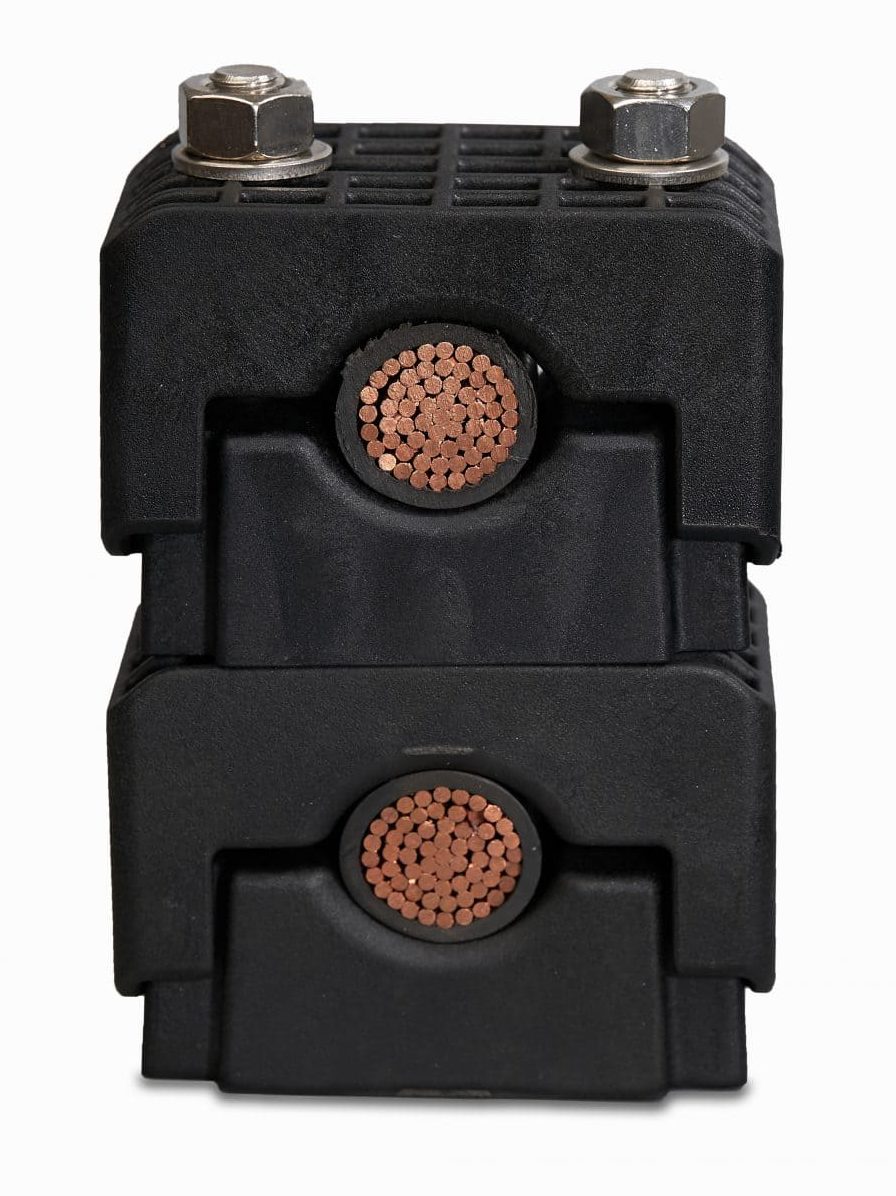
Easily stacked cable clamps for multiple cables and circuits
Large cable range (fewer clamps sized to stock)
Danny Macfarlane, Managing Director of Ellis Patents, said: “Non-metallic cable cleats have been very popular in mainland Europe for many years, and their use is now growing swiftly in the UK and many of the export markets we operate in around the world.”
“Their benefits are numerous but key is the fact that they have extremely long lifespans meaning the cleats can be used practically anywhere, including in extremely harsh environments.”
The reason for Solus’ extremely long lifespan is that the glass filled nylon material used is a high-grade engineering polymer. The new range of cable clamps is also fully stackable, meaning additions to cable runs can be made without having to disturb any cables already installed. Solus also features different mounting options that enhance its installation versatility; and because the product can accommodate a wide cable range, customers can stock small numbers of units to cover a wide range of cable sizes.
“Innovation is very much at the heart of everything we do, and Solus is the latest in a long line of new and improved cable management products to have come out the Ellis Patents Innovation Hub here in Rillington,” added Danny.
Key to Ellis’ ability to innovate is its ability to take products from initial ideas through to IEC61914:2015 compliant products; with its in-house Innovation Hub incorporating 3D printers, FEA analysis and a fully equipped testing laboratory.
Thorne & Derrick are national distributors of LV, MV & HV Cable Installation, Jointing, Substation & Electrical Equipment – servicing businesses involved in cabling, jointing, substation, earthing, overhead line and electrical construction at LV, 11kV, 33kV, 66kV and EHV. Supplying a complete range of power cable accessories to support the installation and maintenance of low/medium and high voltage power systems:
Sealing Underground Cables & Pipes Under Constant Water Pressure
Cable Duct Seals
Do you want to prevent water ingress into building services or substation ducts?
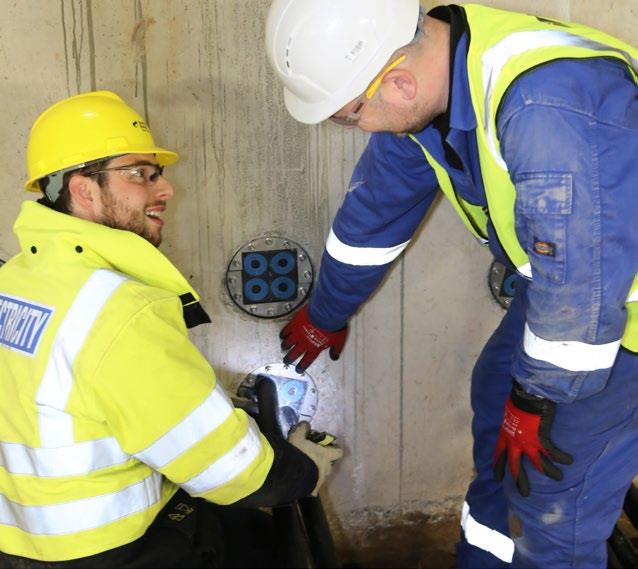
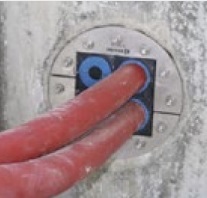
Thorne & Derrick can specify and supply Roxtec duct seals to avoid the risk of costly downtime and power outages due to corrosion, damage to equipment or partial discharge. Roxtec UG (underground) solutions for cables and pipes protect your site against environmental ingress in both normal and flood conditions. The cable transit type seals withstand cable bending forces and are resistant to constant water pressure. Keep your equipment dry and safe by ensuring a long-lasting sealing barrier against flooding, gas, humidity and rodents.
User-friendly Flexibility
Roxtec UG™ seals are easy to install even in wet conditions and in environments with running water.
Available for single or multiple cables and pipes
Multidiameter™ by Roxtec – adapts to cable and pipe sizes through removable layers
Built-in spare capacity for future needs
Retention Capabilities
The seals are tested and developed to provide excellent cable retention.
Withstands pull force of up to 15 000 N and a weight load of up to 1 500 kg
Withstands extreme cable bending
Can expand up to 5 mm to aid installation and ensure a perfect fit
Tight and Resistant Cable Sealing
Roxtec UG™ solutions are IP 68 rated. They are tested for constant and catastrophic water pressure. Thanks to their high grade acid-proof stainless steel, they are suitable for the harshest of environments.
Constant water pressure up to 0.3 bar (3mH2O)
Catastrophic water pressure up to 1 bar (10mH2O)
Gas pressure up to 0.3 bar
Corrosion and rodent safe
Basic steps of a Roxtec knock-out sleeve installation
Pour concrete into the mould
Knock out the lid
Insert the Roxtec cable seal
Knock-out Sleeve Providing Spare Capacity
Use the Roxtec knock-out sleeve to block openings you might want to use later on. Plan your ducted openings, with the added benefit that any spare or unused duct is sealed without additional cost. You only need to buy seals for openings that accommodate cables.
This is an area efficient solution for reducing the footprint and for making sure the building is dry both during and after construction.
Think First
Include knock-out sleeves in the design work for a new building or kiosk. You decide if you want the seal on the inside or the outside and whether you want to connect sleeves into a cluster of openings. Then cast the sleeves into the structure, and knock them out when needed. Use sleeves to ensure consistent results in terms of position and formation of holes and avoid deformed ducts.
Roxtec UG™ solutions are perfect for use around existing cables and pipes, and the smart design simplifies retrofit. The seals fit into the knock-out sleeve as well as in conduits and core drilled holes.
The soft yet firm rubber adapts to uneven openings and ducts. Our openable seals do not suffer from failure in the same way as traditional methods do when the cables or pipes move and expand.
Customised Tools
If you have specific needs or face challenges that require special Roxtec UG™ seals, please contact our T&D and we will help you create tailor-made sealing solutions.
Sealing Underground Cables Application Areas
Roxtec UG™ seals are ideal for cables and pipes entering buildings via concrete foundations. They provide excellent cable retention, eliminate flooding and prevent humidity from damaging equipment. You can use them in vaults, duct banks or cable trenches.
Cable Types
Power
High Voltage Power
Signalling
Telecom
Pipe Types
District heating
District cooling
Water
Wastewater
Plastic, steel and isolated pipes
The Roxtec RS UG™ seal is designed for single cables and pipes entering buildings via foundations.
The Roxtec R UG™ transit is ideal for several cables of different sizes in one opening. It enables you to build in spare capacity.
Roxtec H3 UG™ seals are designed for cables in trefoil
formations. The design simplifies retrofit installations.
The Roxtec knock-out sleeve provides spare capacity and ensures tightness prior to cable routing.
ROxtec
Thorne & Derrick are distributors for Roxtec, the leading manufacturer of sealing solutions for cables and pipes, to protect electricity Transmission & Distribution assets including substations against the potential catastrophic effects water, gas and fire.
Thorne & Derrick International are specialist distributors of LV, MV & HV Cable Installation, Jointing, Duct Sealing, Substation & Electrical Equipment – servicing UK and global businesses involved in cable installations, cable jointing, substation, overhead line and electrical construction at LV, 11kV, 33kV and EHV.
Extract from Instructions for Transportation, Handling, Storage of the Drums & Laying of the Cables | Sept 2014
Cable Drum Handling
Deformation of Cable Sheath Jacket
When Handling Cables
The following information provides advice on the handling of cable drums published by Nexans – always consult with your client or local electric utility to ascertain local preferences and procedures for the Laying, Pulling & Handling of Cable Drums (LV – EHV).
The cable must not be pulled with a tension above the maximum pulling tension
The cable must not be subjected to a bend smaller than the minimum bending radius (given as the “minimum bending radius during installation” and not to be confused with the “minimum bending radius after installation”)
The cable must not be subjected to lateral pressure that exceeds the sidewall bearing pressure
A combination or action of any of the above three items, even without exceeding any of the manufacturers recommendations, can result in the elongation of outer layer of the cable and form a “rucking” or “corrugation” of the cable sheath during installation. Deformation of the sheath during installation is known to occur when the sheath material is softened by elevated temperatures, such as the range of PVC sheathing materials, particularly when the cable is installed in warmer ambient temperatures (near and above 30°C).
Note that actual cable surface temperature can be higher than ambient temperature. It is also known to occur when the outer layer is thinner than a full sheath, such as may occur when installing a Nylon covered cable, which is covered by a thin Sacrificial Sheath.
Such deformation should be monitored to avoid an escalation to very severe puckering, which could induce the tearing of the sheath. Rucking, corrugation, and puckering can be reduced by the use of lubricating substances which will reduce the friction experienced at turns or bends on fixed deflectors and on rollers and even on long straight sections.
Note that longer runs and heavier cables will experience this deformation more often.
Corrective action includes the pausing of the installation pull and the easing of tension and pulling the affected cable length past the bend or roller or friction point that is causing the effect. Once the affected area is moved along, there is often a re‐settling of the elongated sheath and the effect is reduced. Stopping and allowing the cable to cool, will tend to set the corrugations in place and they will not easily be removed. Where this deformation takes place, there is a small reduction of the thickness where the material is stretched, but such deformation as a whole is considered to be of minor consequence. Usually, no repair or corrective action is required on the cable itself. Repair is only necessary when there is a breaking or tearing of the sheath – should you have any technical or commercial enquiries on the subject of Cable Drum Handlingplease do not hesitate to contact us.
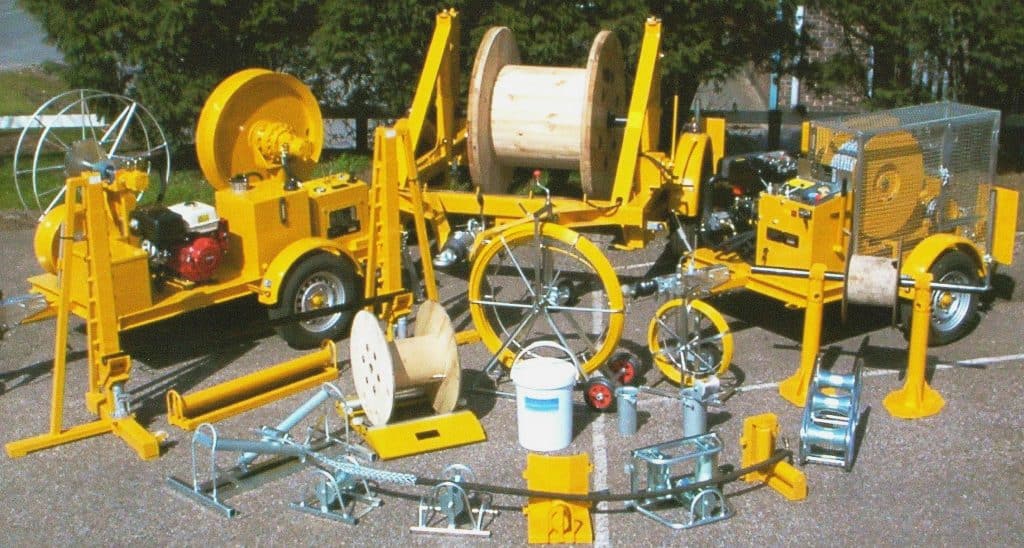
Thorne & Derrick distribute the most extensive range of Low & High Voltage Cable Installation & Electrical Distribution Equipmentto the Power Transmission & Distribution industry in the onshore and offshore wind, solar, rail, oil/gas, data centre, battery storage and utility sectors – this includes the most extensive range of Cable Pulling & Cable Laying Equipmentto enable the installation of low, medium and high voltage power cables into underground trench or duct.
We service UK and international clients working on underground cables, overhead lines, substations and electrical construction at LV, 11kV/33kV and up to EHV transmission and distribution voltages.
Compound Box Filling Compound end boxes rarely get attention — until one fails. Across ageing networks, replacement of compound-filled end boxes is becoming more frequent, particularly where original insulation systems have deteriorated and air insulation is not practical because...
Nexans 240–300mm² Multi-Joint – Medium Voltage Cable Joint Installation Medium voltage cable jointing requires reliability, consistency and safe installation practices. The Nexans 240–300mm² Multi-Joint is designed to simplify medium voltage jointing while maintaining high electrical performance for demanding power...