Cable Cleats
Quad Cable Cleats By CMP
June 30th, 2021 CMP Launches
New Quad Cable Cleat Range
Leading cable gland and cable cleat manufacturer, CMP Products, has launched its new quad cable cleat range ‘Saturn’ (QSDSS), which allows cables to be safely installed in quad formation. Designed and developed by CMP’s in-house R&D team, the Saturn Quad cleat has a market-leading high short circuit rating of 152kA and has undergone stringent third party testing and certification to produce one of the strongest cleats and clamps of its kind.
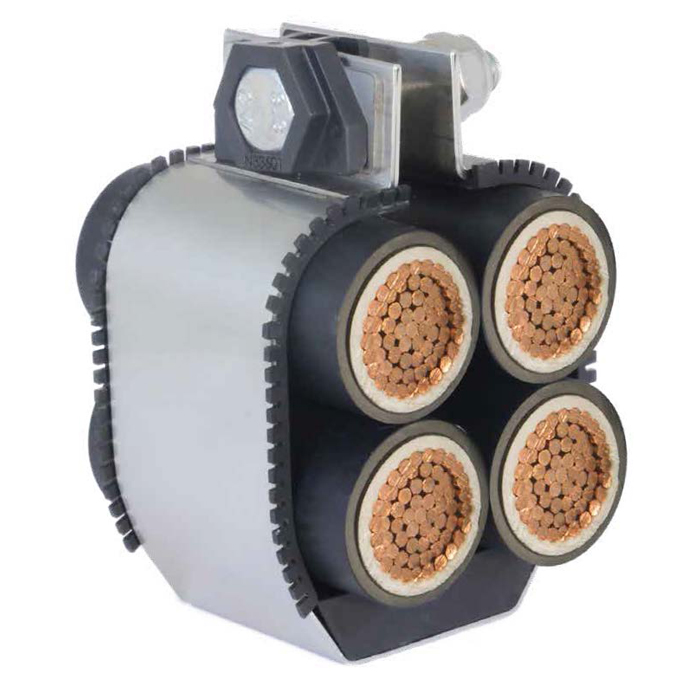
Quad Cable Cleats – CMP Saturn
CMP Cable Cleats
All of CMP’s cable cleats are manufactured with safety as a priority for both end-user and project infrastructure. The Saturn cleats safely restrain single cables in quad (also known as quadrafoil or quatrefoil) formation, whilst protecting the integrity of the cables and cable management system in the event of a short circuit fault condition.
The new quad cable cleat range has a compact design for space constrained-projects and is manufactured in the UK using 316L stainless steel. This provides superior strength and excellent corrosion resistance, making the quad cleat suitable for some of the harshest environments.
Designed to restrain cables across a range of industries including datacentres, rail, energy and more, the Saturn has been third party certified in accordance with IEC 61914:2015.
The Venus has a high short circuit rating of 135kA and can be installed in a range of applications where quadruplex cable is fitted. CMP has also developed the ‘Venus’ (QPSS) cable cleat, which is manufactured with an integrated C-clamp and bolt; providing installers with versatility of installation.
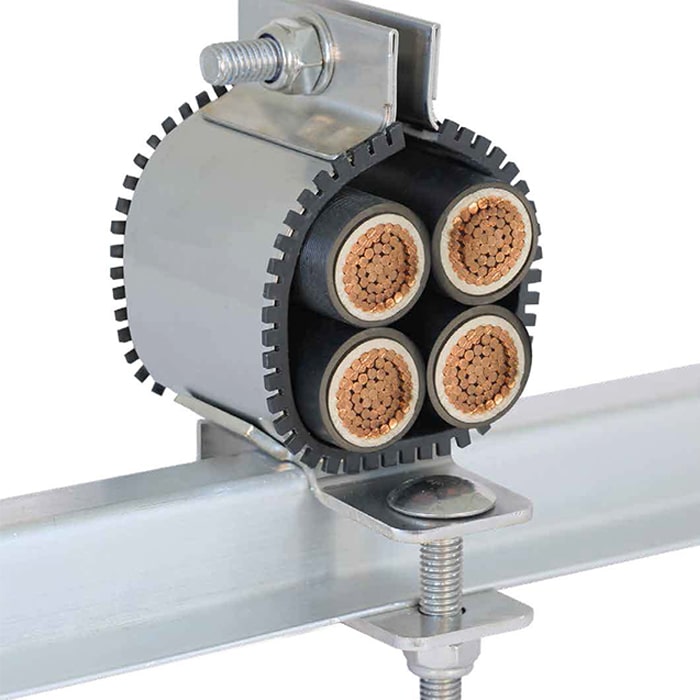
Quad Cable Cleats – CMP Venus
Lee Frizzell, Technical Director at CMP said: “In a space-sensitive but safety-conscious industry, the Saturn series offers a compact solution, whilst maintaining an incredibly high level of restraint, demonstrated by robust third-party testing.
“We have listened to our customer’s needs, producing a cable cleat that provides both safety and reliability. The demand for cable cleats is constantly growing as their essential role in cable management systems becomes increasingly recognised.”

LV, MV & HV Jointing, Earthing, Substation & Electrical Eqpt
Thorne & Derrick International are specialist distributors of LV, MV & HV Cable Installation, Jointing, Duct Sealing, Substation & Electrical Equipment – servicing UK and global businesses involved in cable installations, cable jointing, substation, overhead line and electrical construction at LV, 11kV, 33kV and EHV.
THORNE & DERRICK Product Categories: Duct Seals | Cable Cleats | Cable Glands | Electrical Safety | Arc Flash Protection | Cable Jointing Tools | Cable Pulling | Earthing | Feeder Pillars | Cable Joints LV | Joints & Terminations MV HV
Ellis Patents Engineer Change In Cable Management Market
May 11th, 2021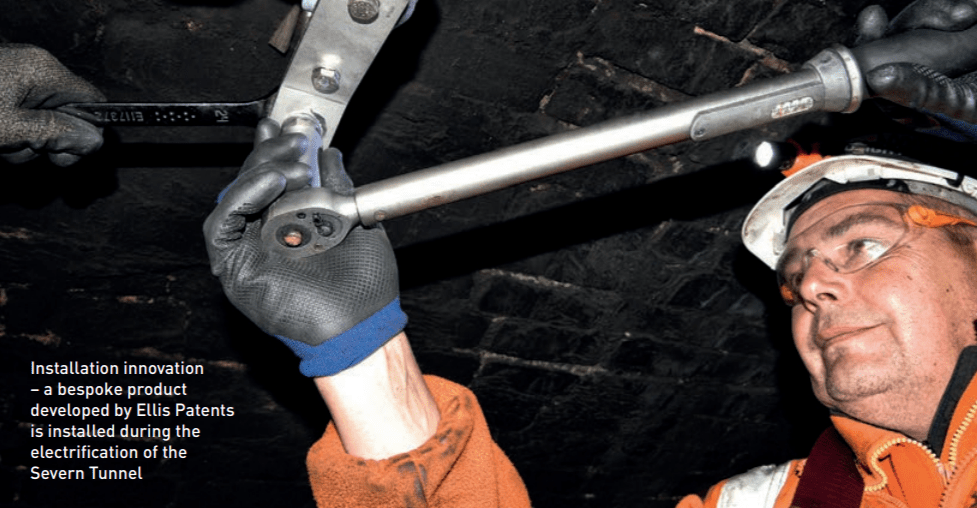
The following article has been republished from Ellis Patents, whereby Managing Director Danny Macfarlane discusses the rapid technological development in the cable management market.
According to Macfarlane, one key change this has led to is that standard product ranges now form the backbone of a far more flexible product offering. He talks to ECN.
When I first joined Ellis Patents in 2003, we very much had standard product ranges, which specifiers selected from according to their project requirements,” says Danny. “We still have these ranges today, and the likes of our Emperor and Vulcan+ cable cleats remain our bestsellers, but alongside them we have a slew of new, innovative products that have been developed as a result of a major shift in the way the market operates; which in itself has been enabled by technological development.”

Ellis Patents Vulcan, Atlas & Emperor Cable Cleats
In the last few years alone Ellis Patents has designed, developed and manufactured a completely new product for a major Siemens offshore wind project; solved installation headaches with bespoke solutions for Balfour Beatty; and consigned a major health and safety issue for National Rail to history with a product that went on to win a number of innovation awards.
The Siemens job was the first of these projects, with the company going to Ellis Patents with a need for a new product during a live project situation. The challenge was to develop a way of feeding, and then restraining, seven 117mm diameter cables along a specified route within a fabricated structure that featured a significant number of twists and turns.
Ellis Patents Cable Guide Clamp
The Cable Guide Clamp that was designed, developed and manufactured in response not only solved Siemen’s problem, it also secured an order that wouldn’t have been won had the company been relying solely on its standard product offering. And Ellis Patents didn’t stop with that one project, the Cable Guide Clamp has since been developed into a full range that regularly secures orders from around the world.

Ellis Patents Cable Guide Clamp
The Ellis Cable Guide Clamp is designed to be installed in place of rollers along the HV cable route where the cable length is pushed and pulled through to its final destination.
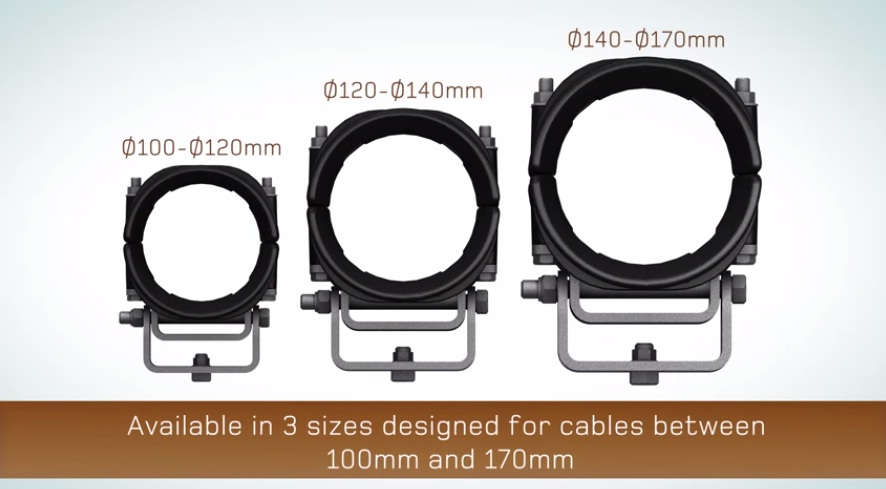
“Our ability to deliver these innovative bespoke solutions, some of which were done in live project situations, is something we’re immensely proud of,” says Danny.
“But without the technology we simply wouldn’t have been able to turn our ideas into fully functioning products in such pressurised, time-sensitive situations.
“Traditionally, creating a production ready prototype would have required the development of injection moulding tools, which involved significant investment in time and resource, and typically took six to eight weeks to manufacture. And once received only small changes to the tools were feasible, meaning any major alterations could add another six to eight weeks to the already lengthy process.
“Now, thanks to 3D CAD and rapid prototyping 3D printing, we can take products from an idea in a brainstorm to a fully functional, production ready prototype in less than a fortnight – something we have done on a number of occasions. And it’s a combination of the growing availability of rapid product development technology and ever-growing levels of in-house engineering expertise amongst manufacturers that has led to such significant change in the market.”

Siemens, for example, didn’t go to Ellis Patents with its complex installation issue because it saw the company as solely a manufacturer of standard products. It was because Ellis had the in-house expertise and technological capacity to solve its problem within the confines of an extremely tight time frame. And it’s this kind of expertise that is playing an ever more important role in the cable management market – in particular amongst those manufacturing cable cleats.
“Projects are often far from straightforward and installation and maintenance issues regularly arise, so having the people and the in house technology to be able to solve problems; firstly on paper and then with an adapted or wholly bespoke product; is now as important as that strong standard product range”, concludes Danny.
THORNE & DERRICK
Thorne & Derrick are national distributors of LV, MV & HV Cable Installation, Jointing, Substation & Electrical Equipment – servicing businesses involved in cabling, jointing, substation, earthing, overhead line and electrical construction at LV, 11kV, 33kV, 66kV and EHV. Supplying a complete range of power cable accessories to support the installation and maintenance of low/medium and high voltage power systems:
- Slip-on Cable Terminations
- Cold-shrink Cable Terminations
- Heat-shrink Cable Terminations
- Cable Joints – Heat & Cold-shrink
- Separable Connectors (Euromold)
- Surge Arresters & Switchgear/Transformer Bushings
Key Product Categories: Duct Seals | Cable Cleats | Cable Glands | Electrical Safety | Arc Flash Protection | Cable Jointing Tools | Cable Pulling | Earthing | Feeder Pillars | Cable Joints LV | Joints & Terminations MV
High Voltage Cable Cleats | Cables, Tunnels & Supporting HV Cables
May 4th, 2021
High Voltage Cable Cleats (HV EHV 132kV 275kV 400kV Cables) – Ellis Patents Centaur
High Voltage Cable Tunnel Cleats
275-400kV
As a result of the increasingly congested and over populated nature of our major cities, high voltage cable tunnels are fast becoming the preferred option for delivering electrical power – most notably because they provide a means of carrying large HV cables in a non-intrusive manner.
Andy Booth, Business Development Manager of leading cable cleat manufacturer, Ellis Patents talks to Electrical Review about a paper the company co-presented at the recent CIGRE Session in Paris, which focused on the issues concerning the clamping and supporting of HV cable systems in underground cable tunnels.
Many of the leading utilities companies are currently investing heavily in HV cable tunnels, and to give some idea of the scale of this investment it’s worth highlighting some of the proposed cable tunnels in London are 3m in diameter and up to 25km long.
Furthermore, the level of investment in new HV cable installations is likely to grow substantially over the next few years due to the fact many of the UK’s existing fluid filled 275kV and 400kV HV cable circuits are reaching the end of their original design life and will need to be replaced with new XLPE circuits.
As a rule of thumb, these HV single core cable systems are installed in a vertical flexible arrangement. This means the cables are supported, generally by cable cleats, at intervals of between 5 and 8.5 metres and allowed to sag in between.
This cable sagging allows the cables to take up thermal expansion and contraction in steady state conditions without the exertion of large thermo-mechanical forces. During load cycles the thermo-mechanical thrust developed by the cable conductor and sheath in an axial direction needs to be constrained by the cable cleats without damaging the cable oversheath.
In the case of short circuit faults and lightning strikes, the resulting high fault currents flowing through the cable will result in large lateral electro-mechanical forces between cores, which cause the cables to shake violently.
During these conditions accelerated sidewall pressures are experienced on the cable at the fixing points, which can compromise the integrity of not just the cleats, supports, clamps and the cable, but the entire HV cable network.
Amazingly, and despite the huge amount of theories, standards and literature regarding fault protection, very little attention is given to arguably the single most important piece of equipment in any fault protection system – the cable cleat.
Yes, IEC61914:2009 describes the appropriate requirements for cable cleats for electrical installations, but this only allows the use of 600V – 1kV cables in a series of tests to confirm the resistance to electro-magnetic forces.
Until now, methods for supporting large HV cables at fixed points have been designed on a project by project basis, but there have been no tests or related publications to determine how these HV cable fixings should perform in the event of a fault. Therefore, our intention when starting work on this project was simple – we wanted to develop a standard product that would provide adequate fault protection for all HV cable installations.
Rationale for appropriate fixings for power cable systems
The operating time for a typical breaker is generally between 3 and 5 cycles, which is equivalent to 0.06 – 0.1 seconds on a 50Hz system. Exceptionally quick relays may operate at 1.5 cycles. However, when considering three-phase faults and the instance of the peak forces, the time frame will be a quarter of a cycle or 0.005 seconds.
On the occurrence of a fault the highest repulsive force is proportional to the square of the peak short circuit current. This is then followed by a residual, pulsating, oscillating stress at a frequency of twice the operating frequency, known as the fault RMS. However, it is accepted that the forces at the peak of the fault are the highest, the most instantaneous, and in turn the most destructive, when considering system protection.
Recommendations for the calculation of short circuit currents are given in the IEC 60909:2001 series. For three phase short circuit faults the most severe repulsive force for flat spaced (horizontally or vertically) cables is experienced in the central phase due to the oscillating effects of mutually induced forces by the outside phases. For trefoil installed cables an equal force (at peak) is experienced in all three phases due to the symmetry.
Further consideration should also be given to the linear stresses along the actual conductor. It is common with cable installation assessments to use the calculation method simulating a bar fixed at both ends, thus determining the transverse deflection rate due to electro-magnetic forces during a fault. Further consideration, as a result of the instantaneous forces during a fault, is the effect of the surface pressure from the moving cables and its effect on the inner loop of the cleat itself.
The time duration for short circuit faults, such as 1 or 3 seconds, which is often specified by clients or in installation specifications, is often misinterpreted with respect to the duration of an actual short circuit fault. The 1s or 3s requirement quoted is the thermal withstand characteristic of the cable and considers conductor cross section and its ability to carry a level of current and therefore heat.
Design Criteria for HV Cable Saddles and Cable Straps
A longitudinal ‘saddle’ type of design, rather than the traditional cable clamp design tends to be best suited to this type of installations. Firstly, the cable saddle should be able to support the weight of the cable in its final installed position – and remember a 2500mm² copper conductor, lead sheathed cable can weigh almost 50kg per metre.
If we assume an 8m fixing distance, then the cable saddle must be able to support 4m (200kg) on one side and 4m on the other side, without deflecting or changing its original profile. Furthermore, the longitudinal saddle must also be radiused along its length to ensure the cable is adequately and safely supported. Various cable construction types affect the radius of the installed cables. For example a lead sheathed, copper conductor cable will have considerably different characteristics to an aluminium sheathed, aluminium conductor cable. The saddle manufacturer must ensure their product design matches this specific cable sag radius on any particular project.
It is undesirable for a cable to be in contact with any sharp edge of a cable cleat. To alleviate the problems various steps can be taken: All sharp edges must be removed as a matter of course from any face which may come into contact with the cable, either during installation, or when the cable is in its final, fixed position.
Generally, the base portion of the cable saddle for this type of installation is a minimum of 600mm long. As the cable is installed over the top of this 600mm long ‘beam’ it becomes curved when sagged. It is essential that the 600mm long ‘base section’ is also curved along its entire length, to ensure support is given to the cable over an area which is as large as possible. On each end of this curved ‘saddle’ section, as the cable leaves the saddle, an additional ‘flare’ should be added to further reduce the possibility of the cable being in contact with a defined edge, and therefore becoming damaged.
Once these general rules have been applied to an initial cleat concept, the actual cleat spacing and installation sag can be calculated.
Short Circuit Testing of a HV Cable Saddle Installation
There is very little empirical research, or cited publications with regard to short circuit testing cable fixings for HV cables. That said, major utility groups around the world use National Grid in the UK for technical expertise and knowledge and so it seemed sensible to use the technical specifications of National Grid as the basis for a series of live short circuit tests.
These tests were carried out at KEMA, an internationally recognised testing station in The Netherlands. The design of the test rig corresponded to the worst case scenario for the peak forces, and 8.4m fixing centres and a phase to phase spacing of 500mm was selected. If the calculation methods from IEC 61914:2009 are employed the maximum theoretical forces between each cleat can be shown as follows:
For a 2 phase fault:
F = 0.2 x 157.5² = 9922.5N/m or 9.923kN/m
0.5
The figure of 157.5 was obtained by using a multiplication factor of 2.5 on a 63kA RMS. This was the theoretical calculation used to obtain the appropriate peak force levels of the fault.
Post Test Cable Examinations
Immediately after the tests were completed and the cables were still in position, an electrical test was performed on each individual cable. Each cable sample satisfactorily withstood a 5kV direct voltage, applied between the lead sheath and the earthed conductive screen for one minute without breakdown or incident.
This procedure follows the requirements of ENA C55/4.
Upon dismantling the test rig a 1m section of cable was identified adjacent to each saddle and each intermediate strap (500mm each side of the saddle or clamp), and cut away for later examination. For each 1m length the following aspects were examined in great detail: Outer jacket over sheath, lead sheath, copper wire screen, lead sheath, and the interior surface core screen.
There were no features or defects attributable to the cleats or intermediate straps. Some features attributable to manufacturing and/or handling of the cable were seen, but as they were independent of the position of the cable cleats, it was evident that they were not due to the presence of the cleats. In any case these features were not of such a severity to compromise the performance of the cable.
Conclusion
With HV power cable installations becoming ever more commonplace, it was absolutely imperative that a tried, tested and trusted means of ensuring these cables remain intact and working during a short circuit situation was available to the industry. The Centaur saddle cleat that we developed as a result of this research has certainly been enthusiastically welcomed and is currently being installed in a major HV cable installation in the UK.
That said, from an industry perspective, there is still a long way to go. It seems that every new type of HV cable and accessory seems to be tested to a known standard with the exception of the cable cleat. However, now that a precedence has been set by our research and development it should follow that every cable saddle, cleat, strap or clamp that is to be used on a flexibly installed, HV, underground system should be fully and independently tested to meet, or exceed, the requirements of the specific project. Furthermore, all engineers in the field need to become ever more aware of the importance of cable fixings.
A full copy of the CIGRE session paper is available upon request.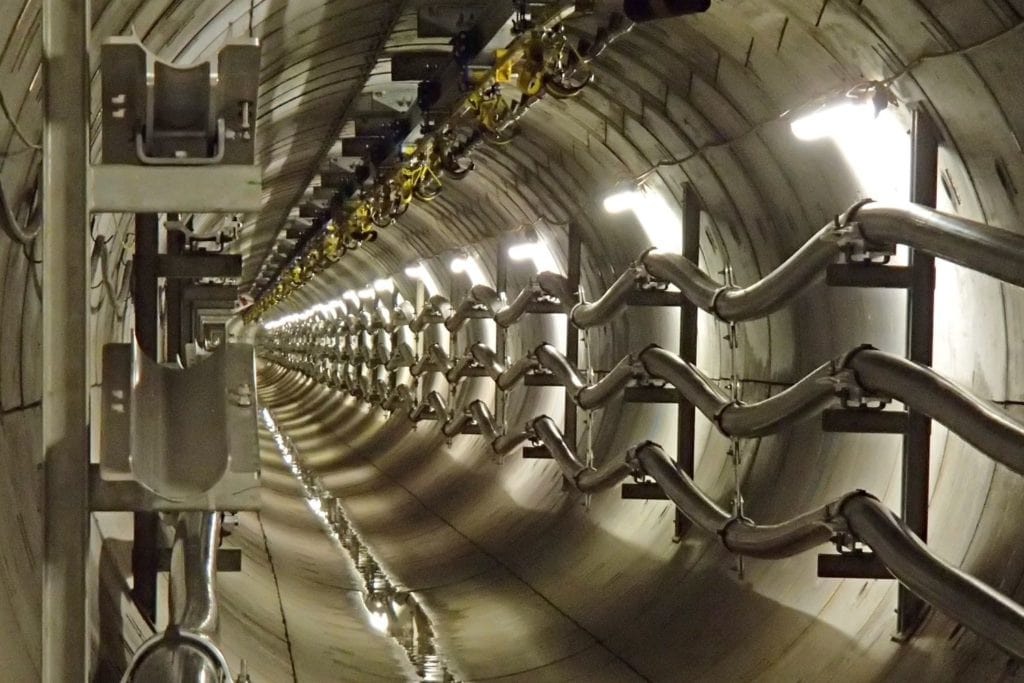
Thorne & Derrick
T&D are Specialist Distributors to UK Distribution Network Operators (DNO’s), NERS Registered Service Providers, ICP’s and HV Jointing Contractors of an extensive range of LV, MV & HV Jointing, Earthing, Substation & Electrical Eqpt – this includes 11kV/33kV/66kV joints, terminations and connectors for both DNO and private network applications.
Contact our UK Power Team for competitive quotations, fast delivery from stock and technical support or training on all LV-HV products.
Key Product Categories: Duct Seals | Cable Cleats | Cable Glands | Electrical Safety | Arc Flash Protection | Cable Jointing Tools | Cable Pulling | Earthing | Feeder Pillars | Cable Joints LV | Joints & Terminations MV HV
➡ Read: Thorne & Derrick Announce Distribution Agreement & Contract With Nexans
BAND-IT Band Clamps Used In TR-343 Transducer Assembly
May 4th, 2021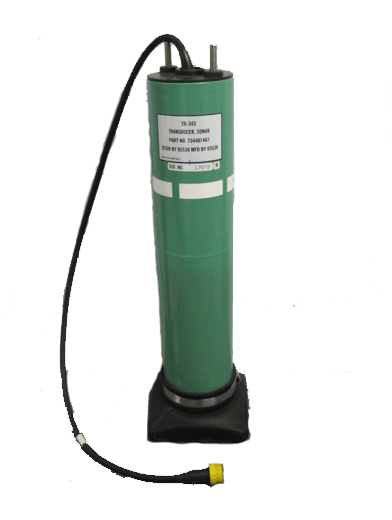
BAND-IT ULTRA-LOK Alloy 625 Clamps
Secure Rubber Boot on TR-343 Transducer Elements
A key component of sonar systems for surface military vessels is the AN/SQS-53C Sonar array, made up of 576 TR-343 Transducers, the array is located in the “bulb” on the bow just below the water surface. Each of those transducers contains a rubber boot or sleeve secured with an ULTRA-LOK Alloy 625 band.
BAND-IT IDENTIFIED AS ONLY SOURCE
During the sourcing process, the US Navy identified BAND-IT as the only responsible source capable of providing the required supplies. Citing the potential for delays and unrecovered costs, the agency chose BAND-IT as the only approved manufacturer based on performance and testing requirements of the Critical Item Production Fabrication Specifications (CIPFS) for the Transducer.

BAND-IT ULTRA-LOK Clamps
TR-343 Transducer by the Numbers
- Current Quantity: 44,352
- 576 Identical Transducers make up the Sonar Transducer Array Unit 717
- Sonar Detecting Ranging Set AN/SQS-53C(V) 1&2 used on all Arleigh Burke DDG-51 Destroyers and several Ticonderoga CG-47 Class Cruisers
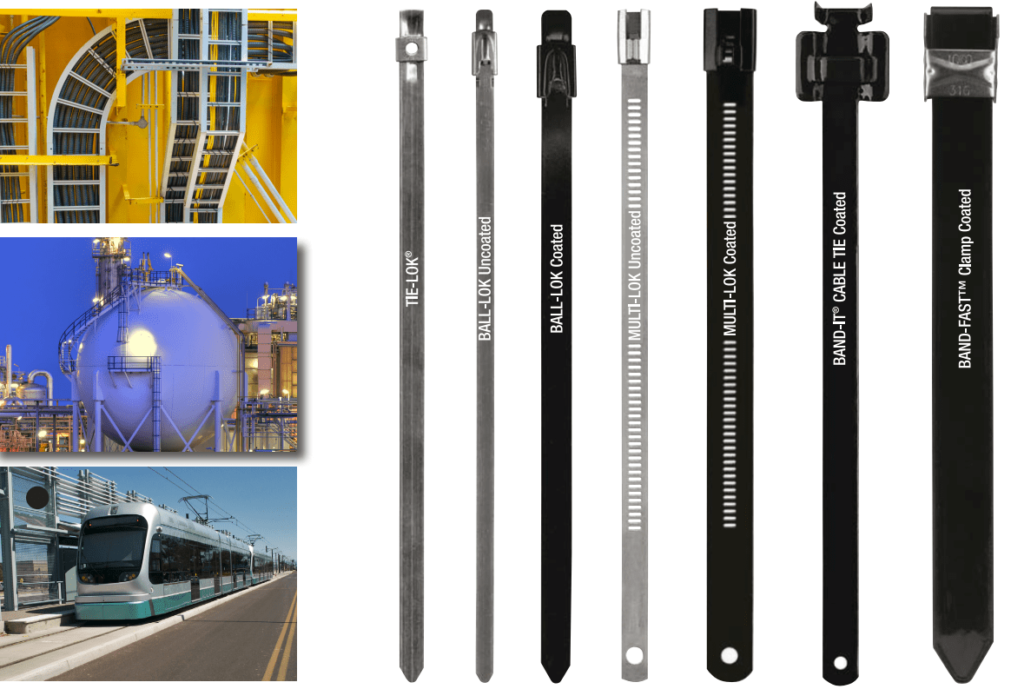

33kV/132kV Offshore Substations – LV, MV & HV power cables providing support to a wind farms distribution of electricity are located using stainless steel cable ties, banding and strapping. Image: Siemens. Durable, reliable and stable cable management products are specified for wind turbine applications where extreme mechanical stress, vibration, UV and seawater exposure preclude the use of sub-standard non-metallic types of cable ties.

Stainless Steel Cable Ties – clamping, strapping and banding cables in harsh, hazardous area and high voltage (HV) applications

BAND-IT – DISTRIBUTORS, STOCKISTS & SUPPLIERS
Thorne & Derrick provide competitive prices and fast delivery from stock for the complete range of BAND-IT stainless steel cable ties.
BAND-IT BAND-FAST Clamps Used In EJP Electric Submersible Pumping Systems
May 4th, 2021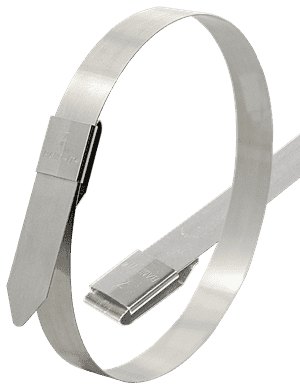
BAND-IT BAND-FAST
Stainless Steel Cable Clamps
BAND-IT BAND-FAST
Precut BAND-FAST Clamps Delivers Performance & Value
In EJP Electric Submersible Pumping Systems
Epsindo Jaya Pratama (EJP) is a company that values quality.
If you visit EJP’s website, you will see a section that describes the standards they maintain for the pumping systems they produce, and the customer experience they promise. But like every business, they also are cost-conscious. The drive to cut costs for manufacturing their Electric Submersible Pumping (ESP) System compelled EJP to switch from BAND-IT fasteners to a competitor’s range of cable ties, a decision they soon reconsidered.
MONEY FLOWS WHEN OIL FLOWS
Subsea downhole oil extraction is different from convention drilling in the oil and gas industry because most of the energy required to transport the produced fluid is supplied by mechanical means rather than by reservoir pressure. That puts more “pressure” on ESP systems. Any time the system needs maintenance or repair, production is interrupted, and the well isn’t generating oil or revenue.
➡ BAND-FAST is part of a full line of products that have achieved the highest level of quality certification ISO 14001:2004 | ISO 9001:2008 | IATF 16949

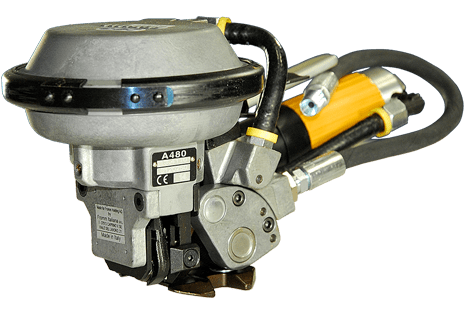
BAND-IT XE4809 Fromm Pneumatic Combination Banding Tool
BAND-IT BAND-FAST Stainless Steel Clamps
EJP’s customers expect their investment to pay off in reliability, and that expectation extends all the way down to the clamps. When EJP changed from BAND-IT to a cheap fastener made in China, the customer experience they delivered suffered – a direct result of the increased failure of the clamps.
Even though EJP had stopped using BAND-IT clamps, Fraser Ng, OEM/Project Manager for BAND-IT, maintained contact with them. “I had advised them of the high possibility that non-reputable companies in China may supply sub-standard quality . It really happened to them. The material they paid for did not meet their requirements.”
➡ BAND-FAST clamps can be secured with seals, clips, ear-lokt buckles or centre punch clips to meet all of your fastening needs.
33kV/132kV Offshore Substations – LV, MV & HV power cables providing support to a wind farms distribution of electricity are located using stainless steel cable ties, banding and strapping. Image: Siemens. Durable, reliable and stable cable management products are specified for wind turbine applications where extreme mechanical stress, vibration, UV and seawater exposure preclude the use of sub-standard non-metallic types of cable ties.
Stainless Steel Cable Ties – clamping, strapping and banding cables in harsh, hazardous area and high voltage (HV) applications
BAND-IT – DISTRIBUTORS, STOCKISTS & SUPPLIERS
Thorne & Derrick provide competitive prices and fast delivery from stock for the complete range of BAND-IT stainless steel cable ties.