Cable Pulling & Laying
Cable Laying & Pulling – Installing LV-HV Cables Into Trench
April 29th, 2021
Thorne & Derrick | Cable Laying & Pulling Equipment Distributors | LV MV HV
-
Uploaded By Chris Dodds – Thorne & Derrick Sales & Marketing Manager
Thorne & Derrick | Specialist Distributors of Cable Pulling Equipment | LV MV HV up to 400kV
Today, in Part 2 of a 2 part series covering Cable Pulling & Laying Equipment, Thorne & Derrick look at the equipment requirements and preparation for cable pulling when installing cables into cable trench. In Part 1, we discussed the procedures and equipment requirements for cable pulling and laying into ducts.
Cable Pulling Equipment & Preparation
Trench
In Part 2 of our series of articles about Cable Laying & Pulling Equipment, we look at the equipment and process requirements for pulling and laying cables in an open trench.
Open trench cable laying is often used as opposed to laying cables directly into cable ducts. This method of laying cables into the ground tends to be used where the cables in use are of a higher voltage (MV HV Cables) and therefore have a greater outside cable diameter.

Press Release | Thorne & Derrick Appointed Approved Stockist for UK Leading Cable Pulling Equipment Manufacturer
The Preparation Of The Cable Trench
Prior to the cable being laid, the cable trench must be dug and prepared properly.
This means that the trench must be of adequate size to allow for the cables and ducting required.
Different cables will require different sized cable trenches – the higher the cable voltage, the bigger the cable and therefore the bigger the cable trench required.
The trench width and depth also depends on the where the cable trench is being dug. For instance, a cable being laid underneath a public footway will not be laid as deep as one under arable land that is to be ploughed.
When a trench is to be dug, it should be sufficient to allow the installer to install the cables and ducting at the correct depth for the cable being used.
It should also allow the cables to be installed within the bending radii specified.
The cable should be installed within the specified pulling dimensions and without damaging the cable sheaths.
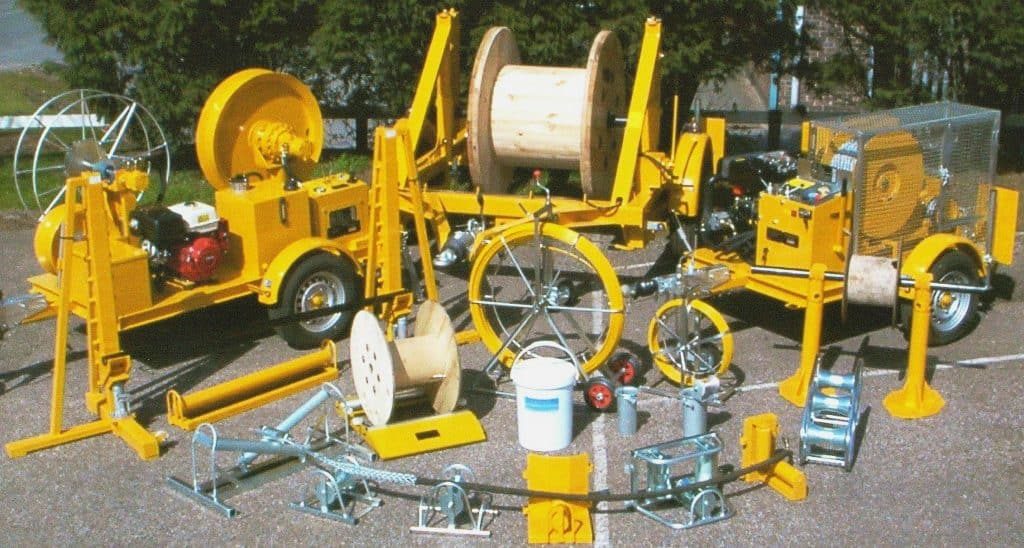
When laying a cable into an open trench, there are 8 key components within the typical equipment layout used excluding the trench and the cable.
- Cable Winch – the cable winch is situated at the end of cable trench and is designed to be simple and robust. The winch provides smooth and controlled pulling of the cables through the trench. It is the cable pulling winch that provides the actual pulling of the cable. There is a number of different cable winches available dependant on the type of cable being pulled. Winches vary between telecommunications, power cables and lightweight cabling.
- Winch Wire Rope – the winch wire rope is attached to the cable in order for it to be pulled through. The wire rope gives extra strength and allows for heavier cables to be pulled through. In addition, the use of the winch wire prevents any potential damage being caused to the cable sheath.
- Swivel Link – the swivel link provides the connection between the cable and the winch wire rope. Each swivel link is designed and used to allow the wire to rotate when being pulled and avoid kinking or twisting. The extra layer of protection provided by the swivel link means damage to the cable sheath is reduced even further.
- Cable Socks – cable socks or stockings are available in either stainless steel or Kevlar but are traditionally constructed of high tensile, galvanised steel wire. Often called cable socks or grips, these are another level of protection between the cable and the cable winch. Fitted to the end of the cable, they are attached to the swivel link and avoid direct contact with the cable. All pilot and telephone, LV, 11kV, 20kV, 33kV, 66kV and 132kV cables should be normally pulled in using a correctly sized cable sock which is securely fixed to the LV-HV cable. More complex cable pulls may require the use of a cable pulling eye attached directly to the cable conductors.

- Straight Cable Rollers – the straight line rollers are, as the name suggests, for use in the straight part of the trench. Varying in size and weight, the straight rollers are selected by the size of the trench they are to be used in. The rollers enable to the cable to be pulled through without making contact with the base of the trench which would damage the cable outer sheath. Full range of cable trench rollers are available – cable pullers should check that cable rollers are in serviceable condition moving easily on their spindle and with rolling surfaces free from damage. Leading cable rollers are usually placed at the cable trench side at the cable pulling end with slide rollers on bends and “hoop” type rollers along straight cable section runs. Contractors can use inverted skid plates shall be used to prevent the cable or pulling wire rising into obstructions. At cable duct entries a bell mouth should be attached at end end with cable rollers positioned to give central access into the bell mouth.
- Corner Rollers – Angled corner rollers are to be used within the trench where there is a bend in the trench. Typically these incorporate a vertical and horizontal roller to allow for the pulling of the cable. Providing the same level or protection as the straight rollers they are both used alongside each other.
- Draw Off Roller – the draw off roller is the first piece of equipment the cable will come into contact with. When the cable is pulled through the open trench, the draw off roller leads the cable straight from the drum into the trench. The cable is then pulled through the trench with the draw roller acting as an initial guide for the cable.
- Cable Drum Trailer – the cable drum trailer is used to transport the cable drum. In addition the trailer is also used to stabilise the cable drum whilst the cable is being pulled through the trench.


Duct rods provide a strong, lightweight, labour saving solution for installing cables into ducts or pipes with or without draw ropes.
Cable Protection
Installation Of Cable Trench Covers & Cable Protection Tiles
All cables and ducts laid into cable trrench should be over-protected by a cable protection cover or tape depending upon the highest voltage cable to be protected within the cable duct – typically in the UK the following cable protection tapes and covers are used for LV, MV and HV cables.
Marker tile tapes or Stokbord covers are installed over the cable in the appropriate trench drawings – usually there is no requirement to install either above approved cable ducts installed using trenchless techniques (i.e. directional drill) but either may be installed if it is deemed that additional MV-HV cable protection is required. When Tile Tape is used it should be cut cleanly and installed so that the medium/high voltage cable is fully covered along the whole length of the installed cable duct.
- LV Service Cable 40m x 200mm x 2.5mm Tile Tape
- LV Mains Cable 40m x 200mm x 2.5mm Tile Tape
- 11kV MV Cables 40m x 200mm x 2.5mm Tile Tape
- 22kV MV Cables 40m x 200mm x 2.5mm Tile Tape
- 33kV MV Cables 1000mm x 244mm x 9mm Stokbord
- 66kV MV Cables 1000mm x 244mm x 9mm Stokbord
- 132kV MV Cables 1000mm x 244mm x 9mm Stokbord
More info ➡ Tile Tape | Stokbord
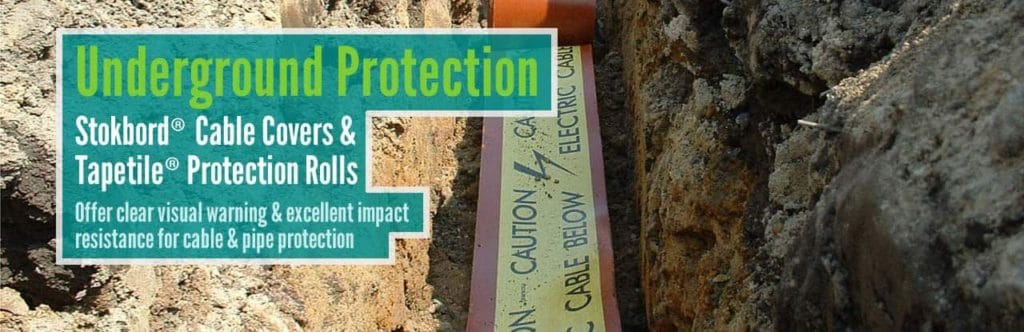
Underground Cable Protection
Duct Seals
Where electricity, pilot and telephone cables are installed into electricity cable ducts the utility engineering standard would normally recommend all cable ducts entering substations and buildings to be duct sealed to prevent the ingress of water and gas – this also applies to 33kV, 66kV and 132kV high voltage substation cables where cable transits are required.

Thorne & Derrick distribute an extensive range of Duct Sealing & Cable Transit Systems to protect utility assets and provide flood protection to substations from water entry via unsealed cable ducts and building penetrations.
Cable Pulling & Cable Laying Equipment Suppliers & Distributors
Thorne & Derrick International distribute the most extensive range of Cable Pulling & Cable Laying Equipment to enable the installation of low, medium and high voltage power cables into underground trench or duct – products also supplied for fibre optic blowing, subsea trenching, offshore umbilical installations and pulling armoured cables onto cable tray.
Cable Blowers | Cable Lubricant | Duct Rods | Cable Socks | Cable Jacks | Cable Rollers | Cable Protection Covers MV HV | Cable Joints MV HV | Duct Sealing

Cable Laying & Pulling – Installing LV-HV Cables Into Duct
April 29th, 2021Thorne & Derrick | Cable Laying & Pulling Equipment Distributors | LV MV HV
-
Uploaded By Chris Dodds – Thorne & Derrick Sales & Marketing Manager
Today, in Part 1 of a 2 part series covering Cable Pulling & Laying Equipment, Thorne & Derrick look at the equipment requirements and preparation for cable pulling when installing cables into ducts. In Part 2, we discuss the requirements for cable pulling and laying into cable trench.
Cable Pulling Equipment
& Preparation Duct
Cables installed into cable ducts are typically used on projects where the cable duct is buried deep into the ground, sometimes up to 1200mm depth – this includes LV Low Voltage, MV Medium Voltage or HV High Voltage ducted power cables.
Guidelines for the minimum depths for the installation of underground cables are stipulated by the DNO depending on whether cables are laid direct into cable trench or installed in suitable cable ducts depending on ground location types:
- Footways, Grass Verges Or Private Property
- Carriageways (including Road Crossings)
- Normal Agricultural Land
Arrangement of the cable trench will depend upon the cable voltages typically LV, 11kV, 20kV, 33kV, 66kV and 132kV.
LV cables could include Service Cables (Single Phase Concentric | 3 Phase Concentric | Split Concentric) and Mains Cables (3 Phase Waveform).
Auxiliary multi-core and multi-pair cables are usually laid at similar depths to the power cable with which they are associated. Pilot and telephone cables installed alongside 11kV and 33kV cable circuits shall normally be installed at LV cable minimum depths of cover.
So for instance, the installation of 33kV power cables into class 1 cable duct is usually covered in the local DNO’s Approved Equipment Register, Guidelines or Excavation and Cable Installation Manual. Additionally, engineering construction standards provided by UK DNO’s will cover the installation of new LV, 11kV, 20kV, 33kV, 66kV and 132kV cables, plus associated pilot and telephone cables.
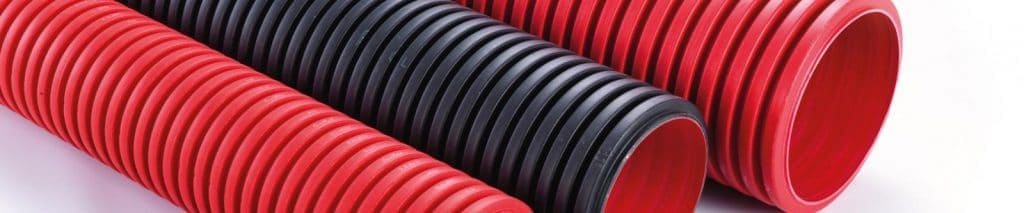
For the protection of LV MV HV cables Thorne & Derrick distribute a complete range of underground protective cable ducting
Prior To Cable Pulling
Due to the nature of the cables that are often installed in these applications, there are a number of checks that must be carried out prior to beginning the cable pull:
- The cable duct lines must be checked for any obstructions and anything that is found must be removed. This is often done with the use of duct brushes or ‘foam pigs’ which are pulled through the duct.
- It is essential to ensure that the cable duct is of adequate size to accommodate the cable due to be pulled. This is done by pulling through a 3 metre length of cable through the duct which is subsequently checked for damage prior to the full cable being installed.
- If, during these checks, the 3 metre length of cable has any damage greater than half the depth of the outer sheath the duct route must be repaired before the full length cable is pulled through. This protects the integrity of the final cable.
Press Release | Thorne & Derrick Appointed Approved Stockist for UK Leading Cable Pulling Equipment Manufacturer
There are a number of items of cable pulling equipment to be used when installing cables into duct lines. Cables can vary in size and voltage, however the same process and equipment is used. When installing cables, there is typically up to 9 different pieces of equipment used.
- Cable Winch – the cable winch is used for physically pulling the cable through the duct, reducing the need for manpower and increasing productivity. Electrically powered, the cable winch is much safer and reliable than manually pulling cables through.
- Rope Guide Roller – the rope guide roller is exactly as the name suggests – a roller to guide the draw ropes or cabling ropes that are coming out of the jointboxes or manhole. This is to reduce the damage and strain put on the ropes therefore prolonging the lifespan of the equipment used. The rope guide roller is made from an aluminium roller mounted onto a frame that has been plated with zinc.
- Cable Bellmouth – the duct bellmouth is used as a means of providing additional protection to the cable when it is being pulled through the duct. The rollers on the bellmouth ensure that the cable can be pulled in any required direction without any damage being caused. The bellmouth is located at the exit of the cable duct through which the cable is being pulled.
- Cable Drum Trailer Or Cable Jacks – the cable drum trailers and cable jacks are used as a means of storing and transporting cable drums. Cable drums are large wooden wheels which are used to hold cable. Cable drum trailers make the transportation of extremely heavy cable drums easier, safer and more reliable. Often equipped with braking and road lighting, the cable drum trailers are attached to the back of an appropriate vehicle such as a tractor to assist in the transportation of cables. Cable jacks are used as a means of supporting and stabilising the cable drums. Cable drums are located at the edge of the manhole cover or opening when installing cable into underground ducts for the cable to be easily rolled off.
- Swivel Link – the swivel link is zinc plated, solid steel link that is attached to the winch rope. This link can, as the name suggests, swivel a full 360° allowing the rope to be pulled through without any twists occurring.
- Conduit Rod – the conduit rod is fed through the manhole cover opening and is used to install draw or winch ropes. The rod is manually fed through the underground duct and is extremely easy to handle. The conduit rod comes with a range of accessories available such as flexible guide tips, end connectors and rod repair kits.
- Cable Socks – cable socks or stockings can also be called cable socks or grips. These cable socks are used to support the pulling of cables through a duct. Attached to the end of a cable prior to pulling, the cable stocking is an efficient method of support when pulling the cable
- Manhole Roller – the manhole roller is specifically designed to be placed at the entrance of the manhole to assist in the guiding of the cable. Not only does the roller make the cable installation easier, it also protects the cable from being scraped on the edge of the manhole. The manhole roller is constructed of a steel frame and aluminium rollers. Complete range of cable rollers are available also for cable trench applications.
- Cable Lubricant – cable lubricant is applied to the outside of the cables when being pulled through the duct. The lubricant assists in the pulling process by removing friction between the cable and the rollers. This not only speeds up the process but also prevents snagging and therefore damage to the cable.

Pictured: Cable Laying & Pulling Equipment – Ducts
Duct rods provide a strong, lightweight, labour saving solution for installing cables into ducts or pipes with or without draw ropes.
Cable Protection
All cables and ducts should be over-protected by a cable protection cover or tape depending upon the highest voltage cable to be protected within the cable duct – typically in the UK the following cable protection tapes and covers are used for LV, MV and HV cables:
- LV Service Cable 40m x 200mm x 2.5mm Tile Tape
- LV Mains Cable 40m x 200mm x 2.5mm Tile Tape
- 11kV MV Cables 40m x 200mm x 2.5mm Tile Tape
- 22kV MV Cables 40m x 200mm x 2.5mm Tile Tape
- 33kV MV Cables 1000mm x 244mm x 9mm Stokbord
- 66kV MV Cables 1000mm x 244mm x 9mm Stokbord
- 132kV MV Cables 1000mm x 244mm x 9mm Stokbord
More info ➡ Tile Tape | Stokbord
Underground Cable Protection
Duct Seals
Where electricity, pilot and telephone cables are installed into electricity cable ducts the utility engineering standard would normally recommend all cable ducts entering substations and buildings to be duct sealed to prevent the ingress of water and gas – this also applies to 33kV, 66kV and 132kV high voltage substation cables where cable transits are required.
Thorne & Derrick distribute an extensive range of Duct Sealing & Cable Transit Systems to protect utility assets and provide flood protection to substations from water entry via unsealed cable ducts and building penetrations.
Cable Pulling & Cable Laying Equipment Suppliers & Distributors
Thorne & Derrick International distribute the most extensive range of Cable Pulling & Cable Laying Equipment to enable the installation of low, medium and high voltage power cables into underground trench or duct – products also supplied for fibre optic blowing, subsea trenching, offshore umbilical installations and pulling armoured cables onto cable tray.
Cable Blowers | Cable Lubricant | Duct Rods | Cable Socks | Cable Jacks | Cable Rollers | Cable Protection Covers MV HV | Cable Joints MV HV | Duct Sealing
How To Remove Bitumen From Subsea Cables & Umbilicals Using Socomore Wipes
April 20th, 2021
Cable Cleaning Wipes
Cable Cleaning | Socomore PF-BR Bitumen Remover Wipes
Bitumen is field-proved to be a highly effective corrosion protection for steel armour wires in array cables, subsea power cables, umbilicals and power umbilicals.
Socomore (formerly PT Technologies) bitumen removal wipes are used for cleaning cables (power, subsea and submarine), umbilicals and electrical equipment including cable rollers and ROV’s – the electrical cleaning solvent wipes are used by cable jointing and technician teams for cleaning and wiping down cables and equipment in the power generation, transmission, distribution and renewable sectors.
PF-BR cleaning wipes from Socomore are extra large, heavily saturated wipes specifically designed for the bitumen removal process during electrical and cabling operations. Used for cable cleaning prior to cable jointing, termination and maintenance of cables, switchgear and network equipment operating at LV MV and HV up to 440kV.
Socomore PF-BR bitumen remover wipes easily remove oils, soils, tar and bitumen. The extra large cleaning wipe reduces the requirement for many smaller wipes, reducing time and wastage during cable preparation which results in cost savings.
The easy hold and grip on the extra large bitumen remover wipe also allows the operator to clean the whole diameter of the cable with one wipe, without touching the cable – suitable for use on static and live cables; low, medium and high voltage applications (up to 440kV).
The bucket wipe system eliminates the transport, storage and logistic issues commonly associated with flammable liquid solvents. Other benefits of the product include reduced solvent consumption and VOC emissions, improving your companies Health & Safety and environmental impact.
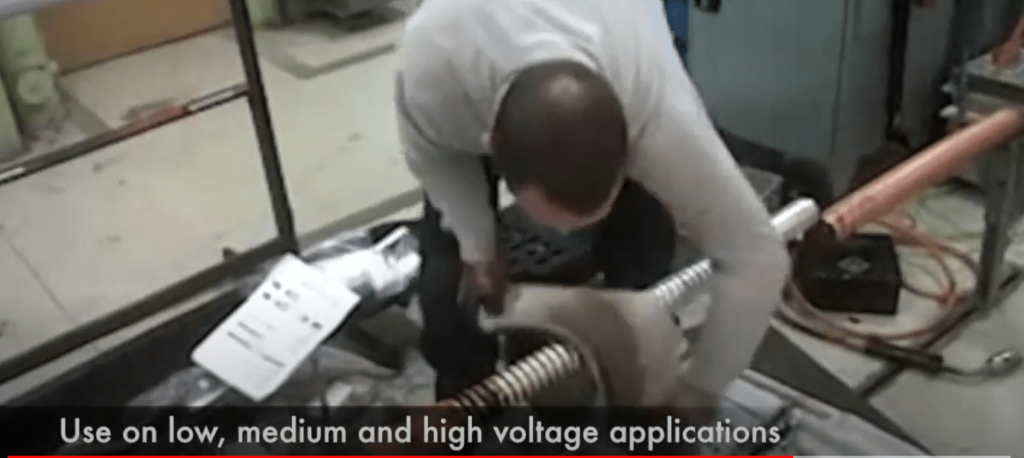
Cleanly Remove Bituminous Compound From Submarine Power Cables.
Socomore PF-BR Electrical & Cleaning Wipes – Key Applications
- Removal of bitumen protection
- Cable cleaning before cable jointing or cable splicing
- Cleaning and degreasing switchgear and network equipment
- Cable end preparation and construction of cable joints
- Cleaning and degreasing cable and moulded connectors
- Cleaning and maintaining large generators, insulators, transformers and motors
- Cleaning and degreasing of plastic and metallic tools
- Electrical equipment and components cleaning
- Degreasing assembly connectors on underground cables
- Cleaning connector interfaces
- General multi-purpose maintenance degreaser
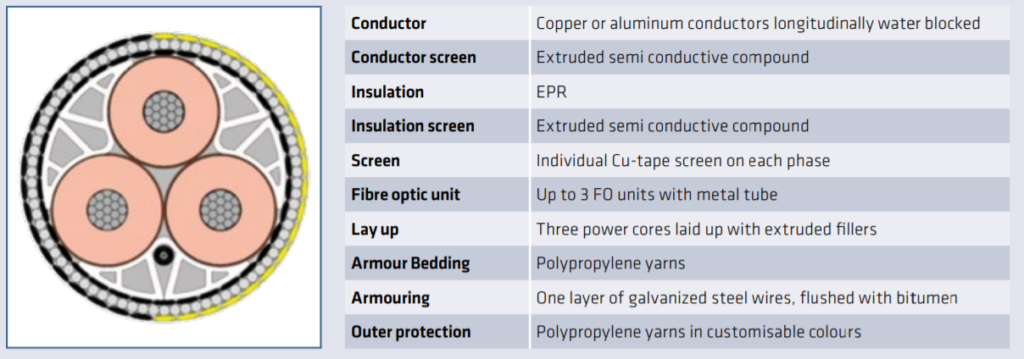
66kV Cable | Typical Offshore Wind Cable Construction | Image Prysmian
Bitumen Removal
from Subsea Cables & Umbilicals
Directions for Use
Bitumen Removal | Heat cable to soften bitumen. Holding an end of impregnated wipe lengthways in each hand, vigorously move the wipe up and down the cable until all bitumen is removed. Dispose of all jointers wipes in an appropriate bin.
General Usage | Apply a thin film of PF-BR using liquid or a pre-saturated wipe. Allow a few minutes for surface action to dislodge contaminants. Wipe off with the same pre-saturated wipe or with a clean, dry low lint cloth (recommended). Dispose of all jointers wipes in an appropriate bin.
Cable Cleaning (Jointing Operations) | Follow cable manufacturers guidelines for cable jacket stripping to semi-conductive shield peeling. Clean the cable with PF-BR – conduction and insulation – to remove residue and degrease. Always clean in the same direction from cable outward (conductor) to cable inward (semi-conductive shield) to avoid re-depositing residues already removed. Wipe off with a clean, dry low lint cloth (recommended). It is not necessary to wait for full evaporation before further working on the system. Solvent residues will not affect the subsequent full cure of epoxy resins in cable jointing systems (heat shrink or cold shrink). Dispose of all jointers wipes in an appropriate bin.
Cable Pulling & Cleaning Products
Thorne & Derrick International are the UK’s leading stockist and supplier of Cable Pulling & Cable Laying Equipment for the installation of underground land and subsea power cables and overhead lines up to 400kV – the products support cable pulling teams to install LV MV HV cables into trench, cable duct, risers and all forms of cable containment.
➡ Further Resources | Cleaning Cables In The Power Industry | PF SOLVENT

Thorne & Derrick are Specialist Distributors to the UK and international Offshore Wind & Renewable industry to provide safe and reliable LV HV Electrical Cable & Power Distribution Systems up to 66kV – we are highly customer responsive and absolutely committed to providing a world-class service.
Contact our UK Power Team for competitive quotations, fast delivery from stock and technical support or training on all LV-HV products.
Key Product Categories: Duct Seals | Cable Cleats | Cable Glands | Electrical Safety | Arc Flash Protection | Cable Jointing Tools | Cable Pulling | Earthing | Feeder Pillars | Cable Joints LV | Joints & Terminations MV HV

See how T&D support, supply and service the Renewable Energy industry.

MV HV 11kV 33kV 66kV | Cable Joints, Terminations & Connections | Distributors & Stockists for 3M Cold Shrink | Nexans Euromold | Pfisterer CONNEX
Cleaning Cables In The Power Industry | PF SOLVENT
April 14th, 2021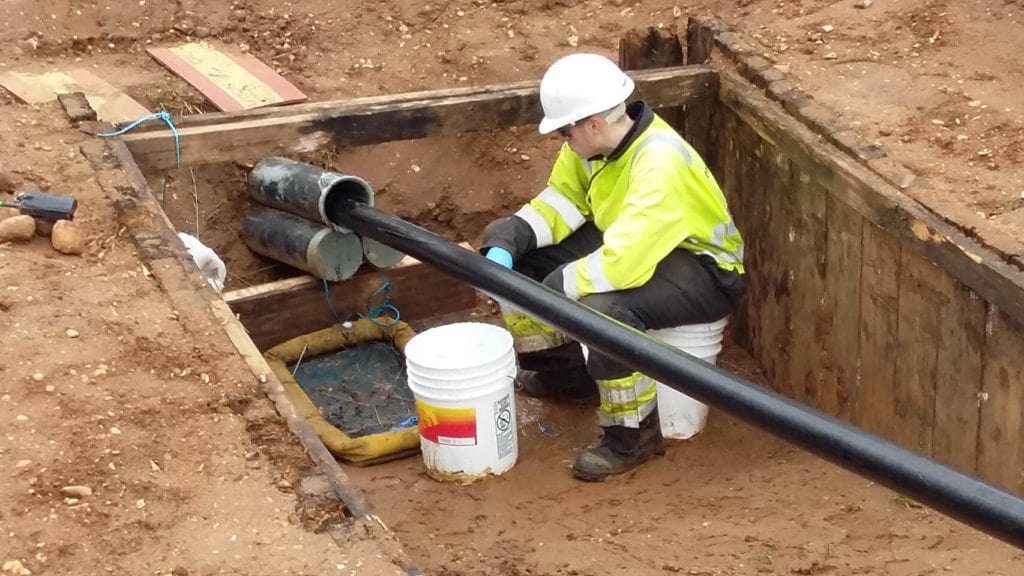 Cleaning Cables in the Power Industry
Electrical cables are everywhere for power distribution within cities or industrial areas.
They run within buildings but are also buried. Often forgotten, offshore marine cables are used under the ocean for power transmission too – this includes subsea and submarine cables which require bitumen removal prior to jointing, termination and connection to electrical equipment.
In sewer and water construction and maintenance, and in the energy and communications industries, we use cleaners to degrease cables and accessories during both installation and maintenance activities.
The main problems are the contaminants that accumulate during years of use, that can provide a path over the insulation and increase the risk of tracking. Solvent cleaners remove contaminants found on the cables before installation or jointing and termination.
PF SOLVENT manufactured by Socomore is a multi-purpose cleaner, available in liquid or as an impregnated cable cleaning wipe. It’s a perfect cable cleaning solvent that is specifically designed as an electrical solvent cleaner, including MV and HV.
Are you looking for an efficient power industry cleaner? Keep reading!
What differentiates PF SOLVENT?
Key Points of this Power Industry Solvent Cleaner
- Multi-purpose
- Multi-approved
- Reduction of installation faults for long-lasting cable life
- Solvent consumption, VOC emissions & costs reduction
- Wide range of power network materials compatibility
- With low lint pre-saturated wipe system: no hazardous storage, transport and logistical issues of loose flammable liquids
Cable Cleaners
Uses
Operations and Applications
PF SOLVENT is used for the cleaning and degreasing of cables during jointing and maintenance activities as well as on switchgear and network equipment.
Some companies also use it during substation cleaning and maintenance as well as the degreasing of overhead power lines in rail applications.
The fact that you can use this product liquid or pre-impregnated on wipes, as well as its cleaning effectiveness and capacity to endure use on high voltage/electrical cables makes its use very broad.
PF SOLVENT is suitable for the 3 families of cables:
- ground impregnated paper cables
- pressure cables
- extruded cables
It can be used to clean the cables but also specific parts of them or accessories like:
- cable oversheaths
- cable metallic sheaths
- connectors (conductor or not)
- termination components
Don’t forget generators or electrical transformers.
The product is a residue free solvent that removes:
- greases
- oils
- sealants
- cable jellies
- soils
- tar
- bitumen
It cleans semi-conducting insulation shield residue, silicone grease, dirt, joints, etc.
PF SOLVENT Approvals
PF SOLVENT is a multi-approved product. The electrical and cable cleaning product is used, recommended and approved by several energy key players including utility companies such as Electricity North West, ESB, Scottish Power, UK Power Networks, Scottish and Southern and Northern PowerGrid. This cable cleaning product is also approved for use by cable companies like ABB, Nexans, Prysmian, NKT Cables, Pfisterer, Sudkabel and Elastimold.

Characteristics
What are PF SOLVENT main characteristics?
One of the main characteristics is its high flash point.
Due to its intrinsic properties, it is suitable for high, medium and low voltage applications.
It is designed specifically following the recommendations of the Institute of Electrical and Electronics Engineers (IEEE).
Due to its key features and properties, this is an ideal replacement to traditional fast evaporating solvents. An example is the Trichloroethane.
Physical Properties
The appearance is a fluid liquid, you can also buy the product in pre-saturated wipes format.
The specific gravity is 0.765 for the liquid format, or >1 if you use pre-saturated wipes.
PF SOLVENT’s flash point is 61°C.
Cable Pulling & Cleaning Products
Thorne & Derrick International are the UK’s leading stockist and supplier of Cable Pulling & Cable Laying Equipment for the installation of underground land and subsea power cables and overhead lines up to 400kV – the products support cable pulling teams to install LV MV HV cables into trench, cable duct, risers and all forms of cable containment.
➡ Further Resources | How To Remove Bitumen From Subsea Cables & Umbilicals Using Socomore Wipes
Thorne & Derrick are Specialist Distributors to the UK and international Offshore Wind & Renewable industry to provide safe and reliable LV HV Electrical Cable & Power Distribution Systems up to 66kV – we are highly customer responsive and absolutely committed to providing a world-class service.
Contact our UK Power Team for competitive quotations, fast delivery from stock and technical support or training on all LV-HV products.
Key Product Categories: Duct Seals | Cable Cleats | Cable Glands | Electrical Safety | Arc Flash Protection | Cable Jointing Tools | Cable Pulling | Earthing | Feeder Pillars | Cable Joints LV | Joints & Terminations MV HV
See how T&D support, supply and service the Renewable Energy industry.
MV HV 11kV 33kV 66kV | Cable Joints, Terminations & Connections | Distributors & Stockists for 3M Cold Shrink | Nexans Euromold | Pfisterer CONNEX
Cubis STAKKAbox™ Toby | The Telco Joint Box for Rural Roads
February 8th, 2021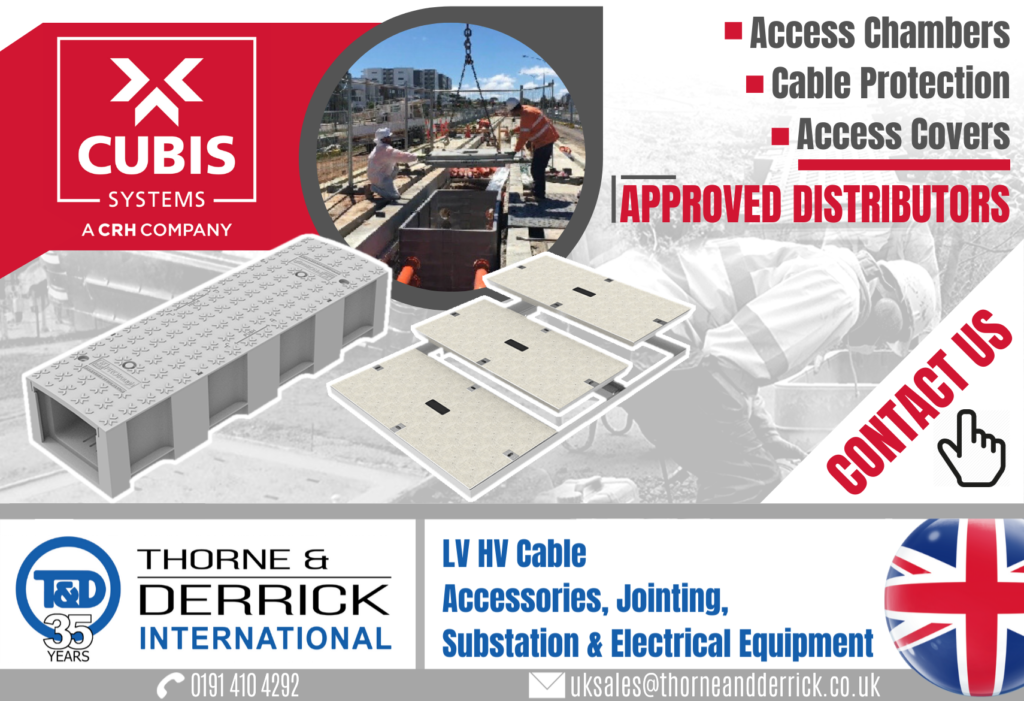
access chambers & Joint Boxes
CUBIS STAKKAbox™ Toby
As a long-standing supplier of network access chambers and AX-S™ covers to the Telecommunication market, Cubis prides itself at being at the forefront of key development and innovations within the sector.
The NEW STAKKAbox™ Toby has been designed to provide a compact Telecoms joint box that can be installed in areas where it is congested with other utilities or there aren’t any pedestrian footpaths such as rural roads. The access chamber system can also be installed in the carriageway making it the ideal solution for your rural telco network.
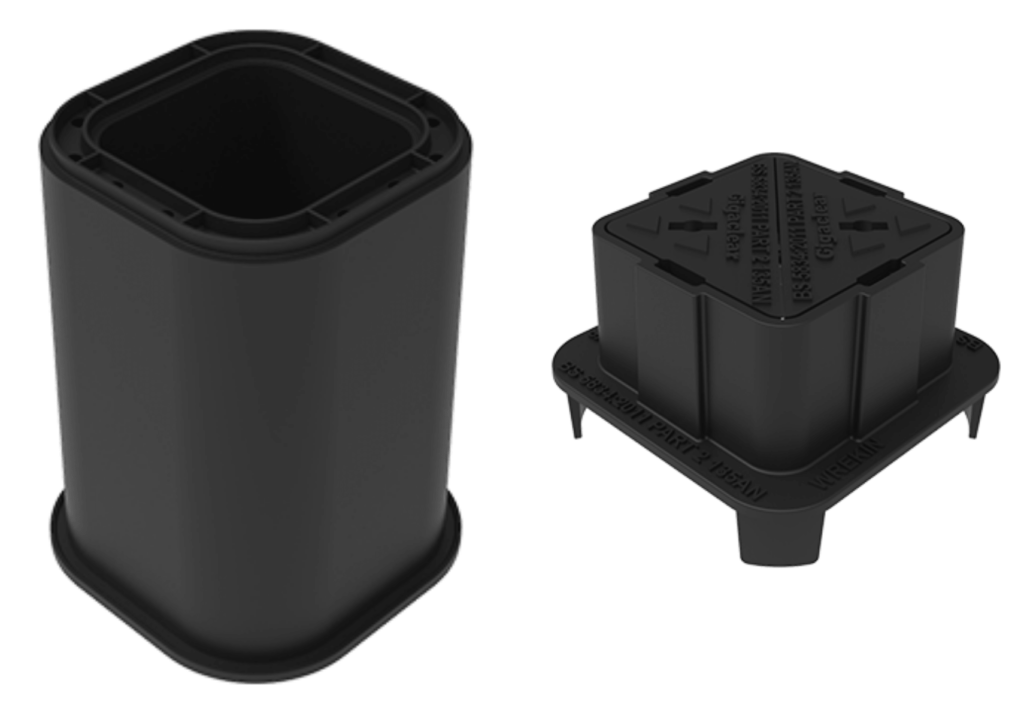
System Components | STAKKAbox Toby & AX-S Ductile Iron Cover
New & Retrofit Network Installation
STAKKAbox™ Toby is available in a solid ring section that can be installed within a new network system or retrofitted into an existing network within the carriageway and has been tested and approved to BS5834 Grade A Heavy making it the ideal solution for EN124 carriageway Group 4 installations.
Easily Adaptable
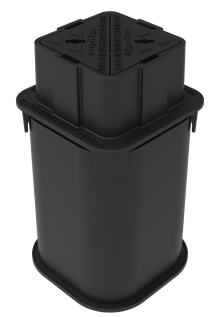
The STAKKAbox™ Toby offers an easily adapted solution to on-site conditions that can be drilled with standard tools for duct entries on any side of the chamber wall and installed within new telco networks or retro fitted around existing utilities.
How it Works
The STAKKAbox™ Toby is made up of one 300mm deep section that has a 150mm x 150mm clear opening with integrated base section.
With one of the sections manufactured with an integrated base section and the other without, the STAKKAbox™ Toby sections can be stacked to accommodate for deeper installations.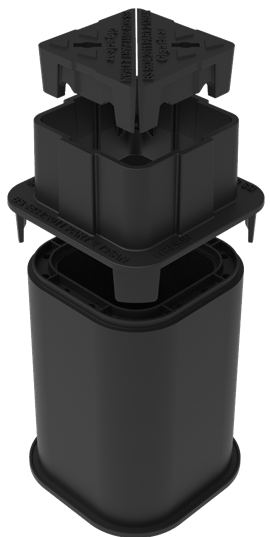
Utilising a Ductile Iron cover, the twin-walled chamber provides a superior strength system for an easily accessed network.
Materials
Polypropylene (PP)
The STAKKAbox™ Toby system is moulded in talc-filled recycled Polypropylene (PP) which possesses excellent strength to weight properties.
Each section is manufactured with twinwall and internal ribbing for improved loading performance.
Available Sizes
The STAKKAbox™ Toby provides an access chamber with a clear opening of 150mm x 150mm.
The single ring section at 300mm deep is built up in conjunction with a 120mm deep ductile iron cover to provide an over 420mm telecoms joint box.
STAKKAbox™ Toby can also be supplied with an extra section for deeper installations providing up to 720mm maximum depth of chamber.
Load Rating
The STAKKAbox™ Toby is suitable for installation in environments rated to BS5834 Grade A Heavy.
Suitable for EN124 carriageway Group 4 installations.
STAKKAbox™ Chambers are significantly faster to install than conventional alternatives, with complete installations typically taking under one hour. This results in reduced costs for the installer and significant time saving. No specialist equipment or plant is required in order to install an access chamber and there is no need for specialist box builders.
With flexible installation, Cubis access chambers can be adapted to suit on-site conditions with standard tools to build over existing networks.

Cubis – Access Chambers, Access Covers, Cable Protection & Cable Accessories
LV, MV & HV Jointing, Earthing, Substation & Electrical Eqpt
Thorne & Derrick International are specialist distributors of LV, MV & HV Cable Installation, Jointing, Duct Sealing, Substation & Electrical Equipment – servicing UK and global businesses involved in cable installations, cable jointing, substation, overhead line and electrical construction at LV, 11kV, 33kV and EHV.
THORNE & DERRICK Product Categories: Duct Seals | Cable Cleats | Cable Glands | Electrical Safety | Arc Flash Protection | Cable Jointing Tools | Cable Pulling | Earthing | Feeder Pillars | Cable Joints LV | Joints & Terminations MV HV