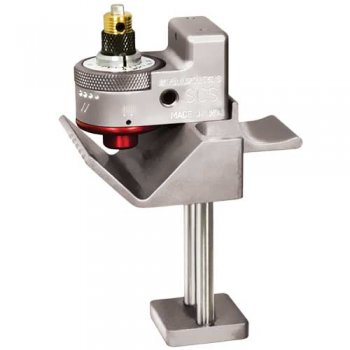
Ripley Tools has launched three new tools for safe and efficient cable semi-con scoring, part of its SCS Series. Ripley SCS is a general purpose semi-con scoring toolfor most medium voltage cable constructions and is equipped with a standard cable guide. The adjustable semi-con scoring tool removes easy strip type semi-con screens from HV power cables, this includes 11kV and 33kV power cables.
Between them, the new cable jointing tools are capable of precisely scoring medium-voltage cables from 0.31′′ to 2.96′′ (8 to 75mm), eliminating the need for traditional, higher-risk blades making them perfect for high voltage power cable preparation prior to jointing and terminating and easily mounts on the cable.
The first Jointing Tool in the series is the compact and adjustable SCS semi-con scoring tool, which precisely scores the semi-con to ease its removal while protecting the underlying insulation. The SCS works on medium voltage 5kV to 35kV cables with semi-con diameters of 0.31′′ – 2.00′′ (8 to 51mm) and is able to perform longitudinal, spiral and calibrated square cuts.
It’s the SCS tool’s micro-adjustable blade depth that ensures accuracy so cable insulation is not damaged and the innovative slide tray keeps the cable square to the cutting head for precision.
The UtilityTool SCS’s design eases operation for cable engineers. It opens and snaps on the cable quickly and simply. Plus, it can work in a small envelope of space, especially on large cable sizes and covers the range of both the BP1A and BP2A.
For highly bowed or curved cables, the SCS V2 has been created to give engineers enhanced control. Its narrow cable guide is suitable for sheathed and jacketed 3 phase assemblies.
Completing the trio is the SCS Max, an extended version of the SCS to make precision cuts on large diameter power cables with strippable semi-con. The tool is designed for cables with a diameter of 1.77′′ to 2.96′′ (45 to 75mm) and it can operate within a 4′′ (101.6 mm) envelope on larger cables.
“All three tools in the SCS Series overcome the mechanical limitations of their counterparts in the market and replace the need for the use of basic, high-risk knives, thanks to the design and engineering capabilities of the Ripley team,” said Brian Bourgoin, Director of Engineering at Ripley Tools.
Thorne & Derrick International are specialist distributors of LV, MV & HV Cable Installation, Jointing, Duct Sealing, Substation & Electrical Equipment – servicing UK and global businesses involved in cable installations, cable jointing, substation, overhead line and electrical construction at LV, 11kV, 33kV and EHV.
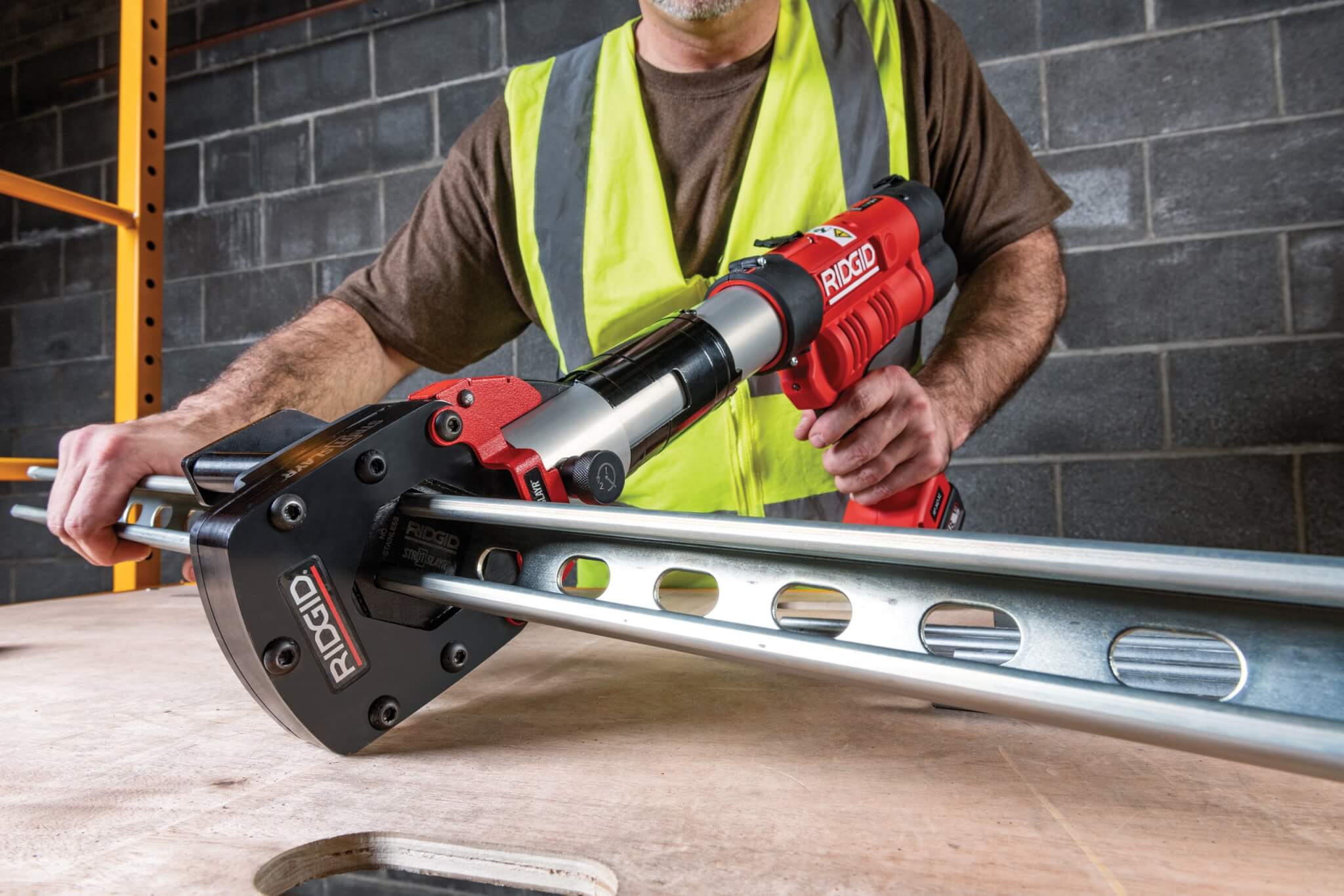
Versatile tools save you time and money on the job. For example, RP 342-XL press tool, shown here with the StrutSlayr Strut Shear Head, works with all of the RIDGID press tool accessories.
Cut Down Time On Your Jobsite
In today’s high-tech world, when people talk about tool timesavers they tend to focus on the latest Bluetooth technology or the newest gadget. Yet, technology is not the only way to cut down time on a jobsite: tools that allow you to work smarter, not harder, can help any professional get to the next jobsite more effectively and efficiently.
Here are a few questions to consider when evaluating the timesaving merits of a tool.
Can the tool do more than one job?
Anytime you can rely on a tool to perform more than one task, that is a win – you will reach in your toolbox less and have less to haul onto a jobsite. The best tools seem to help you do more with less: less gear, less time, less looking around. For example, some wrenches provide multiple surface wrench sizes on one side and have an open box-end for line nuts. This type of wrench has you covered for straight stops, appliance legs, shower heads, faucet nuts, stool bolts, and more.
Are you maximizing the tool’s versatility?
A key factor when saving time and limiting redundancy in your toolbox is to have knowledge of a tool’s full ability. Pressing tools are a good example: Plumbers appreciate press tools because they save time on connections and eliminate the need for soldering. Some press tools can do more than just press pipe connections. For example, RIDGID tools have designed their press tools to be multipurpose. Understanding that no two jobs are created equal, RIDGID tools built the RP 342-XL for them all: its versatile design packs major power and boasts the widest range of applications of any press tool. It can press 1/2” to 4” copper, stainless steel, and carbon steel pipe and 1/2” to 2” PEX—in less than 10 seconds. It is also compatible with the full line of RIDGID Standard 32kN press tool accessories, including the StrutSlayr™ Strut Shear Head, Press Snap™ Soil Pipe Cutter, and all MegaPress jaws.
➡ STRUTSLAYR tool is designed to mechanically shear steel strut channels up to a maximum size of 41 x 41mm, thickness 2.5mm. Compatible with RIDGID 32kN press tools*, the STRUTSLAYR strut cutter offers reduced risk sparking when compared to grinders and chop saws and still manages to produce a clean, consistent cut just by pulling the trigger – a cutting-edge innovation.
STRUTSLAYR™ Strut Shear Head
How reliable are the tools you buy?
Any tool is a timesaver if it is reliable. Think about the tools you have owned the longest. Which tools push through a hard job without breaking? What brand is a one- or two-year tool versus a lifetime of performance? When you are constantly having tools break down and you are investing time and money to replace or repair them, that is a waste.
Buying reliable, proven tools is the best timesaver (and moneymaker). A strong warranty program is nice, but if the tool is always breaking—even if the repairs are free—that downtime will cost you money every time.
Are you buying tools for today or tomorrow?
This question builds on the issue of reliability. Sometimes cost is a hard line that you cannot cross; but when you can, always consider your long-term plans. You might buy a smaller drain cleaner because it costs less. Yet, you know that the larger commercial drain cleaner will allow you to do 10 times as many jobs and build your business in the future.
Which is a better investment? Tool redundancy has its place, but for higher-cost items, it can be a drain on expenses and a sore spot if your small drain cleaner is collecting dust in a warehouse a year from now.
Will I have to start from scratch when I need to upgrade?
When you buy equipment to meet your immediate needs, consider whether there are products designed to complement the equipment as you upgrade. For example, RIDGID reels, imaging cameras, monitors, locators, recorders, and drain cleaning equipment are designed to work together, so setup time is fast and compatibility is a given. Along with faster setup time, purchasing tools that integrate with each other can save you money and minimise downtime for training.
Saving time equals more jobs, and that means more income. There are many ways to adjust your tool inventory so you can work smarter, not harder.
CABLE TOOLS
Should you require technical assistance to select the correct cable crimping or cable cutting tools please contact us.
Thorne & Derrick are Specialist Distributors of cable tools to enable the preparation of all LV MV HV cables prior to the installation of Joints, Terminations & Connectors – this includes Klauke, Cembre, Alroc and Boddingtons cable jointing tools for removal of cable sheath, screen and insulation on 11/33kV (MV) and 66kV/132kV (HV) power cables.
uploaded by Chris Dodds | Sales & Marketing Manager at Thorne & Derrick
HEIGHWAY Energy
for High Voltage Services
HEIGHWAY Ltd have successfully completed the Civils, Jointing, Connection & Commissioning package of works associated with the 33kV High Voltage Power Supply to a new build 5MW solar farm in the UK.
HEIGHWAY are a leading provider of HV Power Services to the renewable, rail, substation and energy sectors with an impressive track-record and future project pipeline following recent audit and Accreditation under the National Electricity Registration Scheme (NERS).
SOLAR FARM PROJECT NOTES
HEIGHWAY provided the following scope of works for the solar farm construction, commissioning and energisation:
HV Cable Diversion Works
HV Cable Installation to New Customer Substation
HV Park Feeder & VT Connections
Installation of 3 New Sets of CT’s
Excavation Works to DNO Compound Including Installation of New Concrete Bases
Installation of COP3 Metering Panels
Full Commissioning of all Cabling, VT’s and CT’s & HV Switchgear
By George Heighway | Director at HEIGHWAY Ltd
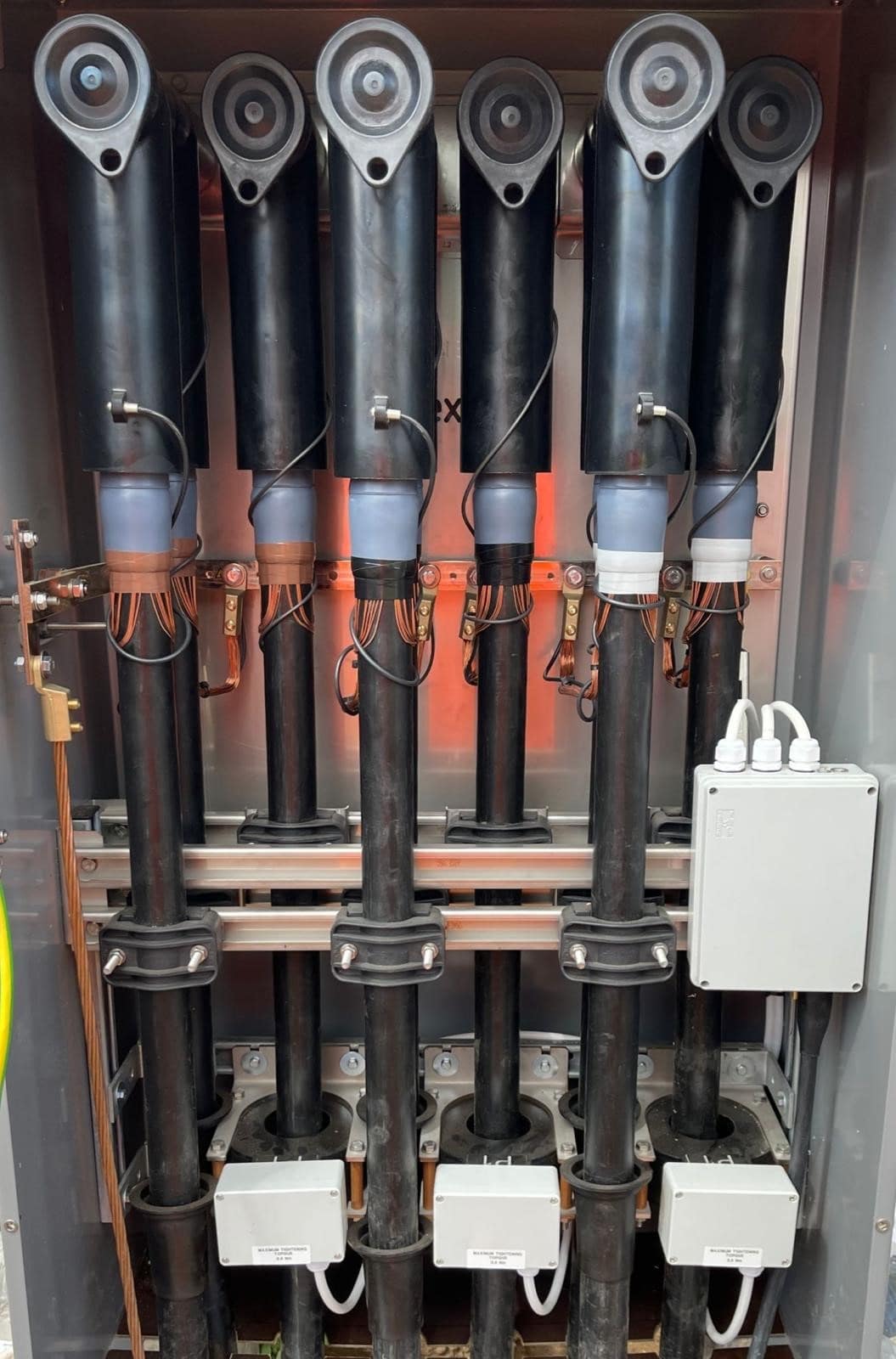
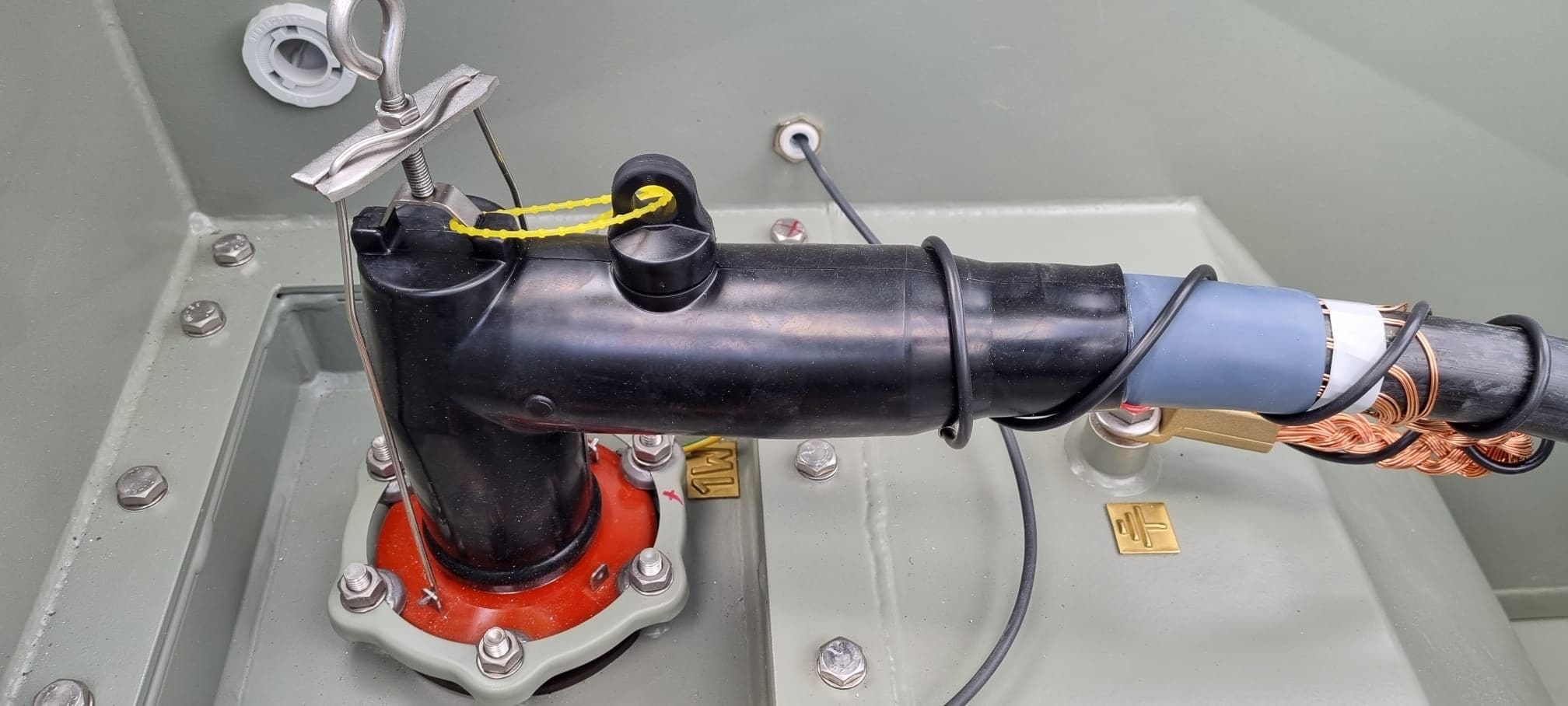
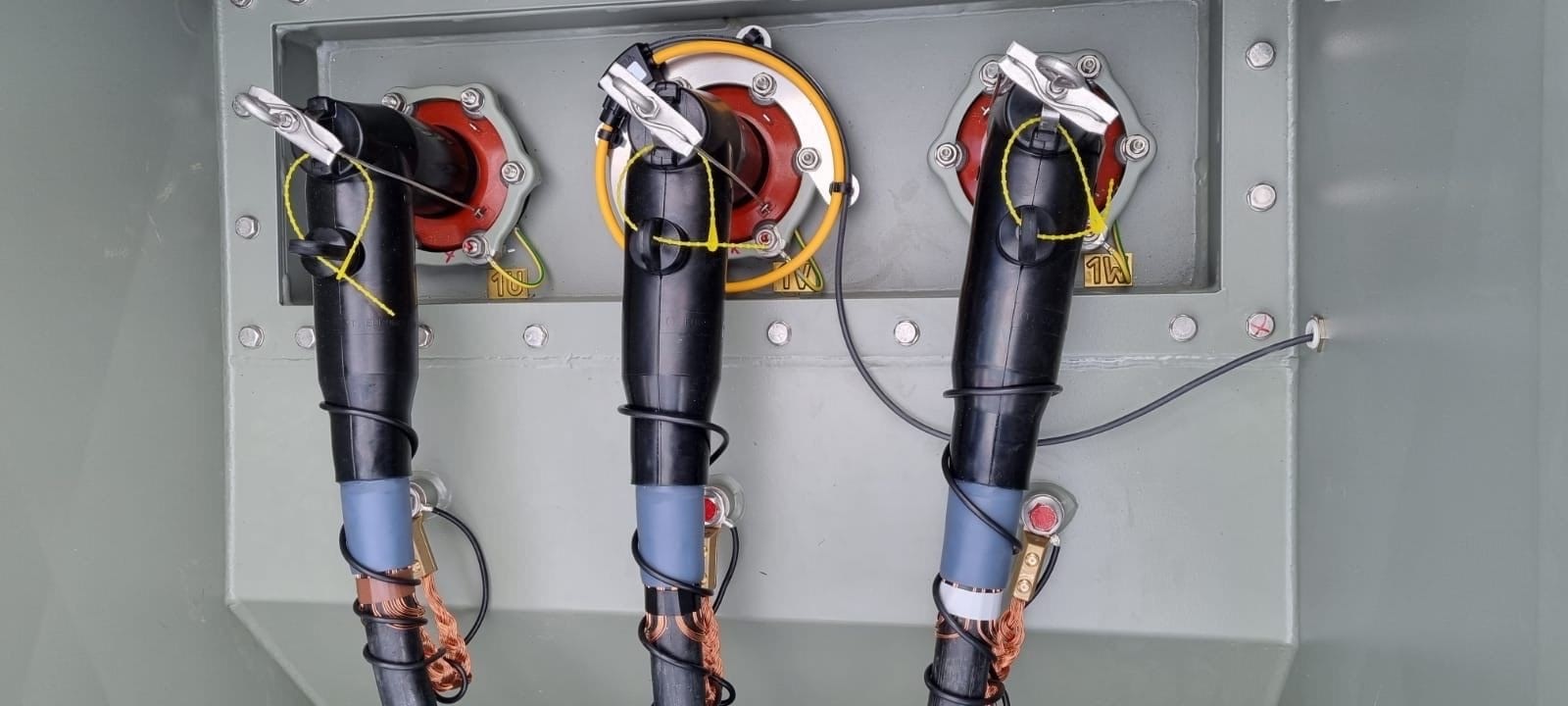
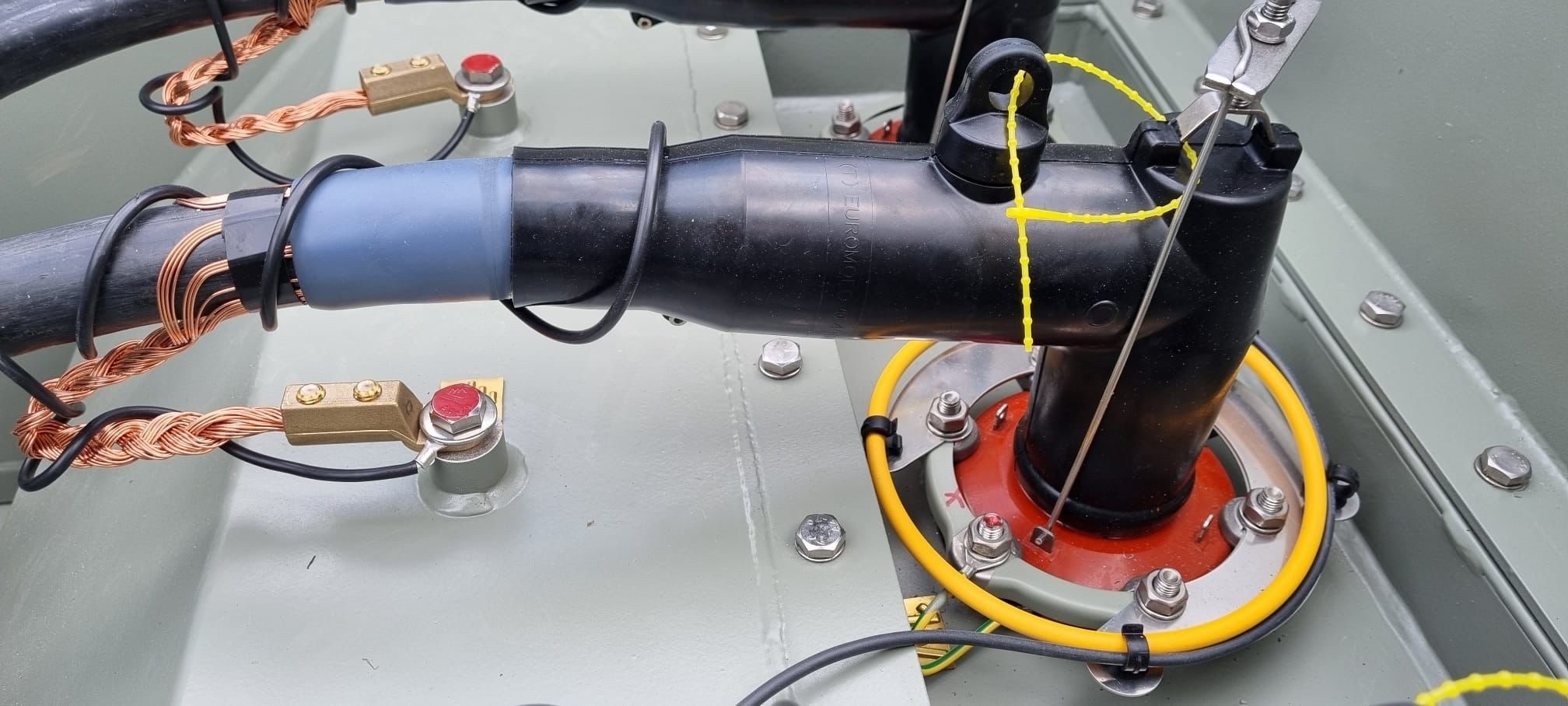
The HV switchgear and transformers providing electrical power distribution at 33kV were connected using the Euromold brand of separable connector manufactured by Nexans – the Interface C Connectors were installed to the T Boot Station and the 33kV single core power cables were prepared, terminated and tested by our Jointers. Euromold bolted terminations are OEM approved and trusted by leading manufacturers of medium and high voltage electrical equipment including Lucy Electric, Siemens and ABB.
Reliance & Compliance
Our team of Jointers are Competent and Qualified in the installation of all types of cable joint and termination technology up to 33kV, including heat shrink and cold shrink, but the engineering preference of our HV Jointers for separable connector technology is the EPDM type manufactured by Nexans. Euromold kits are cost-competitive in the marketplace and readily available from stockists such as Thorne & Derrick, that said our focus as a business is not “lowest-cost” option. Our reputation rides on the reliability of the products we install and the expertise levels of our site teams that install them – also as a contractor we understand the criticality of accurate cable preparation using precision engineered cable tooling to achieve consistently high-quality results, for this reason our Jointing Team have standardised on tools manufactured by Alroc.
The Difference is Material
The Euromold separable connectors are manufactured from high quality EPDM which provides high mechanical strength which can be easily connected and disconnected from the equipment bushing for routine maintenance – competing silicone cable connectors have a tendency to attach and “stick” to the bushings and cannot be easily removed sometimes without damaging the actual connector. Euromold pioneered and innovated the separable connector – their products provide excellent resistance to compression, cutting, impact, tearing and abrasion over a wide temperature range.
HEIGHWAY are Hiring
HEIGHWAY Ltd are recruiting professional and experienced operatives:
– HV SAP/Project Engineer/s (33kV)
– HV Cable Jointer / Jointing Team (33kV)
– HV / LV Fitter/ Fitting Team (LV up to 33kV)
Photographs uploaded by Thorne & Derrick with the kind permission of George Heighway.
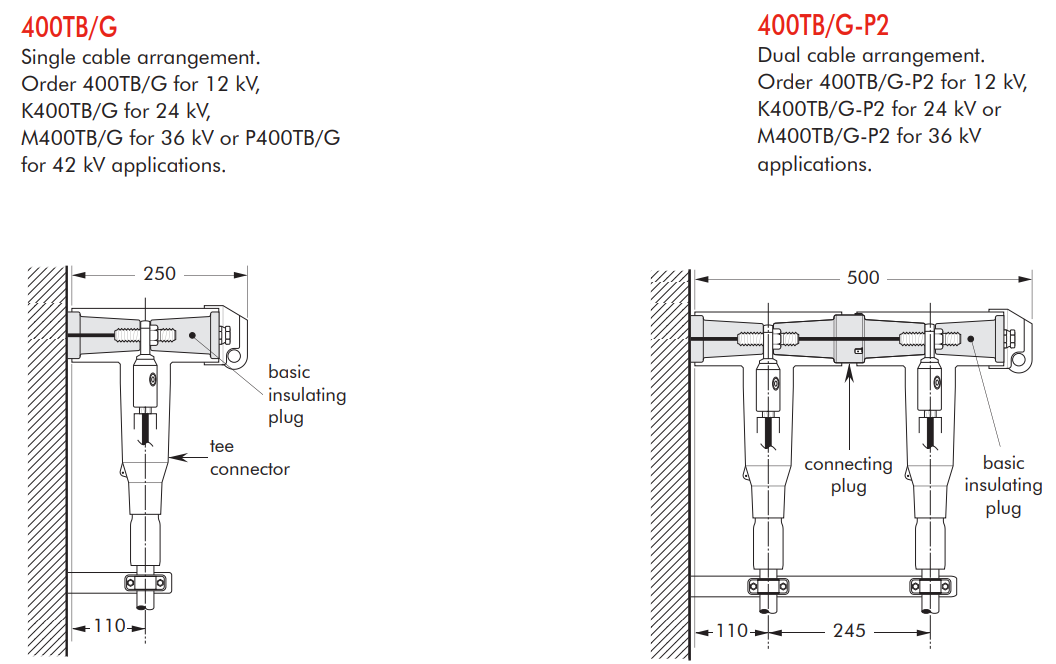
Configuration| the Interface C type connectors provide versatile and optional system design configurations. Here, our team of Jointers were deployed to “Piggy-back” the Euromolds into the medium voltage switchgear compartment. This dual-cable installation is enabled by the use of a connecting plug to mate the front-end connector to the back-end.
Service |Should you require technical support to enable the design or specification of 33kV power cable accessories or systems please do not hesitate to contact Thorne & Derrick, the Contracted & Approved UK Distributor for Nexans Power Cable Accessories.
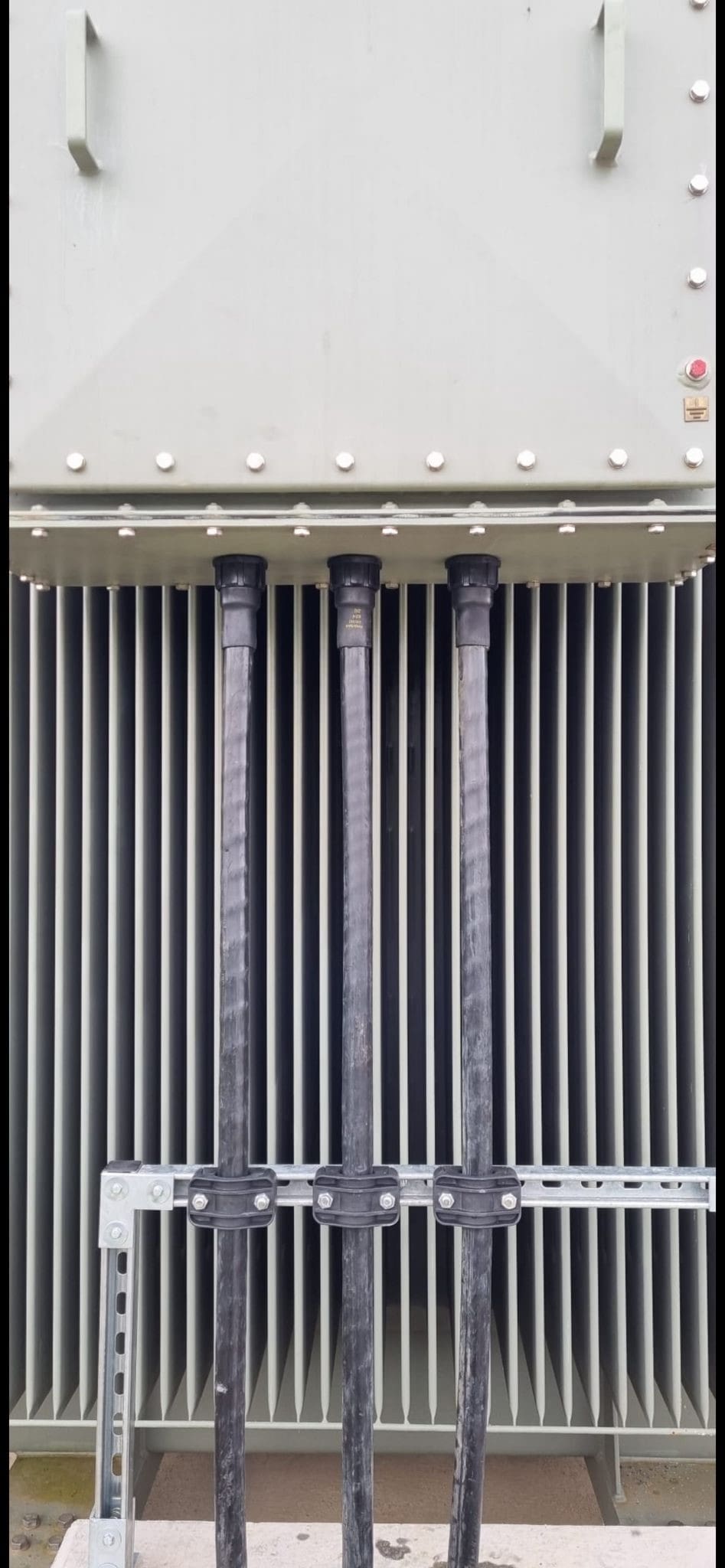
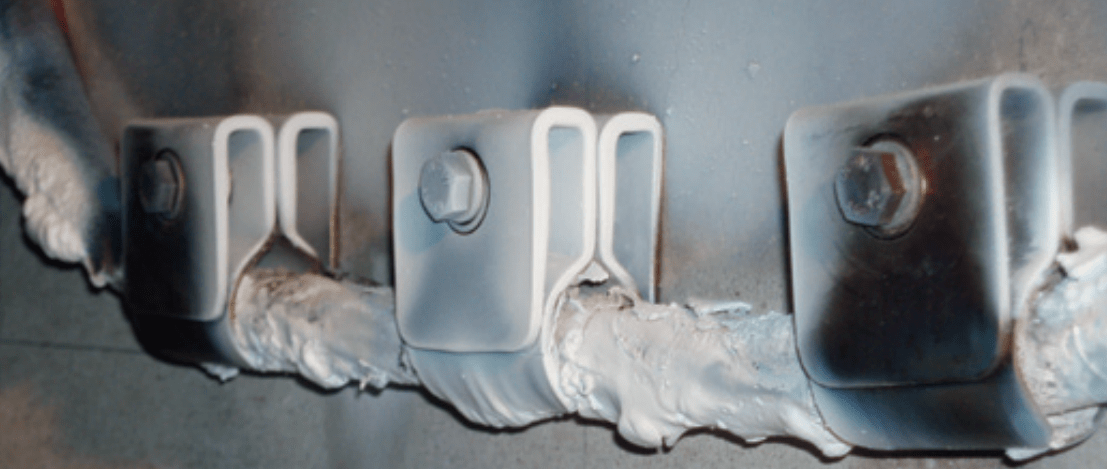
Sealed & Supported | The 33kV single core power cables manufactured to BS7870 Standard were sealed at the transformer point of entry using heat shrink cable sealing glands to prevent water ingress and protect against cable damage. The cables are cleated to provide mechanical retention to the cable in position and electrical short circuit protection in the event of a fault situation.
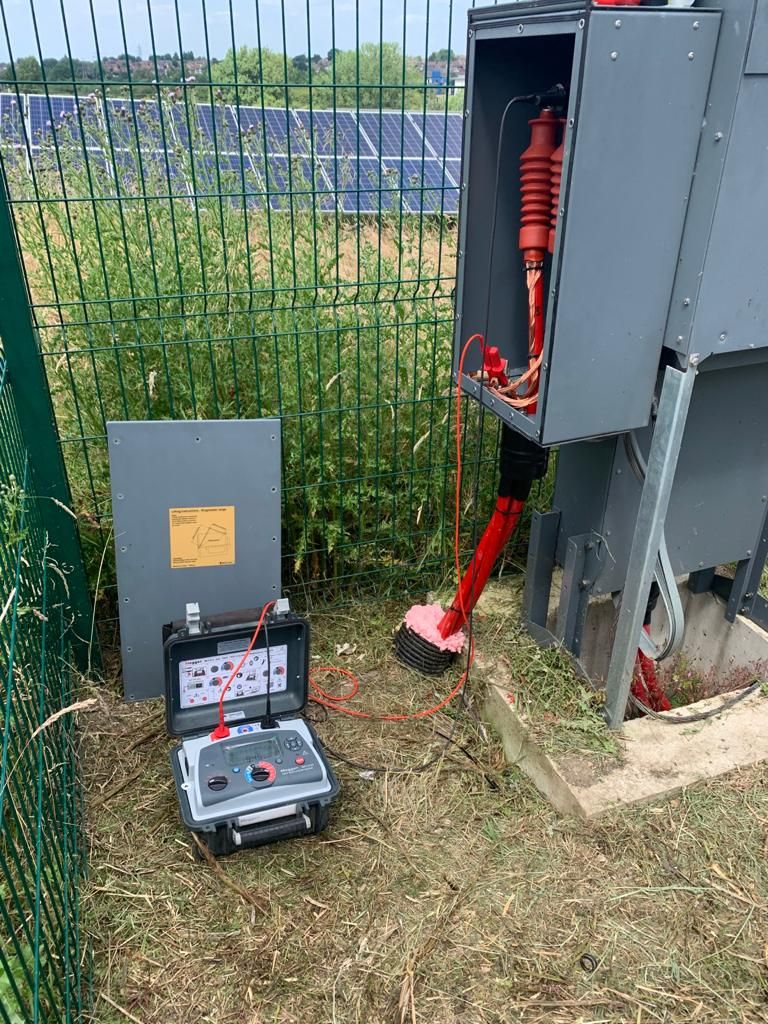
11kV Services | Here HEIGHWAY Ltd completed the HV Isolation, Installation, Test, Termination & Commissioning of new 11kV transformer tails including preparatory de-vegetation works surrounding the site location which was heavily weeded and overgrown.
MV HV High Voltage Cable Joints | Cable Terminations | Cable Connectors | Distributed from Stock | UK & Export Sales
Cable Cleats
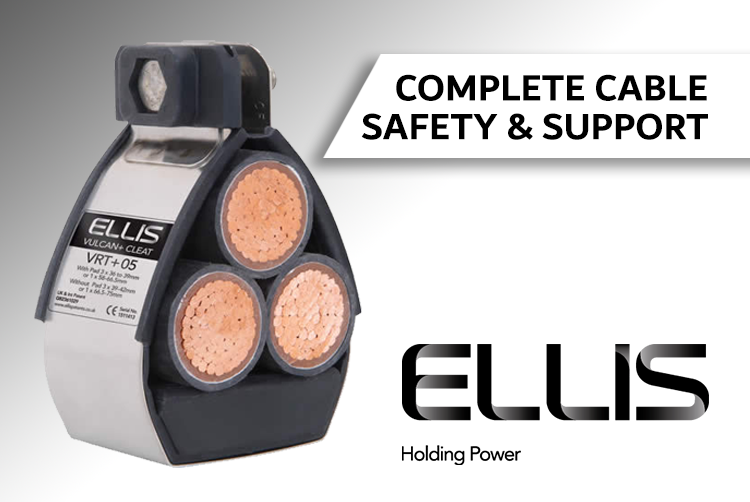
A cable cleat is designed to ensure that cables are fixed, retained and supported correctly so that in the event of short circuit fault or any other emergency, they will contain the cables without causing damage; enabling the circuit to be restored once the fault has been dealt with.
One of the most important issues to consider when specifying cable cleats is the risk of material corrosion – not just as a result of the installation environment, but also from other metals which the cable cleat may come in to contact with.
All cable cleats distributed by Thorne & Derrick are undergoing testing to conform to the latest IEC 61914:2021 Standards. Certification will be in place before the deadline.
What Else Is Important To Consider When Working With Cable Cleats?
Operating Temperatures
Ellis’s standard ranges of cable cleats are designed for use in ambient temperatures ranging from -50°C to +60°C and with cable conductor temperatures up to 90°C.
Eddy Currents
Ferro-magnetic materials that completely surround single conductors in AC circuits are susceptible to heating from eddy currents.
Generally, eddy current generation at mains frequencies requires a complete electrical and ferro-magnetic circuit around each conductor. However in installations where all three phases are contained within the same cable cleat e.g. three cables in a trefoil cable cleat, the magnetic fields of the phases cancel each other out, which in turn negates the eddy currents and the heating effect.
Despite this, it is preferable to use cable cleats manufactured from non-magnetic materials such as aluminium, injection moulded polymers or stainless steel, which has only very slight magnetic properties.
ALWAYS REMEMBER: When using single cable cleats manufactured from ferro-magnetic materials care should be taken to avoid forming a complete iron loop around the cable.
Multi-core Cables
There is a commonly held belief within the electrical industry that multi-core cables will protect themselves in the event of a short-circuit, meaning their installation does not require fault rated cable cleats.
However, research shows that the forces between the conductors of a multi-core cable in the event of a fault are similar to those between three separate single core cables laid in a trefoil arrangement.
Therefore, when specifying multi-core cables it is advisable that cable manufacturer should be contacted to ascertain the ability of its specific cable to withstand these forces.
It is worth noting that whatever the withstand quoted, in the event of a significant fault an unrestrained multi-core cable will move.
Furthermore, the requirements of most wiring regulations are clear and typically state that:
“Every conductor or cable shall have adequate strength, and be so installed as to withstand the electromagnetic forces that may be caused by any current, including fault current.”
Fire
There are currently no European or IEC standards for fire rated cable clamps, although there are requirements within other standards that can be followed to prevent unsuitable products being specified.
The international standard IEC 61914 requires non-metallic and composite cable cleats to have adequate resistance to flame propagation.
UL94, the standard for Safety of Flammability of Plastic Materials for Parts in Devices and Appliances, is a plastics flammability standard that classifies plastics according to how they burn in various orientations and thicknesses. Adherence to its V-0 rating for polymers should be demanded by specifiers.
The use of the description LSF (low smoke and fume) is common terminology with regard to polymers, but is misleading as it doesn’t relate to any published standard and so can be interpreted in a wide variety of ways.
Rail Cable Cleats
To ensure complete assurance of performance in a fire, all Ellis plastic products have undergone testing at the Building Research Establishment (BRE) in line with the London Underground 1-085 specification with regard to:
Smoke emission
Limited oxygen index
Toxicity of fumes
The appropriate products are listed in the London Underground Approved Products register. Identification numbers are 360, 361,362, 363, 364, 365 and 1661.
A great deal of focus is placed on fire rated (FP) cables and their performance in fire, but very little attention is given to the cable fixings used to secure these cables. Given that FP cable is typically rated for operation in temperatures ranging from 850°C to 950°C then the use of plastic cable cleats or clamps is clearly inappropriate.
Even aluminium only has a melting point of 660˚C, which means it would fail to support FP cables in a fire.
Cable Cleats | Fire Resistant Cables
To counteract this shortcoming, Ellis manufactures the Phoenix range of clamps for use with FP cables. Independently tested by Exova Warrington fire and BRE, all products in the range are proven to perform to the same level as the FP cables ensuring continuous operation in the event of fire.
UV Resistance
While wholly metal cable cleats are impervious to UV attack, composite and polymer cable cleats can be at risk.
Ellis composite cable cleats such as Emperor, Vulcan and Atlas all have polymer liners, but are designed to be impervious to UV attack because the polymer is shielded by either the cable cleat’s body or the installed cables.
Polymer cable cleats that are likely to be exposed to UV should be supplied in materials containing carbon black or other UV stabilised material.
ALWAYS REMEMBER: All cable cleats supplied by Ellis Patents for applications involving UV are provided in UV resistant materials.
Do Ellis & Thorne & Derrick provide any advice on cable cleat system designs?
As a cable cleat manufacturer, Ellis Patents do not offer advice on the design principles and choices between different types of cable installation. We will however provide expert advice on the suitability of particular cable cleats within any type of installation.
Flexible and Rigid Cable Installations
On most projects a major consideration is the constant movement of the cable due to thermo-mechanical effect. To accommodate this two principal types of installation design exist:
FLEXIBLE SYSTEMS – where the cables are “snaked” either vertically or horizontally. The cable can expand and contract freely between fixing points.
RIGID SYSTEMS – where the cables are rigidly fixed. The longitudinal thermo-mechanical force is withstood by the combination of the stiffness of the cable, the cable cleat reaction force and the rigidity of the support structure.
Cable cleats are designed to withstand the forces exerted by the cable in the ‘axial’ direction, this is relevant to both flexible and rigid systems. It is also important when the cables are installed vertically.
Flat, Trefoil and Quadrafoil Installations
Cable arrangements for three phase installations utilising single conductor cables are typically flat spaced, flat touching or trefoil.
The Wiring Regulations (BS7671) provides current ratings and voltage drop values for all these arrangements. It also contains information on grouping factors and spacing between circuits to achieve thermal independence.
Additionally, IET Guidance Note No. 6 delivers valuable advice on installation arrangements where there are multiple cables per phase.
An additional method for installing single-core cables is to use quadrafoil cable cleats where the neutral is bundled with the three phase conductors. In this arrangement, there is no advice in BS7671 but a report produced by ERA on behalf of Ellis delivered the following guidelines:
Current ratings, given in BS7671, for cables in touching trefoil formation are appropriate for cables in quad bundles
Derating factors, given in BS7671, for cables in touching trefoil formation are appropriate for cables in quad bundles
Voltage drops for circuits in quad formation should be calculated using the values tabulated in BS7671 for cables in flat touching formation
When considering multiple cables per phase, the advice given in Guidance Note No.6 for trefoil groups is applicable to quad bundles
The induced voltage in the neutral conductor of a quad group is minimal and can be ignored.
How do I prevent thread galling when installing cable cleats?
Stainless steel fasteners have a propensity to “pick-up” when the two threaded surfaces slide against each other. If sufficient speed and pressure is applied to the sliding surfaces then they can weld themselves together – a phenomenon known as thread galling.
All stainless steel fixings will thread gall if there is sufficient friction.
To avoid thread galling, reduce the speed and downward pressure when closing fasteners and use lubrication where appropriate.
THORNE & DERRICK
Thorne & Derrick are national distributors of LV, MV & HV Cable Installation, Jointing, Substation & Electrical Equipment – servicing businesses involved in cabling, jointing, substation, earthing, overhead line and electrical construction at LV, 11kV, 33kV, 66kV and EHV. Supplying a complete range of power cable accessories to support the installation and maintenance of low/medium and high voltage power systems:
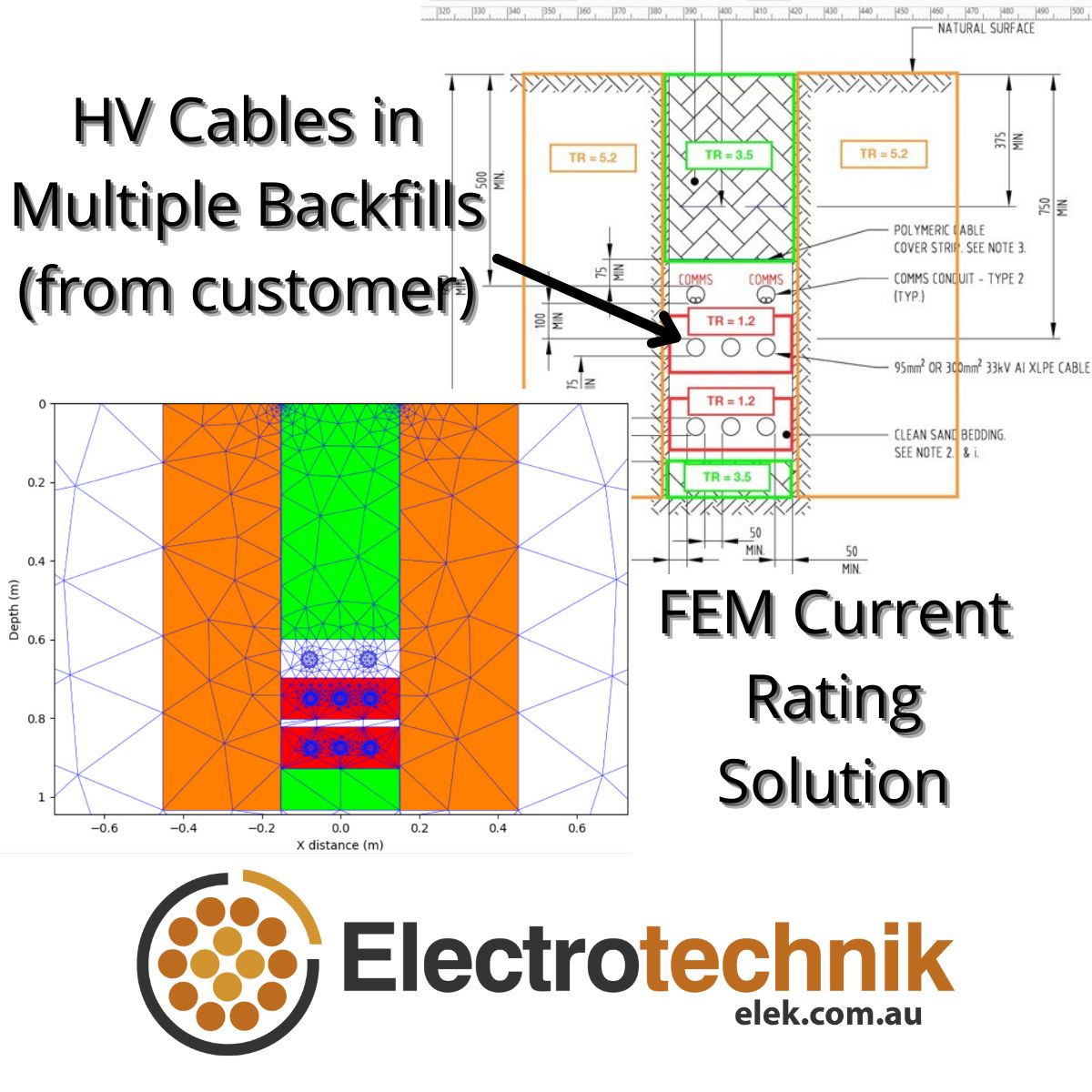
The customer required HV cable current ratings for an installation involving multiple (6) zones of backfilled soil with Thermal Resistivity (TR) varying between 1.2 – 5.2 K.m/W plus the resistivity of the native soil needed to be considered.
The IEC Standard methods do not cover such a complex installation. The most IEC 60287 can deal with is a single backfill. The native soil thermal resistivity was 1.5 K.m/W which is lower than the backfill areas – the IEC Standard equations are invalid for this condition alone.
The Finite Element Method (FEM) was needed to accurately solving the heat flux distributions for this installation.
How does the FEM model work?
In FEM the space is subdivided into smaller parts known as finite elements using a technique called meshing. These elements take the shape of a tetrahedron or a triangle.
The domain of interest is space discretized and this discretization is implemented by constructing a mesh of the object. The formulation of finite element method results in a system of algebraic equations.
These equations that model the finite elements are then assembled into a larger system of equations that models the entire problem. The solution to the problem is reached by minimizing the mean squared error error function.
For the analysis of HV cables, it is assumed to be in a 2D space. The heat generated by the cable conductors is considered along with the ambient temperature. The FEM model creates the temperature array and a large set of equations are solved.
Another important consideration of the HV cable system which is modelled using FEM is the ground surface and ambient air temperature interface which involves heat convection – this aspect is neglected using the IEC method.
How much difference does FEM make?
The calculated current ratings of HV cables using FEM cannot even be compared with the (approximate) IEC Standard method because the standard method is not valid for this installation.
The current rating for the 11kV single core, 300sqmm copper conductor cables surrounded with 6 zones of soil with different resistivity as well as the native soil resistivity, soil ambient temperature of 25 deg.C. and soil/air interface was as follows:
FEM method = 283 A.
IEC method (uniform soil resistivity 5.2 K.m/W) = 201 A (-29 % underestimate).
IEC method (uniform soil resistivity 1.5 K.m/W) = 366 A (+29 % overestimate)
In conclusion, only using FEM will give an accurate calculation of HV cable current ratings for this complicated installation.
Jayson Patrick – Technical Director, Electrotechnik
Jayson is the Technical Director at Electrotechnik, a company which develops leading electrical power system design and analysis software and has extensive experience working on large-scale power systems projects in high voltage design, testing/commissioning, and power system analysis roles along with two decades of experience in professional software development.
Jayson has a master’s degree in electrical power engineering and is a professional software developer. He leads a multi-disciplinary team of developers, cloud architects, UI designers, electrical power engineers and PhD researchers. Jayson’s role at Electrotechnik involves developing new software and complex algorithms for electrical power systems design, where he is using a combination of technologies, multiple programming languages and Agile development practices.
Jayson has a passion for UI and UX design and believes in building powerful software which is accurate while being intuitive and easy to use.
Jayson will be delivering a talk at Earthing Conference UK in Birmingham this month.
1:30pm – Day One
Analysis of Earthing Grids in Multilayer Soils at High Frequencies
Jayson Patrick– Technical Director, Electrotechnik
Modelling earthing system behaviour during both power frequency fault conditions and at high frequencies, especially related to lightning phenomena, is of interest to earthing system designers. The behaviour of earthing systems at varying frequencies is quite different and this paper will present details of the algorithm developed and results in the form of a parametric analysis for multiple grids in different soil conditions for high frequencies.
THORNE & DERRICK
T&D are Specialist Distributors to UK Distribution Network Operators (DNO’s), NERS Registered Service Providers, ICP’s and HV Jointing Contractors of an extensive range of LV, MV & HV Jointing, Earthing, Substation & Electrical Eqpt– this includes 11kV/33kV/66kV cable joints, terminations and connectors for both DNO and private network applications.
Contact our UK Power Team for competitive quotations, fast delivery from stock and technical support or training on all LV-HV products.
Compound Box Filling Compound end boxes rarely get attention — until one fails. Across ageing networks, replacement of compound-filled end boxes is becoming more frequent, particularly where original insulation systems have deteriorated and air insulation is not practical because...
Nexans 240–300mm² Multi-Joint – Medium Voltage Cable Joint Installation Medium voltage cable jointing requires reliability, consistency and safe installation practices. The Nexans 240–300mm² Multi-Joint is designed to simplify medium voltage jointing while maintaining high electrical performance for demanding power...



 See the full range of