Blog
Alroc Cable Jointing Tools Explained
July 22nd, 2026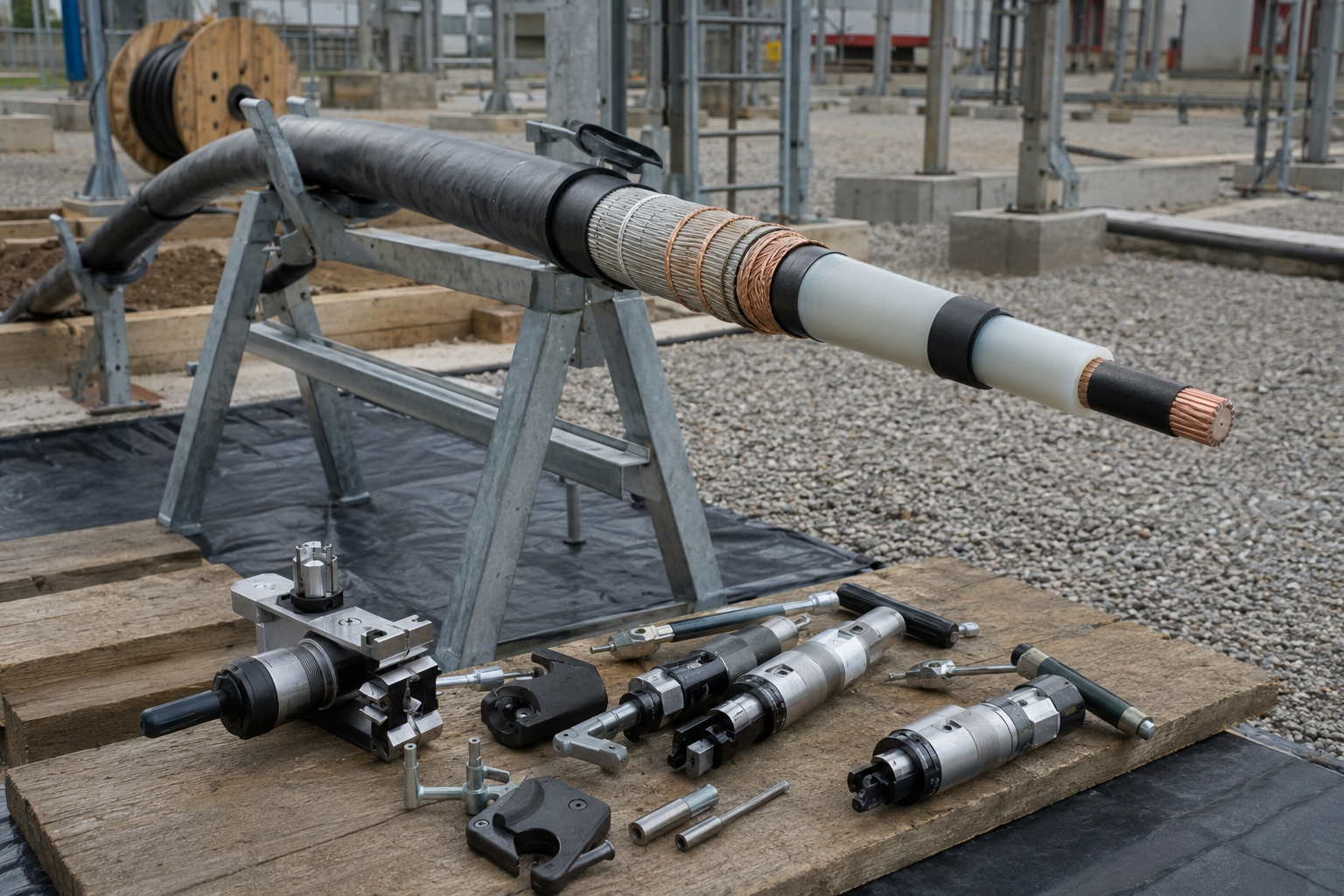
Alroc cable jointing tools are specialist cable preparation tools used by cable jointers to strip, cut, remove, chamfer and prepare LV, MV, HV and EHV power cables before installing cable joints, terminations and connectors.
In medium and high voltage cable systems, preparation accuracy is critical. Before an 11kV, 33kV, 66kV or 132kV cable can be jointed or terminated, the cable layers must be removed to the correct dimensions without damaging the insulation, conductor, semi-conductive screen, metallic screen or outer sheath.
Alroc tools are used for tasks such as outer sheath removal, bonded semi-con screen removal, peelable semi-con screen removal, XLPE insulation stripping, cable chamfering, grooving and general cable preparation. These are specialist tools designed for professional cable jointers working on power distribution, utilities, substations, renewables, industrial networks and high voltage cable systems.
Thorne & Derrick supply Alroc cable jointing tools together with MV HV cable jointing tools, cable stripping tools, semi-con removal tools, cable insulation stripping tools and cable preparation equipment for LV, MV, HV and EHV cable installations.
Quick Answer: What Are Alroc Tools?
Alroc tools are specialist cable preparation tools used by cable jointers to prepare LV, MV, HV and EHV power cables before jointing or termination. They are used to remove outer sheaths, semi-conductive screens, insulation and other cable layers accurately and safely.
Alroc cable jointing tools are commonly used on 11kV, 33kV, 66kV and 132kV cable systems, including XLPE and EPR insulated cables. They help jointers achieve accurate cutbacks, clean stripping, controlled cutting depths and repeatable cable preparation before installing cable joints, terminations or connectors.
What Are Alroc Cable Jointing Tools?
Alroc cable jointing tools are precision cable preparation tools designed for the controlled removal of cable layers. They are used before installing medium and high voltage accessories such as heat shrink joints, cold shrink joints, cable terminations, separable connectors, plug-in connectors and sealing ends.
In a typical MV or HV cable preparation process, the jointer may need to:
- Remove the outer cable sheath
- Prepare the metallic screen or shield
- Remove bonded or peelable semi-conductive screen
- Strip XLPE or EPR insulation
- Chamfer the insulation or semi-con cutback
- Prepare the conductor for connector installation
- Create accurate dimensions for the joint or termination kit
The aim is to prepare the cable exactly as required by the accessory manufacturer’s installation instructions. Incorrect cutback dimensions or damaged insulation can affect the reliability of the completed joint or termination.
View the full Alroc cable tooling range available from Thorne & Derrick.
Why Are Alroc Tools Used?
Alroc tools are used because cable preparation is one of the most important stages in MV and HV jointing. A cable can pass all factory tests but still fail later if it is damaged during installation or poorly prepared before jointing.
Specialist tools help cable jointers achieve:
- Controlled cutting depth to avoid damaging underlying cable layers.
- Clean cutbacks for joints, terminations and connectors.
- Repeatable preparation across multiple cables and phases.
- Accurate stripping dimensions in line with kit instructions.
- Reduced risk of knife damage compared with manual stripping methods.
- Improved finish quality on semi-con and insulation preparation.
- Safer working by using the correct tool for the cable layer.
The higher the voltage, the more critical preparation quality becomes. On MV and HV cable systems, small cuts, scratches, steps, voids or contamination around the insulation and semi-con screen can create long-term electrical stress points.
Cable Layers That Need Preparation
MV and HV cables are built from several layers. Each layer has a specific role, and each must be prepared correctly before jointing or termination.
For more technical background, see the Power & Cables guide to the screen semi-conductive layer on MV cables.
Types Of Alroc Cable Tools
Alroc manufactures a wide range of cable preparation tools. The correct tool depends on the cable layer being removed, the cable diameter, the insulation type and the accessory being installed.
Browse Alroc tools for cable jointing, termination and preparation.
Semi-Con Screen Removal Tools
The semi-conductive screen is one of the most critical cable layers to prepare correctly. It sits over the cable insulation and helps provide a smooth electrical field between the insulation and metallic screen.
When installing a joint or termination, the semi-con screen must be removed cleanly to the correct cutback length. If it is removed poorly, the cable may be left with scratches, steps, contamination or uneven edges that can create stress points.
Alroc semi-con screen removal tools are used for:
- Bonded semi-con screen removal
- Peelable semi-con screen removal
- Semi-bonded screen preparation
- Cold strippable screen preparation
- Chamfering the semi-con cutback where required
A common example is the Alroc CWB18-60 tool family, used for bonded semi-con screen stripping on MV and HV cables. The exact tool variant must always be matched to the cable type, diameter and screen construction.
View semi-con screen removal tools for MV and HV cable preparation.
Outer Sheath Removal Tools
The outer sheath is the external protective jacket of the cable. It protects the cable during handling, pulling, burial, installation and service. Before jointing or termination, part of the outer sheath must be removed to expose the underlying screen, armour or cable construction.
Outer sheath preparation must be controlled carefully. Cutting too deeply can damage metallic screens, lead sheaths, aluminium screens or other underlying layers. Cutting too shallowly can make the sheath difficult to remove and slow down preparation.
Alroc outer sheath removal tools are used for:
- Circular cutting around the cable
- Longitudinal cutting along the cable sheath
- Controlled depth cutting
- Preparation of armoured and unarmoured cables
- Preparation of LV, MV, HV and EHV cable sheaths
View outer sheath removal tools for cable jointing and termination work.
Cable Insulation Stripping Tools
After the outer layers and screens are prepared, the cable insulation may need to be stripped to expose the conductor for connector installation.
On MV and HV cables, the insulation layer is not simply removed with a knife. It must be stripped cleanly and accurately to avoid leaving grooves, cuts, scratches or uneven surfaces. The insulation may also need to be chamfered or pencilled depending on the accessory design.
Alroc insulation stripping tools are used for:
- XLPE insulation removal
- EPR insulation removal
- Controlled insulation cutback
- Insulation chamfering
- Preparing cables before installing connectors, lugs or ferrules
For example, tools in the Alroc LH range are commonly associated with insulation stripping and cable preparation before installing joints, terminations or connectors.
View cable insulation removal tools.
Alroc Tools For MV & HV Cables
Alroc tools are widely used for medium and high voltage cable preparation, especially on 11kV and 33kV power cables. Selected tools are also used for 66kV, 132kV and EHV cable preparation depending on the cable construction and tool range.
For wider tooling options, see cable and installation tooling for LV, MV and HV power cables.
How To Select Alroc Tools
Selecting the correct Alroc cable tool depends on the cable and the task. The wrong tool can damage the cable or create a preparation profile that does not match the joint or termination kit.
The tool should always be selected using accurate cable data, not assumptions from voltage level alone.
Common Cable Preparation Mistakes
Cable preparation problems can directly affect the long-term reliability of cable joints and terminations.
Common mistakes include:
- Using a knife instead of a specialist tool – manual cutting increases the risk of scoring insulation or damaging underlying layers.
- Selecting the wrong tool diameter range – the tool must match the diameter over the layer being prepared.
- Confusing bonded and peelable semi-con screens – different screen types may require different tools and preparation methods.
- Cutting too deeply – overcutting can damage insulation, metallic screens, lead sheaths or aluminium layers.
- Leaving an uneven semi-con cutback – poor edges can create electrical stress points.
- Not chamfering where required – some accessory designs require a specific chamfer or transition profile.
- Ignoring accessory instructions – cutback dimensions should follow the joint or termination manufacturer’s instructions.
- Poor tool maintenance – blunt blades, worn parts or incorrect settings can reduce preparation quality.
- Contaminating the prepared insulation – cleanliness is critical before installing MV and HV accessories.
For MV and HV work, cable preparation should be treated as a controlled technical process, not a basic stripping task.
Related Cable Jointing Tool Products
Alroc tools sit within the wider cable jointing and cable preparation tooling range.
- Alroc Cable Jointing Tools – specialist tools for LV, MV, HV and EHV cable preparation.
- Cable Jointing Tools – tools for cable stripping, preparation, jointing and termination work.
- Semi-Con Screen Removal Tools – tools for bonded, semi-bonded and peelable screen removal.
- Outer Sheath Removal Tools – cable sheath stripping tools for LV, MV and HV cables.
- Cable Insulation Removal Tools – tools for stripping XLPE, EPR, PVC and PE insulation.
- Multi-Function Cable Jointing Tools – tools for combined preparation operations.
- HV Cable Joints, Terminations & Connectors – accessories installed after cable preparation.
- Semi-Conductive Layer On MV Cables – technical guide to the MV cable screen layer.
Alroc Cable Jointing Tools FAQs
Q: What are Alroc tools used for?
A: Alroc tools are used by cable jointers to prepare LV, MV, HV and EHV cables before installing joints, terminations and connectors. They are commonly used for outer sheath removal, semi-con screen removal, insulation stripping and cable chamfering.
Q: Are Alroc tools used on 11kV and 33kV cables?
A: Yes. Alroc tools are widely used for 11kV and 33kV cable preparation, including semi-con screen removal, outer sheath stripping and XLPE insulation preparation before jointing or termination.
Q: What is a semi-con screen removal tool?
A: A semi-con screen removal tool is used to remove the black semi-conductive screen from MV or HV cable insulation. The screen must be removed cleanly and accurately before installing joints, terminations or connectors.
Q: Why is cable preparation so important?
A: Cable preparation is important because damage to the insulation, semi-con screen, sheath or conductor can affect the reliability of the completed joint or termination. Accurate preparation helps reduce the risk of electrical stress, partial discharge and future cable faults.
Q: Can one Alroc tool prepare every cable layer?
A: No. Different cable layers usually require different tools. Outer sheath removal, semi-con screen removal and insulation stripping are separate preparation tasks, and the correct tool depends on the cable type, diameter and layer being removed.
Q: What information is needed to select an Alroc tool?
A: To select an Alroc tool, you need the cable voltage, cable construction, diameter over the layer being stripped, insulation type, semi-con type, accessory instructions and the specific preparation task being carried out.
Q: Are Alroc tools only for high voltage cables?
A: Alroc tools are commonly associated with MV and HV cable preparation, but selected tools can also be used for LV and EHV cable applications depending on the tool type, cable construction and required preparation task.
Q: What happens if the semi-con screen is removed badly?
A: Poor semi-con screen removal can leave scratches, steps, contamination or uneven cutbacks on the cable insulation. These defects can create electrical stress points and may affect the long-term performance of the joint or termination.
Conclusion
Alroc cable jointing tools are specialist tools used to prepare LV, MV, HV and EHV power cables before installing cable joints, terminations and connectors. They help cable jointers remove outer sheaths, semi-conductive screens and insulation accurately, safely and repeatably.
Correct cable preparation is critical to the reliability of MV and HV cable systems. The right tool must be selected according to the cable voltage, diameter, insulation type, semi-con screen type, cable construction and accessory installation instructions.
Thorne & Derrick supply Alroc cable tools, cable jointing tools, semi-con screen removal tools, outer sheath stripping tools, insulation stripping tools and multi-function cable preparation tools for LV, MV, HV and EHV cable installations.
Marconite Earthing Explained
July 2nd, 2026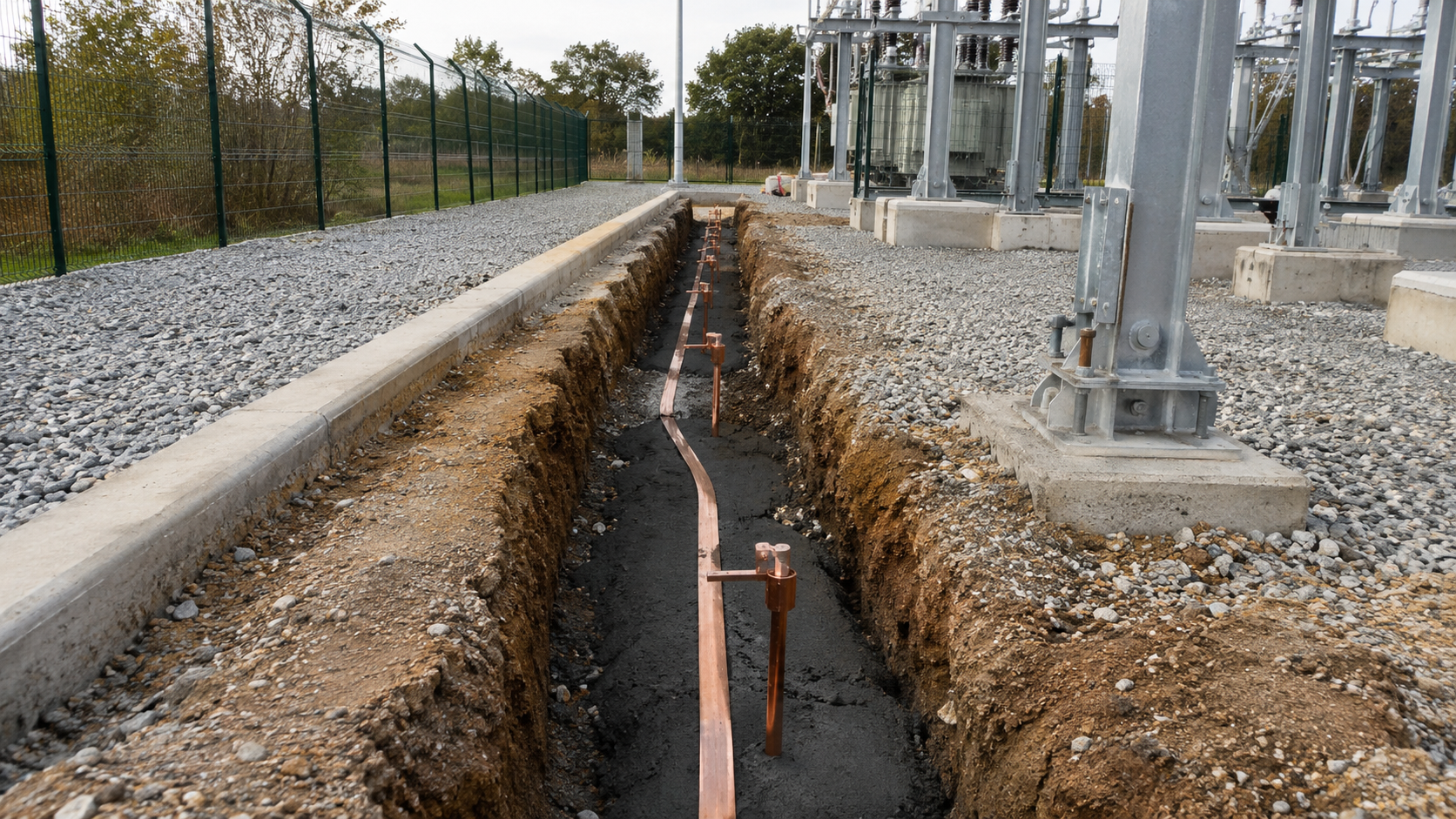
Marconite earthing is used to help create low resistance, stable and long-lasting earthing systems by surrounding earth electrodes with an electrically conductive concrete. Marconite is a conductive aggregate that is mixed with cement and water to form a conductive concrete around earth rods, copper earth tapes, earth mats or other earthing electrodes.
In simple terms, Marconite improves the contact between the earth electrode and the surrounding ground. This helps reduce earth resistance, especially where soil conditions are difficult, dry, rocky, sandy or naturally high in resistivity.
Marconite is commonly used for substation earthing, lightning protection systems, telecoms sites, rail infrastructure, power networks, industrial plants, renewable energy projects, data centres and critical electrical installations where a reliable earthing system is essential.
Thorne & Derrick supply Marconite earthing compound, together with earth tapes, rods, bars and accessories, earth mats and Bentonite earthing compound for LV, MV and HV electrical earthing applications.
Quick Answer: What Is Marconite Earthing?
Marconite earthing is the use of Marconite conductive aggregate around earth electrodes to help create a low resistance earthing system. Marconite is mixed with cement and water to form a conductive concrete that surrounds earth rods, copper earth tape, earth mats or other electrodes.
The conductive concrete increases the effective contact area between the electrode and the surrounding ground. This can help improve earthing performance, especially where normal soil conditions make it difficult to achieve the required earth resistance.
What Is Marconite?
Marconite is an electrically conductive aggregate material used in earthing systems. When mixed with cement and water, it forms a conductive concrete that can be placed around earth electrodes to improve the electrical connection between the electrode and the soil.
Instead of acting like ordinary concrete, Marconite concrete is designed to conduct electricity. This makes it useful where engineers need to improve the performance of an earthing system but the natural ground conditions are not suitable enough on their own.
Marconite is commonly described as a conductive concrete or conductive backfill material. It is used to enhance the performance of earth electrodes such as:
- Copper earth rods
- Copper earth tape
- Copper lattice earth mats
- Earth plates
- Lightning protection electrodes
- Substation earthing systems
Because it forms a solid conductive mass after curing, Marconite can provide a stable earthing enhancement where a permanent low resistance solution is required.
How Does Marconite Earthing Work?
An earthing system works by creating a reliable electrical connection between the electrical installation and the general mass of earth. The lower and more stable the earth resistance, the more effective the earthing system can be in helping fault current, lightning current or unwanted electrical energy dissipate safely.
Marconite earthing works by increasing the effective surface area and conductivity around the buried electrode. Instead of the electrode relying only on direct contact with natural soil, the electrode is surrounded by conductive concrete.
The final resistance of an earthing system depends on many factors, including soil resistivity, electrode design, electrode spacing, installation depth, moisture conditions, fault current requirements and the overall earthing design.
Where Is Marconite Used?
Marconite is used wherever a reliable low resistance earthing system is required and normal soil conditions may not provide the desired performance.
Typical applications include:
- Electrical substations – LV, MV and HV earthing systems for power distribution and transmission networks.
- Lightning protection systems – earthing electrodes for lightning current dissipation.
- Telecommunications sites – tower, mast and equipment earthing where stable resistance is required.
- Rail infrastructure – earthing for signalling, telecoms, substations and electrical infrastructure.
- Renewable energy projects – solar farms, wind farms, battery storage and grid connection earthing.
- Industrial plants – process facilities, factories, data centres, utilities and critical power installations.
- High resistivity soil locations – dry, rocky, sandy or poor conductivity ground conditions.
Marconite is often used where the earthing design must meet a target resistance value but the site conditions make that difficult using basic earth rods alone.
Benefits Of Marconite Earthing
The main benefit of Marconite earthing is that it helps improve the electrical performance of the earthing system.
Power & Cables lists Marconite as a granulated electrically conductive aggregate that replaces sand in cement mixes to create electrically conductive concrete.
Marconite vs Bentonite
Marconite and Bentonite are both used in earthing applications, but they work in different ways and are not the same material.
Bentonite is a moisture-retaining clay-based material often used as an earthing backfill around electrodes. Marconite is a conductive aggregate mixed with cement to form conductive concrete.
For many projects, the selection between Marconite and Bentonite should be made by the electrical designer or earthing specialist based on soil resistivity testing and the required earthing performance.
View Bentonite earthing compound and Marconite earthing compound.
Marconite With Earth Rods, Mats & Copper Earth Tape
Marconite is rarely considered on its own. It is usually part of a complete earthing system that includes electrodes and conductors.
Common earthing components used with Marconite include:
- Earth rods – driven or installed into the ground to provide an earth electrode.
- Copper lattice earth mats – used for potential grading and earthing, especially where touch and step potential must be considered.
- Copper earth tape – used to interconnect electrodes, earth bars, equipment and buried earthing systems.
- Earth bars – used for terminating earth conductors and bonding connections.
- Earth plates – used where a plate electrode design is required.
Marconite helps improve the interface between these electrodes and the surrounding soil. For example, an earth rod may be installed in a drilled hole with Marconite conductive concrete surrounding it, or copper tape may be laid in a trench with Marconite used as an engineered conductive backfill.
The final arrangement should always be designed around the required earth resistance, fault current capacity, step and touch voltage limits, installation environment and applicable standards.
Marconite For Substation Earthing
Substations require reliable earthing systems because fault current, lightning current and transferred potentials must be controlled safely. Earthing is also important for equipment bonding, personnel safety, switchgear operation, transformer installations and protection systems.
Marconite can be used in substation earthing designs where a stable low resistance system is required, particularly if the natural ground conditions are challenging.
Typical substation earthing uses include:
- Earth rod installations around substation compounds.
- Copper earth tape trenches around switchgear, transformers and structures.
- Copper lattice earth mats for potential grading applications.
- Transformer and switchgear bonding to the main earth grid.
- Lightning protection earthing for masts, structures and exposed equipment.
- Renewable energy grid connection substations where stable earthing is required.
Substation earthing should be designed by competent electrical engineers using soil resistivity data, fault level information, site layout and the required safety performance.
How Is Marconite Installed?
Marconite is normally mixed with cement and water to form conductive concrete. The mixture is then placed around the electrode system before it cures.
A typical Marconite installation may involve:
- Excavating a trench or borehole for the earth electrode.
- Installing the earth electrode, such as a rod, tape, mat or plate.
- Mixing Marconite with cement and water according to the project or manufacturer guidance.
- Placing the conductive concrete around the electrode to ensure good contact.
- Allowing the material to cure before final testing and backfilling where required.
- Testing the completed earthing system to confirm performance.
The exact installation method should be confirmed against the manufacturer’s guidance and the earthing design. Poor mixing, poor compaction, poor electrode contact or incorrect placement can reduce the effectiveness of the installation.
How To Select Earthing Materials
Selecting Marconite, Bentonite or another earthing material depends on the complete earthing design. The material is only one part of the system.
Earthing system design should always be based on site conditions, not assumptions. Marconite can be very effective, but only when used correctly as part of a properly designed earthing system.
Common Marconite Earthing Mistakes
Marconite is a specialist earthing material, so poor installation or incorrect specification can reduce performance.
Common mistakes include:
- Using Marconite without a proper earthing design – the material should support the design, not replace it.
- Ignoring soil resistivity – site soil data is essential for designing an effective earthing system.
- Poor contact with the electrode – Marconite must surround the electrode properly to be effective.
- Incorrect mixing – the material should be mixed and placed according to manufacturer or project guidance.
- Confusing Marconite and Bentonite – they are both used for earthing, but they are different materials with different installation behaviour.
- Failing to test after installation – earth resistance should be measured to confirm that the design target has been achieved.
- Forgetting step and touch voltage considerations – low resistance alone is not the only safety factor in complex earthing systems.
- Treating every site the same – rocky, dry, sandy or wet ground conditions may require different earthing arrangements.
For critical installations, the earthing design should be reviewed by a competent electrical engineer or earthing specialist.
Related Earthing Products
Marconite is usually specified alongside other earthing and lightning protection products.
- Marconite Earthing Compound – conductive aggregate for low resistance earthing systems.
- Bentonite Earthing Compound – earthing backfill compound for earth electrodes and trenches.
- Copper Earth Tape – copper tape for buried earth grids, bonding and lightning protection systems.
- Earth Rods – earth electrodes for low resistance earthing systems.
- Copper Earth Mats – copper lattice mats for potential grading and earthing applications.
- Earth Bars – copper earth bars for bonding and termination of earthing conductors.
- Wallis Earthing & Lightning Protection – earthing, bonding and lightning protection accessories.
Marconite Earthing FAQs
Q: What is Marconite?
A: Marconite is an electrically conductive aggregate used in earthing systems. It is mixed with cement and water to form conductive concrete around earth electrodes.
Q: What is Marconite earthing?
A: Marconite earthing is the use of Marconite conductive concrete around earth rods, copper tape, earth mats or other electrodes to help reduce earth resistance and improve earthing performance.
Q: Is Marconite the same as Bentonite?
A: No. Marconite is a conductive aggregate mixed with cement to form conductive concrete. Bentonite is a clay-based earthing backfill compound. Both can be used in earthing systems, but they are different materials.
Q: What is Marconite used for?
A: Marconite is used to improve earthing systems in substations, lightning protection, telecoms, rail, utilities, renewable energy, industrial sites and high-resistivity ground conditions.
Q: How does Marconite reduce earth resistance?
A: Marconite reduces earth resistance by forming a conductive concrete around the electrode. This increases the effective contact area and improves the conductive path between the electrode and surrounding soil.
Q: Can Marconite be used with earth rods?
A: Yes. Marconite is commonly used around earth rods to improve the contact between the rod and surrounding ground. It can also be used with copper earth tape, earth mats and other electrodes.
Q: Is Marconite suitable for substations?
A: Yes. Marconite can be used in substation earthing systems where a stable low resistance earth is required, particularly in difficult ground conditions. The system should be designed by a competent engineer.
Q: Does Marconite need to be tested after installation?
A: Yes. The completed earthing system should be tested after installation to confirm that it meets the required resistance and safety performance set out in the earthing design.
Conclusion
Marconite earthing is used to create low resistance, stable and long-lasting earthing systems by forming conductive concrete around earth electrodes. It is especially useful where normal soil conditions make it difficult to achieve the required earth resistance using earth rods or copper electrodes alone.
Marconite can be used with earth rods, copper earth tape, copper lattice earth mats, earth plates and lightning protection systems. It is commonly specified for substations, rail, telecoms, utilities, renewable energy projects, data centres and industrial power infrastructure.
Correct design and installation are essential. Marconite should be selected based on soil resistivity, resistance targets, fault current requirements, electrode layout, site conditions and the overall earthing design.
Thorne & Derrick supply Marconite earthing compound, Bentonite, copper earth tape, earth rods, earth bars, copper lattice earth mats and earthing accessories for LV, MV and HV electrical infrastructure projects.
FP400 Cable Explained | Fire Resistant SWA
July 2nd, 2026
FP400 cable is a fire-resistant armoured power and control cable used where electrical circuits may need to maintain integrity during a fire. It is commonly specified for critical building services, fire performance circuits, public buildings, infrastructure projects and electrical systems where low smoke, low halogen and fire-resistant cable performance is required.
Prysmian FP400 is a tough, armoured cable with low fire hazard properties and limited fire resistance. It is designed to provide a practical fire-resistant alternative to standard armoured cable where circuit integrity is needed in the event of fire.
FP400 is commonly discussed alongside other fire performance cables such as FP200, FP600S and mineral insulated copper cable. However, FP400 has its own role and should be selected according to the project fire strategy, cable standard, circuit type, installation method and required fire performance.
Thorne & Derrick supply Prysmian FP400 fire-resistant power cable, together with Prysmian fire performance cables, cable glands, cable cleats, fixings and electrical installation accessories.
Quick Answer: What Is FP400 Cable?
FP400 cable is a fire-resistant, low smoke zero halogen armoured cable used for power and control circuits where circuit integrity may be required during a fire. It is commonly used in buildings and infrastructure where electrical circuits need additional fire performance compared with standard armoured cable.
FP400 is part of Prysmian’s FP fire performance cable range. It is a 600/1000V fire-resistant armoured cable and is suitable for selected indoor and outdoor installations, including clipped direct, tray, ladder, trough, duct and direct burial applications where the installation conditions allow.
What Is FP400 Cable?
FP400 is a fire-resistant armoured cable manufactured by Prysmian for power and control applications. It is designed for electrical circuits where enhanced fire performance is required, but where a robust armoured cable format is also needed.
The cable combines fire resistance with low fire hazard properties. This means it is designed to help maintain circuit integrity under defined fire test conditions while also reducing smoke and acidic gas emissions compared with conventional PVC-based cable materials.
FP400 is often used where a project needs:
- Fire-resistant cable performance
- Armoured mechanical protection
- Low smoke zero halogen properties
- Power or control circuit capability
- A practical alternative to standard SWA cable for fire performance circuits
Power & Cables describe Prysmian FP400 cable as a tough, armoured fire-resistant cable with low fire hazard properties and limited fire resistance, making it suitable for power or control circuits where circuit integrity in the event of fire is required.
Where Is FP400 Cable Used?
FP400 fire-resistant cable is used in buildings and infrastructure where certain electrical circuits may need to keep operating during a fire, or where the fire strategy requires enhanced cable performance.
Typical FP400 cable applications include:
- Public buildings – power and control circuits requiring fire performance cable.
- Commercial buildings – critical systems where circuit integrity is part of the fire safety strategy.
- Emergency systems – selected power circuits supporting emergency or life safety functions.
- Fire alarm circuits – where the cable size and project specification make FP400 suitable.
- Plant rooms – power and control cable routes needing low fire hazard materials.
- Infrastructure projects – robust fire performance cable routes in transport, utilities or public facilities.
- Indoor and outdoor cable runs – where the cable type, support method and environmental conditions are suitable.
The correct cable should always be selected against the project specification, fire strategy, circuit duty, installation method and relevant standards.
Is FP400 Fire Resistant?
Yes. FP400 is a fire-resistant armoured cable, but it is important to understand what that means.
Fire-resistant cable does not mean the cable is indestructible in a fire. It means the cable is designed to maintain circuit integrity under specific fire test conditions. The required fire performance depends on the application, the relevant standard and the fire strategy for the building or infrastructure project.
Power & Cables state that FP400 maintains circuit integrity during the BS6387 CWZ fire test and produces very low levels of smoke and virtually no acidic gases. :contentReference[oaicite:2]{index=2}
If a project requires higher fire performance, FP600S or another cable type may be more suitable, depending on the required standard and application.
FP400 Cable Construction
FP400 cable is constructed as a robust fire-resistant armoured cable. The exact construction should always be checked against the manufacturer datasheet for the required cable size and core configuration.
Typical FP400 construction includes:
- Copper conductors for power and control circuits.
- Fire barrier layer to support circuit integrity under fire test conditions.
- XLPE insulation for electrical insulation performance.
- Low smoke zero halogen materials to reduce smoke and acidic gas emissions.
- Armour to provide mechanical protection.
- Outer sheath for environmental and installation protection.
FP400 is often described as a fire-resistant SWA-style cable because it combines fire performance with armoured cable construction.
For exact construction, current ratings, core identification and installation limits, the manufacturer’s datasheet should always be checked before specification or installation.
FP400 Installation Methods
FP400 is designed to be installed using familiar armoured cable installation methods. Prysmian states that FP400 is suitable for indoor and outdoor applications and may be installed using direct burial, trough, fixed direct, tray or ladder methods. :contentReference[oaicite:3]{index=3}
Common installation methods include:
- Clipped direct – fixed directly to a suitable surface using appropriate fire-resistant fixings where required.
- Cable tray – supported on cable tray in plant rooms, risers, service routes or industrial environments.
- Cable ladder – used where larger cable sizes or heavier routes need robust support.
- Trough installation – installed through cable trough routes where suitable.
- Duct installation – installed in ducts where the duct size, pulling method and cable protection requirements are suitable.
- Direct burial – where the cable and installation conditions are suitable for buried routes.
Installation must consider cable bending radius, pulling tension, support spacing, fire-resistant support requirements, gland selection, cleating, mechanical protection and termination conditions.
For installation equipment, see cable pulling and laying equipment, including cable rollers, cable socks, winches and lubricants.
FP400 vs FP600S
FP400 and FP600S are both Prysmian fire performance cable products, but they are not the same. They are designed for different fire performance requirements and should not be selected interchangeably without checking the project specification.
Prysmian explains that FP400 is an armoured LSOH cable with limited fire resistance, while FP600S is designed for more stringent fire performance standards, including BS 7846 F120, BS 8491 120 minutes and BS 8519 Category 3 power. :contentReference[oaicite:4]{index=4}
In simple terms, FP400 may be suitable for standard fire-resistant applications, while FP600S is typically selected where a more demanding fire performance requirement applies. Always check the project specification and relevant standard before selecting between them.
Cable Glands, Cleats & Accessories For FP400
FP400 is an armoured cable, so it must be installed using suitable cable accessories. The correct accessory package depends on cable size, environment, enclosure type, earthing arrangement, support method and installation route.
Typical FP400 accessories include:
- Cable glands – for mechanical cable entry, armour termination and sealing into enclosures.
- Cable cleats – for cable support and restraint on tray, ladder or structural supports.
- Fire-resistant cable fixings – where the installation requires supports that remain effective under fire conditions.
- Cable lugs – for conductor termination into equipment.
- Cable tools – for cutting, stripping, crimping and installing cable accessories.
- Cable pulling equipment – for safe handling and installation of larger cable sizes.
Because FP400 is often used for fire performance circuits, the accessories and supports should be selected to match the fire strategy and installation standard. A fire-resistant cable can still fail to perform as intended if it is poorly supported, incorrectly terminated or installed with unsuitable accessories.
How To Select FP400 Cable
Selecting FP400 cable requires more than choosing a cable size. The cable must suit the electrical design, fire performance requirement and installation method.
If the project requires more demanding circuit survival, the specification may need to consider FP600S or another fire performance cable instead of FP400.
Common FP400 Specification Mistakes
FP400 cable is a specialist fire performance cable, so it should not be specified only because it appears similar to standard SWA cable.
Common mistakes include:
- Assuming all fire-resistant cables are the same – FP400, FP600S, FP200 and mineral insulated cables are not interchangeable.
- Ignoring the required fire standard – the cable must match the fire performance requirement for the circuit.
- Using unsuitable fixings – fire-resistant circuits may require support systems that remain effective during fire conditions.
- Overlooking installation method – tray, ladder, duct, trough and direct burial installations all need different considerations.
- Selecting cable size without derating checks – current rating, grouping, ambient temperature and installation method must be considered.
- Using incorrect cable glands – glands must suit the armoured cable construction, environment and enclosure entry.
- Not checking FP400 vs FP600S – some applications may require the higher fire performance of FP600S.
- Treating circuit integrity as only a cable issue – glands, cleats, fixings, joints, terminations and support systems also matter.
For fire performance cable systems, the whole installation should be assessed, not just the cable type.
Related FP400 Cable Products
FP400 cable is usually specified alongside cable accessories, supports and installation tools.
- Prysmian FP400 Fire Resistant Power Cable – FP400 cable for power and control circuits requiring fire performance.
- Prysmian Fire Performance Cables – FP cable range for fire-resistant cable applications.
- Cable Glands – glands for armoured cable termination and sealing.
- Cable Cleats – cable supports and restraints for power cable installations.
- Cable Lugs & Crimping Tools – lugs, connectors and tooling for cable termination.
- Cable Pulling & Laying Equipment – equipment for safe cable handling and installation.
- Cable Tools – cutting, stripping, crimping and installation tools.
FP400 Cable FAQs
Q: What is FP400 cable?
A: FP400 cable is a Prysmian fire-resistant armoured power and control cable used where circuit integrity may be required during a fire. It combines fire resistance, low smoke zero halogen properties and armoured cable construction.
Q: Is FP400 cable fire resistant?
A: Yes. FP400 is a fire-resistant cable designed to maintain circuit integrity under defined fire test conditions. It should still be selected against the required fire standard and project specification.
Q: What is FP400 cable used for?
A: FP400 is used for selected fire performance power and control circuits in buildings and infrastructure, including applications where low smoke, low halogen and circuit integrity properties are required.
Q: Is FP400 an armoured cable?
A: Yes. FP400 is an armoured cable, which means it provides mechanical protection in addition to its fire performance and low fire hazard properties.
Q: What is the difference between FP400 and FP600S?
A: FP400 is an armoured LSOH cable with limited fire resistance for selected fire performance applications. FP600S is used where more demanding fire performance standards are required. The correct cable depends on the project fire strategy and specification.
Q: Can FP400 be installed outdoors?
A: FP400 can be used in selected indoor and outdoor applications where the installation method, environmental conditions and manufacturer guidance are suitable. The datasheet and project specification should always be checked.
Q: Does FP400 need special glands?
A: FP400 is an armoured cable and should be terminated using suitable cable glands for the cable construction, size, environment and enclosure. The gland must provide the required armour termination, sealing and mechanical performance.
Q: Is FP400 the same as standard SWA cable?
A: No. FP400 is armoured like SWA cable, but it is also designed as a fire-resistant, low smoke zero halogen cable for selected fire performance circuits. It should not be treated as a standard SWA cable replacement without checking the specification.
Conclusion
FP400 cable is a fire-resistant armoured power and control cable used where selected electrical circuits need enhanced fire performance, low smoke zero halogen properties and mechanical protection.
It is suitable for many fire performance circuit applications, but it must be selected carefully against the required fire standard, circuit duty, installation method and project specification. FP400 should also be compared with other fire performance cables, such as FP600S, where higher circuit survival requirements apply.
Thorne & Derrick supply Prysmian FP400 fire-resistant cable, Prysmian FP fire performance cables, cable glands, cleats, cable lugs, cable tools and installation accessories for critical building services, infrastructure and electrical power projects.
Feeder Pillars Explained | LV Power Distribution
July 1st, 2026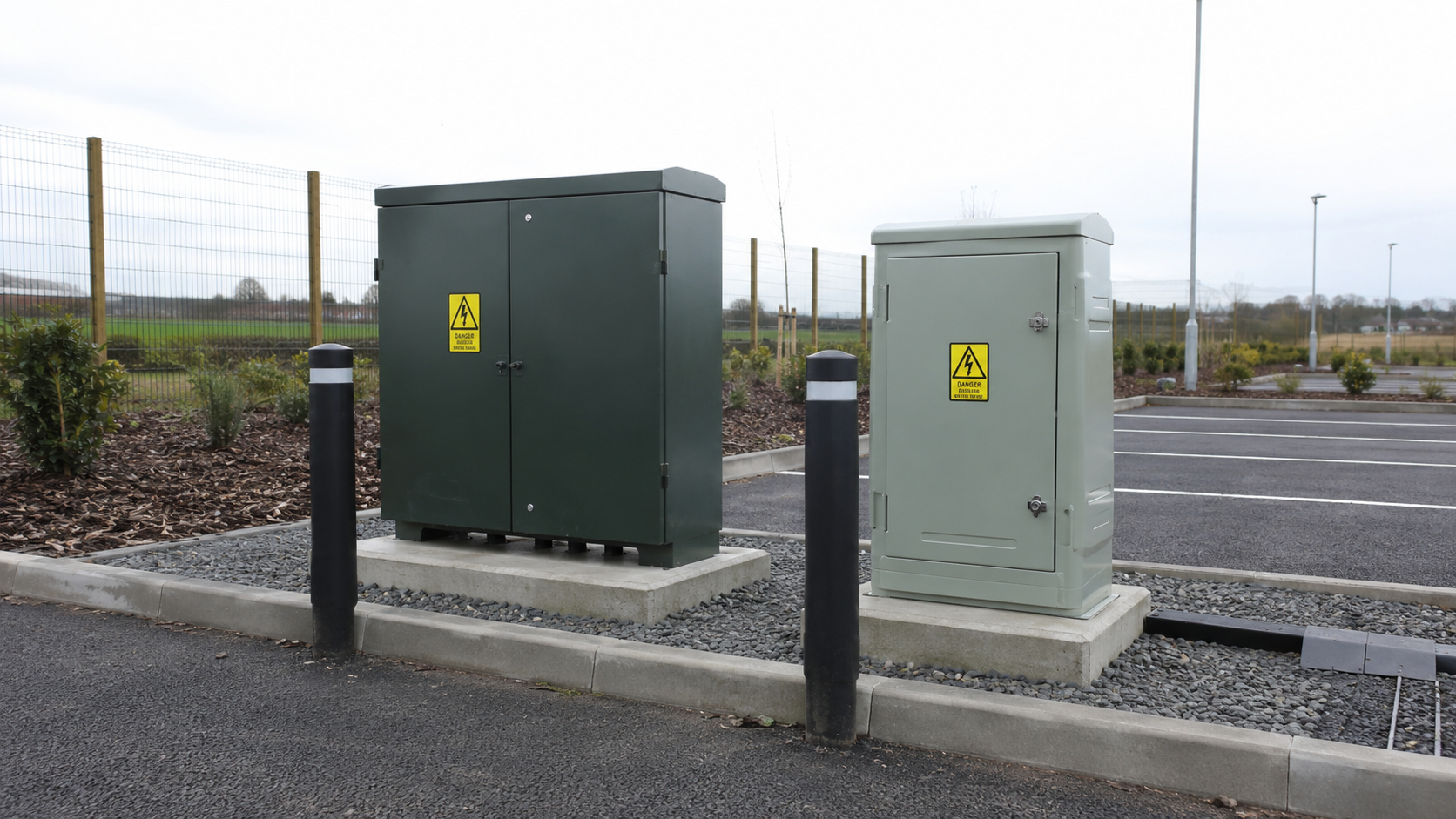
A feeder pillar is an outdoor electrical cabinet used to house and protect low voltage power distribution, isolation, control and connection equipment. Feeder pillars are commonly installed in public spaces, highways, substations, street lighting networks, EV charging sites, industrial facilities, sports grounds, car parks and utility infrastructure.
In simple terms, a feeder pillar provides a secure, weather-resistant enclosure where incoming electrical supplies can be distributed to outgoing circuits. These circuits may feed street lights, signs, traffic systems, EV charge points, temporary event supplies, pumps, public realm equipment, industrial loads or other low voltage electrical assets.
Feeder pillars can be supplied as empty enclosures for panel builders and electrical contractors, or as pre-wired feeder pillars fitted with cut-outs, isolators, fuses, distribution boards, meters, contactors, surge protection, terminals, sockets or other project-specific equipment.
Thorne & Derrick supply feeder pillars for LV electrical power distribution, including GRP, galvanised steel, stainless steel, cast iron, slimline, single door, double door, pre-wired and retractable feeder pillar solutions.
Quick Answer: What Is A Feeder Pillar?
A feeder pillar is a secure outdoor electrical enclosure used for low voltage power distribution, electrical isolation, circuit protection and control. It normally receives an incoming electrical supply and distributes power to one or more outgoing circuits.
Feeder pillars are used for LV electrical power distribution in applications such as street lighting, highways, car parks, public spaces, EV charging, utilities, parks, industrial sites, temporary supplies and substations.
What Is A Feeder Pillar?
A feeder pillar is a purpose-built outdoor enclosure used to house electrical distribution and control equipment. It acts as a protected point where low voltage power can be terminated, isolated, protected and distributed.
The enclosure protects the internal electrical equipment from weather, impact, unauthorised access and environmental conditions. Depending on the design, the feeder pillar may contain:
- Incoming cable terminations
- Outgoing cable terminals
- Cut-outs and fuses
- Isolators and switches
- Distribution boards
- Meters and metering panels
- Contactors and timers
- Surge protection devices
- Earth bars and neutral bars
- Sockets for temporary or public power supplies
The exact internal arrangement depends on the application. A street lighting feeder pillar may be designed for lighting circuits, photocell control or timeclock control. An EV charging feeder pillar may distribute power to charging equipment. A utility feeder pillar may be used to provide LV power connections to the electricity grid.
What Does A Feeder Pillar Do?
A feeder pillar performs several important functions in an LV electrical distribution system.
A feeder pillar is usually positioned close to the electrical loads it serves, making it easier to distribute power locally and safely.
Where Are Feeder Pillars Used?
Feeder pillars are used wherever low voltage electrical power needs to be distributed outdoors or in exposed environments.
Typical applications include:
- Street lighting networks – distributing power to lighting columns and lighting circuits.
- Highways and traffic systems – powering signs, signals, lighting, CCTV and roadside electrical equipment.
- EV charging sites – supplying power to electric vehicle charging infrastructure.
- Car parks and public spaces – feeding lighting, ticket machines, signage and public electrical services.
- Parks and sports grounds – providing controlled power distribution for events, lighting, pumps or facilities.
- Industrial sites – distributing power to outdoor equipment, process areas and plant.
- Substations and utilities – housing LV power distribution equipment, control equipment and auxiliary supplies.
- Temporary power supplies – supporting semi-permanent or temporary electrical distribution requirements.
Feeder pillars are often specified where equipment must be outdoors, accessible for maintenance and protected from environmental conditions.
Types Of Feeder Pillars
Feeder pillars are available in different materials, sizes, door configurations and wiring arrangements.
View the full range of feeder pillars for electrical power distribution.
GRP vs Steel Feeder Pillars
Two of the most common feeder pillar materials are GRP and steel. The correct choice depends on the project environment, security requirements, mechanical risk, corrosion risk, installation preference and specification.
GRP feeder pillars are commonly used for LV power connections and can be supplied to accommodate different LV power requirements.
Lucy Zodion Slimline steel feeder pillars are manufactured from galvanised steel with optional painted versions for LV power distribution and control applications.
Pre-Wired Feeder Pillars
A pre-wired feeder pillar is supplied with internal electrical equipment already fitted and wired before delivery. This can help reduce site installation time and improve consistency because the internal arrangement is built to an agreed specification.
Pre-wired feeder pillars may include:
- Incoming supply terminals
- Outgoing circuit protection
- Switch disconnectors or isolators
- Fuse switches or cut-outs
- Metering equipment
- Earth bars and neutral bars
- Distribution boards
- Control gear
- Sockets and temporary supply outlets
- Surge protection devices
Pre-wired feeder pillars are commonly used where a standardised or repeatable electrical supply arrangement is needed, such as street lighting schemes, EV charging sites, public spaces, temporary power supplies and highways infrastructure.
Street Lighting & Highway Feeder Pillars
Street lighting feeder pillars are used to distribute power to lighting circuits and associated highway electrical equipment. They are often installed at roadside locations, footpaths, car parks, transport hubs and public realm environments.
A typical street lighting or highway feeder pillar may supply:
- Street lighting columns
- Road signs
- Traffic signals
- CCTV equipment
- Control cabinets
- Pedestrian crossing equipment
- Public lighting systems
Because these feeder pillars are often installed in public locations, security, vandal resistance, IP rating, lock type, visibility, finish, access and maintenance requirements should all be considered.
For manufacturers, see Lucy Zodion feeder pillar and street lighting solutions.
EV Charging Feeder Pillars
EV charging feeder pillars are used to distribute low voltage power to electric vehicle charging points. They may be specified for car parks, public charging hubs, fleet charging depots, workplace charging, local authority charging schemes and commercial developments.
EV charging sites often require careful coordination between:
- Incoming LV supply capacity
- Number of charge points
- Fast, rapid or high-power charging requirements
- Circuit protection and isolation
- Metering and monitoring
- Surge protection
- Cable routing and civil works
- Future expansion
Power & Cables has existing content on feeder pillars for electric vehicle power supply, including pre-wired supply pillar options for EV charging infrastructure.
How To Select A Feeder Pillar
Selecting the correct feeder pillar requires a clear understanding of the electrical design, installation environment and project requirements.
A feeder pillar should be selected using both the electrical specification and the physical site requirements. The enclosure, internal equipment and cable arrangement must all work together.
Feeder Pillar Installation Considerations
Feeder pillar installation usually involves both civil and electrical works. The exact method depends on the pillar type, base design, root section, incoming cable route, internal electrical equipment and site conditions.
Important installation considerations include:
- Base preparation – ensuring the feeder pillar is installed on a suitable foundation, plinth or root section.
- Cable duct alignment – incoming and outgoing ducts must align with the pillar cable entry points.
- Cable bending space – the pillar must allow enough space for safe cable entry and termination.
- Earthing – earth bars, bonding and earthing arrangements should be suitable for the design.
- Access – the door must open fully and safely for installation, inspection and maintenance.
- Public safety – pillars in public spaces should consider security, labels, locks and impact risk.
- Environmental exposure – wind, rain, UV exposure, corrosion and flood risk should be considered.
For installation guidance, see the Power & Cables article on GRP feeder pillar site installation.
Common Feeder Pillar Mistakes
Feeder pillar issues are often caused by poor coordination between the enclosure design, internal electrical equipment and civil installation.
Common mistakes include:
- Choosing a pillar that is too small – insufficient internal space can make cabling, termination and maintenance difficult.
- Forgetting cable bending radius – larger LV cables need enough room to enter and terminate safely.
- Specifying the wrong material – GRP, steel, stainless steel and cast iron all suit different environments and risks.
- Ignoring security requirements – public-facing feeder pillars need suitable locks, hinges and vandal-resistant features.
- Poor duct alignment – incoming ducts must be coordinated with cable entry positions.
- Not allowing maintenance access – doors and internal components must remain accessible after installation.
- Treating all feeder pillars as the same – street lighting, EV charging, industrial and utility applications may need different internal equipment.
- Overlooking earthing and bonding – the pillar and internal electrical equipment must be correctly earthed in line with the design.
The best feeder pillar specification starts with the electrical design, then selects an enclosure and internal layout that can safely support it.
Related Feeder Pillar Products
Feeder pillars are part of the wider LV power distribution and cable installation system. Related products include:
- Feeder Pillars – complete range of feeder pillars for LV electrical power distribution.
- GRP Feeder Pillars – GRP pillars for low voltage power connections and outdoor electrical distribution.
- Lucy Zodion Slimline Steel Feeder Pillars – galvanised steel slimline feeder pillars for LV distribution and control.
- Lucy Zodion Fortress Feeder Pillars – galvanised steel feeder pillars from the Fortress range.
- Lucy Zodion Cast Iron Feeder Pillars – cast iron feeder pillars for increased weather protection, security and long service life.
- EV Power Supply Feeder Pillars – feeder pillar solutions for EV charging infrastructure.
- Cable Ducting – underground cable ducting for LV, MV and HV cable protection.
- Cable Glands – glands for cable entry, termination and sealing into enclosures and cabinets.
Feeder Pillar FAQs
Q: What is a feeder pillar?
A: A feeder pillar is an outdoor electrical cabinet used to house low voltage power distribution, isolation, protection and control equipment. It typically receives an incoming supply and distributes power to outgoing circuits.
Q: What is a feeder pillar used for?
A: Feeder pillars are used for LV power distribution in street lighting, highways, EV charging, public spaces, car parks, industrial sites, parks, utilities, temporary supplies and substations.
Q: What is inside a feeder pillar?
A: A feeder pillar may contain cut-outs, fuses, isolators, switchgear, distribution boards, meters, contactors, terminals, earth bars, neutral bars, surge protection devices and control equipment, depending on the application.
Q: What is a GRP feeder pillar?
A: A GRP feeder pillar is an electrical feeder pillar manufactured from glass reinforced plastic. GRP pillars are lightweight, corrosion-resistant and commonly used for outdoor low voltage power distribution applications.
Q: What is a pre-wired feeder pillar?
A: A pre-wired feeder pillar is supplied with internal electrical equipment already installed and wired. This may include isolation, protection, distribution, metering, control equipment, sockets or terminals depending on the project specification.
Q: What is the difference between a feeder pillar and a distribution board?
A: A distribution board is an internal electrical assembly used to distribute circuits. A feeder pillar is usually an outdoor enclosure that may contain a distribution board or other electrical equipment, while also providing weather protection, security and cable termination space.
Q: Are feeder pillars waterproof?
A: Feeder pillars are designed for outdoor use, but the level of protection depends on the enclosure design and IP rating. The correct pillar should be selected for the site environment, exposure level and internal electrical equipment.
Q: How do I choose the right feeder pillar?
A: To choose the right feeder pillar, check the application, material, size, door configuration, internal equipment, cable entry requirements, security, environmental exposure, earthing requirements and installation method.
Conclusion
Feeder pillars are essential outdoor electrical enclosures used for low voltage power distribution, isolation, protection and control. They provide a secure point for distributing power to outgoing circuits in street lighting, highways, EV charging, public spaces, industrial sites, utilities, parks and temporary supply applications.
The correct feeder pillar depends on the application, internal electrical equipment, enclosure material, size, door configuration, security requirements, cable entries, earthing arrangement and installation environment.
Thorne & Derrick supply LV electrical feeder pillars, including GRP, galvanised steel, stainless steel, cast iron, slimline, single door, double door, pre-wired and retractable feeder pillar solutions for electrical power distribution projects.
Cable Pulling Explained | LV MV HV Installation
June 18th, 2026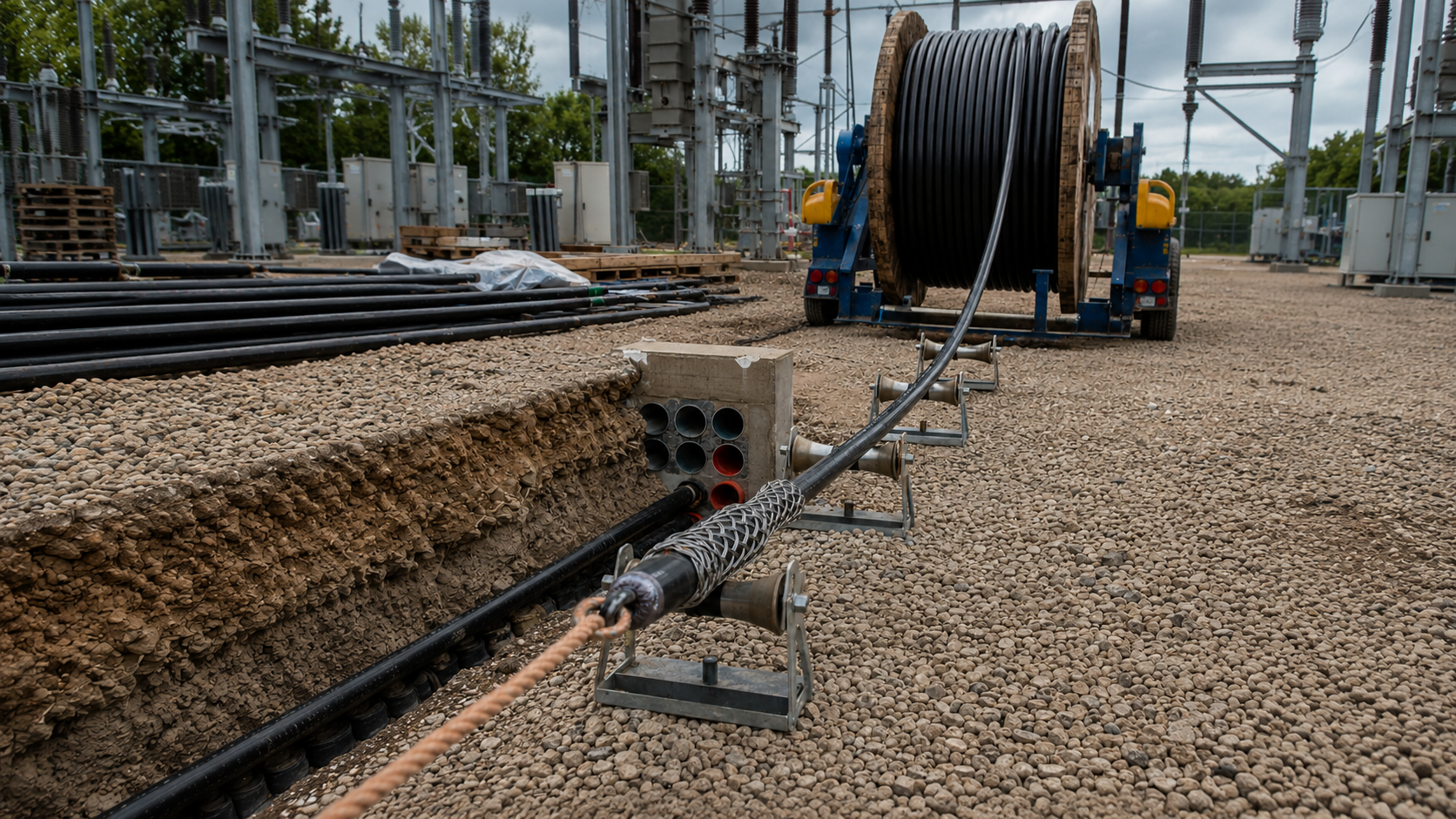
Cable pulling is the controlled process of installing electrical, power, telecoms or fibre optic cables into ducts, trenches, conduits, tunnels, cable troughs or containment systems. In LV, MV and HV power cable installations, cable pulling must be carefully planned to prevent damage to the cable sheath, insulation, conductor, screen or armour during installation.
For utilities, DNOs, electrical contractors, cable jointers, rail contractors, civil engineering teams, renewable energy projects and industrial power systems, correct cable pulling equipment is essential. The cable may be heavy, expensive, difficult to handle and critical to the future reliability of the electrical network.
Cable pulling is not simply a case of attaching a cable to a winch and pulling it into place. The route, bend radius, cable weight, cable diameter, pulling tension, drum position, cable rollers, cable socks, cable lubricants, duct condition and operator control all need to be considered before the installation starts.
Thorne & Derrick supply cable pulling and cable laying equipment for LV, MV, HV and EHV cable installations, including cable pulling winches, cable rollers, cable socks, drum jacks, duct rods, lubricants and cable protection products.
Quick Answer: What Is Cable Pulling?
Cable pulling is the process of installing a cable through a duct, trench, conduit, tunnel, cable tray or cable route using controlled pulling force. It is commonly used for power cables, telecoms cables, fibre optic cables, control cables and utility cables.
For LV, MV and HV power cable installations, cable pulling must be planned carefully because excessive pulling tension, poor route preparation, tight bends, damaged ducts or unsuitable equipment can damage the cable during installation. This can lead to sheath damage, insulation stress, future cable faults and expensive repair work.
What Is Cable Pulling?
Cable pulling is a method of installing cables by applying controlled force to move the cable from its drum into its final route. The cable may be pulled through an underground duct, across a cable trench, over rollers, through conduit, into a substation, along a tunnel, onto a cable tray or through a prepared cable containment system.
Cable pulling is used across many industries, including:
- Power distribution – LV, 11kV, 33kV, 66kV and 132kV cable installation.
- Substations – cable routes between transformers, switchgear, sealing ends and cable trenches.
- Renewable energy – wind farms, solar farms, battery storage and grid connection projects.
- Rail infrastructure – signalling, traction power, telecoms and power cable routes.
- Telecommunications – fibre optic and copper cable pulling through ducts.
- Industrial sites – factories, process plants, data centres and critical power systems.
- Civil engineering – underground cable ducts, trenches, chambers and utility corridors.
The aim is to install the cable without exceeding the manufacturer’s pulling limits or damaging the cable. This requires the correct equipment, a suitable route and trained personnel.
Why Cable Pulling Matters
A power cable can be damaged before it is ever energised. Poor handling during installation is one of the most avoidable causes of future cable problems.
Incorrect cable pulling can cause:
- Outer sheath damage from sharp edges, stones, ducts or poor roller positioning.
- Excess tensile stress on the conductor, screen, armour or cable structure.
- Insulation stress caused by overbending or incorrect route design.
- Water ingress risk if cable end caps or sheaths are damaged.
- Cable deformation from incorrect drum handling, poor support or excessive force.
- Future faults that only become visible after energisation or years of operation.
For high value MV and HV power cables, installation damage can be extremely expensive. It may result in failed testing, delayed energisation, cable replacement, outage risk or loss of manufacturer warranty.
This is why cable pulling should be treated as a controlled engineering process rather than a simple site task.
Cable Pulling Equipment
Different cable pulling jobs require different equipment. A short LV cable route may only need rollers, drum jacks and manual handling support, while a long MV or HV cable route may require winches, tension monitoring, cable socks, lubricants, bellmouths, duct rods and detailed pulling calculations.
View the full range of cable pulling and cable laying equipment.
Cable Pulling Winches
A cable pulling winch is used where the cable is too heavy, the route is too long, or the required pulling force is too high for manual installation.
Cable winches are commonly used for:
- LV power cables
- 11kV and 33kV MV power cables
- 66kV and 132kV HV cables
- EHV transmission cable installations
- Fibre optic and telecoms cable pulling
- Long duct routes and cable trench installations
A good cable winch allows the operator to control the pulling force and speed. For power cable work, tension monitoring is especially important because the cable manufacturer’s maximum permissible pulling tension must not be exceeded.
View cable pulling winches for LV MV HV power cable installation.
Cable Rollers, Socks & Grips
Cable rollers and cable socks are key parts of a controlled cable pull.
Cable rollers support the cable and reduce friction during installation. They help prevent the cable from dragging across the ground, trench edges, duct mouths, concrete surfaces or sharp obstructions. Rollers are especially important when pulling heavy LV, MV or HV cables across open trenches or into ducted routes.
Cable socks, also known as cable pulling grips, create the mechanical connection between the cable and pulling line. They are designed to grip the cable over a length of the sheath, distributing pulling force more evenly than a simple single-point attachment.
Correct selection matters because the wrong pulling grip, poor attachment or excessive force can damage the cable.
- Straight cable rollers support cable movement along the route.
- Corner rollers protect cable bends and route changes.
- Bellmouth rollers support cable entry into ducts.
- Cable socks provide grip for pulling cable into position.
- Swivels help prevent cable twisting during pulling.
Cable socks must be selected based on cable outside diameter, cable type, pulling force, route conditions and manufacturer recommendations.
Cable Ducts, Lubricants & Duct Pulling
Many LV, MV and HV cables are pulled through underground ducts. The duct protects the cable route, but it can also increase friction if the duct is dirty, undersized, damaged, obstructed or has tight bends.
Before pulling cable into a duct, the route should be checked carefully. The duct should be clear, correctly sized and suitable for the cable diameter and bend radius.
Cable ducting and duct condition are especially important because a cable can be damaged if it catches on a collapsed duct, poor joint, sharp duct edge or debris inside the route.
Cable lubricants are often used when pulling cables through ducts. They reduce friction between the cable sheath and duct wall, making the pull easier and helping reduce pulling tension.
After installation, ducts entering substations, buildings or plant rooms may also need sealing using duct seals to reduce water or gas ingress risk.
Pulling Tension & Cable Damage
Pulling tension is one of the most important factors in cable installation. Every cable has a maximum pulling tension based on its construction, conductor material, size and manufacturer instructions.
If pulling tension becomes too high, the cable may be damaged. This can happen when:
- The duct route is blocked or partially collapsed.
- The cable catches on a bend, joint or duct edge.
- The route has too many bends or too much friction.
- The drum is poorly positioned.
- The wrong pulling equipment is used.
- The cable is pulled too quickly or without monitoring.
- Cable rollers are missing, poorly positioned or unsuitable.
During motorised cable pulling, the tension gauge should be monitored continuously. If tension rises suddenly, it may indicate that the cable is obstructed, caught or dragging somewhere along the route. The winch should be slowed or stopped so the cause can be found before damage occurs.
A cable pulling record or protocol can also be useful, especially for larger MV, HV and EHV installations. This helps demonstrate that the cable was installed within acceptable pulling limits.
LV, MV & HV Cable Pulling
Cable pulling requirements vary depending on the voltage level, cable size, route and project type.
For high voltage cable projects, pulling equipment may be used alongside HV cable joints, terminations and connectors, cable ducting, duct sealing, cable cleats, cable jointing tools and electrical safety equipment.
Cable Pulling Checklist
Before pulling a cable, the installation team should check the cable, route, equipment and installation method.
The checklist should be adapted to the cable manufacturer’s instructions, site method statement, risk assessment and project specification.
Common Cable Pulling Mistakes
Cable pulling problems are often caused by poor planning, unsuitable equipment or lack of control during installation.
Common mistakes include:
- Pulling without checking the cable route – ducts, bends and trenches should be inspected before installation.
- Ignoring maximum pulling tension – pulling force must stay within the cable manufacturer’s limit.
- Using too few cable rollers – unsupported cable can drag, scrape or be damaged by edges and stones.
- Poor drum positioning – incorrect pay-out angle can increase tension and make cable handling harder.
- Not using cable lubricant where needed – friction can increase significantly in long or tight duct routes.
- Using the wrong cable sock – the pulling grip must suit the cable diameter and pulling load.
- Pulling too quickly – uncontrolled speed can make it harder to respond to rising tension or cable movement.
- Failing to record tension data – pulling records can be important for quality assurance and warranty discussions.
- Removing cable end caps too early – cable ends should remain protected from moisture and contamination until cable termination or jointing.
A safe cable pull is controlled, monitored and planned around the cable’s physical limits.
Related Cable Pulling & Installation Products
Cable pulling normally requires a complete installation equipment package rather than one isolated product.
- Cable Pulling & Cable Laying Equipment – complete equipment range for LV, MV, HV and EHV cable installation.
- Cable Winches – winches for pulling LV, MV and HV power cables where controlled pulling force is required.
- Cable Rollers – rollers for supporting cables during pulling and laying.
- Cable Socks – pulling grips for cable installation through ducts, conduits and trenches.
- Cable Lubricants – lubricants for reducing friction during cable pulling into ducts.
- Cable Duct – underground ducting for LV, MV and HV power cable protection.
- Duct Seals – sealing systems for cable ducts entering substations, buildings and plant rooms.
- HV Cable Joints, Terminations & Connectors – cable accessories used after cables are installed and prepared for jointing or termination.
Cable Pulling FAQs
Q: What is cable pulling?
A: Cable pulling is the controlled installation of cable through a duct, trench, conduit, tray, tunnel or cable route. It is used for LV, MV and HV power cables, fibre optic cables, telecoms cables and control cables.
Q: What equipment is used for cable pulling?
A: Cable pulling equipment can include cable pulling winches, cable rollers, cable socks, grips, swivels, drum jacks, drum trailers, duct rods, cable lubricants, bellmouths and cable protection products.
Q: What is a cable pulling winch?
A: A cable pulling winch is a mechanical pulling machine used to install cables where controlled pulling force is required. Cable winches are commonly used for heavy, long or high-tension cable pulls, including LV, MV and HV power cable installations.
Q: Why is pulling tension important?
A: Pulling tension is important because excessive force can damage the cable conductor, insulation, screen, armour or outer sheath. Pulling force should be monitored and kept within the cable manufacturer’s permitted limits.
Q: Why are cable rollers used?
A: Cable rollers support the cable during pulling and help reduce friction, dragging and sheath damage. They are used along trenches, ducts, bends and cable routes to control the cable’s movement.
Q: What are cable socks used for?
A: Cable socks are pulling grips used to attach a cable to a winch rope, draw rope or pulling line. They grip the cable over a length of sheath and help distribute the pulling force during installation.
Q: When should cable lubricant be used?
A: Cable lubricant should be considered when pulling cables through ducts, conduits or routes where friction may be high. It helps reduce friction between the cable sheath and duct wall, making the pull easier and reducing tension.
Q: What causes cable damage during pulling?
A: Cable damage during pulling can be caused by excessive tension, poor roller placement, sharp duct edges, collapsed ducts, stones, tight bends, poor drum handling, unsuitable pulling grips or pulling without monitoring the cable route.
Conclusion
Cable pulling is a critical stage in LV, MV and HV cable installation. The quality of the pull can directly affect the long-term reliability of the cable system.
A safe and successful cable pull depends on correct planning, suitable equipment, clean cable routes, controlled pulling tension, trained operators and careful inspection. Cable winches, rollers, socks, drum jacks, lubricants, duct rods and duct entry protection all play an important role in reducing installation risk.
Thorne & Derrick supply cable pulling and cable laying equipment for underground cable installation, substations, utilities, rail, telecoms, renewables, industrial sites and LV MV HV power cable projects.