Blog
Euromold Connectors | Properties & Performance – 40 Years of Market-Leadership
September 27th, 2022
Euromold Connectors
Properties of EPDM & Silicone Rubbers
For approximately 40 years Euromold has been formulating and moulding rubber compounds. The knowledge and skill gained over this extensive period has overcome many obstacles and are a great asset for the future of the brand and the Euromold connectors.
The resultant hydrocarbon-based elastomers have all advantages of general purpose rubbers but its performances excel in electrical strength and resistance to environmental conditions.
The silicone rubbers used by Euromold connectors in its cold-shrinkable and slip-on terminations have been selected for their excellent tracking resistance as well as their unique hydrophobic properties.

Thorne & Derrick have an International Distribution Agreement with Nexans Power Accessories UK and are their main stockists and suppliers for their range of Heat Shrink Joints & Terminations up to 66kV as well as their Euromold connectors.
OZONE/CORONA RESISTANCE
The outstanding resistance to corona is due to the ability of the EPDM rubber to withstand ozone and other chemical compounds formed by discharges and its resistance to heat.
CHEMICAL RESISTANCE
Products made from EPDM rubber resist attacks made by many acids, alkalis, detergents, phosphates, esters, ketones, alcohols and glycols. They give particularly outstanding service in the presence of hot water and high pressure steam. Like all hydrocarbon-based elastomers, EPDM is not resistant to hydrocarbon solvents and oils or chlorinated hydrocarbons.
RADIATION RESISTANCE
EPDM connectors are also installed in nuclear containment areas.
RESISTANCE TO MECHANICAL ABUSE
EPDM rubber has good resistance to compression, cutting, impact, tearing and abrasion over a wide temperature range.
ELECTRICAL PROPERTIES
| Typical Values | EPDM Connectors | Silicone | |
| Insulation | Conductive | Insulation | |
| Dielectric strength (kV/mm) | 33 | – | 24 |
| Dielectric constant | 2.7 to 3.1 | – | 2.6 |
| Dissipation factor (x 10-3) | 2.5 | – | 4 |
| Volume resistivity at 20 °C (Ohm-cm) | 1014 | 50 | 1015 |
OTHER Euromold PROPERTIES
| Typical Values | EPDM Connectors | Silicone | |
| Insulation | Conductive | Insulation | |
| Specific gravity (kg/dm³) | 1.33 | 1.12 | 1.15 |
| Tensile strength (N/mm²) | 4.8 | 11 | 8.5 |
| Shore hardness (Shore A) | 65 | 80 | 47 |
| Elongation (%) | 400 | 450 | 700 |
| Abrasion resistance | good | excellent | poor |
| Heat ageing | good | good | good |
| Temperature range (°C) | -60 to +130 | -60 to +130 | -80 to +200 |
| Resistance to: | |||
| -U.V. | good | good | good |
| -Ozone | excellent | excellent | excellent |
| -Sunlight | outstanding | outstanding | outstanding |
| -Water absorption | very good | very good | excellent |
| -Solvent | poor | poor | poor |
| -Hydrocarbon oil | poor | poor | good |
| -Silicone oil | good | good | poor |
RESISTANCE TO THE ENVIRONMENT
EPDM rubber has properties comparable with the best speciality elastomers in resistance to weather. Accelerated life and salt spray tests suggest excellent properties which have been proven in practice by more than 40 years experience in widely varied applications all over the world. Silicone rubber has outstanding long-term resistance to weather in aggressive environments (industrial, coastal and desert climates).
RESISTANCE TO WATER
Water has little effect on the properties of EPDM hydrocarbon rubber. Even long immersion in hot water results in minimal loss of tensile strength. Tests also show a very low degree of water absorption. Silicone rubbers retain their surface hydrophobicity which is a considerable advantage for outdoor applications.
INTERNATIONAL PROTECTION CLASS
By design, Euromold connectors are protecting live elements of the connection against ingress of dust and water. The protection class per IEC 60529 is IP67.
PROPERTIES OF SILICONE LUBRICANT
The high viscosity silicone grease has been chosen for both its lubrication and dielectric properties. It is used as a lubricant when installing all premoulded rubber accessories on epoxy bushings as well as on the core insulation of dry cables.
Its selection is the result of several years of evaluation by Euromold of many types of silicone grease. Silicone grease displays a high level of long-term lubricating stability avoiding any ageing effects (e.g. the risk of sticking).
It also offers excellent dielectric properties assuring good performance at high voltage interfaces. In addition, the grease contributes in making interfaces watertight. It is completely compatible with all premoulded rubber accessories as well as with polymeric insulated cables.
USES
Use of this grease has proven to be of value in the installation of accessories in series and for operations such as greasing interfaces after disconnection. The installation instructions included in each product package detail clearly the application of the silicone grease.
ELECTRICAL STRESS
ELECTRICAL STRESS IN CABLES
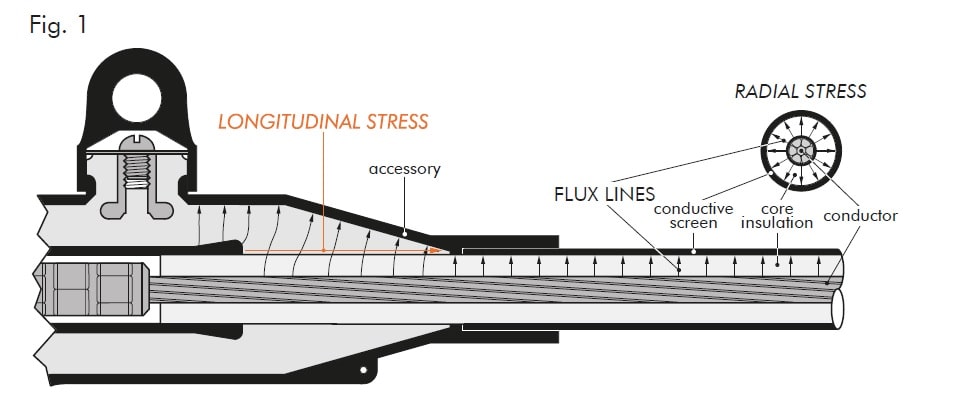
The design and construction of screened power cables is primarily based on two types of electrical stress – a radial stress which can be represented by flux lines and a longitudinal
stress on the surface of the insulation where the screen has been removed. (Fig. 1).
ELECTRICAL STRESS RELIEF
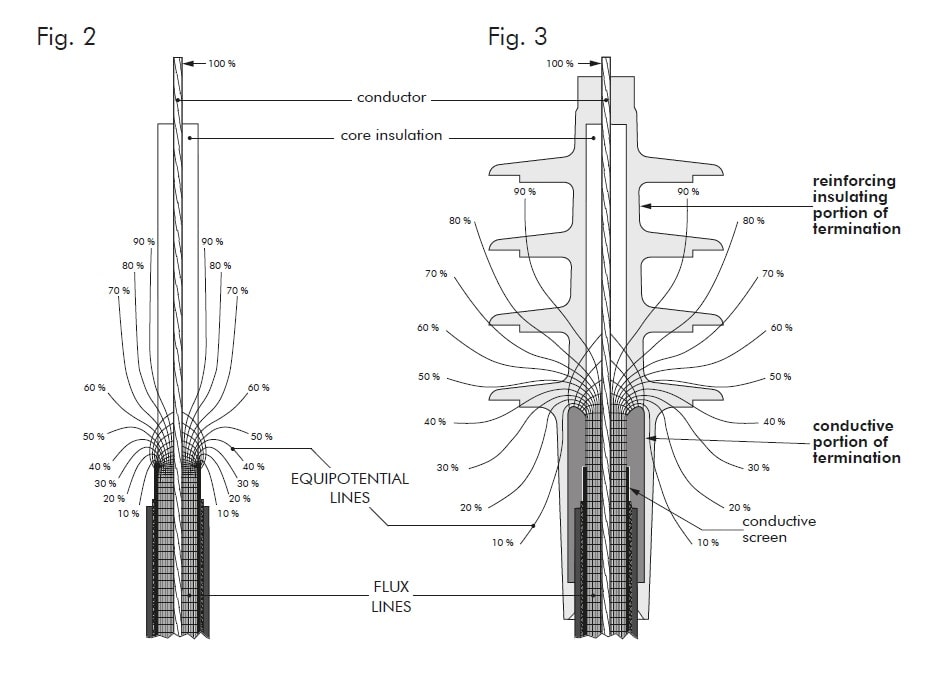
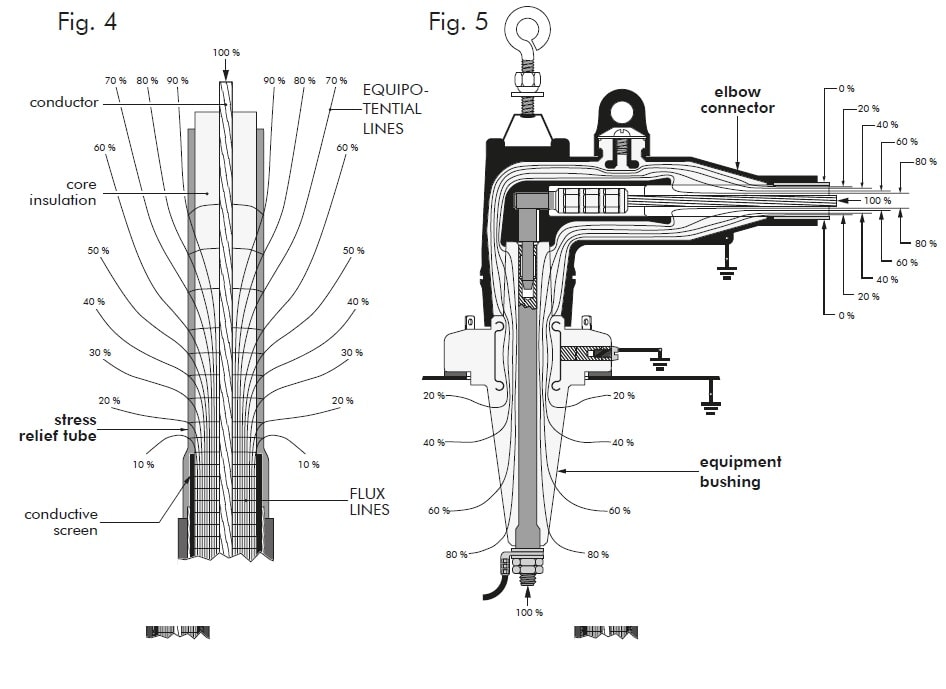
When the semi-conductive screen is cut, the electrical field distribution changes radically. The surrounding air and the dielectric material in the vicinity of the cut screen become overstressed (Fig. 2) and breakdown of the cable will soon occur. To avoid this, we control the equipotential lines by installing a termination with a stress cone (Fig. 3), a termination
with linear stress relief (Fig. 4) or a separable connector (Fig. 5) at the end of the screen.
The terminations will make sure that equipotential lines are sufficiently far apart when they finally emerge into the air and that they will not cause ionization. The separable connector keeps the equipotential lines inside the cable/connector assembly in a controlled way. This stress relief is automatically built into all the accessories by the precision moulding of conductive and/or insulating EPDM/silicone rubber.

Nexans Cable Accessories
Nexans manufactured Cable Accessories are in extensive service throughout the UK DNO power grid – the Euromold connectors are approved and are approved by several DNO/IDNO operators dependent on the product, voltage and network.
The JTS Joints and MONO Terminations are increasingly preferred and adopted by NERS Accredited Independent Connection Providers (ICPs) working on 11kV private networks.

Surge Counters | Monitoring The Health Of Surge Arresters
September 15th, 2022
Surge Counters are used to monitor the health of Surge Arresters and protect against potentially damaging events which could lead to deterioration and ultimate overload. It is important to also schedule regular checks of surge arresters including visual inspection and diagnostics to detect and prevent a costly medium voltage power outage.
Well-designed and tested, ABB surge arresters are maintenance-free and can reasonably be expected to have a long service life. However, the condition of these surge arresters should also be monitored to ensure the most ultimate protection against a costly unplanned power outage. This can be achieved using the ABB EXCOUNT range of surge counters and monitors.
Surge Counters
Surge registration
The primary reason for the use of surge counters on modern gapless ZnO arresters is to check if a particular transmission line or phase suffers from an exceptionally high number of overvoltages leading to arrester operation — lightning faults on a line, for example. If this is the case, whilst it validates the need for the arresters, use of some preventative counter measures may be warranted to limit the number of surges. A sudden increase in the counting rate may also indicate an internal arrester fault, in which case the arrester should be investigated further.
However, simple surge counters tell only part of the story, as they only register the number of surges according to their operating characteristic. The user therefore has no way of telling the magnitude of the surge and if it was significant, nor when it occurred and if it was coincident with a system event.

Leakage current measurement
Surge counters can be complimented with the substation facility to measure leakage currents (total and/ or resistive), with the intention of monitoring and diagnosing the condition of the arrester and its state of fitness for continued service. However it is important to understand the validity of the information provided.
At continuous operating voltage (Uc), a metaloxide varistor acts as a capacitor, leading to a predominantly capacitive component of current and a significantly smaller resistive part. For a complete surge arrester, the capacitive current is further dependent on stray capacitances, pollution currents on the insulator surface, number of varistor columns in parallel and the actual operating voltage. Meanwhile the small resistive component of the leakage current is temperature and voltage dependant.
Since the capacitive component of the current dominates so greatly, the total leakage current measured on a basic mA-meter will be very sensitive to the installation; making interpretation of the readings difficult. Furthermore, the capacitive current does not change significantly due to deterioration of the voltage-current characteristic of the surge arrester. Consequently, measurement of capacitive current cannot reliably indicate the condition of metal-oxide arresters. Nevertheless, increasing values may be of some use in indicating that cleaning of the insulators is necessary.
Instead, it is generally recognized (IEC 60099-5) that the only reliable indicator for the condition of a gapless arrester that can be assessed during normal service is to measure the resistive component of the leakage current (or estimate it from the 3rd harmonic).
The obtained value may then be compared with the maximum allowable resistive current as given by the manufacturer under prevailing service conditions i.e. temperature and applied voltage.
If a metal-oxide varistor ages or is damaged by impulses etc, the arrester resistive leakage current, and hence power losses, increase permanently. This may result in an increase in temperature, which in turn, increases the leakage current and so on until a so-called thermal runway occurs. Early detection of a possible harmful increase may prevent a failure and subsequent unplanned shutdown. Hence, to provide true diagnostics, a good monitor must be able to detect the arrester leakage current and isolate and measure the resistive component flowing internally.

EXCOUNT Surge Counters | ABB
Diagnostic plan
A surge arrester does not contain any moving parts or items that can break.
Consequently there is nothing to maintain, adjust, correct or repair, which is why there is normally no need to perform any form of periodical checking or monitoring. In general, a correctly chosen and installed arrester is maintenance free during its entire lifetime. A correctly chosen arrester in this context means that its electrical and mechanical characteristics are matched to actual service conditions.
Nonetheless, since external factors can place stresses on the arrester, potentially leading to its deterioration and ultimate overload, it may be prudent to draw up a schedule for regular checks. Such consideration is all the more important if an unplanned outage is unacceptable for reasons of system stability or economics. The older the arrester, the more regular these checks may need to be, since the statistical risk for overload increases with age.
As a guide, the following strategy is proposed to be made at regular intervals as required and determined by site availability and importance:
- Visual inspection and possible cleaning
- Diagnostics in advance of the designated lighting season and thereafter following periods with bad weather conditions.
- Diagnostics after special fault conditions causing flashover in the network or TOV’s of high amplitude and/ or long duration.
Because of their nature, old-style gapped arresters should be removed as soon as possible as part of a scheduled replacement program. Their age and inherent design does not warrant detailed evaluation. Early models of gapless arresters may require additional visual checks to look for signs of mechanical or physical deterioration as well as monitoring of the internals. Newly purchased arresters can also benefit from diagnostic monitoring right from first installation since this permits easy trend analysis to detect potential deterioration later on in its service life.
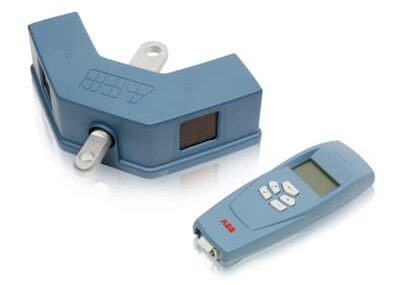
EXCOUNT-C |
EXCOUNT-I |
EXCOUNT-II |
EXCOUNT-III |
 |
 |
 |
 |
Safety Comes First
Monitoring Surge Arresters
EXCOUNT draws upon over 80 years of experience by ABB in the development of arresters and associated accessories. Safety, functionality and longevity are key elements which are given priority in selection and design of components. The EXCOUNT range has not neglected short-circuit safety which lies inherent in the design concept.
The EXCOUNT family is characterized by:
Highest Personnel Safety
- Same electrical safety performance as ABB arresters
Negligible Residual Voltage
- Does not reduce protection margins
- Minimized risk for injury in case of accidental contact during surges
Maintenance Free
- Sealed components
- Requires no external power supply (except for EXCOUNT-III)
Long Life
- Moulded components, non-sensitive to humidity or temperature variations
Universal Application
- All makes and types of gapless surge arresters.
- All weather and temperature conditions.
Design
The use of an impulse current transformer with a single-turn primary ensures that the voltage drop across the counter is negligible, even at the highest impulse currents encountered in service. This leads to added personnel safety and no increase in the protection level of the arrester. Since no gaps or series impedance are used, there is no risk of internal arcing and consequent explosive failure in the event of a short-circuit following an arrester failure.
One further common feature with the entire EXCOUNT family is that all internal components are fully encapsulated in polymer. This provides sealing to IP67, which ensures no harmful ingress of dust or moisture as well as providing personal safety through complete protection against contact with the internals.
EXCOUNT is available in different variants, depending on the user’s needs: simple, basic or extensive. Contact Thorne & Derrick for more information.

T&D are Specialist Distributors of LV MV HV Cable Installation, Jointing, Substation & Electrical Equipment – we supply companies in the onshore and offshore wind, solar, rail, oil/gas, data centre, battery storage and utility sectors with products to enable the energisation, operation and maintenance of underground cables and overhead lines.
Products | Surge Counters | Sealing Cable Ducts | Cleats, Clamps & Hangers | LV MV HV Electrical Safety | Arc Flash Clothing & PPE | Jointing, Termination & Stripping Tools | Cable Pulling & Laying | Feeder Pillars | Cold Shrink | Heat Shrink | Joints Terminations Connectors MV HV


HV Joints Terminations Connectors | 11kV/33kV up to 66kV Ex Stock
ABB EXCOUNT-III Surge Counters | Remote & Real Monitoring of High Voltage Power Systems
September 15th, 2022
ABB EXCOUNT-III Surge Counters for MV and HV Power Systems
ABB developed EXCOUNT-III to provide remote, real-time monitoring of surge arresters. The system helps utilities monitor arrester performance and assess electrical stresses within high voltage substations.
As electricity networks become more demanding, online condition monitoring is increasingly important. Therefore, utilities need reliable information to support maintenance decisions and reduce unexpected outages.
The ABB EXCOUNT-III Surge Counters provide detailed information about surge activity and arrester condition. In addition, the recorded data supports insulation co-ordination assessments across the substation.
By combining remote monitoring with diagnostic information, EXCOUNT-III helps operators understand how surge arresters respond to electrical disturbances.
What Are Surge Counters?
Surge counters record electrical surge events affecting surge arresters. These devices help operators monitor surge activity within medium and high voltage power systems.
Surge arresters protect electrical equipment against potentially damaging overvoltages. However, repeated electrical stresses can affect their condition over time.
Consequently, monitoring provides useful information for maintenance planning. Regular visual inspections and diagnostic checks also remain important.
ABB has extensive experience developing surge arresters and associated accessories. Drawing on this expertise, the EXCOUNT range focuses on safety, functionality and long-term reliability.
Furthermore, short-circuit safety is considered within the design of the EXCOUNT surge counter range.
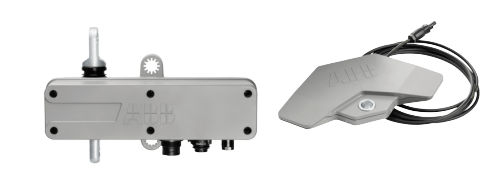
ABB EXCOUNT-III Remote Surge Arrester Monitoring
Electricity network operators aim to maintain a reliable power supply while reducing unplanned interruptions. As a result, condition monitoring has become an important part of substation maintenance.
Surge arresters protect electrical equipment from transient overvoltages. During electrical disturbances, they may experience significant current impulses.
Although these events can be brief, they provide valuable information about stresses affecting the power system.
For this reason, ABB developed EXCOUNT-III to monitor surge activity and support diagnostic analysis.
Real-Time Monitoring and Diagnostic Information
EXCOUNT-III is a remote monitoring, diagnostics and analysis system for surge arresters. Depending on the selected version, it records several important operating parameters.
These include:
- Total surge count: Records the number of discharge events.
- Surge amplitude: Measures the magnitude of surge current impulses.
- Wave steepness: Provides information about the rate of change of the surge current.
- Date and time: Records when surge events occur.
- Total leakage current: Monitors leakage current through the arrester.
- Resistive leakage current: Supports assessment of arrester condition.
In addition, the advanced system can use recorded surge information to estimate the residual voltage across the arrester.
Consequently, operators can assess potential overvoltages affecting nearby equipment. This information also supports more detailed insulation co-ordination studies.
Overall, EXCOUNT-III provides information about both arrester performance and electrical conditions within the substation.

Monitoring Overvoltages Across the Substation
EXCOUNT-III does more than record surge arrester operations. The advanced version can also estimate overvoltages affecting equipment within the arrester’s protection zone.
For example, recorded surge current characteristics can help engineers assess whether the existing protection arrangement is suitable.
Furthermore, the information can support decisions about arrester selection, placement and insulation co-ordination.
As a result, utilities gain a clearer understanding of the electrical stresses experienced by their equipment.
IEC 61850 and SCADA Integration
ABB EXCOUNT-III supports IEC 61850 Edition 2 for communication with compatible substation monitoring systems.
Using an optical fibre connection, the system allows recorded information to be accessed remotely. Therefore, operators can integrate relevant signals into an existing SCADA system.
Remote access also reduces the need for site visits solely to retrieve surge arrester monitoring data.
Importantly, personnel do not need to approach an energised arrester to perform routine online diagnostic readings. This provides an additional safety benefit for substation operators.
EXCOUNT-III Applications and Performance Data
The EXCOUNT-III system uses individual sensors connected through optical fibre communication. Each sensor can be accessed separately for monitoring and data analysis.
In addition, the system can be integrated into compatible SCADA installations. It is designed for use with different makes and types of gapless surge arresters.
Key Features and Benefits
- Remote, real-time monitoring of surge arresters.
- Supports assessment of arrester condition and substation electrical stresses.
- Does not add voltage to the arrester’s residual voltage.
- Reduces substation visits for routine monitoring.
- Supports IEC 61850 Edition 2 communication.
- Allows integration with compatible SCADA systems.
- Enables analysis of surge current impulses.
- Supports more detailed insulation co-ordination assessments.
- Provides a straightforward monitoring interface.
- Designed for maintenance-free operation.
As a result, EXCOUNT-III offers a practical monitoring solution for high voltage substations and electrical power networks.
ABB EXCOUNT Surge Counter Range
ABB offers several EXCOUNT models for surge arrester monitoring. The range includes EXCOUNT-C, EXCOUNT-I, EXCOUNT-II and EXCOUNT-III.
Each model provides different monitoring capabilities. Therefore, selection should reflect the required measurements, communication functions and installation conditions.
| EXCOUNT-C | EXCOUNT-I | EXCOUNT-II | EXCOUNT-III |
|
|
|
|
EXCOUNT-III Design Features
EXCOUNT-III is available in two versions: EXCOUNT-IIIA and EXCOUNT-IIIM.
Both versions provide monitoring capabilities. However, the advanced model offers additional surge analysis functions.
EXCOUNT-IIIA Advanced Monitoring
The advanced EXCOUNT-IIIA version records detailed information about surge arrester operation.
For each connected arrester, it can record:
- Total number of surge discharges.
- Surge current amplitude.
- Surge wave steepness.
- Date and time of occurrence.
- Total leakage current.
- Resistive leakage current.
Furthermore, resistive leakage current is assessed through third-harmonic analysis using Method B2 of IEC 60099-5.
The advanced model also uses high-speed sampling to capture complete surge current impulses. Consequently, engineers can examine the characteristics of individual surge events.
EXCOUNT-IIIM Standard Monitoring
EXCOUNT-IIIM is intended for applications that do not require detailed overvoltage analysis.
Instead of recording complete surge waveforms, the standard version categorises discharges according to their amplitude.
Each event also receives a date and time stamp. Meanwhile, other general monitoring features remain available across the versions.
Optical Fibre Communication
A web browser interface allows users to access individual EXCOUNT-III units through an optical fibre connection.
In addition to viewing monitoring data, users can configure the equipment through this interface.
The system also supports IEC 61850 communication for compatible SCADA integration. Therefore, utilities can include arrester monitoring information within existing data collection arrangements.


EXCOUNT-III ABB Surge Counters
EXCOUNT-III Surge Registration
Surge registration is an important feature of the EXCOUNT-IIIA advanced monitoring system.
In addition to counting discharge events, it records surge amplitude and wave steepness. This information allows engineers to estimate the residual voltage across the arrester during an electrical surge.
Consequently, operators can assess potential overvoltages within the substation more accurately.
For example, this information may indicate whether the existing surge protection arrangement is adequate.
Alternatively, the recorded results may support a review of arrester selection or the number of arresters installed.
Furthermore, engineers can compare surge front times and estimated overvoltages with information from transformer monitoring equipment.
As a result, EXCOUNT-III contributes to wider electrical system condition monitoring and diagnostic analysis.
Leakage Current Measurement and Condition Monitoring
EXCOUNT-III measures both total leakage current and the resistive component of current flowing through the surge arrester.
In particular, resistive leakage current provides useful information about arrester condition.
Changes in this measurement can help operators assess whether an arrester remains suitable for continued service.
Furthermore, monitoring data can be integrated into a compatible SCADA system. This allows maintenance teams to review arrester condition alongside other substation information.
Consequently, maintenance or replacement activities can be planned using recorded condition data.
This approach can help reduce unnecessary interventions and support efforts to prevent unplanned power outages.
EXCOUNT-III Safety and Remote Monitoring
Safety is an important consideration when monitoring energised surge arresters.
EXCOUNT-III allows operators to retrieve monitoring information remotely through an optical fibre connection. Therefore, personnel do not need to approach the arrester simply to obtain routine diagnostic readings.
In addition, remote monitoring can reduce substation visits undertaken solely to assess arrester condition.
Weatherproof Construction and Installation
EXCOUNT-III components are housed within a sealed, weatherproof enclosure suitable for outdoor installation.
The base unit is mounted on the support structure and connected in a similar arrangement to a conventional surge counter.
Meanwhile, a separate field probe is installed at the bottom of the surge arrester.
The system also requires an external power supply and optical fibre communication connection.
Its auxiliary power requirements are:
- Supply voltage: 100–250V AC or DC.
- Communication: Optical fibre connection.
- Installation: Outdoor, weatherproof equipment housing.
As a result, the system combines remote access, diagnostic monitoring and outdoor installation capability.
Thorne & Derrick – MV and HV Electrical Equipment
Thorne & Derrick are specialist distributors of LV, MV and HV cable installation, jointing, substation and electrical equipment.
We supply products for the installation, energisation, operation and maintenance of underground cables and overhead power lines.
Our customers operate across utilities, onshore and offshore wind, solar, rail, oil and gas, data centres and battery energy storage.
In addition, we support contractors and electrical engineers with specialist products for power distribution and electrical infrastructure.
Explore Our Electrical Equipment Range
Thorne & Derrick supply a wide range of electrical installation and maintenance products. Explore the following categories:
- Surge Counters
- Cable Duct Sealing Systems
- Cable Cleats, Clamps and Hangers
- LV, MV and HV Electrical Safety Equipment
- Arc Flash Clothing and PPE
- Cable Jointing and Termination Tools
- Cable Pulling and Laying Equipment
- Electrical Feeder Pillars
- Cold Shrink Cable Joints
- Heat Shrink Cable Accessories
- MV and HV Cable Joints, Terminations and Connectors
For technical information, product selection or availability, contact Thorne & Derrick to discuss your electrical equipment requirements.
HV Joints, Terminations and Connectors | 11kV/33kV up to 66kV Ex Stock
Offshore Wind Power Cable Management | Top 5 Challenges
August 31st, 2022
Top 5 Challenges In Wind Power Cable Management
Offshore Wind Power Cable Management
Roxtec Top 5 Challenges
Thorne & Derrick are Approved Distributors for Roxtec, the leading manufacturer of sealing solutions for cables and pipes, to protect electricity Transmission & Distribution assets including windfarm substations against water ingress, gas migration and fire hazards.
Below Roxtec have compiled the top 5 most common issues we all struggle with on offshore substations.
1. Specifications & Certificates
We all want to ensure safety and operational reliability, and use high quality products to deliver the best result we can. Therefore, we often meet specifications and requirements demanding a multitude of certificates. However, it is not guaranteed that all types of cable sealing methods are approved.
The best thing would be to find a sealing solution that has passed all tests and certifications.
2. Uncertain Estimates
It can be difficult to know how many cables or pipes, or what size power and instrumentation cables, we need to route. We can never be sure about making the right openings, or about how to seal all those penetrations. Even the best of estimates cannot predict all late design changes.
What we need is a sealing system that is as adaptable as possible to the number and size of cables, pipes or openings. It should be so flexible that we would be able to have spare capacity.
3. Hard Cables To Handle
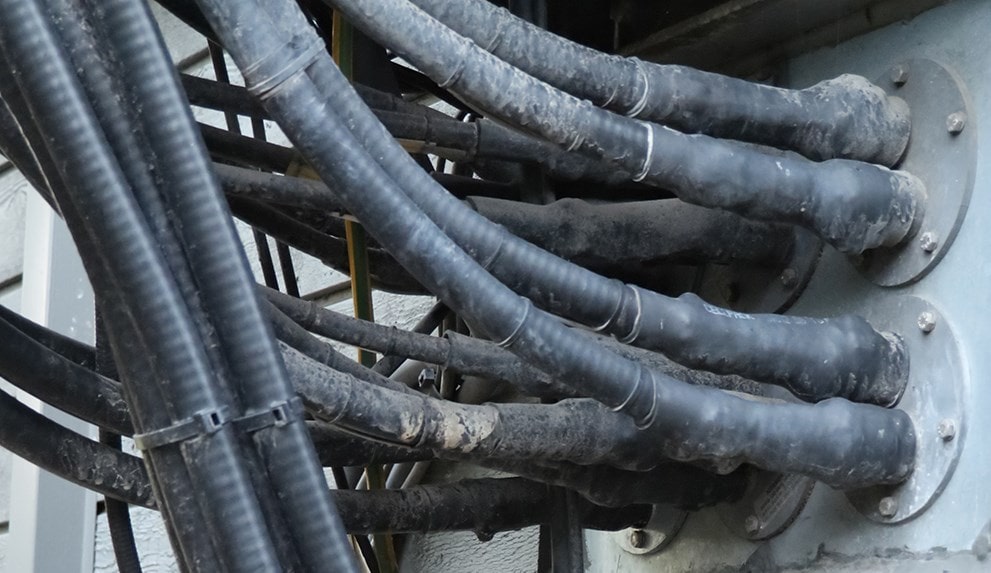
It is difficult, or almost impossible, to move and bend a large high-voltage or medium-voltage power cable into the desired position for routing through a deck or bulkhead. It takes a lot of time to reorganize the routing path in order to gain a couple of millimeters of bending radius.
What you need is a solution where you can position and apply a seal to fit around the cables, even if they are in an off-center position.
4. Tricky Design Work
Given the issues mentioned above, the work of design engineers often becomes a nightmare. We need to plan, calculate and design in cable and pipe penetrations at an early stage considering both rollout and maintenance. Sometimes, it means recalculating each opening.
Imagine a web-based design tool that we can use to design and redesign transits in no time.
5. Time-Consuming Installation
We know renewables can save the climate, and we know speed is crucial and time is money. Therefore, it is so frustrating to struggle with sealing solutions that are neither flexible nor easy to install. We cannot accept that project plans fail due to complicated installation work tasks. We should only engage suppliers of user-friendly products who will also train the installation team.
Roxtec provides offshore wind farms with an “all in one” solution for cable entry sealing, cable management and vibration damping. Standardise with Roxtec seals for efficient offshore windfarm cable protection design, quick roll-out and certified protection – cables are securely fixed, sealed and cable lifetime is extended.

Thorne & Derrick are Specialist Distributors to the UK and international Offshore Wind & Renewable industry to provide safe and reliable
LV HV Electrical Cable & Power Distribution Systems up to 66kV – we are highly customer responsive and absolutely committed to providing a world-class service.
Contact our UK Power Team for competitive quotations, fast delivery from stock and technical support or training on all LV-HV products.
Key Product Categories: Duct Seals | Cable Cleats | Cable Glands | Electrical Safety | Arc Flash Protection | Cable Jointing Tools | Cable Pulling | Earthing | Feeder Pillars | Cable Joints LV | Joints & Terminations MV HV

See how T&D support, supply and service the Renewable Energy industry.
ENERGYx2022 North | Chester Racecourse | 21st September 2022
August 15th, 2022
ENERGYx2022 North | Chester Racecourse | 21st September 2022 | Book Now
ENERGYX2022 north
What: ENERGYx2022 North | Electrical Industry Event
Where: Chester Racecourse, New Crane Street, Chester, CH1 2LY
When: Wednesday 21st September 2022 09:00 – 16:00
Exhibition Space Bookings: BOOK NOW
Free Delegate Attendance: BOOK NOW
ENERGYx2022 North is an Exhibition and Conference for anyone working within the Electricity Industry (distribution network operators, private network operators, energy transmission, renewable energy, telecommunications, and rail companies). This Net Zero event combines Overhead Lines, Plant and Cables as well as featuring the Health & Safety aspects.
Thorne & Derrick are delighted to announce that we are exhibiting at ENERGYx2022 North taking place this September at Chester Racecourse. Earlier in the year we were Exhibition Sponsors for ENERGYx2022 South in Chester. We would like to take this opportunity to invite our supply chain to attend this prestigious event.
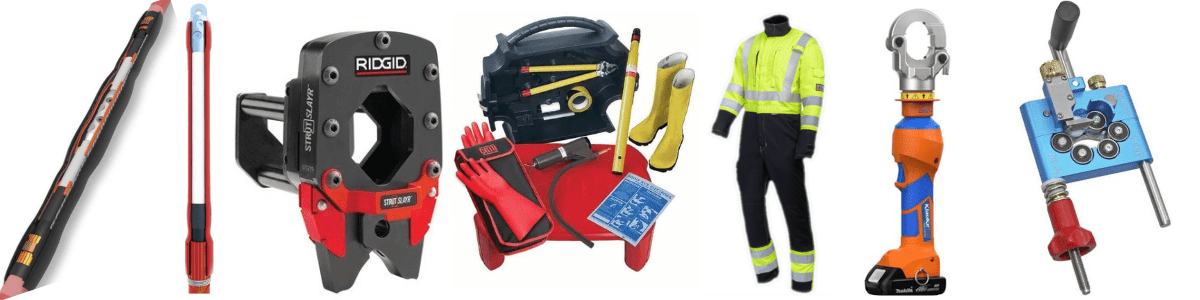
Thorne & Derrick will be showcasing a range of products including the Strutslayr Rigid Tool, HV Joints, Terminations and Connectors, Arc Flash PPE & Electrical Safety Equipment and Cable Jointing Tools.
There is much to see and do at ENERGYx2022 North, be that hear from leading industry figures, meet the best of the supplier base, take part in practical health and safety demonstrations, and sample the food drink and entertainment available at the Networking event the evening prior.
This event will be attended and supported by a wide mix of people working in Electrical Utilities, Network Operators, DNOs, Railway Companies, Transport Specialists, Renewable Companies, Civil Works, Health & Safety, Telecom, data centres and Industrial Manufacturers with private networks.

Following on from ENERGYx2020/21, COP26 and the UK government’s drive for us all to reduce the use of fossil fuels ENERGYx2022 will be a great place to benchmark our progress. The challenges reaching Net Zero creates for transmitting and distributing electricity whilst maintaining safe and reliable networks, though not insurmountable requires a lot of joined up and collaborative thinking.
With the proliferation of working from home it has become more difficult to meet and network with potential customers and suppliers and therefore events such as ENERGYx and The Electrical Engineers Circle have grown in importance.


Contact Louise Purcell Events Director at Energy Network Events Limited to discuss further:
Tel: +44 (0)121 736 0411
Mobile: +44(0)7581 779661
Email: [email protected]
Energyx2022 North Confirmed Speakers
Liam O’Sullivan – Licence Director, SP Manweb, SP Energy Networks

Liam O’Sullivan is the Licence Director for the SP Manweb area for SP Energy Networks. He started his professional career in ScottishPower in 2000 and has gained a wealth of experience in several senior roles, in both the Retail and Networks businesses, including Customer Collections, E-Commerce, Network Operations, Customer Connections and Large Capital Investment Projects.
In his current role, he is responsible for the electricity distribution network in North West England, North and Mid Wales. As a result of the decarbonisation of transport and heat networks, demand and reliance on our electricity network infrastructure is expected to increase significantly. Liam is committed to ensuring a smooth transition to low carbon technologies for all industrial, commercial and domestic customers in Merseyside, Cheshire, North Shropshire and North Wales.
 Cara Blockley – Head of DSO Strategy, Electricity North West
Cara has been with Electricity North West for 14 years working in network innovation and transition to distribution system operations for the last 8 of those. Cara has responsibility for the teams who are charged with leading the North West to Net Zero.
This means ensuring we understand what the needs of our customers will be in relation to network capacity requirements, seeking innovative, flexible solutions to those requirements through running tenders for flexibility and supporting the adoption of low carbon technologies.
Geoff Murphy – Head of Delivery for Low Carbon Technology and Low Voltage Cables, SP ENERGY Networks
Geoff is currently the Head of Delivery for Low Carbon Technology and Low Voltage Cables in the SP Manweb Licence Area. He is a Chartered Engineer that has worked for SP Energy Networks for 18 years.
During this time, he has held several varied positions within the organisation, with a strong focus on developing, trialling an implementing innovation strategies and solutions.
Kailash Singh – Lead Engineer – Future System Strategy, SP Energy Networks
Kailash Singh is a Lead Engineer within Future System Strategy team at SP Energy Networks. With over 15 years of industry experience, Kailash is specialised in power system planning, design, and network innovation.
At SP Energy Networks Kailash is involved in development of the state-of the art Engineering Net Zero (ENZ) Model which underpins Load Related Expenditure (LRE) within SPEN’s RIIO-ED2 Business Plans. Kailash has been instrumental in development of SPEN’s flexible network planning process and have been involved in assessment of over 1.5GW of flexibility capacity across both distribution license areas of SPEN.
Professor John Barrett OBE
John is a Professor in Energy and Climate Policy at the Sustainable Research Institute, University of Leeds with over 20 years of experience in energy and climate policy. John’s research interests include energy demand, resource productivity, energy and economy modelling, carbon accounting and exploring low carbon transitions.
John has been the Director of a number of large research centres that has employed a range of modelling approaches to understand how changes in production and consumption can contribute to a low carbon future. John was the Director of the Centre for Industrial Energy, Materials and Products (CIE-MAP – www.ciemap.ac.uk), a £4 million initiative funded by the UK Research Council. The centre explored how using material and products differently could contribute to the UK carbon targets. John is now a Co-Director for the Centre for Research in Energy Demand Solutions (CREDS – www.creds.ac.uk). This £19 million initiative is a new research centre established in 2018 with a vision to make the UK a leader in understanding the changes in energy demand needed for the transition to a secure an affordable, low carbon energy system.
John’s research is applied in various arena having been an advisor to a number of UK Government departments, Government Select Committees and agencies such as the Committee on Climate Change. John’s research team are responsible for providing annual headline Government indicators, including an indicator on “Consumption-based GHG emissions” and “Resource Productivity”. His research findings have provided evidence and influenced many Government publications related to energy demand projections, climate policy and resources and waste strategies. John was also a lead author for the International Panel on Climate Change, Working Group III.
Helen Gaier-Laidlaw – Licence Programmes Manager, SP Energy Networks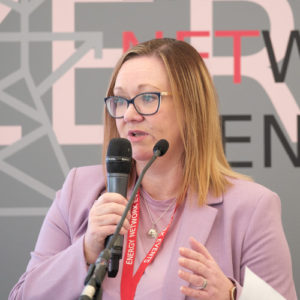
Helen is responsible for the development and delivery of investment programmes for SP Energy Networks including Overhead lines, vegetation management, telecoms, civils, Low Carbon Technology connections and investments including EVs and heat pumps.
Management of budgets, asset and business performance as well as preparing for the next Price Control contract from Ofgem and enabling SP Energy Networks transition to Net Zero.
Tom Walsh – District General Manager – Scottish Power
Tom leads a multidiscipline team to build, operate and maintain the EHV, HV & LV electricity distribution network in Merseyside and delivering a world class customer experience.
Tom is an experienced GM with a demonstrated history of working in the construction and utilities industries.
Guy Shapland – Lead Commercial and Policy Analyst, SP Energy Networks
Guy started his career in Manweb in 1993 as an apprentice jointer and has worked in many areas throughout his time. More recently Guy has been taking a lead role in developing the processes and systems to manage the procurement and operation of flexibility services.
Jason Hicks – Offshore Network Strategy Manager, National Grid ESO
Jason started his career at National Grid in 2011. During this time, Jason has been responsible for producing the Network Options Assessment (NOA) signalling the future transmission network requirements needed to deliver the renewable energy revolution.
With 10 years’ experience in onshore network planning Jason recently pivoted into the offshore network planning space. Since then, Jason has developed the Holistic Network Design, a first-of-a-kind plan to coordinate the connection of 23GW of offshore wind and recommend the key onshore and offshore infrastructure requirements necessary to facilitate the Government’s ambition of connecting 50GW of offshore wind by 2030.
In his current role, Jason is continuing to develop the strategy that delivers a future offshore transmission network, unlocking access to large volumes of renewable generation and paving the way to Net Zero.
Simon Sutton
Simon has over 25 years’ experience in the electricity transmission and distribution industry predominantly in the cables sector. He has worked in the cable materials supply industry, as the cables policy manager for a transmission utility and in the research sector. His interests also include condition monitoring, diagnostic testing, forensics and asset management.
Simon now works as Director of Professional Services for Altanova and is based in the UK. His responsibilities include business strategy, external relationships, and the coordination of technical activities around the world.
Simon holds a degree and PhD in Physics both from the University of Reading. He is active in International professional bodies and recently became chairman of CIGRE Study Committee D1, Materials and Emerging Test Techniques. He is also a member of the editorial board of the IEEE Electrical Insulation Magazine and a Visiting Senior Research Fellow at the University of Southampton.
Sebastian Ebert – M Sc of Engineering / Diplom-Ingenieur Elektrotechnik (FH)
 Sebastian graduated from the University of applied sciences Zittau, Görlitz (Germany) as a Electrical Engineer and has worked in the industry for nearly 20 years in Germany and across the world. He has been with Suedkabel since 2019 and as a keen environmentalist he and his team want to play their part in helping with the drive to Net Zero.
Based on what we learnt at previous ENERGYx events we thought it fitting to have a speaker from a world class manufacturer, Suedkabel, who have been producing high quality cables and accessories for more than 120 years.
Sebastian will speak about the importance of maximizing the use of European power cable system manufacturing with technological leadership and sustainable advantage as contribution to meet the climate targets to drive the energy transition in the UK and in Europe.
T&D are Specialist Distributors of LV MV HV Cable Installation, Jointing, Substation & Electrical Equipment – we supply companies in the onshore and offshore wind, solar, rail, oil/gas, data centre, battery storage and utility sectors with products to enable the energisation, operation and maintenance of underground cables and overhead lines.
Products | Sealing Cable Ducts | Cleats, Clamps & Hangers | LV MV HV Electrical Safety | Arc Flash Clothing & PPE | Jointing, Termination & Stripping Tools | Cable Pulling & Laying | Earthing– Tapes | Rods | Bars | Feeder Pillars | Joints LV – Cold Shrink | Resin | Heat Shrink | Joints Terminations Connectors MV HV | Tools – Cutting | Crimping

HV Joints Terminations Connectors | 11kV/33kV up to 66kV Ex Stock