Electrical Safety
PBwel Earthing Leads For Temporary Earthing Of Transmission Line Conductors 132kV, 275kV, 400kV
January 11th, 2021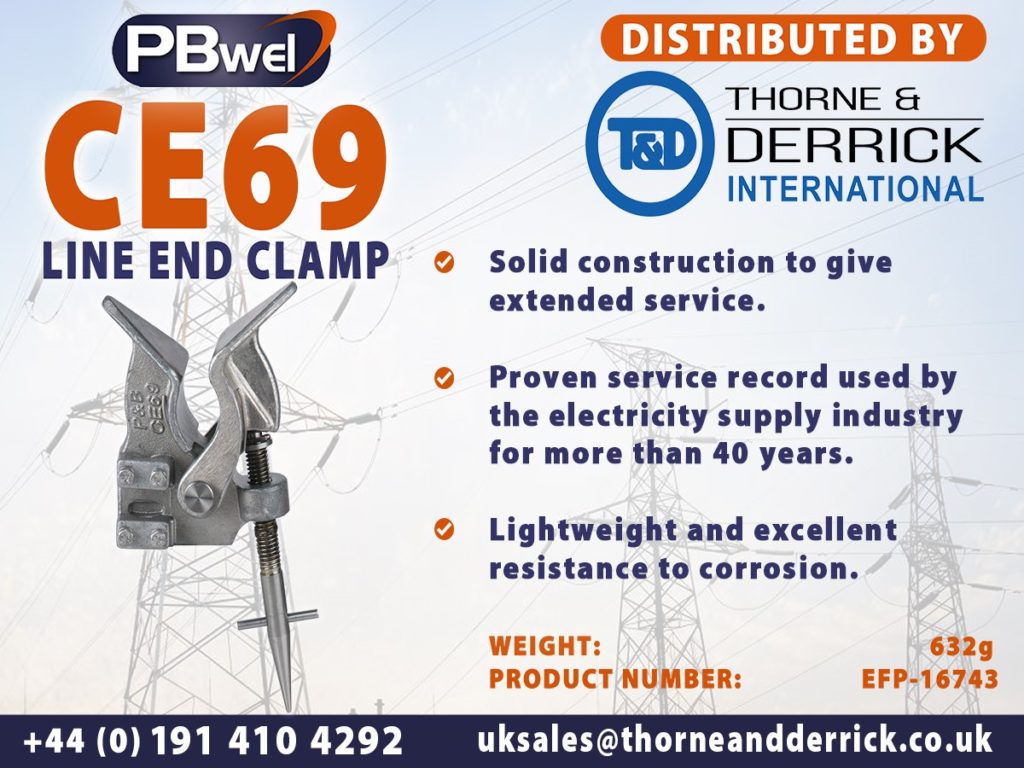
PBwel CE69 Line End Clamp
PBwel CE69 Line End Clamp
PBwel Earthing Leads
The PBwel range of Earthing Leads and equipment for the Electricity Transmission & Distribution sector are renowned within the industry and are suitable for temporary earthing of transmission line conductors within the range 132kV, 275kV and 400kV.
The PBwel CE69 Line End Clamp is suitable for application to conductors ranging from 13mm to 46mm.
The CE69 earth clamp is to be applied in either an upward or downward direction utilising an OL1 operating socket attached to an insulated operating pole. The spring-loaded jaws enable the clamp to be slipped easily over the line conductor and retain the clamp in position whilst the operating screw is being tightened or loosened.
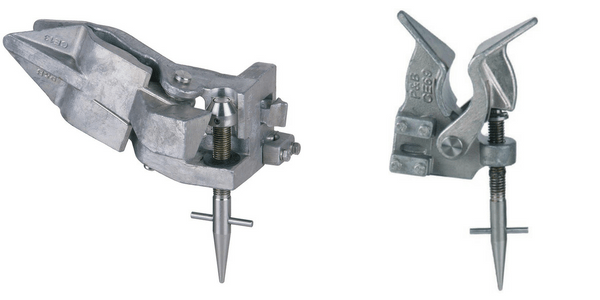
A full range of Transmission Line Earthing Equipment are available for use with transmission line end earthing clamps
PBwel CE69 Line End Clamp
Technical Specification
- Clamping Diameter: 13- 46mm
- Short Circuit Rating: 20kA/ 1s
- Cont. Current Rating: 300A
- Weight: 0.632kg
- Part Number: EFP-16743

PB WEIR – DISTRIBUTORS, STOCKISTS & SUPPLIERS
PB Weir Substation Earthing and Transmission Line Earthing Equipment include line end clamps, earth end clamps, portable earthing leads and operating poles for high voltage substations, overhead power line and transmission line applications – voltages include 11kV, 33kV, 66kV, 132kV up to 400kV.
Thorne & Derrick provide competitive prices and fast delivery from stock for the complete range of PB Weir substation earthing and transmission line earthing equipment.
In 2018 In 2018 PB Weir joined the Novarc group and re-branded as PBwel and now, through the ESP group of companies, we are able to supply, support and maintain a comprehensive range of Electrical Safety Equipment which includes: Earthing, Insulated Tools, Arc Flash Protection, Personal Voltage Detection Helmets, Insulating Gloves, Voltage Detection, Operating Poles & Lock-Out Tag-out.

ALADIN | Improved electrical safety levels for workers operating near live equipment
➡ Read More Here: ALADIN Individual Voltage Alarm With Headlamp For MV Overhead Lines 10-69kV
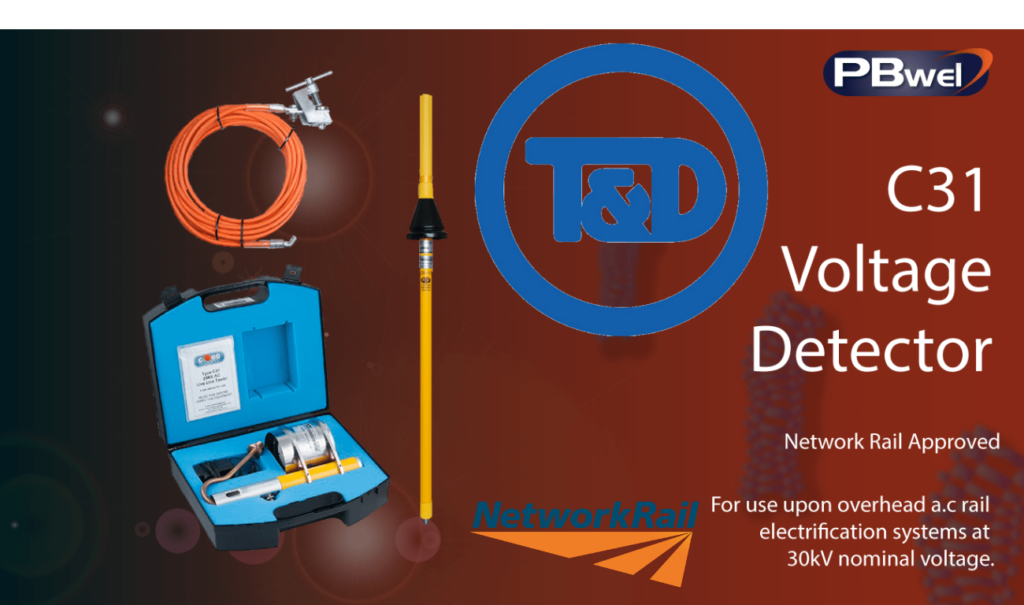
Product Spotlight | see Live Line Indicators designed for use upon overhead a.c. rail electrification systems operating at 25kV nominal voltage to indicate the presence of extra high voltages to aid safe working practices.
Further Reading
- E-Shark Safety Helmet By PBwel
- MTAG DR 69 kV Multi Voltage Detector Dual Range
- Network Rail Case Study New Overhead Line Equipment
- Substation Suspended Earthing Spigots By PBwel
- Drain Earths | PBwel 50sqmm Arctic Orange Field Drain Earth
- PBwel Transmission Line Earthing Leads 132kV, 275kV, 400kV
- Long Blues | Rail Portable Earthing By PBwel | Network Rail Approved
LV, MV & HV JOINTING, EARTHING, SUBSTATION & ELECTRICAL EQPT
Thorne & Derrick International are specialist distributors of LV, MV & HV Cable Installation, Jointing, Duct Sealing, Substation & Electrical Equipment – servicing UK and global businesses involved in cable installations, cable jointing, substation, overhead line and electrical construction at LV, 11kV, 33kV and EHV.

Arc Flash Protection Clothing | A Sizing Guide from CATU Electrical
October 12th, 2020
Medium & High Voltage Electrical Safety | Arc Flash Protection
Arch Flash Clothing
Size Guide
CATU Electrical ranges of arc flash clothing and switching suits include convenient kit form PPE with face shields, helmets and visors to protect the head/face and gloves for hand protection of utility workers against the dangers of arc blast from 12cal to 100cal levels – worn by substation engineers, SAP’s, cable jointers and overhead linesmen.
Below is a handy sizing chart for arc flash coverall, arc flash trousers, arc flash coat, arc flash bib overall and arc flash jacket.
Arc Flash Coverall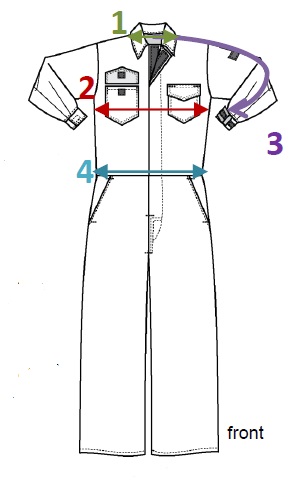
How to Measure
- Neck – Measure neck seam around the front and back
- Chest – Measure 1″ below armhole, across front and back
- Sleeve Length – Measure from centre back neck over to shoulder point and down to sleeve side
- Waist Width – Measure across waistline of coverall from side seam to side seam
| Size* | SM | MD | LG | XL | 2XL | 3XL |
| Neck | 16″ | 18″ | 20″ | 21″ | 23″ | 24″ |
| cm | 40.5 | 45.75 | 51 | 53 | 58.5 | 61 |
| Chest | 47″ | 51″ | 55″ | 59″ | 63″ | 67″ |
| cm | 119 | 129.5 | 140 | 150 | 160 | 170 |
| Sleeves Length | 33.5″ | 35″ | 36″ | 37″ | 38″ | 39″ |
| cm | 85 | 89 | 91.5 | 94 | 96.5 | 99 |
| Waist Relaxed | 33″ | 35″ | 38″ | 42″ | 44″ | 48″ |
| cm | 84 | 89 | 96.5 | 107 | 112 | 122 |
| Waist Extended | 37″ | 39″ | 43″ | 46″ | 48″ | 50″ |
| cm | 94 | 99 | 109 | 117 | 122 | 127 |
*Size of the garment (not on the body)
Arc Flash Trousers
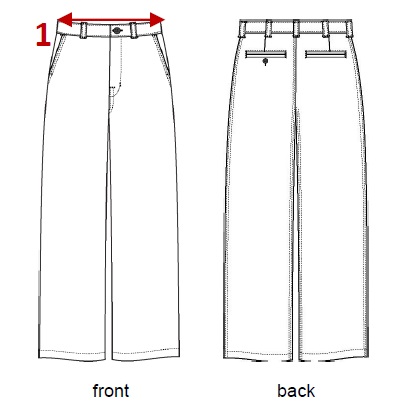
How to Measure
- Waist – Measure across top waistline of trouser across front and back
| Size* | 32 S | 36 M | 40 L | 44 XL | 48 2XL |
| Waist circumference (W)* | 33.5* | 37.5* | 41.5* | 45.5* | 49.5* |
| cm | 85 | 95 | 105.5 | 115.5 | 125.73 |
Arc Flash Short Coat
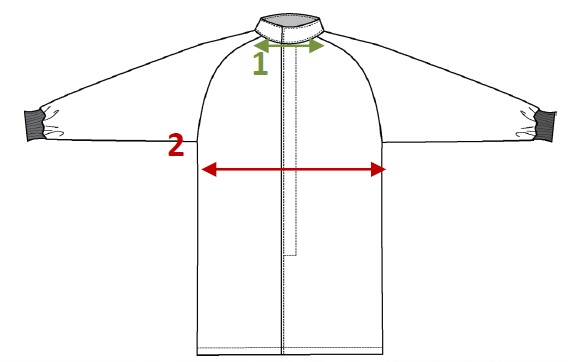
How to Measure
- Neck – Measure neck seam around front and back
- Chest – Measure 1″ below armhole, across front and back
| Size | SM | MD | LG | XL | 2XL | 3XL |
| Neck | 19″ | 20″ | 21″ | 22″ | 23″ | 24″ |
| cm | 48 | 51 | 53 | 56 | 58.5 | 61 |
| Chest | 48″ | 52″ | 56″ | 60″ | 63″ | 66″ |
| cm | 122 | 132 | 142 | 152.5 | 160 | 167.5 |
| Jacket Body Length | 32″ | |||||
| cm | 81 | |||||
Arc Flash Bib Overall
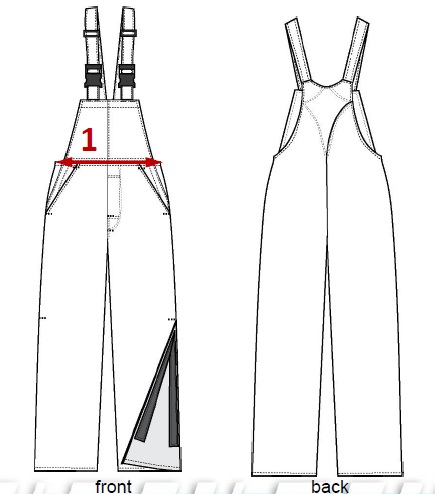
How to Measure
- Waist – Measure around waistline (bib seam), front and back
| Size* | SM | MD | LG | XL | 2X | 3X |
| Waist | 36″ | 39″ | 42″ | 45″ | 48″ | 51″ |
| cm | 91.5 | 99 | 106.5 | 114 | 122 | 129.5 |
*Size of garment (not of the body)
Arc Flash Jacket with Hood
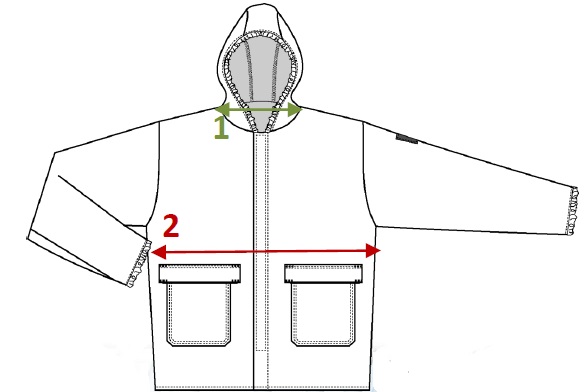
How to Measure
- Neck – Measure neck seam around front and back
- Chest – Measure 1″ below armhole, across front and back
| Size | SM | MD | LG | XL | 2XL | 3XL |
| Neck | 19″ | 20″ | ||||
| cm | 48 | 51 | ||||
| Chest | 46″ | 50″ | 54″ | 58″ | 62″ | 66″ |
| cm | 117 | 127 | 137 | 147 | 157.5 | 167.5 |
| Jacket Body Length | 32 | |||||
| cm | 81 | |||||

Medium & High Voltage Power Substations
Further Reading
- Electrical Safety – Arc Flash Accidents & Electrocution In LV-HV Installations
- Arc Flash Calculation – Selecting Clothing & PPE To Protect Lives Against Arc Hazard
- IEC 61482-2:2018 – Get Up To Speed With The New Arc Flash Standard
- Arc Flash PPE | 7 Top Considerations
- Arc Flash The Basics

Electrical Safety Equipment | Insulating Matting | Voltage Detectors | Substation Kits | Phase Comparators
THORNE & DERRICK
Thorne & Derrick are national distributors of LV, MV & HV Cable Installation, Jointing, Substation & Electrical Equipment – servicing businesses involved in cabling, jointing, substation, earthing, overhead line and electrical construction at LV, 11kV, 33kV, 66kV and EHV. Supplying a complete range of power cable accessories to support the installation and maintenance of low/medium and high voltage power systems:
- Slip-on Cable Terminations
- Cold-shrink Cable Terminations
- Heat-shrink Cable Terminations
- Cable Joints – Heat & Cold-shrink
- Separable Connectors (Euromold)
- Surge Arresters & Switchgear/Transformer Bushings
Key Product Categories: Duct Seals | Cable Cleats | Cable Glands | Electrical Safety | Arc Flash Protection | Cable Jointing Tools | Cable Pulling | Earthing | Feeder Pillars | Cable Joints LV | Joints & Terminations MV

Use Of SF6 Gas In The Electrical Transmission Industry
August 10th, 2020
Use Of SF6 Gas In The Electrical Transmission Industry
SF6 Gas
In The Electrical Transmission Industry
Bluefield
Sulphur Hexafluoride (SF6) gas circuit-breakers have been a critical technology under review by the European Union (EU) for some time. Bluefield applied our collective knowledge and learnings to inform and recommend an alternative the use if SF6 gas-type switchgear.
Problem
A site required upgrades to its existing High Voltage (HV) electrical switchboards. The site’s aim was to reduce all arc flash hazard categories to ‘everyday work clothing’ or less.
Bluefield identified that the existing switchboard equipment utilised the SF6 gas-type circuit-breakers
SF6 gas circuit-breakers have been a critical technology under review for some time.
Bluefield further investigated the risks of use, possible alternatives, and opportunities for the site to reduce its arc flash hazards.
Investigation
- The European Union EU regulation 517/2014, due to be reviewed in 2020, will potentially declare the complete phasing out of the use of SF6 gas type equipment.
- SF6 is the greenhouse gas with the most significant global warming potential (GWP) – 22,800 times more than CO2.
- SF6 decomposes under electrical stress, forming toxic by-products; this by-product, disulphur decafluoride (S2F10), has a toxicity on a par with phosgene gas, and is extremely hazardous to employees.
- Only licensed or authorised hazardous waste managers are permitted to handle, transport, and recycle SF6 (OPSGG 1989)
- A significant number of assets in the site’s HV electrical infrastructure utilised SF6 gas type circuit breakers.
Results
Bluefield recommended the use and future change out to Vacuum-type circuit-breakers.
Service experience shows them to be reliable, almost maintenance-free, and safe under operating conditions. They have negligible global warming potential (GWP), with no reporting required under the Synthetic Greenhouse Gas Management Act, no suffocation or poisoning risk due to toxic by-products or leakage, and no fire hazards or explosion risk due to over-pressurisation or overheating of the gas.
Bluefield also recommended the installation of remote or wireless switching of circuit breakers to remove the arc flash hazards associated with this task.
The site subsequently changed its business philosophy on the use of SF6 gas-type circuit-breakers. They implemented the use of Vacuum circuit-breakers, and utilised remote switching to achieve their target for arc flash reduction and risk mitigation.
About Bluefield

Bluefield believes that: –
- Equipment reliability starts with the quality execution of the lifecycle maintenance plan
- Software solutions should make it easier and less labour intensive to operate equipment within design limits and execute quality maintenance to a defined lifecycle plan
- Maintenance management is about managing maintenance and reliability, whereas asset management is about making sure the physical assets deliver the best bottom line outcomes for the business
We have proven our ability to assist our clients in mining, rail and gas industries to sustainably get more from their assets; more throughput, more reliability, more uptime, more productivity and more cost reductions. Our methods ensure that the site teams own the improvements and therefore they actually get implemented. We use the latest technology to get results faster.
Specialist Suppliers of High Voltage Electrical Equipment & Cable Accessories
LV, MV & HV Jointing, Earthing, Substation & Electrical Eqpt
Thorne & Derrick International are specialist distributors of LV, MV & HV Cable Installation, Jointing, Duct Sealing, Substation & Electrical Equipment – servicing UK and global businesses involved in cable installations, cable jointing, substation, overhead line and electrical construction at LV, 11kV, 33kV and EHV.
THORNE & DERRICK Product Categories: Duct Seals | Cable Cleats | Cable Glands | Electrical Safety | Arc Flash Protection | Cable Jointing Tools | Cable Pulling | Earthing | Feeder Pillars | Cable Joints LV | Joints & Terminations MV HV

Thorne & Derrick | Stockists & Suppliers | Joints Terminations Connectors up to 66kV
Medium Voltage Electrical Safety Tips | MV HV
May 7th, 2020
MV and LV Electrical Substation Hub: Courtesy OSHA
-
Guest Article By Sam Pherwani. P.Eng, CESCP Engineer, Instructor, Entrepreneur
Medium Voltage Electrical Safety
Five years+ of doing this, I’m still a student.
However been grateful to my customers for the exposure to windfarms, oil and gas, substations, pulp/paper meeting many fine electricians and learning from spirited discussions on how industry in US and Canada interprets Electrical Safe Work practices. Of course, NFPA 70E/NEC/CSA Z462 form the basis of Electrical Safety on this side of the pond.
These few pointers come out of experience in the Medium Voltage (per ANSI C84.1) Electrical Systems practically (2.4kV-69kV). Hope we see more of these best practices considered and frequently I might add, as the new world rolls into a better future.
- Electrical Safety Footwear – Conventional Electrical Hazard rated Safety Boots most electrical workers have are rated to ASTM F2413-11 and CSA Z195-14 offer very little electrical shock protection, 600VAC or less if in wet conditions. Most well written MV electrical safety Risk Assessment forms (JHA/JSAs) call for secondary protection such as dielectric insulating mats or dielectric insulating safety overshoes but human error, inertia sometimes causes these steps overlooked. ASTM F1117 Class 2 AC EN 50321 dielectric boots now offer 17kV/20kVAC protection, comparable to Class E hard hats, making it a better fit for MV workplace.
- Arc Rated Suits & Arc Flash Protective Clothing – Until NFPA 70E-2015 the soft “do not exceed” threshold for unsafe energized work was 40 cal/cm2 of incident energy at working distance (3-4 feet, length of hot-stick away from equipment). Since then, PPE manufacturers making arc flash suits rated to as high as 140 cal/cm2 have influenced the standards to soften stance on that verboten verbiage. Their rationale – no OSHA recorded fatalities for arc blast at these higher cal ratings. My take – first of all, probably none of the mavens have experienced a 100 cal blast first hand from within the arc flash suit or PPE. Secondly, G-forces of even a 1.5 cal/cm2 blast could rattle human vitals like jello, permanently marring a victim with weakened resistance to other adverse forces soft or direct, possibly even a shorter lifespan if not an instant injury. Personally, I’d find a way to minimize high incident energy exposure regardless of the arc flash protective clothing.
- Current Probe – So you want to work on MV Medium Volage electrical equipment (make modifications) … you de-energize the system, test for absence of voltage, and apply grounds, You troubleshoot with a voltage detector, not clearly distinguishing between nominal, stray, backfed or induced voltages. Would be nice to have a current meter clamped device hotstick mountable to gauge trace currents. Can’t find one? Until we do, here is one good at least for measuring current draw on troubleshooting. An amp-probe such as this one works well in tandem with a tick tracer. https://sensorlink.com/products/ampstik-plus. Consider adding one to your toolbox.
- Rescue Hooks – OSHA 1910.269, 70E-110 are not clear on when rescue hooks or insulating sticks are to be used for shock mitigation. The urban legend of using a 2×4 lumber on an electrocution won’t die, the victim might, especially in an MV environment. In addition to switching bare overhead substation equipment, racking of breakers, 4160V MCCs justify use of rescue shepherd hooks. The second Qualified Electrical person should secure the worker with a rescue hook and correct body position, weight pulling outward passively. Many a site has a rescue hook sitting in a warehouse collecting dust, just for the fact nobody included it in their electrical safety program conditions.
- Infrared Thermograhy – 70E/Z462 very clearly say equipment may not be in normal operation if equipment is not properly maintained. So you buy a maintenance contract (per NFPA 70B, CSA Z462, NERC) for peace of mind. You still could have a potential situation where a transformer or breaker is in imminent danger of failure owing to end of life, service fatigue, process upsets or transients. Infrared thermometers, prohibitively expensive 20 years ago are now very feasible tools, reasonable in price and are way preferable to contact troubleshooting methods. A big plus is predictive maintenance if baseline images/videos have been established. Care is required to use rated instruments in outdoor MV environments, outside restricted approach shock boundary.
- Performing Ground Resistance Studies – You inherit a substation, so you’re only worried about above ground equipment maintenance right? Whats under the ground can hurt you … Copper theft, corrosion, increase of plant or station capacity from initial Ufer/ring ground design, improper grounding and bonding could result in fault currents light up the ground in ripples (step & touch potential hazards). Yes, those yellow sleeves on guy wires have a real purpose. NEC 250 requires 25 ohms or under as ground resistance for industrial sites but utilities, power generation consultants usually count five ohms or less as rule of thumb. Its a good idea every few years to perform a ground resistance test – three/four point method, preferably during a shutdown in vicinity of mains transformer.
Further Reading
- Electrical Safety – Arc Flash Accidents & Electrocution In LV-HV Installations
- Arc Flash Calculation – Selecting Clothing & PPE To Protect Lives Against Arc Hazard
- IEC 61482-2:2018 – Get Up To Speed With The New Arc Flash Standard
- Arc Flash PPE | 7 Top Considerations
- Arc Flash The Basics

Arc Flash Clothing | Polo Shirts | Jackets | Coveralls | Trousers | Sweatshirts | Helmets
THORNE & DERRICK
Thorne & Derrick are national distributors of LV, MV & HV Cable Installation, Jointing, Substation & Electrical Equipment – servicing businesses involved in cabling, jointing, substation, earthing, overhead line and electrical construction at LV, 11kV, 33kV, 66kV and EHV. Supplying a complete range of power cable accessories to support the installation and maintenance of low/medium and high voltage power systems:
- Slip-on Cable Terminations
- Cold-shrink Cable Terminations
- Heat-shrink Cable Terminations
- Cable Joints – Heat & Cold-shrink
- Separable Connectors (Euromold)
- Surge Arresters & Switchgear/Transformer Bushings
Key Product Categories: Duct Seals | Cable Cleats | Cable Glands | Electrical Safety | Arc Flash Protection | Cable Jointing Tools | Cable Pulling | Earthing | Feeder Pillars | Cable Joints LV | Joints & Terminations MV
How Thorne & Derrick Improve Electrical Safety……
March 6th, 2020
Mark Henderson (CATU) and Natalie Lundie (Thorne & Derrick International)
Electrical Safety
Mark Henderson (Sales Engineer) at CATU Electrical visited Thorne & Derrick offices today to discuss with Natalie Lundie (Supply Chain: Marketing Lead) how we can work together on some joint marketing initiatives to further increase sales lead generation.
CATU Electrical manufacture electrical safety equipment for LV HV and EHV applications including switching and maintenance work on low and high voltage electricity switchgear and cable systems – the range includes voltage detectors, substation life saving kits, insulating sticks, insulating gloves and insulating matting.
Mark has recently took on a new role at CATU Electrical as a Electric Vehicle Safety Equipment Specialist and has requested the help of T&D to build a marketing campaign around products specific to the EV industry.
💡 Blog Electrical & Hybrid Vehicles | Improving Electrical Safety for the EV Industry

Ready for the Revolution? Thorne & Derrick can support the implementation of electrical safety precautions with automotive manufacturers, dealership networks and garage repair specialists – products specifically designed to prevent electrocution.
Mark Henderson Sales Engineer at Sicame Distribution UK comments, “Thorne & Derrick are the UK’s largest stockist and distributor for CATU Electrical – supplying Safety Equipment for underground, overhead line and substation safety on LV, MV and HV cable networks including the renewables industry.”
T&D’s Sales Engineers have excellent product knowledge and are supported by CATU Electrical with ongoing training. Their team are friendly and technically astute going “above and beyond” – offering a proactive customer service which also includes joint product demonstrations and field support. The sales team are strongly supported by a marketing team whose expertise and strengths are SEO, social and digital marketing,” Mark adds.
➡ Look out for our Q&A with Mark about EV Electrical Safety.
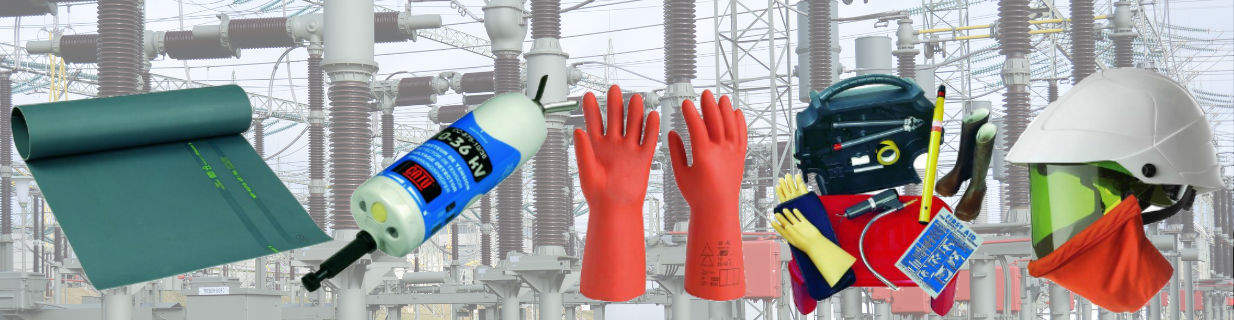
CATU Electrical Safety Equipment
Stockists & Suppliers of Electrical Safety Equipment