Electrical Safety
VIDEO How To Verify Total Absence of Voltage By The Push Of a Button
April 11th, 2019
-
Guest Article by Glen Bate (Panduit Account Manager)
VeriSafe voltage tester
When servicing LV MV HV electrical equipment, workers must comply with safety regulations that require a voltage verification test to validate the absence of voltage.
This process requires strict adherence to prevent accidents and bodily injury, but includes many stages that can be complex and time-consuming when using hand-held portable test instruments.
This paper examines the costs and limitations involved with using a manual absence of voltage tester. It also describes a new technology for the factory floor that automates the process, reducing time, complexity, and costs.
VeriSafeTM by Panduit is the first-of-its-kind voltage tester that determines the absence of voltage with just a push of a button. This revolutionary 2018 NFPA 70E compliant product automates the required six-step testing process in about ten seconds, enabling your plant to operate faster, safer, and more efficiently.
Simplify electrical safety with the superior technology of VeriSafe.
Historical Costs of Checking for Absence of Voltage
Numerous studies exist pertaining to injuries resulting from electric shock and arc flash events. These studies recognise that establishing the economic payoffs of prevention is a critical factor in promoting workplace safety. Besides personal injury, the costs of property and equipment damage need to be considered.
Although estimates vary, studies have shown that the average direct cost of an electrical injury ranges from about US $50,000 to US $80,000′, while the indirect cost can exceed the direct cost by a factor of nearly four2. Direct costs include lost wages or workers’ compensation payments, medical expenditures, and legal expenses.
Indirect costs include:
- wages paid during work stoppage
- administrative costs related to injury
- property damage and repair
- training and compensation for replacement workers
- lost productivity with less experienced workers
- fines related to workplace safety violations
- potential increase in absenteeism
- decrease in morale
Electrical injuries have one of the highest average workers’ compensation costs, second only to motor vehicle accidents3.
Injuries from contact with exposed wiring, transformers, or other electrical components frequently occur in the workplace and involve construction, installation, maintenance, and repair workers. These injuries are often costly and serious, as demonstrated by the number of days away from work; 51% of workers missed over one week of work due to these injuries, with 40% missing two weeks or more4.5.
Limitations of Using a Handheld Voltage Tester
Verifying the absence of voltage is part of the process to establish an electrically safe work condition. Step 5 of NFPA 70E-2015 Article 120.56 describes this process:
Use an adequately rated test instrument to test each phase conductor or circuit part to verify it is de-energized. Test each phase conductor or circuit part both phase-to-phase and phase-to-ground. Before and after each test, determine that the test instrument is operating satisfactorily through verification on a known voltage source.
This process usually involves a portable, hand-held voltage test instrument. To be effective, it is critical to perform each step of the process in sequence, and it requires taking the necessary precautions, such as the proper use of personal protective equipment (PPE) (Figure 1).
Competent & Authorised Persons
Note Panduit recommend that VeriSafe should be used by competent and authorised people. As VeriSafe is a new and innovative solution to make the Absence of Voltage Testing, we recommend that the people who will use this device, have to be trained in order to understand how it works and how to use it properly.
Please be aware that with this product there is no risk of having hazardous voltage on the indicator module and on the door, as they are isolated from the main power by the isolation module which is located inside the panel. This means that there is less than 5 volts (just enough to power the LEDs on the indicator) present at the device located on the door and used to launch the test procedure.

Figure 1. Absence of Voltage Test Using Handheld Voltage Test Instrument

VeriSafe – Request a Demo
Complexity
Adhering to this process prevents electrical injuries, but the process is complex and time consuming. Portable instruments are susceptible to mechanical and electrical failure and misuse by the person using the device. In addition, because the process of using a hand-held tester is dependent on human input, interaction, and interpretation, it is vulnerable to mistakes and errors.
Training Costs
Training on the selection, maintenance, and use of test instruments is crucial as are systems for inspecting and maintaining voltage test instruments. However, training and maintaining the test equipment incur the additional expenses of time and cost.

The Risks of Voltage Testing

Portable Handheld Voltage Detector in Action
Electrical Safety

Traditional Method – Determining absence of voltage with handhled testers presents a risk of exposure to electrical hazards
A disadvantage of implementing a voltage verification test with a hand-held tester is that the person performing it may be exposed to electrical hazards while verifying that the tester is working prior to and after the test, and during the test if the equipment was not de-energized.
With such a significant emphasis on performing work only on de-energized equipment, it is ironic that best practice relies on PPE and exposure to hazards before de-energized work begins. The need for PPE is a significant contributor to the overall time to carry out this process because the worker must first determine the required PPE, then obtain, inspect, dress, and properly store it after use. Additionally, PPE can be misused or not used at all, especially when there are time constraints.
When processes are overly complex or time-consuming, workers tend to become complacent and develop shortcuts as practices become routine. A normalization of deviance—small, gradual deviations from an established practice—may occur over time. With the lack of negative consequences, the lower standard eventually becomes the norm”.
Even when hazards are part of the everyday routine, deviations from a safety procedure can slowly become accepted practice. These deviations are particularly evident when there are time pressures, which is often the case when electrical maintenance causes unplanned or excessive downtime. If either training or enforcement of administrative procedures is lacking, the effectiveness of the procedures will diminish.
A More Efficient Way to Test for Voltage VeriSafeTM Absence of Voltage Tester (AVT)

VeriSafe AVT – Prevents direct exposure to electrical hazards and determines voltage status before equipment is accessed
The VeriSafeTM AVT automates the voltage verification process and is the first AVT tailored for electrical enclosures (Figure 2). By automating this process, the VeriSafeTM AVT features the following:
- Tests without exposure to harmful voltages/currents
- Self-contained; no additional meters or tools are needed
- Built-in pre-/post-verification test
- Tests phase-to-phase and phase-to-ground
- Automated test sequence
- Active indication for absence of voltage
- Supports compliance with NFPA 70E-2018 Article 120.5
- Rated safety integrity level (SIL) 3 per IEC 61508
The VeriSafeTM AVT is applicable for several applications:
- Equipment with a single source of incoming power
- High risk associated with access
- Equipment with high incident energy
- Remote or difficult to access locations — Outdoor, mezzanine, catwalk
- Sites with temporary or intermittent power
- Equipment with stored electrical energy — VFDs, capacitors, etc.
- Equipment frequently serviced by third-party technicians or contractors

Figure 2 VeriSafe AVT
NFPA 70E
One of the major changes to the 2018 edition of NFPA 70E involves the new requirements that allow an installed AVT to be used instead of a hand-held voltage tester. When the VeriSafe– AVT is used in conjunction with a Lockout/Tagout Program, it meets the requirements for the process described in NFPA 70E-2018 Article 120.5:
Exception No. 1: An adequately rated permanently mounted test device shall be permitted to be used to verify the absence of voltage of the conductors or circuit parts at the work location, provided it meets the following requirements:
- It is permanently mounted and installed in accordance with the manufacturer’s instructions and tests the conductors and circuit parts at the point of work
- It is listed and labeled to verify the absence of voltage
- It tests each phase conductor or circuit part both phase-to-phase and phase-to-ground
- The test device is verified as operating satisfactorily on any known voltage source before and after verifying the absence of voltage

Figure 3 Comparison of the VeriSafe AVT and Portable Device Testing Methods
VeriSafe AVT – The Safe, Efficient, Accurate Way to Verify
Integrating the VeriSafe™ AVT is a vital improvement to absence of voltage testing. A solid testing method helps create a reliable, safe, cost-effective system that workers can use as needed. The VeriSafe™ AVT verifies the absence of voltage before equipment is accessed, making it easier for qualified electrical workers to determine an electrically safe environment in a fraction of the time required by hand-held portable test instruments.

VeriSafe AVT – Verification Steps

VeriSafe AVT – Safe, Efficeint & Accurate Way To Detect Voltage

VeriSafe Award Winning Panduit Product
- B. Campbell and D. A. Dini, Occupational Injuries from Electrical Shock and Arc Flash Events. Quincy, MA: Fire Protection Research Foundation, 2015.
- F. A. Manuele, “Accident costs: Rethinking ratios of indirect to direct costs,” Prof. Safety, pp. 39-47, Jan. 2011.
- I. B. Horwitz and B. P. McCall, An epidemiological and risk analysis of Virginia workers’ compensation burn claims 1999 to 2002: Identifying and prioritizing preventative workplace interventions,’ Occup. Environ. Med., vol. 49, no. 12, pp. 1376-1385. 2007.
- Bureau of Labor Statistics. Injuries, illnesses, and fatalities. [Online]. Available: http://www.bls.gov/iif/data.htm
- U.S. Department of Labor. Bureau of Labor Statistics census of fatal occupational injuries. [Online]. Available: http://www.bls.gov/iif/oshcfoi1 .htm
- Standard for Electrical Safety in the Workplace 2015 Edition, NFPA 70E, 2015.
- L. Floyd and B. J. Nenninger, Personnel Safety and Plant Reliability Considerations in the Selection and Use of Voltage Test Instruments: IEEE Transactions on Industry Applications, vol. 33, no. 2, pp 367-373, 1997.
- A. Johnson. (2011- Nov. U. Not an easy task. Safety+ Health. [Online]. Available: http://www.safetyandhealthmagazine.com/articles/not-an-easytask-2
- ‘J. Wettstein. (2013, Oct. 241. When safety shortcuts become the norm. [Online]. Available: http://www.safetyrisk.net/when-safety-shortcutsbecome-the-norm/
- “Only AVTs listed to UL 1436 as an AVT meet this requirement.

VeriSafe – Request a Demo
Thorne & Derrick International, based in the UK, are Official Distributors for the Panduit range of cable ties for industrial and hazardous area management of data, telecoms, control, instrumentation and power LV MV HV cables in industrial and hazardous area industries including oil/gas, petrochemical, rail, renewable, construction and mining/quarrying industries – this includes stainless steel cable ties used to clamp and cleat cables located in medium/high voltage MV HV onshore and offshore substations.
CATU Insulated Tools for Live Line Working to IEC 60900 up to 1000 Volts
February 7th, 2019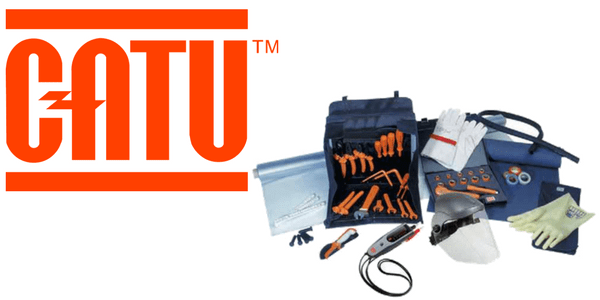
-
uploaded by Chris Dodds - Thorne & Derrick Sales & Marketing Manager
Insulated Tools
Live Line Working Tools – LV Cable Jointers Tools
Electrical Safety Equipment
The CATU Electrical range of insulated tools comply with the NF EN 60900 and IEC 60900 standards – these insulated tools are used by cable jointers and electrical engineers for live working and jointing cables up to 1000 volts.
CATU insulated hand tools are dielectrically tested to 10,000 volts AC by electrical testing and severe mechanical tests including impact tests, tearing tests and puncture tests to meet these standards and are for working live at nominal voltages up to 1kV AC and 1.5kV DC.
Contact us with your Sales Enquiries for the following product ranges – we stock and distribute the most extensive range of IEC 60900 insulated tools:
- Insulated Tool Kits

- Insulated Pliers & Cutters
- Insulated Spanners
- Insulated Sockets & Accessories
- Insulated Saws & Knives
- Insulated Screwdrivers
- Insulated Nut Spinners
- Insulated Link Extractors
- Insulated Hexagon Keys
- Insulated Box Spanners
- Other Insulated Tools
- Insulated Gloves

CATU Tools
IEC 60900:2018
♦ Live Working Tools – Hand Tools For Use Up To 1000 V AC and 1 500 V DC

CATU Isomil insulated tools for live working cover all electricians and cable jointers requirements. Insulated tools are used by live working cable jointers on utility cables during connection, disconnection and cable fault repair of PILC, Consac, Waveform and XLPE SWA low voltage cables, 415V-600V.
From stock Thorne & Derrick can also supply complete LV Jointers Tool Sets and Jointers Tents to provide weather protection for utility workers carrying out maintenance, repair or installation services to both de-energised or energised power systems – for overhead line and pole working on cables and conductors we can supply a selection of insulating ladders compliant with EN 131 safety standards.
CATU Isomil Dual Material
Layer Insulating Tools

DUAL MATERIAL INSULATED TOOLS – FEATURES & BENEFITS
- Suitable for work on live cables, particularly low voltage (30cm area of a live bare wire, cable or conductor)
- Ergonomic hand tools
- Dual material with non-skid “softgrip” injected material for operator comfort
DUAL LAYER INSULATED TOOLS – FEATURES & BENEFITS
- Extensive product live for work on live cables; mainly used by LV Live Line Working teams
- Ergonomic insulated tools
- Dual-layer with a white insulating layer
- High mechanical strength in the layers due to dipping technique
- Steel with high mechanical properties

from CATU Electrical
CATU Electrical LV Live Line Working Tool Range
- IEC 60900 Insulated Pliers
- IEC 60900 Insulated Screwdrivers
- IEC 60900 Insulated Cutters
- IEC 60900 Insulated Hacksaws
- IEC 60900 Insulated Stripping Knives
- IEC 60900 Insulated Spanners
- IEC 60900 Insulated Ratchet Handles
- IEC 60900 Insulated Wrenches
- IEC 60900 Insulated Sockets
Electrical Safety Overhead Lines & Underground Cables
CATU Electrical Safety Equipment protects Senior Authorised Persons (SAP’s), Linesmen, Cable Jointers and Electrical Engineers during electrical construction and maintenance work on underground cables and overhead lines – typical applications include LV-HV cable jointing, fuse pulling, racking circuit breakers, electrical switching and live working.
For instance, insulating gloves offer personal protection against electrocution – durable, flexible, high dielectric and mechanical strength insulating gloves from 500V – 33kV.
The CATU MO-180-ARC is part of our range of arc flash helmets which is comfortable and safe when in use with insulating protection of the shell, shockproof for the head and eye and face protection againstof thermal effect. Easy to use – taking only 3 Seconds To Install.

Arc Flash Safety Helmet with Integrated Face Shield – CATU MO-180-ARC4


Pfisterer | Nexans Euromold | Prysmian | Cable Joints & Terminations MV HV
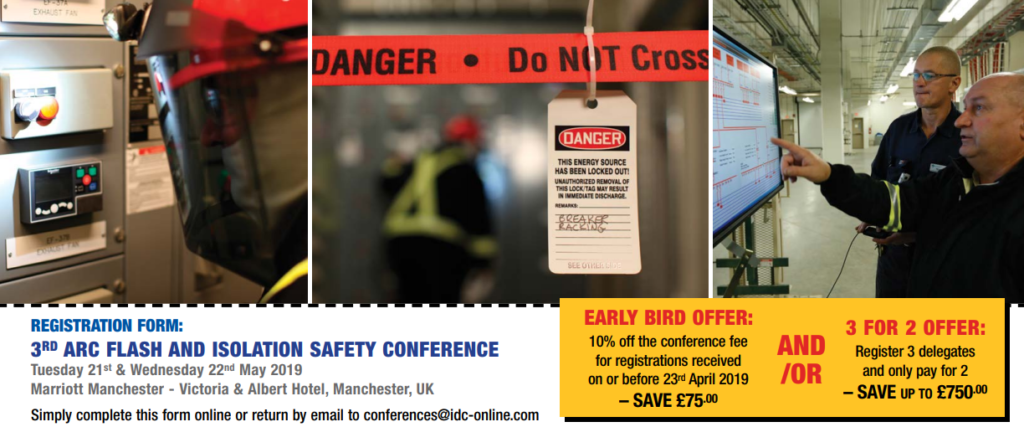
3rd Arc Flash & Isolation Safety Conference in Manchester on May 21st & 22nd 2019
February 6th, 2019
-
uploaded by Chris Dodds - Thorne & Derrick Sales & Marketing Manager
Arc Flash
The objective of the Arc Flash & Isolation Safety Conference is to provide the industry with the latest developments and best practice to deal with arc flash hazards and isolation safety issues. You will have a chance to discuss your electrical safety issues with our speakers, and gain practical applications to improve arc flash and isolation safety in your workplace.
The focus throughout is on the experiences of end users.
The Arc Flash Conference will be attended by those who are interested in technical solutions to their arc flash and isolation issues, industry trends, standards developments and new techniques to handle existing electrical safety threats.
➡ For more details download the event brochure HERE or register online HERE.
Technical Topics Include
- The human factor in electrical safety – ways to reduce error and improve performance
- Arc flash risk assessment from a UK Perspective – what’s new?
- Building and implementing a flame resistant/arc-rated program for arc flash hazard
- Arc flash in the maritime industry – case study of arc flash hazard and risk mitigation
- Internal arc classification according to IEC 62271-200
- How to make LV switchgear assemblies safer according to IEC 61439
- Gaps in electrical training and the safety implications of this related to arc flash
- Arc flash PPE – do you or don’t you need it?
- Arc flash risk assessments – A case study from Sweden´s largest nuclear power plant
- The anatomy of arc flash PPE
- IEEE 1584 Guide for Performing Arc Flash Hazard Calculations
- Three case studies looking at the practicality of arc flash risk assessment in the workplace
- Selection of PPE – practical experience of different arc assessment methods

Legal Responsibility & The Electricity at Work Regulations By Anthony Smith
This presentation by Anthony Smith (CEO – Lantei Compliance Services & The Electrical Safety Network) will focus on the legal requirements related to the maintenance of LV MV HV electrical installations, systems and equipment. It will cover issues raised in the IET Code of Practice for Electrical Safety Management, the latest legislation and regulations including the Electricity at Work Regulations 1989 and the Health & Safety at Work Act 1974. The aim of this section is to help duty holder’s work towards some element of clarity and simplicity whilst maintaining compliance in the workplace, a must for all those serious about electrical safety in the workplace. See Session 14 in the Event Document.
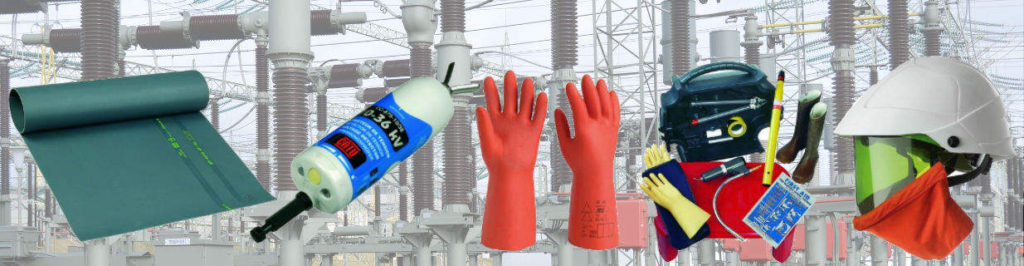
LV MV HV Voltage Detectors | Portable Earthing | Insulating Sticks | Insulating Gloves | CATU Electrical Equipment – Largest Stocks In UK & Europe from THORNE & DERRICK
Arc Flash Conference Highlights Day 1
-
Meet International Keynote Speaker Jim Pollard - Arc Flash Expert, Arc-Rated PPE (Unlimited PPE Inc)
-
The Human Factor In Electrical Safety - Ways To Reduce Error & Improve Performance by Jim Pollard
-
Arc Flash Risk Assessment From A UK Perspective - Whats New by John Maplesden
-
Building & Implementing A Flame Resistant/Arc Rated (FR/AR) Program For Arc Flash Hazard by Derek Sang
-
Arc Flash In The Maritime Industry - Case Study Of Arc Flash Hazard & Mitigation Through System Design On A New Build Vessel by Shaun White
-
International Arc Classification According To IEC62271-200 by Andy Seccombe
-
How To Make LV Switchgear Assemblies According To IEC61439 Safer by Lutz Graufmann
-
Gaps In Electrical Training & The Safety Implications Of this Related To Arc Flash by Kevin Hann
-
ARC Flash PPE - Do You Or Don't You Need It? by Anthony Long
-
Arc Flash Risk Assessments - A Case Study From Swedens Largest Nuclear Power Plant by Thomas Winter
Arc Flash Conference Highlights Day 2
-
The Anatomy Of Arc Flash PPE by Jim Pollard
-
IEEE 1584 Guide For Performing Arc Flash Hazard Calculations by Alan O'Kelly
-
3 Case Studies Looking At The Practicality Of ARc Flash Risk Assessment In The Workplace by Pay Mynett
-
Selection of PPE - Practical Experience & Comparison Of Different Arc Assessment Methods by Thomas Jordan
-
Duty Holder Responsibility by Anthony Smith
Book Online & Register Here
Download the full event brochure HERE.
Register online below ▼ or email your registration form to [email protected]. If you experience any difficulties, please email or call the UK office on +44 (020) 8335 4014.
The Gains
• Learn about UK, EU and international standards developments in arc flash
• Hear case studies detailing the latest arc flash mitigation strategies and solutions
• Define what personal protective equipment (PPE) is required on your site
• Understand how to achieve a compliant and electrically safe work place
• Learn about the recent updates to NFPA 70E 2012, CSA Z462, BS7671 and IEEE 1584
• Clearly understand what an arc flash is and the potential injuries it can cause
• Learn about electrical safety statistics and the implications for you
• Detail the steps to perform an arc flash hazard analysis
• Understand practical considerations for PPE selection, testing and maintenance
• Learn how to provide arc flash training for your staff
• Network with specialists in the field and your peers
• No sales pitches – non-commercial presentations
Who Should Attend?
• Electrical Technicians, Engineers and Managers
• Engineering Managers
• Risk Assessors
• Design Engineers
• Manufacturers of PPE & Safety Equipment
• Safety Facilitators
• Instrumentation & Control Technicians and Engineers
• Process Safety and Loss Prevention Managers
• Government Safety Regulators/Inspectors
• OHS/Training Managers
• Tradespersons working in potentially explosive areas
Conference Particulars
| Event Date | 21/05/2019 |
| Event End Date | 22/05/2019 |
| Registration Start Date | 01/02/2019 |
| Cut Off Date | 31/05/2019 |
| Original Price | £750.00 |
| Discounted Price | £675.00 (Until 23/04/2019) |
| Fixed Group Price | £1,500.00 |
| Location | Marriott Manchester – Victoria & Albert Hotel |
Arc Flash Statistics
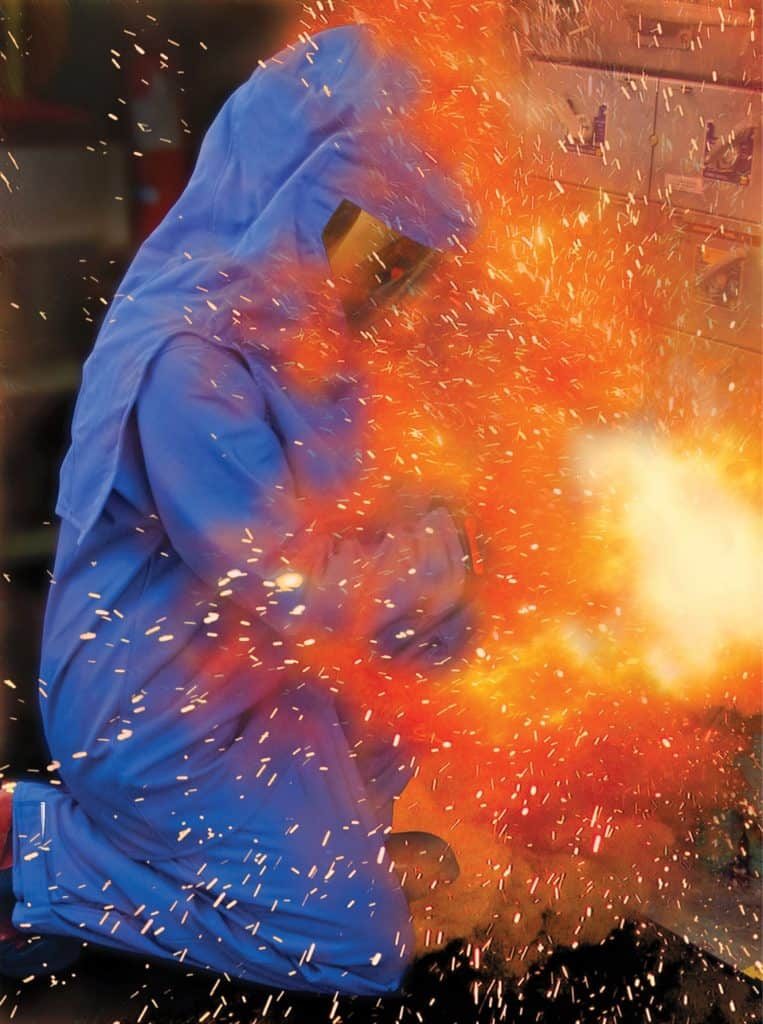
- 30,000 Arc Flash Incidents per year
- 7,000 Burn Injuries per year
- 2,000 Hospitalisations per year
- 400 Fatalities per year
“30,000 Arc Flash Incidents per year” Source: ISHN
➡ DISCOUNTS – We are offering a 10% off early bird discount until April 23rd (SAVE £75 per person) plus a 3 for 2 offer – register 3 delegates and only pay for 2 (SAVE to £750). Discounts are applied at online check-out.

Thorne & Derrick’s POWER Blog is regularly updated with news, projects, videos, technical tips, training information, promotions, webinars, career opportunities and white papers.
➡ View T&D’s brochure – contact our Sales Team with your requirements.
We focus on Product Categories: Duct Seals | Cable Cleats | Cable Glands | Electrical Safety | Arc Flash Protection | Cable Jointing Tools | Cable Pulling | Earthing | Feeder Pillars | Cable Joints LV | Joints & Terminations MV HV
We provide guidance and technical support for the installation of LV, MV & HV Cable Joints, Terminations, Substation & Electrical Equipment from our Key Suppliers including:
| 3M | CMP | Ellis Patents |
| Nexans Euromold | Elastimold | Pfisterer |
| Prysmian | Alroc | CSD |
| Roxtec | CATU Electrical | Cembre |
| Lucy Zodion | ABB | Emtelle |

Our Jointers Photo Blog features contributions from our social network of utility professionals, linesmen and cable jointers working on MV HV EHV cables and overhead lines typically at 11kV, 33kV, 66kV and up to 132kV.


Static Discharge Sticks 33kV – CATU CM-50 Medium Voltage Static Ground Discharge Stick
November 22nd, 2018
CATU CM-50 Medium Voltage Static Ground Discharger
-
uploaded by Chris Dodds - Thorne & Derrick Sales & Marketing Manager
Static Discharge Sticks
Product Launch – MV Medium Voltage Static Ground Discharge Stick
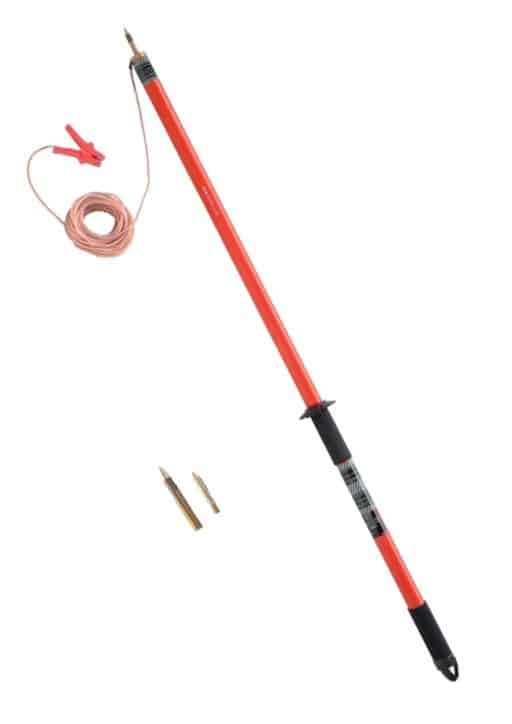
Thorne & Derrick supply the CATU CM-50 Static Discharge Stick used for medium/ high voltage overhead lines, busbars and substation use up to 33kV. The CATU discharge stick complies to the IEC 60855 standard and is used to safely dissipate electrostatic charges.
♦ IEC 60855-1:2016 Standard | Live Working – Insulating foam-filled tubes and solid rods. Part 1: Tubes and rods of a circular cross-section.
CATU CM-50 static discharge stick is an insulating orange tube with a diameter of 39mm and made of epoxy fibreglass – equipped with 6 metre of copper cable, cross section section 6sqmm, PVC insulated.
Static discharge sticks are designed to safely remove the static charge after de-energising of medium/high voltage power systems – this includes draining voltage retaining components before maintenance work is performed up to 33kV. The discharge sticks are equipped with hand guard and grip protection with sufficient electrical safety clearance against physical contact with medium/high voltages.
Static discharge sticks are available for higher voltage applications – contact us to discuss your MV HV EHV Electrical Safety Equipment requirements.
IEC 60855 | Discharge Sticks for Medium Voltage Substations
Catu CM-50 Static Discharge Stick Specification
| For Use On Medium Voltage Lines & Conductors Up To | 33kV |
| Hand Guard At Length | 0.65m |
| Copper Alloy Contact Probe Length | 80mm |
| Overall Discharge Stick Length | 1.6m |
| Weight | 2.3kg |
T&D are the UK’s largest stockis of CATU Electrical Safety Equipment of products for underground, overhead line and substation safety at LV, MV and HV cable networks.

Insulating Gloves | Insulating Matting | Voltage Detectors | Arc Flash Clothing | Substation Safety | Portable Earthing LV MV HV
LHR ShoveIt | Hand Safety Tool Prevents Pinch Point Injury | LHR ShoveIt
July 10th, 2018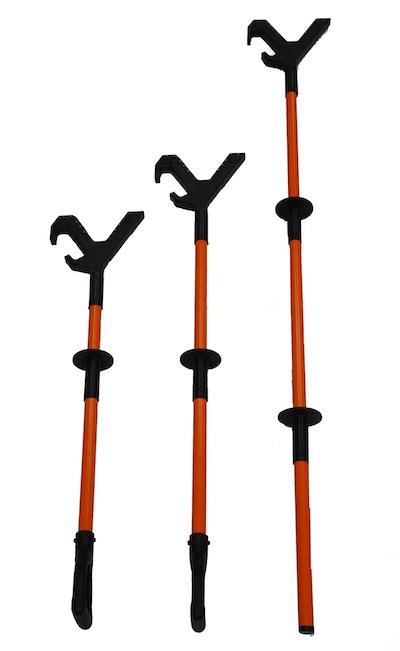
LHR ShoveIt Hand Safety Tool
- uploaded by Chris Dodds – Thorne & Derrick Sales & Marketing ManagerShoveIt Tools | Largest UK Stocks | Contact Us for a Quotation
Shoveit
Push Pull Tools
Prevent Hand Injury & Pinch Point
Prevention Of Workplace Hand Injuries
Thorne & Derrick represent and distribute the ShoveIt Hand Safety Tool in the UK – the non-conductive hand tool substantially reduces hand and finger injuries by avoiding pinch points and other hand related safety issues while working with suspended loads and materials handling on job sites.
This mitigation measure, some may say “finger-saver”, safeguards employees by minimising hand and finger injuries – this proactive control measure protects against unnecessary workplace hazards. Gloves can limit severity but not remove risk.
Pinch Points & Hand Protection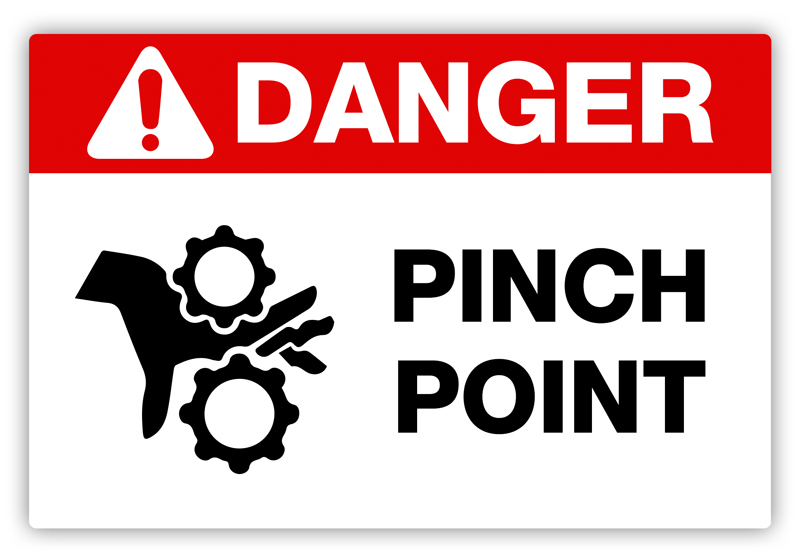
A pinch point is commonly defined as any point where it is possible for a body part to be caught between moving and stationary plant or equipment. Pinch points are found in many places throughout a workplace.
Work tasks such as equipment maintenance, lifting materials, guiding loads, assembly line work and hoisting or hooking up trailers are just a few common tasks where pinch points are a common hazard.
The physical forces applied to the hand caught in a pinch point can vary and cause injuries ranging from bruises, cuts, fractures and scalping to mangled and amputated body parts, and even death.
The ShoveIt Hand Safety Tool is used to promote hand injury prevention, whether minor or serious, in the electric utility power and transmission distribution sectors – the tool is also widely used in the oil and gas, rail, renewables, offshore and marine and construction industries to prevent “crush-effect” or pinch point inflicted hand injuries.
The non-conductive tool is available in standard lengths 42″, 50″ and 72″ with custom lengths available upon request subject to minimum order quantity – refer to the download below.
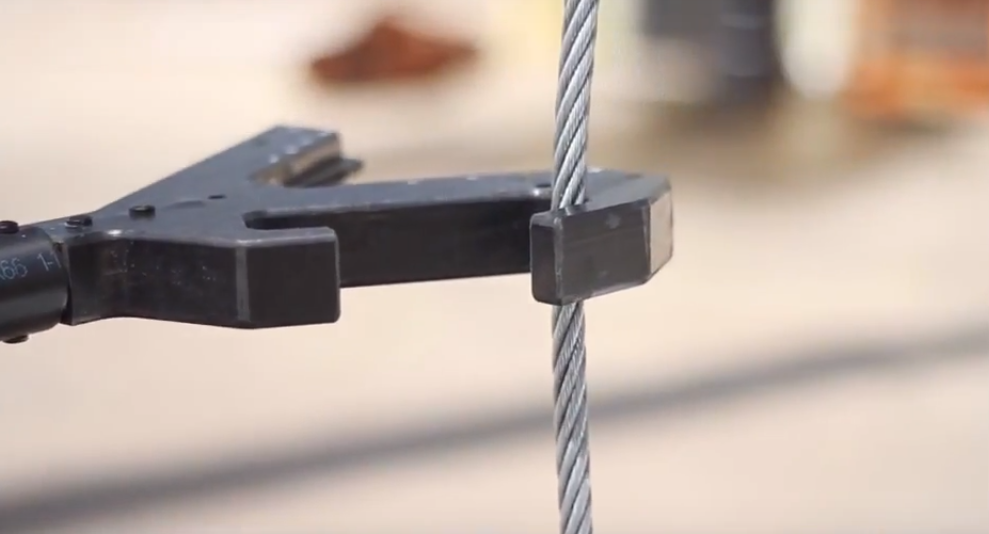
ShoveIt Hand Safety Tool is a non-conductive tool with a V-shaped hand that is designed to:
- Push against flat surfaces, corners or rounded edges of suspended loads
- Move pipes and tubulars with the “V” shaped end
- Grab slings and taglines with the hooks
- Manouevre suspended loads in MV HV EHV substations and switchyards
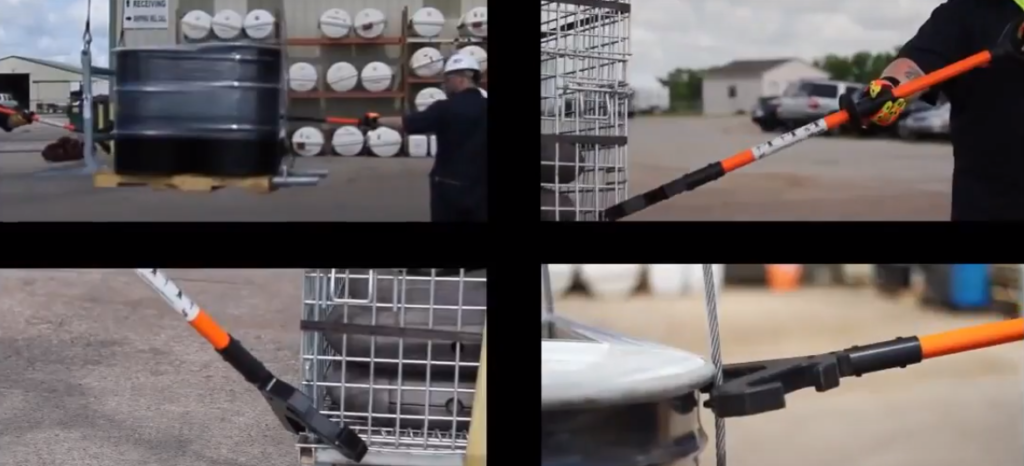
ShoveIt
Push Pool Tools
The range of Push Pull Tools manufactured by the Hand Safety Tool Company and distributed by Thorne & Derrick provide significant Health & Safety Improvements around site where “pushing and pulling” operations such as handling deliveries or loading/unloading in yards is commonplace. This download produced by the UK HSE enables the Risk Assessment according to Load Weight, Operation Frequency, Push/Pull Distances and other impacting factors – the range of tools to keep hands off loads, enable “hands-free” lifting, mitigate risk of load handing and prevent hand or finger injury are available in the UK from Thorne & Derrick.

ShoveIt Hand Safety Tool
The V-shaped head features a rubber lining to prevent slippage when using the hand tool.
The tool shape also allows users to safely guide drill pipe, casing and other tubulars without having to directly use your hands.
The opposing grab hooks help the user manouevre tag lines and slings as suspended loads.
A slip resistant hand grip is positioned halfway down the length of the tools. A second slip resistant hand grip is positioned halfway down the length of the tool. A second slip resistant hand grip is available on the 72″ model whilst the 42″ and 50″ are finished off with a D shaped handle. The grips are ergonomically designed to provide the user with maximum pushing and pulling control.
No metal parts are used in the manufacture of the ShoveIt hand safety tool – the tool is entirely non-conductive.
Non-conductive tools are used for a number of applications:
- Grab taglines
- Grab sling legs
- Land suspended loads
- Guide suspended loads
- Guide tubulars
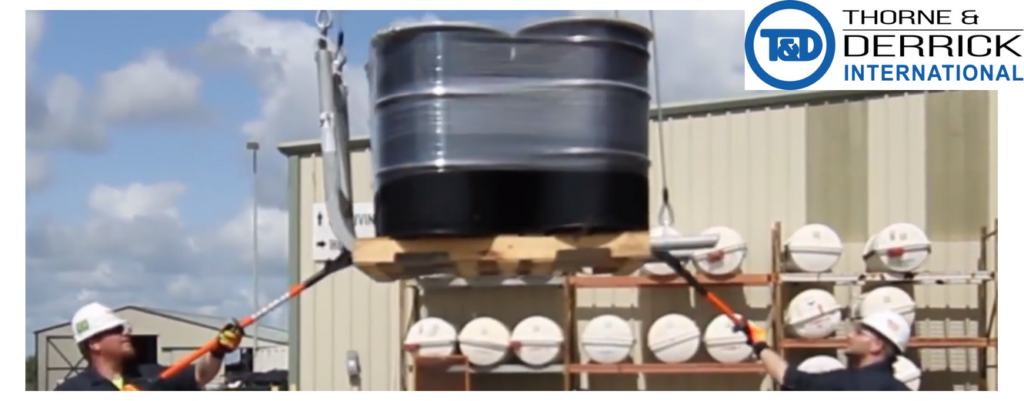
LHR ShoveIt Hand Safety Tool
New Features
- Rubber lining added to “V” to improve grip
- Opposing grab hooks to help with the maneuvering of cable slung loads
- Non-conductive – no metal parts
- Push / Pull force rating: Push 600lbs. / Pull 350 lbs
- Electrically tested to 75kV per foot
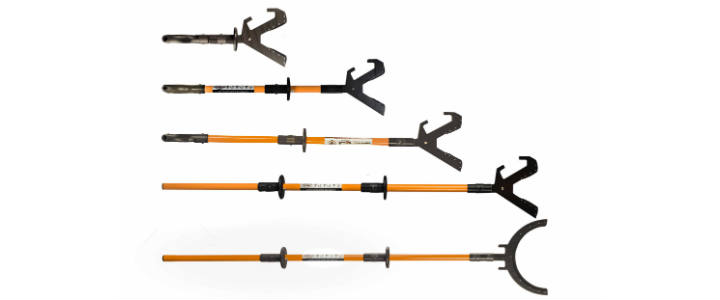
ShoveIt Hand Safety Tool available in 42in, 50in and 72in lengths
| LHR ShoveIt Part Number | Non-Conductive Tool Description |
| SHST42 | 42 inch |
| SHST50 | 50 inch |
| SHST72 | 72 inch |
| SHST72T | 72 inch w/Single Side Hook |
| SHST72TEFLON | 72 inch w/Teflon |
Should you require any further information, quotation or would like to place an order for the ShoveIt Hand Safety Tool please do not hesitate to contact Thorne & Derrick.
➡ NOTE: ShoveIt hand safety tools must NOT be used to pry or lift any item.
➡ Qualified and approved safety equipment and/or PPE should be used while using the ShoveIt tool.
T&D offer a range of electrical safety equipment including insulating gloves and insulating boots.

CATU Electrical Safety Equipment – Substation & Overhead Lines
LV, MV & HV Jointing, Earthing, Substation & Electrical Eqpt
Thorne & Derrick International are specialist distributors of LV, MV & HV Cable Installation, Jointing, Duct Sealing, Substation & Electrical Equipment – servicing UK and global businesses involved in cable installations, cable jointing, substation, overhead line and electrical construction at LV, 11kV, 33kV and EHV.
THORNE & DERRICK Product Categories: Duct Seals | Cable Cleats | Cable Glands | Electrical Safety | Arc Flash Protection | Cable Jointing Tools | Cable Pulling | Earthing | Feeder Pillars | Cable Joints LV | Joints & Terminations MV HV

Specialist Stockists & Suppliers of 11kV/33kV Joints & Terminations