By Rachel Salisbury– Rachel has worked as an Application Engineer for 3M in the Electrical Markets Division for 18 years advising customers and end-users on applications and specifications for 3M’s range of LV MV HV cable accessories for solutions in rail, construction, oil and gas and the renewables markets.
uploaded by Chris Dodds - Thorne & Derrick Sales Marketing Manager
What is Cold Shrink?
A question I get asked a lot, is what is cold shrink and how can it benefit me, my cable installers and my project costs?
Is it just a more expensive option with the gimmick of unravelling a core?
The answers are simple; there are multiple benefits for cold shrink, both financial and product benefits, it’s well-researched and a tried and tested solution from 3Mfor cable installations and a must-have in flammable areas of work including hazardous area locations with potentially explosive atmospheres.
Cold Shrink – What is it?
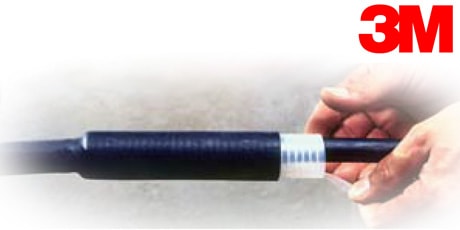
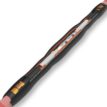
3M cold shrink is made from either EPDM (Ethylene-Propylene-Diene-Monomer) or silicone rubber, that is expanded onto a spiral core. After the cold shrink tube has been placed over the joint or cable termination end, this inner spiral is pulled out. The insulating tube then contracts to its pre-stretched size and shrinks onto the cable, exerting constant radial pressure for the lifetime of the joint or termination.
Cold Shrink Offers the Maximum Mechanical Protection
Cold shrink products have a 45+ year track record of performing exceptionally well in indoor and outdoor environments, including under harsh conditions.
The silicone material conforms well to cable bends, which ensures long term reliability against moisture ingress, or voids within the installation. It is shows excellent performance in the following environments:
i. Refineries
ii. Coastal environments
iii. Altitude
iv. Dusty environments eg. solar power plants, wind farms
v. Vibrations eg. railroad, subway
vi. Underwater environments
vii. Overhead joint applications
Trust Cold Shrink
Low Cable Failure Rates*:
– 0.067% for Cold Shrink Cable Joints & Cable Splices
– 0.022% for Cold Shrink Terminations
* Data based upon U.S. failure data of U.S. manufactured 3M Cold Shrink Medium Voltage Cable Accessories between 2009 and 2012.
What’s the difference between the seal created with Cold Shrink and Heat Shrink?
Initially heat shrink may provide a good environmental seal obtained with the application of adhesive and mastics by the cable jointer included in the MV termination or cable joint.
However, over time the cable can expand and contract due to temperature changes. During a rise in temperature, a heat shrink material may be able to expand at the same time.
But, if the cable contracts due to temperature decreases, either because it returns to its initial temperature or it drops below its initial temperature, a rigid heat shrink material may not shrink with the cable, therefore leaving a void between the cable and the cable accessory.
This void can allow moisture and contamination from dust, chemicals, etc. to get into the cable accessory, which may accelerate the likelihood of failure. Long term expansion and contraction of the cable could create cracks and splits in a rigid heat shrink installation.
I have issues with tracking on terminations – how can Cold Shrink help?
Tracking is defined as a process that produces localised irreversible deterioration on the surface of an insulator, resulting in the loss of the insulating function by the formation of a conductive path on the surface of the insulator.
The cause of tracking is when voltage, moisture and contamination exist together, and it will eventually lead to an electrical failure because it erodes enough of the material so that there is a continuous conductive path from high voltage to ground. When there is a continuous conductive path, there is a short from the high voltage to ground.
Silicone is an excellent track resistant material and is hydrophobic, repelling water and making the insulator self-cleaning which results in a dryer surface and lower leakage currents. 3M outdoor cable terminations include rain sheds which disrupt any wet leakage paths that occur in industrial environments and also allows the creepage distance of the termination to be much shorter.
Wind Farm | 3M Cold Shrink Joints On High Voltage XLPE 34.5kV Cables. Image J Neimeyer.
How is Ultraviolet (UV) Resistance relevant to Cold Shrink Technology vs Heat Shrink Technology?
UV can damage the material of the termination, which creates cracks where contamination and moisture can be trapped and increase the likelihood of tracking.
All 3M terminations are produced from high performance Silicone, which is designed to be inherently UV resistant.
EPDM and Ethylene-vinyl Acetate (EVA) need additives to make them UV resistant, which over time can dissipate and reduce the UV resistance of the material.
what’s the installation time difference between Heat Shrink and Cold Shrink?
The time difference is significant with Heat Shrink taking double the time to install than Cold Shrink.
Other factors to be taken into consideration are delays in days to obtain hot permits, training and the costs of risks, for example: liability of fire, explosion, shutdowns and the associated insurance to cover these.
Multiply up the installations per annum this could provide a real cost saving for companies.
In summary, you get what you pay for, a premium product yet when looking at the total cost of ownership, this product comes out on top. Cold Shrink – yes, it’s the Real Difference.
Established since 1985, T&D International based in the UK distribute the most extensive range of LV, MV & HV Cable Jointing, Terminating, Pulling & Installation Equipment – contact us today for a competitive quotation.
Image Courtesy of: Andy O’Malley (IBEW 258 EHV Cable Jointer/Splicer)
3m cold shrink joints & terminations
3M Cold Shrink technology joints, splices and terminations require no heat for installation and are consequently preferred for jointing medium voltage cables in confined spaces where potentially explosive gases could be present in the cable vault or basement atmosphere – generally, heat shrink joints and terminations requiring naked flames and hot-working permits are not allowed in confined spaces.
Jointers blog
Subscribe now to our POWER NEWSLETTER– a monthly email circulation packed with news, projects, videos, technical tips, training information, promotions, webinars, career opportunities and white papers.
Includes access to our popular JOINTERS BLOGwith contributions from utility professionals, linesmen and cable jointers working on MV HV EHV cables and overhead lines typically at 11kV, 33kV, 66kV and up to 132kV.
15,000+ Subscribers. ➡
Cold Shrink Cable Joints
uploaded by Chris Dodds - Thorne & Derrick Sales & Marketing Manager
Developed in the 1970’s by 3M, Cold Shrink technology has been found to be a safer, more reliable and easier to install technology for the jointing, terminating and abandoning of low voltage power cables.
Helping MV HV Contractors Make The Change
In order to help cable contractors, cable jointers and engineers make the change out of heat shrink and into 3M Cold Shrink, we feature a YouTube Video Playlist covering the installation of cable joints, terminations and abandonment kits using 3M Cold Shrink.
Cables must be jointed and terminated accurately, safely and quickly – T&D & 3M can provide cable jointer training to further reduce the risk of cable failure caused by poor workmanship.
5 Good Reasons To Switch From Heat Shrink To 3M Cold Shrink
Reduced danger of damaging XLPE cable material – no scorching
Less room for cable jointer error – no skill-sensitive multiple layer heat shrinking, single part construction
No special site permits required – cold applied joints/terminations, no “hot-working”
No cooling time needed before power energising – reduced outage periods and downtime
Thorne & Derrick stock and distribute LV Joints in Cold Shrink, Heat Shrink or Resin Cast technologies – multicore and multi-pair cable joints are available for immediate backfill and energisation of Low Voltage power, control and instrumentation cables 600V/1000V 3.3kV.
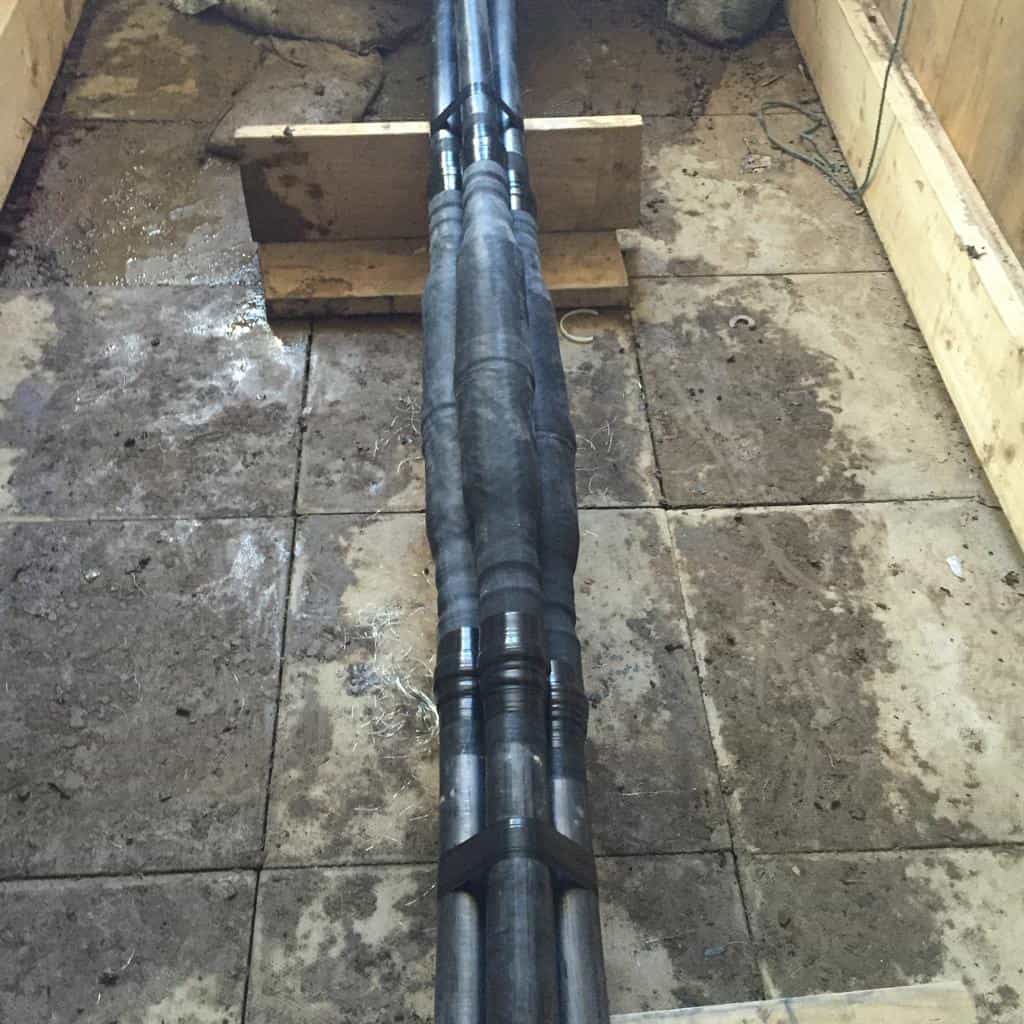
Application: Jointing Polymeric Insulated (XLPE) 66kV Single Core Cables
Cable Type: 66kV XLPE Insulation – High Voltage Power Cables
Cable Jointer: Chris Barker (EHV Cable Jointer)
Featured Manufacturer: 3M Electrical
Cold Shrink
The use of Cold Shrink applied cable accessories, including joints and terminations, has been adopted by UK and international power utilities for the connection, repair and upgrade of medium/high voltage power networks typically operating at 11kV, 33kV and 66kV.
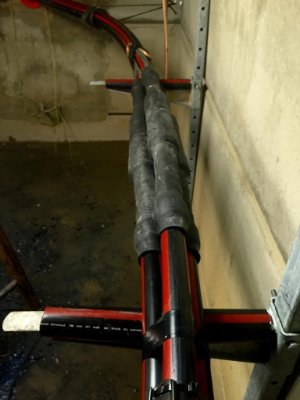
Here, the cable jointer has used 3M Cold Shrink Cable Joints to effectively joint and connect the
Established since 1985, T&D distribute the most extensive range of LV, MV & HV Cable Jointing, Terminating, Pulling & Installation Equipment – contact us today for a competitive quotation.
Thorne & Derrick are inviting you to join LinkedIn’s fastest growing Discussion Group :Low & High Voltage Power, Cabling, Jointing, & Hazardous Area Electricals (LV-HV).
Discussion subjects include cable installations, cable jointing, electrical substation, overhead line and electrical construction at LV, 11kV, 33kV and EHV.
Network, engage and promote your profile, company or products with over 10,000 influencers.
3M cold shrink cable abandonment kits (live cable end seals) are used to temporarily or permanently seal power, control and instrumentation cables – this includes the abandonment of redundant or decommissioned low voltage offshore, marine and shipwiring power, control and instrumentation cables in both safe and hazardous area workplace locations, such as Zone 1 or Zone 2 according to ATEX Directive.
Unlike cable end caps the cable abandonment kits include a copper earth braid system for the safe grounding off cables in the event of future planned or accidental energisation of the electrical cable circuit – the cable sheath and cores should be covered and protected with copper earth braid and bonded using constant force springs to effectively short-circuit the cable system if energised. Copper binder wire and shielding braid is used to abandon and ground the individual cable cores – this is demonstrated in the 3M Training video below.
Cold Shrink – invented by 3M over 40 years ago and now the preferred technology for heat-free jointing, terminating, sealing and abandonment of LV HV cables
We hope you find this video informative and educational, contact T&D for technical support, quotations and stock availability for 3M Cold Shrink Cable Abandonment Kits.
➡ Visit 3M Electrical for further information about joints, terminations, tapes and insulation to seal, repair, splice and connect LV MV HV cables.
Nexans 240–300mm² Multi-Joint – Medium Voltage Cable Joint Installation Medium voltage cable jointing requires reliability, consistency and safe installation practices. The Nexans 240–300mm² Multi-Joint is designed to simplify medium voltage jointing while maintaining high electrical performance for demanding power...
On Friday 27th March, Thorne & Derrick will be taking over the bench at the Faraday Centre Ltd Power Group Event #2. We look forward to welcoming clients, suppliers and service providers to the High Voltage Power Industry. Event...