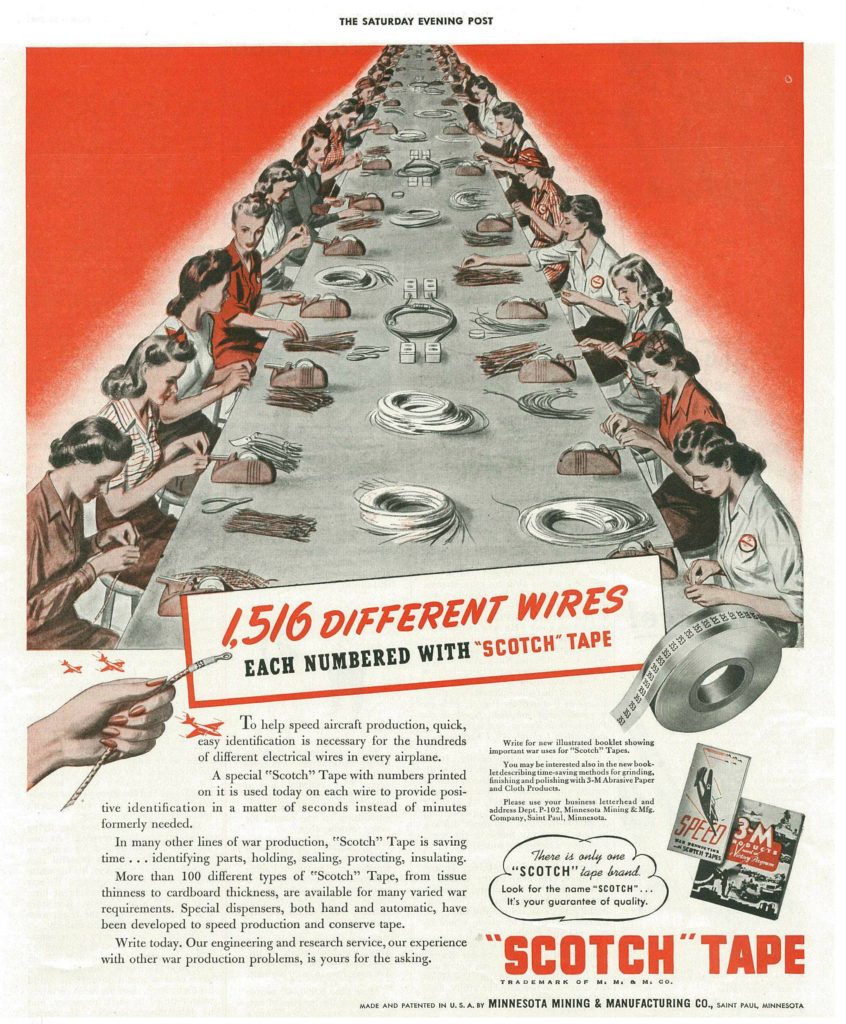
Once upon a time, 3M introduced a revolutionary electrical tape.
That was in 1946 when the vinyl electrical tape patent was issued and since then 3M Electrical have pioneered the role of electrical tapes for maintenance and repair jobs.
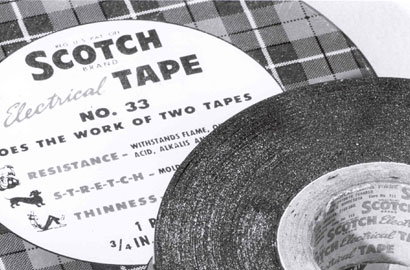
So the humble PVC insulation tape was born and named Scotch 33 – this tape evolved into the mass-market over the proceeding decades to become established as the Number 1 PVC Electrical Tape.
And the rest as they say is history…
1951 Improved aging, higher temperature performance and wet dielectric
1953 Improved slitting and telescoping performance
1957 Flame retardant properties developed
1961 Improved adhesive anchorage to cables, joints and splices
Quickly No. 33 Tape manufactured by 3M and branded Scotch became the new standard for insulating electrical connections and cables.
In 1966, when England were winning World Cups, the standard Scotch 33 tape became “Super” – the introduction by 3M of this new and improved electrical tape commonly called “Super 33” had a new operating temperature rating up to 176º F and was coloured black for UV resistance.
All Scotch electrical tapes exhibit smooth unwind and excellent handling characteristics.
Essentially, 3 basic qualities must be carefully evaluated when choosing your tape:
Shear Adhesion or “Holding Power”
Peel Back or “Pull-off Strength
Thumb Appeal or “Quick Stick”
Peel Back measures the adhesive resistance of the electrical tape to be peeled away from the surface to which it is adhered – the thumb appeal measures the quality of the adhesive to actually feel sticky and retain the bond strength without suffering departure from the surface.
This tendency for adhesive “creep” can lead to the need to remove and re-tape the application to maintain the electrical insulation and mechanical protection.
Additionally, consider the following factors when choosing an electrical tape: backing construction, tape thickness, and dielectric strength.
High tensile strength, excellent elastic memory and stable recovery – specify 3M Scotch
Taping Skills & Tips
Overtime the use of conventional electrical tapes has declined as modern product advances, such as 3M Cold Shrink Tubes, have replaced traditional taped solutions for effecting cable repairs, jointing and termination. Even though electricians are unlikely to consider “old-school” taping skills to be an important element in the engineers skill-set of today the importance of cable splice and termination taping skills for electricians, jointers and linesmen remain a focal element of training courses.
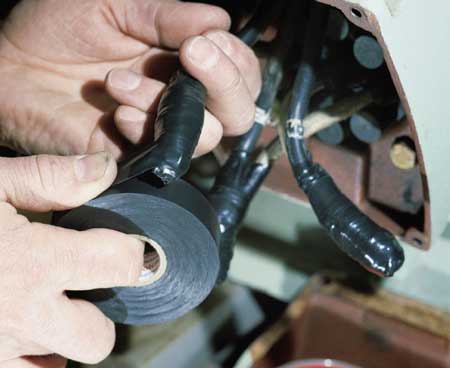
Watch the electrical taping techniques of an experienced cable jointer using 3M Scotch 33 tape to provide electrical insulation layers to the cable – neutral tails are taped up here with the cable splicer demonstrating the slick pass, stretch and apply method to the Scotch tape.
Here are several good reasons to master the craft of electrical taping.
When quick “on the spot” electrical and cable repairs are required and other products are simply not available, 3M Scotch Electrical Tapes can be real “day-savers”.
3M Electrical Tapes offer long-term performance, excellent adhesion, chemical resistance and temperature performance – their smooth unwind from the roll can provide “quick-fix” and simple solutions to electrical insulation tasks straight out the engineers pocket.
The function of moisture-sealing tapes such as vinyl, rubber, and mastic products is to exclude moisture from the insulation assembly and provide electrical insulation to cable, splices and terminations. One of these Scotch tapes — or alternatively a 3M mastic pad — generally forms the second layer of the insulation assembly. Rubber, mastic, and filler tapes are also used to pad the underlying surface by covering sharp edges.
LV Tapes
3M rubber tapes are generally non-adhesive and are either equipped with a liner (Scotch 23) or are linerless (Scotch 130C). Stretched and overlapped layers of the tape will fuse or bond together – “self amalgamating“ – to form an effective electrical insulation and moisture barrier. For low-voltage (1000V or less) applications, rubber tapes should be stretched during wrapping so that tape width is reduced to approximately 75%.
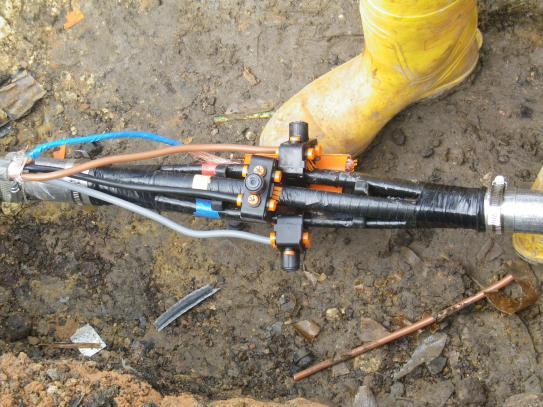
Similarly, low voltage inline splices, connectors and joints can be protected using Scotch tape by wrapping the installed connector with four half-lapped layers of rubber mastic tape or rubber splicing tape, and then over-wrapping it with two half lapped layers of premium vinyl electrical tape, such as Scotch 33.
MV & HV Tapes
For high voltage (HV) and medium voltage (MV) applications — where the electrical stresses are high (e.g. connector areas, cable lug areas and cable shield semicon cut-back areas) — electrical tape should be stretched just short of its breaking point.
3M Vinyl Tape forms the final outer layer and serves several important functions in addition to electrical insulation, including abrasion protection, corrosion resistance, UV resistance and protection from chemicals including alkalis and acids.
Conformable vinyl tape is tougher than the softer, stickier surfaces of rubber, mastic, and putty tapes it protects. Several grades of vinyl electrical tape are available — all of which differ in conformability, ease of unwinding, resistance of the adhesive to heat and cold, and loosening (flagging).
Brandname Scotch
The Scotch brand is a registered trademark of 3M Electrical and is synonymous with the highest levesl of quality, performance and reliability. So much so, Scotch has became a language term for the entirety of the market niche that the respective brand dominates. But unlike some lapsed and generic trademarks such as Lollipop, Trampoline or Aspirin, the Scotch brand which recognises problem-solving as the ultimate creative act continues to pervade and guide customer choice and preference.
Insulating Cables
While general-use vinyl tapes are appropriate for bundling, wire pulling and other ancillary tasks, Scotch 35 premium-grade vinyl tape is the best choice for permanent insulation work as it handles the broadest range of environmental factors and functions, such as chemical resistance – available in a rainbow rich choice of colours.
The combination of elastic backing and aggressive adhesive provides moisture-tight electrical and mechanical protection with minimum bulk. For cold weather applications down to – 18°C, Scotch 88 tape is recommended.
3M Scotch 35 and Scotch Super 88 available ex stock
Electricians should use a minimum of two half-lapped layers of 3M vinyl tape to insulate and jacket low-voltage cables, cable sheaths and electrical components. A half-lap consists of overlaying each turn by one-half the width of the tape. The general rule of thumb calls for a tape thickness of 1.5 times the thickness of existing wire or cable insulation.
Two half-lapped layers of 3M vinyl tape
In every case, tension on the electrical tape should be sufficient to conform the 3M Scotch tape evenly to the surface. A slight reduction in tension is encouraged for the final wrap. Trim the Scotch tape end and allow it to return to shape before pressing down with the thumb to avoid lifting or flagging.
Thorne & Derrick International are specialist distributors of LV, MV & HV Cable Installation, Jointing, Duct Sealing, Substation & Electrical Equipment – servicing UK and global businesses involved in cable installations, cable jointing, substation, overhead line and electrical construction at LV, 11kV, 33kV and EHV.
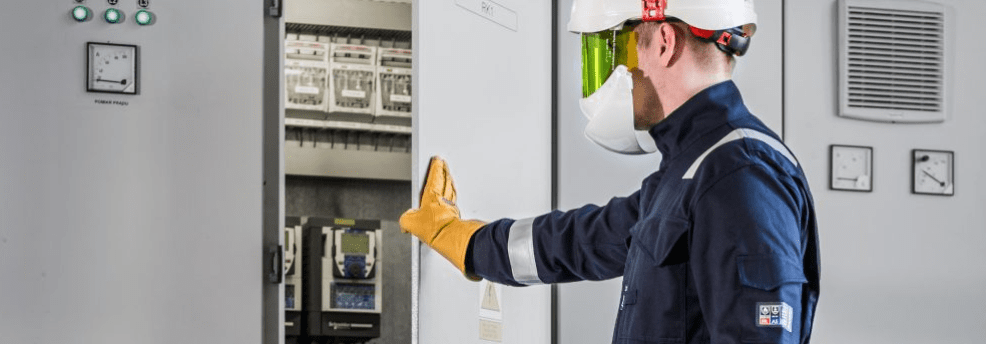
Helping educate companies and raise awareness amongst operatives about what garments to wear and how to wear them, when at risk of an ARC FLASH
Author: Hamilton Smith Technical Sales Manager 2020
What is an arc flash / electric arc?
Definition: An arc flash is the light and heat produced as part of an arc fault; a type of electrical explosion or discharge that results from a low impedance connection through air to ground or another voltage phase in an electrical system.
… and in laymans’ terms
An arc flash occurs when electrical current jumps across an air gap between conductors, like when lightening jumps down to earth
That large instantaneous discharge of electrical current causes an explosion
– Extremely high levels of energy, heat and light are released in fractions of seconds
– Temperatures can reach up to 35,000ºF (19,000ºC) = 4 times the temperature of the Sun’s surface!
– A blast and pressure wave that can damage eardrums and even strip away garments
➡ Ultra Slow Motion Arc Flash 480V
Where & when does an arc flash occur?
Where?
Industrial electrical environments – Factories, manufacturing plants, electrical maintenance even including areas such as electric vehicle maintenance and manufacture
Power generation -Traditional environments but also including renewables such as wind turbine maintenance
Utilities – Anyone breaking ground in electrical, gas and water, even operatives installing street lights
Rail sector – Electrification and maintenance
Petrochemicals – Protecting plant workers and even tanker drivers in the same way as for arc flash against flash fire
When?
Whilst undertaking installation, maintenance or repairs, but also when breaking ground, undertaking excavations and construction
Why does an arc flash occur?
Tools or equipment inadvertently touch live conductors or are dropped
Faults or mistakes in isolating equipment
Equipment failure due to faulty parts, poor installation, or even normal wear + tear
Dust, corrosion or other impurities on conductor surfaces
Cable strikes when breaking ground 8 to 10 cable strikes are reported daily in the UK
Arc flash vs Operative … only one winner!
Skin burns right to 3 rd degree from direct heat exposure
Damage to eyesight caused by heat and the high intensity flash which includes UV light
Hearing loss and physical damage as the blast can greatly exceed the sound of a jet engine
Significant injury risks from flying debris such as equipment, shrapnel wounds and molten metal
Loss of memory or permanent impairment of brain function from concussion
Burns from hot liquids in oil cooled or insulated equipment
Other physical injuries from being blown off ladders, into walls etc
It’s no exaggeration when we say the implications and injuries can be life threatening, they’re certainly life changing.
Employee protection what can be done?
Employers have a duty to protect their employees against injury and other hazards.
There is a hierarchy of steps to safeguard workers:
Reduce the exposure of operatives to risk
Define and enforce safe working practices to reduce risk – they can undertake an AF study
Provide appropriate level sot PPE – AF assessments or studies can help to predict potential exposure and suggest the level of protection.
PPE is designed to reduce the risk of life changing or life threatening 2nd or 3rd degree burns. Arc flash clothing and PPE is the last line of defence when risks cannot be totally eliminated.
Arc Flash Protection standards
IEC 61482 2 : 2018 Protective Clothing Against the Thermal Hazards of Electric Arc
Arc flash testing information – there are two test methods:
BS EN IEC 61482-1 1:2019 | Method 1: Determination of the arc rating (ELIM, ATPV and/or EBT) of clothing materials and of protective clothing using an open arc (Open Arc Test).
ATPV = Arc Thermal Performance Value
the value of incident energy at which the heat transfer through the test specimen is enough to reach the Stoll criteria with 50% probability of 2nd degree burn e.g. if a product that achieves 8cal/cm² ATPV, is hit with 8cal arc exposure then there is 50% probability of 2nd degree burns.
EBT = Breakopen Threshold Energy
the value of incident energy at which breakopen occurs with 50% probability of 2nd degree burn e.g. a product that achieves 8cal/cm² EBT, if hit with 8cal arc exposure then there is 50% probability of 2nd degree burn and with breakopen of material.
ELIM = Incident Energy Limit
a numerical value of incident energy attributed to a product, below which there is no data point with the amount of heat transmitted through the product reaching the Stoll criteria or with the product exhibiting breakopen e.g. a product that achieves 8cal/cm² ELIM, if hit with 8cal arc exposure then there is 0% probability of 2nd degree burn.
IEC 61482 2 : 2018 Protective Clothing Against the Thermal Hazards of Electric Arc
Arc flash testing information – there are two test methods:
BS EN 61482-1 2:2014 | Method 2: Determination of arc protection class of material and clothing by using a constrained and directed arc (Box Test)
APC 1 (Class 1):
• test current 4kA (+/-5%)
– voltage 400 volts a.c. (+/-5%)
– arc duration 500 ms (+/-5%)
– frequency either 50hz (+/- 0.1hz) or 60hz (+/- 0.12hz)
APC 2 (Class 2):
– test current 7kA (+/-5%)
– voltage 400 volts a.c. (+/-5%)
– arc duration 500 ms (+/-5%)
– frequency either 50hz (+/ 0.1hz) or 60hz (+/ 0.12hz)
Fibres, Fabrics & Creating Protective Garments
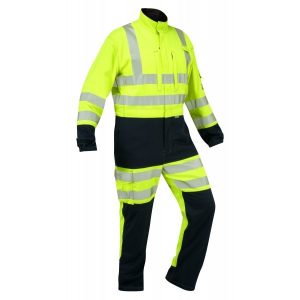
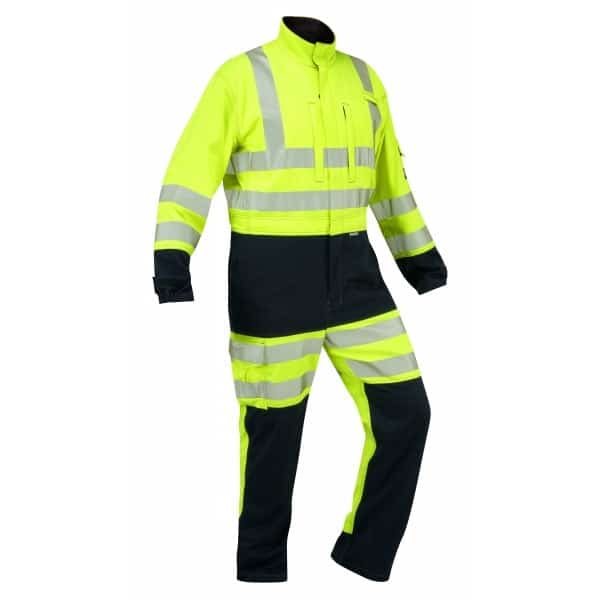
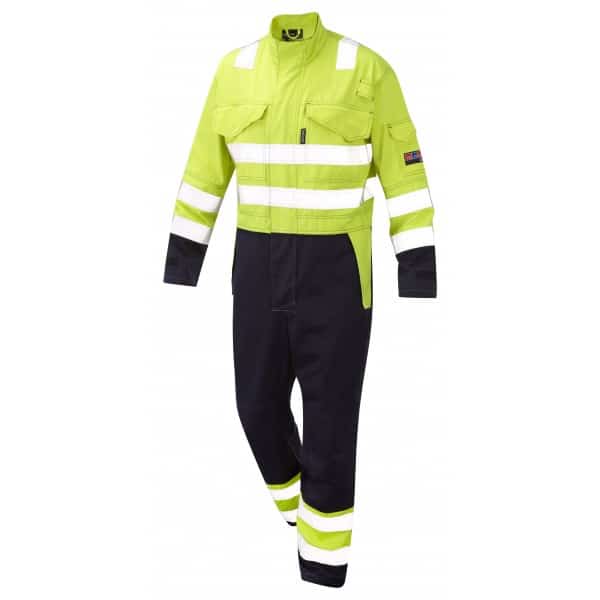
Arc Flash Lineman Coverall ProGARM 6458
Treated vs Inherent
At ProGARM we believe fundamentally that inherent FR fabrics offer the best solution
Traditionally treated fabrics have been stiff, uncomfortable, lacked breathability and even smelly!
Protection from treatments reduces every time a garment is washed
Inherent means that characteristically the fibre will not burn – Inherent fibres create inherent yarns which are knitted or woven into inherent fabrics instant extinguishing
Our fabrics are called VXS+.
Arc Flash Clothing systems
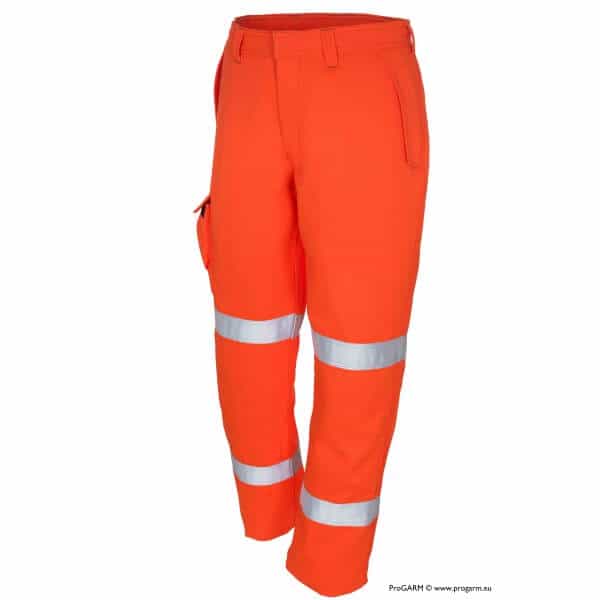
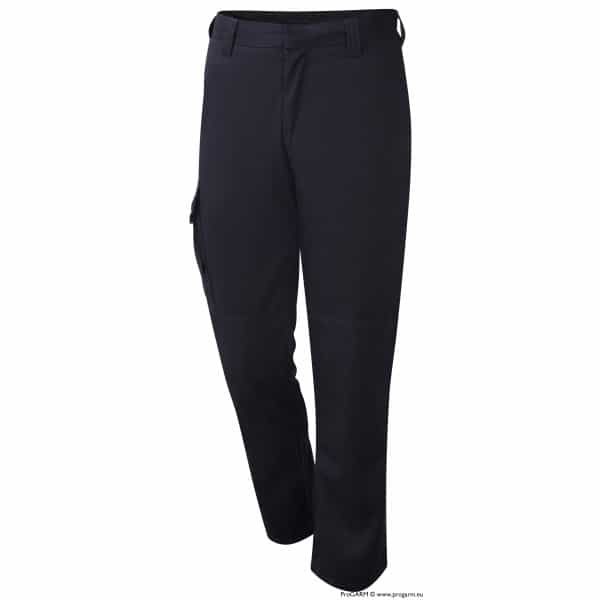
Examples of garments that are often combined into a PPE system
We’ve developed a total range of garments from underwear and thermal base layers to 47cal waterproofs
Many H&S Managers and operatives are not aware that wearing the wrong fabrics, even under AF protective garments, can compromise the AF garments and result in injury
What makes a great garment?
Let’s take a look at some of the features that protect and save lives.
Arc flash garment features to be aware of:
Take a look at the garment design features that show the attention to detail.
Triple stitched seams
Inherent fabric & instant extinguishing
FR threads
ThermSAFE components tested to continue to function after an incident
Wrist tabs and neck fastening
Reflective tape
SafetyICON marking
Internal labelling inc batch numbers for traceability
Stretch panels
Napoleon pockets for harnesses
Garments available from S to 4XL
Women’s garments
Let’s sum up
Education is one of our core missions – we’re here to help.
ProGARM’s Mission
Educate and inform to save lives
Constantly develop and innovate
Deliver an exceptional customer experience
Never compromise. Lives depend on it
We’re here to help you find the right solution for your operatives who are at risk of an electric arc to make sure they come home safely.
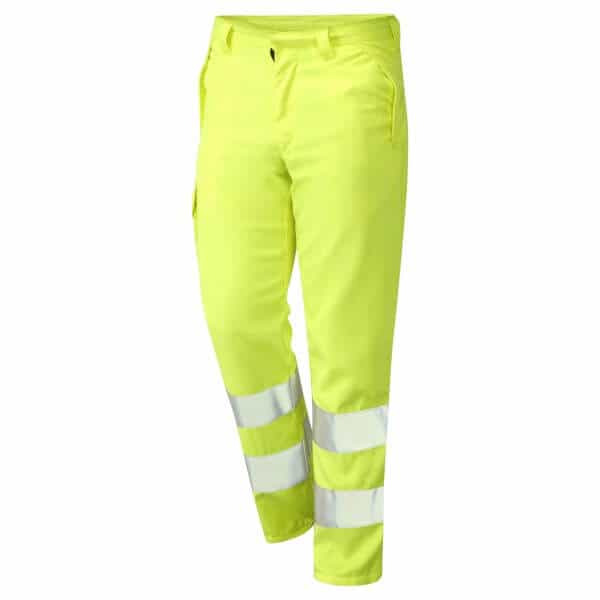
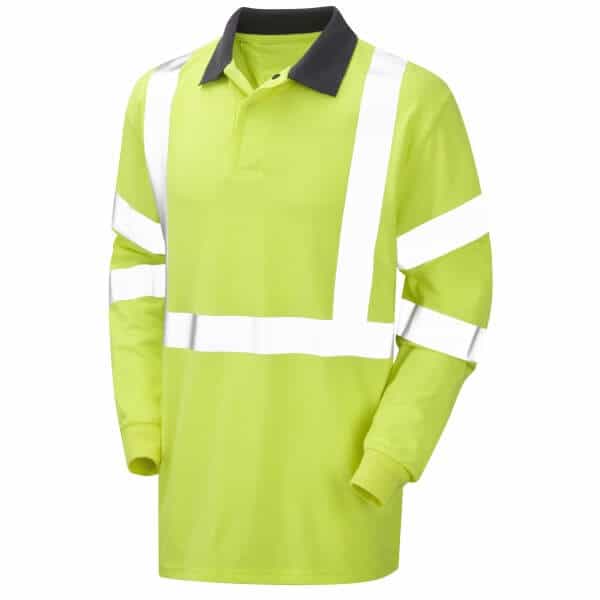
Overview of Arc Flash Clothing| Contact us to discuss your garment and PPE requirements, we can mitigate risk with guidance on safe working practices and by providing appropriate worker clothing that offers advanced Arc Flash Protection that saves lives every day. Whether working on underground cables or overhead lines, here is a selection of workwear clothing – contact us to discuss your requirements;
Thorne & Derrick are national distributors of LV, MV & HV Cable Installation, Jointing, Substation & Electrical Equipment – servicing businesses involved in cabling, jointing, substation, earthing, overhead line and electrical construction at LV, 11kV, 33kV, 66kV and EHV. Supplying a complete range of power cable accessories to support the installation and maintenance of low/medium and high voltage power systems:
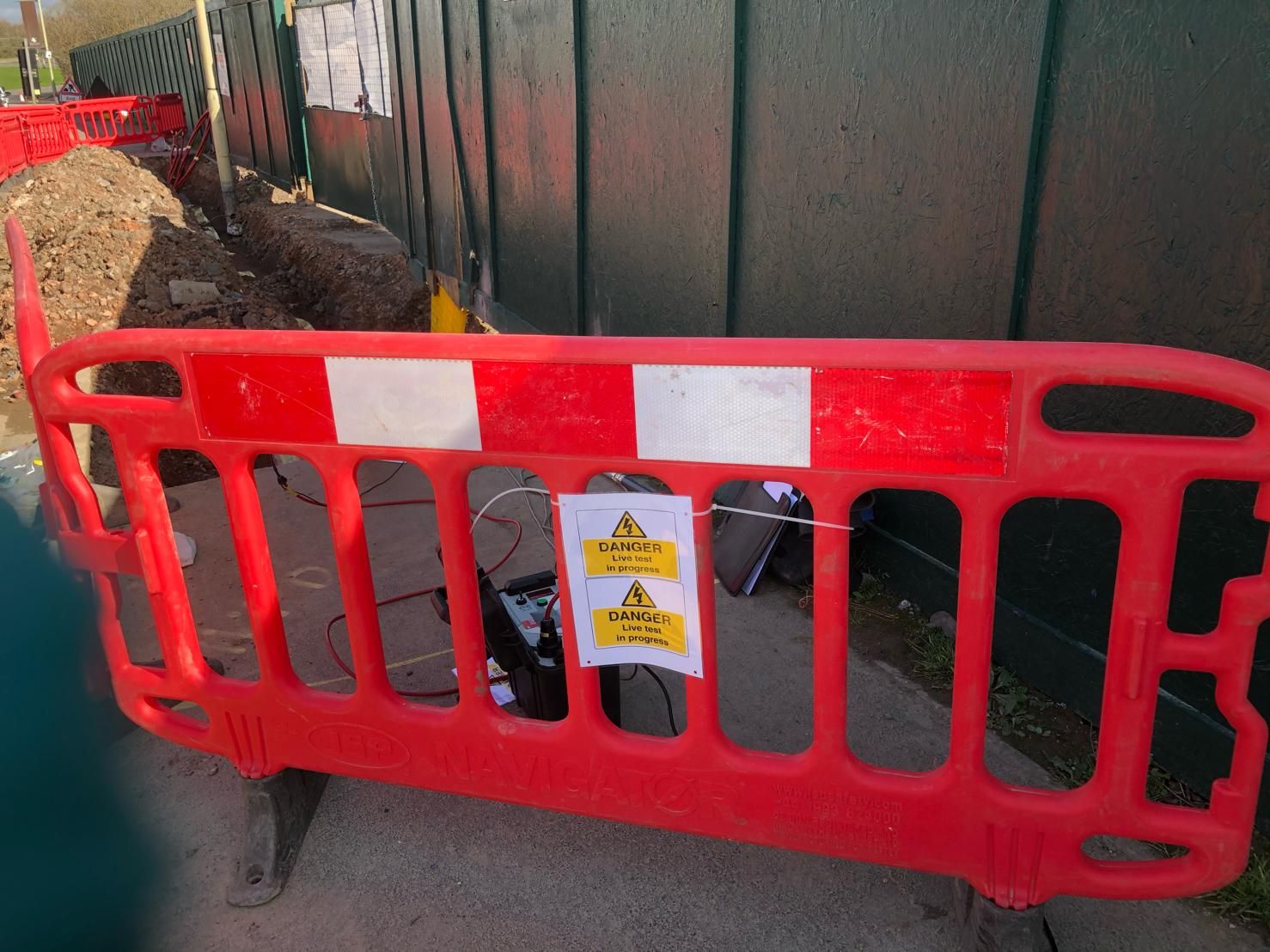
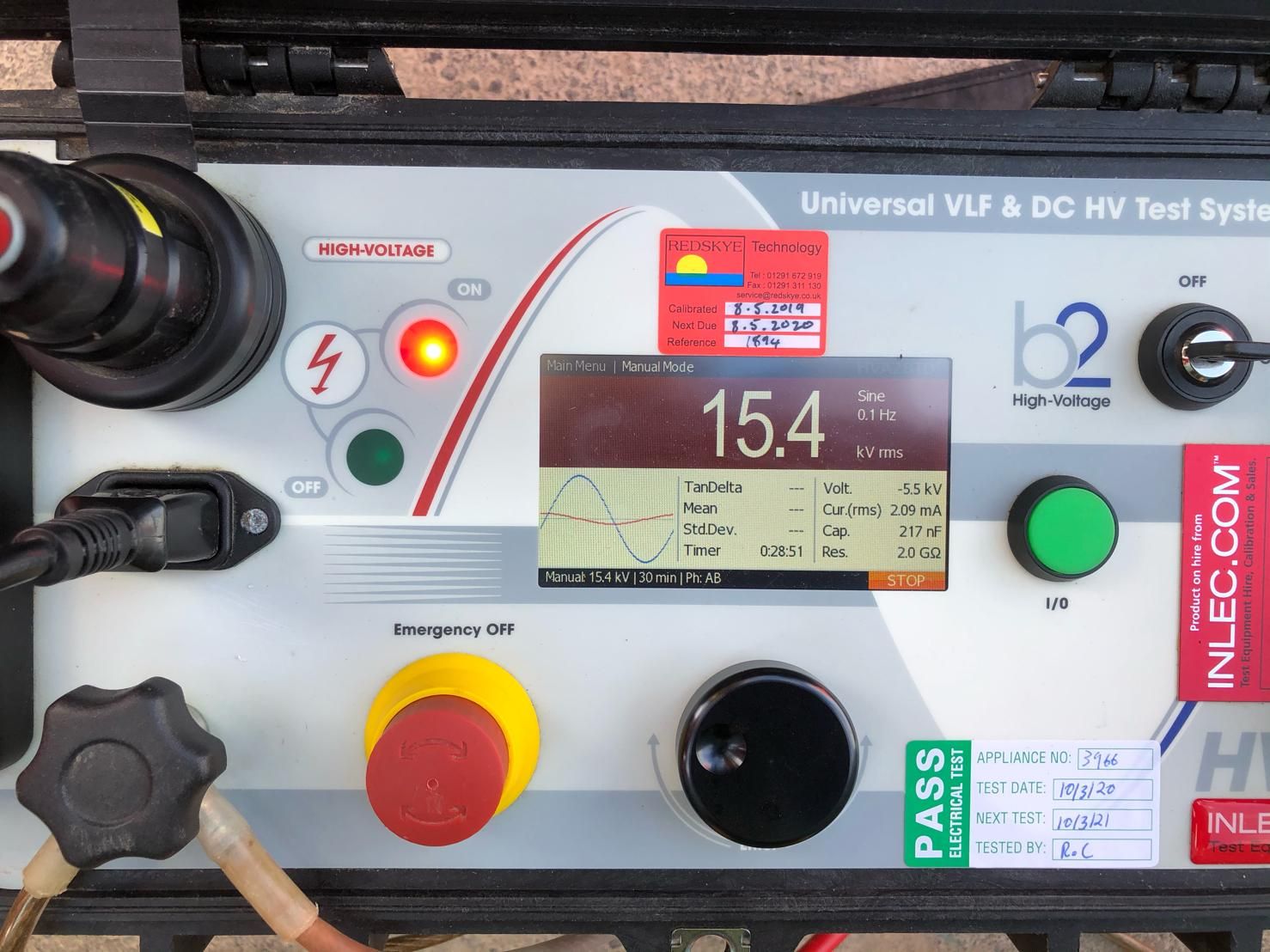
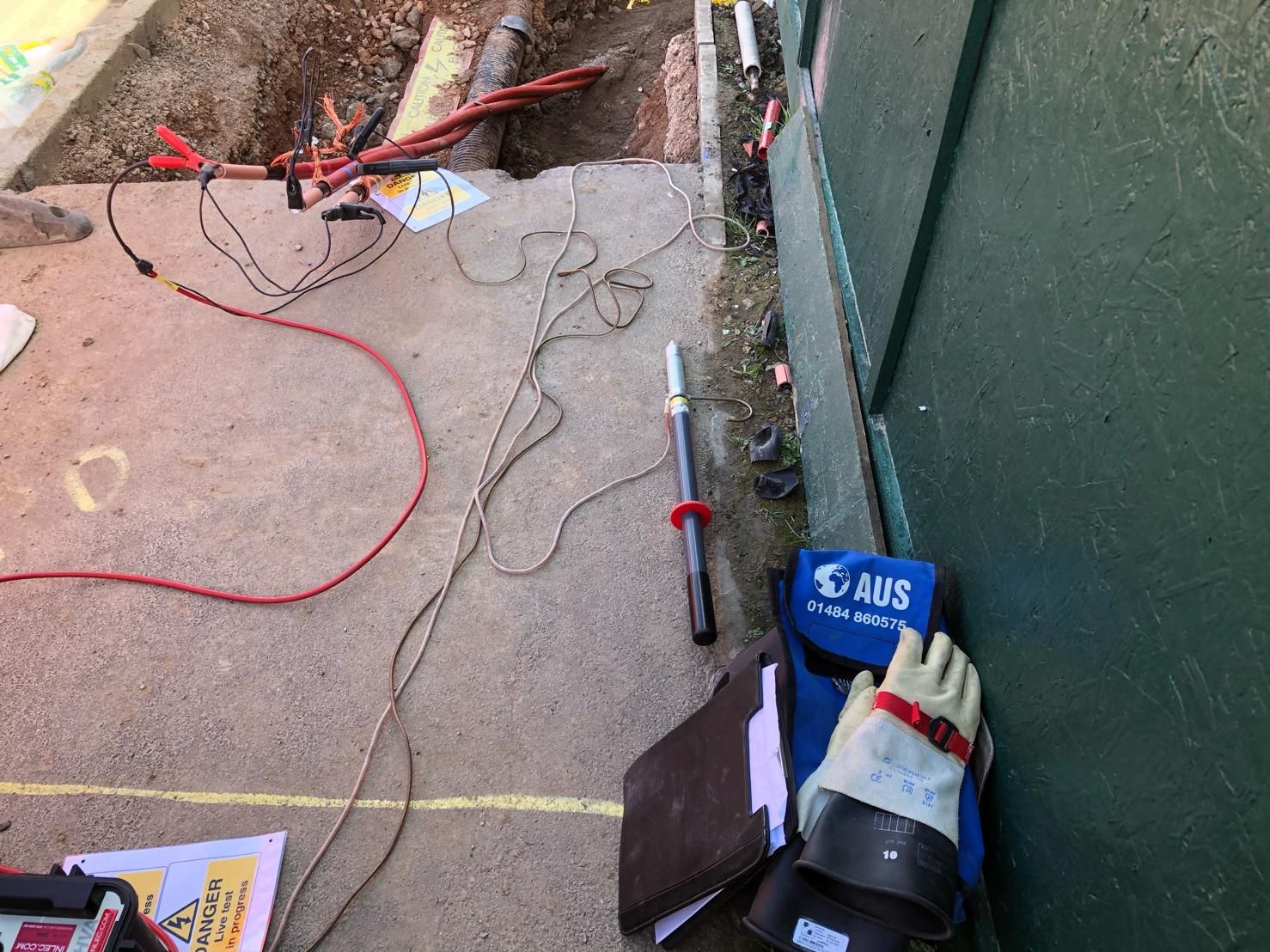
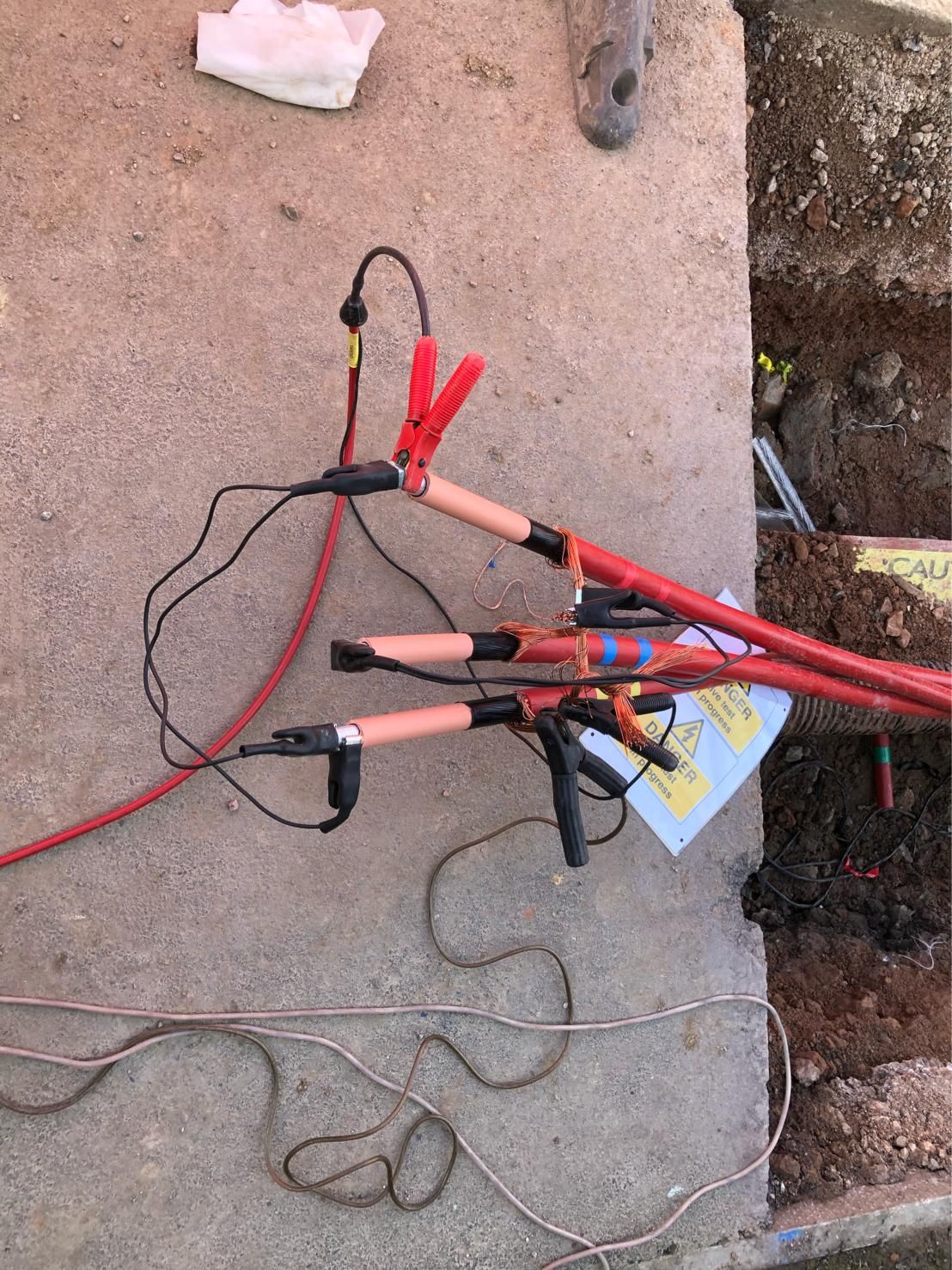
Pictured: HV High Voltage VLF Testing 11kV IDNO Connection
Images Courtesy of: Andy Dresser GCGI IEng MIET – Director at ASD Power Services Ltd
HV VLF Testing
Some HV VLF testing being carried out for a customer pre-connection of a new substation as part of a IDNO connection. ASD Power Services Ltd offer a wide range of work from VLF testing and sheath testing to SAP works.
asd power services ltd
ASD Power Services Ltd, established July 2016, are based in Newbury, Berkshire and offer the following services:
(SAP) Senior Authorised Person (11KV)
Auditing of Electrical Distribution Networks both LV and HV
Maintenance inspections on electrical installations, including none intrusive IR Inspections
Director Andy Dresser is a Senior Authorised Person (SAP) and has over 25 years of experience in the Electricity Distribution business including network design, project management, auditing, people management, operational engineering, network construction, control engineering and procedure development.
Jointers blog
Subscribe now to our POWER NEWSLETTER– a monthly email circulation packed with news, projects, videos, technical tips, training information, promotions, webinars, career opportunities and white papers.
Includes access to our popular JOINTERS BLOGwith contributions from utility professionals, linesmen and cable jointers working on MV HV EHV cables and overhead lines typically at 11kV, 33kV, 66kV and up to 132kV.
15,000+ Subscribers. ➡
Images : James Weston – Cable Jointer at Linbrooke Services Ltd
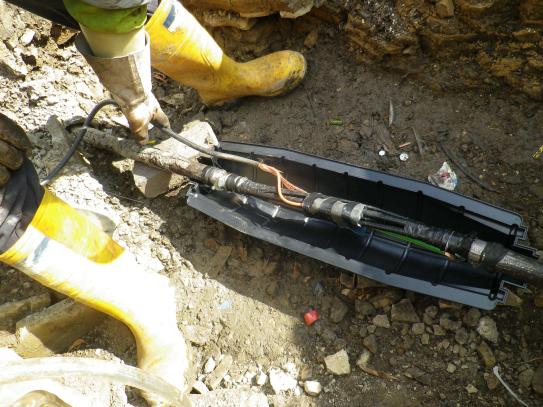
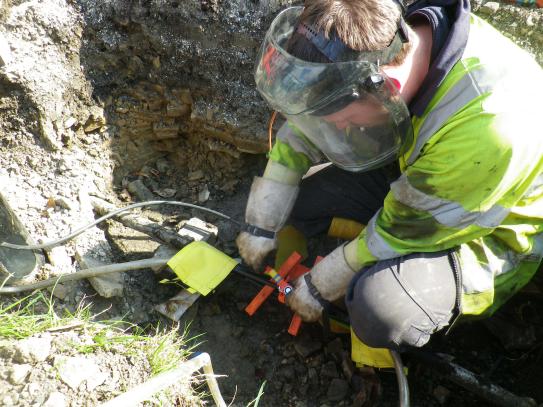
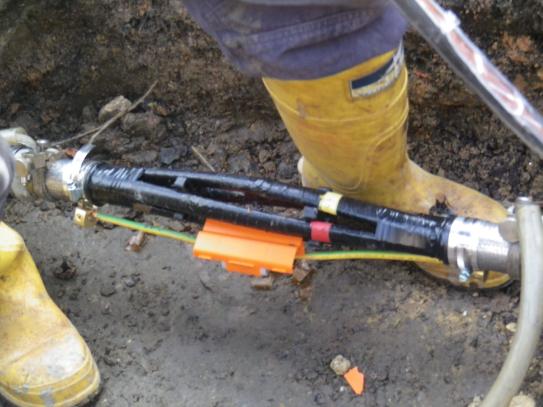
LV service to mains cable jointing
Service cable jointing up to 35sqmm 3 Phase, including connections to waveform and PILC cables
LV switching and fuse operation on all LV service equipment
Single Service Cable Jointed Off .1 PILC Cable – Low Voltage
3 Phase Service Breech Cable Joint Off 5 Core .3 Cable
Jointers blog
Subscribe now to our POWER NEWSLETTER– a monthly email circulation packed with news, projects, videos, technical tips, training information, promotions, webinars, career opportunities and white papers.
Includes access to our popular JOINTERS BLOGwith contributions from utility professionals, linesmen and cable jointers working on MV HV EHV cables and overhead lines typically at 11kV, 33kV, 66kV and up to 132kV.
15,000+ Subscribers. ➡
Stainless Steel Clamps
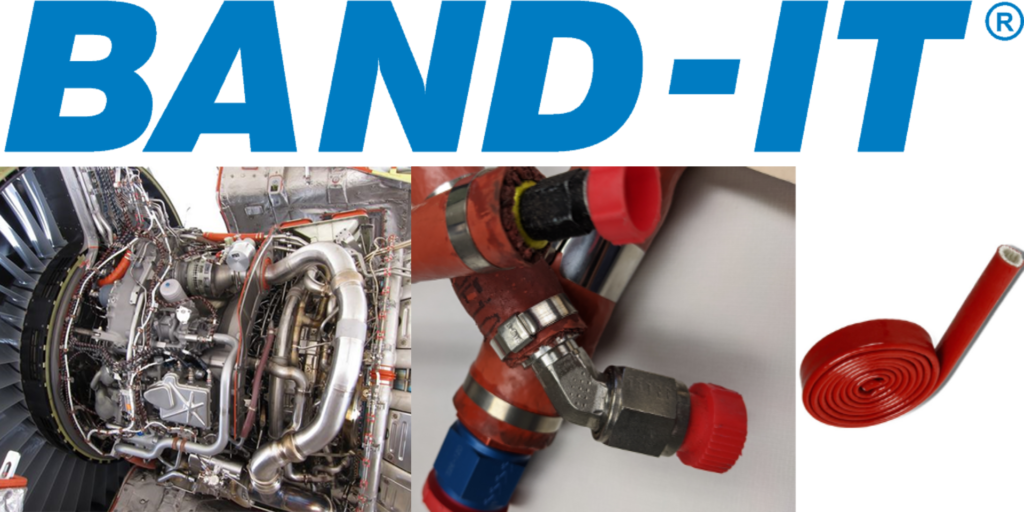
BAND-IT JS clamp
Securing Fire Resistant Sleeves On Critical Hoses & Wires In Jet Engines
Fighter jet engines operate in extremes: high altitude, cold air, and hot engines.
While rare, if a fire was to break out in the engine, fiberglass sleeving protects the critical hose and electrical systems to give the pilot a chance to extinguish the fire, land, or eject.
The BAND-IT JS clamp was selected to secure the sleeving in place because of its proven ability to handle extreme heat, extreme cold, and the vibration of the aircraft. The result is a consistent tension on the hose clamp and a sleeve that doesn’t loosen or slip during flight.
The BAND-IT Edge
Minimal expansion/contraction from thermal changes
High strength to weight ratio
Consistent installation tools and smooth edge ensure the sleeve is tightly secured without damaging the sleeving
Available in multiple alloys, including Alloy 625
Stainless Steel Clamp Product Features
Stainless steel clamps have a higher melting temperature and longer life than plastic ties
JS Clamps have a low buckle profile to prevent catching or damage to other components
BAND-IT Cable & Hose Clamps | Stainless Steel
Thorne & Derrick stock, supply and distribute the most extensive range of BAND-IT products to enable clamp, cleat, support, and identify cables, pipes and hoses.
THORNE & DERRICK are national distributors of LV, MV & HV Cable Installation, Jointing, Duct Sealing, Substation & Electrical Equipment – we service UK and global businesses involved in cable installations, cable jointing, substation earthing, overhead line and electrical construction at LV, 11kV, 33kV and EHV.
Since 1985, T&D have established an international reputation based on SERVICE | INTEGRITY | TRUST.
Contact us for 3M Electrical, ABB, Alroc, AN Wallis, CATU Electrical, Cembre, Centriforce, CMP, CSD, Elastimold, Ellis Patents, Emtelle, Euromold, Filoform , Furse, Lucy Electric & Zodion, Nexans, Pfisterer, Polypipe, Prysmian, Roxtec, Sicame, WT Henley.
INDUSTRIAL LABEL PRINTING SOLUTIONS When clear, durable and professional identification is required across control panels, cable systems, production facilities and industrial installations, print quality, reliability and ease of use are critical. Cembre industrial label printers are designed to support...
HIGH VOLTAGE JUNCTION BOXES & ENCLOSURES When high-voltage power distribution and cable termination are required, safety, enclosure integrity and long-term reliability are critical. HV Junction Boxes and Electrical Enclosures manufactured by Abtech are engineered for the safe distribution, cable termination and protection...



 Essentially, 3 basic qualities must be carefully evaluated when choosing your tape: