Many cable crimping applications throughout the industry are conducted using manual ratchet tools or hand hydraulic tools. Depending on the number of operations conducted each day and the hand force required to close the handles of the crimping tool, Repetitive Strain Injury (RSI) can result.
➡ Thorne & Derrick, are leading suppliers of cable crimp lugs and associated crimping tools for Low, Medium & High Voltage Cables and Power Systems.
The average force required to close the handles of a ratchet crimp tool is 22kg, and with many applications in factories and OEM’s requiring 250+ terminations per day, a significant risk is exposed.
Employee health – Less physical effort due to electrically-driven tools
CABLE CRIMPING & HEALTH & SAFETY
Looking to statistics available on-line, 29% of repetitive strain injuries will result in Carpal Tunnel Syndrome (CTS). This condition is where the Median nerve in the wrist is squashed in the Carpal tunnel, creating chronic pain, pins and needles, and numbness in the fingers and hand of the operator.
In worst cases CTS can only be resolved with surgery, one hand at a time, resulting in employees being unable to work for 6-8 weeks.
Those at risk of CTS are employees where they have a combination of:-
1. Repetitive bending and stretching of the hand
2. High force applications of squeezing or gripping cable cutting or crimping tools
3. Exposure to high vibration (e.g. motor driven saws/ grinders)
Electromechanical Cable Crimping Tools
The new alternative to manual ratchet crimping tools for high volume, high force applications, is the Klauke Micro tool. This is an electro-mechanical tool suitable for Pre-insulated connectors (up to 16sqmm), Boot-lace ferrules (up to 50sqmm), and Cu tube lugs (up to 25sqmm). The Micro provides a 90% reduction in hand load experienced by the operator to help keep employees safe and maintain high productivity.
Electromechanical Crimping Tool Operation
Choosing the correct electromechanical crimping tools can help reduce workplace injuries and improve site and worker Health & Safety.
The Micro is less than 1kg, completes in excess of 300 crimps per charge in less than 1.5 secs per crimp. As an intelligent tool, it ensures full closure of the jaws on every crimp and comes with the ability to link to Klauke iPress software, where quality records can be downloaded and stored for improved traceability.
Klauke EK 50 ML 0.14sqmm – 50sqmm Electromechanical Crimping Tool
There are more reported cases of CTS in our industry and with better, safer, more productive tool solutions available today, each employer has a duty of care to provide the most suitable tools to their employees.
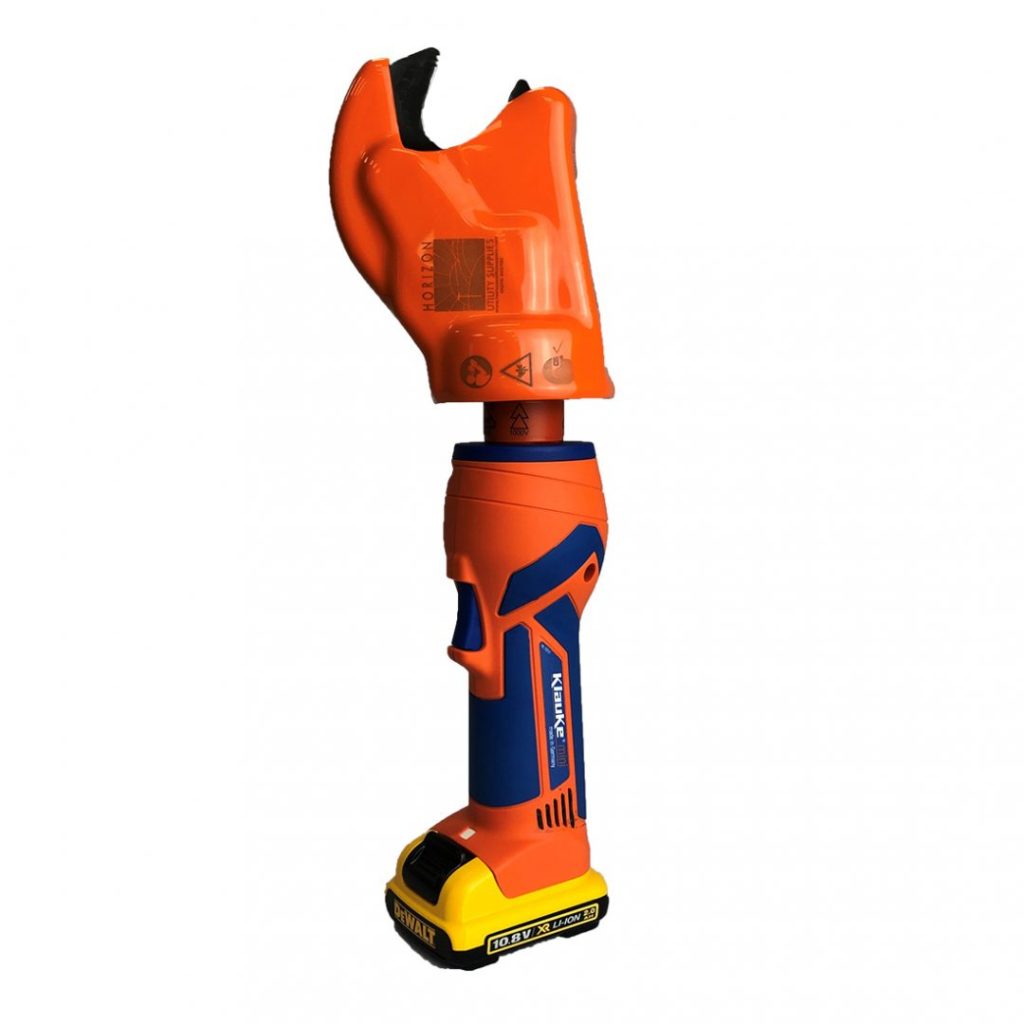
The Klauke ES32SISML-WSHis a battery powered cable cutting tool with a maximum cutting range of 32mm suitable for use with copper and aluminium conductors up to 300sqmm. The Klauke ES32SISML insulated cable cutter has a slim cutting head for Jointers working in substations, switchgear and trenches with confined spaces – this insulated tool provides advanced worker and electrical protection to utility contractors working live in the vicinity of energised Mains and Service cables up to 1000V.
The insulated tool is typically used by UK DNO’s and their ICP Contractors to core cut 185sqmm, 240sqmm and 300sqmm BS7870 Waveform 600/1000V cables.
Klauke cutting tools are available with 10.8V DeWalt Li-Ion Batteries and are fully insulated to the electrical requirements of IEC 60900.
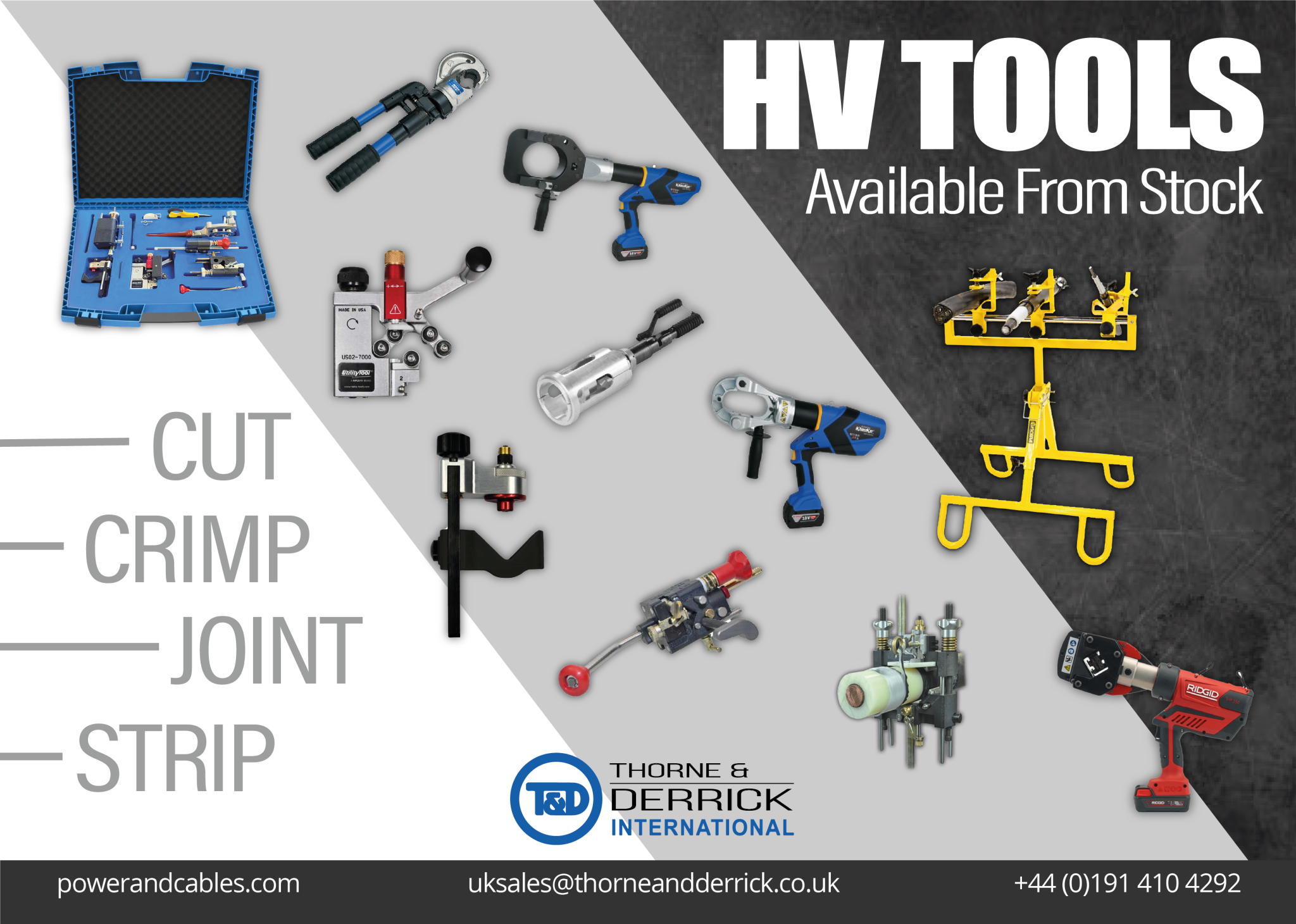
Cable Innovation Tools & Accessories for Low & High Voltage Power Systems
THORNE & DERRICK are Specialist Distributors of LV HV Cable Jointing, Earthing, Substation & Electrical Eqpt up to 66kV– this includes the most extensive range of Ex Stock Innovation Tooling to facilitate safe and reliable preparation, termination and installation of cables.
MV HV High Voltage Cable Joints | Cable Terminations | Cable Connectors | Distributed from Stock | UK & Export Sales
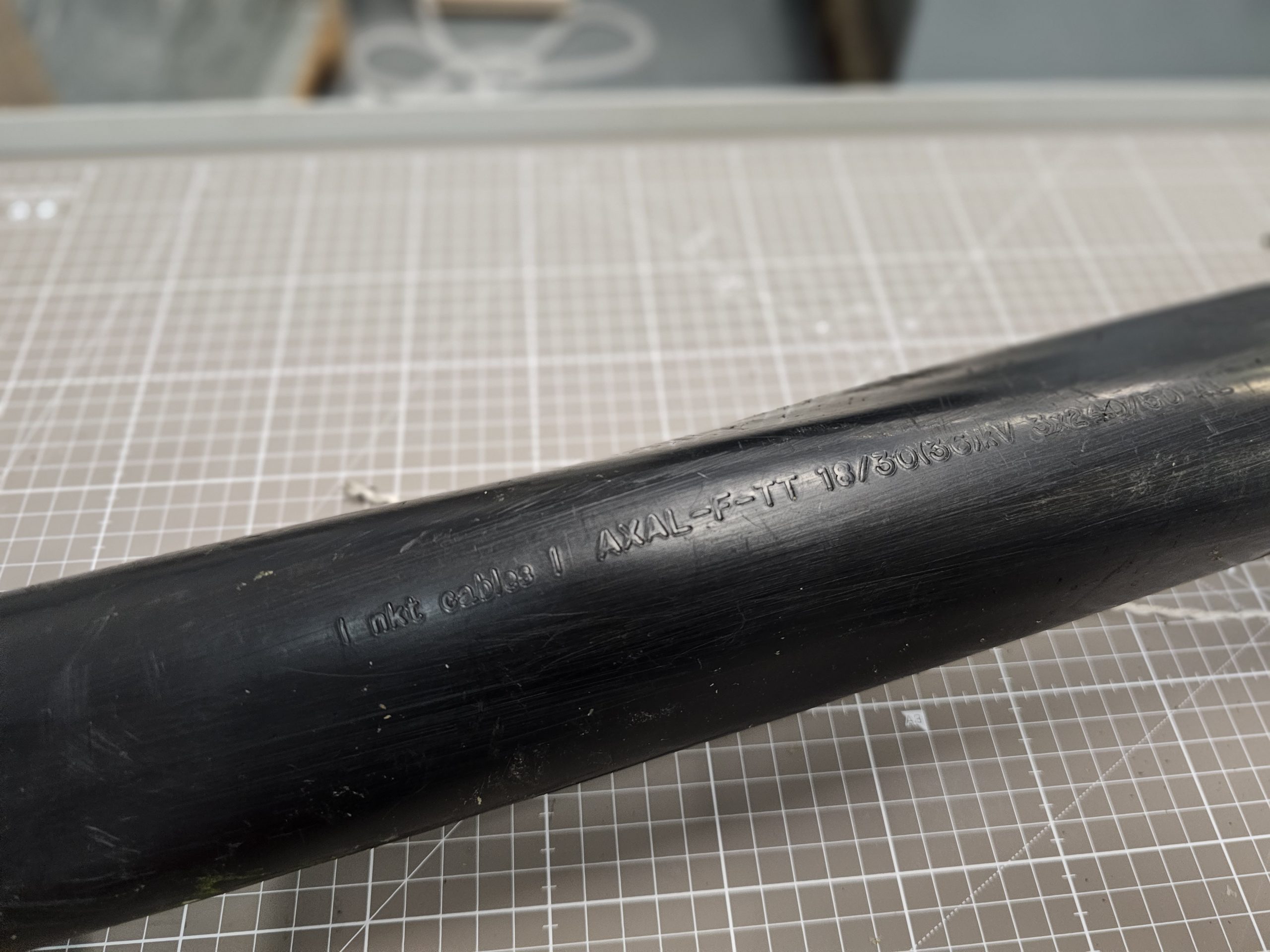
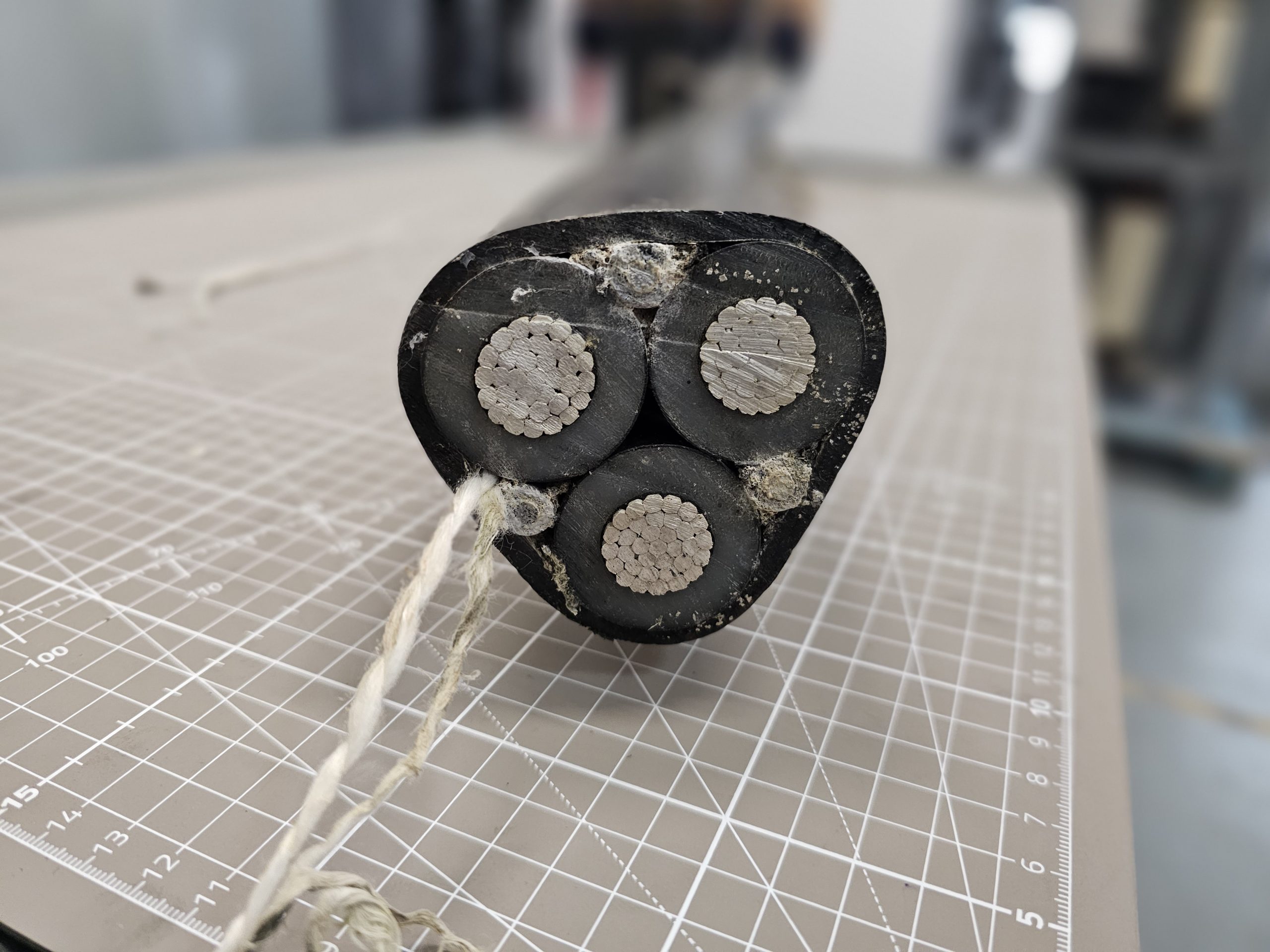
Operational Problem | Recurring 33kV Joint Failures Caused by Water Ingress to AXAL-F-TT Cables – a Medium Voltage Cable with XLPE Insulation 3 Core Construction.
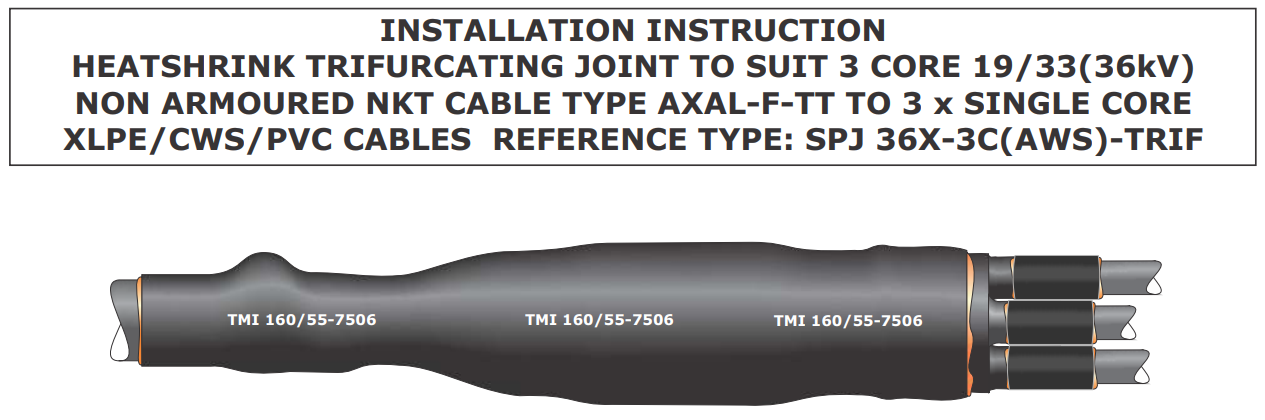
Approved Technical Recommendation | Design, Specification & Supply of Customised Medium Voltage Polymeric Trifurcating Cable Joints (3 Core to 3 Single Core Cables).
Uploaded by Chris Dodds | Sales & Marketing Manager Thorne & Derrick
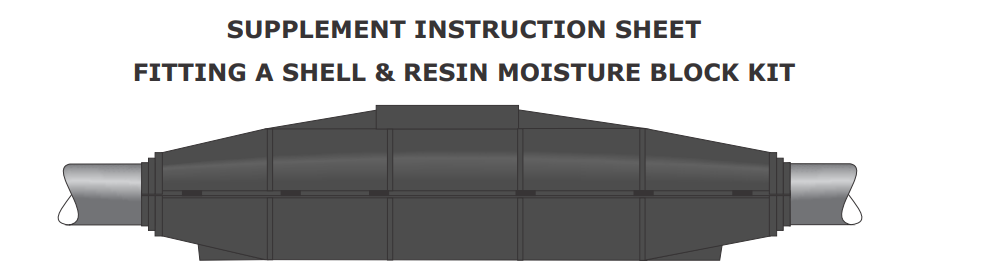
Thorne & Derrick have been working across several portfolios of renewable assets in the UK with Solar EPC’s to produce a reliable rectification to 33kV cable joint failures caused by water ingress. The Approved Polymeric Heat Shrink Trifurcating Joint with integral water-barrier features a “resin block” before the cable joint to prevent additional water from penetrating the seals of the joint shell.
Rather than use heat shrink shapes, such as a cable break-out, the client preference for the MV Joint was to include a combined Resin & Shell Water-Blocking Kit to overcome future water penetration compromising solar cable service, reliability and circuit integrity.
Cable reliability increases plant profitability and overall operational efficiency with reduced downtime caused by cable failures on PV power plants.
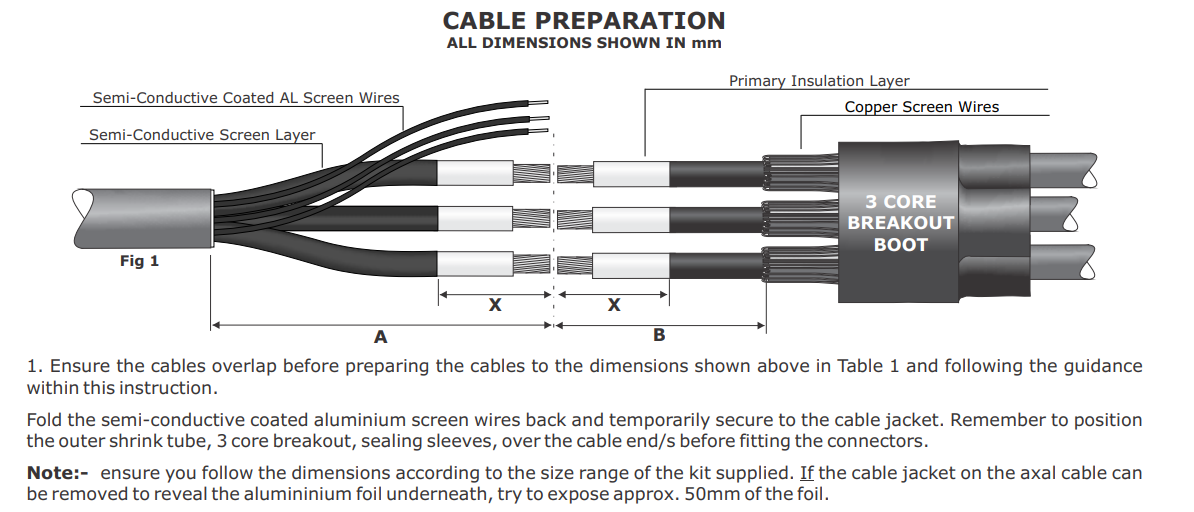
Water spread and the capillary effect under the cable sheath can cause excess stress on the seal leading to premature joint failure. The solution covered in the Jointing Instruction is to install the jointing encapsulation resin and shell 1000mm from the cable sheath and create a birdcage with the cores – note the core of the medium voltage cable must be separated to allow the resin to flow fully into all voids to eliminate air gaps and possible pathways for water ingress to travel into the Joint and minimise the risk of future failure.
With an expected shelf-life of 2-3 years the Joints have now been introduced to several solar farm sites as Strategic Spares – this provides the client with contingency planning, emergency response and immediate fault repair to any future 33kV cable failures.
The Joint features a “single-tube” shrink over the mechanical shearbolt connector overcoming the traditional multi-tube process with independent stress control and triple wall heat shrink tubes requiring additional working time. Repair and Jointing work should only ever be carried out by an Authorised & Competent Jointers.
The existing faulted 33kV 3 Core AXAL-F-TT specification cable was jointed onto new 33kV BS7870 Single Core BS7870 type cables in accordance with the manufacturers Jointing Instruction – here is an excerpt from the JI Document, ownership of Shrink Polymer Systems.
Thorne & Derrick are Specialist Distributors to Solar EPC’s & High Voltage Jointing Contractors working on the design, construction and maintenance of UK, European and international projects supplying an extensive range of LV HV Solar Cables, Jointing, Substation & Electrical Eqpt.
Based in the UK, we are highly customer responsive and absolutely committed to providing a world-class service.
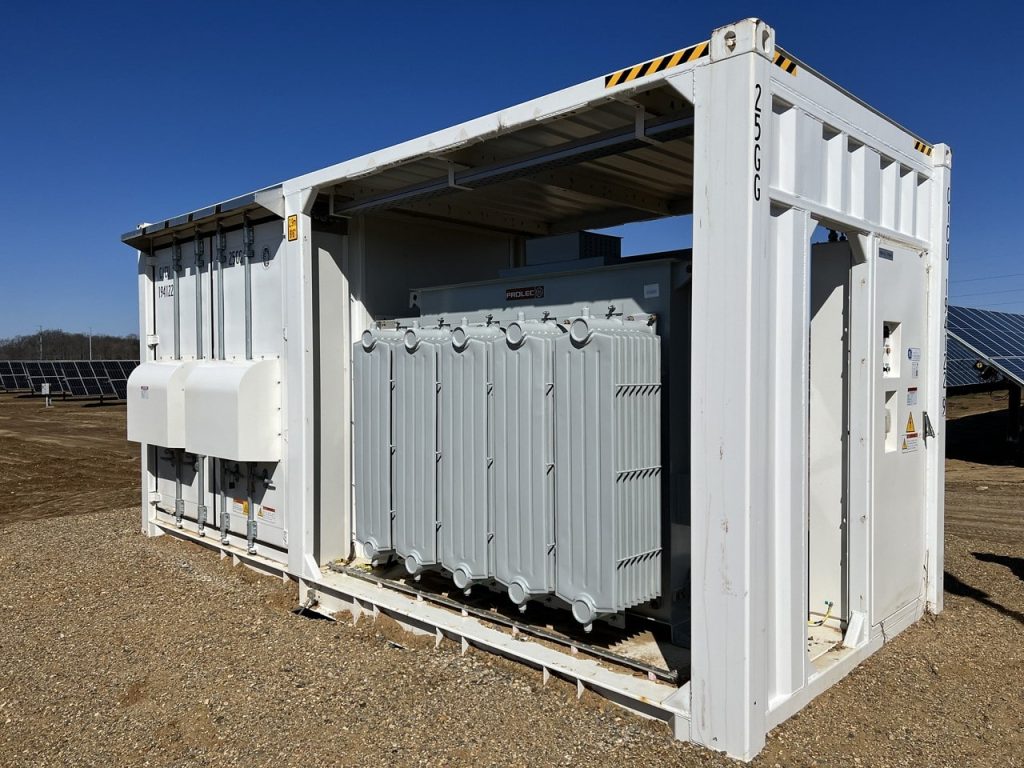
We stock LV HV Solar Cables, Accessories & Electrical Equipment to enable the construction, maintenance and operation of utility-scale PV installations – our products connect 600V/1500V solar cables into combiner boxes, inverters, transformers and energise switchgear up to 33kV/132kV for high voltage grid connections.
Since 1985, we have provided expert technical support and express delivery from extensive UK stocks to world-wide destinations.
Uploaded by Chris Dodds | Sales & Marketing Manager at Thorne & Derrick
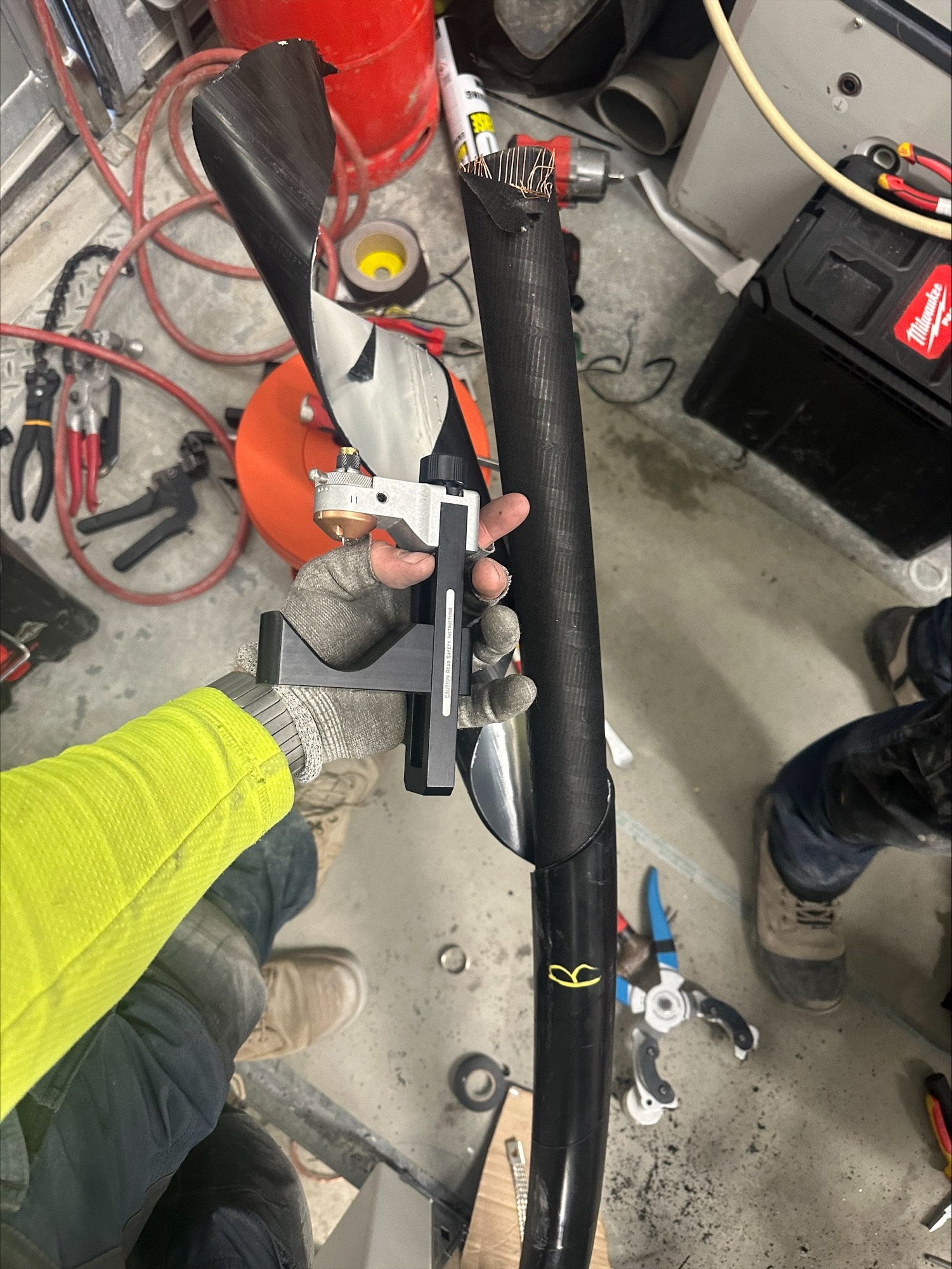
33kV Cable Sheath Stripping with the Ripley US15 Tool
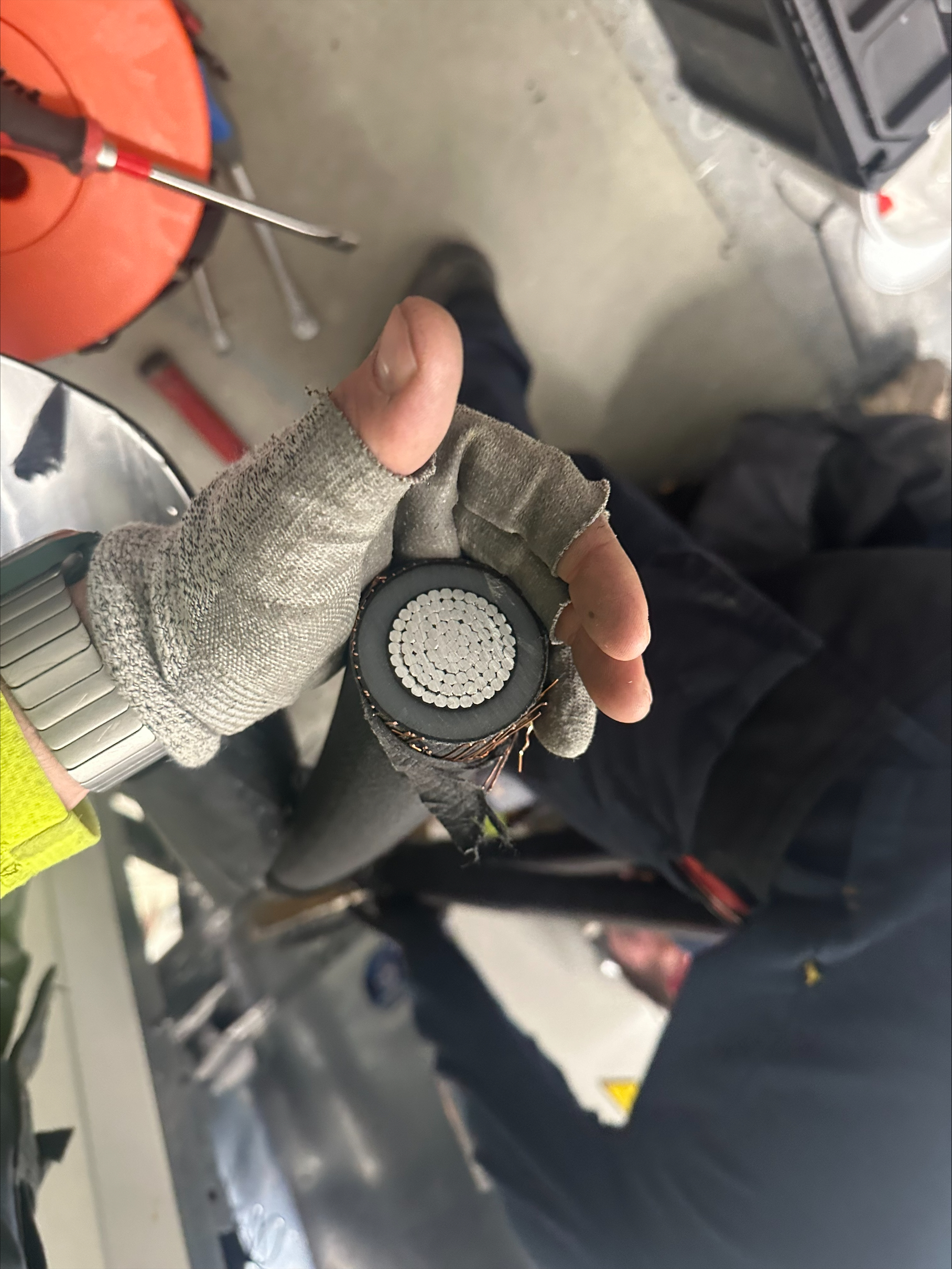
Jointer Steffan Evans from HVSM demonstrates how to remove the cable sheath and bonded aluminium screen from a 33kV single-core, 800mm² XLPE-insulated cable.
Steffan uses the Ripley US15 Cable Sheath Stripping Tool, designed for cable sheath diameters of 10–50mm. When used by trained and competent jointers, the tool removes the outer sheath and bonded aluminium foil screen while helping to protect the underlying copper wire screens from damage.
Explore our range of cable jointing tools for cable preparation and installation applications.
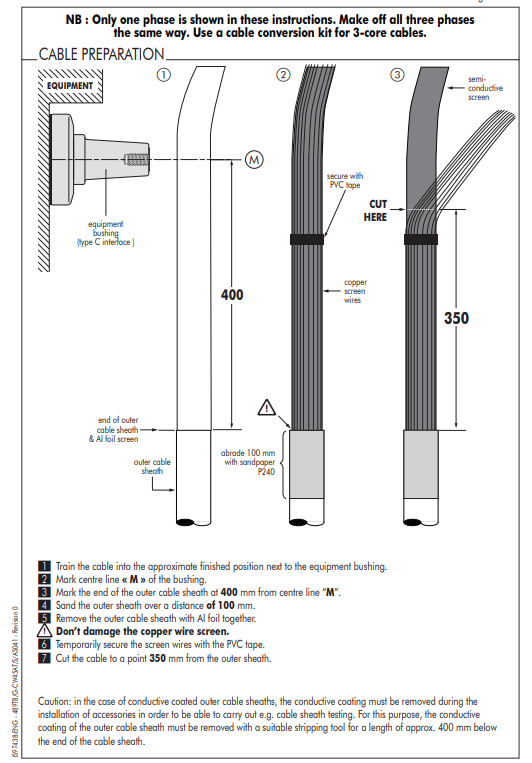
The following excerpt from the Nexans Euromold Type C Interface Connectors (K), (M), (P) 800PB/G instructions, rated up to 20.8/36 (42)kV, highlights the requirement to remove the outer cable sheath and aluminium foil screen together.
Important caution: When working with conductive-coated outer cable sheaths, installers must remove the conductive coating when preparing the cable for accessories. This allows tasks such as cable sheath testing to take place.
The instructions specify that installers should remove approximately 400mm of conductive coating below the end of the cable sheath using a suitable stripping tool.
Sheath stripping with the Ripley US15
Stripping Bonded Screens on 33kV Cables
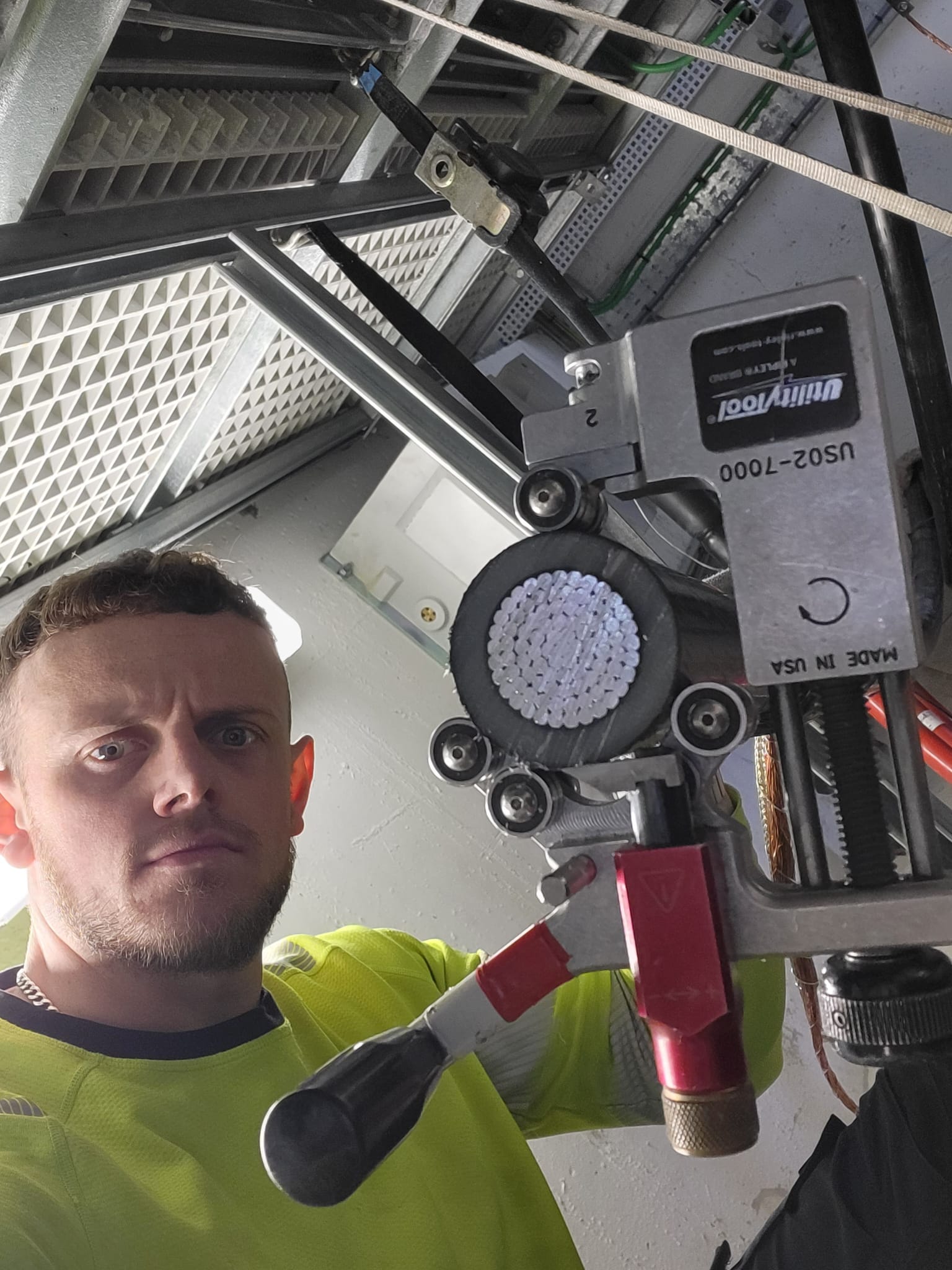
In this demonstration, Steffan removes the bonded semi-conductive screen from medium-voltage power cables (20/22kV) before terminating them into a Siemens NXAIR vacuum circuit breaker.
Manufactured by Ripley Tools, the US02 features an ergonomic revolving handle and accessible adjustment knobs. These features help jointers work comfortably and accurately when performing repetitive screen-shaving tasks in the field.
“Investing in innovation and introducing cable jointing tools to HVSM improves safety and reliability for our clients. The Ripley US02 is very Jointer-friendly with a spectacular finish to the XLPE insulation – the automatic cut-off and incremental blade adjustments ensure a professional perfection of cable preparation at medium voltages,” comments Steffan.
Stripping in the Switch – Compact Tool Design
The compact but robust design of the US02 allows jointers to work in confined spaces within medium-voltage electrical equipment.
Cable Preparation Tools | Distributed From Stock | Approved Supplier
HVSM – High Voltage Engineering Specialists
HVSM is one of Ireland’s longest-standing high-voltage engineering companies, having operated since 1991. Headquartered in Ireland, the company works with customers across the globe.
HVSM provides specialist engineering services to high-voltage power industries, including commercial, utilities, manufacturing, life sciences, data centres and renewable energy.
Cable Jointing Stands and Installation Equipment
Thorne & Derrick are official distributors of the Vicera range of cable jointing stands. This range complements our established selection of cable jointing, cable pulling equipment and cable preparation tools, helping support efficient and reliable power cable installations.
MV and HV Cable Joints, Terminations and Connectors
Thorne & Derrick distribute a wide range of medium- and high-voltage (MV and HV) cable joints, terminations and connectors from leading manufacturers, including 3M, Prysmian, Nexans Euromold, Elastimold, Pfisterer CONNEX and SEANEX.
Our range includes heat shrink, cold shrink, push-on and slip-over cable accessories for joining, terminating and connecting 11kV–33kV and 66kV–132kV cables. These accessories support connections to oil-, air- and gas-insulated switchgear, transformers, motors and overhead lines used in medium- and high-voltage electricity distribution.
11kV, 33kV and 66kV Cable Accessories
Thorne & Derrick hold extensive stocks of 11kV, 33kV and 66kV cable joints and terminations for XLPE, PILC and EPR cables. Our range includes both heat shrink and cold shrink technologies to meet the medium- and high-voltage cable accessory requirements of UK and international customers.
Unlocking The Power Of Solar | Electrical Balance of System in Solar Applications
Electrical Balance of System in Solar Applications
The hard parts are done. You have a solar farm site ready to build and an order placed for high performance PV modules, best-in-class inverters, and a tracking system to maximise energy production. Now you just need to figure out how to get it all connected.
Easy, right?
It’s not rocket science, but thoughtful selection of Electrical Balance of System (EBOS) components is essential for project success. In a recent audit from Solargrade, 62% of all utility-scale solar projects had critical safety issues, 91% of which related to direct current (DC) power distribution. Most issues were caused by field-made connectors and wire management, components of the EBOS.
To understand where to focus to create a reliable, high-performance EBOS, let us start with the PV module and work our way to the DC/AC inverters that connect to the grid.
➡ Thorne & Derrick partner with Panduit to bring the most innovative renewable energies solutions to the market.
Below discover how Panduit is at the forefront of accelerating solar projects, enhancing reliability, and increasing profitability with our expert insights on navigating Electrical Balance of System (EBOS).
Join us as we unlock the potential of solar energy for reliable, efficient projects.
Electrical Balance of System Components IN THE SOLAR iNDUSTRY
PV modules range in size and power output, but all have DC wires exiting from a junction box on the back. In a solar array, these wires are routed as a bundle or spliced together at prescribed intervals and fed into a combiner box. The combiner box, as its name suggests, combines the power from these strings of modules so that a pair of larger, high-voltage cables can carry their combined power in a “home run” to the inverter and then eventually on to the grid.
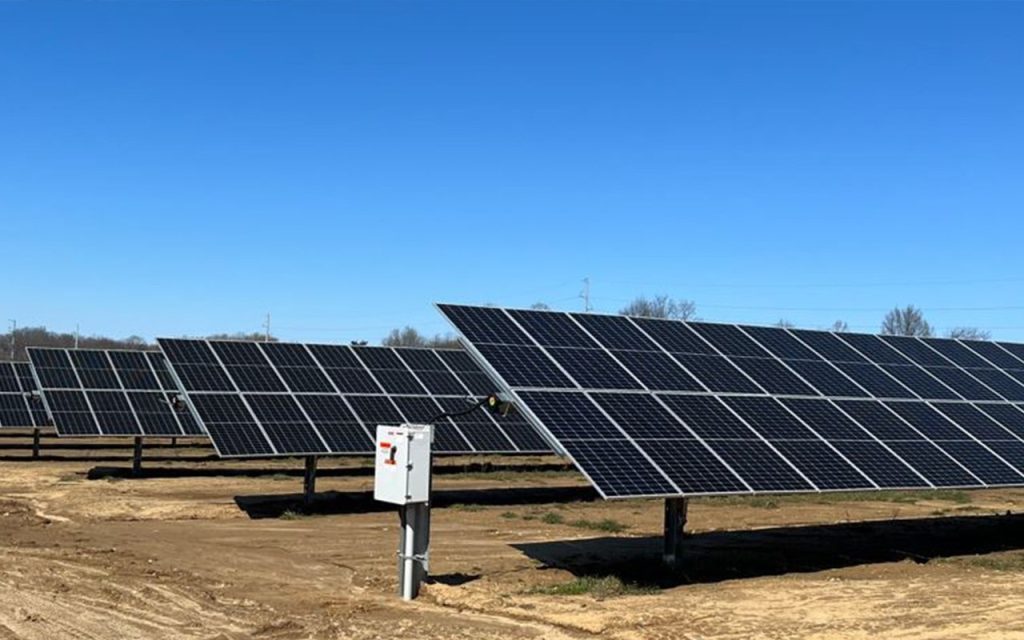
Commercial and utility scale solar projects necessarily have a large footprint to produce the amount of required power. Because each PV module only creates 400–600 W, you need 1,667–2,500 modules to produce just one megawatt (MW) of electricity, and utility projects can typically range anywhere from 20 to 500+ MW. With all that scale comes a huge amount of cable to manage. And because these projects are placed in areas with intense sun, all the components are exposed to the elements. To be reliable, solar cable management solutions must securely hold cables in high wind, protect from long-term abrasion, withstand harsh UV, potential chemical exposure, and extreme temperatures.
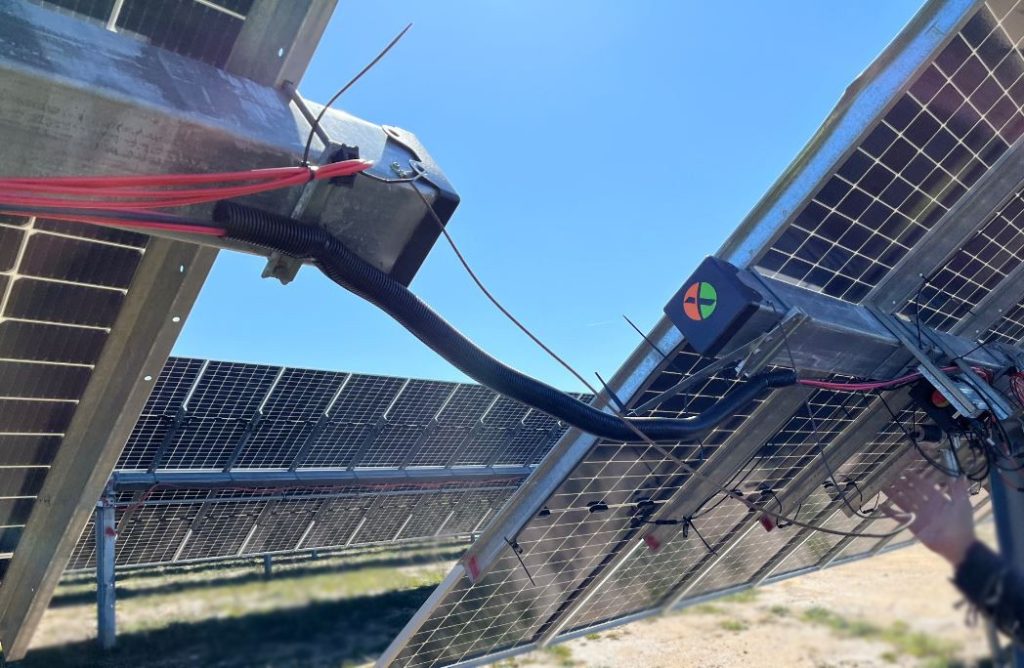
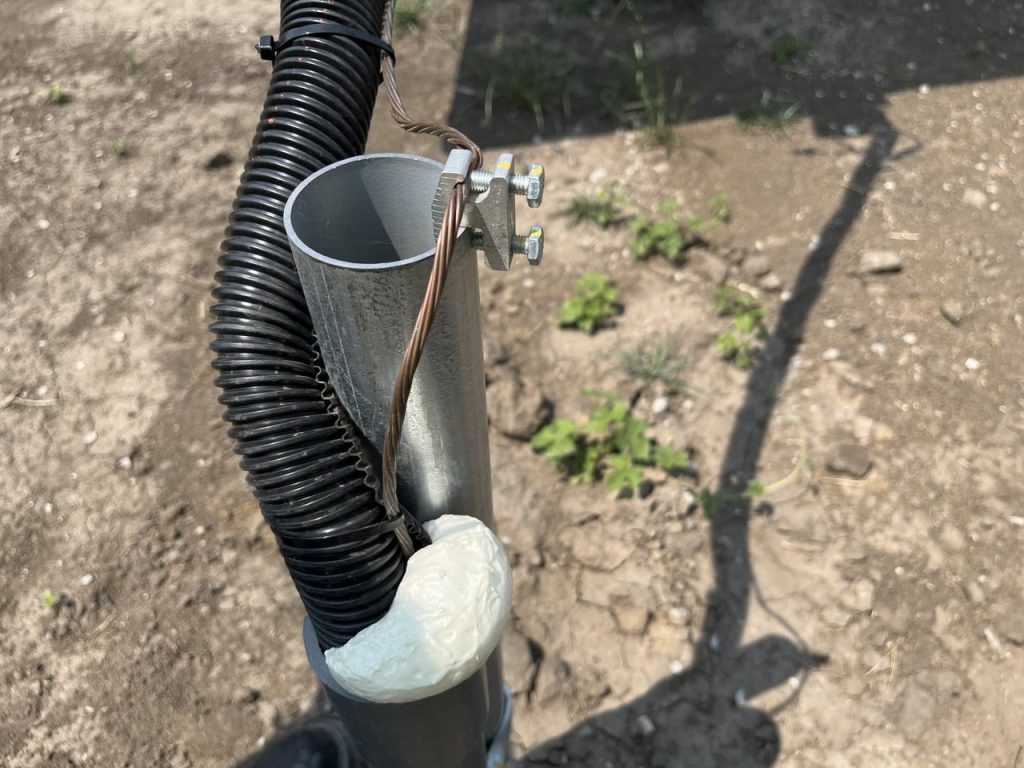
Several suitable options exist for routing smaller cables along the back of PV modules. The most common include dedicated solar clips that snap on the metal frame, specialised wire hangers that fit through holes in the frame, and heavy-duty cable ties. Arrays that move to track the sun create some additional challenges with abrasion, so flexible corrugated tubing is often used to surround cables and protect around potential pinch points.
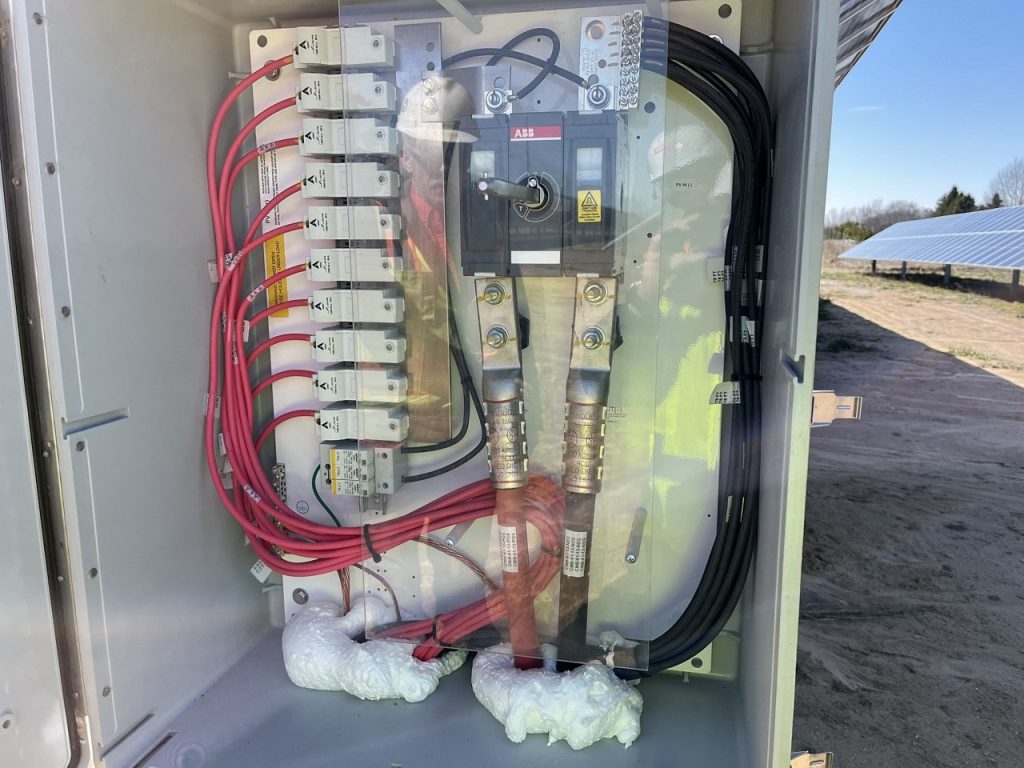
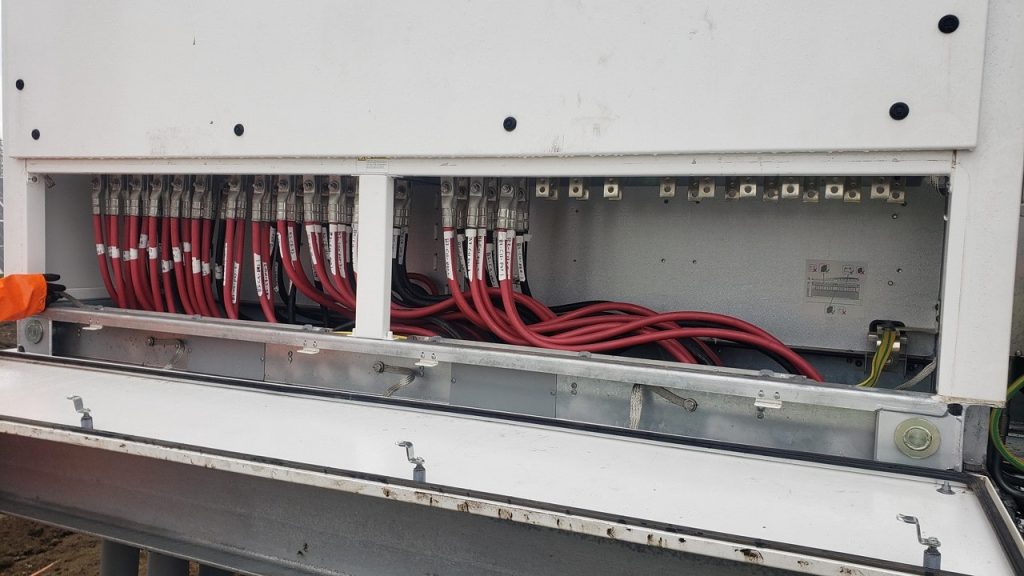
At each combiner box, dozens of smaller cables enter and connect to a pair of busbar conductors, most commonly with power lugs. The lugs are crimped using tools or mechanically terminated to the ends of the wires and secured to the busbar with screws to ensure reliability and efficiency.
Power exits the combiner box through higher-voltage cables and is routed one of two ways: either below ground in a trench or suspended in bundles from steel cables strung in-between rows. These higher voltage “home run” cables carry power to an inverter connected to the grid, or directly to DC battery storage on site.
As with any electrical system, proper bonding and grounding are critical parts of a solar project. Grounding provides a super-low-resistance path for electricity to flow, so that power can safely complete a circuit should a fault occur.
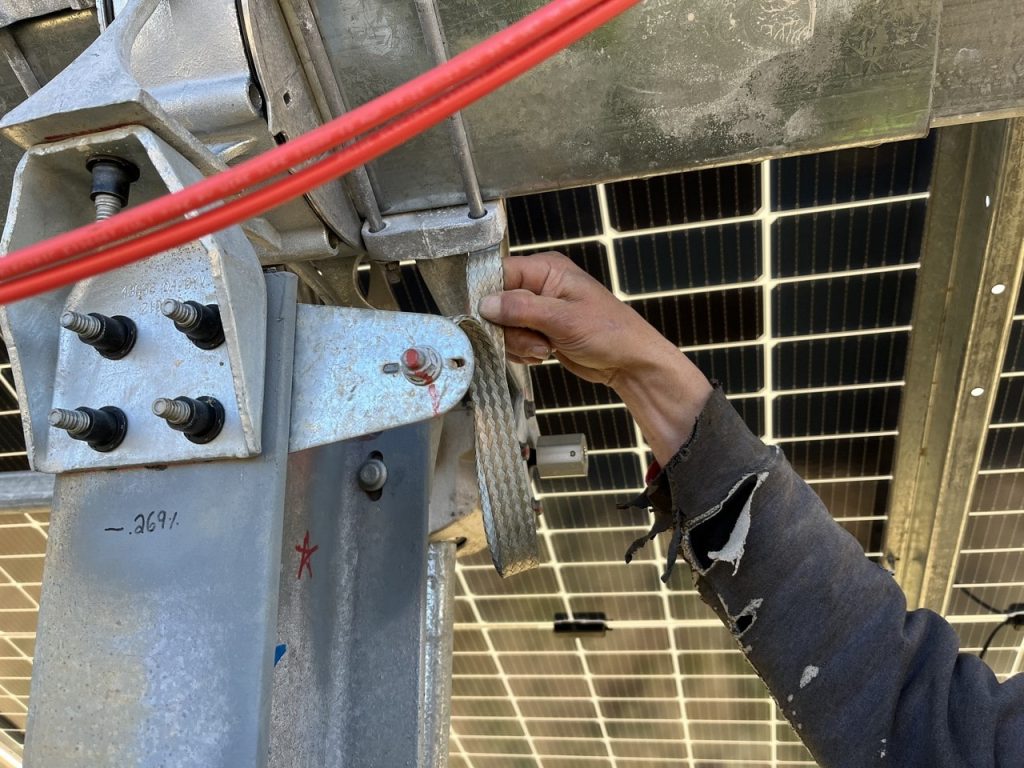
In the EBOS, bonding components like lugs and straps connect each of the individual array components together and then to the grounding system. Without proper grounding, tray and racking surfaces can become energised in the event of a fault, creating a life-threatening situation for people working on the solar array.
Most solar safety and reliability issues emerge from mistakes in managing DC wiring and grounding. Selecting appropriate cable management, termination, and grounding solutions can prevent some challenges. Placing an emphasis on ease of installation, quality materials, and long-term reliability when specifying EBOS components will minimise problems once the project is built.
Maximising Return on Investment Through EBOS
Like any utility, the goal of solar farms is to produce the most usable energy at the lowest total cost over the life of the project. To optimise long-term return on investment, it’s important to consider ease of installation, durability, and safety when selecting BOS components.
Finding skilled labour continues to be a challenge in the construction industry, and the labour needed to connect 2,500 PV modules is significant, let alone 2.5 million. EBOS solutions that simplify installation and minimise re-work can noticeably reduce labour hours and total installation costs. Even components that save seconds per operation compound to significant time savings over the duration of the build.
Once a power plant is commissioned, any downtime directly impacts profitability. Because these projects necessarily involve hundreds of thousands of individual modules, any weaknesses in components will be exposed and magnified. Selecting products specifically designed to last years in harsh environments reduces unplanned maintenance costs and lowers the total cost of ownership over the life of the project.
Solar projects typically have a usable lifespan of 25+ years. To maintain the highest level of production, it’s necessary to perform regular maintenance, which includes everything from cleaning modules and controlling vegetation to replacing deteriorating components.
Effective labelling of all system components during installation is critical for future operations personnel to interact with equipment safely and efficiently. Exposure to UV and precipitation can lead to fading and make labels illegible, so high-quality, easy-to-read solutions designed for outdoor environments are a good investment to ensure efficient maintenance in the future.
Summary
Though EBOS components (excluding wire) represent less than 5% of total project costs, they can be an important way to control costs and optimise performance throughout the life of a solar installation. Quality components maximise labour efficiency during the initial build and result in fewer errors that require re-work. Using longer lasting environment-specific materials and easy-to-read labelling solutions simplifies future operations and reduces maintenance costs. And most importantly, getting EBOS right addresses the most common critical safety issues found in solar projects today.
Experienced Brand Marketer with a specialization in strategy, content marketing, product marketing, storytelling, public relations, event management, athlete and ambassador partnerships, advertising, and team leadership.
Andrew is a member of the Panduit Renewable Energy team as a Product Marketing Manager. He is passionate about building an electrified future and the technology powering energy transformation.
Panduit Electrical Group is a world wide leader in the manufacture of high-quality electrical products including cable ties, wiring accessories, terminals, and identification products such as computer printable labels and portable labelling systems, wiring duct, heat shrink tubing, wire abrasion protection, and accessories.
Thorne & Derrick are Specialist Distributors to Solar EPC’s & High Voltage Jointing Contractors working on the design, construction and maintenance of UK, European and international projects supplying an extensive range of LV HV Solar Cables, Jointing, Substation & Electrical Eqpt.Based in the UK, we are highly customer responsive and absolutely committed to providing a world-class service.
We stock LV HV Solar Cables, Accessories & Electrical Equipment to enable the construction, maintenance and operation of utility-scale PV installations – our products connect600V/1500V solar cablesinto combiner boxes, inverters, transformers and energise switchgear up to 33kV/132kV for high voltage grid connections.
Since 1985, we have provided expert technical support and express delivery from extensive UK stocks to world-wide destinations.
We look forward to working to with you on your next Solar project.
Joint | Terminate | Connect Medium & High Voltage Cables MV HV
MV HV High Voltage Cable Joints | Cable Terminations | Cable Connectors
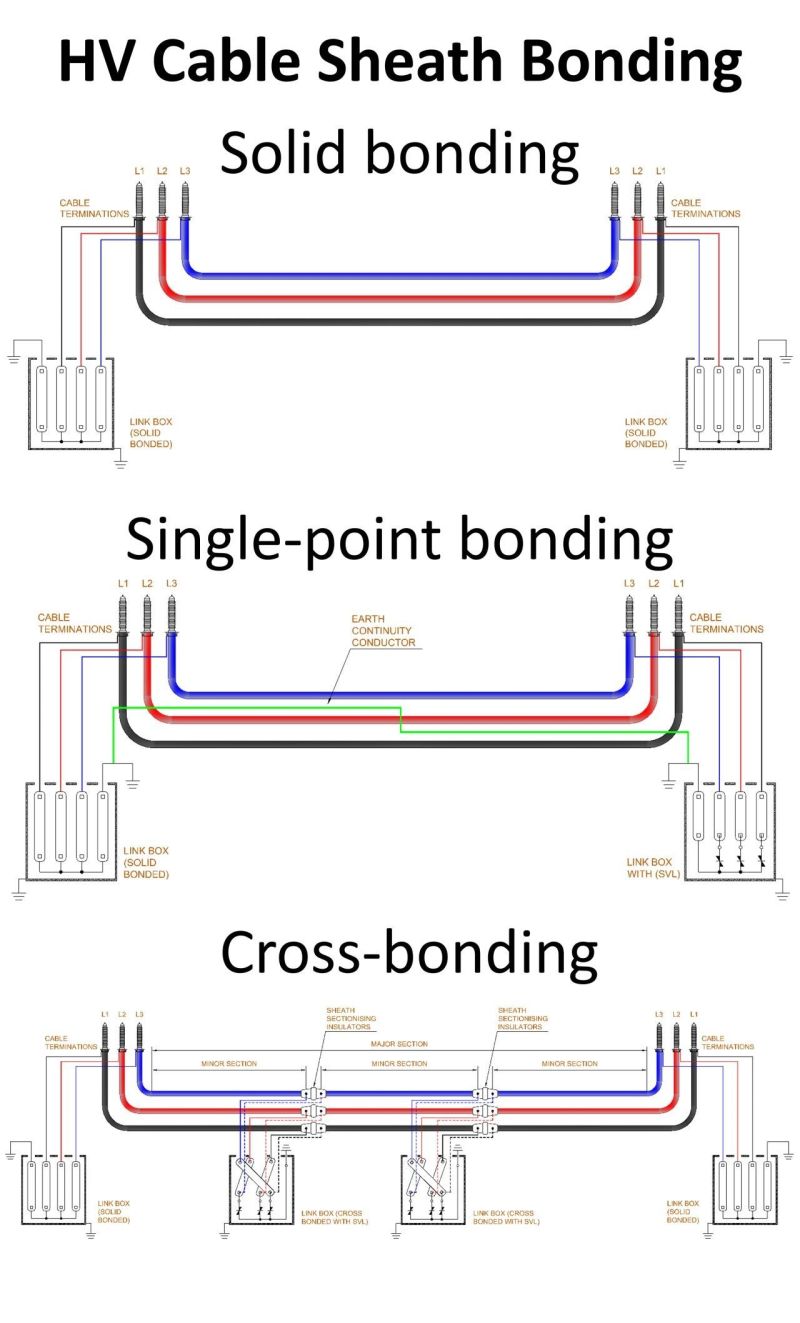
Cable Sheath Bonding
Each HV cable sheath bonding method has its advantages and applications.
Solid bonding of high voltage cables is simple but leads to sheath losses, single-point bonding eliminates circulating currents but requires voltage control, and cross-bonding is the most efficient for long HV cables, minimizing losses.
The choice depends on High Voltage Power System requirements, cable length and operational efficiency.
Solid Bonding
In this method, the metallic sheath of the cable is bonded at both ends and connected to the earth. This results in continuous current flow in the sheath due to the induced voltage.
Solid Bonding Advantages: Simple to install. Disadvantages: High circulating currents in the sheath lead to power losses and increased heating. Best suited for: Short high voltage cable routes where sheath current losses are minimal.
Single Point Bonding
The sheath is bonded to the earth at only one end, with the other end left open and insulated. An earth continuity conductor is used to maintain equipotential grounding.
This method eliminates circulating currents but results in induced sheath voltages, which can be high. To control this, sheath voltage limiters (SVL) are used.
Single Point Bonding Advantages: Reduces power losses as no sheath currents circulate. Disadvantages: Requires careful management of sheath voltages. Best suited for: Medium-length high voltage cable systems.
Cross Bonding
The high voltage cable length is divided into three equal sections (minor sections) within a major section. At each section junction, the cable sheaths are cross-bonded using link boxes to balance out induced voltages. This technique cancels out circulating currents, reducing sheath losses significantly.
Cross Bonding Advantages: The most efficient method, significantly reducing losses. Disadvantages: Complex installation and maintenance. Best suited for: Long-distance high voltage cable routes.
T&D distribute the most extensive range of LV, MV & HV Cable Jointing, Terminating, Installation & Cable Pulling Equipment – we service UK and international clients working on underground cables, overhead lines, substations and electrical construction at LV, 11kV, 33kV and EHV transmission and distribution voltages.