Blog
Copper Cable Lugs For Special Applications
September 3rd, 2018
Copper Cable Lugs For Special Applications
-
uploaded by Chris Dodds - Thorne & Derrick Sales & Marketing Manager
Thorne & Derrick International, based in the UK, are leading suppliers of cable crimp lugs and associated crimping tools for Low, Medium & High Voltage Cables and Power Systems – this series of articles by Klauke discusses the theory and practise of installing compression type cable lugs and connectors.
Klauke cable lugs and crimping tools are used by Jointers, Linesmen, Panel Builders and Electrical Engineers to install underground cables and overhead line conductors on power, transmission and distribution networks including LV MV & HV systems, 11kV-33kV.
➡ Download 2018 Klauke Cable Lugs catalogue and see the complete range of tools for cutting and crimping cables.
In this Article we cover the following:
- Crimping cables according to Class 5 & Class 6 DIN 57295 using Klauke “F” cable lugs
- Tube diameter is matched to the conductor size to guarantee a professional cable crimp
- Cable lugs for switch cabinets with special narrow palm cable lugs
- Crimping copper cables and conductors using stainless steel and nickel cable lugs
A well known problem for every electrician or cable jointer is trying to insert a stranded or fine stranded conductor into the cable lug or cable splice and some wires cannot be inserted. To avoid this problem renowned manufacturers offer specialist application connectors and cable lugs for the jointing and termination of LV MV HV cables.
Cable Lugs, Strandings & Conductors
With these specialist application cable lugs all types of cables can be used – the design and construction of the cable lug to be selected is determined by the cable stranding and conductor type. The cable conductor characteristics of cable types are as classified in the DIN Standard 57295.
Class 1 is a solid/round conductor providing both the smallest diameter and largest cross-sectional area (CSA in sqmm) – this is the simplest conductor but mechanically weak with solid conductors prone to breakage after several bending cycles. The cable conductors are categorised into Classes based on the total number of strands per conductor – the higher the Class, the more strands in the conductor:
- Class 1 Round single / solid conductors
- Class 2 Round multi-stranded conductors – typically 7 or 19 strands
- Class 5 Fine stranded conductors (Multi-stranded general flexible use)
- Class 6 Fine stranded conductors (Extra multi-stranded dynamic use)
DIN 57295: DIN VDE 0295:1980-09; VDE 0295:1980-09
Conductors of Cables & Flexible Cords For Power Installation (VDE Specification)

Conductor types acc. to DIN VDE 57295: round solid, round stranded, fine stranded, compacted
Cable Lugs For Fine & Very Fine Stranded Conductors
The above mentioned problem of spliced cables per Class 5 and Class 6 according to DIN 57295 is being avoided when using Klauke “F” type series cable lugs. These lugs are designed for processing larger cross section conductors in voltage applications up to the short circuit tested rating of the cable lug.
Compared with standard tubular cable lugs the “F type” lugs have a larger tube diameter – the cable lugs have a flared entry which eases cable location into the barrel of the lug.

Unprofessional and individually matched cable lugs can create serious safety defects in electrical installations.
The advantages are obvious – “F type” cable lugs ensure an easy and safe insertion of the conductor, the unravelling of the cable strands is avoided and the complete conductor fits into the cable lug prior to compression using appropriate crimping tools and die sets.
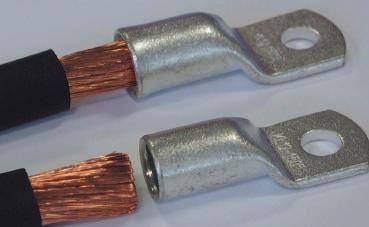
Cable lugs “F type” for fine stranded conductors for easy insertion with no splicing
This is also a safety-related issue – a reduction of the cross section area of the cable conductor caused by not inserting all the strands is being avoided and the complete cross section of the cable is maintained. Markings on the F-type cable lug barrel provide information of the product, e.g. manufacturer, dimension and design.
Marking “KL 12 150 F” indicates:
- KL: Manufacturer Klauke
- 12: Metric bolt size for connecting bolt: size M12
- 150: Cross section of conductor in sqmm
- F: Tubular cable lug design and construction
For professional crimping of F-type cable lugs the indent or quad point crimping method is recommended with the appropriate crimping tools and the correct indent profile.

F-type cable lug shows professional indent crimp
To avoid over or under compression the correct tooling is a pre-requisite. An incorrect crimping connection can result in increased joint resistance leading to an increase in temperatures and in the worst case in fire.
Klauke recommends use of their own crimping tools to achieve and guarantee professional crimps according to VDE standards. In addition to “F-type” cable lugs some manufacturers offer appropriate butt-connectors for splicing, extension and repair of cable conductors.
They also feature a flared entry and larger tube dimensions. A central restriction insures uniform insertion of the cable ends, and insure the crimping recommendations for F-type lugs are adhered to.
“F-type” cable lugs and butt connectors conform to the normative requirements of the EN 13600 standard and are manufactured from electrolytic copper for excellent conductivity.

A cross sectional view of an indent crimp (with manufacturers recommended tool) shows the even arrangement of conductor in the lug
For corrosion protection the cable lugs are available tin plated from cross sections ranging between 10sqmm up to 300sqmm. In addition to the normal design “F-type” cable lugs are also available as 45° resp. 90° angled versions as well as inspection holes to check whether the conductor is fully inserted prior to crimping-up the lug using the cable tool.
As with all other connections these products are subject to test standard IEC 1238 Part 1, which guarantees a safe electrical and mechanical connection has been achieved. Cable lugs manufactured by Klauke are subject to a special annealing process to help relieve material stresses and hardness.
This reduces the chance of material fracture and is an additional safety feature. The quality of cable lugs can often be recognised by visual characteristics. A burr free lug, a flat palm and a cleanly machined end are indicative of a high quality product.
Note: IEC 61238-1:1993 Is Now Withdrawn. Compression & Mechanical Connectors For Power Cables With Ccpper Or Aluminium Conductors – Part 1. Contact T&D.
Cable Lugs For Solid Conductors
For processing and crimping solid conductors (Class 1 DIN VDE 57295) the use of tubular cable lugs “E” type is recommended which are also manufactured from electrolytic tin plated copper. Their tube diameter is matched to the conductor size to guarantee a professional cable crimp.

Professional crimp on a solid conductor with matched tube dimension
Application is in all areas where solid conductors are being mostly used, e.g. manufacture of switchgear, transformers and engines.
A hexagonal indent crimping is being recommended – again it has to be observed that both cable lugs and crimping tools come from the same manufacturer.
Cable lugs for solid conductors can be recognized by their smaller tube diameter and the marking “E”. For example: KL 10 50 E.
Cross sections usually range from 6sqmm up to 50sqmm. The range is being completed by butt-, T- and cross connectors having the appropriate internal tube diameters.
Cable Lugs For Switch Cabinets
In many cases working area in switch cabinets is very tight and connecting conductors to high-power switchgears can be a problem In case of larger cross sections standard cable lugs do not fit into the compact connecting terminal.

Special cable lugs for switch cabinets (type SG) for safe connection also of conductors
For such applications many manufacturers have designed special narrow palm cable lugs (Klauke SG cable lugs) which fit comfortably.

Direct comparison of standard cable lugs (left) and cable lugs with narrow palm for switch cabinets
The narrow palm lug is also thicker than standard cable lugs ensuring the same amount of electrolytic copper has been used.
Despite a narrower palm no performance is lost. Thus these cable lugs therefore comply with a professional connection for stranded conductors according to DIN- VDE Class 2 as typically used in switch cabinets.
A hexagonal or indent crimp is recommended – conductor cross sections range from 35sqmm up to 300sqmm. The hole dimensions comply with industry sizes of connecting terminals, e.g. 6, 8, 10, 12 and 16mm.

Professional crimp on stainless steel cable lug for application in ambient temperatures of up to 400°C
Versions with inspection holes are also available – it is dangerous and incorrect to file the palm of a normal cable lug to the size of the connecting terminal. Such manipulation can result in increased temperatures and fire in the worst case.

Shows the thicker palm of SG cable lugs for switch cabinets, using the same amount of
copper as used in a standard cable lug.
Stainless steel cable lugs
for aggressive environments
Especially for adverse environments and for crimping copper conductors stainless steel and nickel tubular cable lugs have been designed. Stainless steel cable lugs are particularly acid and corrosion resistant and are typically used in chemical industries in areas exposed to sea water i.e. the earthing of masts on sailing yachts.
An additional benefit of these cable lugs is the temperature resistance. Consequently these lugs can be used in ambient temperatures up to 400°C.
At higher temperatures of up to 650°C – common in the construction of furnaces – nickel cable lugs represent the best solution. Both stainless steel and nickel cable lugs can be used for all common cable types.

A correctly crimped stainless steel cable lug used for applications where the environment can reach 400º C
Cross section ranges from 0.5sqmm up to 95sqmm. Generally an indent crimp is recommended. The same applies for stainless steel and nickel butt connectors with barrier.
Further Reading
Review other Blogs in this series of articles about Cable Lugs, Crimping Cables & Tools:
Cable Lugs – Crimping Applications & Standards
Indent Crimping Of Cables – Benefits & Limitations
Cable Lugs & Crimps – Hexagonal v Indent Methods of Crimping
Cable Lugs & Crimping Using The Hexagonal Crimp Method
DIN Standard – Crimping & Compressing Aluminium Cable Lugs & Connectors
Copper & Aluminium – Crimping CU-AL Cables
Electrically Driven Crimping Tools For High Volume Applications
LV MV HV Cable Accessories & Substation Electrical Equipment
Thorne & Derrick are Specialist Distributors of leading manufacturers of Cable Accessories, Jointing & Installation Equipment.
LV MV HV cable accessories used to joint, terminate, connect, cleat and gland power cables to air and gas insulated substations, transformers, switchgear and overhead line networks.
Hover over our Interactive Electricity Grid to learn more about our product ranges.
LV 600/1000V ◊ MV 11kV 33kV ◊ HV 66kV 132kV
 |
 |
 |
 |
 |
 |
 |
 |
 |
 |
Substation & Overhead Line Electrical Safety Equipment
Manufactured by CATU Electrical to enable the safe construction, maintenance and repair of underground cables and overhead lines network up to EHV (400kV).

T&D - CABLES ♦ JOINTS ♦ TERMINATIONS ♦ CONNECTORS ♦ GLANDS ♦ CLEATS ♦ CRIMPS & LUGS ♦ DUCT ♦ SEALS ♦ ARC FLASH PPE
EARTHING ♦ FEEDER PILLARS ♦ JOINTERS TOOLS ♦ CABLE CUTTING & CRIMPING TOOLS ♦ COLD SHRINK ♦ HEAT SHRINK ♦ FUSES
Klauke Cable Lugs & Crimping Tools | 2018 Catalogue Download
September 3rd, 2018Klauke
Thorne & Derrick | Distributed from Stock | Approved Supplier | UK & Export Sales
Klauke cable lugs are electrical compression connectors including: copper tube cable lugs and connectors (straight, angled crimp connectors for copper stranded and aluminium solid conductors), insulated cable lugs and connectors, stainless steel cable lugs and connectors, nickel cable lugs and connectors and DIN spec compression cable lugs and connectors.
➡ See below the current issue Klauke Catalogue – contact our Sales Team for prices, technical support or to place an order for cable lugs or installation tooling for cutting and crimping cables manufactured by market-leader Klauke.
Klauke cable lugs and crimping tools are used by Jointers, Linemen, Panel Builders and Electrical Engineers to install underground cables and overhead line conductors on power, transmission and distribution networks including LV MV & HV systems, 11kV-33kV.
➡ See our complete range of Cable Lugs, Crimps & Connectors LV MV HV.

Street Lighting Cut Outs – Lucy Zodion DNO Approved Cut Out Listing
September 3rd, 2018
Street Lighting Cut Outs
-
uploaded by Chris Dodds - Thorne & Derrick Sales & Marketing Manager
Cut-outs
Lucy Zodion street lighting cut-outs are approved for use on every UK DNO Network.
Thorne & Derrick together with Lucy Zodion can offer a range of SLF street lighting cut-outs (SLCOs) which are now approved for use by every Distribution Network Operator (DNO) in the UK.
The high level of specification status of their cut-outs for street lighting applications on both the UKPN and WPD networks is a clear demonstration of Lucy Group’s commitment to keeping LV electrical connections safe and reliable.
The Lucy Zodion SLF range of street lighting cut outs use high quality materials and provide a wide range of features that help ensure robust and reliable protection and isolation across a number of street lighting network types and applications.
Additionally, the Lucy Zodion brand of Fortress type feeder pillars are extensively specified and installed throughout the UK DNO LV Electricity Distribution network.
➡ For further information about how Lucy Zodion provide control and power distribution products for street lighting applications, please review the Lucy Titan (Cut-outs) and Lucy Trojan (Isolators) ranges of products.
Cut Outs
Here is the current street lighting cut out approval listing according to UK DNO designation:
| DNO Approved Products | DNO Area | ||
| DNO | Lucy Zodion Code |
Cut Out Description | |
| WPD* | THM0048847 | SLF IPC Type 1 HEX Drive Clear Cover (SNE) |
 |
| THM0041767 | SLF IPC Type 2 HEX Drive Clear Cover (CNE) |
||
| ENW | 0260009009 | SLF 25A SLCO Type 1 (SNE) |  |
| 0260010009 | SLF 25A SLCO Type 2 (CNE) | ||
| NPG | THM0001978 | SLF 25A SLCO TYPE 2(CNE) POLYCARBONATE |  |
| THM0001979 | SL DNO DP 25A SLCO (CNE) POLYCARBONATE | ||
| THM0001970 | SLF 25A Single Pole SNE | ||
| SPEN | 0260009009 | SLF 25A SLCO Type 1 (SNE) |  |
| 0260010009 | SLF 25A SLCO Type 2 (CNE) | ||
| SSE | 0260009009 | SLF 25A SLCO TYPE 1 (SNE) |  |
| 0260010009 | SLF 25A SLCO TYPE 2 (CNE) | ||
| 0260026007 | SL DNO DP 25A SLCO (CNE) | ||
| UKPN* | 0260011007 | SLF 25A SLCO TYPE 1 (SNE)3mm HEXDRIVE |  |
| 0260012009 | SLF 25A SLCO TYPE 2 (CNE)3mm HEXDRIVE | ||
*sole supplier status

Street Lighting | House Service | DNO | Heavy Duty – complete range of Cut Outs
THORNE & DERRICK SPECIALIST ELECTRICAL DISTRIBUTOR
LV ♦ MV ♦ HV
T&D distribute the most extensive range of LV, MV & HV Cable Jointing, Terminating, Cable Pulling & Installation Equipment – we service UK and international clients working on underground cables, overhead lines, substations and electrical construction at LV, 11kV, 33kV and EHV transmission and distribution voltages.
- Key Products: MV-HV Cable Joints & Terminations, Cable Cleats, Duct Seals, Cable Transits, Underground Cable Protection, Cable Jointing Tools, Feeder Pillars, Cable Ducting, Earthing & Lightning Protection, Electrical Safety, Cable Glands, Arc Flash Clothing & Fusegear.
- Distributors for: 3M, ABB, Alroc, Band-It, Catu, Cembre, Centriforce, CMP, Elastimold, Ellis Patents, Emtelle, Furse, Lucy Zodion, Nexans Euromold, Pfisterer, Polypipe, Prysmian, Roxtec.

LV – Low Voltage Cable Joints, Glands, Cleats, Lugs & Accessories (1000 Volts)

MV HV – Medium & High Voltage Cable Joints, Terminations & Connectors (11kV 33kV EHV)

Cable Laying – Underground Cable Covers, Ducting, Seals & Cable Pulling Equipment
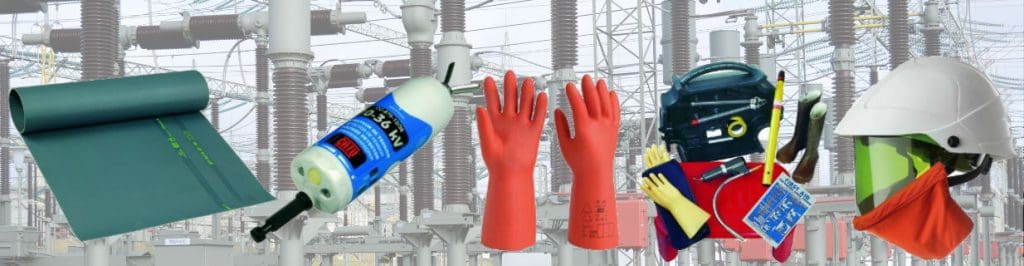
T&D, CATU Electrical Safety & Arc Flash Protection Specialists for SAP’s, Linesmen, Jointers & Electrical Engineers – Largest UK Stockist
HV Joints & Terminations – Brands & Jointer Training
August 31st, 2018
-
uploaded by Chris Dodds - Thorne & Derrick Sales & Marketing Manager
hEAT sHRINK Joints & Terminations
A myth pervades the UK contractor market that HV Cable Jointers MUST be re-trained and MUST be re-certified to install heat shrink cable joints and terminations according to the manufacturer/brand of kit.
Not true.
If a Jointer is conversant and competent to install Brand A of heat shrink product he is therefore conversant and competent to install Brand B, C, D….etc.
Since the development of heat shrink technology in the 1970’s competitor manufacturers have increasingly closed the gap between material quality and product performance.
This has been evidenced by the number of reputable manufacturers now able to provide 11kV and 33kV joints and terminations type tested by 3rd Party according to international recognised standard IEC60502-4.
Kits lists and installation instructions although not identical are very, very similar.
Vital to the life cycle performance and reliability of all HV Joints & Terminations operating at 11kV/33kV is the Jointers skill, experience and competency to execute cable preparation – essentially this involves the skilled use of specialist Jointing Tools to remove the outer cable sheath, semicon screen and insulation.
Typically, 90% of the installation time period for a heat shrink joint/termination is accounted for by the cable preparation process. The other 10% is “shrink-time”.
Let’s not underplay the Jointers need to possess excellent heat shrink techniques to shrink the kit components – this is clearly covered in all manufacturers Jointing Instructions and essentially provides recommendation on how to avoid scorching or over-heating of the tubes to achieve a smooth, wrinkle free installation.
Here, the flame is the name of the game and the torch-work by the Cable Jointer must basically involve heating but not burning the insulation, anti-track and stress control heat shrink tubes.
Trading Up, Down Or Sideways
Thorne & Derrick as a distributor at the sharp-end of the price point are exposed to increasing brand substitution with contractors brand affinity waning against a backdrop of tightening profit squeezes. Frankly, many brands are strong substitutes – heat shrink is heat shrink is heat shrink (up to a point) – and often brand loyalty is firstly commercial, secondly technical and thirdly emotional.
Price by itself should never decide the motive to buy. But generally price is the driver in the context of overall value for money and brand trust.
Last Words
In conclusion, Jointers skills are readily transferable across brands and contractors should not be prevented from attending site and installing HV Joints/Terminations purely on a brand basis – similarly if a commercial gain is to be secured from purchasing Brand A instead of any other Brand then the contractor should not be confronted by a doubt about the ability of their Jointer to correctly install that more cost-efficient value for money brand.
Discuss.
Stockists & Suppliers of MV HV Joints, Terminations & Connectors
Hover over our Interactive Electricity Grid to learn more about our product ranges – T&D are Specialist Distributors to DNO’s, ICP’s and NERS Registered Providers of LV, MV & HV Jointing, Earthing, Substation & Electrical Eqpt.
LV 600/1000V ◊ MV 11kV 33kV ◊ HV 66kV 132kV
T&D - CABLES ♦ JOINTS ♦ TERMINATIONS ♦ CONNECTORS ♦ GLANDS ♦ CLEATS ♦ CRIMPS & LUGS ♦ DUCT ♦ SEALS ♦ ARC FLASH PPE
EARTHING ♦ FEEDER PILLARS ♦ JOINTERS TOOLS ♦ CABLE CUTTING & CRIMPING TOOLS ♦ COLD SHRINK ♦ HEAT SHRINK ♦ FUSES
Has Cable Jointing Just Moved On? Discuss.
August 31st, 2018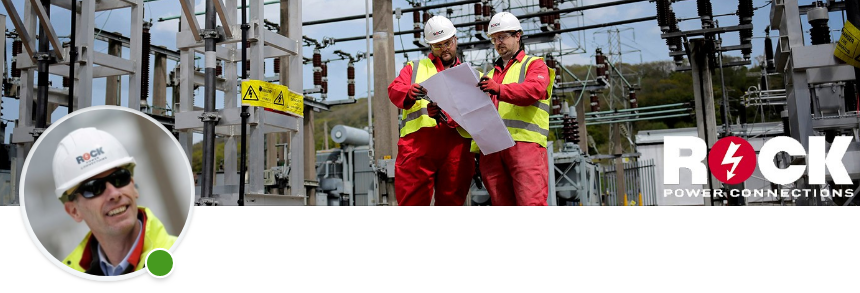
Leading ICP – Independent Connection Provider
With Guest Comment by Reece James MIET
Co-Owner and Operations Director at Rock Power Connections
-
uploaded by Chris Dodds - Thorne & Derrick Sales & Marketing ManagerLets put the Cable Jointing cat amongst the pigeons……..
Question: Has Triplex Killed The Jointer?
The universally respected BICC Generation of crème de la crème Cable Jointers experienced on jointing XLPE, fluid-filled and gas type cables might bemoan the modern industry trend, or nose-dive, towards polymeric power cable systems.
Recently nicknamed the Triplex Tripe Age on Linked-In by a former BICC’er.
Paper Lead is in vogue no more, Triplex is the new PILC and Plastic is here to stay.
Face facts, it’s unstoppable but as we hurtle headlong down BS7870 street does that mean we can all become Jointers overnight?
Yes, we know plastic is damaging the Planet and is bad for our environment but is it also messing with our Jointers? Or is plastic fantastic?
Polymeric cables have become increasingly simpler to strip, prepare and joint but surely Competency remains vital to safeguard industry standards?
What role have the Jointer Training Centres to play in this?
The days of metal pots, compound buckets, burners with heater, whackers for backfilling, picks and shovels is long gone. It’s 2018.
The drift away from paper insulated lead covered cables (PILC) started last century with the almost global adoption of modern polymeric type cables – this has heralded the introduction of precision engineered Jointers Tools to ensure efficient cable preparation of medium-high voltage cables.
Allegedly this has removed the skill, dexterity and Craft out of the Art of Jointing Cables?
For what it is worth here’s my two penn’orth.
The “roll-up roll-up”, pay your £2K and in 4 days time you can start your new career as a Cable Jointer message is frankly undermining confidence, reputation and the earning potential of the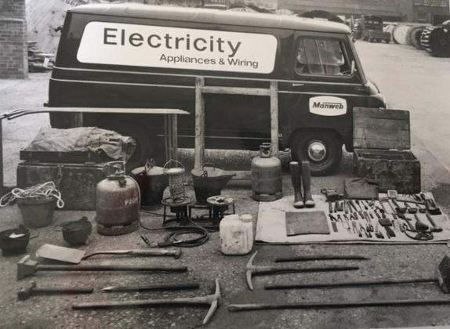 experienced Jointer.
Familiarisation is not Competency.
But the issued Paperwork can dupe some Recruiters sometimes into booking “Jointers” onto projects they are not yet adequately qualified or trained to undertake.
Many have not invested in the tool-set never mind the skill-set. Believe me, on an average day I receive 10-15 LinkedIn Direct Messages from non-electricians aspiring to become Cable Jointers under the influence of often misleading social media messages.
There is no fast-track to achieve the workmanship and skills levels of most of the Jointers we meet here on LinkedIn – Great Jointers and Great Guys.
Check them out on our Jointers Blog.
Sorry but some Training Centres will take “all-comers” while others screen/vet potential Trainees via CV scrutiny – that’s an important distinction.
Another more important stand-out for me is peer attitude – some will nurture, care passionately and graft daylong to maintain Jointing industry standards through the sharing of their extensive skills and experience with their staff. Supporting their career paths and fuelling their ambition while getting them to knuckle under and earn their spurs.
People like Reece James.
So to answer the question Has Cable Jointing Moved On?
Read Reece James thoughts:
“Ok I’m going to be controversial here but Cable Jointing has moved on.
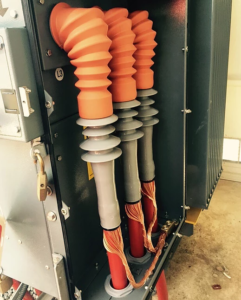
11kV Cable End Termination
As an apprentice trained DNO Cable Jointer who can work on old and new HV and LV lead cables, compound end boxes, do sweated cable joints and lead plumbing yes it did take years to learn the trade properly. However with new plastic Triplex cables, shearbolt connectors etc an experienced electrician can go on a short duration jointing course and learn how to joint / terminate cables to an excellent standard. I’ve shadowed a few of my staff before authorising them, giving them a few extra tips but the standard of there work is top notch. No, they are not fully rounded cable jointers like in the old days but on the cables they have been trained on and with on job experience there is no issue with the quality of there cable jointing work. It’s all down to the person and if they take pride in their work.
I remember the odd DNO trained jointer who did not care and turned out rough cable joints because they were in a rush. I just think it is unfair to tarnish all new (short training course) cable jointers with the same brush. I do however think there needs to be a minimum level of competence for someone doing these cable jointer training courses and in my experience a trained electrician is a good starting point!”
Meet Reece James MIET
♦ Bio
I am a highly motivated and experienced professional who is passionate about the electricity distribution industry and developing people. I have over 30 years experience in the electrical power industry, with the last 5 years as Operations Director of Rock Power Connections, which I Co-founded in 2012.
I have worked on various projects from LV connections to new EHV primary substation builds up to 400kV and have acted as Consultant Project Manager for many large developers, introducing competition, increased value and risk management for all their utility connections / requirements. I pride my self on my excellent customer service and relentless drive to deliver and exceed the customer’s expectations and my down to earth approach to business.
Developing my team and watching them succeed is one of my biggest motivations.
Who Are Rock Power Connections?
Rock Power Connections are power connection experts, specialising in independent electrical connections up to 33kV and DNO services up to 132kV – Lloyds accredited as part of the National Electricity Registration Scheme (NERS) and CHAS accredited.
Rock Power provides solutions from initial enquiry through design of electrical networks, construction (cable laying, jointing, substation installation), commissioning and final adoption of assets to DNO or Independent Distribution Network Operator (IDNO).
Working on behalf of a broad range of commercial developers to install new connections and repair / replace old equipment across sectors from retailers to residential, factories to farms – building and maintaining low, medium and high voltage cables and networks.

Thorne & Derrick – Stickists & Suppliers of MV HV Joints, Terminations & Connectors
Hover over our Interactive Electricity Grid to learn more about our product ranges – T&D are Specialist Distributors to DNO’s, ICP’s and NERS Registered Providers of LV, MV & HV Jointing, Earthing, Substation & Electrical Eqpt.
LV 600/1000V ◊ MV 11kV 33kV ◊ HV 66kV 132kV
T&D - CABLES ♦ JOINTS ♦ TERMINATIONS ♦ CONNECTORS ♦ GLANDS ♦ CLEATS ♦ CRIMPS & LUGS ♦ DUCT ♦ SEALS ♦ ARC FLASH PPE
EARTHING ♦ FEEDER PILLARS ♦ JOINTERS TOOLS ♦ CABLE CUTTING & CRIMPING TOOLS ♦ COLD SHRINK ♦ HEAT SHRINK ♦ FUSES