Blog
Cleaning Wipes & Solutions for Low & High Voltage Switchgear
November 3rd, 2021HYSO QD
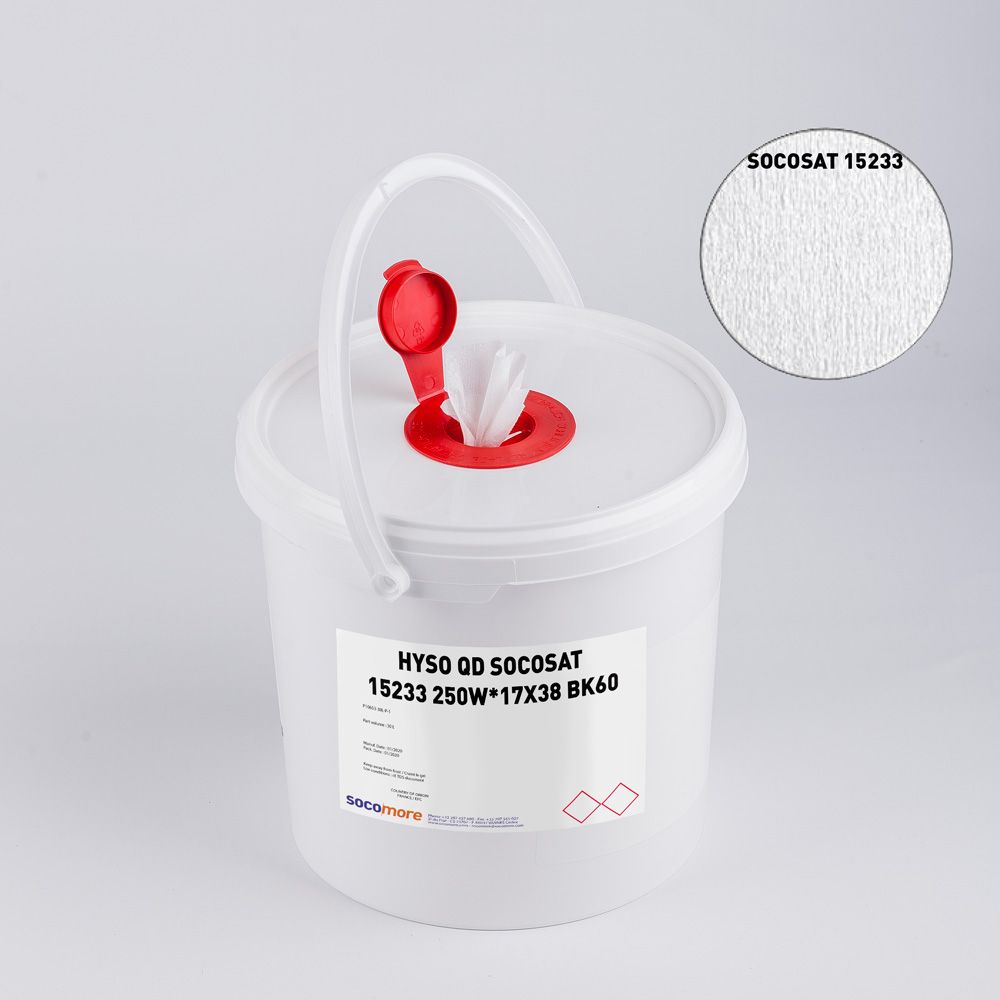
HYSO QD from Socomore is the former PF-QD manufactured by PT Technologies Europe – HYSO QD is a quick drying residue free manual cleaning solvent for surface cleaning and degreasing in manufacture, maintenance and fabrication activities. HYSO QD removes general soils, oils, greases and combustion residues.
Features & Benefits of HYSO QD
- Low odour, fast evaporating cleaning solvent
- Suitable for use in poorly ventilated or confined spaces
- Leaves no residue after complete evaporation
- Non corrosive to metal such as copper, aluminium, magnesium and stainless steel
- Compatible with resins, plastics and elastomeric rubbers
- Available in liquid and pre-saturated on low lint wipes such as SOCOSAT 15233 – a cloth compliant to AMS 3819C qualification requirements
- Pre-saturated wipe system eliminates the hazardous storage, transport and logistical issues of loose flammable liquids
HYSO QD is a fast evaporating and odourless solvent for zero residue cleaning and degreasing of low and high voltage switchgear. A non corrosive electrical cleaning solvent on metal such as copper, aluminium, magnesium and stainless steel – suitable for use on metal and painted switchgear surfaces. Compatible with resins, plastics and elastomeric rubbers, the low surface tension provides excellent wetting action, even with difficult plastics.
HYSO QD is suitable for a variety of LV-HV switchgear cleaning applications, in general and specific niche industries such as aerospace and power.
* Switchgear cleaning and maintenance
* Surface cleaning and preparation
* Removing petroleum based oils
* General cleaning and degreasing in manufacture, fabrication and maintenance applications
HYSO QD has additional worker benefits along with its impressive compatibility and cleaning abilities : quick drying, non toxic, has a low skin irritation potential and as it is odourless, eliminates strong smells in the workplace – especially important for those working in confined spaces on low and high voltage switchgear and cabinets.
Switchgear Cleaning Guidance
1. Apply a thin film of cleaning solvent using the liquid or impregnated wipe.
2. Allow 1-2 minutes for surface action to dislodge switchgear contaminants.
3. Wipe off with the same wipe or with a clean, dry lint free cloth (recommended). Repeated use of the impregnated cleaning wipe without further solvent addition is possible until the cleaning wipe becomes saturated with contaminant.
See Also | PF Wipes Cable Cleaning Solvents & Products
Techlube | Market-leading Cable Pulling Lubricant

Cable Pulling & Cleaning Products
Thorne & Derrick International are the UK’s leading stockist and supplier of Cable Pulling & Cable Laying Equipment for the installation of underground land and subsea power cables and overhead lines up to 400kV – the products support cable pulling teams to install LV MV HV cables into trench, cable duct, risers and all forms of cable containment.
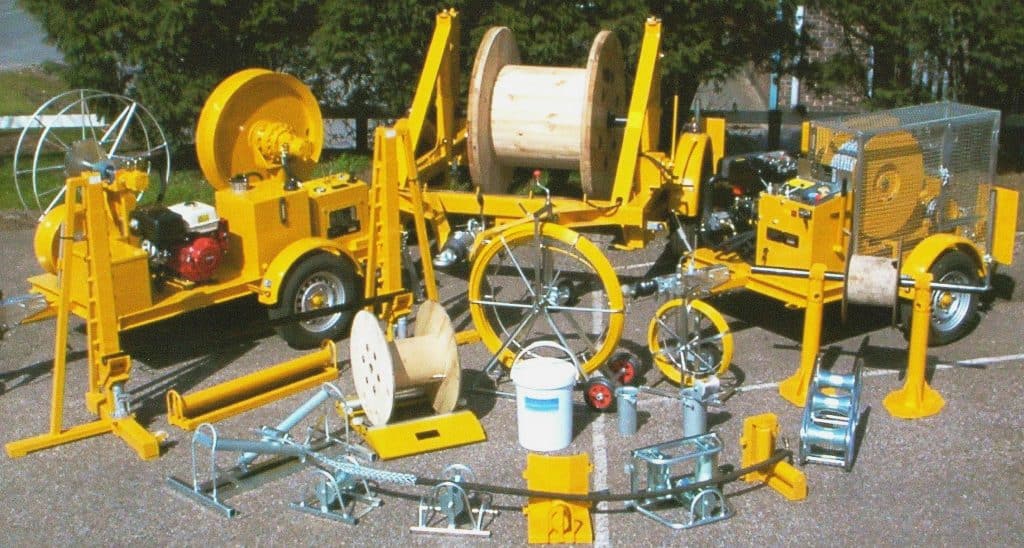
T&D distribute the complete range of LV-HV Cable Pulling and Laying Equipment including cable rollers, cable socks, cable jacks, cable drum trailers, cable lubricant, underground cable protection and conduit duct rod.

Heat Shrink Terminations | Tracking on Medium Voltage Cable Terminations
November 1st, 2021By Stephen Harrison | Training & Technical Manager Current Training Service Pty Ltd
Terminations for MV Power Cables
The image shows a shed (rain shed) – this is a heat shrink moulded part and component of standard medium voltage cable terminations. The installed rain shed is in operation on a 33kV indoor installation – tracking and discharging can be seen on the outside of the shed (rain shed) element of the cable termination and if left unchecked this will eventually cause the MV cable to fail in the field. At 33kV (Um 36kV) this cable termination was suffering a tough time whilst in service and it was eventually pulled out of operation after the discharge was identified. The discharge and tracking can be seen between the surface of the anti-tracking tube and the shed (rain shed) collar which is due to poor installation by the cable jointer. Sheds (rain sheds) must be shrunk down with collar connecting to the anti-tracking tubes evenly. If in doubt how and where the shed (rain shed) is to be installed, refer to manufacturer’s instructions.
Thorne & Derrick | Distributors of Medium Voltage Joints, Terminations & Connectors

3M Electrical | Nexans Euromold | Pfisterer CONNEX | Main UK Stockists
Techlube | Cable Pulling Lubricants for Power & Telecom Cables
October 28th, 2021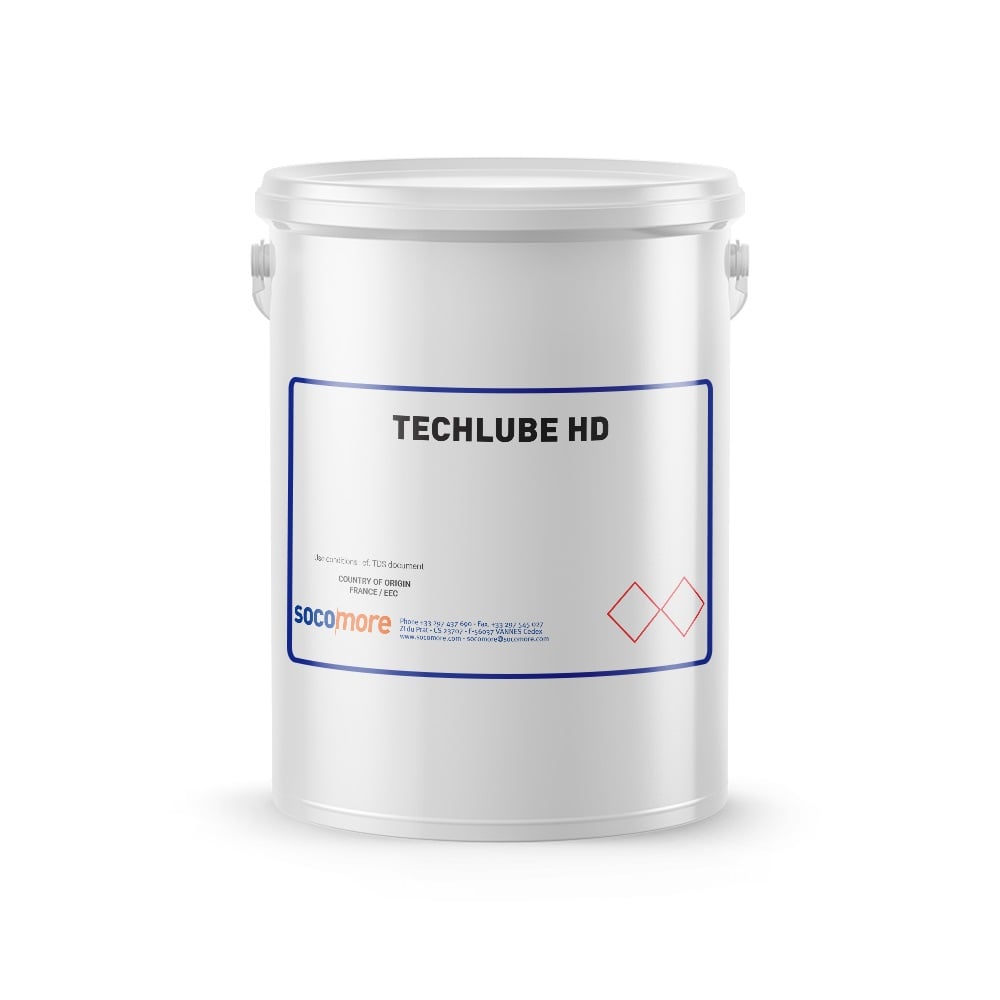
Cable Pulling Lubricants | Techlube
Cable Pulling Lubricants
Techlube by Socomore
Techlube is a range of water-based underground Power & Communication cable pulling lubricants designed to provide superior friction reduction and reduce the risk of cable damage during cable installation, which is the primary cause of 90% of cable damage.
All Techlube cable lubricants share similar chemistries and characteristics:
- ‘Cling & String’ consistency of Techlube ensures strong adhesion to the duct wall/ cable
- Perfect adhesion to cable in wet weather
- Resistance to wash off, allowing lubrication even in flooded ducts
- Slow drying, leaving a thin film which keeps its lubricating potential assisting with cable pulls to the same duct, preventing ‘cementing’ of the cable
- Substantially biodegradable* & non-flammable
- Water polymer lubricants with low conductivity
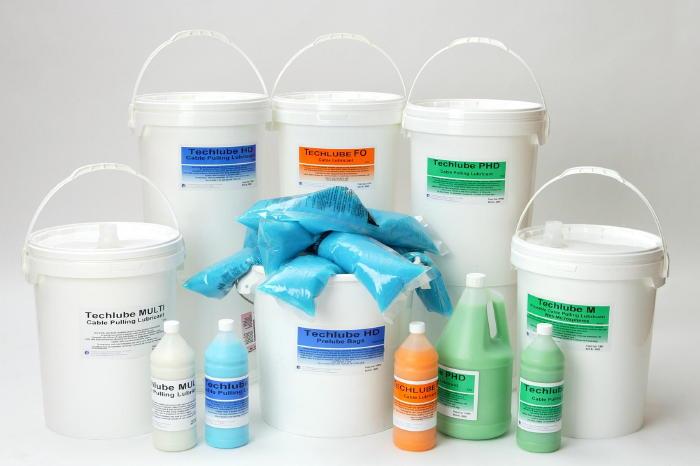
Cable Lubricants By Socomore
Cable Pulling Lubricant Product Benefits
- Reduced friction & risk of damage
- Compatible with cable jackets & jointing accessories
- Regular pulling tension
- Temperature stability
- Retains lubricating potential
- Improved efficiency
- Environmentally responsible
- Several formulations available
Friction Reduction
The ability to reduce friction between the cable jacket and the conduit provides the means to evaluate performance of cable lubricants.
Friction Theory:
The coefficient of friction, µ is a dimensionless value that is a proportionality constant between the frictional force, F, and the normal force, N.
µ=F/N
µs : the static coefficient of friction, is defined as the minimal force required to start an object in motion divided by the normal force.
µk :the kinetic coefficient of friction, is defined as the minimal force required to keep an object in motion divided by the normal force.
Note: laboratory measured coefficients may not be accurate when used to predict actual cable pulling tensions.
Compatibility
Techlube does not contain any salt, detergent, paraffin or grease which can degrade cable jackets or cause hot spots, and has passed compatibility testing with materials commonly used in power cable accessories, joints & cable jackets including HDPE, LLDPE, Natural Rubber, CPE, CSPE, EPR, XLPE, PVC and Neoprene.
Cable Pulling Lubricants Techlube Range
| Techlube Range | Cable Lubricant Description | Viscosity (cPs) | Uses |
| HD | Heavy duty cable lubricant for heavy cables & difficult cable pulls | 5400-7400 | Cable Pulling Installations Cable Duct Pre-lubrication |
| PHD | Pourable lubricant for lighter cable installations | 2000-3500 | |
| MULTI | Multi-purpose cable lubricant | 5400-7400 | |
| FO | Fibre optic & sub duct installation lubricant with high elasticity for reduced consumption | 2000-3500 | |
| M | Cable lubricant with microspheres, specially designed for Telecom industry | 1800-2800 |
*Excluding microspheres in Techlube M
Directions For Use
Techlube products are easy to apply through a variety of methods:
- Hand
- Manual Pouring
- Pumping
- Cone Feeder Systems
Recommended Cable Pulling Lubricant Quantity
These quantities are given for reference and guidance only. Every installation is different depending on complexity, route, cable and duct variables.
- For plastic conduit (PVC, Polyethylene) use the following equation:
Q = 0.0064 x L x D (HD, PHD, MULTI)
Q = 0.0080 x L x D (FO)
Q = 0.0004 x L x D (M) - For multiple concrete, clay tile, fibre cement, fibre filled & wooden conduit use the following equation:
Q = 0.0098 x L x D (HD, PHD, MULTI)
Q = 0.0120 x L x D (FO)
Q= 0.0006 x L x D (M)
Q = Quantity of Techlube
L = The total length of the pull in meters
D = The inside diameter of the conduit in centimeters
Physical Properties
Appearance: Viscous liquid
VOC: 0% or O g/1
PH: >=5.0 – <8.0
Health & Safety
- Substantially biodegradable*, non-toxic & water-based
- Non-flammable
- Not irritating to the skin under normal use
- No unpleasant odour
- Protective clothing not required under normal use
- No threat to the environment
Temperature Stability
Standard grade Techlube will not lose performance qualities in hot weather or after undergoing freeze/thaw cycles.
Clean Up
Good working practice in accordance with local & EU regulations.
Standard Packaging
- 20 litre buckets / 24 buckets per pallet
- 1 litre bottles (PHD only)/ 12 bottles per case/ 36 cases per pallet
- 2 litre pre-lube bags (HD only) / 10 bags per bucket
Storage & Shelf-Life
Store tightly sealed in adequately ventilated premises. Shelf life is one year from the manufacturing date.
General Requirements for Cable Lubricants
- Cable & Duct Compatibility: prolonged exposure to the lubricant should not adversely affect the cable or duct performance for the life of the cable
- Friction Reduction: the initial installation should not expose the cable to excessive pulling forces or generate damaging heating effects and when completely dried, the lubricant should not ‘cement’ the cable in place
- Environmental Safety: the chemical consistency of the lubricant should not adversely affect the users or environment into which it is placed
- Fire Resistance: the lubricant deposits should not continually burn or spread a flame along the length of the duct/ cable
- Electrical Considerations: the lubricant should not affect the volume resistivity of the semi-conducting cable jacket when used in conjunction with power cables
The below video shows the Socomore Techlube HD heavy duty water-based cable pulling lubricant in use. Suitable for underground cable installations and is designed for heavy power and difficult cable routes and pulls (LV HV).
Cable lubricants manufactured by Socomore are recommended when installing LV-HV power, fibre optic and telecoms cables into cable duct.
CABLE PULLING & CLEANING PRODUCTS
Thorne & Derrick International are the UK’s leading stockist and supplier of Cable Pulling & Cable Laying Equipment for the installation of underground land and subsea power cables and overhead lines up to 400kV – the products support cable pulling teams to install LV MV HV cables into trench, cable duct, risers and all forms of cable containment.
T&D distribute the complete range of LV-HV Cable Pulling and Laying Equipment including cable rollers, cable socks, cable jacks, cable drum trailers, cable lubricant, underground cable protection and conduit duct rod.
Nexans Slip-on Terminations 33kV | Wind Farm Connections for Medium Voltage Cables
October 27th, 2021Image Courtesy of: Johnothan Bocor – Medium Voltage Accessories Solutions & Sales Manager at Nexans Australmold
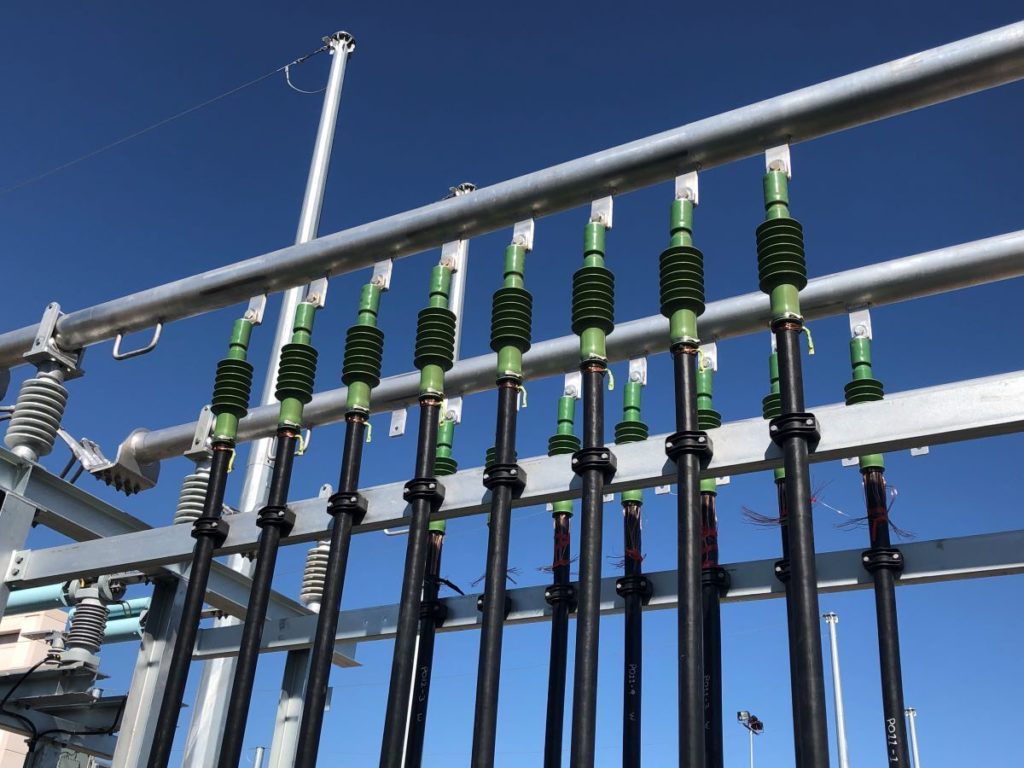
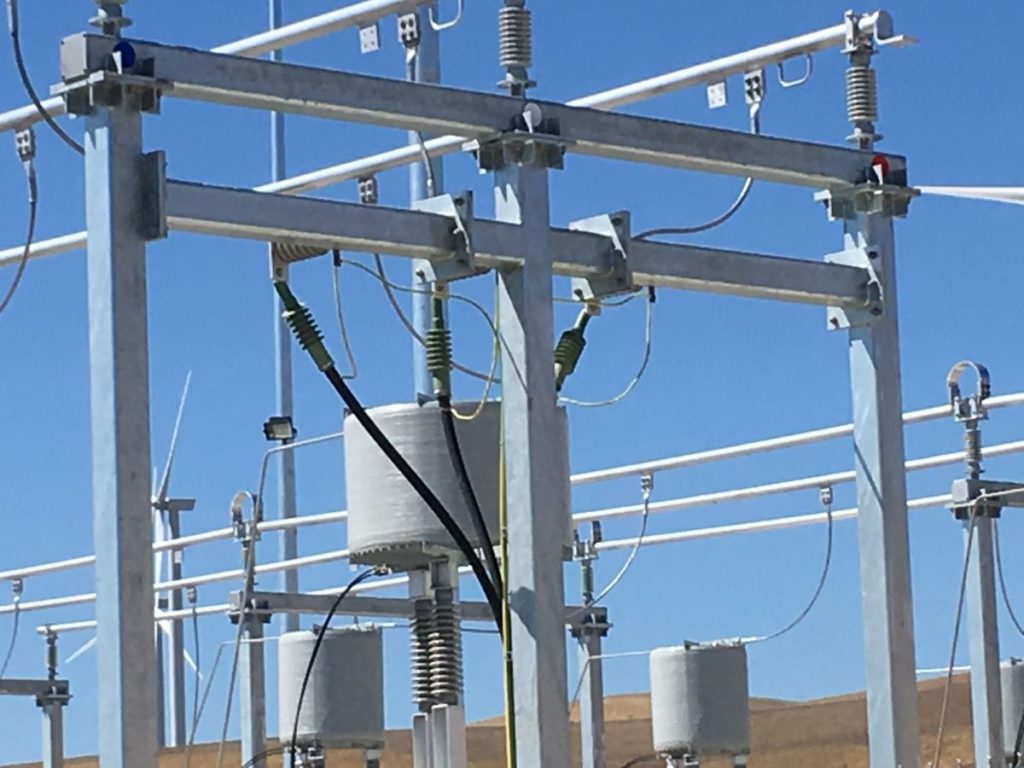
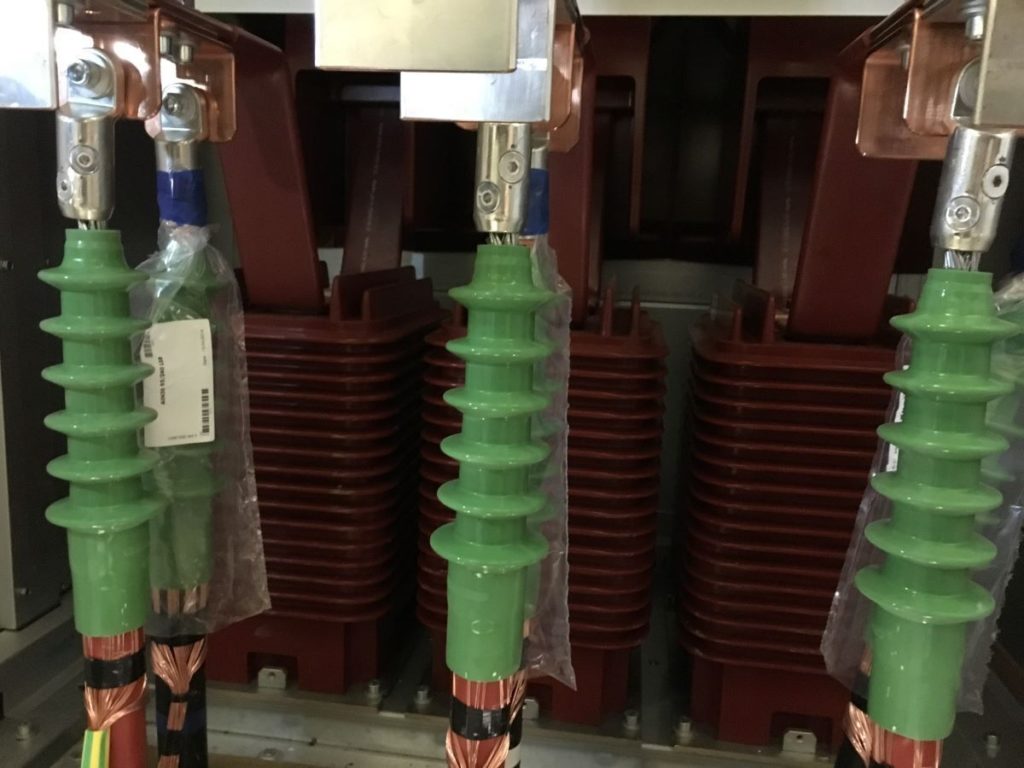
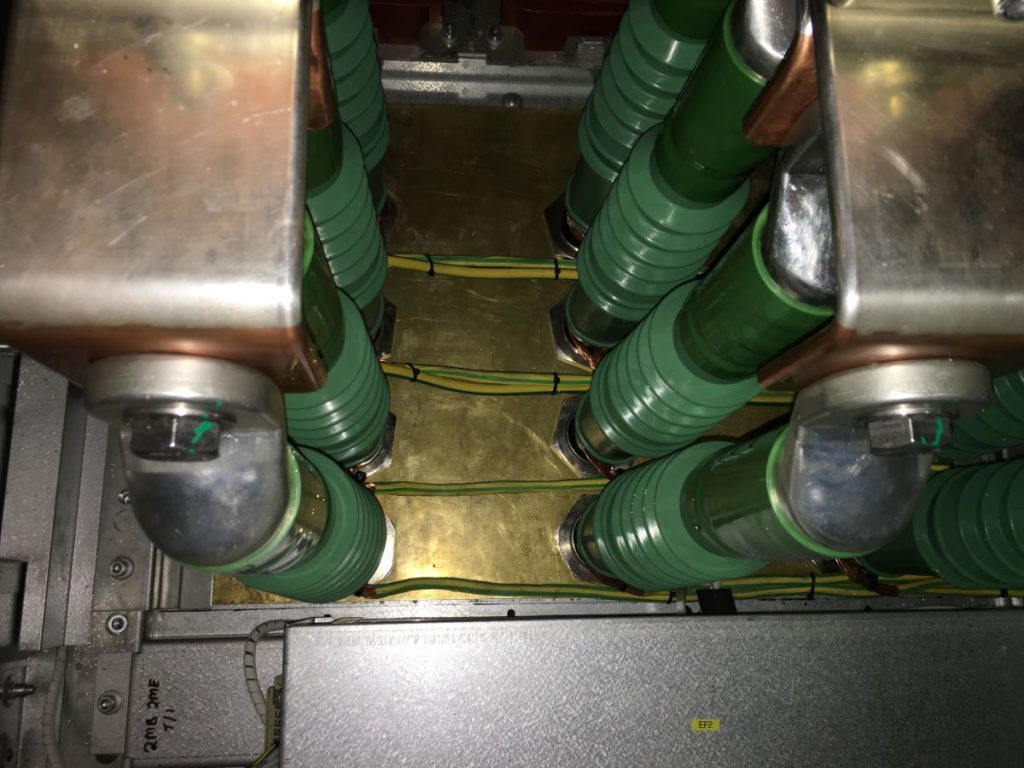
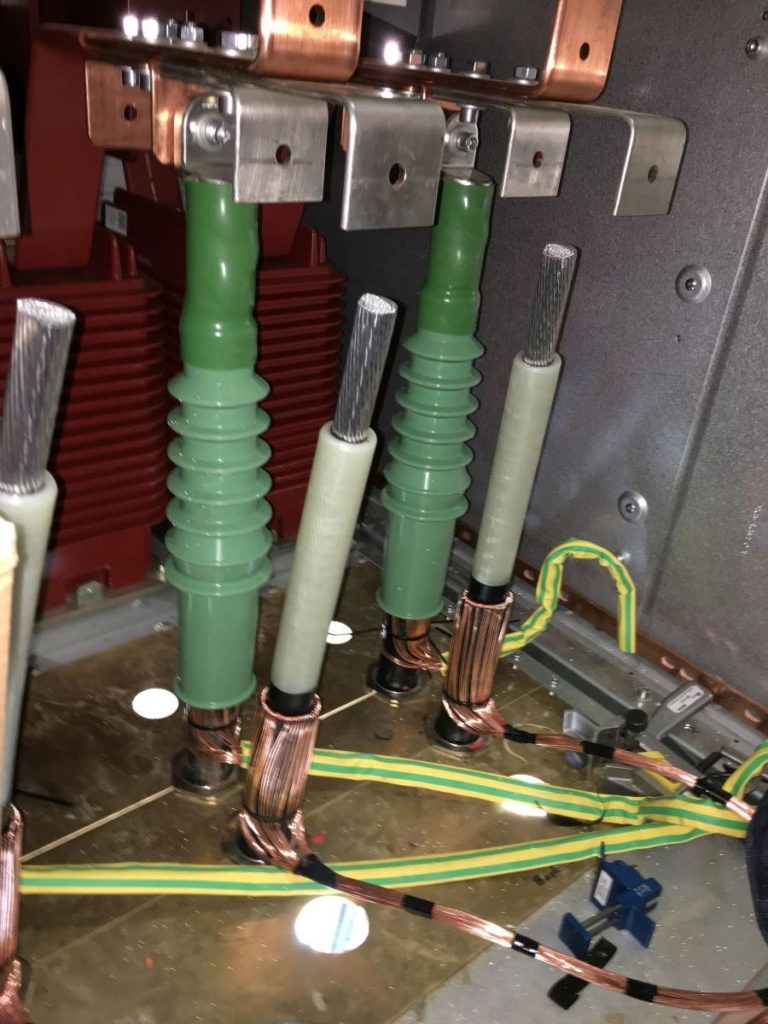
Pictured: Nexans Slip-on Terminations 33kV
Wind Farm Connections for MV Cables
Nexans Euromold Terminations
Nexans Australmold Sales Manager, Johnothan Bocor says “reduced installation time, no flame, EHV design technology, hydrophobic, solid and robust cable terminations. The Nexans Euromold slip-on terminations meet the demands for outdoor and indoor installations for medium voltage power systems. These installations are 33kV wind farm substations in Victoria, Australia and you could not ask for a harsher outdoor environment and electrical system with cyclic electrical loads. The indoor profile is compact catering for all modern switchgear type installations. The size range for 33kV is 50sqmm to 800sqmm, the outdoor installations in the images are on 33kV 800sqmm cable and the indoor installations are on 33kV 185sqmm and 800sqmm. Pristine installations and excellent quality of work, a testament to the jointers installing them, they look fantastic.”
Shown in the last image is the Ripley SCS semi-con scoring tool which was used during this cable termination installation.
Jointers blog
Subscribe now to our POWER NEWSLETTER– a monthly email circulation packed with news, projects, videos, technical tips, training information, promotions, webinars, career opportunities and white papers.
Includes access to our popular JOINTERS BLOG with contributions from utility professionals, linesmen and cable jointers working on MV HV EHV cables and overhead lines typically at 11kV, 33kV, 66kV and up to 132kV.
15,000+ Subscribers. ➡ 
Cable End Caps | Cable Pulling & Storage | Part 2
October 26th, 2021
Cable Pulling & Storage – Part 2
Stephen Harrison – Training & Technical Manager at Current Training Service Pty Ltd
When using a pulling sock whilst pulling cables through pits or open trenches, it generally pulls in-tight onto the cable end cap attached to the cable when force is applied.
I found when I have pulled cables, the pulling sock can damage the end cap causing water to penetrate the cable. Water is one of the most destructive elements and introducing it to a piece of cable can reduce the cables service life. The biggest cause of water in cables, is storage or pulling the cable in through pits, ducts, or open trench incorrectly capped.
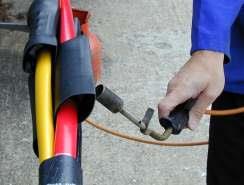
When pulling cables with a pulling sock, the use of a triple end seal is a safe option. The triple end seal consists of two end caps, mastic and a heatshrink tube. It is a simple kit which helps resist the cable from getting water ingress around the pulling sock area.
Abrade the cable first and remove dirt or mud allowing for the mastic and first end cap to seal onto the cable. Mastic is applied at pre-determined length, and a piece of medium wall tubing is shrunk down over the end cap and mastic onto the cable. This piece of heatshrink is around 200-240mm long and is the strength of this kit.
More mastic is applied, with the last end cap installed over the medium wall heatshrink and inner end cap completing the triple end seal. Caution must be observed, do not pull the cable until the heatshrink has cooled.
Why So Many Components?
The top end cap is sacrificial and might be damaged by the pulling sock or other pulling gear, but the inside end cap is not disturbed.
The inside cap is sealed to the cable and will not get damaged when the cable is under tension whilst being installed. The medium wall tubing and mastic help with mechanical strength for the inner end cap, preventing the pulling sock from biting into the inner end cap or pulling the external end cap off whilst sealing the cable.
The triple end seal is also good for cables which require storage underground or in pits until they are ready for joining or terminating. As there are mastic seals in the kit, these create a water seal on the cables. I have personally seen triple end seals on cables in water up to 3 meters deep, and they have not leaked water.
At every cable pull and storage installation, stop and ask, have the cable ends been sealed correctly? Which kit should I use for the application?
Part 3 will explain about water getting into cables whilst drums of cable are outside not capped correctly.
➡ Read Part 1 here Cable Pulling & Laying | Sealing Cables Whilst Installing | Part 1

Filoform Cold Shrink End Caps
Further Reading
How To Apply 3M Cold Shrink Cable End Caps
Secure Spiking of Underground LV & HV Cables | Cable Spiking & Cutting Tools

Cable Pulling & Cable Laying Equipment