Duct Seals
Roxtec H3 Cable Transit Seals – How To Seal Substation Cables
January 8th, 2019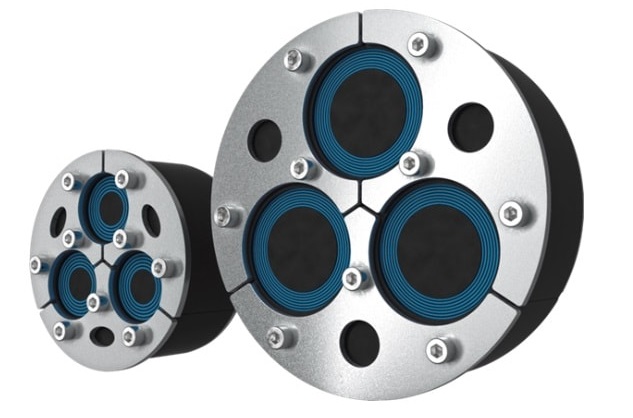
-
uploaded by Chris Dodds - Thorne & Derrick Sales & Marketing Manager
Roxtec
Thorne & Derrick are distributors for Roxtec, the leading manufacturer of sealing solutions for cables and pipes, to protect electricity Transmission & Distribution assets including substations against water, gas and fire.
Roxtec H3 cable transit seals are ideal for the protection of cables and substations against constant running water entering Low, Medium & High Voltage Substations via concrete and brick foundations – the Roxtec H3 is a three-part cable transit seal that is easy to install including in wet conditions and in environments with running water; the system is suitable for normal and flood condition installation.
The cable transit withstands extreme cable bending and has a +5mm tolerance towards the aperture as well as an indicator showing when a compressed seal is achieved. The cable seal can be installed into sleeves, conduits and core drilled holes.
Partial Discharge Prevention
The Roxtec range of cable transits are resistant to constant and catastrophic water pressure and by providing firm cable retention with the cable seals forming a defence barrier against humidity and the risk of partial discharge – this ensures and maintains the optimum and uninterrupted service of substations reducing the risk of power outages.
The cable sealing system has been adopted by power utilities in the UK and overseas to seal 11kV/33kV cables – this includes both multiple single core cables in Trefoil and Triplex arrangement (BS7870) and 3 core polymeric insulated cables (XLPE & EPR including BS6622).
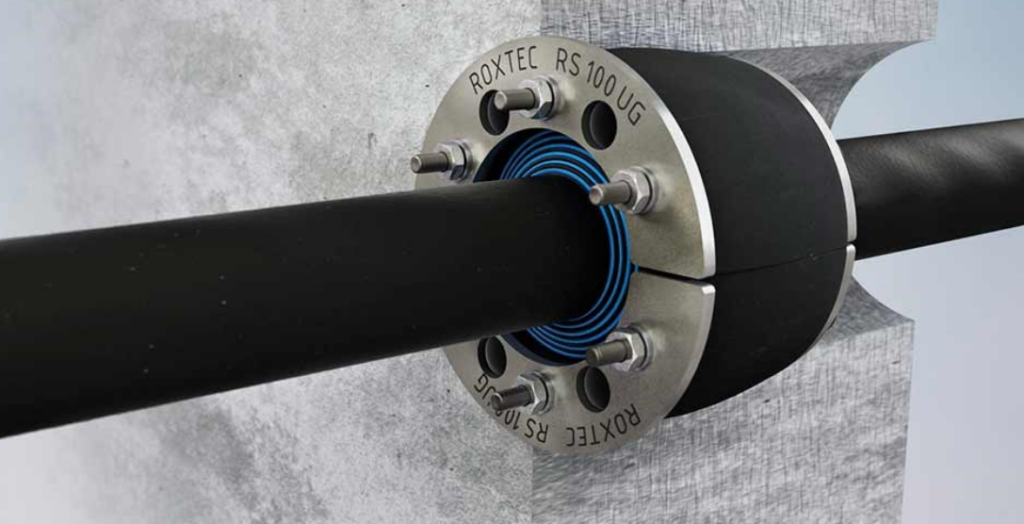

Below is a best practice installation guide for sealing substation cables with Roxtec H3 cable transit seals.
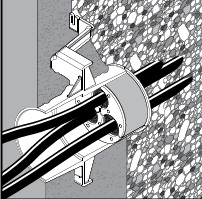
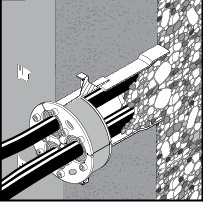
Installation In A Roxtec Knock-Out Sleeve
 |
 |
 |
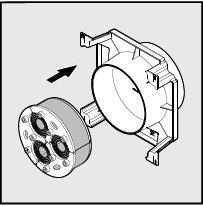 |
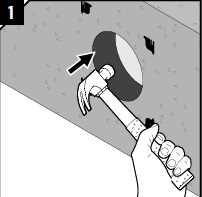
| Remove the knock-out of the sleeve before inserting the seal. | The seal can be installed from the outside of the structure. | The seal can also be installed from the inside of the structure. | The seal must always be installed in the correct end of the knock out sleeve. |
Installation In A Core-Drilled Hole
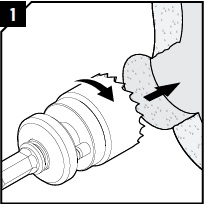 |
| Installation of seal into a core-drilled hole. Use a hole saw with the appropriate diameter. |
Installation In A Bolted Sleeve
For retrofit purposes an openable Roxtec sleeve can be used.
|
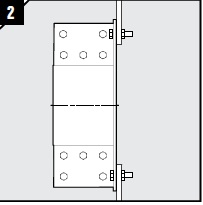 |
| Use the flange as template for the drilling of the bolt holes. | Attach the frame to the structure using suitable sealing method and suitable stainless fasteners. |
Installation In A Welded Sleeve
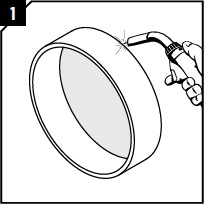 |
| Weld the Roxtec sleeve to the cabinet/wall |
Installation Of Cable Seals
Thorne & Derrick, working with Roxtec, can provide on-site installer training for all cable transit and sealing systems to ensure effective protection against flood damage or flammable gas migration on 132kV/66kV/33kV/11kV substations and battery rooms.
 |
 |
 |
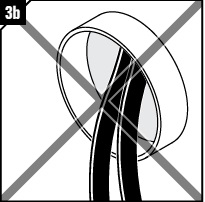 |
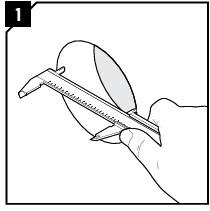
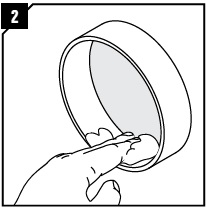
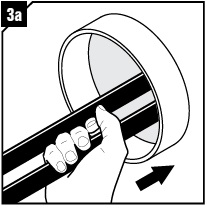
| Measure the aperture according to the table below. | Remove any dirt from the sleeve/ hole. | Pull the pipes/cables through | Cables shall go straight through the seal. |
 |
 |
 |
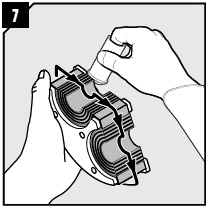 |
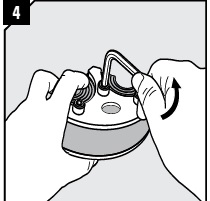
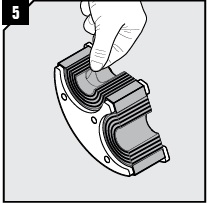
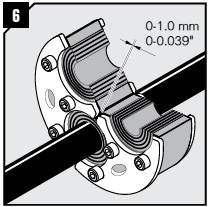
| Make sure that the bolts of the seal are loose. | Adapt rubber layers to fit the cables. | Test with a cable. Achieve a gap of 0-1.0 mm between the rubber halves. Adapt the layers for all cables. The halves may not differ by more than one layer. | Lubricate the three parts of the seal all around. |
 |
 |
 |
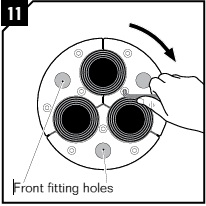 |
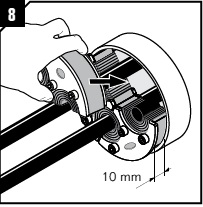
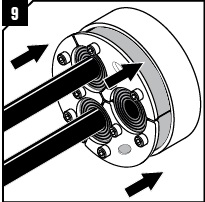
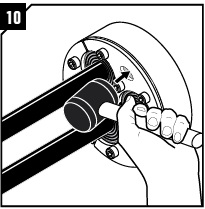
| Insert the seal into the sleeve. Leave a 10 mm margin to simplify the installation of the last piece. | Press all three parts of the seal into the sleeve simultaneously. | If necessary, use a rubber hammer. | Tighten the screws crosswise one turn at a time. Start with the inner screws. |
Signs Of Compressed Seal
 |
 |
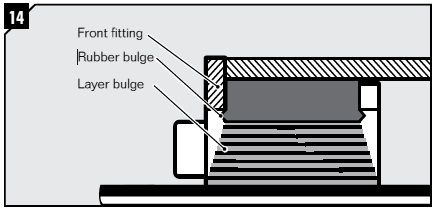 |
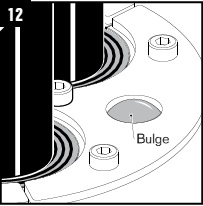
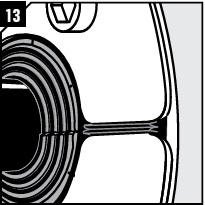
| The seal is compressed when the rubber expands through the fittings and when the inner part bulges. | Sectional view of the seal showing when rubber expands and bulges. The required torque depends on several things, e.g cable or pipe size, amount of used lubricant, sleeve size or material in the cable sheath. | |
Disassembly Of Cable Seal
 |
 |
 |
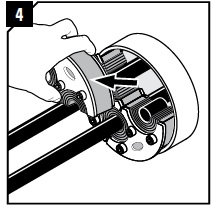 |
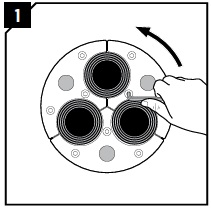
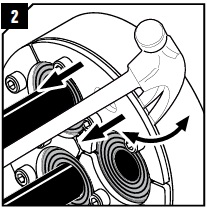
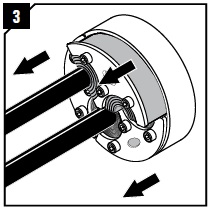
| Release compression by untightening all the screws. | Use a suitable tool to remove the halves of the H3 seal. Be careful not to damage the seal. | ||
Reinstallation Of Cable Seal
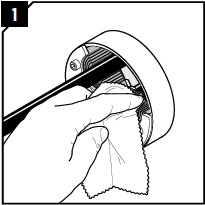 |
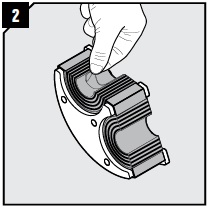 |
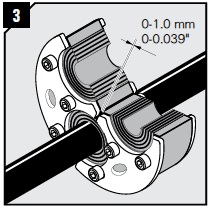 |
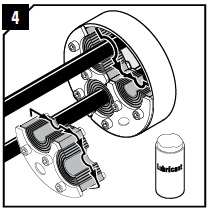 |
| Make sure that the inside surfaces of the exposed packing space are free from dirt or dust. | Adapt halves, which are to hold the additional cables or pipes, by peeling off layers until you reach the gap seen in pic. 3. The number of layers may not differ by more than one between the halves. | Achieve a gap of 0-1.0 mm between the rubber halves. If not, repeat 2. | Lubricate the inside surfaces all around with Roxtec Lubricant, especially into the corners. Continue reinstallation from step 7. |
➡ Note:
- Wait 24 hours or longer after installation before exposing the cables or pipes to strain or pressure
- Operating temperature range of cable seals is +4 to +40 °C
- Cables shall go straight through the transit seal
- Cable/pipe with considerable weight needs to be supported to prevent damage or subsidence to the seal
- Do not peel off the last rubber layer of each Roxtec module half

Roxtec UG Cable Transit Seals Product Range
| Roxtec Part Number | Aperture Ø (mm)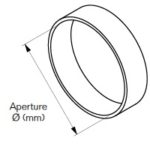 |
Clearance Depth (mm) | Cable/pipe Range Ø (mm) |
| Roxtec H3 135 UG | 135-140 | 75 | 0+23-43 |
| Roxtec H3 150 UG | 150-155 | 75 | 0+24-52 |
| Roxtec H3 185 UG | 185-190 | 75 | 0+48-64 |
| Roxtec H3 200 UG | 200-205 | 75 | 0+48-68 |

Cable Transits – Roxtec
Thorne & Derrick Specialist Electrical Distributor
Established since 1985, T&D distribute the most extensive range of LV, MV & HV Cable Jointing, Terminating, Pulling & Installation Equipment – contact us today for a competitive quotation.
Key Products : MV Joints & Terminations, Cable Cleats, Duct Seals, Cable Transits, Underground Cable Protection, Jointing Tools, Feeder Pillars, Cable Duct, Earthing & Lightning Protection, Electrical Safety, Cable Glands, Arc Flash Clothing Protection & Fusegear.
Distributors for : 3M, Pfisterer CONNEX, Nexans Euromold, Elastimold, Catu, Roxtec, Emtelle, Centriforce, Lucy Zodion, Alroc, Hivotec, Cembre, Prysmian, Ellis Patents, ABB & Furse.

T&D Providers Of Jointer Training Courses By Pfisterer CONNEX & Nexans Euromold
RISE Cable Transit Systems – Fireproof, Watertight & Gastight Sealing Of Cable Duct & Pipe Entries
November 19th, 2018
Sealing Cable Ducts (Water Tight & Gas Tight)
-
uploaded by Chris Dodds - Thorne & Derrick Sales & Marketing Manager
The effective sealing of cable ducts and pipe entries is critical to reducing risks; fire; flooding; explosion; environmental; confined space and corrosion of equipment.
All cable and pipe entries should be sealed according to the degree of fire resistance (if any) both integrity (E) and insulation (I), and watertight and gastight integrity prescribed for the respective element of the construction before penetration. In additional for bund walls and plinths it should be resistant to transformer oil.
Where the cable transit system also provides fire protection and/or prevents migration of flammable gas into a hazardous area or gas insulated substation it is now a legal obligation for the specifier, owner or main contractor to ensure a contractor can prove competency for the materials used, or the works to be carried out. (See Appendix A – Fire & Your Legal Liability- produced by Association for Specialist Fire Protection).
Any pipe or cable transit sealing system, such as those manufactured by CSD Sealing Systems, must satisfy the regulatory requirements of the following standards;
- BS 7671:2008 IEE Wiring Regulations (17th Edition) – 527.2 Sealing Of Wiring System Penetrations
- The Building Regulation/Standards
- Dangerous Substances & Explosive Atmosphere Regulations 2002 (DSEAR) & ATEX Confined Space
- The Regulatory Reform (Fire Safety) Order 2005
- Construction, Design and Management Regulations 2007 (CDM 2007)
Further relevant details of these can be found within Appendix B.
To reduce the risk (and provide a safety margin) of flooding, explosion, environmental leakage of transformer oil, confined space, high humidity and corrosion of equipment the penetration system should be;
- Certified watertight to 1.5 bar (21psi)
- Certified gastight to 1 bar (14psi)
- Age tested for in service life of 50 years
- Resistant to transformer oil
- Resistant to methane, hydrogen sulphide and chlorine.
- Permit thermal movement of the cable or pipe and still maintain a seal
When a cable or pipe system penetrates an element of the building or substation construction which has a specified fire resistance the penetration should be sealed using a suitable transit or seal product that will reinstate the fire resistance taking account of both the integrity and insulation performance required.
To prove the fire resistance the penetration system must be Third party certified to the new more stringent BS EN 1366-3, fire resistance tests for service installations; penetration seals (this will become mandatory end of 2012) and performance classification of the resistance to fire, the duration of both Insulation (I) and Integrity (E), in accordance with BS EN 13501-2.
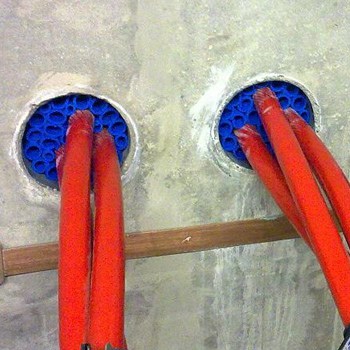
RISE Water & Gas & RISE Fire, Water & Gas
BSEN 1366-3 also includes mechanical stability testing to ensure the system withstands the stresses which may arise when the support to the wiring system is damaged during a fire thus satisfying the mechanical stability requirements of IEE Wiring Regulations.
To satisfy all these requirements the following methods are recommended;
- CSD RISE Water & Gas (RISE WG) sealing system is used for non fire rated areas
- CSD RISE Fire, Water & Gas (RISE F) sealing system is used for fire rated areas
The RISE WG cable and pipe transit sealing system will provide; a minimum of 1.5 bar (21psi) watertight seal, 1bar (14psi) gastight ensuring compliance with both DSEAR and ATEX regulations as dangerous gases will be prevented from migration between hazardous area zoned areas RISE is resistant to methane, chlorine and hydrogen sulphide, reducing the risk of dangerous atmospheres in confined spaces.
Resistant to transformer oil, permits thermal movement of the wiring system without reduction of the sealing quality and is age tested to prove an in service life of at least 50 years without any deterioration in performance.
In areas that do not require a full fire rating the system should consist of 60mm RISE (RISWAT) rubber sleeves and FIWA fire rated, water and gastight sealant.
A suitable fitting RISE sleeve should be placed around each cable to ensure cable separation (critical for obtaining watertight and gastight integrity) and then use the remaining sleeves to tightly pack any free space in the penetration using sleeve sizes 27/19 and 18/12.
Push all of the filler sleeves into the opening, leaving 20mm free space at the front for the application for the sealant layer. Before sealing the penetration use an approved cable cleaner or degreaser to ensure that the surfaces of the cables and the penetration sleeve are clean and free from any dirt, oil or dust residue.
The cable sealant is then applied to the face of the penetration ensuring a pressure tight seal is maintained, sealant must be applied to a minimum depth of 20mm.
CSD Rise Rapid
Cable Duct Sealing Installation Video
The following video demonstrates the installation process of the CSD RISE Rapid method of sealing cable ducts and pipe penetrations or entries.
The RISE Fire rated system (RISE F) provides the same level of protection as RISE WG but in addition will maintain the fire protection of any wall, floor or partition when it is penetrated by any cable or pipe transit. It provides up to 240 minutes (4 hours) of fire integrity (E) and 120 minutes of fire insulation (I) as classified in accordance with BS EN13501-2.
The cable duct sealing system also provides mechanical stability to withstand the stresses which may arise through damage to the support of the wiring system due to fire.
For a full fire rated system this should consist of 160mm RISE fire resistant rubber sleeves and a layer of FIWA fire rated, water and gastight sealant at each end of the penetration.
A suitable fitting RISE sleeve should be placed around each cable to ensure cable separation and then use the remaining sleeves to tightly pack any free space in the penetration using sleeve sizes 27/19 and 18/12.
Push all of the filler RISE sleeves into the opening, leaving 20mm free space at the front and back of a 200mm long penetration for application of the sealant layer. Before sealing the cable or pipe penetration ensure that the surfaces of the cables and the penetration sleeve are clean and free from any dirt, oil or dust residue.
The RISE sealant is then applied to each face of the penetration ensuring a pressure tight seal is maintained, sealant must be applied to a minimum depth of 20mm.
In areas where access is only possible from one side of the penetration it may be possible to install a single 40mm layer of FIWA sealant at the accessible side of the penetration.

RISE Duct Seal – Watertight and gastight protection for building entries and cable duct terminations
Appendix A
Fire & Your Legal Liability
Why is this of relevance to me!
If you are involved in provision of a fire protection package, at any level, then you share liability for its usefulness and its operation when it’s needed in fire, and that liability will still be there in the event of a court case.
I place the order; it is not my responsibility to install the works!
If it is your responsibility to specify the cable protection and sealing materials and/or appoint the installation contractor, it is also your responsibility to ensure that they can prove competency for the fire protection materials used, or the works to be carried out.
It’s no longer simply a duty of care or voluntary – it’s a legal obligation.
If you knowingly ignore advice that leads to a failure in the fire performance of any element of installed fire protection within a building, then you are likely to be found to be just as culpable as the deficient installer.
You share liability for the provision of information required under Building Regulation 16B that tells the user of the building about the fire prevention measures provided in the building. Otherwise, the user cannot make an effective risk assessment under the Regulatory Reform (Fire Safety) Order 2005.
What is expected of me?
In the event of fire, and deaths, a court will want to know how every fire protection system was selected; the basis for selection of the installer, whether adequate time was provided for its installation, and whether there was adequate liaison between the different parties to ensure it was installed correctly. No ifs, no buts – it’s all contained in the Construction, Design and Management Regulations 2007.
The CDM 2007 regulations, enforced by Health and Safety Executive concentrate on managing the risk, and the health and safety of all those who build, those that use the building, those who maintain it and those that demolish it – cradle to grave.
Be aware – the time to consider the above is before the event, not after it!
Provided by: The Association of Specialist Fire Protection
Cable Duct Seals – Sealing Cables Against Water, Gas & Fire
The below video shows the cable duct seals providing an effective and simple solution to all fire, gas and water tight duct sealing requirement.
Appendix B
The requirements for Sealing of Cable and Pipe entries are covered in more detail in the following regulations:-
1) BS 7671:2008 IEE Wiring Regulations (17th Edition) 527.2 Sealing of wiring system penetrations.
527.2.1 Where a wiring system passes through elements of building construction such as floors, walls, roofs, ceilings, partitions or cavity barriers, the openings remaining after passage of wiring system shall be sealed according to the degree of fire-resistance (if any ) prescribed for the respective element of building construction before penetration.
527.2.7 Any cable sealing arrangement intended to satisfy Regulation 527.2.1 or 527.2.2 shall resist external influences to the same degree as the wiring system with which it is used and, in addition, it shall meet all of the following requirements:
- It shall be resistant to the products of combustion to the same extent as the elements of building construction which have been penetrated
- It shall provide the same degree of protection from water penetration as that required for the building construction element in which it has been installed.
- It shall be compatible with the material of the wiring system with which it is in contact
- It shall permit thermal movement of the wiring system without reduction of the sealing quality.
- It shall be of adequate mechanical stability to withstand the stresses which may arise through damage to the support of the wiring system due to fire.
The cable seal and wiring system shall be protected from dripping water which may travel along the wiring system or which may otherwise collect around the seal unless the materials used in the seal are all resistant to moisture when finally assembled for use.
2) Building Regulations in England & Wales
Approved Document B 2006 – Building Regulations 2000
Section 10.2 of approved document B3
“If a fire separating element is to be effective, then every joint, or imperfection of fit, or opening to allow services to pass through the element, should be adequately protected by sealing or fire stopping so that the fire resistance of the element is not impaired”
Regulation 16B as referenced in Appendix G -Approved document B – Fire safety Appendix G of the Approved Document B, 2006 Edition, introduced comments on a new Regulation 16B of the building Regulations 2000, which requires that where work involves the erection or extension of a relevant building, or a relevant change of use of a building, then fire safety information shall be given to the responsible person at the completion of the project, or when the building or extension is first occupied.
Fire safety information’ means information relating to the design and construction of the building or extension, and the services, fitting and equipment provided in or in connection with the building or extension, which will assist the responsible person to operate and maintain the building with reasonable safety.
3) Building Standards Scotland
Regulation 12.1 of the Building standard states that every building shall be so constructed, that for a reasonable period in the event of fire-
- its stability is maintained
- the spread of fire and smoke within the building is inhibited; and
- the spread of fire to and from other buildings is inhibited.
Regulation 9 stipulates that the requirements can be satisfied only by compliance with the relevant standards which are set out in a series of Technical standards; section 3 of the introduction to Technical Standard D states:-
“ To restrict the internal spread of fire, a building may have to be divided into compartments separated from each other by compartment walls or compartment floors intended to provide a complete barrier to fire between the compartments. In practice, the continuity of such walls and floors will have to be breached by openings for circulation or services and where this occurs special precautions are necessary to maintain the effectiveness of the barrier. The acceptable size of a compartment for this purpose is determined by its likely fire load which is, in turn, influenced by the purpose group of the building, or part of the building, in which it is situated and the provision, or otherwise, of active fire protection measures.”
4) The Regulatory Reform (Fire Safety) Order 2005
Came into effect on 1st October 2006 and applies in England & Wales.
Similar legislation applies in Scotland and in Northern Ireland. The new system of regulation is risk-assessment based and includes the provision that the person responsible for the premises should carry duties for fire safety therein. Risk assessment by the ‘responsible person’ is a vital part of the planning process.
5) Construction, Design and Management Regulations 2007 (CDM 2007)
CDM Regulations 2007 came into effect 6 April 2007 and is enforceable under criminal law.
In brief, government intends that health and safety is integrated into the management of a project and encourages everyone to work together to achieve that objective as a normal part of a project, to reduce risks and manage the residual risks, by use of the right people for the right job at the right time. This shall enable hazards early on such that they be removed, reduced or managed properly.
CDM co-coordinator industry guidelines – produced by Construction Skills
www.cskills.org/healthsafety/cdmregulations
www.cskills.org/uploads/CDMCo-ordinatorstcm17-4642.pdf
6) Fire Test Standards
Hitherto ad hoc fire testing of penetration product has been performed to BS476 Part 20 & 22:1987, however BS476 series of tests is being withdrawn for use, it is now recommended that to ensure full compliance only those products that are 3rd party certified are used and preferably those that have been tested to the new more stringent BS EN 1366-3, fire resistance tests for service installations; penetration seals ( this will become mandatory end of 2012) and performance classification of the resistance to fire (both insulation and integrity) in accordance with BS EN 13501- 2 .
BSEN 1366-3 also includes mechanical stability testing to ensure the system withstands the stresses which may arise when the support to the wiring system is damaged during a fire.
7) Dangerous Substances & Explosive Atmosphere Regulations 2002 (DSEAR) & ATEX Explosive Atmospheres – Preventing the formation of a dangerous atmosphere through the migration of gases through cable and pipe transits in walls, floors and partitions.
T&D distribute proven cable duct sealing products from leading manufacturers CSD Sealing Systems with widespread utility approvals and industry acceptance as trusted alternatives to traditional “sticky and tricky” to install mastic seals or regulation violating expanding foam – these duct seal products are technically advanced cable sealing solutions designed to provide guaranteed protection of clients assets without the risk of failure.

Duct Seals – Sealing Cable Ducts

Pfisterer CONNEX | 3M Cold Shrink | Nexans Euromold | Nexans Slip-on | Heat Shrink Cable Terminations – stocked and distributed by Thorne & Derrick
LU London Underground Tested Cable Duct Seals – LUL S1085 Standard
October 29th, 2018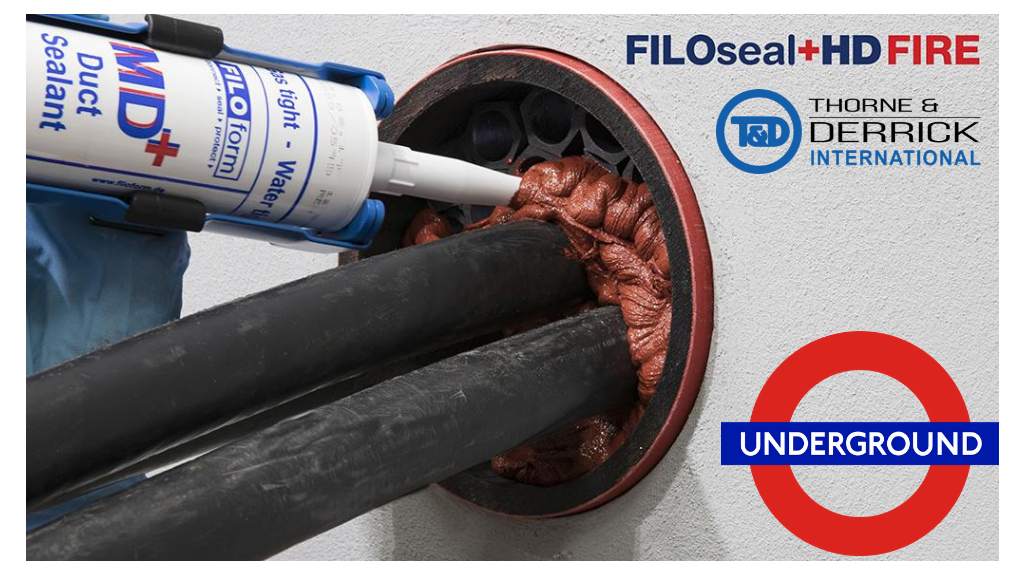
-
uploaded by Chris Dodds - Thorne & Derrick Sales & Marketing Manager
FiloSeal+HD FIRE has now been tested by London Underground for the safe and effective sealing of cables and ducts on the underground rail network – the duct seal system has been rigorously and successfully tested against smoke and toxicity emissions according to LUL S1085 Standard.
London Underground LUL – S1085
Fire Safety Performance of Materials
Rail Stations & Tunnel Infrastructure
LUL S1085 standard specifies the requirements for materials within all locations as listed in LU Standard S1086 with regard to:
a) Combustibility
b) Smoke Emission
c) Toxic Fume Emission
Note: This standard does not cover the wider aspects of fire engineering and it may be necessary to invoke other London Underground, National or European Standards to cover fully all aspects of fire safety for a particular application. Guidance is available in G085.
Purpose
The purpose of this standard is to define the requirements for the fire safety performance of materials, installed on the London Underground (LU) Stations and Tunnel Infrastructure.
The business objective of this standard is to ensure that the risk to which the public and employees are exposed is controlled to a level that is as low as reasonably practicable.
FiloSeal+HD FIRE is also approved to the following rail industry standards:
- Railway Applications – Fire Protection On Railway Vehicles BS EN45545
- French Standard – Fire Test to Railway Components CIt NF F16-101
All these tests look at the following: toxicity values when the product is burning, smoke index value and the amount of oxygen required for combustion.

London Underground LU Transport For London 1-085. Download Copy.

Thorne & Derrick – Stickists & Suppliers of MV HV Joints, Terminations & Connectors
Specialist Suppliers To The UK & International Rail Industry

Thorne & Derrick International, based in the UK, are leading Specialist Distributors & Stockists of LV, MV & HV Cable Installation, Jointing, Substation & Electrical Equipment to the Rail industry.
➡ Product Categories: Duct Seals | Cable Cleats | Cable Glands | Electrical Safety | Arc Flash Protection | Cable Jointing Tools | Cable Pulling | Earthing | Feeder Pillars | Cable Joints LV | Joints & Terminations MV HV
Joints ♦ Terminations ♦ Glands ♦ Cleats ♦ Earthing ♦ Ducts ♦ Seals ♦ Safety ♦ Tools ♦ Fusegear
Fire Stopping Cable Ducts
August 28th, 2018
A Guest Article by Carl Pike – Director Filoform UK
The following contributed post provides an overview of the dangers of inadequately protected building penetrations and the need for duct sealing solutions with independently tested fire-proofing specification to protect people and property against the devastating effects of fire.
What is Fire Stopping?
Fire stopping has been brought more to the fore over the last few years than ever before.
The best way to explain the need of a fire-stop is to treat a multi-room dwelling or factory or any structure as a series of boxes or compartments. These boxes need to join physically by their walls or floors, even doors or windows. All these items are regulated and proven fire withstand products and procedures are in place to ensure any building is built or modified in accordance with the underlying need to stop fire spreading.
The fire tightness of one of these boxes is only as strong as the weakest entry point.

Did you know, fire can double in volume per minute it is lit. It doesn’t take long at this alarming rate to fill a room with fire. Fire does not respect any boundaries put in its place, but a certified system like ‘FiloSeal+HD FIRE‘ installed in the correct manner will stop or prevent the premature spread of fire to the next compartment through cable ducts, entries or penetrations.
Fire stopping got its foothold first in the marine industry. Probably because a loss of integrity of one compartment will mean a total loss of the vessel. It was in fact a development from the second World War German super sub captured by the Swedish that led to fire stopping products of a modular nature being developed by a company still going today. In the super sub, the system was used to prevent the rattle of pipes and wires within the sub, hence improving the sound signature of a hidden submarine.
Research we have done leads us to the improving of fire stopping on land as a direct result of several disasters in the USA starting with the 1906 San Francisco earthquake. This was followed by the New York garment district factory fire of 1911 and perhaps most scarily by the Browns Ferry Nuclear plant fire of 1975. This last event was caused by an open candle flame being used to detect air path leaks in foam based cable and pipe transit areas!
Not surprisingly, the nuclear industry was the first on land industry to take fire stopping seriously.
The use of the correct fire stopping product in the correct way and in the correct place ensures fire tightness of a compartment or room. There are plenty of products which work on floor/wall or ceiling wall interfaces. Many of these are flexible to allow for building expansion and contraction. Some other ways of sealing do not allow for this expansion; cements and mortars for instance. These materials do have their place but not always.
The last area we have not yet mentioned is the service penetrations into a room or compartment. These are the necessary services such as water, electricity and data cables which without them a room is almost useless.
Penetrations may come in via a wall, floor or ceiling. All must be adequately and correctly fire stopped. These services will need a flexible and re-enterable method of being sealed. The flexibility due to temperature expansion of both cables and pipes; the re-enterability due to the almost constant development of a buildings use and services.
Rockwool and insulation’s of the type are fire-retardant but are not in themselves a fire stopping method. They are perfectly suited to holding a system in place during installation but should never be relied upon to be the actual stop itself.
Fire stopping expanding foams
Please don’t get us started with this.
The use of so-called ‘fire rated’ foams for fire stopping of service penetrations or control joints is sadly becoming more prevalent everywhere. This trend could lead to serious consequences if a fire happens in a building where they’re used,
What do we mean by ‘fire rated foams’?
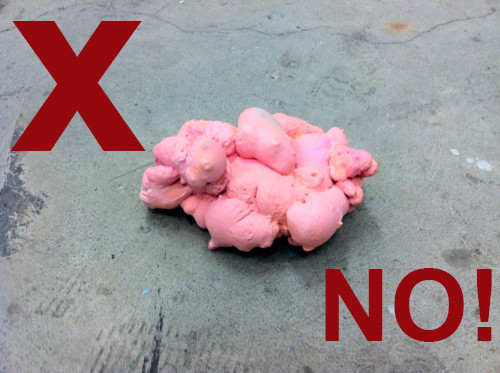
The fire rated foams we’re talking about are those that are delivered by way of an aerosol can or canister, which foam up when they’re dispensed – much like canned shaving foam.
They’re typically polyurethane based, and our understanding is they might all be coming from the same factory overseas, imported under many different product brands. To add to the problem, many are now dyed red or pink like above to signify their suitability for fire stopping applications. DON’T USE THEM!
Modular sealing systems work admirably out at sea where rigorous compliance is ensured on a day to day basis. On land, a more flexible system would work better; one where less is known up front about the exact cables or pipes to be found in any service penetration. One that can cope with irregular sized holes and mis-shaped ducts.
The correct system to use in service penetrations ON LAND
Their are many fire rated sealing systems available that claim their product is suitable for penetrations with cables present but you must really be careful and select the correct product for the situation you are sealing. Important note; a fire rating applies to an ‘as fire tested’ system, or an otherwise approved configuration. Only when a particular (and I must add proprietary) brand of product is installed in an identical way to the approved configuration does the entire system or configuration achieve the fire rating as described.
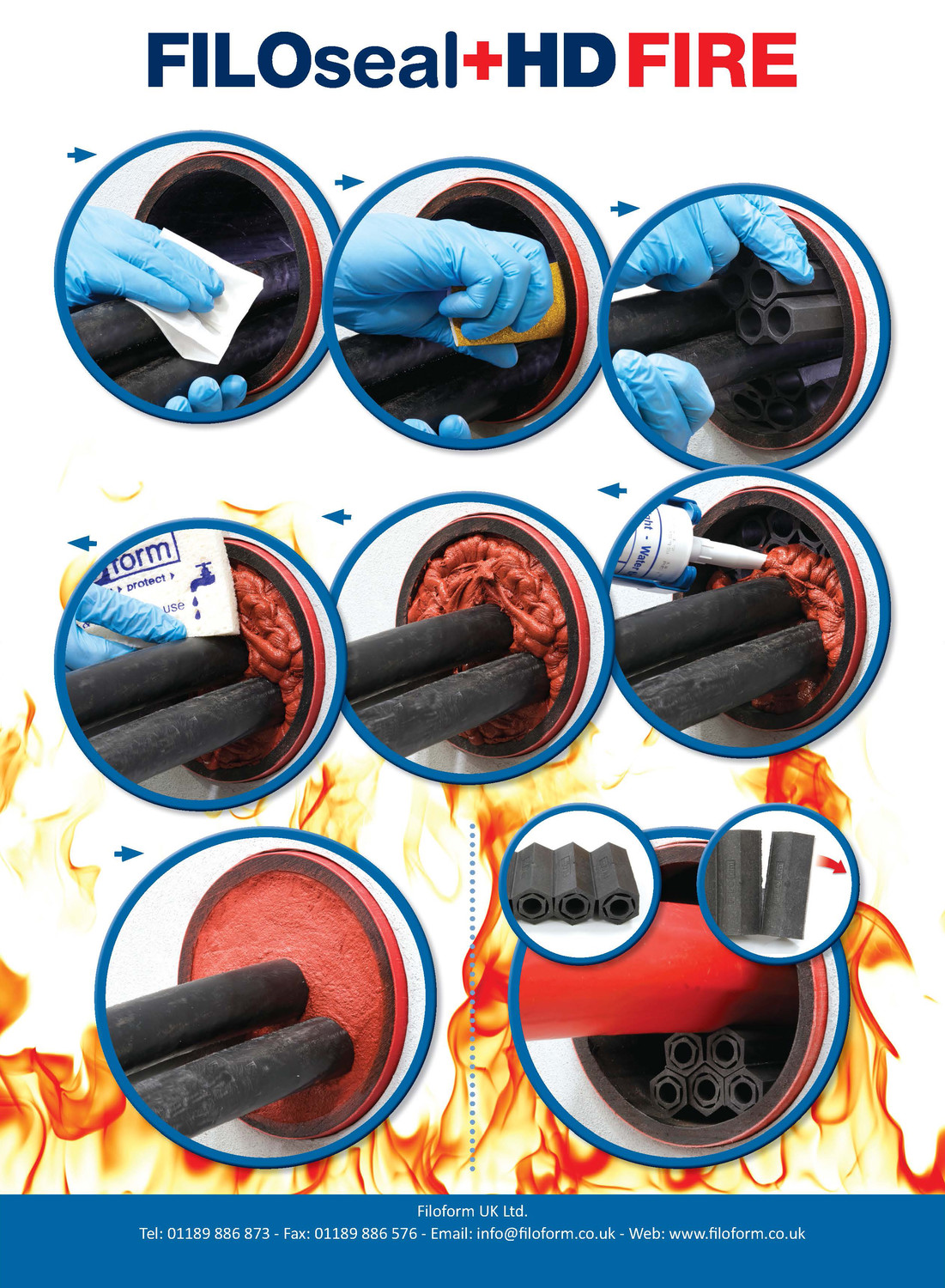
Filoform has heavily invested time and money into developing a fire rated duct sealing solution that offers the user and and end customer the following;

Flexible & Simple – a one box solution that has everything is one kit to seal a cable duct regardless of the size or number of cables running through the duct – we’ve kept selecting and installing our product ‘simple’ little upfront planning needed.
NON Hazardous – FiloSeal+HD FIRE contains no hazardous chemicals which makes COSHH and getting our product approved with any Health & Safety departments an easier process.
Many Resistances – Not only is our product fire resistant, tested to BS EN1366-3:2009, it also offers, 2 bar pressure resistance against water and gas / rat, rodent and termite protection (Mastotermes Darwiniensis) Northern Australian termites) and resists many harsh chemicals and gases, for example, Hydrogen Sulfide, Methane, Chlorine, Hydrocarbons and many more.
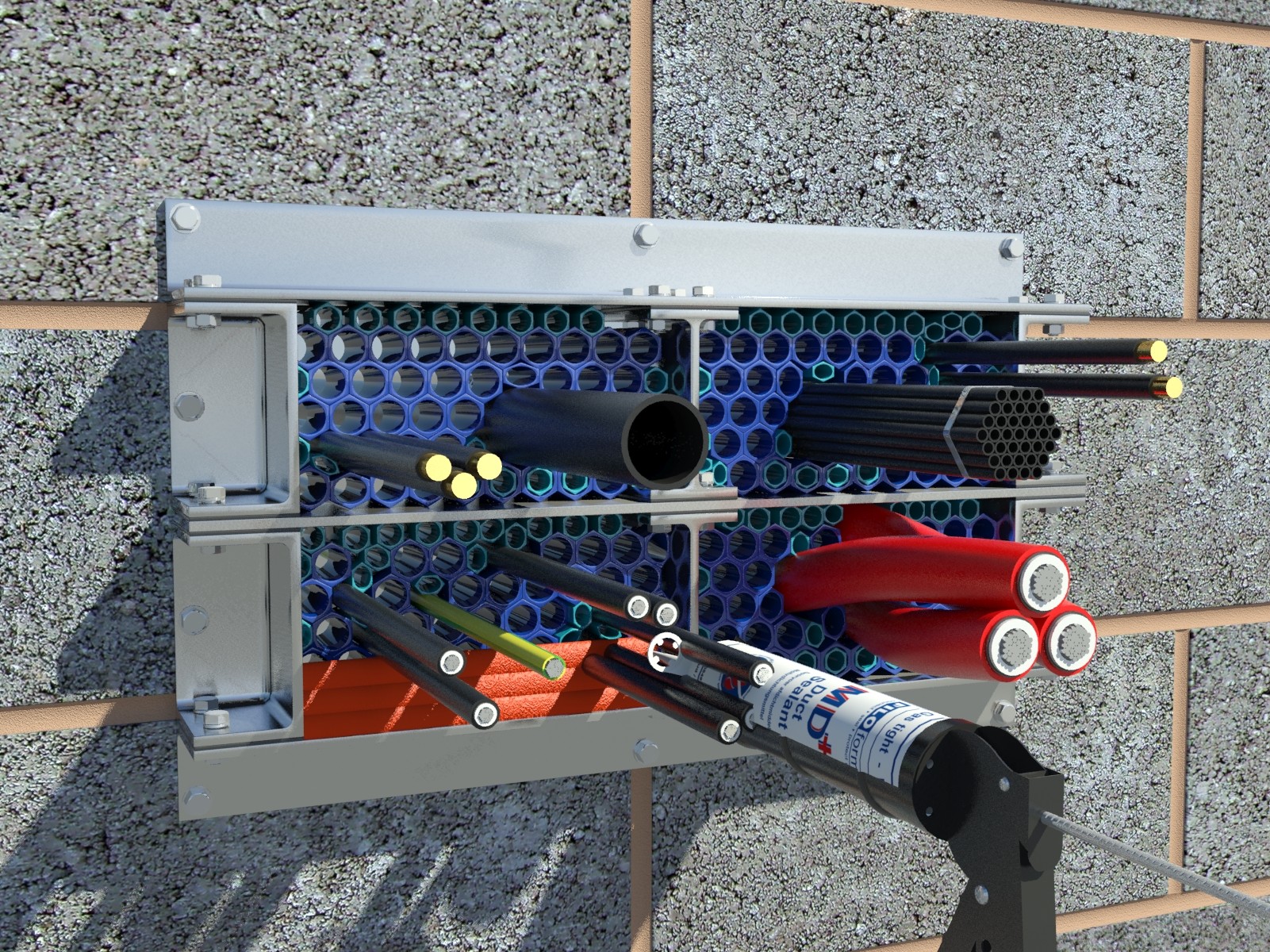
Expandable – We’ve developed FiloSeal+HD FIRE to easily be installed in circular ducts and also irregular shaped penetrations. FiloSeal+HD FIRE can be supplied with a retrofittable cable transit frame which is used if a structure or space will not allow fitting of a seal into the structure itself.
Affordable – Even with the heavy investment and time we spent designing and developing FiloSeal+HD FIRE, we’ve made this cable duct seal affordable but still offering extremely high quality components with proven test reports and a solid history of sealing solutions.
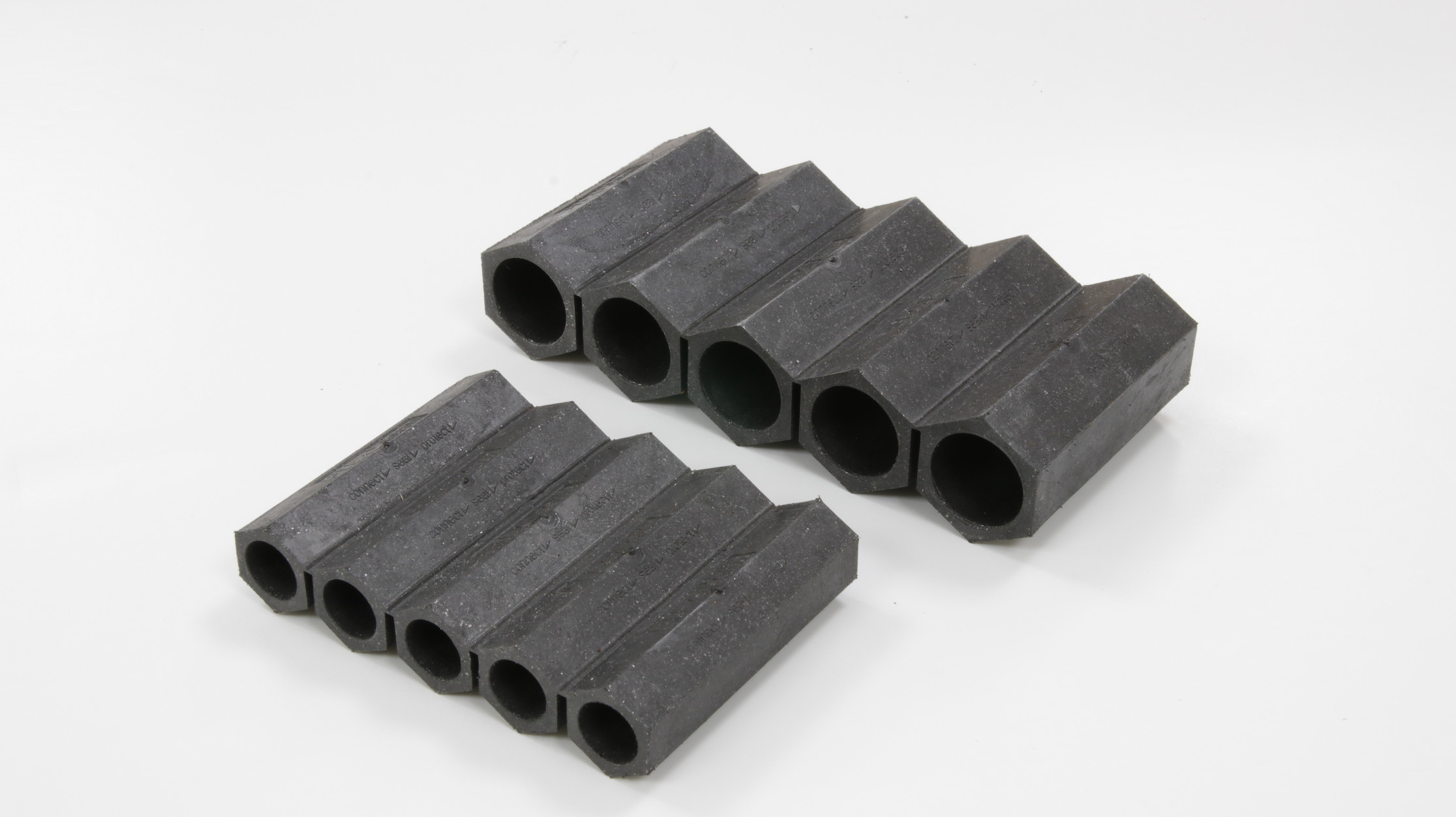
FiloSeal+HD FIRE provides a strong support system using the fire resistant hexagonal blocks made of our specially formulated material called ‘Formite’ which builds up like a honeycomb structure.
FiloSeal+HD FIRE is suitable for sealing empty or any cable configuration or pipes contained in one duct and also allows easy re-entry of the seal to add or remove cables or pipes as required.
Filoform FiloSeal+HD FIRE
FiloSeal+HD FIRE is very easy to apply regardless of the type of cable scenario in the cable ducts as it uses strong, but flexible hexagonal blocks to support the cable and provide a strong backing for the seal.
The unique design of the hexagonal blocks makes positioning and separation of the cables very simple while also providing a strong backing for the MD+ to be applied on.
- Up to 4 hours fire resistance in transit frames (single side)
- Up to 4 hours fire resistance in ducts
- Tested to BS EN1366-3 2009
- Up to 2 bar Pressure Resistance
- 100Kg pulling Force on the cables when sealed
- 10xd at 45º, with 1 bar pressure bending test
THORNE & DERRICK SPECIALIST ELECTRICAL DISTRIBUTOR
LV ♦ MV ♦ HV
T&D distribute the most extensive range of LV, MV & HV Cable Jointing, Terminating, Pulling & Installation Equipment – we service UK and international clients working on underground cables, overhead lines, substations and electrical construction at LV, 11kV, 33kV and EHV transmission and distribution voltages.
- Key Products: MV-HV Cable Joints & Terminations, Cable Cleats, Duct Seals, Cable Transits, Underground Cable Protection, Cable Jointing Tools, Feeder Pillars, Cable Ducting, Earthing & Lightning Protection, Electrical Safety, Cable Glands, Arc Flash Clothing & Fusegear.
- Distributors for: 3M, ABB, Alroc, Band-It, Catu, Cembre, Centriforce, CMP, Elastimold, Ellis Patents, Emtelle, Furse, Lucy Zodion, Nexans Euromold, Pfisterer, Polypipe, Prysmian, Roxtec.

LV – Low Voltage Cable Joints, Glands, Cleats, Lugs & Accessories (1000 Volts)

MV HV – Medium & High Voltage Cable Joints, Terminations & Connectors (11kV 33kV EHV)

Cable Laying – Underground Cable Covers, Ducting, Seals & Cable Pulling Equipment
T&D, CATU Electrical Safety & Arc Flash Protection Specialists for SAP’s, Linesmen, Jointers & Electrical Engineers – Largest UK Stockist
Correctly Sealed Cable Ducts Will Protect From Ingress Into Potable Drinking Water
July 16th, 2018
-
uploaded by Chris Dodds - Thorne & Derrick Sales & Marketing Manager
The following information is provided courtesy of Severn Trent Water as part of their series of Lessons Learn Bulletins which highlight the potential use or adoption of products to ensure cleaner, safer and more reliable distribution of water supply – specifically this short update is focussed on duct sealing to prevent pollution of potable drinking water.
Brief Description
The Whitacre / Warwickshire team identified a shortfall in the way cable ducts are sealed following installation of new and the maintenance of existing assets.
This was identified as part of coliform investigations where there is a potential for water ingress into injection chambers, reservoirs and back wash tanks. Lack of correct duct sealing in this instance resulted in water entering a level probe chamber with the potential to pollute potable drinking water.
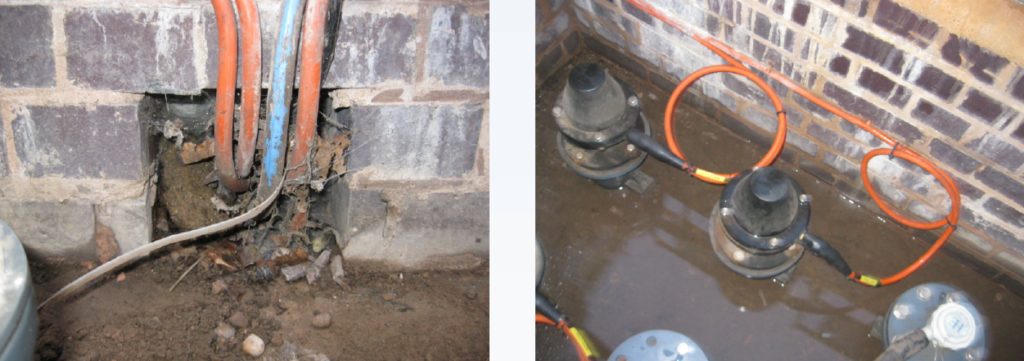
Sealing Cable Ducts
Several options to securely seal cable ducts have been investigated with support from Water R&D. As a result of findings Asset Creation updated the STW design manual for E&M Plant Electrical Design (DM0106-03) and issued a technical bulletin informing key departments, ensuring that the new minimum standard is adhered to.
Two duct sealing kits were used and approved by PH&S, both provided similar results.
PLEASE NOTE: These kits are not DWI Reg 31 approved and must not be used where direct contact with potable water occurs. Any proprietary seal kit used must be of the type listed in the Water Industry Mechanical & Electrical Specification 3.02 (SPC 0302-W302).
Lessons Learnt
Share at your Comm Cells with your operational and maintenance teams.
• During routine inspections check for any cable ducts which could possibly allow ingress into reservoirs or injection chambers which could lead to a water quality failure?
• Contact either of the above for any assistance for procuring and advice on installing the sealing kits.
• Track any next steps via your Comm Cell, raise WQ U/C and sign off when complete.
Sealed Cable Ducts

Examples of installed duct sealing systems

More info: Filoform Filoseal Seals | CSD RISE Seals
Cable Duct & Cable Protection
Thorne & Derrick supply an extensive range of underground cable duct and protection covers suitable for LV MV HV cable installations – this includes Tape Tile 11kV and Stokbord Covers 33kV used to protect underground power cables pulled and laid into trenches.
To promote the installation of cable into duct a labour-saving range of cable lubricants is available to facilitate friction-free cable pulling and reduce damage to cables. See our range of cable ducts suitable for low, medium and high voltage power and utility cables.
Key Product Categories: Duct Seals | Cable Cleats | Cable Glands | Electrical Safety | Arc Flash Protection | Cable Jointing Tools | Cable Pulling | Earthing | Feeder Pillars | Cable Joints LV | Joints & Terminations MV HV