Blog
Overhead Lines | Preventable & Fatal Risks of Electrocution & Arc Flash Incidents
October 8th, 2019Thank you to the Electrical Safety Authority for allowing us to republish this article.
Four Ontarians Critically Injured or Killed by Electricity in the Past 24 Hours
Mississauga, on (September 20, 2019) – In the last day, three confirmed electrical-related incidents that have involved four individuals have been reported on worksites across Ontario: two reported fatalities and two critical injuries. All of these incidents involved contact with overhead electrical wires.
The Electrical Safety Authority is supporting the Ministry of Labour while each of these incidents are investigated. “In the last 24 hours, four families have been tragically impacted by the dangers of electricity and we are incredibly saddened by this news,” says Dr Joel Moody, Chief Public Safety Officer with the Electrical Safety Authority. “Unfortunately, these incidents were preventable and it’s clear that more needs to be done to help Ontarians stay safe when working around electricity.”
In the last 10 years, 19 Ontarians have died after making contact with energised powerlines.
The events of the past 24 hours further reinforce the serious nature of electricity and need to always be vigilant when working close to or around energised wires.
Electrical Safety
To keep safe, ESA urges everyone to remember these safety tips when working around electricity – at home or on the job:
- Look up, look out and identify all powerlines around you. Make sure people and equipment stay at least three metres away to prevent an incident. Electricity can jump to you or your equipment if you’re too close to a powerline.
- Stay alert! Many incidents happen at the end of the day when people are tired or rushing to finish a job.
- Be aware. Drivers of dump trucks and other high reach vehicles must get a signaller to ensure that equipment doesn’t come within three metres of overhead powerlines.
- Hidden dangers. Overhead powerlines can be hidden by foliage. Tree trimming tools that contact a powerline can result in electrocution. Look closely to identify overhead powerlines running through trees and ensure that you and your tools are at least three metres away from powerlines at all times.
- Keep equipment away. Aluminium ladders, or ladders with aluminium parts, will act as conductors of electricity if they contact overhead powerlines. Even wooden ladders can contain metal and lead to a shock if contact occurs with a powerline.
- Don’t touch. If wires fall down on the truck or the ground, always assume they are still energised. Stay in the vehicle, call 911 and keep everyone back. Only the local utility worker on-site can confirm when the power is off and tell you when it’s safe to exit the vehicle.
About the Electrical Safety Authority
The Electrical Safety Authority’s (ESA’s) role is to enhance public electrical safety in Ontario.
As an administrative authority acting on behalf of the Government of Ontario, ESA is responsible for administering specific regulations related to the Ontario Electrical Safety Code, the licensing of Electrical Contractors and Master Electricians, electricity distribution system safety, and electrical product safety.
ESA works extensively with stakeholders throughout the province on education, training and promotion to foster electrical safety across the province. More information on the Electrical Safety Authority can be found at esasafe.com and on Facebook at www.facebook.com/ElectricalSafetyAuthority.
ESA’s Customer Service Centre can be reached at 1-877-ESA-SAFE (372-7233).
For further information: Electrical Safety Authority Media Relations 905-712-7819 or [email protected]
Arc Flash Learning & Resources

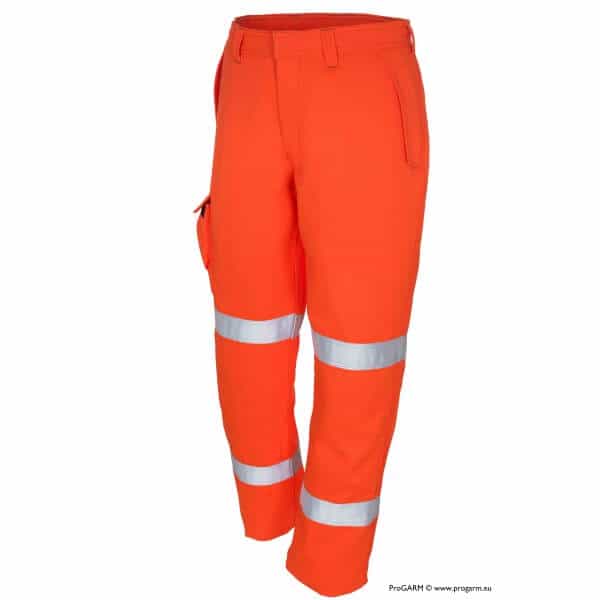
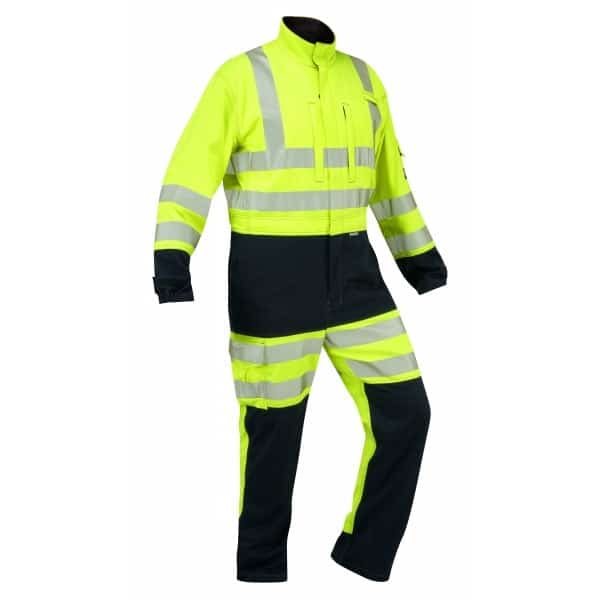
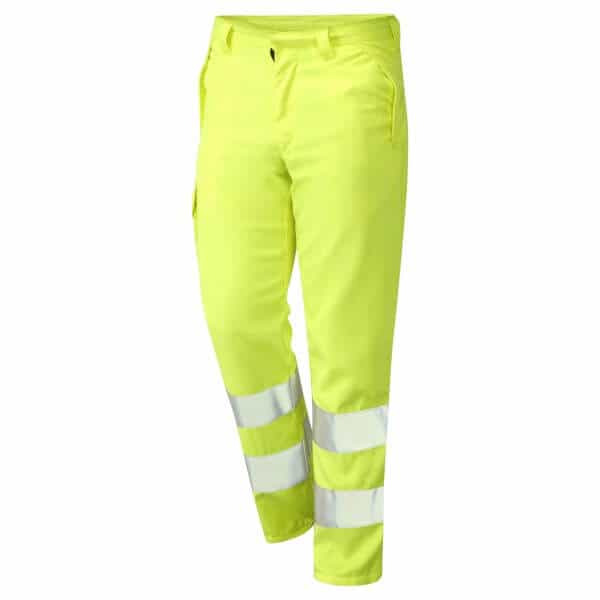
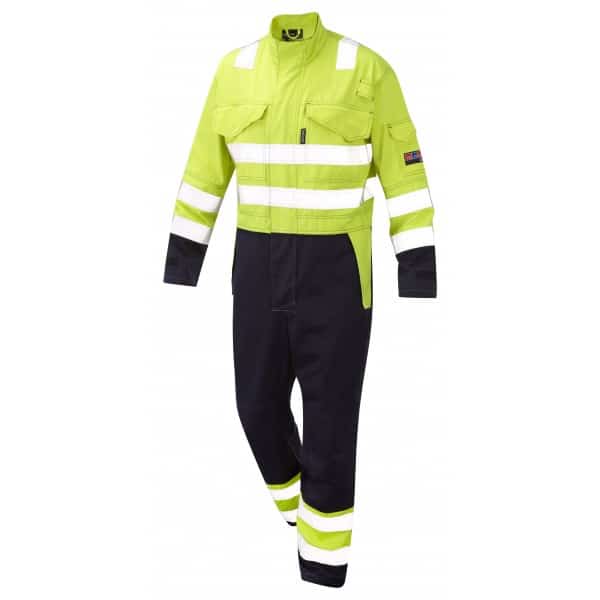
Thorne and Derrick are proud to be distributors of ProGARM arc flash coveralls and protection.
We can help – should you require arc flash calculators or advice on the type of clothing and protection available please do not hesitate to contact us.








Thorne & Derrick
Thorne & Derrick are national distributors of LV, MV & HV Cable Installation, Jointing, Substation & Electrical Equipment – servicing businesses involved in cabling, jointing, substation earthing, overhead line and electrical construction at LV, 11kV, 33kV, 66kV and EHV. Supplying a complete range of power cable accessories to support the installation and maintenance of low/medium and high voltage power systems:
- Slip-on Cable Terminations
- Cold-shrink Cable Terminations
- Heat-shrink Cable Terminations
- Cable Joints – Heat & Cold-shrink
- Separable Connectors (Euromold)
- Surge Arresters & Switchgear/Transformer Bushings
Key Product Categories: Duct Seals | Cable Cleats | Cable Glands | Electrical Safety | Arc Flash Protection | Cable Jointing Tools | Cable Pulling | Earthing | Feeder Pillars | Cable Joints LV | Joints & Terminations MV
The Semicon Screen – The Most Critical Point In Any MV Cable Joint, Termination Or Connector
October 8th, 2019
Semicon Screen Cutback
-
uploaded by Chris Dodds | Thorne & Derrick Sales Marketing Manager
Thorne & Derrick, UK Specialist Distributors of LV MV HV Jointing, Earthing, Substation & Electrical Eqpt, are delighted to be able to provide the following excellent Guest Blog and commentary geared towards reducing cable failure rates caused by poor workmanship and sub-standard MV cable preparation.
Critically, the article focuses on the importance of precise and careful treatment of the semiconductor screen on medium voltage power cables by the jointer or cable splicer. This insulation screen, is the semi-conductive layer of the medium/high voltage cable and provides a homogeneous even distribution of the electric field between the external insulation and metallic screen on the MV cable.
Typically, the insulation screen can be fully bonded or easy-strippable. The removal of the insulation screen is the most critical step during the cable preparation process and the the use of the correct jointing tools by a Competent Jointer can extend the service life of power cable systems and underground distribution networks.
Incorrect or sub-standard cable preparation is the primary cause for the failure of medium/high (MV-HV) cable accessories including joints, terminations and connectors.
By: Ben Lanz – Director, Applications Engineering at IMCORP
Witness the excellent square radial cut to the semicon layer of the power cable (arrow) in the photograph below.
- Pictured: Square Semicon Screen Cut On Medium Voltage Cables – the semicon cable screen was removed using Speed Systems Screen Scoring Tools. MV cable type is ICEA 35kV strippable insulation shield design.

Square Semicon Screen Cut On Medium Voltage Cables
To File, Or To Sand?
Neither.

IMCORP, providers of diagnostic services for medium and high voltage power cable systems, have just finished an Accessory Performance Consultation for a critical generation facility.
Expert cable condition analysis and power cable life cycle consulting services provided by IMCORP can prevent any systemic semicon cutback issues when a Factory Grade(R) site commissioning assessment is provided. This can prevent multiple costly cable system failures on medium voltage power systems.
Unfortunately, there was some ‘pick off ‘ (circle) that required some light localised sanding by the cable splicer.
This is how IMCORP remove cable failure producing defects and eliminate future O&M through Factory Grade(R) Certification and quality control assessment enabling a predicted 100 year life cycle of the cables.
In the UK it is normal to smooth-out the step down on the screen cut from the primary XLPE insulation using a rat tail file or aluminium oxide abrasive paper for sanding.
However international standards and jointer preferences vary on the subject.
Ben comments, “this semicon cut back was made for an IEEE 386 35kV separable connector which has a built in square step in the stress cone cable adapter that ideally needs to interface with a square semicon step made with a semi con scoring tool on a ICEA type strippable insulation shield. If the cable jointer bevels the edge it would require significantly more void filling grease which can be a risk factor for substandard performance in this type of medium voltage cable installation. We have a factory comparable partial discharge test for the field that we have used to test tens of thousands of these types of separable connector terminations. I can assure you that this technique in conjunction with installing the rest of the cable termination correctly will far surpasses the manufacturer’s PD performance expectations.”
-
-
- ♦ IEEE 386 Standard for Separable Insulated Connector Systems for Power Distribution Systems Rated 2.5kV through 35kV – IEEE 386 Standard covers the definitions, service conditions, ratings, interchangeable construction features and tests established for loadbreak and deadbreak separable insulated connector systems for use on power distribution systems rated 2.5kV through 35kV and 900A.

-
Removal of Semiconductor “Pick Off” On Medium Voltage Cables
Regarding the removal of the semicon ‘pick off’ contaminant from the MV cable which is circled in the picture, Ben recommended the following.
“At 35kV we recommend using a little 120 grit aluminium oxide sandpaper, but only at the location of the contaminant with a small circular motion at the tip of the thumb.”
“We never recommend sanding at this voltage class with a strippable insulation shield unless the cable cleaner will not remove the contamination,” adds Ben.
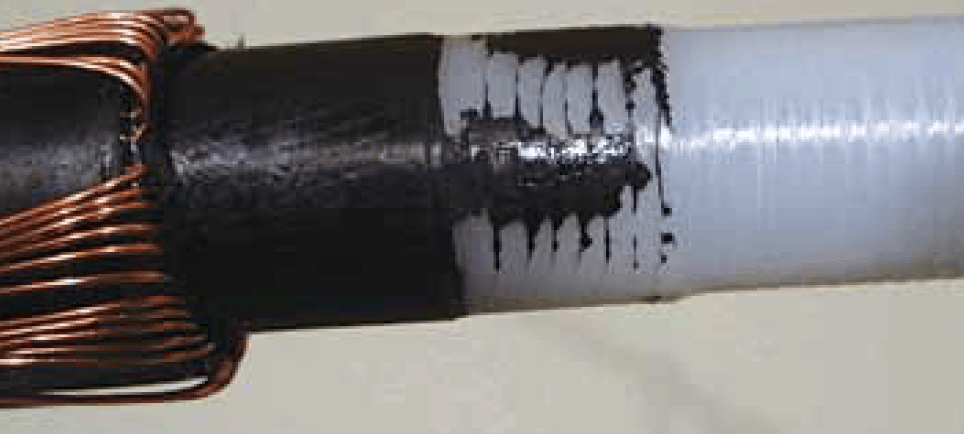
Here, the semi conductive layer has been left on the 11kV XLPE insulation which can cause surface tracking and eventual flash over.
The below cable preparation images clearly shows the straight and clean cut to the black semicon screen stepping down onto the 11kV cable insulation (XLPE) – here a constant force spring provides a straight edge for copper tape screen on the 11kV cable before installing the cable termination.

Image: David Baldock (HV Cable Jointer) – the insulation screen transition is perfectly smooth and clean achieved by a straight final cut.
The F Word
FAILURE – cable failures are disruptive and dangerous, but also avoidable.
Not all, but some.
Whatever your currency the financial cost of cable failure is overshadowed by the immeasurable cost inflicted in terms of loss of reputation.
Tony Haggis (Director at Tony Haggis Consulting Ltd) with 46 years experience in electricity distribution up to 132kV provided some professional insight.
“It looks like a very carefully executed screen cut and a nice neat job. However, one problem that occurs with this method is that the screen can lift slightly off the insulation when the upper part or the medium voltage cable screen is torn off at the depth cut. This results in a small void under the screen which can result in partial discharge.”
“In EoN Central Networks, we identified this as a root cause of MV cable failures after microscopic inspection. We changed the semicon screen cut method to using a small round file to make a circumferential groove at the screen off position which just exposed the white insulation below.”
Tony continues, “when the cable screen was pulled off there then was no danger of lifting the remaining screen. The result was a tapered transition on the screen. This eliminated failures due to discharge at the screen off position. Eventually, we moved to bonded screen and top quality bonded screen stripping tools which again provide a reliable screen off cut but more easily and quickly. Bonded screen was also lower cost than strippable.”
Delamination & PD
Ben replied on the issue of MV cable failures, “we taught the class how to remove the semicon while minimising the likelihood of delamination and the how to inspect for this issue. Fortunately, we will not have to guess if they followed our recommendations. The owner requires a third party factory comparable PD test (offline 50/60Hz PD test with better than 5pC sensitivity) on 100% of the installations and the installer is on the hook for repairs and retests. This is becoming the new standard for QA/QC!”
Tools Of The Trade
The new Alroc CWB/18-60-MVS cable jointers tool, with “stop” included, removes both the bonded semi-conducting screen without requiring lubrication while also creating a chamfer in a clean and reliable cable preparation process.
Here the cable jointer demonstrates the ease of simplicity of removing bonded semiconductor screen layer from 11kV Triplex cables with 300sqmm stranded copper conductor and XLPE insulation prior to terminating into medium voltage switchgear. The Ripley US02 is set at 1mm during this cable preparation process.
21st century power networks depend upon type-tested, trustable medium voltage cable accessories such as cable joints and cable terminations, to energise our lives.
Cable accessories are only reliable if installed in accordance with the manufacturers jointing instructions and recommended cable stripping dimensions.
Precision engineered cable jointing tools are an essential part of the MV-HV jointers toolbox ensuring the accurate removal of cable sheaths, insulation and semicon screens on MV-HV cables.
Ben goes on to explain, “I agree that the semicon cutback is the most critical part of the cable termination and I agree that a smooth transition (chamfer or slope) is better than a step if the termination design has a smooth interface. However, this cut back was made for an IEEE 386 35kV separable connector as referenced above.”
However, jointers tools alone without the knowledge, expertise and skill of a Competent Jointer to use them are not worth diddly squat.
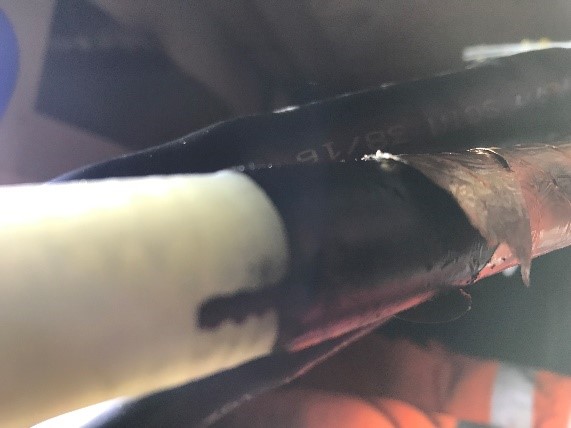
For instance the photograph below highlights the problem of unskilled labour, even if equipped with the correct cable jointing tools, inflicting catastrophic damage to MV-HV power systems through lack of training, experience and understanding of the criticality of semicon cutback.
Non-radial, rough and jagged semicon screens with protuding points at the cutback will cause cable termination or joint failure. Outage. Blackout.
Ben’s Bio

Ben Lanz
Ben Lanz is Director of Applications Engineering at IMCORP USA and has expert technical oversight of power cable life cycle consulting (5kV-500kV).
Ben has published several technical papers on power system reliability, asset management, diagnostics and regularly presents on the topics. He is a Senior Member of the IEEE Power & Energy Society, a voting member of the IEEE Standards Society, and a member of the IEEE Dielectrics and Industrial Applications Societies. He has served as Chairman of the Insulated Conductors Committee (ICC) technical committees responsible for cable testing, cable reliability and surge arresters.
Who Are IMCORP?
IMCORP is the leading provider of power cable reliability assessment services for medium and high voltage (5kV to 500kV) power cable systems for both aged and new cable installations. Our Factory Grade® assessment is non-destructive, requires no hazardous materials, and is a cost-effective alternative to cable replacement. We identify the precise cable system Rehabilitation requirements, allowing the customer to Certify their cable systems to like-new condition.
MV HV Power Cable System Reliability Solutions by IMCORP

Thorne & Derrick are national distributors of LV, MV & HV Cable Installation, Jointing, Substation & Electrical Equipment – servicing businesses involved in cabling, jointing, substation, earthing, overhead line and electrical construction at LV, 11kV, 33kV, 66kV and EHV. Supplying a complete range of power cable accessories to support the installation and maintenance of low/medium and high voltage voltage power systems:
- Slip-on Cable Terminations
- Cold-shrink Cable Terminations
- Heat-shrink Cable Terminations
- Cable Joints – Heat & Cold-shrink
- Separable Connectors (Euromold)
- Surge Arresters & Switchgear/Transformer Bushings
Key Product Categories: Duct Seals | Cable Cleats | Cable Glands | Electrical Safety | Arc Flash Protection | Cable Jointing Tools | Cable Pulling | Earthing | Feeder Pillars | Cable Joints LV | Joints & Terminations MV HV

MV HV High Voltage Cable Joints | Cable Terminations | Cable Connectors | Distributed from Stock | UK & Export Sales

VeriSafe AVT by Panduit | Safe & Sure Electrical Isolation
October 7th, 2019
Verisafe AVT: An Article by Panduit
Idea to Innovation: Inventions that Move the Industry
From the first product, a panel conduit that led to the name Panduit, we understood our engineers are the gateway to success and need free reign to investigate and innovate.
This is one of their stories.
 VeriSafe AVT: The Proof That the Power is Off – Story
Safety is everything.
So, be sure the power is off before you open electrical equipment and start handling wiring matters.
But how can you be safe and be sure the circuit is de-energized?
What if the only acceptable method is a complex testing process that potentially exposes you to the very danger you’re trying to avoid?
Here’s a story of how a team of engineers with fresh thinking and years in the lab resulted in an entirely new product – theabsence of voltage testers (AVTs) – and positive proof the power is off.
How To Test Voltage Using the Verisafe AVT
- Electrically isolate and lock or tag out the equipment you want to work on
- Put on appropriate Personal Protective Equipment (PPE)
- Test a hand-held meter on a known-live circuit to make sure it’s working
- Test for absence of voltage in the isolated equipment, both phase-to-phase and phase-to-ground
- Re-test the hand-held meter on a known-live circuit to confirm it’s still working (so… expose yourself to energised parts twice to make sure there’s no voltage? Yep.)
No Light Doesn’t Mean No Power
To understand why VeriSafe AVT is such a big deal, you have to understand 3 things:
- Contact with electricity is a leading cause of injury and death in the workplace
- Stored energy can remain in a circuit even after it’s shut off
- Hand-held testers require a slow, manual process that’s prone to human error and may expose workers to the very hazard the process is meant to protect them from
You might think a hard-wired voltage indicator would solve the problem – lights out means no power – but you’d be wrong.
Indicators warn when power is on, but no signal doesn’t guarantee that a circuit is de-energised. No light could mean the power is off, but it could also be caused by a faulty indicator or installation problems. How would you know the difference?
That uncertainty is why OSHA never recognised permanently installed voltage indicators and instead relied on the hand-held tester method. But that means in order to prove there’s no voltage in the de-energised circuit you have to expose yourself to a known-live circuit.
The very definition of irony!
Standards Before Sales
Having a new product is one thing.
Getting it accepted by the market is another thing altogether.
The team understood that without an official standard authorising their new absence of voltage tester nobody would adopt it.
So, the first challenge was figuring out how to convince the governing bodies that a new way to test was needed. The team turned to safety workshops with organisations like NFPA and IEEE to gather information about electrical accidents and gauge interest in a new solution.
Armed with accident data and feedback from safety professionals, the team then collaborated with UL to start work on a standard supporting this new, safer methodology.
But knowing inventions (and standards) take time, the team hit the lab and started working out the mechanics of how an AVT could work.
verisafe avt – Now, Safety is Just a Press Away
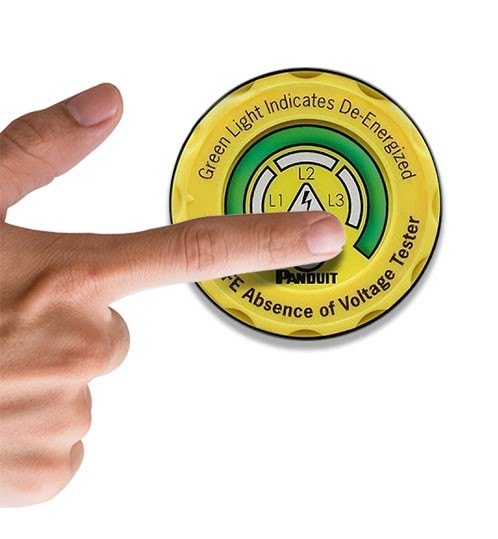
Through years of development and collaboration with industry groups, the team was able to reach proof of concept and eventually create an absence of voltage tester that performed exactly as they hoped. All that was left was for the new AVT product category to be defined in an industry-standard and for the safety requirements to be published.
In 2016, UL published the first-ever AVT safety and listing requirements in UL 1436.
In 2017, the VeriSafe AVT was released and now offers workers an easy, safer way to get positive proof the system is de-energized before accessing or working on electrical equipment.
Now, all it takes is a press of the test button, and a moment to wait for the green light. And, as everybody knows, green means go.

The Power to Provide Positive Proof
With over 60 years of infrastructure experience, our team recognized the need for a safer – and easier – way to verify a circuit is de-energized. The change our engineers had in mind was to eliminate exposure to live circuits – either by accident or during an absence of voltage test. That would mean no more hand-held meters, and no need to interact with known-live circuits as part of the test.
The idea was a self-powered, self-testing, permanently-mounted device that would emulate the traditional handheld testing process, without the need to open cabinets. Being self-powered and capable of testing its own connections, the AVT would be the first of its kind to give positive proof the circuit was de-energized.
Like many breakthroughs, it seems perfectly logical after the fact – why did it take so long?
Thorne & Derrick
T&D are Specialist Distributors to UK Distribution Network Operators (DNO’s), NERS Registered Service Providers, ICP’s and HV Jointing Contractors of an extensive range of LV, MV & HV Jointing, Earthing, Substation & Electrical Equipment – this includes 11kV/33kV/66kV joints, terminations and connectors for both DNO and private network applications.
Contact our UK Power Team for competitive quotations, fast delivery from stock and technical support or training on all LV-HV products.
Key Product Categories: Duct Seals | Cable Cleats | Cable Glands | Electrical Safety | Arc Flash Protection | Cable Jointing Tools | Cable Pulling | Earthing | Feeder Pillars | Cable Joints LV | Joints & Terminations MV HV
➡ Read: Isolate 99.999% Of Electrical Risks With Verisafe From Panduit

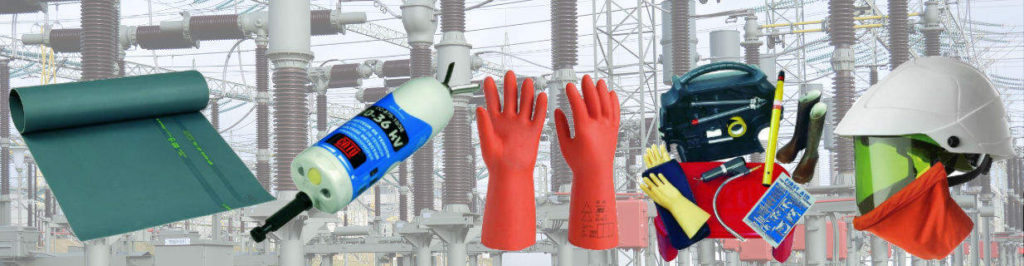
Pfisterer EST145 Dry Outdoor Substation Cable Terminations
October 4th, 2019
Dry Type Terminations for Substations
Thorne & Derrick are Main Distributors & Stockists for the Pfisterer range of Medium Voltage and High Voltage Power Products including Connex Plugs, Cable Jointing Tools, Sicon Connectors, Surge Arresters and Electrical Safety Equipment.
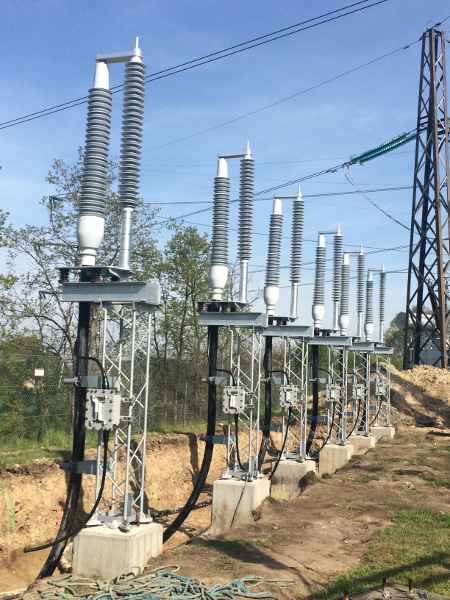
Image Courtesy: Emil Zlatev (Trainer & EHV Extra High Voltage Cable Jointer At Pfisterer)
Pfisterer MV HV cable plugs and terminations are suitable for all voltage levels and applications where medium or high voltage power cables must be reliably connected, terminated and distributed within the electricity supply industry.
The self-supporting Pfisterer IXOSIL EST SUB design replaces conventional oil-filled or gas-filled outdoor terminations in substations. The supporting elements can be installed seperately on the substation steel structure while the cable termination can be fitted on the ground and then mounted in the supporting elements afterwards.
Further Reading
-
132KV Termination Using Pfisterer IXOSIL EST Sub Self Supporting Termination
-
PFISTERER Training Courses – Cable Jointer Training For MV HV CONNEX Connectors

JOINTERS BLOG
Subscribe now to our POWER NEWSLETTER– a monthly email circulation packed with news, projects, videos, technical tips, training information, promotions, webinars, career opportunities and white papers.
Includes access to our popular JOINTERS BLOG with contributions from utility professionals, linesmen and cable jointers working on MV HV EHV cables and overhead lines typically at 11kV, 33kV, 66kV and up to 132kV.
15,000+ Subscribers. ➡

Cable Cleats & Safe Cable Installations for the Wind Energy Industry
October 2nd, 2019-
Republished with the kind permission of Toni Dring Marketing Executive at Ellis Patents
-
(World Leaders in the Design & Manufacture of Cable Cleats)

Short Circuit Cable Cleats | Safe Cable Installations | LV MV HV
uploaded by Chris Dodds – Thorne & Derrick Sales & Marketing Manager
Ellis Patents
With concerns over climate change and fossil fuel security, the world is seeing a significant shift toward renewable energy sources. By 2040, it is expected that renewables could account for 30% of the world’s electricity supply.
Here in Europe, that could be as high as 50%.
One area of renewables which has seen significant growth and development is wind energy.
In the last 30 years, both onshore and offshore wind capacity have seen huge growth and the technology has developed at a fast pace. In fact, the latest turbine models produce 25,000 times as much power compared to the turbines used in the first ever commercial offshore wind farm 30 years ago.

The development of offshore wind turbines over the last 25 years is immense. (Graphic: Ørsted A/S formerly DONG Energy)
New Highs & Lower Costs
The cost of producing energy from wind is falling and relative to other sources, offers a viable renewable alternative. The cost of offshore wind has plummeted by almost 30% in the last two years and when compared to the future Hinkley Point C nuclear power station, costs just £40/MWh versus Hinkley’s expected £92.50.
This is an international trend too.
Globally, the portfolio of offshore wind projects rose 15% in 2019. Whilst Europe remains the largest single region, with significant installed capacity in the UK, Denmark, Germany and the Netherlands, there are significant project pipelines across North America & Asia.

As a world leader in the design and manufacture of cable cleats, Ellis Patents has been involved in ensuring safe cable installation practice on major windfarm projects across the globe. We’ve worked closely with operators, OEMs, EPC companies, cable manufacturers and cable installers, to ensure that we offer the best solution for their cable cleat requirements to safely retain and restrain LV MV HV cables in the event of a short circuit situation.
IEC 61914
As always, Ellis Patents greatest concern is to ensure that cable cleats are correctly specified to cope with the short circuit withstand requirements of the project. The formula below, taken from the International standard IEC 61914, can be used to calculate the forces between two conductors in the event of a three phase fault:
Ft = 0.17 x ip2 / S
Where:
Ft = force in Newton/metre (N/m)
ip = peak short-circuit current in kiloamps (kA)
S = distance between the centrelines of the conductors in metres (m)
Once Ft, in N/m, has been determined then the force for each potential cable cleat can be calculated. You can learn more about correctly specifying cable cleats here.

Cable Cleats IEC61914
When it comes to wind farm projects, there are often other considerations in addition to the usual short circuit concerns;
- High Axial Requirements
When installing cables in the turbine tower, cable weight and the corresponding axial force on the cable cleat must be considered. By design, some cable cleats offer a greater axial load capability than others and therefore lend themselves more favourably to vertical installations.
Ellis Patents has the most extensive range of cable cleat designs on the market and as such, has a range of offerings suitable for vertical installations from stainless steel to polymeric products. With onsite facilities, we can offer testing to specific project requirements in addition to the IEC guidelines.
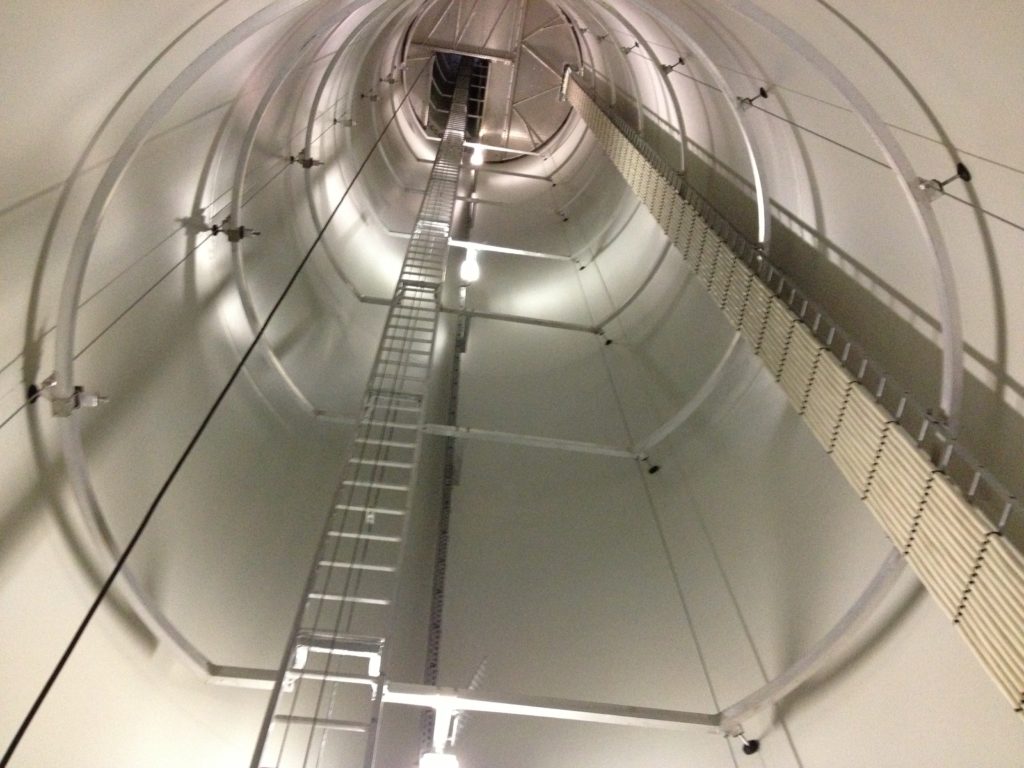
Inside Wind Turbine Tower. Image: Western Technology inc.
- Restricted Installation Space & Installation Access
On a range of projects, installation space can be crucial. For wind farms, this could be an issue in the nacelle or inside the tower. No two Ellis Patents cable cleats look the same, offering the client a range of choices for installations.
For example, the Ellis Vulcan+ cleat has a very narrow design, meaning space between cable runs can be minimised. Equally important, the Ellis Emperor cleat offers a low profile design where available headroom is an issue.

Ellis Patents Vulcan Cable Cleats

Ellis Patents Emperor Cable Cleats
- Cable Routing
On offshore windfarms in particular, large High Voltage (HV) cables have to take lengthy and complex routes to provide electricity distribution at 33kV and 66kV. In locations such as the Modular Offshore Grid (MOG), similar to large offshore substations, installers require an efficient, safe and cost-effective method to install their cables.

Belgian transmission system operator Elia has awarded Dredging International, part of the DEME Group, with a contract for the subsea cable installation for the Modular Offshore Grid (MOG) in the Belgian part of the North Sea. The installation scope includes the supply, installation and maintenance of the submarine power cables. The contract has been valued to approximately EUR 130 million. More info via offshoreWIND.biz.
Ellis Patents can offer Cable Guide Clamp – a product specifically designed for an offshore project. This cable support product offers a dual function as both a guide, eliminating the need for rollers, and a clamp. Designed with ease of installation at its core, Cable Guide Clamp is manufactured from a low friction polymer and offers a trumpet-like appearance to reduce contact surface area with the cable during pulling.

The wind sector will continue to grow, with a worldwide pipeline of projects already in the wings.
The development of floating wind turbine technology will also open up opportunities for deep-water areas, where fixed turbines are not feasible.
With an international network of distributors, Ellis cable cleats are tried, tested and trusted to safely secure cable on the world’s largest LV MV HV power and infrastructure projects. Please contact us for more information.
Further Reading
- Ellis Patents Cable Cleats & Cable Basket Tray for Securing High Fault Level Cables
- Cable Cleats Help Tackle Copper Cable Theft on Railways
- Stainless Steel Cable Cleats v Cable Ties – The Myths Debunked By Ellis Patents
- The Importance of Cable Cleats on Multi-Core Cables – Video
- Understanding the Importance of Cable Cleats in Offshore Industries
References
The Guardian, 2019
Renewables UK, 2019
OVO Energy, 2018
BBC, 2019
Bloomberg, 2017
LV MV HV Jointing, Earthing, Substation & Electrical Eqpt
POWER Professionals Join Here TODAY ▼
https://www.powerandcables.com/landing-page/
Subscribe today to our POWER NEWSLETTER & JOINTERS BLOG – a monthly email circulation packed with news, projects, videos, technical tips, training information, promotions, webinars, career opportunities and white papers

LV, MV & HV CABLE JOINTING, EARTHING, SUBSTATION & ELECTRICAL EQPT
Thorne & Derrick are Specialist Distributors to the UK and international Offshore Wind & Renewable industry to provide safe and reliable LV HV Electrical Cable & Power Distribution Systems – we are highly customer responsive and absolutely committed to providing a world-class service.
We have an International Distribution Agreement with Nexans Power Accessories UK to supply their Heat Shrink and Cold Applied ranges of 11kV/33kV/66kV joints and terminations and Euromold brand of separable connectors.
Since 1985, we have established an international reputation based on Service, Integrity and Trust – contact us.
t: 0191 410 4292 | e: [email protected] | www.powerandcables.com
We provide expert technical support and supply from a multi-million pound stock holding:
- Cable Joints, Terminations & Connectors Earthing & Lightning Protection
- Cable Accessories – Lugs, Glands
- Circuit Protection & Fuses
- Cable Cleats & Clamps Electrical Safety Equipment
- Cable Pulling & Laying Equipment
- Arc Flash Protection & Clothing
- Cable Duct Seals & Transit Systems Surge Arresters & Bushings