Blog
ATEX & Cold Shrink | Certification & Safe Working In Zone 1 / Zone 2 Hazardous Areas
March 21st, 2019
Oil | Gas | Petrochemical | Hazardous Area Industries & Cable Accessories | ATEX
3M Cable Accessories In Relation To The ATEX 94/9/EC Directive
The ATEX Directive covers a large range of electrical equipment, potentially including equipment used on fixed offshore platforms, in petrochemical plants, mines, flourmills and other areas where a potentially explosive atmosphere may be present – commonly referrred to as “hazardous areas” and categorised by Zone (Zone 0, 1 or 2) according to the degree of explosion risk.
In very broad terms, there are 3 pre-conditions for the ATEX Directive to apply to the equipment:
a) must have its own source of ignition
b) be intended for use in a potentially explosive atmosphere (air mixtures); and
c) be under normal atmospheric conditions
When used as directed, Cold Shrink cable accessories do not have a source of ignition – they are installed “cold” without requirement for “naked flames or hot-work permit applications for safe jointing, termination and abandonment of LV MV HV cables in hazardous area locations.
The firing of an explosive atmosphere may be caused by a short circuit, but when
installed according to 3M Electrical instructions, these products are safe against short circuits.
To conclude, 3M Cold Shrink cable accessories are not within the scope of the ATEX directive.
Conclusion
Cold Shrink cable accessories are not covered or categorised according to ATEX or any other notified body – they are effectively “non-sparking” and when installed in accordance with the manufacturers installation instructions, in this case 3M Electrical, do not pose a potential explosion risk.
In this instance, a “Statement of Exclusion” applies to cable accessories with respect to the ATEX Directive.
Cold Shrink Cable Accessories
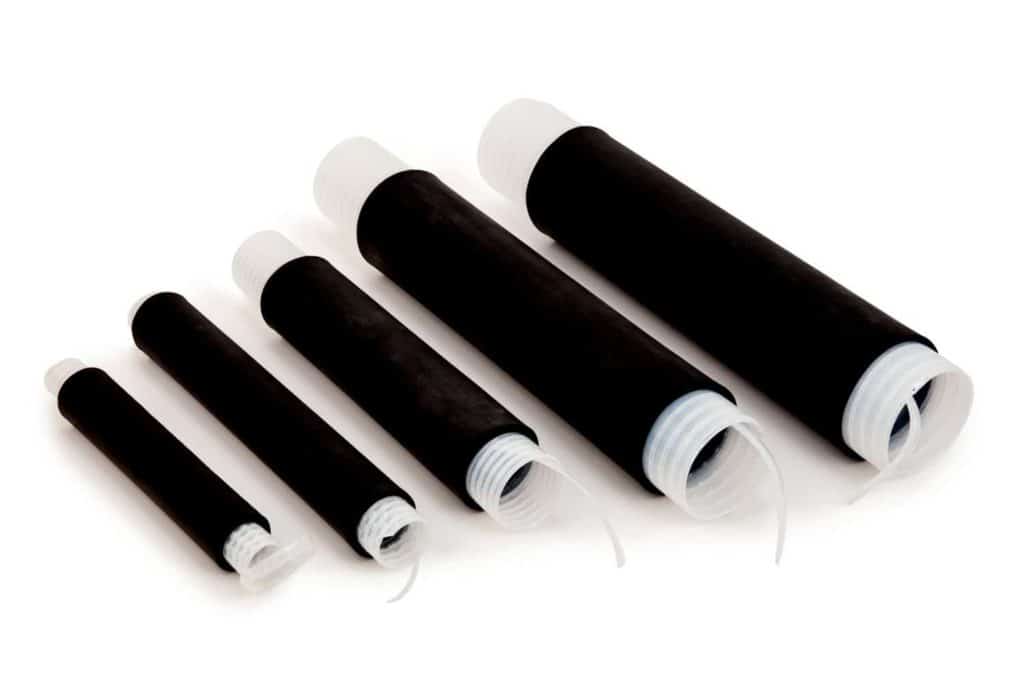
LV, MV & HV Jointing, Earthing, Substation & Electrical Eqpt
Thorne & Derrick International are specialist distributors of LV, MV & HV Cable Installation, Jointing, Duct Sealing, Substation & Electrical Equipment – servicing UK and global businesses involved in cable installations, cable jointing, substation, overhead line and electrical construction at LV, 11kV, 33kV and EHV.
THORNE & DERRICK Product Categories: Duct Seals | Cable Cleats | Cable Glands | Electrical Safety | Arc Flash Protection | Cable Jointing Tools | Cable Pulling | Earthing | Feeder Pillars | Cable Joints LV | Joints & Terminations MV HV

Pfisterer | Nexans Euromold | Prysmian | Cable Joints & Terminations MV HV
Powerstar Partners With Renowned Specialist Distributor Thorne & Derrick
March 19th, 2019
Smart Transformers | 415/11kV | Manufactured In UK
-
uploaded by Chris Dodds - Thorne & Derrick International Sales & Marketing Manager
Transformers
415V 11kV
Powerstar, UK manufacturer of leading-edge smart energy solutions, has announced a new partnership with Thorne & Derrick International to help bolster its smart transformers offering for energy conscious businesses, allowing them to improve their existing medium/high voltage (MV HV) infrastructures, maximise efficiencies and reduce electricity consumption and costs with a solution that enables real-time asset monitoring to assess performance and operation.
As one of the largest specialist distributors and worldwide exporters of LV MV HV Cable Installation, Jointing, Substation & Electrical Eqpt, Thorne & Derrick distribute in excess of 100,000 products from over 50 manufacturers globally.
The partnership will facilitate knowledge sharing between the two companies and enable them to collaboratively promote the range of fit-for-purpose solutions and services available to I&C customers, such as Powerstar SO-LO range of 11kV transformers, a super low loss amorphous core smart transformer with remote monitoring capabilities.
Ideal for a wide range of organisations in both the private and public sector, including manufacturing, petrochemical, telecoms, retail, healthcare and leisure, Powerstar SO-LO provides a cost-effective way to reduce energy costs by maximising efficiencies on the HV electrical power side with a super low loss amorphous core.
Additionally, the remote monitoring functionality, which brings LV – 11kV distribution transformers in line with the modern expectations of connected technology, allows constant monitoring of the asset’s performance, helping to avoid critical errors and avoid operational downtime. This can be particularly beneficial for businesses who own or operate solar (PV) where any downtime can have costly ramifications.
The collaboration will be underpinned by the exemplary customer service offered by both companies to support and inform organisations on how they can further improve their HV infrastructure through customised recommendations such as the implementation of smart transformers, and other complementary services, as well as technologies, that are ‘Industry 4.0’* ready.
Dr. Alex Mardapittas, Chief Executive Officer at Powerstar, commented: “We are proud to partner with the renowned HV Electrical Equipment Distributor Thorne & Derrick. The partnership will heighten the visibility of smart transformers and enable a wide variety of organisations to learn how they can modernise their HV infrastructure.”
Chris Dodds, Sales and Marketing Manager at Thorne & Derrick, added: “Powerstar SO-LO transformers are UK manufactured, online, smart technology transformers with amorphous core and integrated remote monitoring capabilities – with reduced core losses by up to 75% when compared to traditional CRGO transformers this range of LV/11kV transformers improve and inform scheduled maintenance and minimise outage risks associated with grid supply voltage.”
“Thorne & Derrick look forward to developing existing relationships and presenting the full portfolio of Powerstar Transformers up to 11kV to new clients.”
To find out more about Powerstar, please visit https://powerstar.com.
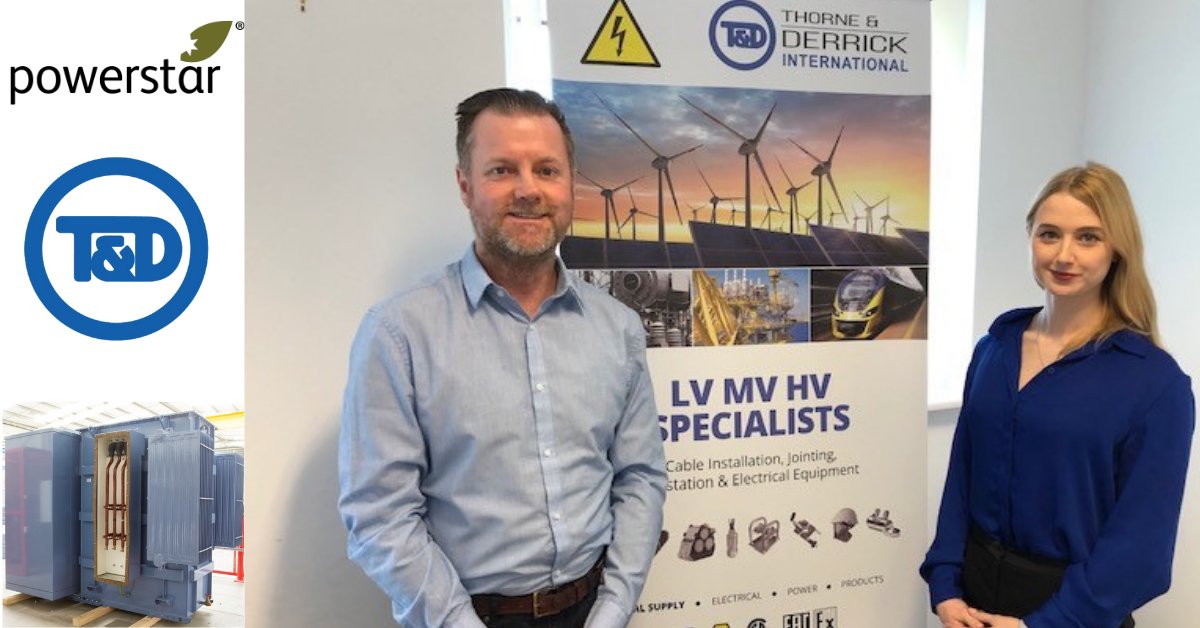
Photo caption: (L-R) Chris Dodds of Thorne & Derrick meeting with Lindsay Brownless (Head of Commercial and Marketing at Powerstar) recently at T&D’s offices in Durham, UK.

Manufactured & Designed In UK | Short Lead Time | Transformers LV 11kV
THORNE & DERRICK SPECIALIST ELECTRICAL DISTRIBUTOR
The 11kV Specialists
Thorne & Derrick distribute the most extensive range of 11kV Cable Installation & Electrical Distribution Equipment – we service UK and international clients working on underground cables, overhead lines, substations and electrical construction at 11kV and up to and EHV transmission and distribution voltages.
- Key 11kV Products: MV-HV Cable Joints & Terminations, Cable Cleats, Duct Seals, Cable Transits, Underground Cable Protection, Copper Earth Tapes, Cable Jointing Tools, Feeder Pillars, Cable Ducting, Earthing & Lightning Protection, Electrical Safety, Cable Glands, Arc Flash Protection & Fusegear.
- Distributors for: 3M Cold Shrink, ABB, Alroc, Band-It, Catu, Cembre, Centriforce, CMP, Elastimold, Ellis Patents, Emtelle, Furse, Lucy Zodion, Nexans Euromold, Pfisterer, Polypipe, Prysmian, Roxtec.

LV – Low Voltage Cable Joints, Glands, Cleats, Lugs & Accessories (1000 Volts)

MV HV – Medium & High Voltage Cable Joints, Terminations & Connectors (11kV 33kV EHV)

Cable Laying – Underground Cable Covers, Ducting, Seals & Cable Pulling Equipment
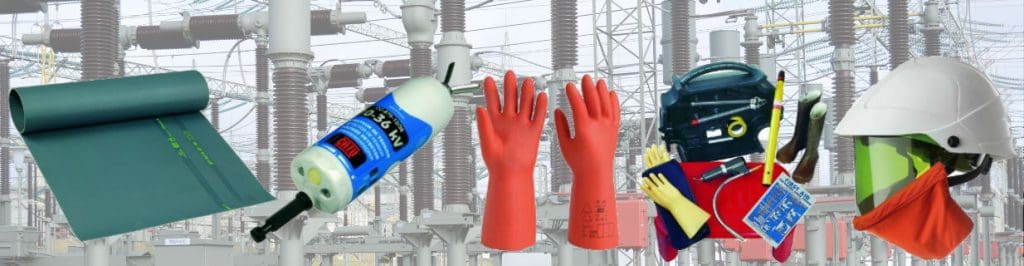
T&D, CATU Electrical Safety & Arc Flash Protection Specialists for SAP’s, Linesmen, Jointers & Electrical Engineers – Largest UK Stockist
Ellis Patents Cable Cleats & Cable Basket Tray for Securing High Fault Level Cables
March 15th, 2019
Ellis Patents Basket Tray Clips
-
uploaded by Chris Dodds - Thorne & Derrick Sales & Marketing Manager
Ellis Patents Cable Cleats
Ellis Patents Basket Tray Clip
Ellis Patents, the leading manufacturer of cable cleats and clamps, have launched a cable basket tray clip that provides a strong and reliable means of securing low and high voltage cables with high fault levels to the increasingly popular cable management solution when used in conjunction with its heavy duty trefoil cable cleats – manufactured in Type 316L Stainless Steel for excellent corrosion resistance in industrial and hazardous area installations including medium/high voltage substations.
The Ellis Patents cleat clip means cable basket tray can now compete with traditionally stronger cable management solutions such as cable ladder and cable tray on this kind of cable installation.
Richard Shaw, managing director of Ellis Patents said: “the idea for the Ellis Patents clip came about while we were carrying out testing with Cablofil to look at the performance of its basket tray in short-circuit scenarios.

“At the time there was no proven means of safely securing heavy duty cleats to basket so that they would be guaranteed to stay in place in the event of a short-circuit. And with demand for basket tray growing significantly we decided to look at a way of delivering a fixing accessory that would do exactly this.”
The resulting product, the basket tray clip is manufactured in 316L stainless steel and has been tested for use with Ellis Patents Vulcan, Emperor and Alpha trefoil cable cleats.
The cable cleat clip simply snaps in to position on the basket wires and the cable cleats are then secured to it using a standard set screw and flange nut.
| Part Number | Width | Length | Depth | Fixing Hole Clearance | Weight |
| Ellis Patents 91-BTC01 | 37mm | 35mm | 13mm | 10mm | 30g |
Cable Basket Tray Installation Images
1)  |
2) |
3) |
4) |
5) |

LV, MV & HV Jointing, Earthing, Substation & Electrical Eqpt
Thorne & Derrick International are specialist distributors of LV, MV & HV Cable Installation, Jointing, Duct Sealing, Substation & Electrical Equipment – servicing UK and global businesses involved in cable installations, cable jointing, substation, overhead line and electrical construction at LV, 11kV, 33kV and EHV.
THORNE & DERRICK Product Categories: Duct Seals | Cable Cleats | Cable Glands | Electrical Safety | Arc Flash Protection | Cable Jointing Tools | Cable Pulling | Earthing | Feeder Pillars | Cable Joints LV | Joints & Terminations MV HV

Cable Cleats Help Tackle Copper Cable Theft on Railways
March 15th, 2019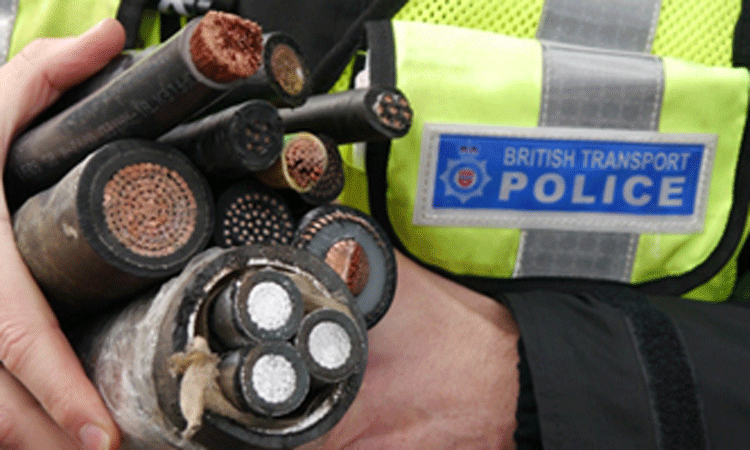
Cable Theft – Photo Credit: Network Rail
-
uploaded by Chris Dodds - Thorne & Derrick Sales & Marketing Manager
Cable Cleats
Crime Busting Cable Cleats Combat Copper Theft
At its peak, cable theft was costing the UK economy £770 million per year but now cable cleat and clamp manufacturer, Ellis Patents, has designed and developed a tamper proof rail cable cleat to beat the thieves.
The Ellis Patents cable cleat design means thieves will not have the time to remove cables before the police arrive.
Reports earlier this month highlighted a dramatic reduction in the incidents of copper earthing and cable thefts from UK railways, and now cable cleat manufacturer, Ellis Patents claims to have developed a means of completely eradicating the problem of rail cable theft.
At its peak, cable theft was estimated to cost the UK economy £770 million per annum.
And even now, after a major crack down by the British Transport Police (BTP), which has been aided by £5 million of Home Office funding, there were 2,700-hours of delays and compensation payments of over £12.7 million in the 12-months to April 2013.
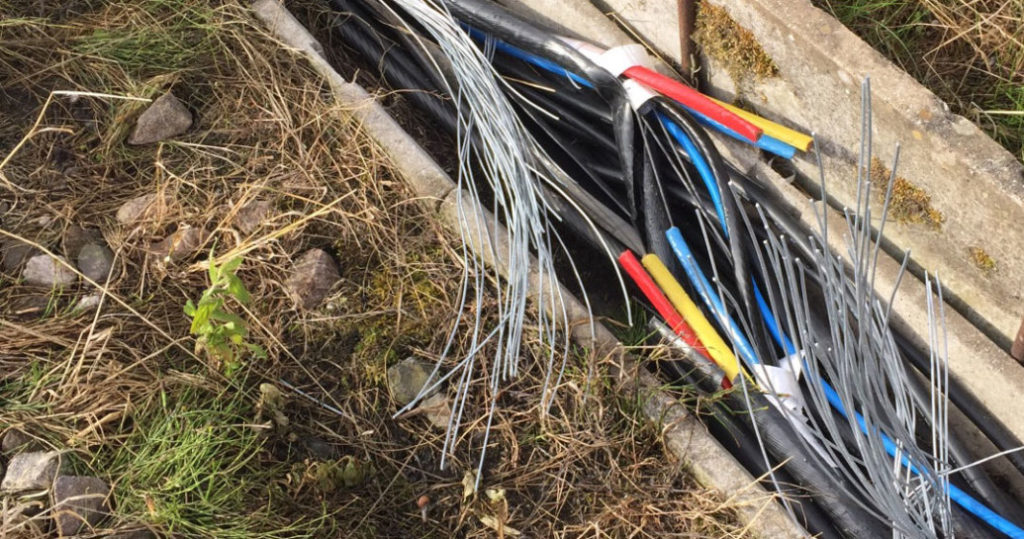
UK Rail Industry: thieves target signalling cables, overhead power lines and even metal fences to sell for scrap.
Ellis Patents, the global leader manufacturer of cable cleats, has designed and developed a tamper proof rail cable cleat that its Managing Director, Richard Shaw says will stop thieves in their tracks.
“The biggest issue with this crime is the ease and speed with which thieves are able to disconnect and remove long lengths of copper cable,” he said.
“The BTP action has aimed to cut off the route to market by banning cash payments by scrap metal dealers in England and Wales and increasing fines for offences under the Scrap Metal Dealers Act, but while the crime remains relatively simple the problem will remain.”
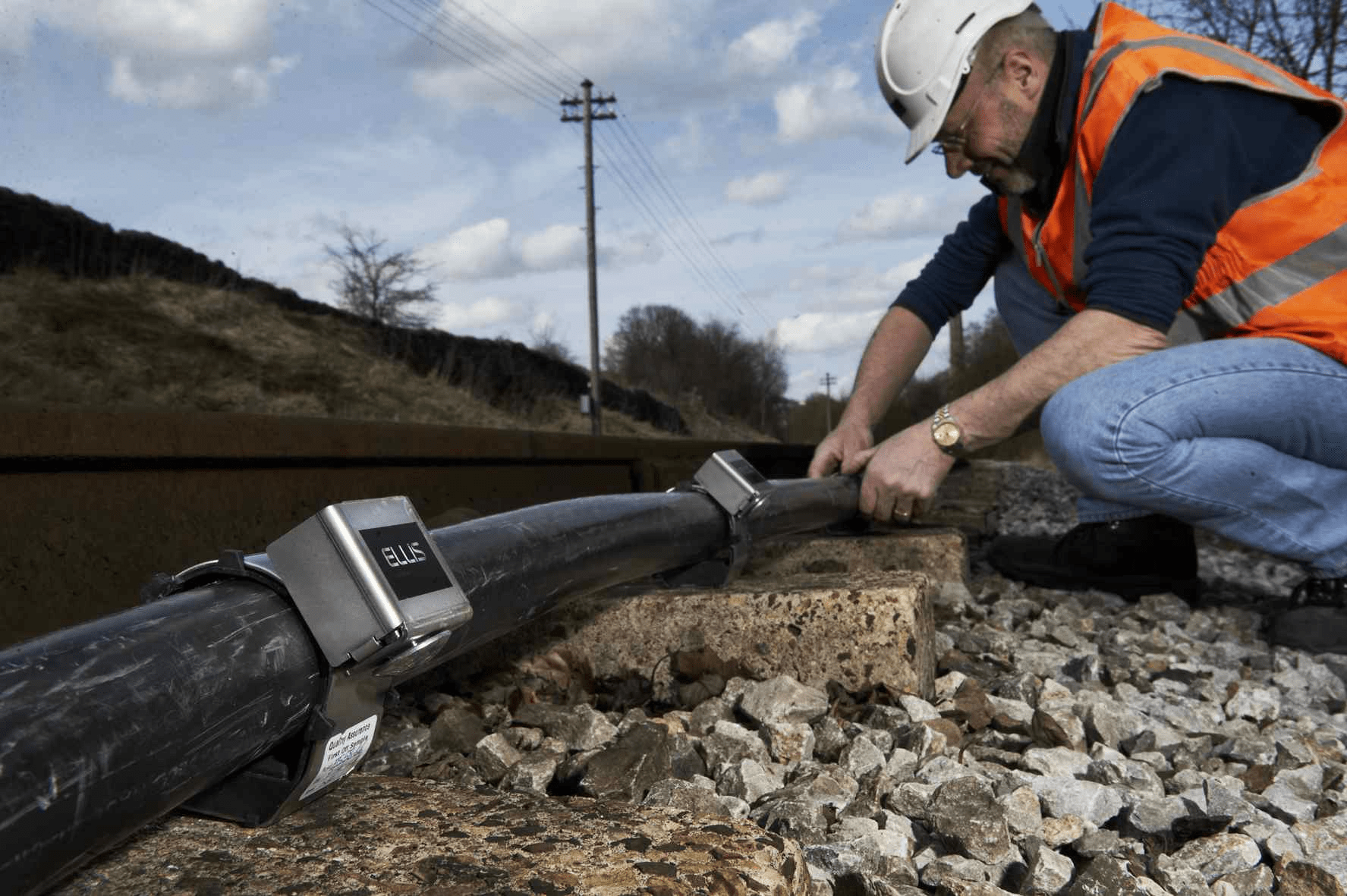
Ellis Patents Tamper Proof Cable Cleats
“Ellis’ tamper proof cable cleat is designed to make removing copper cables nigh on impossible. Its box design makes the job of detaching the cable cleat from the cable it is securing laborious and time consuming, while the requirement to fit the cleats at regular intervals along cable lengths means thieves will simply not have the time to remove cables before the police arrive.”
“Quite often the best solution to a problem is the simplest and our tamper proof cable cleat is certainly a simple, but effective deterrent,” added Richard. “By delivering a great level of security, both in terms of the strength and number of the fixings, we are confident that it will help bring an end to copper cable theft.”
Further Reading
- Ellis Patents No-Bolts Cleats Improve Electrical Safety Of Rail Cable Installations
- Ellis Patents Pegasus Cable Hangers For Rail Cable Support
LV, MV & HV Jointing, Earthing, Substation & Electrical Eqpt
Thorne & Derrick International are specialist distributors of LV, MV & HV Cable Installation, Jointing, Duct Sealing, Substation & Electrical Equipment – servicing UK and global businesses involved in cable installations, cable jointing, substation, overhead line and electrical construction at LV, 11kV, 33kV and EHV.
THORNE & DERRICK Product Categories: Duct Seals | Cable Cleats | Cable Glands | Electrical Safety | Arc Flash Protection | Cable Jointing Tools | Cable Pulling | Earthing | Feeder Pillars | Cable Joints LV | Joints & Terminations MV HV
Stainless Steel Cable Cable Cleats v Cable Ties – The Myths Debunked By Ellis Patents
March 15th, 2019
-
uploaded by Chris Dodds - Thorne & Derrick Sales & Marketing Manager
Thorne & Derrick are Distributors for Ellis Patents, the world-leading UK manufacturer of cable cleats in stainless steel, aluminium and nylon for retaining, supporting and cleating LV-HV Power Cables ; this includes 11kV-33kV medium voltage (MV) cables capable of generating destructive short-circuit fault currents.
T&D presents a Guest Blog from Ellis Patents Managing Director Richard Shaw outlining the differences between stainless steel cable cleats and cable ties.
Ellis Patents are leading manufacturers of cable cleats and are technical experts in short circuit protection.
Claims have recently begun to emerge from certain quarters that imply stainless steel cable ties can be placed on an equal footing with stainless steel cable cleats.
Amongst the claims being made are:
- “Metal ties actually provide as much protection in the event of a short circuit as cleats.”
- “Stainless steel cable ties are less expensive on average than cable cleats.”
- “Stainless steel cable ties provide an equal or better level of risk mitigation at lower cost and quicker time to install.”
My problem with these assertions is that although stainless steel cable ties and cable cleats are complementary products, the area of overlap is extremely small – and when explored fully, it’s immediately apparent that it’s an area of considerable risk to electrical infrastructure.
What this means is that the kind of claims being made about stainless steel cable ties are, at best, extremely misleading.

Cable Cleats | Ellis Patents Vulcan | Alpha | Phoenix | Flexi-Strap | Triplex Cable Cleats | LV MV HV 11kV 33KV EHV Cables
Cleats v Ties
Cable cleats are made in a variety of materials to accommodate a wide range of installation conditions and locations.
Ellis Patents product ranges alone feature stainless steel, mild steel, extruded aluminium, cast aluminium and a wide range of polymers. Many Ellis Patents cable cleats combine metals and polymers to deliver the best solution.
Cable cleats also come in a number of different varieties. Again using our product range as an example, Ellis Patents supply cable saddles, cable straps, flexible cable cleats, hinged cable cleats and even the most straightforward of cable clamps.
Ellis Patents Stainless Steel Cable Cleats – cable cleats available for single, multiple, trefoil and bundled cables.

Ellis Patents Cable Cleats
In contrast, a stainless steel cable tie is just that – a cable tie available solely in stainless steel. Creating an analogy about the two products highlights the scale of the differences between them perfectly: a stainless steel cable tie manufacturer may claim their wrench is as good, if not better, than the cable cleat manufacturer’s.
But the cable cleat manufacturer retorts by pointing out they don’t just have one wrench, they have an entire tool kit.
Cable Cleat Price
Before even considering the question of price, we first have to decide which of the many types of cable cleat we should compare the stainless steel cable tie with.
In the examples I’ve seen, the price comparisons between the two tend to pit cable cleats at the upper end of their range against cable ties.
While this may seem unfair, the comparison has been made so let’s see how it stands up to scrutiny.
First, it’s obvious that a single stainless steel cable tie will be cheaper than what is the strongest of stainless steel cable cleats – after all, you get what you pay for.
But even so, would the entire cost of both product and installation be cheaper if you used cable ties rather than cleats? It may surprise you to discover that the answer is almost certainly no – but why?
When considering the strongest stainless steel cable cleat it is ludicrous to try and equate it to a single stainless steel cable tie. Yes, both products are made from similar material, but there is, of course, a lot more stainless steel in a cleat than a tie.
Therefore, in order to make a direct comparison you need to consider the cross sectional area of the material being used – a calculation based on width, thickness and the number of times it is wrapped round the cables.
Cable ties are typically less than 20mm wide and less than 0.4mm thick and so have a cross sectional area of less than 8mm².
If the cable strap is wrapped round twice we have material with a maximum cross sectional area of 16mm² securing the cables. In comparison, a top of the range stainless steel cleat will have a cross sectional area of 100mm².
Harking back to simple physics, the ultimate tensile strength of a material is proportional to its cross sectional area – and that’s something you simply can’t argue with.
Using the information above, and all relevant supporting short circuit test data, if the calculated fault level for a system required the installation of an Ellis Emperor cable cleat every 300mm, it would come as a great surprise if the cost of the equivalent appropriate number of cable ties was less than the cost of the cleats – and that’s before you even take into account the time it would take to install them all.
Pictured: Ellis’ cleats undergo short circuit testing and are certified according to international standard IEC61914.
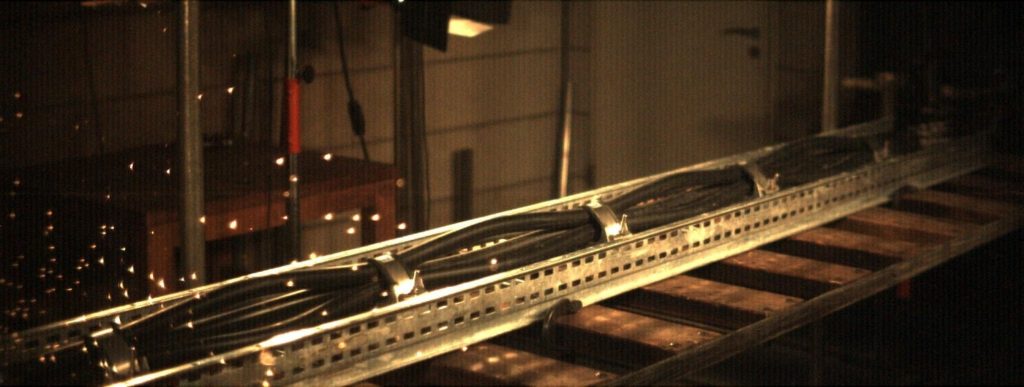
Short-circuit testing
The final point I’d like to address is short-circuit testing, and in particular the question of whether the data gathered from a test is transferable to a real life installation?
As far as cable cleats are concerned, the answer is usually yes. This is because, under fault conditions, a cable cleat constrains all the forces generated between the cables.
The mounting structure has no influence on the cleats performance and so it should perform at the level indicated on the short-circuit test certificate.
The situation is nowhere near as cut and dried when it comes to stainless steel cable ties – mainly because of the difference in fixing methods.
Typically there are three ways in which a cable tie is used to attach cable to ladder:
- The cable tie can be wrapped around both the cable and the rung.
- The cable tie can be installed using a mounting bracket, which fixes to the rung.
- The cable tie can be fed through perforations on the ladder rung if they are present.
Of these three methods, both option 1 and option 3 introduce significant variables that will have an impact on likely performance during a fault.
In both cases a foreign body is being introduced to the loop that contains the cable. As such everything from ladder material to rung profile; types of hole and sharpness of edges; and even surface finish and cable diameter can have an impact on the whole arrangement.
As such, it’s impossible to say that the result of a short-circuit test on a stainless steel cable tie is transferrable to the real world, unless the installation is identical to the testing set-up.
Of course, installation option 2 is more likely to deliver real-life performance that matches short-circuit testing performance for a cable tie.
But in this scenario both the cost of the parts required, and the installation time will increase significantly, making it even less competitive when the number of ties to cleats ratio is taken into account.
The Final Decision
What needs to remembered when considering the respective merits of both stainless steel cable cleats and cable ties is that the primary concern for all those involved in electrical cable installations should be safety.
In order for an electrical installation to be deemed safe, cables need to be restrained in a manner that can withstand the forces they generate, including those generated during a short-circuit.
Yes, both cable ties and cable cleats have their place in the specification picture. And yes, there is a minimal amount of overlap where it is feasible that an installer or specifier could choose one over the other.
But it is minimal, and the specification decision shouldn’t be made based on misleading claims aimed squarely at undermining the sales of a tried, tested and trusted solution.
All cable cleats designed and manufactured by Ellis Patents undergo a thorough testing program prior to launch, including short-circuit testing.
Even after launch, products are regularly short-circuit tested and will perform at the level on the relevant certification during a real life short-circuit scenario.
Not one of our installed Ellis Patents cable cleats has ever failed. Therefore, make sure you make the correct specification decision on your next electrical installation.
If you don’t the dangers posed by a short-circuit are plentiful – costly damage to cables and cable management systems, plus the risk to life posed by incorrectly installed live cables.”
LV, MV & HV Jointing, Earthing, Substation & Electrical Eqpt
Thorne & Derrick International are specialist distributors of LV, MV & HV Cable Installation, Jointing, Duct Sealing, Substation & Electrical Equipment – servicing UK and global businesses involved in cable installations, cable jointing, substation, overhead line and electrical construction at LV, 11kV, 33kV and EHV.
THORNE & DERRICK Product Categories: Cable Ties | Duct Seals | Cable Cleats | Cable Glands | Electrical Safety | Arc Flash Protection | Cable Jointing Tools | Cable Pulling | Earthing | Feeder Pillars | Cable Joints LV | Joints & Terminations MV HV