Blog
See How DEHN Provides Electrical Protection for Wind Turbines
March 29th, 2023
Electrical Protection For Wind Turbines
Electrical Protection for Wind Turbines
Lightning & Surge Protection by DEHN
Ensure smooth operation and protect investments with lightning and surge protection safety equipment from DEHN.
Committed to the protection of workers and material assets, Thorne & Derrick together with DEHN can offer electrical protection specifically for wind turbines with a range of innovative products.
Thorne & Derrick provide an extensive range of electrical safety equipment including insulating gloves, voltage detectors, insulating matting and portable earthing to ensure worker safety when carrying out maintenance on LV-HV switchgear, substations, cables and electrical equipment.

Electrical Safety Products for LV MV HV Cables, Conductors, Substations & Earthing
Secure profit on your investment
The feed-in remuneration for renewables is sinking worldwide and putting the wind branch under increasing pressure. To ensure that investments in new wind turbines pay off in future, too, the top priority is to optimise the availability of the turbines. This prevents loss of revenue due to downtime and high service and repair costs.
Their height makes wind turbines particularly susceptible to destructive lightning events. If insufficient protective measures are taken, the risk of damage and downtime due to lightning is correspondingly high. An integrated lightning protection system is therefore a must.
It consists of external and internal lightning protection, earthing and equipotential bonding.
Take the safe option and entrust the globally recognised specialist DEHN with your lightning and surge protection. Our high-quality and durable products protect turbines on all continents, from the foundations to the rotor blades. Take advantage of our services and make quicker and verifiable progress. We can assist you by, for example, conducting risk analyses, creating bespoke protection concepts and product solutions, or conducting system tests in our accredited test centre.
Developing lightning protection zone concepts with expertise
To secure the availability of wind turbines, the lightning protection zone concept aims to prevent lightning damage to mechanical and electric components. This is achieved by discharging lightning current and controlling surges.
The lightning protection zone concept for wind turbines described in IEC 61400-24 deals with the topic of lightning protection for wind turbines including detailed information on the selection of lightning and surge protection measures 1).
As the basis for creating a protection concept, a wind turbine is subdivided into lightning protection zones. One distinguishes here between external zones (LPZ 0A und 0B) and internal zones (LPZ 1, LPZ 2…n) 2). The external zones of a wind turbine – except the rotor blade – are determined by way of the rolling sphere method. The subdivision of the internal zones very much depends on the construction of the individual wind turbine and should be conducted accordingly.
Having laid down the relevant lighting protection zones, one can then define the necessary protective measures. It is advisable to create a lightning protection concept at the initial planning stage of a wind turbine to avoid later cost-intensive repairs and retrofitting. Long experience in the field of lightning and surge protection and the numerous system tests conducted for the wind industry have given DEHN the know-how to develop effective lightning protection systems for wind turbines. We will assist you in developing a lightning protection concept for your turbine consisting of external lightning protection, internal lightning protection, equipotential bonding and earthing.
1) IEC 61400-24 Lightning Protection of Wind Turbines
2) LPZ: Lightning Protection Zone
Always reliably informed with DEHNdetect
Lightning Current Measuring System Prevents Subsequent Damage
Damage resulting from a lightning strike does not necessarily lead to the immediate failure of the turbine. This means that lightning events often remain undetected, especially in the case of upward flashes where the initial long stroke current flowing is only a few 100 A and can be the main cause of damage, e.g., to the rotor blades.
Continued operation of the turbine can lead to serious subsequent damage. Lightning current measuring systems are often employed to detect lightning events and prevent subsequent damage. However, dangerous upward flashes are not always fully detected due to the low current flow of the measuring system. As well as impulse currents, DEHNdetect also reliably registers these dangerous long stroke currents, thus preventing expensive maintenance work and long downtimes. DEHNdetect identifies the following parameters:
- Impulse current [kA]
- Long stroke current [A]
- Load [C]
- Specific energy [MJ/Ω]
- Rise time [kA/μs]
Benefits:
- Prevention of subsequent damage
- Reduction of maintenance / repair costs
- Reduction of downtime
The system can be integrated in the IT infrastructure of the wind turbine via existing interfaces. The data can then simply be read out and managed using the available SCADA systems. If direct integration is not possible, the data can be transmitted to a cloud and evaluated via a web application. This makes it possible to monitor several turbines or even entire wind parks.
Invest in availability to secure the power supply of your turbine, today and tomorrow.
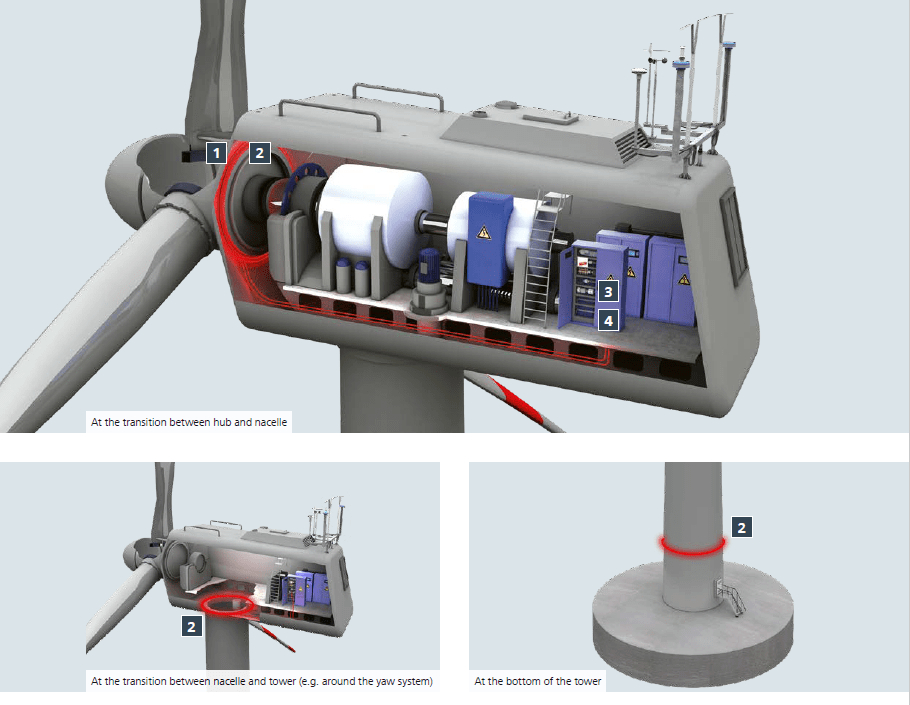
| DEHNdetect Components | ||
| 1 | 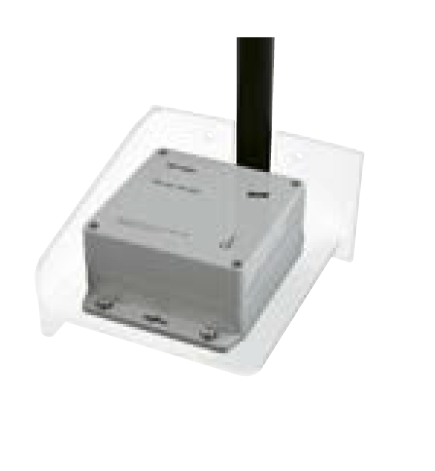 |
DEHNdetect BDU Detector for the wireless detection of lightning current in the rotor. |
| 2 | 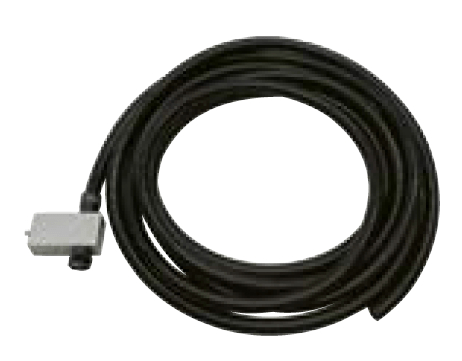 |
DEHNdetect ICC IMP Measuring coil long stroke current and impulse current. Measuring range 60 A to 250 kA. |
| 3 | 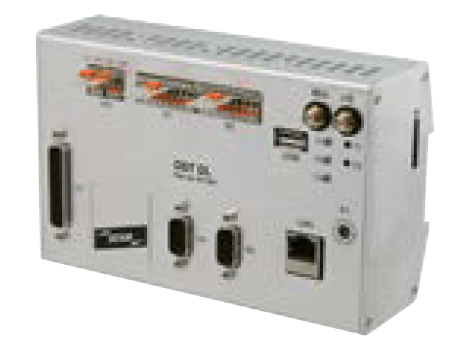 |
DEHNdetect DL Data logger with different interfaces for integration in IT systems. |
| 4 |  |
DEHNdetect integrator Processing of the measuring signals and transmission to the data logger. |
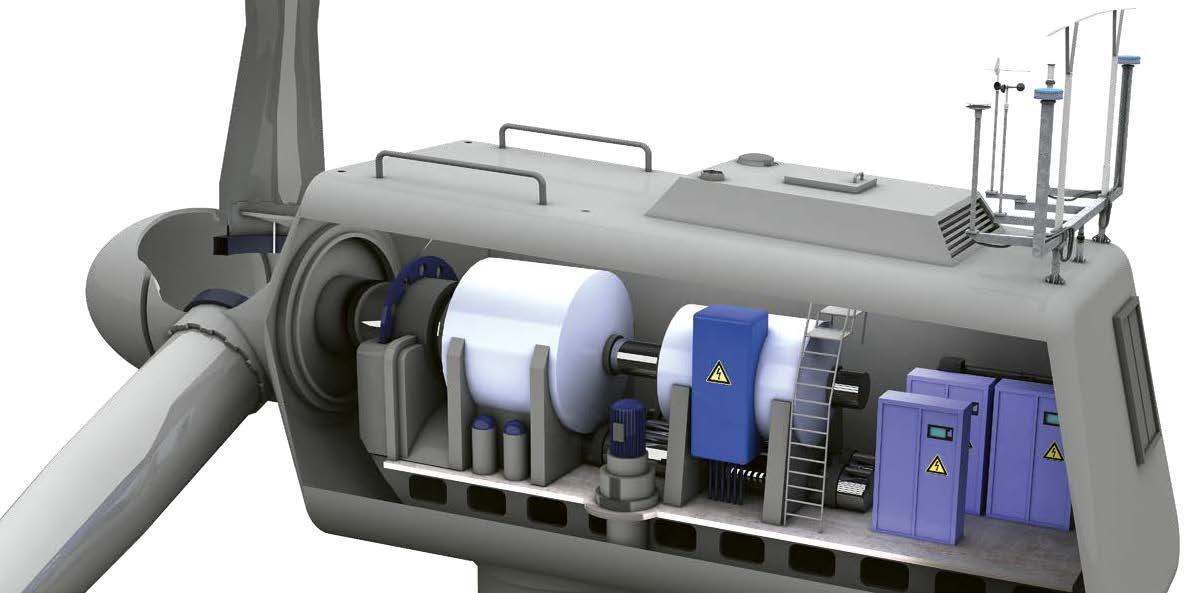
Lightning & surge protection
in the Wind Turbine nacelle
All lightning and surge protective devices by DEHN for application in wind turbines are vibration- and shock-tested in compliance with IEC 60068-2.
Power Supply Systems
By implementing coordinated surge protection measures for power supply systems, the risk of system downtime due to lightning currents and surges can be avoided. This increases the availability of the wind turbine in the long term.
Information Technology Systems
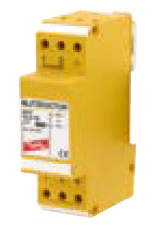
A consistent protection concept prevents damage to information and data systems. Condition monitoring is indispensable for operational safety and plant availablity. The monitoring unit for the condition-oriented monitoring of up to 50 BLITZDUCTORconnect arresters fulfils this task. Remote monitoring is also possible.
| Application | Type | ||
| Power Supply Systems | |||
| 1 | 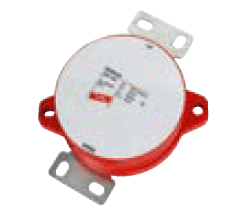 |
DEHNsolid | Rotor blade heating Coordinated type 1 SPD, with 200 kA discharge capacity and low voltage protection level (Up ≤ 2.5 kV). |
| 2 | 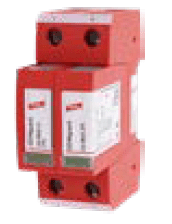 |
DEHNguard M TN CI | Pitch system, aircraft warning light Type 2 SPD, especially space- and cost-saving due to integrated backup fuse. |
| 3 | 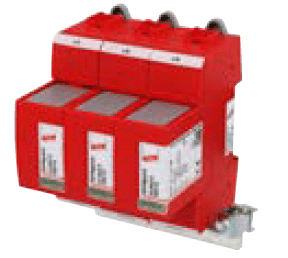 |
DEHNguard SE H 1000 VA FM + earthing clip |
Generator Type 2 SPD, further development of the “Neptune circuit” – Advantages: small dimensions save space and costs, improved protection level. |
| 4 | 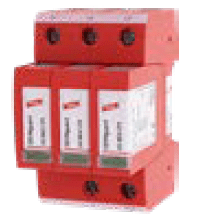 |
DEHNguard M TNC | Voltage supply
Type 2 SPD |
|
Information Technology Systems |
|||
| 5 |
|
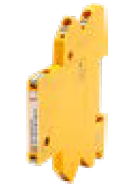
BLITZDUCTORconnect |
Protects signal, bus or control lines |
|
|
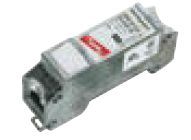
DEHNpatch Class E |
Universal type 2 SPD for Ethernet and structured cabling up to 250 MHz. |
|
|
|
BLITZDUCTOR VT |
Weather station |
|
|
|
DEHNrecord IRCM |
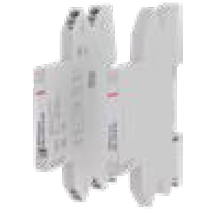
Condition monitoring unit for up to 50 BLITZDUCTORconnect arresters. With LED status indication and floating remote signalling contact. |
|
Safely discharging lightning current
External Lightning Protection
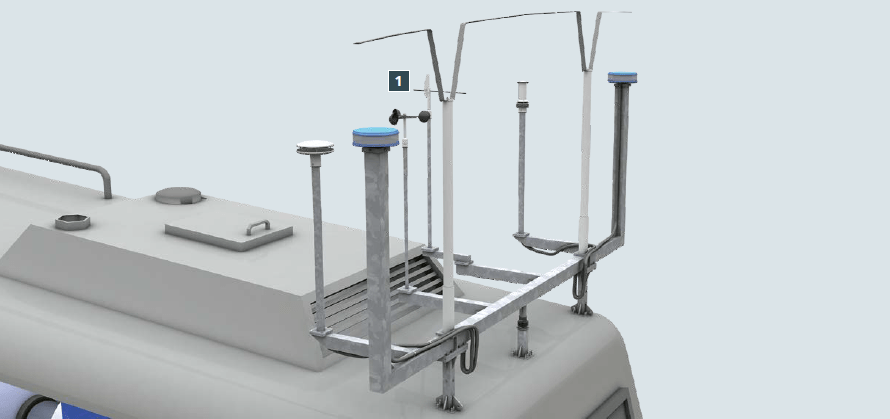
Safe interception and discharge of direct lightning strikes is paramount for the availability of a wind turbine. DEHN ensures that this is the case by testing components like the HVI power Conductor with a lightning current of 200 kA (10/350 μs) as stipulated in IEC 62561. The stainless steel design of the air-termination rods and connection elements fulfils stringent corrosion resistance requirements.
Earthing & Equipotential Bonding
Safe operation of electrical equipment and systems and a well-functioning lightning protection system require an earth-termination system designed according to IEC 61400- 24 1). Connection elements which are capable of carrying short-circuit current ensure the safe contact of the earth-termination system with metal parts of the foundations and the main earthing busbar. A high level of product quality safeguards long-term mechanical strength and corrosion resistance.
| Application | Type | ||
| External Lightning Protection | |||
| 1 |  |
HVI power Conductor (in supporting tube with air-termination rod)) |
Class of LPS 1 – 200 kA (10/350 μs) – High-voltage-resistant, insulated down conductor for maintaining the separation distance. |
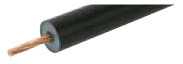 |
HVI power long Conductor (cut to length) |
Individual lengths, on request we can assemble your conductors with the appropriate connection elements. |
|
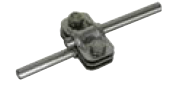 |
UNI disconnection clamp 200 kA | 200 kA lightning current carrying capability according to IEC 62561- 1 2), stainless steel V2A. |
|
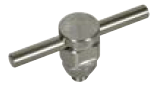 |
KS connector 200 kA | 200 kA lightning current carrying capability according to IEC 62561- 1 2), stainless steel V2A. |
|
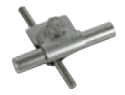 |
MV clamp 200 kA |
200 kA lightning current carrying capability according to IEC 62561- 1 2), stainless steel V2A. Lightning current carrying connection of the air-termination system and down conductor. |
|
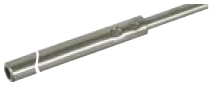 |
Tubular air-termination rod |
Safe interception of the flash charge in permanently corrosionresistant, stainless steel design. |
|
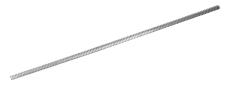 |
Air-termination rod StSt |
Safe interception of the flash charge in permanently corrosionresistant, stainless steel design |
|
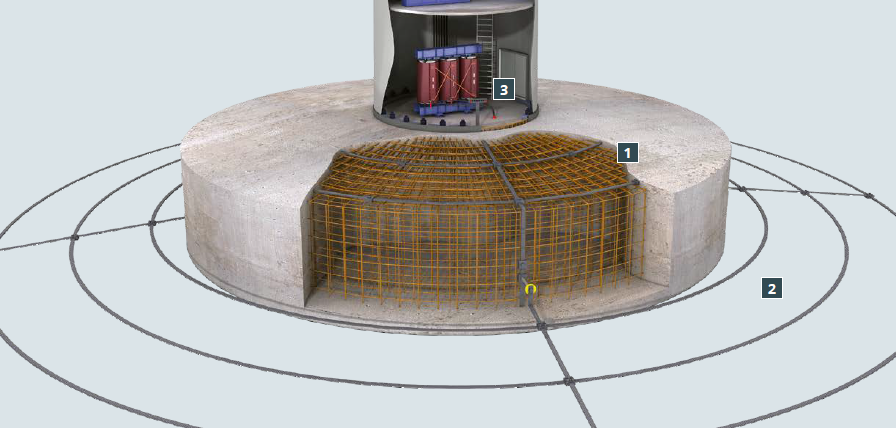
| Application | Type | ||
| Foundation Earthing | |||
| 1 | 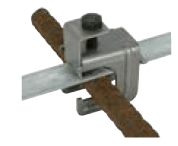 |
Connecting clamps | Clamps for connecting round and flat conductors in concrete foundations and reinforcements with round and flat conductors with tested short circuit current carrying capacity (50 Hz). |
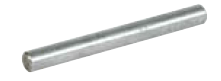 |
Round wire 10 mm St/tZn | Round wire tested to IEC 62561-2 for use in lightning protection and earth-termination systems 3). | |
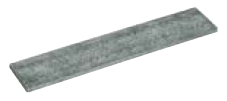 |
Strip 30 x 3.5 St/tZn | Strip tested to IEC 62561-2 for use in lightning protection and earth-termination systems 3). | |
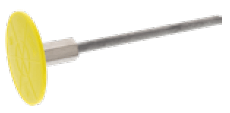 |
Fixed earthing terminal type M V4A |
Corrosion-resistant connection of the ring earthing with the foundation earthing at the base of the tower. | |
| Ring Earth Electrode | |||
| 2 |
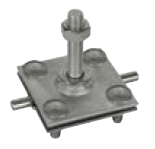 |
Connection clamp with threaded bolt StSt (V4A) |
For connection of round and flat V4A conductors to fixed earthing terminal |
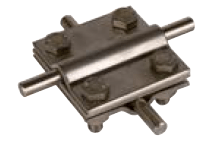 |
Cross unit StSt V4A | Corrosion-resistant connection of the individual ring conductors in V4A. | |
 |
Stainless steel strip V4A | Corrosion-resistant ring conductor in V4A. | |
| Equipotential Bonding | |||
| 3 | 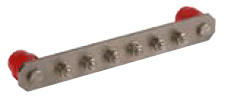 |
Equipotential bonding in the tower base/equipotential busbar StSt |
Suitable for equipotential bonding and protective/functional equipotential bonding. |
Safe service and maintenance work
DEHN safety equipment
Safe Right Down The Line
Work on electrical systems is becoming more and more demanding. Make sure you use safe and reliable equipment. DEHN offers tested products and reliable services which protect your employees from injury caused by arc faults and secure the availability of your systems. This gives you, as the employer, legal certainty.
Safe At Work
- Personal protective equipment and arc flash clothing
- Voltage detectors
- EaS devices
- Fixed ball points
- Arc fault protection systems
| Application | |
| External Lightning Protection | |
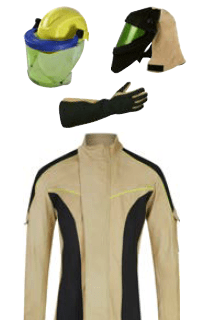 |
Safe when it matters most Reliable protection against arc faults in electrical installations: DEHNcare personal protective equipment keeps you safe from the thermal effects of an arc fault. DEHNcare equipment is also comfortable to wear thanks to the unique material combination of leather and neoprene. The protective equipment is tested to international standards and consists of a hood, safety helmet for electricians, face shield, protective gloves, jacket and trousers or coat. |
| Voltage Detectors | |
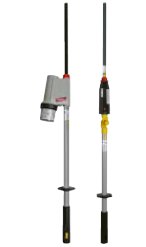 |
Safe right down the line Make sure that no voltage is present with a capacitive voltage detector from 1kV to 420kV. Choose from a wide range of voltage detectors – you are bound to find your voltage and frequency! |
| EaS devices and fixed ball points | |
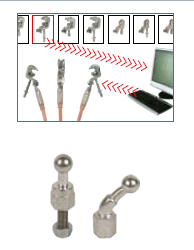 |
Safe earthing and short-circuiting (EaS) Configuring your individual EaS device for your system is simple and flexible. Fixed ball points |
|
Arc fault protection system |
|
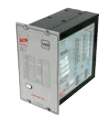 |
Safe – fast – flexible DEHNshort quenches arc faults in your low-voltage switchgear installations in milliseconds. Your employees are safe when carrying out maintenance and repairs. Profit from optimised system availability: your system runs and runs, downtime due to an arc fault is significantly reduced. |
ELECTRICAL SAFETY PROVIDERS
We protect substation engineers, asset managers, SAPS, cable jointers, overhead linesmen and utility workers with PPE and safety equipment: this includes insulating gloves, arc flash clothing, voltage detectors, insulating matting and portable earthing to ensure worker safety when carrying out repair and maintenance on LV-HV switchgear, transformers, substations and turbines.
All of our Cable Connection & Energisation Accessories including Medium & High Voltage joints, terminations, connectors and cleats are tested to the latest international standards and supporting ranges of professional installation tools are stocked to reduce incident, accident and downtime to plant and people.
High Voltage Inspections | Wireless Inspection Camera for Systems up to 33kV/123kV
March 27th, 2023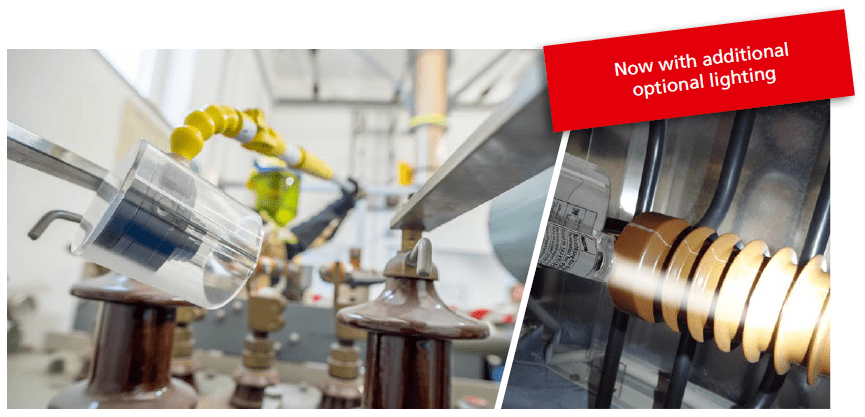
DEHN High Voltage Inspections Camera
High Voltage Inspections Camera
Brings the invisible to light
DEHN are committed to the protection of workers and material assets with their developments and innovative products in the field of lightning protection, surge protection and safety equipment. DEHN ensure that your buildings and installations are protected during operation, maintenance and repair. Their focus is particularly on wind energy, photovoltaic, process industry, traffic and communication solutions.
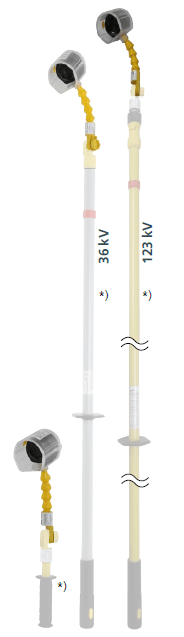
The Wireless Inspection Camera has been introduced for use with systems up to 123kV – allowing for easy and quick inspections on high voltage switchgear installations, even on difficult to access parts.
Facilitates work
The inspection camera makes regular inspections on medium-voltage and low-voltage installations easier: difficult to access parts can be easily reached with the flexible operating head.
Saves time
The installation does not have to be disconnected during inspection. The state of the installation can be evaluated with the help of photos and films and measures can be discussed.
Increases safety
Photos of the installation are transmitted live from the inspection camera to a smartphone or tablet computer via radio link. This ensures that the electrician does not have to enter the live working zone.
Brings the invisible to light
The inspection camera allows the state of the installation to be monitored without great effort. Tools forgotten during maintenance work can be found with the help of photos and films.
Brings light into the dark
Flexible working at any time, day or night, even in poorly illuminated environment. With the additional optional lighting you are independent of the lighting conditions.
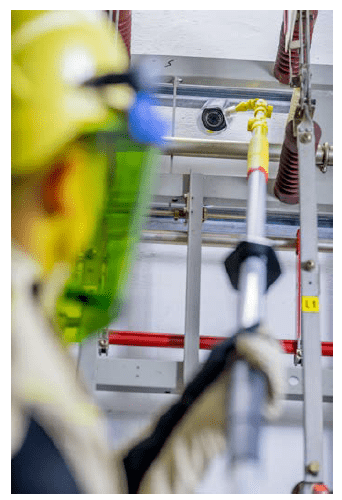
Wireless Inspection Camera for High Voltages up to 123kV
Reliable inspection and easy operation via radio link to a smartphone or tablet
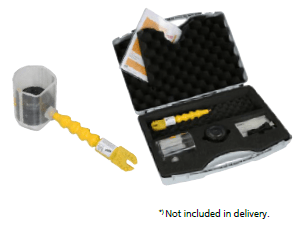
The 123kV wireless inspection camera is supplied as a complete set in a case. It consists of a camera with battery, USB cable, smartphone attachment, housing, adapter with gear coupling and transport case.
- For visual inspection of electrical installations with nominal voltages up to 123 kV / 15 to 60 Hz (without special training)
- Installation does not have to be disconnected
- For documentation of the state of the installation
- Wireless operation of the camera via smartphone or tablet computer (System requirements: Android version 4.0 – 5.1 or iOS version 7.0 – 12.0)
| SET DIGIK | Part No. 766 390 |
| Standard | Based on EN 50508 |
| Camera | 18.2 megapixels Wide-angle lens with 10x optical zoom Optical image stabiliser Autofocus PlayMemories Home App Wi-Fi integrated Micro-USB 2.0 connection HD video recordings in MP4 format Temperature range: 0 °C … +40 °C Material: Plastic |
| Dimensions of the case | 395 x 290 x 105 mm |
| HG ZK 230 | Part No. 766 393 |
| Handle*) with gear coupling up to 1000 V / 15 to 60 Hz and 1500 V / d.c. |
ELECTRICAL SAFETY PROVIDERS
We protect substation engineers, asset managers, SAPS, cable jointers, overhead linesmen and utility workers with PPE and safety equipment: this includes insulating gloves, arc flash clothing, voltage detectors, insulating matting and portable earthing to ensure worker safety when carrying out repair and maintenance on LV-HV switchgear, transformers, substations and turbines.
All of our Cable Connection & Energisation Accessories including Medium & High Voltage joints, terminations, connectors and cleats are tested to the latest international standards and supporting ranges of professional installation tools are stocked to reduce incident, accident and downtime to plant and people.
Protection Against Arc Flash, Faults & Electric Shock | 5 Safety Rules
March 24th, 2023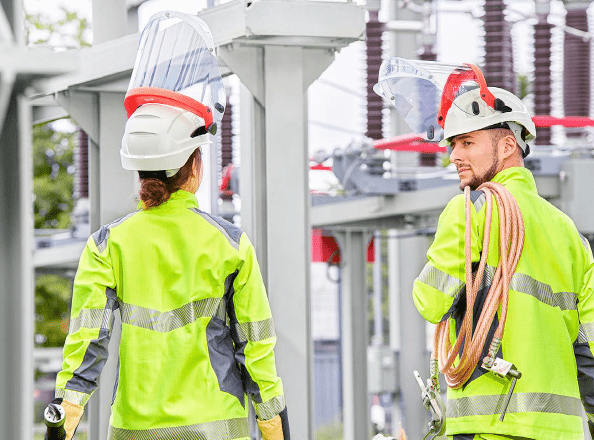
Protect employees from electric shock and arc faults
In industries working around high and low voltage electricity, the importance of Electrical PPE and arc flash protection is widely recognised, and the latest electrical safety requirements are understood by managers and operatives alike.
It is imperative that the 5 safety rules are complied with to prevent accidents when working on electrical systems. By using insulating tools and equipment, electric arcs are prevented from forming and the working distance is made bigger.
DEHN are committed to the protection of workers and material assets. The energy and the spirit of innovation of more than 1,400 employees are reflected in their developments and innovative products in the field of lightning protection, surge protection and safety equipment.

DEHN protection at a glance:
Effective – The probability of an arc fault occurring is reduced and the PPE protection level increased.
Protective – The employee is further removed from the system, increasing his/her safety during work.
Competent – DEHN offers the right products for complying with the 5 safety rules.
Foresighted – A large range of services ensures that electrical equipment is kept safe permanently.
ARC FLASH Protection | Five safety rules
| 1. Disconnect completely | 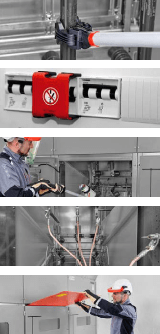 |
Operating poles are used for safe hot stick working when switching and insulating live equipment. | ||
| 2. Secure against reconnection | Locking devices secure the work location against re-powering. | |||
| 3. Verify that the installation is dead | Voltage detectors are available for verifying a dead condition on all poles at the work location. | |||
| 4. Earthing and short-circuiting | Earthing and short-circuiting devices for earthing and short-circuiting electrical systems. | |||
| 5. Provide protection against adjacent live parts | Insulating protective shutters for protecting against accidental contact with live parts of an installation. |
reducing Arc Flash risk
The use of tested insulating tools and operating sticks reduces the probability of occurrence of an arc fault and thus also the risk involved. Furthermore, the individual is distanced further away from the system (working distance) due to the lengths of the insulating sticks, meaning the PPE protection level is increased.
Arc Flash Protection & Electrical Safety Products | Distributed By Thorne & Derrick
ELECTRICAL SAFETY PROVIDERS
We protect substation engineers, asset managers, SAPS, cable jointers, overhead linesmen and utility workers with PPE and safety equipment: this includes insulating gloves, arc flash clothing, voltage detectors, insulating matting and portable earthing to ensure worker safety when carrying out repair and maintenance on LV-HV switchgear, transformers, substations and turbines.
All of our Cable Connection & Energisation Accessories including Medium & High Voltage joints, terminations, connectors and cleats are tested to the latest international standards and supporting ranges of professional installation tools are stocked to reduce incident, accident and downtime to plant and people.
Insulated Tools | IEC60900 v VDE Tool Types for Live Working at Low Voltage
March 23rd, 2023
Insulated tools complying with IEC EN 60900
Types of Insulating Tools, IEC 60900 vs VDE, Tool Care Information
Insulated and insulating hand tools are used for live working and work near live parts, with voltage ratings up to 1000V AC and 1500V DC. CATU Insulated tools comply with the international standard IEC 60900.
They are identified by the mark: 1000V (Double Triangle) IEC EN 60900
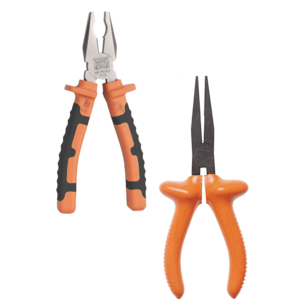
The CATU Electrical range of insulated tools comply with IEC 60900 standards, and are used by cable jointers and electrical engineers for live working and jointing cables up to 1000 volts. Available from Thorne & Derrick.
INSULATED and Insulating HAND TOOLS
Insulated hand tools are classified into 3 categories :
INSULATED HAND TOOLS
Hand tools made of conductive material(s) fully or partially covered by insulating material. Fully insulated tools covered with insulating materials with the exception of conductive parts on the working surface reduce the risk of short circuiting between two parts at different potentials.
INSULATING HAND TOOLS
Hand tools made totally or essentially from insulating material(s) except for inserts made from conductive materials used for reinforcement, but with no exposed conductive point. Insulating tools can have several working heads, and are used to protect the user from electric shocks and minimize the risk of short circuiting between two parts at different potentials.
HYBRID HAND TOOLS
Hand tools made from insulating material(s) with exposed conductive parts at the working head (e-g : cutting edges) (some non exposed conductive part can be used for reinforcement).
HYBRID tools can have several working heads. They protect the user against electric shocks and reduce the risk of short circuiting between two parts at different potentials.
For this category of hand tools, this catalogue uses the term «hybrid» in conformity with the draft of edition 4 of the NF EN IEC 60900 standard.
What is the difference between VDE and IEC 60900 Standard?
Insulated Tools from CATU
VDE is a German institute that certifies tools against the European IEC 60900 Standard.
Under this standard, the statement of conformity issued by a manufacturer stating compliance with the norm is sufficient, and hence it is not mandatory to certify the tools by an independent body. The VDE certification therefore offers those who require a higher degree of confidence, a third party verification of the compliance. However, VDE is not the only third party certification available in the market, and there isn´t such a thing as a VDE norm or certificate for tools.
What VDE certifies, like any other third party independent body does, is that the tools comply with the IEC 60900 norm and that the manufacturer has the required capabilities and means to manufacture and test de tools against the requirements of the standard. As a result, it is common that manufacturers only certify a few references (i.e. few sizes in each product category) and not all the references. Once the independent body certifies a specific size, all other sizes within that product category can also be considered as safe as the ones VDE certified, considering that that they would be manufactured following the same process, tested with the same test equipment and backed by the Statement of Conformity of the manufacturer.
Insulated Tool Care
Only use tools that are marked with the official international 1000-volt rating double triangle symbol shown above, if there is any chance that the tools will make contact with a live electrical source.

Electrical Safety Equipment | Insulating Matting | Voltage Detectors | Substation Kits | Phase Comparators
Visual inspection
Perform a visual inspection on your insulated tools each time you plan to use them. If any cracks, nicks or other damage to the outer orange layer is visible, don’t use the tool.
Beware of temperature
Only use insulated tools in areas whose ambient temperatures are compatible with the manufacturer’s specifications. All of our tools are carefully manufactured to be extremely resilient, but it’s still a good idea to check beforehand. Always keep tools away from heat sources as this will cause damage.
Beware of non insulated parts
Don’t touch any parts of the tool that are not insulated as these parts could come into contact with an energised source and you will be at risk of electrical shock.
Keep away from sharp objects
Ensure you keep your insulated tools away from any sharp objects, such as utility knives, to prevent damage to the outer material. A tool case or bag is a good solution.
Clean your tools
It’s important to take care of your insulated tools by cleaning and maintaining them regularly this will ensure many years of reliable service. All of our tools are tailor-made to be robust and long-lasting but it’s always a good idea to keep on top of the housekeeping.
Of course, ideally, the mains should be shut off before commencing any repair or inspection. However, when this is not possible, it is important to remember that insulated tools are an important link in the overall chain of safety and should be used alongside PPE, such as insulated gloves, boots and electrical safety matting.
ELECTRICAL SAFETY Distributors
Main UK Stockists & Distributors of Electrical Safety Products
Thorne & Derrick provide Electrical Safety Equipment to substation engineers, cable jointers, overhead linesmen and utility workers with PPE and electrical safety equipment including insulating gloves, voltage detectors, insulating matting and portable earthing to ensure worker safety when carrying out maintenance on LV-HV switchgear, substations, cables and electrical equipment.
We protect substation engineers, asset managers, SAPS, cable jointers, overhead linesmen and utility workers with PPE and safety equipment: this includes insulating gloves, voltage detectors, insulating matting and portable earthing to ensure worker safety when carrying out repair and maintenance on LV-HV switchgear, transformers, substations and turbines.
All our Cable Connection & Energisation Accessories including Medium & High Voltage joints, terminations, connectors and cleats are tested to the latest international standards and supporting ranges of professional cabling tools are stocked to reduce incident, accident and downtime to plant and people.
IEC 61482-2 | Arc Flash Clothing & Protection Standard (Version EN-IEC 61482-2: 2020)
March 22nd, 2023
EN-IEC 61482-2: 2020 Protective clothing against the thermal hazards of an electric arc
EN IEC 61482-2:2020 Supersedes IEC 61482-2:2009
IEC 61482-2 Standard is an International Electrotechnical Commission standard regarding live working – protective clothing against the thermal hazards of an electric arc. This part of EN 61482 specifies requirements and test methods applicable to materials and garments for protective clothing for electrical workers against the thermal hazards of an arc flash.
Electric shock hazards and other effects like noise, light emissions, pressure rise, hot oil, the consequences of physical and mental shock or toxic influences are not covered by this standard. Protection of eyes, face, head, hands, and feet against electric arc hazard fall outside the scope of this standard.
EN IEC 61482-2 includes two methods for testing. Garments can be certified according to one of the test methods or to both test methods.
What is an electric arc?
Electric Arc and the Arc Flash created is an extremely dangerous and least understood hazard of electricity. It occurs as a result of extreme discharges of voltage or electrical current from equipment including switchgear, transformers and heavy electrical equipment. The Arc generates a high level of energy for a very short span of time (up to 1 second). The intense heat can create temperatures as high as 19,000°C and it also produces electric shock, force and large quantities of thermal radiant energy.
What is the Risk?
In any situation where your employees are working with electricity, an Arc Flash can occur and as such the maximum energy of default circuits in any electrical installation must be able to be determined. The risks of an electric Arc exposure are:
- Electrocution – potentially fatal
- Extremely high levels of Radiant Heat
- 1st, 2nd or 3rd Degree burns – 3rd Degree burns cause permanent damage
Arc Testing Methods
EN-IEC 61482-1-1:2019 supersedes IEC 61482-1:2009 – “Open Arc Test Method”
USA Arc Flash Test Method
The Open Arc Test Method (ATPV test and garment test) determines the Arc Rating Arc Thermal Protection Value (ATPV level), ELIM (incident energy limit) or Energy Break Open Threshold (EBT) of flame-resistant material (Method A) and clothing (Method B). The basic principle is that the ATPV of the garment must be higher than the Arc Flash energy level as calculated. The “Open Arc” test method is the same as the original North American method for measuring the Arc Thermal Performance Value (ATPV) as used in ASTM F1959. The Arc Rating is expressed in cal/cm² (calories per centimetre square).
EN-IEC 61482-1-2:2015 – “Box Test Method”
European Arc Flash Test Method
In the Box Test Method, materials and clothing will be tested using two methods: the material box test method and the garment box test method.
The material box test method is used to measure and determine material response to an arc exposure when tested in a flat configuration. A quantitative measurement of arc thermal performance is made by means of the energy transmitted through the material. During this test, a fabric sample is exposed to an electric arc produced by a 4kA or 7kA short circuit. In this test, the arc does not last any longer than 500ms. The amount of heat transmitted through the sample is measured during and after the test.
Based on the resulting data and a Stoll curve, the length of time it would take to cause the onset of second-degree burns is subsequently determined. Samples are also assessed for after-flaming, hole formation, melting, etc.
The garment box test method is used to test the function of the protective clothing after an arc exposure (i.e., no heat flux will be measured). This test must be conducted on a complete garment. In doing this, the objective is not to determine the energetic value, but to assess the garment after exposure to an electric arc for defects in the seams, fastenings, and other closures.
The garments are tested and evaluated in two classes in the same test:
- APC1 (Arc protection class) protects against electric arc of 4kA (arc energy 168 kJ)
- APC2 protects against electric arc of 7kA (arc energy 320 kJ)
The standard requires the following:
- A garment must have at least an ELIM value of 3,2 cal/cm2 (130 kJ/m2), or else an ATPV or EBT value of 4 cal/cm2 (167.5kJ/m2) according to IEC 61482-1-1 or APC1 when tested according to EN IEC 61482-1-2
- Garments must be sewn with inherently flame-resistant threads
- If a garment has a higher rating of arc protection on the front than on the back, the garment’s torso, sleeves, and legs must be made using the arc-rated material; the back of the garment can have a lower arc rating
- Garments must have no exposed external metal (i.e., any internal metal or melting parts are to be covered inside to avoid contact with the skin)
- The garment label must show the lowest ATPV or class if the garment is comprised of different panels of material; more detailed information about areas of the garment with varying levels of protection may be provided on the garment’s label or in the manufacturer’s instructions pertaining to use
- The protective clothing material must have some minimum tensile, tear, and burst resistance and minimum dimensional stability (e.g., for wear and tear associated with cleaning)
- The garments must cover the entirety of the wearer’s body. For example, jacket and trousers must be worn together with other personal protective equipment (PPE), including a helmet with a protective visor, protective gloves, and protective footwear (i.e., work boots) to achieve the correct level of protection. Layering is very important and will increase protection (e.g., if you wear flame-retardant underwear beneath your flame-retardant garments, you are better protected).
ARC FLASH PPE & ELECTRICAL SAFETY
Main UK Stockists & Distributors of Electrical Safety Products
Thorne & Derrick provide Electrical Safety Equipment to substation engineers, cable jointers, overhead linesmen and utility workers with PPE and electrical safety equipment including insulating gloves, voltage detectors, insulating matting and portable earthing to ensure worker safety when carrying out maintenance on LV-HV switchgear, substations, cables and electrical equipment.
We protect substation engineers, asset managers, SAPS, cable jointers, overhead linesmen and utility workers with PPE and safety equipment: this includes insulating gloves, voltage detectors, insulating matting and portable earthing to ensure worker safety when carrying out repair and maintenance on LV-HV switchgear, transformers, substations and turbines.
All our Cable Connection & Energisation Accessories including Medium & High Voltage joints, terminations, connectors and cleats are tested to the latest international standards and supporting ranges of professional cabling tools are stocked to reduce incident, accident and downtime to plant and people.