Cable Cleats
Cable Cleats & Fixings For The Rail Industry by Ellis Patents
November 5th, 2019
by Phil Goddard
Technical Development at Ellis Patents; a globally renowned designer and manufacturer of cleats, clamps and hangers.
Investment in the rail sector has grown rapidly over the last decade and much greater funding is expected going forward.
Both UK and worldwide there is a growing ambition for modern, reliable and sustainable mass transit systems. Overground and metro schemes are taking shape in many high population density areas, powered by low carbon energy sources.
Decarbonisation of the rail sector is the main driver.
The UK has the oldest rail infrastructure in the world, with much still dating from the Victorian era. A series of spending Control Periods is gradually providing the upgrade and new-build needed.
The current CP6 rail industry spending period is now active and although project spend commitment was initially slow, it is expected to ramp up soon. Huge investment is helping to modernise this industry at many levels with electrification at the forefront.
CP6 Plan Infographic: Courtesy ATA Recruitment.
ATA Recruitment are one of the UK’s leading technical recruitment agencies and can help you take the next step in your engineering career
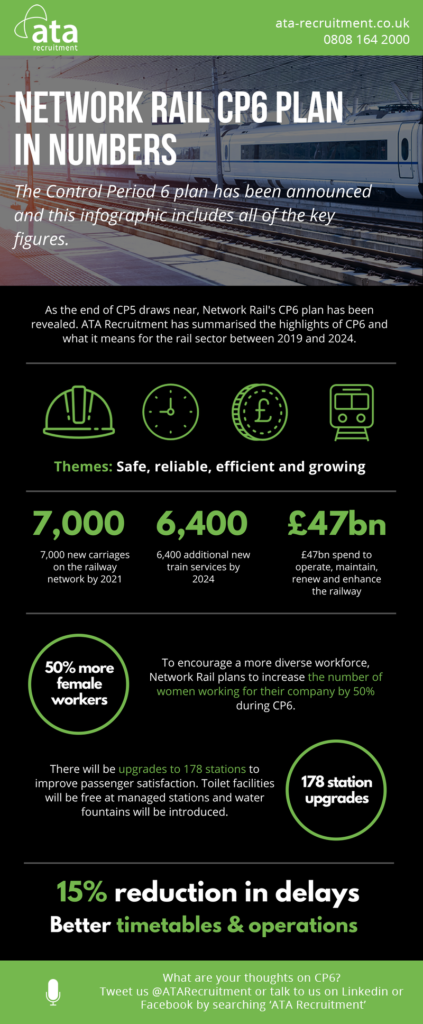
CP6 Plan Infographic
Bi-mode operating trains using either electric and diesel or electric with battery will assist in decarbonising the rail sector. Although hydrogen powered trains are possible in the future, electric motive power will increase and dominate for many more decades.
The costs of operating electric trains are significantly lower than those of diesel trains; and electric trains can provide improved journey time, customer ambience and environmental benefits. The issue is that the cost and delivery risks of conventional (or continuous) electrification are perceived to be too high.
The Great Western Electrification Programme (GWEP) and Midland Mainline projects have started the ball rolling in the UK, and much experience has been gained both technically and in handling project risk. It is important that electrification of the rail network continues to realise the ambition to decarbonise the railway.
Rail electrification requires both power cables and Overhead Line Equipment (OLE).
Upgrades and new-build schemes must adhere to rail industry National Technical Rules (NTRs) and European Technical Specifications for Interoperability (TSI) and these will provide guidance for cabling. Short circuit fault levels in the rail sector are generally low (compared to other industry sectors) and most installations will not exceed 20kA. Ellis has the most extensive range of cable cleat designs on the market and as such, has a range of offerings suitable for all applications within the rail industry.

Cable Cleats Manufactured by Ellis Patents
Cable Hangers
Overground and underground rail sectors use an extensive range of cable types including telecoms, alarm and control cables, signalling and data and of course, a range of power delivery and electrification cables. Many rail cables are installed using cable hangers.
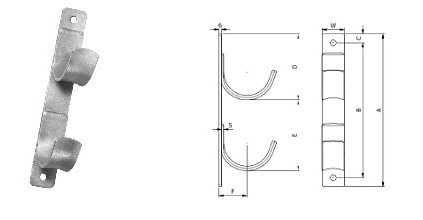
Ellis has improved the design of the basic galvanised steel hanger with reduced weight, radiused corners (to reduce damage to cables during installation) and a convex hanger profile for cable sagging – see Ellis Patents Cable Hangers.
Ellis manufactures cable hangers that are curved to fit the profile of a tunnel. These reduce the level of supporting steel structures necessary as the cable hangers can attach directly to the tunnel profile. Where the kinematic envelope of trains is tight and space is restricted, these profiled hangers provide a neat solution.
Ellis Patents No Bolts Cleat
The Ellis Patents No Bolts Cleat was designed to a specific remit from Network Rail.
Contractors had been injured when working live on cables where metallic components in the cable fixings tore through the cable sheath. Network Rail’s design brief for a new-style fixing specified no metal parts and no tools required for installation and maintenance. The No Bolts Cleat was fast-tracked successfully through the development stages using rapid prototyping technology and achieved its Network Rail PADs approval within a year. The product is also fully compliant with IEC 61914 having been short circuit fault tested to 101kA. No Bolts Cleat won the Electrical Times “Best Innovative Product of the Year 2016”.
Harsh Environmental Conditions
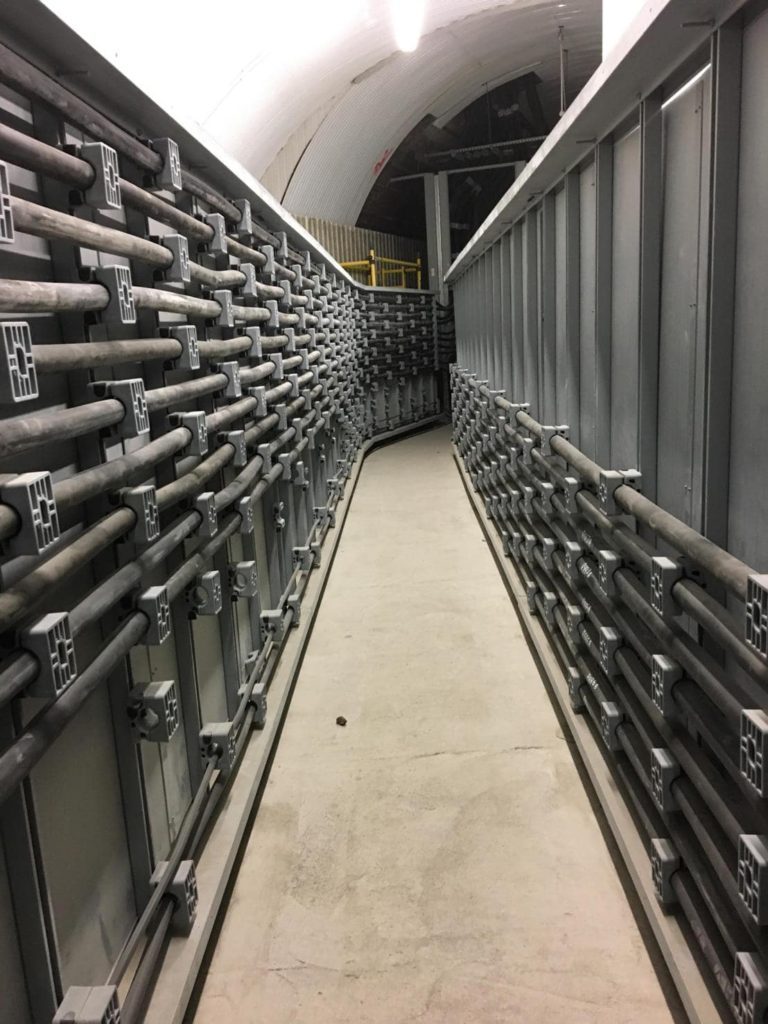
Ellis were approached in 2016 to supply cable fixings to the Severn Tunnel Electrification Scheme, part of the GWEP project. The tunnel conditions are severe with sea water ingress and a high corrosion environment. A 60-year design life was specified and as such, Ellis Patents adapted their standard 2F+ cable cleat product to include a super duplex high-chromium fixing plate which satisfied the project requirements.

References – Railway Industries Association. RIA Electrification Cost Challenge. March 2019. Phil Goddard – Technical Development at Ellis Patents
Further Reading
- IEC 61914 – Cable Cleats & Short Circuit Protection Calculations
- Fire Resistance & Cable Cleats – Surviving Fire, Flame & Extreme Heat
- Triplex Cleats – Selection Guide for Cleating 11kV BS7870 Part 4.10 Cables
- Stainless Steel Cable Cleats – Preventing Galvanic Corrosion Of Cable Fixings
- Ellis Patents Cable Cleats & Cable Basket Tray for Securing High Fault Level Cables
- Stainless Steel Cable Cleats v Ties – The Myths Debunked By Ellis Patents

RAIL CABLE ACCESSORIES, ELECTRIFICATION

& INSTALLATION EQUIPMENT
Thorne & Derrick supply an extensive range of 400V-66kV Rail Cable Accessories & Power Distribution Systems including feeder pillars to contractors undertaking Low Voltage Power Distribution, HV Electrification & Substations, DC Traction & Networks, OLE and Track Feeder Cable Renewals – a complete range of Network Rail PADS approved track terminations, cable joints, cable repair and connection products up to 25kV, including 3M Cold Shrink, Pfisterer CONNEX and Nexans Euromold products.
Full range of Cable Pulling Equipment & Products to ensure safe and efficient of rail cables in to cable ducts and containment infrastructure including cable troughs.

Reliable & Compliant Cable Accessories for Substation, Trackside & OHL Power Supply
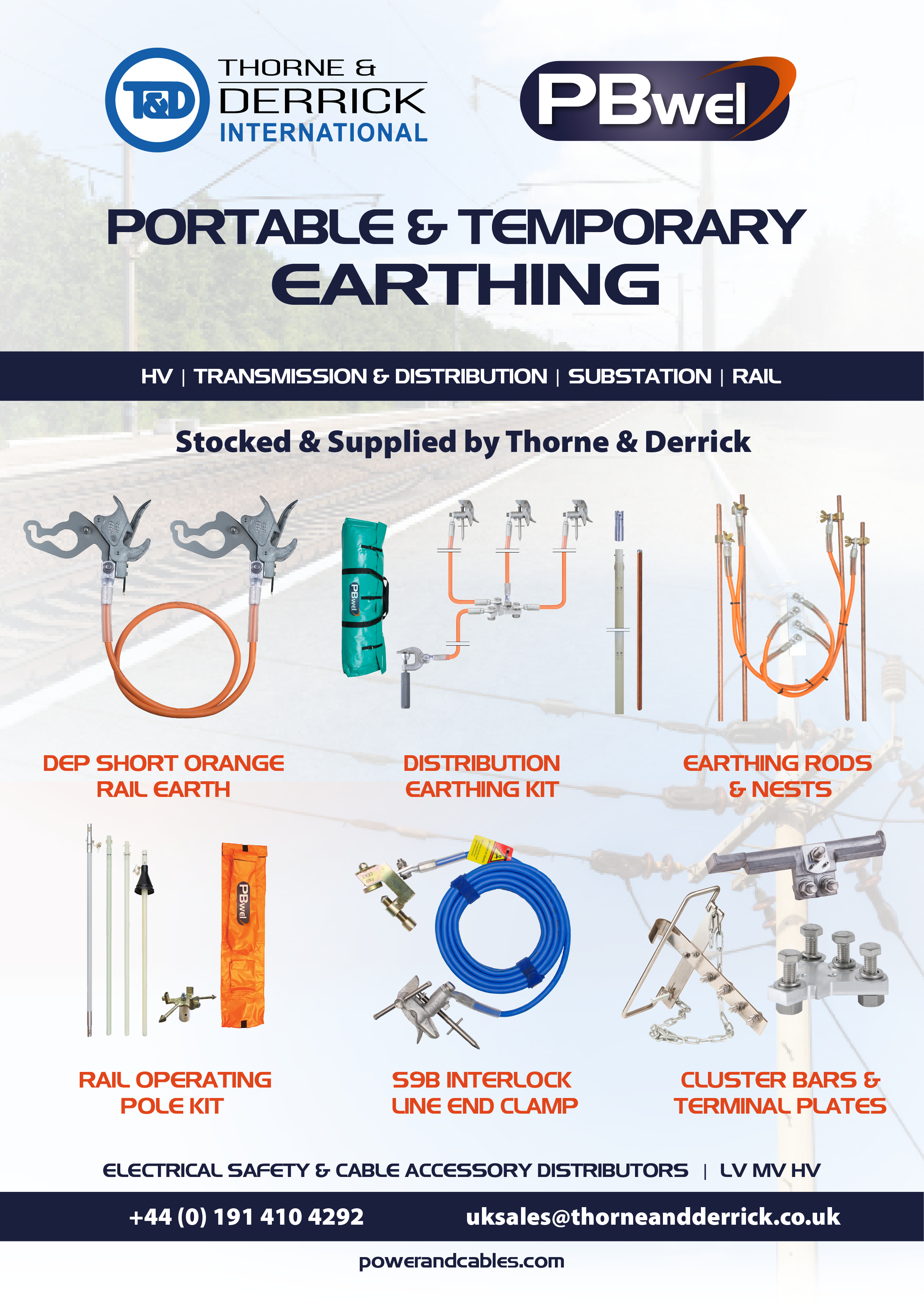
Thorne & Derrick provide next day delivery from stock at competitive prices for the PBwel range of Operating Poles & Temporary Earthing Kits; the complete range consists of DEP Short Earth Leads, J117 Rail Clamps, Long Blue Interlocked Earths, Short-Circuiting Straps, Rail Bonds, Rail Jumper Bonds, Rail Poles, Voltage Detectors, Rail Socket and Heads, Arboriculture Equipment and Signal Sighting Targets.
Cable Cleats – Costs v Quality
October 9th, 2019
Ellis Patents Cable Cleats
Cable Cleats
-
uploaded by Chris Dodds | Thorne & Derrick Sales Marketing Manager
Ellis Patents based in the UK are world leading manufacturers of cable cleats and cable clamps used to clamp and support LV-MV-HV cables – this includes 11kV-33kV medium/high voltage power cables in single, trefoil or bundled formation.
Ellis Patents are global leaders in the innovation and manufacture of nylon cable cleats, aluminium cable cleats and stainless steel cable cleats – Ellis satisfy the operational requirements of the construction, oil, gas, rail, utilities, wind energy and power generation industries.

Stephen Walton Technical Director Ellis Patents
Stephen Walton, Technical Director of the world’s leading cable cleat manufacturer, Ellis Patents, recently bought a home in need of complete renovation. While pondering how he could extend the number of hours in a day in order to get the project finished, he also found himself asking the age old question – ‘Why don’t they build them like they used to?’
“Taking on a renovation project probably isn’t the most sensible thing I’ve ever done; especially when you consider I have a challenging full-time job and a rapidly growing son. But my wife and I had been in the same house for ten years, and it was fair to say we’d outgrown it.
We could have bought a brand new house on a nearby development, but instead we opted for a 1930’s property that needed fully refurbishing.
Why? Well, in my experience buildings today are built for a price, and not for the long term – a view that has been backed up by many of the tradesfolk who have been to the new house, and have all commented on the build quality of it compared to today’s new build homes.
I realise this sounds like I’m teetering on the edge of a grumpy old man rant about how things were better in the old days, but I’m not. I believe we live in the most exciting of times, and that the technology we have access to enhances our lives in a myriad of ways – whether at home, work, play or anywhere in between.
But advances in technology don’t necessarily mean improvements. In the 1930s, houses were built in a robust way as the mentality was different. Yes, cost was an issue, but longevity was key. Over the following 90 years industry mastered the art of producing products that will survive the required life span, but no more.
Described as the bathtub curve, this approach has been developed so costs can be cut to the bone, while products will only last as long as absolutely necessary. Some consider this is efficient, but for me it’s a clear case of going too far in the pursuit of margin.
The Hackitt Report, which was commissioned following the Grenfell Tower tragedy, takes a hard hitting attitude towards bathtub building methods; citing a lack of responsibility and commitment to safety in the industry.
The report insists on major change, in particular that systems as a whole are considered, rather than individual manufacturers testing their own products in isolation, which is very much accepted current practice.
Earlier in my career I worked in the subsea oil and gas industry, and during that time the Gulf of Mexico Macondo incident led to the kind of sweeping change that Dame Hackitt want to see.
The industry had become complacent and a series of failures contributed to the disaster. Post Macondo, documentation requirements increased significantly, and many more FMECA reports were needed.
Applauding what the subsea, oil and gas industry has achieved is easy, but a great deal of that has been down to exceptional internal housekeeping.
In contrast, the task the construction industry has been set requires wholesale change from manufacturers up – and once again that brings the bathtub curve back into play.

At Ellis we design, manufacture and supply cable cleats that are tried, tested and trusted around the world. We rigorously short-circuit test all of our cleats to ensure they will do the job they are designed for – that is to keep powerful electrical cables secured in short-circuit situations. And we don’t stop there.
We offer project specific testing, so that those specifying and installing our cleats do so safe in the knowledge that they are perfectly suited for that particular project. And still we don’t stop.
We are called in with increasing regularity by the likes of Siemens, Balfour Beatty and National Rail, to design bespoke solutions to solve problem installations or help consign health and safety issues to history.
Over the years we’ve banged the drum about the importance of cable cleats; reacted to a veritable flood of cheap and unsafe markets by focusing on the vital importance of correct specification; celebrated the introduction of British, European and International standards governing the use of cleats; and welcomed the arrival of others to into the market who read from the same hymn sheet as we do.
What this has all meant is that today I can confidently state the vast majority of cable cleats specified and installed in any major project, virtually anywhere in the world, are selected because of their proven quality as opposed to being selected solely on price. A position that certainly means the bathtub curve has been smoothed over.
But moving forward will this victory for quality over cost be enough? And if not, where does the responsibility for whole system testing fall? Individual manufacturers coming together to test and sell whole project solutions as opposed to their own, often highly specialised, products? Specifiers? Contractors? Installers?
Sitting in the stripped down shell of my 1930s refurbishment project, I feel whole system testing is a step too far. This house was built at a time when buildings were built to last, and the quality of products used during construction were deemed far more important than their cost.
If, post Hackitt, the building industry can return to those days – and thus shelve the cheap and often unsafe products that have been responsible for so much heartache –; then the question we’ll be asking in years to come will no longer be “why don’t we build them like we used to?”, but “why didn’t we always build them like this?”

Ellis Patents Cable Cleats
Further Reading
- IEC 61914 – Cable Cleats & Short Circuit Protection Calculations
- Fire Resistance & Cable Cleats – Surviving Fire, Flame & Extreme Heat
- Triplex Cleats – Selection Guide for Cleating 11kV BS7870 Part 4.10 Cables
- Stainless Steel Cable Cleats – Preventing Galvanic Corrosion Of Cable Fixings
- Ellis Patents Cable Cleats & Cable Basket Tray for Securing High Fault Level Cables
- Stainless Steel Cable Cleats v Ties – The Myths Debunked By Ellis Patents
Thorne & Derrick
T&D are Specialist Distributors to UK Distribution Network Operators (DNO’s), NERS Registered Service Providers, ICP’s and HV Jointing Contractors of an extensive range of LV, MV & HV Jointing, Earthing, Substation & Electrical Eqpt – this includes 11kV/33kV/66kV joints, terminations and connectors for both DNO and private network applications.
Contact our UK Power Team for competitive quotations, fast delivery from stock and technical support or training on all LV-HV products.
Key Product Categories: Duct Seals | Cable Cleats | Cable Glands | Electrical Safety | Arc Flash Protection | Cable Jointing Tools | Cable Pulling | Earthing | Feeder Pillars | Cable Joints LV | Joints & Terminations MV HV
➡ Read: Thorne & Derrick Announce Distribution Agreement & Contract With Nexans

Ellis Patents Cable Guide Clamp – Video
October 9th, 2019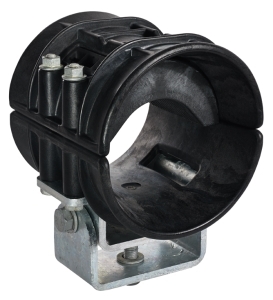
-
uploaded by Chris Dodds | Thorne & Derrick Sales Marketing Manager
Ellis Patents
Cable Guide Clamp
Ellis Patents Guide The Way With Guide Clamp Cable Cleats
Ellis Patents, the world leading UK designer and manufacturer of cable cleats have developed the Cable Guide Clamp – a combination of a cable guide and a cable clamp for high voltage (HV) cables.
The Ellis Cable Guide Clamp is designed to be installed in place of rollers along the HV cable route where the cable length is pushed and pulled through to its final destination.
Ellis Patent Guide Clamp was developed to provide a product that could be used during cable installation and then be used to clamp and restrain the HV power cable.

Two Stage Cable Installation & Clamping
The Ellis Cable Guide Clamp works in two simple stages. Firstly during cable pulling, the guide clamps gimballed mounting and slipper nylon construction enables simple installation and cable guiding.
Once the cable has been sufficiently pulled through and placed, the top half of the guide clamp is removed and a LSF polymeric fixing piece installed directly onto the cable.
Then, the top half of the guide clamp is replaced turning it into a fully functioning HV cable clamp. The narrow Ellis Patents design minimises the cable to cable distance resulting in greater flexibility, easier movement and therefore simpler installation.
Cable Guide Clamp Selection Table
| Cable Guide Clamp Part Number | ∅ Range (mm) |
| CGC100-112-G | 100 – 112 |
| CGC110-122-G | 110 – 122 |
| CGC120-135-G | 120 – 135 |
| CGC130-145-G | 130 – 145 |
| CGC140-160-G | 140 – 160 |
| CGC150-170-G | 150 – 170 |
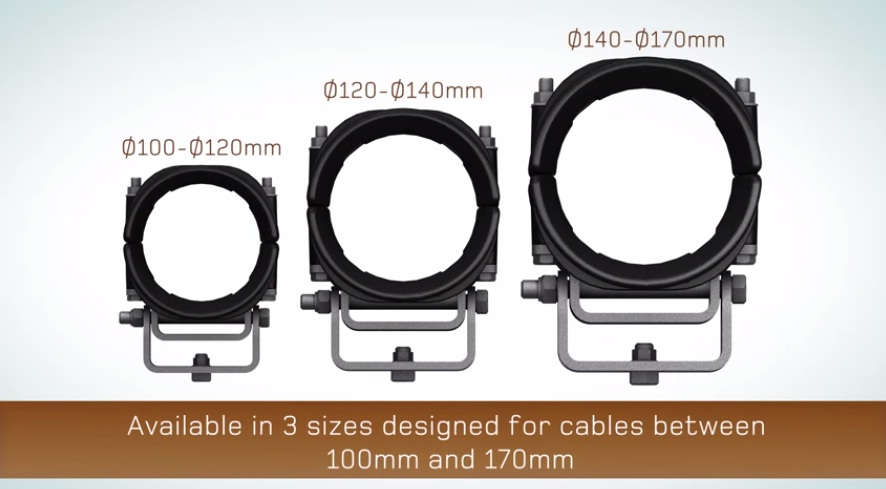
Ellis Patents HV Cable Guide & Clamp – Product Dimensions
The Ellis Cable Guide Clamp was originally designed for use on an offshore project by Siemens and has now been developed for use with HV cables in many other potential applications.
Thorne & Derrick
Thorne & Derrick are national distributors of LV, MV & HV Cable Installation, Jointing, Substation & Electrical Equipment – servicing businesses involved in cabling, jointing, substation, earthing, overhead line and electrical construction at LV, 11kV, 33kV, 66kV and EHV. Supplying a complete range of power cable accessories to support the installation and maintenance of low/medium and high voltage power systems:
- Slip-on Cable Terminations
- Cold-shrink Cable Terminations
- Heat-shrink Cable Terminations
- Cable Joints – Heat & Cold-shrink
- Separable Connectors (Euromold)
- Surge Arresters & Switchgear/Transformer Bushings
Key Product Categories: Duct Seals | Cable Cleats | Cable Glands | Electrical Safety | Arc Flash Protection | Cable Jointing Tools | Cable Pulling | Earthing | Feeder Pillars | Cable Joints LV | Joints & Terminations MV
Cable Cleats & Safe Cable Installations for the Wind Energy Industry
October 2nd, 2019-
Republished with the kind permission of Toni Dring Marketing Executive at Ellis Patents
-
(World Leaders in the Design & Manufacture of Cable Cleats)

Short Circuit Cable Cleats | Safe Cable Installations | LV MV HV
uploaded by Chris Dodds – Thorne & Derrick Sales & Marketing Manager
Ellis Patents
With concerns over climate change and fossil fuel security, the world is seeing a significant shift toward renewable energy sources. By 2040, it is expected that renewables could account for 30% of the world’s electricity supply.
Here in Europe, that could be as high as 50%.
One area of renewables which has seen significant growth and development is wind energy.
In the last 30 years, both onshore and offshore wind capacity have seen huge growth and the technology has developed at a fast pace. In fact, the latest turbine models produce 25,000 times as much power compared to the turbines used in the first ever commercial offshore wind farm 30 years ago.

The development of offshore wind turbines over the last 25 years is immense. (Graphic: Ørsted A/S formerly DONG Energy)
New Highs & Lower Costs
The cost of producing energy from wind is falling and relative to other sources, offers a viable renewable alternative. The cost of offshore wind has plummeted by almost 30% in the last two years and when compared to the future Hinkley Point C nuclear power station, costs just £40/MWh versus Hinkley’s expected £92.50.
This is an international trend too.
Globally, the portfolio of offshore wind projects rose 15% in 2019. Whilst Europe remains the largest single region, with significant installed capacity in the UK, Denmark, Germany and the Netherlands, there are significant project pipelines across North America & Asia.

As a world leader in the design and manufacture of cable cleats, Ellis Patents has been involved in ensuring safe cable installation practice on major windfarm projects across the globe. We’ve worked closely with operators, OEMs, EPC companies, cable manufacturers and cable installers, to ensure that we offer the best solution for their cable cleat requirements to safely retain and restrain LV MV HV cables in the event of a short circuit situation.
IEC 61914
As always, Ellis Patents greatest concern is to ensure that cable cleats are correctly specified to cope with the short circuit withstand requirements of the project. The formula below, taken from the International standard IEC 61914, can be used to calculate the forces between two conductors in the event of a three phase fault:
Ft = 0.17 x ip2 / S
Where:
Ft = force in Newton/metre (N/m)
ip = peak short-circuit current in kiloamps (kA)
S = distance between the centrelines of the conductors in metres (m)
Once Ft, in N/m, has been determined then the force for each potential cable cleat can be calculated. You can learn more about correctly specifying cable cleats here.

Cable Cleats IEC61914
When it comes to wind farm projects, there are often other considerations in addition to the usual short circuit concerns;
- High Axial Requirements
When installing cables in the turbine tower, cable weight and the corresponding axial force on the cable cleat must be considered. By design, some cable cleats offer a greater axial load capability than others and therefore lend themselves more favourably to vertical installations.
Ellis Patents has the most extensive range of cable cleat designs on the market and as such, has a range of offerings suitable for vertical installations from stainless steel to polymeric products. With onsite facilities, we can offer testing to specific project requirements in addition to the IEC guidelines.
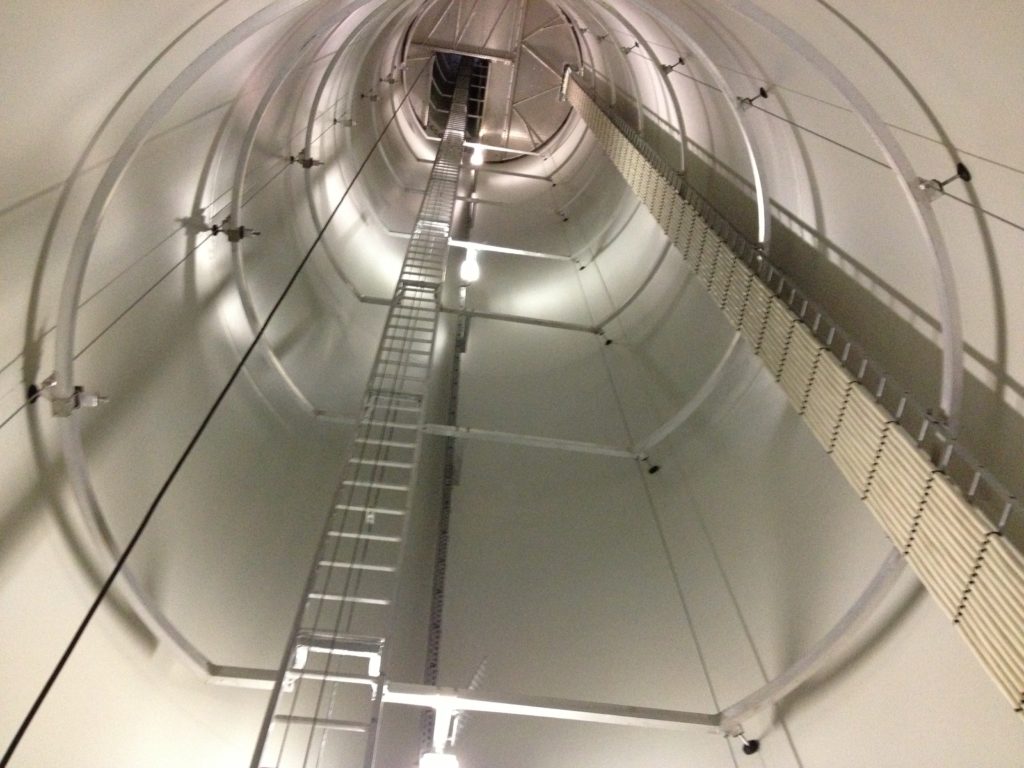
Inside Wind Turbine Tower. Image: Western Technology inc.
- Restricted Installation Space & Installation Access
On a range of projects, installation space can be crucial. For wind farms, this could be an issue in the nacelle or inside the tower. No two Ellis Patents cable cleats look the same, offering the client a range of choices for installations.
For example, the Ellis Vulcan+ cleat has a very narrow design, meaning space between cable runs can be minimised. Equally important, the Ellis Emperor cleat offers a low profile design where available headroom is an issue.

Ellis Patents Vulcan Cable Cleats

Ellis Patents Emperor Cable Cleats
- Cable Routing
On offshore windfarms in particular, large High Voltage (HV) cables have to take lengthy and complex routes to provide electricity distribution at 33kV and 66kV. In locations such as the Modular Offshore Grid (MOG), similar to large offshore substations, installers require an efficient, safe and cost-effective method to install their cables.

Belgian transmission system operator Elia has awarded Dredging International, part of the DEME Group, with a contract for the subsea cable installation for the Modular Offshore Grid (MOG) in the Belgian part of the North Sea. The installation scope includes the supply, installation and maintenance of the submarine power cables. The contract has been valued to approximately EUR 130 million. More info via offshoreWIND.biz.
Ellis Patents can offer Cable Guide Clamp – a product specifically designed for an offshore project. This cable support product offers a dual function as both a guide, eliminating the need for rollers, and a clamp. Designed with ease of installation at its core, Cable Guide Clamp is manufactured from a low friction polymer and offers a trumpet-like appearance to reduce contact surface area with the cable during pulling.

The wind sector will continue to grow, with a worldwide pipeline of projects already in the wings.
The development of floating wind turbine technology will also open up opportunities for deep-water areas, where fixed turbines are not feasible.
With an international network of distributors, Ellis cable cleats are tried, tested and trusted to safely secure cable on the world’s largest LV MV HV power and infrastructure projects. Please contact us for more information.
Further Reading
- Ellis Patents Cable Cleats & Cable Basket Tray for Securing High Fault Level Cables
- Cable Cleats Help Tackle Copper Cable Theft on Railways
- Stainless Steel Cable Cleats v Cable Ties – The Myths Debunked By Ellis Patents
- The Importance of Cable Cleats on Multi-Core Cables – Video
- Understanding the Importance of Cable Cleats in Offshore Industries
References
The Guardian, 2019
Renewables UK, 2019
OVO Energy, 2018
BBC, 2019
Bloomberg, 2017

LV MV HV Jointing, Earthing, Substation & Electrical Eqpt
POWER Professionals Join Here TODAY ▼
https://www.powerandcables.com/landing-page/
Subscribe today to our POWER NEWSLETTER & JOINTERS BLOG – a monthly email circulation packed with news, projects, videos, technical tips, training information, promotions, webinars, career opportunities and white papers

LV, MV & HV CABLE JOINTING, EARTHING, SUBSTATION & ELECTRICAL EQPT
Thorne & Derrick are Specialist Distributors to the UK and international Offshore Wind & Renewable industry to provide safe and reliable LV HV Electrical Cable & Power Distribution Systems – we are highly customer responsive and absolutely committed to providing a world-class service.
We have an International Distribution Agreement with Nexans Power Accessories UK to supply their Heat Shrink and Cold Applied ranges of 11kV/33kV/66kV joints and terminations and Euromold brand of separable connectors.
Since 1985, we have established an international reputation based on Service, Integrity and Trust – contact us.
t: 0191 410 4292 | e: [email protected] | www.powerandcables.com
We provide expert technical support and supply from a multi-million pound stock holding:
- Cable Joints, Terminations & Connectors Earthing & Lightning Protection
- Cable Accessories – Lugs, Glands
- Circuit Protection & Fuses
- Cable Cleats & Clamps Electrical Safety Equipment
- Cable Pulling & Laying Equipment
- Arc Flash Protection & Clothing
- Cable Duct Seals & Transit Systems Surge Arresters & Bushings

Calculating Oglaend Smart Cable Cleat Spacings On Cable Ladder Installations
April 2nd, 2019
Cleats & Clamps | LV MV HV Cables
-
uploaded by - Chris Dodds Thorne & Derrick Sales & Marketing Manager
Oglaend
Cable Cleats & Clamps
Theoretical Background
Source: EFI report TR A3901 Jan 1993
The following article and formula enables the calculation of cable cleat/clamp spacings to enable adequate short-circuit restraint of LV MV HV cables onto cable containment in onshore or offshore medium/high voltage substations.
Fb=(0.5 x 0.2 x kApeak2)/a where:
- Fb: Force (N/m)
- kA.peak: Short circuit current peak value (kA)
- a: Distance between the centre points of the cables/cable diameter
- Cable run. Length of cable run
Recommended distance between Oglaend Smart Cleat clamps mounted on cable ladders is shown in the image below:
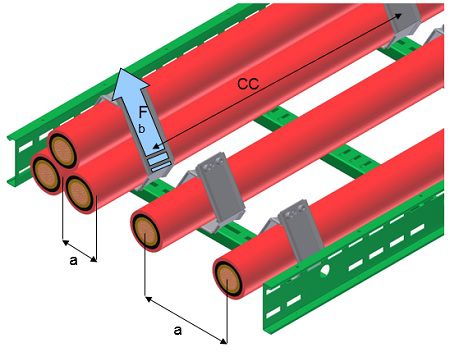
The calculated number of Oglaend cable clamps is included using Smart Securing Plate in both ends of the cable run.
The distance between the cable clamps should be reduced in vertical and horizontal bends.
The recommended maximum distance between Smart Cleats is 0.9m.
Recommended distance between Oglaend Smart Cleat clamps when not installed on cable ladder is shown in the image below:
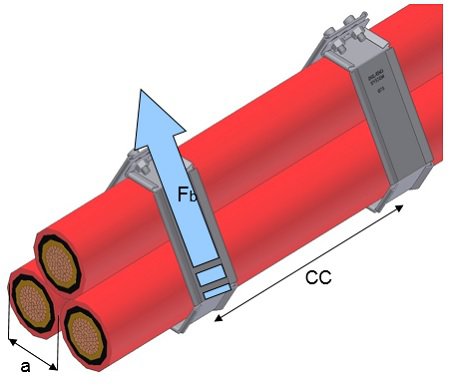
At the start and at the end of the cable run it is recommended to install 3 cable cleats with 150mm distance between them. The calculation above is including these cable cleats.
The distance between the cleats must be reduced during vertical and horizontal bends. The maximum recommended distance between Smart Cleats is 0.9m.
Smart Securing Plates
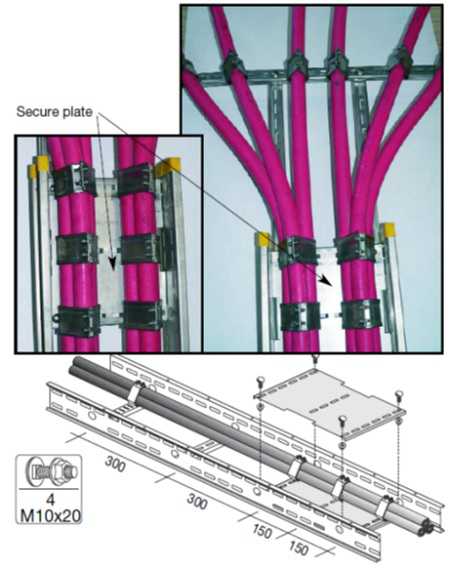
Secure plates are strongly recommended to be used at both ends of a trefoil cable run. Realistic tests done on several cable lengths and clamp distances confirms the theory that the cable must be additionally secured at both ends to reduce arching and eliminate deformation and stretch marks on the cable.
Smart Securing Plates Part References
| Type (State Ladder Width) | Art. No. SS |
| Oglaend A-OE EX-Smarcl-150 | 87544 |
| Oglaend A-OE EX-Smarcl-300 | 87545 |
| Oglaend A-OE EX-Smarcl-450 | 87546 |
| Oglaend A-OE EX-Smarcl-600 | 87547 |
| Oglaend A-OE EX-Smarcl-750 | 87548 |
| Oglaend A-OE EX-Smarcl-900 | 87549 |
| The Smart Securing Plate is designed to fit all standard ladder types with 300 cc rungs. Includes our RZE and FRP systems. | |
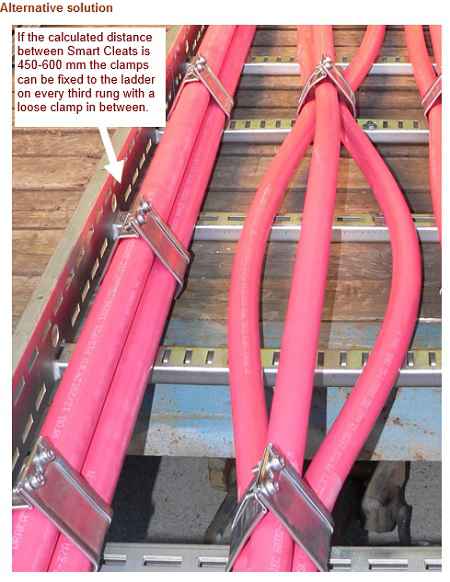
Distance between Smart Cleats manufactured by Oglaend given that the distance between the centre points of the cables or the cable diameter is 42mm

Smart Cleat
- Smart Cleat saves space – both in cable clamp height and width
- Plastic liners are not required for trefoil installations due to the design of the cable clamp providing a smooth surface
- Manufactured by Oglaend the Smart Cleat is suitable for fixing to preslotted rung design
- Fixing bolts are easily accessible from underneath the rung
- Low weight – compact and light design cable clamps
- The design fixes the cables so close to the rungs, that the rungs in between cleats give full support for distribution of load
- Low product price and low installation cost
- Smart Cleat trefoil cover cables from Ø 25 mm – Ø 99 mm and Smart Cleat single cables from Ø 39 mm – Ø 99 mm
- Smart Cleat is tested up to 160 kA-Peak
- Smart Cleat single and trefoil are certified by DNV according to IEC 61914
Further Reading
- Cable Clamps: The BAND-IT BAND-FAST Range – IEC61914 Tested
- Stainless Steel Cable Cable Cleats v Cable Ties – By Ellis Patents
- Understanding the Importance of Cable Cleats in Offshore Industries
- Stainless Steel Cable Cleats
- A60 H120 Pipework Fire Protection For Offshore Bulkheads & Decks
- IEC 61914 – Cable Cleats & Short Circuit Protection Calculations
Cable Cleat Distributors | Ellis Patents | Torgy | id-Technik
LV, MV & HV Jointing, Earthing, Substation & Electrical Eqpt
Thorne & Derrick International are specialist distributors of LV, MV & HV Cable Installation, Jointing, Duct Sealing, Substation & Electrical Equipment – servicing UK and global businesses involved in cable installations, cable jointing, substation, overhead line and electrical construction at LV, 11kV, 33kV and EHV.
THORNE & DERRICK Product Categories: Duct Seals | Cable Cleats | Cable Glands | Electrical Safety | Arc Flash Protection | Cable Jointing Tools | Cable Pulling | Earthing | Feeder Pillars | Cable Joints LV | Joints & Terminations MV HV

T&D Providers Of Jointer Training Courses By Pfisterer CONNEX & Nexans Euromold