Cable Joints & Terminations LV
Lead Wiping | A Disappearing Cable Jointers Skill Video Tutorial
April 16th, 2019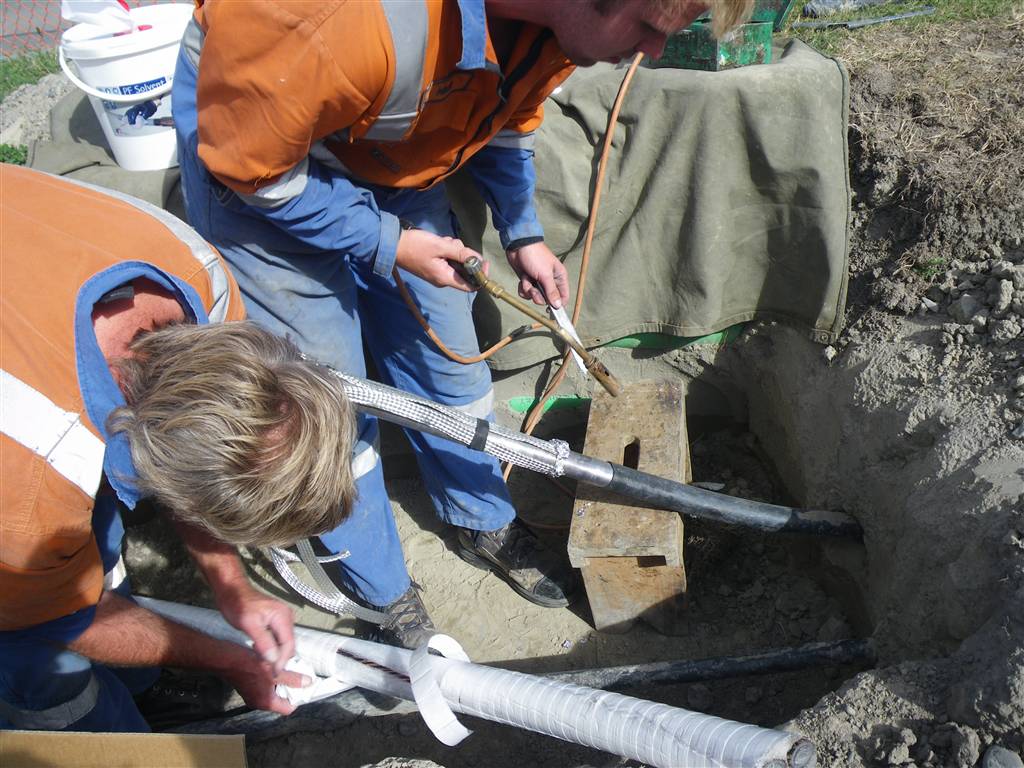
How to Wipe Lead Cables
Prior to Cable Jointing
-
uploaded by - Chris Dodds Thorne & Derrick Sales & Marketing Manager
Heat shrink cable joints for jointing paper or polymeric insulated cables (PILC or XLPE) with lead sheaths are specified for Low Voltage power distribution systems in the oil, gas and petrochemical industries where underground cables are exposed to waterlogging and corrosive liquids and vapours – cable construction including the lead sheath cover or jacket protects against penetration and degradation of electric cable insulation by hydrocarbon contaminants (whether underground or airborne).
Today, lead wiping has virtually disappeared from the cable jointers skill-set as more modern techniques, such as constant force spring armour and lead earthing continuity kits, which are integral to 3M hydrocarbon resistant cable joint kits have become commonplace. The modern day trend towards the manufacture and adoption of Polymeric (XLPE EPR insulated) cables has further reduced the demand for jointers with competency to work, maintain and splice using PILC type cables.
Cable Jointing & Lead Wiping
Credit: ThunderboltNZ
Lead Sheath Cutting & Removal From Paper Insulated Cables
Due to Occupational Health & Safety problems with handling lead and associated fumes, lead wiping has been replaced by jointing the cable sheaths using copper earth braid and constant force springs.

Lead Sheath Wiping
Pictured : A cable repair being conducted on a 200 pair (400 wire) lead-sheathed, paper-insulated cable (PILC). The photo illustrates the difficult conditions under which cable jointers often have to work. The gas lantern is required for both lighting and heating as it is important that the paper insulation of the individual wires do not become damp.
The joining of paper-insulated, lead-sheathed cables is not an easy task. Each 200 pair joint can take over two days to complete. The wires are identified by a colour code and are layered in a particular way: a common mistake when repairing these cables is to join pair number 1 to pair number 200 (i.e. 180 degrees out of phase). Each wire is individually joined together and covered by a paper sleeve. The photo below shows a close-up of the cable being spliced with some pairs having been joined and the remainder temporarily folded back out of the way.

Cable Splicing
LV Cable Joints (Low Voltage Cables)
Thorne & Derrick stock and distribute LV Joints in Cold Shrink, Heat Shrink or Resin Cast technologies – multicore and multi-pair cable joints are available for immediate backfill and energisation of Low Voltage power, control and instrumentation cables 600V/1000V 3.3kV.
Further Reading
- LV Cable Diversion 4 Core PILC to 4 Core Wavecon Straight Joint
- PILC Replacement & Cable Longevity
- Cable Splicing At The Lazy Q Ranch
Complete range of LV Cable Accessories ➡
Cable Breakouts | Cable Caps | Cable Lugs | Cable Cleats | Cable Trough | Cable Duct | Feeder Pillars | for 11kV/33kV/66kV networks see MV HV Joints & Terminations

Pfisterer | Nexans Euromold | Prysmian | Cable Joints & Terminations MV HV

Cold Shrink by 3M | Joints | Abandonment | Terminations | Low Voltage LV Cables
Consac Cable Jointing & Tooling
April 11th, 2019
Boddigtons Cable Jointing Tools
LV Cable Jointing & Terminating
Boddingtons 936 cable tools are designed to cut the aluminium sheath on consac cable to facilitate cable jointing and cable terminating.
The consac cable jointing tools provides safe and accurate cutting of the sheath without the risk of cutting the live inner conductor – exact cutting depths are achieved when using the different size cutting wheels.
Consac cable joints must only be installed by Trained & Competent Jointers using the approved and correct Consac cable jointing tools.
Jointing tools manufactured by Boddingtons are in widespread service throughout the electrical power industry – cable preparation and cable jointers tools are available for use on LV MV HV cables (XLPE, PILC, EPR insulated), waveform, consac, Triplex and utility power cables up to 33kV.
Boddingtons Electrical
Consac Cable Jointing Tools
Features
- “T” handle is available to assist the operation of the tool
- Consac Sheath Punch is available in two sizes – Ø 7 or 10 mm
- Complete sheath cutting kit in plastic case available on request
- Insulated Sheath Lifters, two types available – all plastic or coated metal
- Insulating Shrouding kit available
1. Boddingtons Electrical Consac Sheath Cutter MK3 – Ø 23.4 – 32.7mm
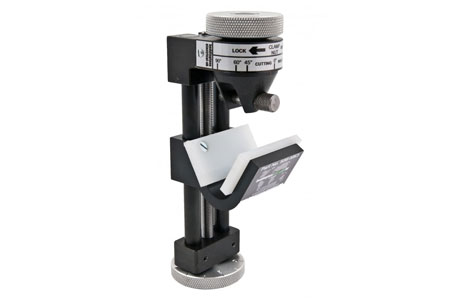
2. Boddingtons Electrical Consac Sheath Cutter MK4 Ø 32.7 – 45.3mm
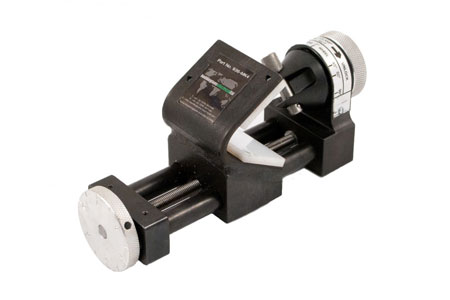
3. Boddingtons Electrical Consac Hole Punch 7mm / 10mm
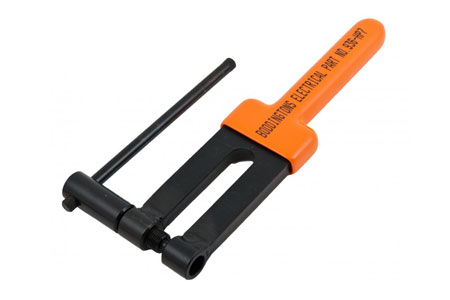
4. Boddingtons Electrical Insulated Consac Sheath Lifter (metal)
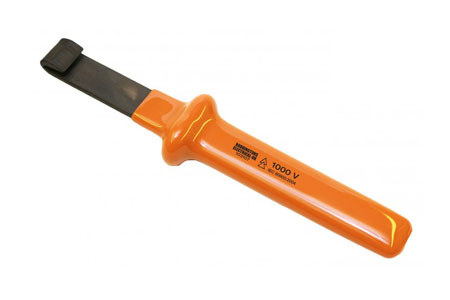
5. Boddingtons Electrical Insulated Consac Sheath Lifter (all plastic)
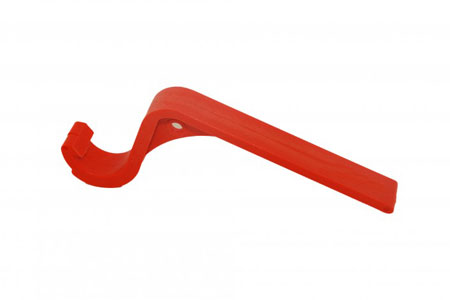
Boddingtons Electrical Consac Sheath Cutting Tool
Technical Data
| Part Number | Description | Weight |
| Boddingtons 936-MK3 | Consac Sheath Cutter MK3 – Ø 23.4 – 32.7mm | 1900g |
| Boddingtons 936-MK4 | Consac Sheath Cutter MK4 – Ø 32.7 – 45.3mm | 2000g |
| Boddingtons 936-AK | Allen Key for MK3/MK4 Cutter | 10g |
| Boddingtons 936-TB | T-bar for MK3/MK4 Cutter | 160g |
| Boddingtons 936-WP | Spare wheel pin for MK3/MK4 Cutter | 30g |
| Boddingtons 936-PPMK3 | Spare set of plastic pads (2) for MK3 Cutter | 35g |
| Boddingtons 936-PPMK4 | Spare set of plastic pads (2) for MK4 Cutter | 35g |
| Boddingtons CS90/DB76 | Plastic case to hold MK3 sheath cutter and accessories | 700g |
| Boddingtons 936-HP7 | Consac Hole Punch 7mm | 700g |
| Boddingtons 936-HPI0 | Consac Hole Punch 10mm | 700g |
| Boddingtons 103107 | Insulated Consac Sheath Lifter (metal) | 350g |
| Boddingtons 103108 | Insulated Consac Sheath Lifter (all plastic) | 50g |
IET Forum Post, April 2010
On the British Standards website, BS5593:1978 Specification for impregnated paper-insulated cables with aluminium sheath/neutral conductor and three shaped aluminium phase conductors (CONSAC), 600/1000V for electricity supply was withdrawn by BSI British Standards on 15.12.96.
Waveform – A method of layering wires to form a neutral conductor used in low voltage polymeric insulated mains cables. This is also covered by the following BSI British Standard : BS 7870-3.40:2001 – LV and MV polymeric insulated cables for use by distribution and generation utilities. Specification for distribution cables of rated voltage 0.6/1 kV. XLPE insulated, copper wire waveform concentric cables with solid aluminium conductors
LV Cable Joints (Low Voltage Cables)
Thorne & Derrick stock and distribute LV Joints in Cold Shrink, Heat Shrink or Resin Cast technologies – multicore and multi-pair cable joints are available for immediate backfill and energisation of Low Voltage power, control and instrumentation cables 600V/1000V 3.3kV.
Complete range of LV Cable Accessories ➡
Cable Breakouts | Cable Caps | Cable Lugs | Cable Cleats | Cable Trough | Cable Duct | Feeder Pillars | for 11kV/33kV/66kV networks see MV HV Joints & Terminations
Pfisterer | Nexans Euromold | Prysmian | Cable Joints & Terminations MV HV
Cold Shrink by 3M | Joints | Abandonment | Terminations | Low Voltage LV Cables
Prysmian ESDF4 | Fibre Splices (FO Cables) – ESDF4 In Line Joints & Enclosures
April 4th, 2019
Prysmian Fibre Splices (FO Cables) – Joints & Enclosures from Prysmian
-
uploaded by - Chris Dodds Sales & Marketing Manager (Thorne & Derrick International)
ESDF4
Prysmian Fibre Splices
Thorne & Derrick | Distributed from Stock | Approved Supplier | UK & Export Sales
Enclosures, Joints & Splices for FO Cables
The Prysmian ESDF4 In Line Joint is an underground cable joint suitable for direct burial and underground chamber applications. The fibre splices/joints, manufactured by Prysmian, are used for the jointing, splicing and branching of optical cables with a total capacity of 72 fibres.
The Prysmian joint kit is supplied with six splice trays each able to accommodate up to 12 fibre splices. Cable entry glands, splice protectors and mounting brackets are ordered separately to suit the application requirements.
Note: Four Cable Entry Kits must be ordered per joint. If only two cables are required blank entry kits must be used to seal the fibre splicde or joint.
Prysmian ESDF4 In Line Joint
Features & Benefits
- Installation in an underground chamber or direct buried
- Six splice trays are each able to accommodate 12 spliced fibres
- Maximum spliced fibre capacity is 72 fibres
- Between 4 and 16 cable entries dependent on cable diameter
- Mechanical cable sealing of the fibre optic splice
- Cable anchor system allows cables to be prepared away from the joint
- Continuous addition of branched cables possible for up to 4 cables per port
- Reliable sealing of the box using a mechanical gasket allows easy entry
- Splices/joints are suitable for direct buried applications
- Pole and wall mounting brackets available
- Earth point for cables metallic parts
Prysmian ESDF4 In Line Joint Technical Data
- Prysmian Part Number: XJTSC00083
- Number of cable ports: 4 – 16 (depending on diameter)
- Maximum cable diameter (mm): 25
- Maximum number of trays: 6
- Maximum fibre capacity: 72
- Required space envelope (mm): (l) 500 x (w) 160 x (d) 90
- Operating temperature: -20oC to + 50oC (5 to 95% RH)
Splice or Joint Closure Material:
- Closure: Glass Filled Nylon
- Splice trays: FR ABS
Splice or Joint Closure Testing:
- Closure Sealing IP68
- Optical: Tested at 1310nm, 1550nm and 1625nm
- Drop: EN 60068-2-32
- Salt Mist: NF C 20 – 711
- Vibration: EN 60068-2-6
- Shock: EN 50 102
Logistics:
- Packing Dimensions (mm): (l) 580 x (w) 180 x (d) 110
- Packed Weight of Splice (kg): 3.3
- Net weight of Splice (kg): 3.0
- Installation Instructions included

Cable Joints | Cable Cleats | Cable Terminations | Cable Glands | Power & Fibre Cable Accessories LV MV HV Networks
Prysmian Fibre Splices (FO Cables) Additional Items
| Prysmian Part Number | Product Description | Product Image |
| ESDF4 ILJ Cable Entry Kits | ||
| XJTSC00084* | Blank Entry – to seal unused ports | 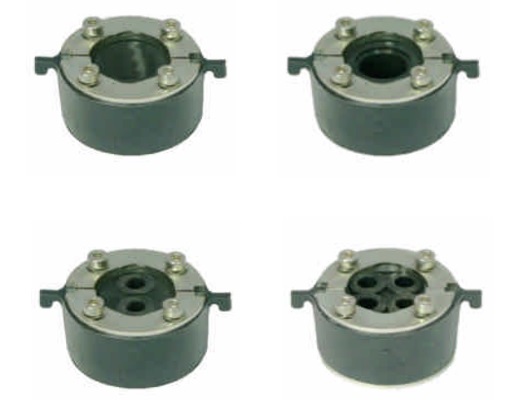 |
| XJTSC00085* | Single Entry – for one cable up to 25mm | |
| XJTSC00086* | Double Entry – for two cables up to 12.5mm each | |
| XJTSC00087* | Quad Entry – for four cables up to 9mm each | |
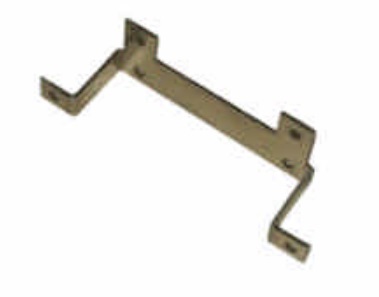
| Wall Mounting Bracket | ||
| XJTSC00088 | The ILJ Wall Mounting Bracket is used for mounting the In Line Joint to a wall. The bracket is supplied with the appropriate fixings. |
 |
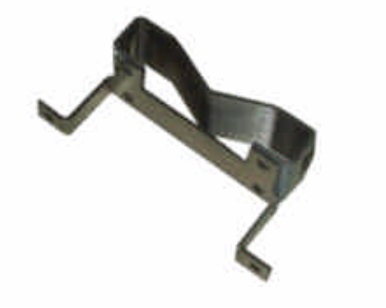
| Pole Mounting Bracket | ||
| XJTSC00089 | The ILJ Pole Mounting Bracket is used for mounting the In Line Joint to a Pole. The bracket is supplied with the appropriate fixings. |
 |
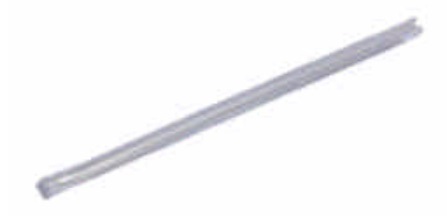
| Heat Shrink Splice Protectors | ||
| XPESC00053 | Splice protectors are used to protect the fibre splice. They are 2.2mm in diameter and 45mm in length. |
 |
| XKTSC00050 | ||
| Crimp Splice Protectors | ||
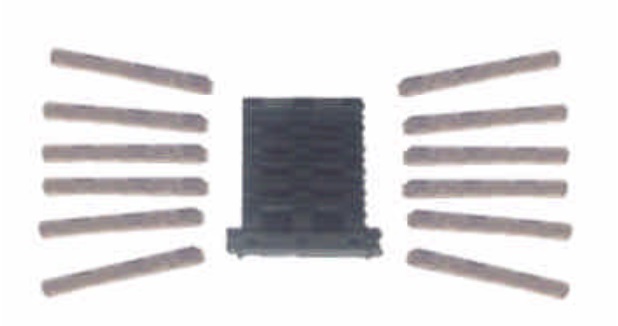
| XKTSC00020 | The Crimp Splice Protector Kit is used to convert the splice tray in an In Line Joint to accommodate crimp splice protectors. One kit is required for each splice tray. The kit contains an insert to house the splice protectors and 12 crimp splice protectors. |
 |
*ILJ Cable Entry Kits are used to install cables into an In Line Joint. One kit contains all of the components required to prepare, install and route the fibres of one cable to the splice trays. Four Cable Entry Kits must be used. If only two cables are required to be installed, then two blank kits must be ordered also. (Kits are available for installing one, two or four cables into a port, depending on the cable diameter).
LV, MV & HV Jointing, Earthing, Substation & Electrical Eqpt
Thorne & Derrick International are specialist distributors of LV, MV & HV Cable Installation, Jointing, Duct Sealing, Substation & Electrical Equipment – servicing UK and global businesses involved in cable installations, cable jointing, substation, overhead line and electrical construction at LV, 11kV, 33kV and EHV.
THORNE & DERRICK Product Categories: Cable Ties | Duct Seals | Cable Cleats | Cable Glands | Electrical Safety | Arc Flash Protection | Cable Jointing Tools | Cable Pulling | Earthing | Feeder Pillars | Cable Joints LV | Joints & Terminations MV HV
Further Reading
Fibre Optic FO Splice Trays & Junction Boxes for Offshore Wind Farms
Emperor Cable Cleats | Gwynt y Mor Offshore Wind Farm
On-line Partial Discharge Monitoring & Location on a 33kV Offshore Wind Farm Export Cable

Q/ Can 3M Electrical Offer MV Cable Joints For Hazardous Areas?
April 4th, 2019-
uploaded by Chris Dodds - Sales & Marketing Manager at Thorne & Derrick
MV Cable Joints
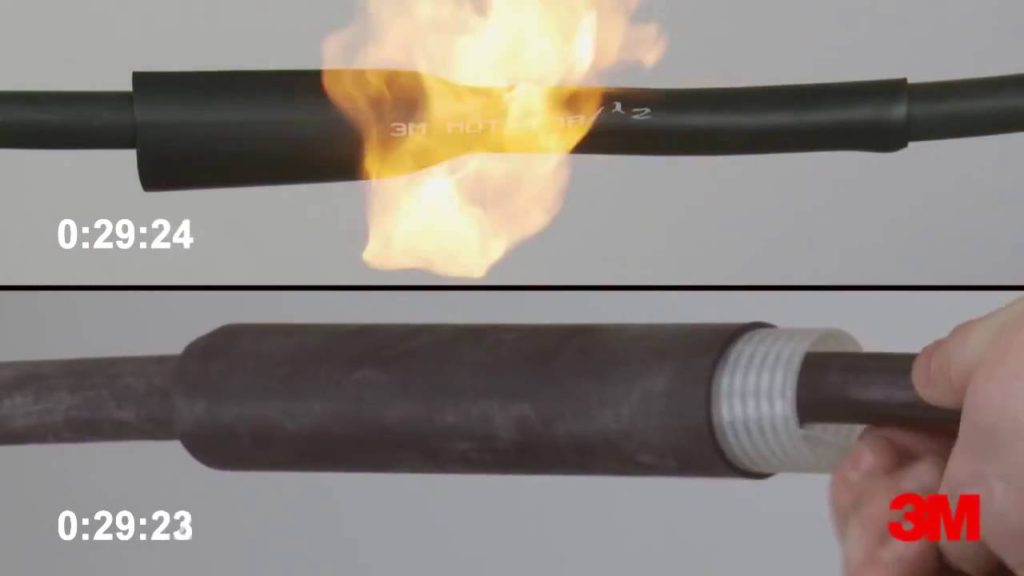
A/ All 3M Electrical Cable Accessories which utilise 3M Cold Shrink technology are inherently safe to install in potentially  explosive atmospheres as they do not pose a risk of ignition to flammable gases in hazardous area workplace locations as designated Zone 1 or Zone 2 according to the ATEX Directive.
For clarification on the relationship and application of ATEX with respect to Cold Shrink cable accessories for LV MV applications refer to our Blog ➡
ATEX & Cold Shrink | Certification & Safe Working In Zone 1 / Zone 2 Hazardous Areas
Hydrocarbon Resistant Cable Joints
Thorne & Derrick stock and supply 3M Electrical cable joints for MV cables with 3 core cable construction for both XLPE/EPR type cables – these are polymeric insulated cables.
For single core cables where the cables to be jointed are located in hazardous areas with hydrocarbons present the cable joints can be encapsulated using a joint mould/shell and Scotchcast 1402FR resin – the joint would be installed according to the Jointing Instruction as usual apart from the final cold shrink outer tube which would be substituted with the cable joint mould/resin.
Typically, installers have used the 92-NA-6U cable joint kit, manufactured by 3M Electrical, which is designed for LV unarmoured cables – the mould shell fits over the cable stripping dimensions of the 3M 92-AG Cold Shrink range of MV joints for single core polymeric cables (XLPE EPR). The larger 1451-PET mould can also be used in conjunction with appropriate volume of 3M resin using the Mix Pack 7 litre packs. This solution would provide excellent protection of the cable joint against the deteriorative effects of prolonged exposure to hydrocarbons in either air installations on cable containment or direct burial where the joint is to be buried in underground contaminated ground or cable trench.
➡ Further reading: 3M Cold Shrink vs Heat Shrink
Cold Shrink
LV, MV & HV Jointing, Earthing, Substation & Electrical Eqpt
For Use In Hazardous Areas & Explosive Atmospheres
Thorne & Derrick International are specialist distributors of LV, MV & HV Cable Installation, Jointing, Duct Sealing, Substation & Electrical Equipment – servicing UK and global businesses involved in cable installations, cable jointing, substation, overhead line and electrical construction at LV, 11kV, 33kV and EHV.
THORNE & DERRICK Product Categories: Duct Seals | Cable Cleats | Cable Glands | Electrical Safety | Arc Flash Protection | Cable Jointing Tools | Cable Pulling | Earthing | Feeder Pillars | Cable Joints LV | Joints & Terminations MV HV
Pfisterer | Nexans Euromold | Prysmian | Cable Joints & Terminations MV HV
Slips, Trips & Falls | Cable Hooks For Reduced Accidents & Improved Safety During Shutdowns
March 25th, 2019
Reducing Slips, Trips & Falls With Tidi-Cable Steel Cable Hooks
Accidents are expensive: but is it safety, or housekeeping that will make the change?
Slips, trips and falls on the same level (excluding falls from height) accounted for 31% of all UK workplace accidents in 2018 according to RIDDOR 2017/2018 (Reporting of Incidents, Diseases and Dangerous Occurrences Regulations).
These accidents are extremely expensive to both companies and the individuals who get injured, causing days off work and expensive insurance claims. A list of all UK workplace accidents can be found here.
Using the 80/20 rule, the main focus should be to reduce these common accidents.
Let’s look at common causes of workplace accidents, and find some quick, free or low costly cable hook solutions to prevent this unnecessary evil.
Preventing Slips
Slips often happen due to wet or slippery floors. Wet and slippery floors can sometimes be easily tackled by small adjustments in the work environment. For example, a change in the cleaning regime proved one company to reduce its slips by 80%.
Think small adjustments; choose a convenient time to clean the floors when most employees are behind their desks, workstations or worksites in the field, rather than cleaning floors at 7:45 am, just before all employees arrive to work, or just before the shift change. Have a door mat for all entry points, it’s cheap and effective.
Simple slip prevention includes using the correct type of slip-resistant footwear. Remember, if footwear is supplied as personal protective equipment (PPE), it must be supplied free of charge to employees.
The decision to involve the affected employees in choosing the right shoes, will help the employees understand the issues and will promote positive change.
Also, consider age and construction of buildings, whether there is evidence of leaking roofs, if walkways are exposed to the elements, or whether there is a potential for water, mud, ice or other substance build-up.
The most important factor in slip accident prevention is to have decent grip at all times. In a food industry plant this method reduced slipping accidents up to 60%.
Having arrangements for routine cleaning and dealing with accidental spills is normal practice in every company. Where floors cannot be kept clean and dry, again, slip-resistant footwear can prevent accidents.
How To ‘Tackle’ Trips
Trips are often caused by uneven floor surfaces and obstacles, or trip hazards. These can be prevented by design and good housekeeping regimes.
Keeping the workplace clean and organised is the clear prevention message. Are there any trip hazards in corridors and walkways or in the entire industrial work environment?
Think of tripping hazards such as cables, tools, hoses, boxes, pallets, or other objects that could cause a potential tripping accident.
Removing these hazards can be done by tying them up next to the walkways, or re-routing these items away from the walk spaces.
Quick solutions to remove hazardous obstructions from the work floor vary, from cable tie-wraps, steel wires, welding anodes and ‘S’ shaped cable safety hooks.

Steel S Shaped Hooks
Cable Hooks For Safe Cable Support, Suspension & Management
Tidi-Cable Products are a simple cable support range of products designed to suspend hoses, wires, cables and ropes. Tidi-Cable steel cable hooks are used by most of the major oil and gas and construction companies and enable employees to adhere to their housekeeping and safety policies.
Tidi-Cable Steel Hooks are designed to be fire resistant and help to manage LV-HV power cables, as well as welding cables, extension cords and hoses. The simple Steel S Hooks and Figure of 8 Hooks are simple, effective products that enable the users to fix cables to hand rails, fences and scaffolding.
Tidi-Cable’s Steel S Hooks come in various different sizes including:
- TCS003 – 235mm length, small hook internal diameter 55mm, large hook internal diameter 72mm, max. load 10kg
- TCS004 – 235mm length, small hook internal diameter 55mm, large hook internal diameter 72mm, max. load 20kg
- TCS005 – 310mm length, small hook internal diameter 55mm, large hook internal diameter 90mm, max. load 30kg
- TCS006 – 415mm length, small hook internal diameter 64mm, large hook internal diameter 115mm, max. load 55kg
The cable hooks are made from galvanised steel and coated in a highly visible powder coated orange. For special projects, Tidi-Cable are able to ‘own brand’ and colour any products to the customers specification.
Checking Your Walkways
Check for suitable walkways. Are they in the right place? Are they being used? Are they available for use? What tasks are taking place on the walkway? Are some tasks preventing the employee from seeing where he or she is going?
Lessons: Walkways must be safe to walk over at all times. Confronted with tasks carrying loads of tools or boxes in hand, employees should have the confidence that you and your co-workers have housekeeping elements embedded in their work operation.
This can be done by well described company policies and procedures, which should be implemented through company campaigns and brought into the company culture by training for all employees.
By keeping walkways safe and clean, employees’ experience free walkways with no clutter. Well-marked and obstructed repair sites will have better visibility during construction, maintenance or turnaround activities.
Do you already have enough policies and procedures, but still want to improve the bottom line by safe work attitude adjustment? Try to apply a teach-by-example approach.
For example, a refinery with many contractors, different job requirements and safety policies may pressure the workers to cut corners by not following these company guidelines and procedures.

Tidi-Cable Heavy Duty Cable Management Products
Keeping Walkways Safe & Clean
Slips, trips and falls put pressure on families, cost money, and hurt the bottom line. Could all of this be avoided? Lost time injuries by slips, trips and falls are often simple to prevent and can improve the companies’ incident ratings in the short term.
Housekeeping simply improves the workplace for others, who can in their turn dedicate time to focus on their core jobs and appreciate not having to sort their cables and hoses out in the end. A benefit is that hoses and cables do not wear as fast by-passing traffic, resulting in fewer spills.
Adequate Site Signage
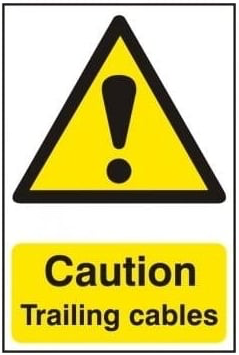
All workplaces have dangers and risks, from taps that run with scolding hot water to big open floor spaces on construction sites. One of the easiest ways to inform stakeholders of the risks is to always put up adequate signage warning of any dangers. More information can be found on the signage requirements Health and Safety (Safety Signs and Signals) Regulations 1996 here.
Improving Essential Housekeeping Elements
It is not just good enough to have a walkway; it must be kept clear, no obstructions and no trailing wires. Employees and cleaners need to have “see it, sort it” attitude to ensure these and other work areas are kept clear. Safety is everyone’s responsibility in any workplace and has been for decades, however there is still much to be done to change the ‘not my responsibility’ culture all over the world.
Is the cleaning regime effective? Are there enough storage bins on the facility? Have you described this standard type of working in your company?
Lessons: Keep it clear, remove cables and hoses and work in a clean environment by suspending obstructions with tie-wraps or hooks from the work floor. This will not only improve the lifecycle of these tools and cables, but it will significantly reduce the number of tripping points.
Applying good housekeeping to keep walkways clean and clear helps employees and contractors understand that your company applies high safety standards by tackling direct causes of the highest incident rate; slips, trips and falls.

Steel Tidi-Cable Hooks
Design & Maintenance Of The Workplace Environment
When assessing the quality of your safety regime, ask the following questions:
- Is the floor suitable and safe for the workers?
- Is it fitted correctly and properly maintained?
- Are walkways wide enough and do they have no unexpected level differences?
- Are stairs suitable?
- Is there adequate signage warning people of hazards?
- Are solid handrails available at every stair case?
- Do environmental factors such as good lighting conditions also fall in the category of good housekeeping? Is there enough light for employees to identify hazards?

Tidi-Cable 8 Hooks
Lessons: Floor openings used for maintenance or repair should be well‐marked. Make sure lighting is sufficient and that slopes, unbalanced variations in floor levels, and steps are clearly visible.
Keep walkways and work areas clear of obstructions. Blunt objects in walkways should be well marked and have soft padding.
Slips and trips are not only unpleasant, but are costly to the bottom line. Use common sense to review risks. Discuss “What if’s…”, and find low cost solutions.
It leaves us with the question; should housekeeping be an essential part of your safety department when it comes to preventing the most likely type of accidents on your work floor?
Shutdowns & Turnarounds
With an ever increasing need for cost control and management of project complexities, the significance of every decision made by a TAR manager during the planning and execution stages of these events is continuously imperative.
As the current oil price downturn has widened refining margins and set owners smiling from ear to ear, the realities are still the same for the shutdown manager.
In this interview, IQPC speak with a Shutdowns and Turnarounds veteran, André Bokma, Turnaround Coordinator at Neste.
The interview confronts the growing difficulties of finding the right people for the job, and how the simple, graphical visualisation of the turnaround process can really swing the balance between success and failure.

Steel Cable Hooks | Power Cable & Trailing Cable Support | BS7671 Regulations
LV, MV & HV Jointing, Earthing, Substation & Electrical Eqpt
Thorne & Derrick International are specialist distributors of LV, MV & HV Cable Installation, Jointing, Duct Sealing, Substation & Electrical Equipment – servicing UK and global businesses involved in cable installations, cable jointing, substation, overhead line and electrical construction at LV, 11kV, 33kV and EHV.
THORNE & DERRICK Product Categories: Duct Seals | Cable Cleats | Cable Glands | Electrical Safety | Arc Flash Protection | Cable Jointing Tools | Cable Pulling | Earthing | Feeder Pillars | Cable Joints LV | Joints & Terminations MV HV