Image Kind Courtesy : John Perez - Quanta Underground Power Services / A Quanta Company
Words : Chris Dodds - Thorne & Derrick Sales & Marketing Manager
Cold Shrink
The dependability of any proprietary brand of Joint or Termination is dependent upon the skill and competence of the Splicer and ultimately the standard of the Splicer Training provided to that Splicer. Bad pun klaxon……this is a simple fact of Splice.
Since their introduction in the 1970’s, 3M Cold Shrink products, including cable splices and terminations, document exceptional field service history – BUT this failure rate is only as exceptional as those Splicers installing them.
Splicers specialising in the jointing and terminating of MV HV cables require initial work experience, on-the-job mentoring, training and often formal vocational education – training continues throughout the lifetime of the career of a Splicer as new methods and working practices evolve against the backdrop of changes to the types of cable being used.
Our dynamic Splicers with their nerves of steel and the concentration powers of a chess Grandmaster must maintain a steady hand and focussed mind when working their cables – whether strong-arming a PILC cross in a muddy hole knee deep in brown squelch or performing a high-wire terminator act out the back end of a Bucket Truck.
Anyway, here goes those jaw-drop 3M stats 🙂 :
Low failure rates*
– 0.067% for Cold Shrink Cable Splices
– 0.022% for Cold Shrink Cable Terminations
*Data based upon U.S. failure data of U.S. manufactured 3M Cold Shrink Medium Voltage Cable Accessories between 2009 and 2012.
Cable Splices
Here, the trainee Splicers are shown the installation procedure for cable splicing of medium voltage PILC (Paper Insulated Lead Covered) cables – the Cold Shrink cable splice body is positioned on the cable following the preparation of the cable using appropriate jointing tools and prior to the installation of the mechanical shearbolt connectors.
Cable Type: MV Medium Voltage PILC 3 Core 15kV Manufactured by CME Wire & Cable.
QS4 Splices & QTIII Terminations
Listen, before the phone calls start these Videos are NOT for Training purposes – so to all the “You Tube Jointers“ watching out there, get real and get trained.
Better still become Competent. Then train some more. Stay Competent. Achieve Manufacturers Certifications – go get trained by Nexans Euromold, Pfisterer and 3M.
Let’s protect and preserve the reputation of the beautiful Craft of Splicing – like Andy O’ Malley says “build it like you own it.”
Take Pride but above all Take Care. Enjoy the Movies!
…
This Video demonstrates the installation of their 3M Cold Shrink Cable Termination QT III for terminating MV-HV Cables with tape shields.
3M pioneered and innovated Cold Shrink tubing and technology in the 1970’s and since then their products have secured global utility approvals: https://www.powerandcables.com/cold-s… 3M Cold Shrink Cable Joint QS4 – MV HV JCN CablesThorne & Derrick International, based in the UK, are Main Distributors for 3M Electrical products – further info: https://www.powerandcables.com/manufa…
This Video demonstrates the installation of their 3M Cold Shrink Cable Joint QS4 for jointing MV-HV JCN Cables.
Info Cold Shrink Tubes https://www.powerandcables.com/cold-shrink-tubes/ bitrate 628 kb/sheight 360duration 00:03:34.58fps 29.97width 640originaldate 2018-05-02T14:47:42.000000Z3M Cold Shrink Cable Termination QTIII – MV-HV Tape Shielded CablesThorne & Derrick International, based in the UK, are Main Distributors for 3M Electrical products – further info: https://www.powerandcables.com/manufa…
This Video demonstrates the installation of their 3M Cold Shrink Cable Joint QS4 for jointing MV-HV JCN Cables.
Info Cold Shrink Tubes https://www.powerandcables.com/cold-shrink-tubes/
T&D distribute the most extensive range of LV, MV & HV Cable Jointing, Terminating, Cable Pulling & Installation Equipment – we service UK and international clients working on underground cables, overhead lines, substations and electrical construction at LV, 11kV, 33kV and EHV transmission and distribution voltages.
uploaded by Chris Dodds - Thorne & Derrick Sales & Marketing Manager
Thorne & Derrick International, based in the UK, are leading suppliers of cable crimp lugs and associated crimping tools for Low, Medium & High Voltage Cables and Power Systems – this series of articles by Klauke discusses the theory and practise of installing compression type cable lugs and connectors.
Klauke cable lugs and crimping tools are used by Jointers, Linesmen, Panel Builders and Electrical Engineers to install underground cables and overhead line conductors on power, transmission and distribution networks including LV MV & HV systems, 11kV-33kV.
Compression cable lugs according to DIN 46235 for crimping solid, stranded, fine stranded and finest stranded copper conductors
Copper tube cable lugs “standard design” made from electrolytic copper (EN 13600)
Compression cable lugs DIN 46235 terminals not for solid conductors
Selection of the correct lug very much depends on the cable type
International Standard IEC 1238 Part 1 – electrical and mechanical properties of cable lugs
Although cable connections are relatively low cost in comparison to price-per-metre of cable and often a project afterthought the importance of specifying and installing the correct type of lug is critical to safe and reliable performance of LV MV HV Power Systems – a poor cable connection can result in an increased joint resistance and even in fire. Worse still, fatality.
Incorrect tools and cable crimps cause increased temperatures and fire.
In this blog T&D will show you the correct cable crimping procedure. There are hundreds of different versions of cable lugs available.
For the electrical engineer and cable jointer it is very difficult to choose from this broad range the correct lug for each specific application.
The following article gives an overview of the different types of lugs for copper conductors and details the facts which will guarantee a safe and permanent electrical connection.
In principle we differentiate between 3 types of cable lugs:
DIN Standard 46235 defines the application, dimensions and marking of cable lugs – this standard allows use of these lugs for compression of solid, stranded, fine stranded and finest stranded copper conductors and cables.
3 types of lugs: DIN cable lugs, standard tubular cable lugs and sheet metal terminals (from left to right)
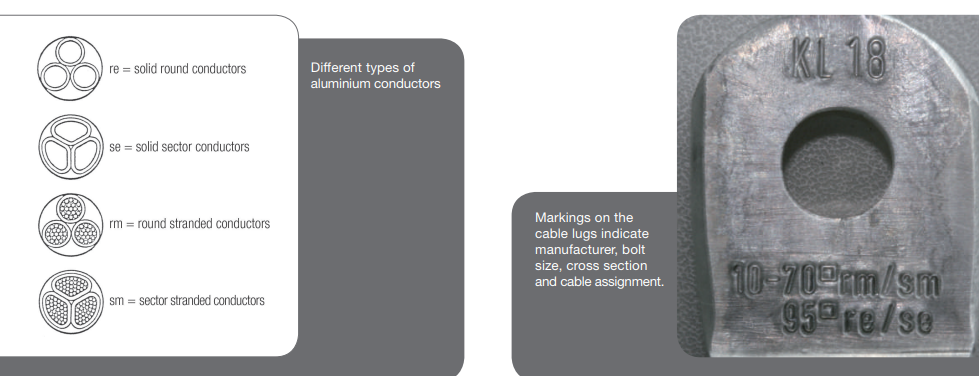
Markings on the product provide the installer with information relating to the origin and application of the DIN 46235 cable lugs, which also applies for standard tubular cable lugs.
DIN crimp cable lugs show the required number of crimps stipulated by the manufacturer: Marking “KL 22 12 – 150”
KL: indicates manufacturer (in this case Klauke)
22: Die set code (only for compression lugs DIN 46235)
In addition, these lugs indicate the number of required crimps. For installing, the DIN standard recommends crimping dies according to DIN 48083, Part 1, 3 and 4 for solid, stranded and fine stranded conductors.
For braided ropes the standard refers to the information of the manufacturer.
Klauke generally recommends the use of hexagon crimping dies according to DIN 48083, Part 4 for installing of compression lugs DIN 46235 – the range of cable conductor cross sections is from 6sqmm up to 1000sqmm, bolt sizes range from 5mm up to 20mm.
Electrolytic copper according to EN 13600 is mandatory.
For corrosion protection the compression cable lugs – also standard tubular cable lugs and terminals – are tin plated to protect against oxidisation.
Copper tube cable lugs “standard design”
Apart from DIN cable lugs, many manufacturers also offer standard tubular cable lugs, also made from electrolytic copper according to EN 13600. As far as sizes are concerned, standard tubular lugs are mostly shorter than DIN lugs and also differ in tube dimensions.
DIN EN 13600 Copper & Copper Alloys – Seamless Copper Tubes For Electrical Purposes; German version EN 13600:2013
DIN compression cable lugs are longer than standard tubular cable lugs
However, since these lugs are also subject to test standard IEC 1238 Part 1 the durability of electrical and mechanical connection is not affected.
All lugs – irrespective of type – can only be crimped properly when a suitable cable crimping tool is used. Incorrect tools or an unprofessional crimp can result in increased joint resistance, increased temperatures and even fire.
Standard tubular cable lugs (left) have different tube dimensions to DIN crimp cable lugs (right)
To eliminate this risk Klauke recommends the crimping of their lugs with their tools – this is a matched crimping systems avoid a mixture of brands which are potentially incompatible.
Sheet metal terminals according to DIN 46234
Solderless Terminals
Also for the sheet metal terminals certain DIN standards apply regarding application, dimensions and marking.
Other than compression cable lugs DIN 46235 terminals are designed only for crimping of stranded, fine and very fine stranded conductors – not for solid conductors.
Incorrect Crimping
Incorrect Crimping
Correct Crimping
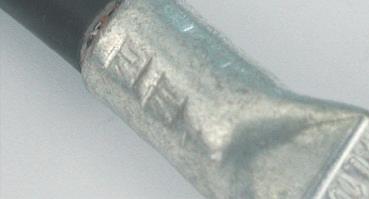
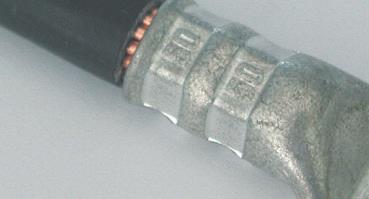
Incorrect and correct crimps in comparison: An incorrect crimp (crimping,middle: low force crimping, and usage of incorrect crimping tools can result in an increase in joint resistance and may jeopardise the installation)
Which cable lug suits which application?
Cross section ranges from 0.5sqmm up to 240sqmm, bolt sizes from 2mm to 16mm.
Among others terminals they can be found in electrical control cabinets and vehicles of public transportation services, such as rail carriages and rolling stock.
Sheet metal terminals are also made from electrolytic copper according to EN 13600. But there is a difference in the basic material – compression standard tubular lugs are produced from copper tubes while solderless terminals are made from copper sheets.
Terminals show a soldered seam as the DIN standard prescribes a closed tube.
The DIN standard does not specify crimping tools – Klauke recommends their self-designed indent crimping tools.
Useful Information
The selection of the correct cable lug very much depends on the cable type. For cables according to DIN 57295 the following lugs can be used:
Cables Class 1, 2, 5 and 6: Compression lugs DIN 46235
Cables Class 2: Standard tubular lugs
Cables Class 2, 5 and 6: Terminals
In practice it can happen that flexible class 5 and 6 cable conductors do not fit into the appropriate cable lug. For such cases, Klauke recommends the so called F-cable lugs which have a larger inner diameter and feature a flared entry. Indent crimping is recommended.
For installing the DIN lugs, crimping tools with die codes according to DIN 48083 Part 4 have to be used.
Electrical & mechanical properties
The International Standard IEC 1238 Part 1 applies to electrical and mechanical properties of cable lugs. The requirements for a permanent and safe electrical connection for the intended application are detailed in this standard.
Both a mechanical pull-out test and an electrical durability test are defined.
A test cycle simulates the application in practice: the connection is being heated 1000 times up to 120°C to imitate the morning voltage peak in-rush in the public power supply system.
Also high current tests are being carried out on the cable lugs at temperatures of 250°C.
The responsibility of adherence to these safety rules lies with every manufacturer of cable lugs. For this reason the manufacturers specify the appropriate cable type to be used with their lugs. Apart from normative standards, renowned manufacturers stipulate additional quality requirements.
F-Cable lugs with flared entry represent an option when cables of class 5 and 6 will not fit into normal cable lugs.
Klauke cable lugs are subject to an “annealing” process to condition the material from tension and hardness and to reduce the risk of fracture. F-Cable lugs with flared entry represent an option when cables of class 5 and 6 will not fit into normal lugs.
This process increases the durability and provides greater protection for the lug against vibration. This is another reason why Klauke recommend use of high-quality cable lugs from well known manufacturers.
The longer tube of Klauke cable lugs (above) guarantees a high quality connection.
The quality of lugs can often be recognised by visual characteristics: burr free cable lugs with flat palm and a cleanly machined end are signs of a high quality electrical connector.
High Quality Klauke Cable Lugs
Further Reading
Review other Blogs in this series of articles about Cable Lugs, Crimping Cables & Tools:
Thorne & Derrick are Specialist Distributors of leading manufacturers of Cable Accessories, Jointing & Installation Equipment.
LV MV HV cable accessories used to joint, terminate, connect, cleat and gland power cables to air and gas insulated substations, transformers, switchgear and overhead line networks.
Hover over our Interactive Electricity Grid to learn more about our product ranges.
LV 600/1000V ◊ MV 11kV 33kV ◊ HV 66kV 132kV
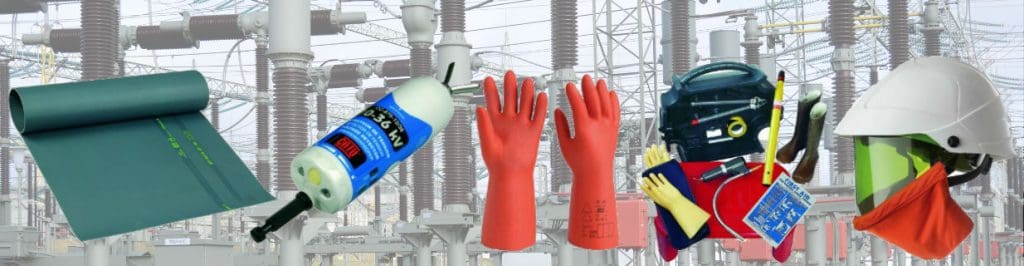
Substation & Overhead Line Electrical Safety Equipment
Manufactured by CATU Electrical to enable the safe construction, maintenance and repair of underground cables and overhead lines network up to EHV (400kV).
uploaded by Chris Dodds - Thorne & Derrick Sales & Marketing Manager
DIN 48083
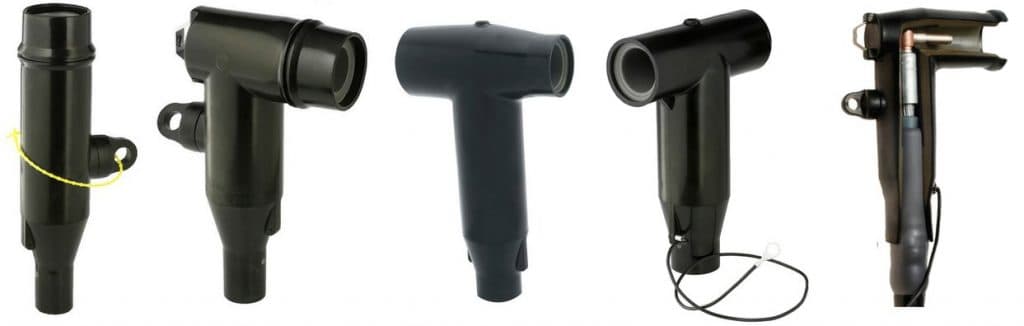
The following information is provided courtesy of Nexans Euromold to ensure the safe and reliable termination of LV MV HV cables using cable crimping lugs prior to installing any proprietary brands of cable termination – the information is relevant to Cold Shrink, heat shrink, slip-on and EPDM rubber screened separable connectors.
The standardised hexagonal crimp allows cable lugs and electrical connectors according to DIN 46235 to be crimped with certified crimping die sets and tools according to DIN 48083 Part 4.
Crimping Cables & Cable Lugs
Crimp lugs, compression connections and tubular cable lugs manufactured from copper or aluminium require precise matching of crimp cable lugs, conductor type and crimping tool size.
DIN standard crimping requires adherence of conductor, selected crimp cable lugs and compression die sets to provide optimum results when terminating cable lugs to DIN standards at LV MV HV.
The hexagon crimp or compression is designed for a cable conductor temperature up to 90°C, according to IEC.
DIN Standard 48083
DIN Standard 48083 is a hexagonal crimping profile and to conform to DIN standard where the correctly designated die sets must be used to compression/crimp the lugs or connectors.
All crimp cable lugs are stamped with cross section specification, manufacturer’s logo as well as die set code number, corresponding roughly to the outer diameter of the sleeve.
Select the crimp tool die corresponding to this code.
The hexagon crimps or compressions are carried out by means of mechanical,hydraulic or battery operated crimping tools according to the standard DIN 48083. “Cu” (Copper) marked dies have to be used for copper or steel compression cable lugs.
Designated “Al” (Aluminium) dies are used for aluminium or aluminium alloy compression cable lugs. In the case of hydraulic tools differentiation regarding the conductor materials is not necessary – if in doubt call Thorne & Derrick in connection with any of your cable crimping, lug or tool queries and requirements.
Installing Cable Lugs
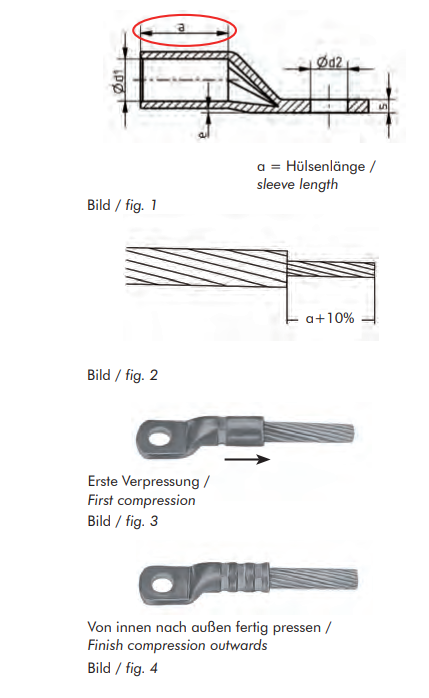
1. Strip cable conductor to sleeve length a+10% (fig. 1, 2)
2. Remove all tapes/yarn or similar conductor filling materials before mounting the cable lug
3. Remove dirt and oxide layers from the cable conductor using a metal brush
4. Insert conductor into compression sleeve up to the stop/inspection hole of the cable lug
5. Before compression verify the die code with the crimp mark number on the cable lug
6. Start crimping using correct tool from the palm side to the barrel end (fig. 3, 4)
7. The number and position of the compression points is indicated by marking lines. Attention: All markings must be compressed by the crimping tool
8. Final Check: The extension length of the sleeve is about 5 % by correct compression with correct conductor – cable lug – die – combination
9. Remove excess grease using cable cleaning wipes
Thorne & Derrick distribute for Cembre and recommend the use of their hydraulic and battery operated crimping tools in order to crimp cables in accordance with DIN Standard 48083 – contact us for technical support, quotations and delivery from stock.
T&D distribute the most extensive range of LV, MV & HV Cable Jointing, Terminating, Cable Pulling & Installation Equipment – we service UK and international clients working on underground cables, overhead lines, substations and electrical construction at LV, 11kV, 33kV and EHV transmission and distribution voltages.
uploaded by Chris Dodds - Thorne & Derrick Sales & Marketing Manager
The following information is provided to enable to selection and use of the correct crimping tools and die sets according to DIN Standard when installing Nexans Euromoldtype separable connectors – these cable connectors are used to terminate MV-HV cables into switchgear, transformers and medium/high voltage electrical equipment.
** Rotate each successive crimp 90 Degrees and remove flashes resulting from crimping.See the following image for crimp sequences.
DIN Standard Hexagonal Crimping Dies
Cable Conductors *
Diameter Crimp Barrel (A)
DIN Die Index **
Die Width Small
Die Width Large
25 35 50sqmm
12mm
12
4
2
35sqmm
14mm
14
5
3
50sqmm
16mm
16
5
3
70sqmm
18.5mm
18
6
3
95sqmm
22mm
22
6
3
120sqmm
23mm
22
6
3
150sqmm
25mm
25
6
3
185sqmm
28.5mm
28
6
3
240sqmm
32mm
32
8
3
300sqmm
34mm
34
8
3
400sqmm
38.5mm
38
–
4
500sqmm
44mm
44
–
4
Thorne & Derrick distribute Cembre tools to enable the crimping of all types of copper or aluminium conductor cables in hexagonal or nest-indent formation.
DIN stANDARD
DIN, Deutsches Institut für Normung e.V. (German Institute for Standardization) develops standards for rationalisation, quality assurance, environmental protection, safety and communication in industry, technology, science as well as the public domain.
T&D distribute the most extensive range of LV, MV & HV Cable Jointing, Terminating, Cable Pulling & Installation Equipment – we service UK and international clients working on underground cables, overhead lines, substations and electrical construction at LV, 11kV, 33kV and EHV transmission and distribution voltages.
uploaded by Chris Dodds - Thorne & Derrick Sales & Marketing Manager
Cable Joints
BS6387
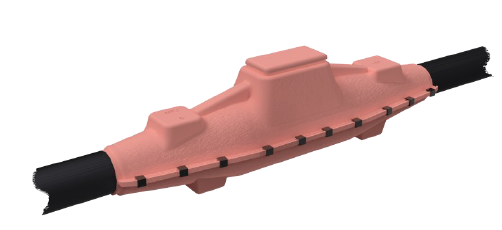
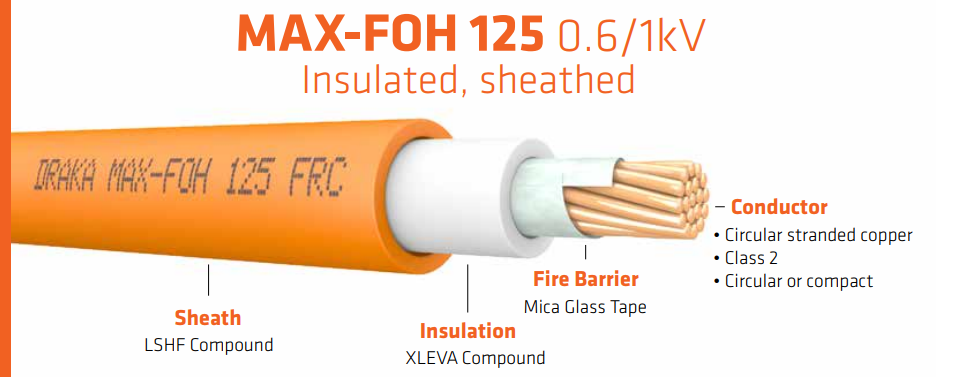
Prysmian FRZHMPJ are Fire Performance & Fire Resistant Cable Joints suitable to install as straight joints for LV Unarmoured and Armoured (SWA AWA) Max-FOH cables with copper conductors up to 1000V:
Single Core 1.5sqmm-1000sqmm
Multi Core 1.5sqmm-400sqmm
See the following download for the full and complete technical specification for Prysmian FRZHMPJ cable joints.
Cable Joint Kit Standards
The cable joint kits and shells include rigid glass reinforced phenolic joint shells which are fire retardant and LSOH (Low Smoke Zero Halogen) – the following fire tests have been conducted on the cable joints:
BS EN 50393:2015 – Test methods and requirements for accessories for use on distribution cables of rated voltage 0.6/1 (1.2)kV.
BS6387:2013 – Test method for resistance to fire of cables required to maintain circuit integrity under fire categories (Categories C, W & Z).
IEC 61034-2:2005+A1:2013 – Measurement of smoke density of cables burning under defined conditions
♦ BS6387 – Test method for resistance to fire of cables required to maintain circuit integrity under fire conditions.
Thorne & Derrick are distributors for the complete range of Prysmian Cable Joints for the reliable and safe jointing of industrial, hazardous area and fire resistant power cables to BS6387 standard.
What Is Arc Flash PPE and Why Is It Important? Arc flash PPE is specialist personal protective equipment designed to help protect electrical workers against the thermal hazards of an electric arc. It includes arc-rated clothing, protective helmets, face...
Voltage detectors are electrical safety instruments used to identify the presence or absence of voltage on electrical equipment and conductors. They are used by electricians, electrical engineers, utilities and maintenance teams working on low voltage (LV), medium voltage (MV)...



















 brands of cable termination – the information is relevant to Cold Shrink,