Safe & Easy Live Line Working at Low Voltage Networks & Cables
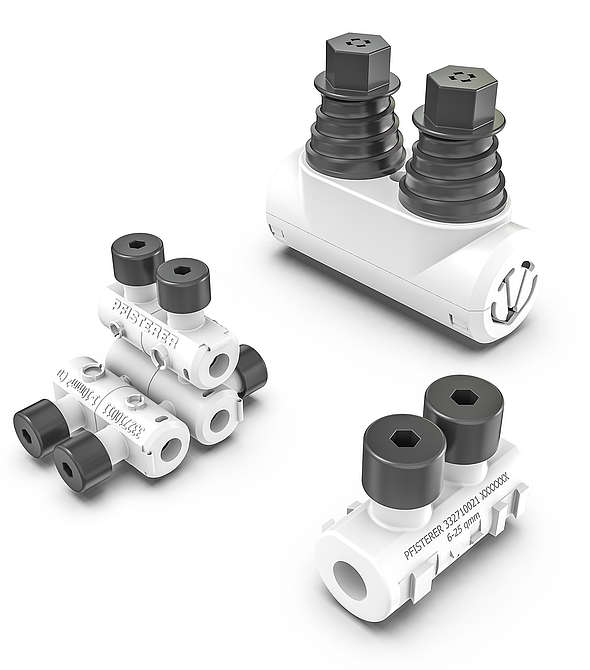
Live line working is increasingly essential in low voltage networks. Bolted connectors used for this purpose should be easy to install and ensure the best possible occupational safety. The LV piercing connector family from PFISTERER has been developed to meet today’s practical requirements. Durable contacts come as standard, and have been a PFISTERER core competence for nearly 100 years.
Conductor does not have to be stripped
Insulation piercing connectors connect and make electrical contact with conductor ends, whatever the conductor cross-section, type and insulation. Because they pierce the insulation during installation, preparatory work on the conductor, such as stripping or brushing the contact area, is eliminated when live working.
The shear bolts on insulation piercing connectors LV are based on patented SICON technology. The electrical connector bolts are equipped with a piercing system that reliably penetrates the conductor insulation during installation by the cable jointer. A rotatable disc at the base of the bolt prevents damage to individual strands and ensures the correct contact force for all conductor materials.
New installations or repairs LV piercing connectors easily and safely connect all low voltage cables – even under voltage
Good occupational safety
The insulating body and plastic cover caps provide IP2X protection against finger contact in accordance with EN 60529. On type 3 and above, plastic flaps prevent inadvertent contact with the inside of the conductor channel. The elastomer insert ensures protection against contact after the bolts shear off.
Low shear off torque
The shear off bolts are tightened using standard tools. Once the optimal contact force is reached, the bolt gently breaks away at a torque of between 2.5 and 27 Nm, depending on the type. This prevents common installation errors and makes live line working much safer.
Compact and well designed
Once installed, the small size of LV piercing connectors makes subsequent work easier. Compact cable joints with cast resin mean that fewer resources are needed for the final installation. The connectors can be placed close to each other without any further accessories.
Type 1 and 2 are equipped with a push together system: multiple connectors can be joined together to form a compact unit. With type 3 to 5, the elimination of the cover caps ensures the smallest possible dimensions.
Connector Benefits
Insulation does not have to be stripped from individual conductors
Easy, safe installation – ideal for live line working
Shear-off bolts prevent installation errors
IP2X protection against electrical hazards
Consistent operational reliability, according to IEC 61238-1 Class A
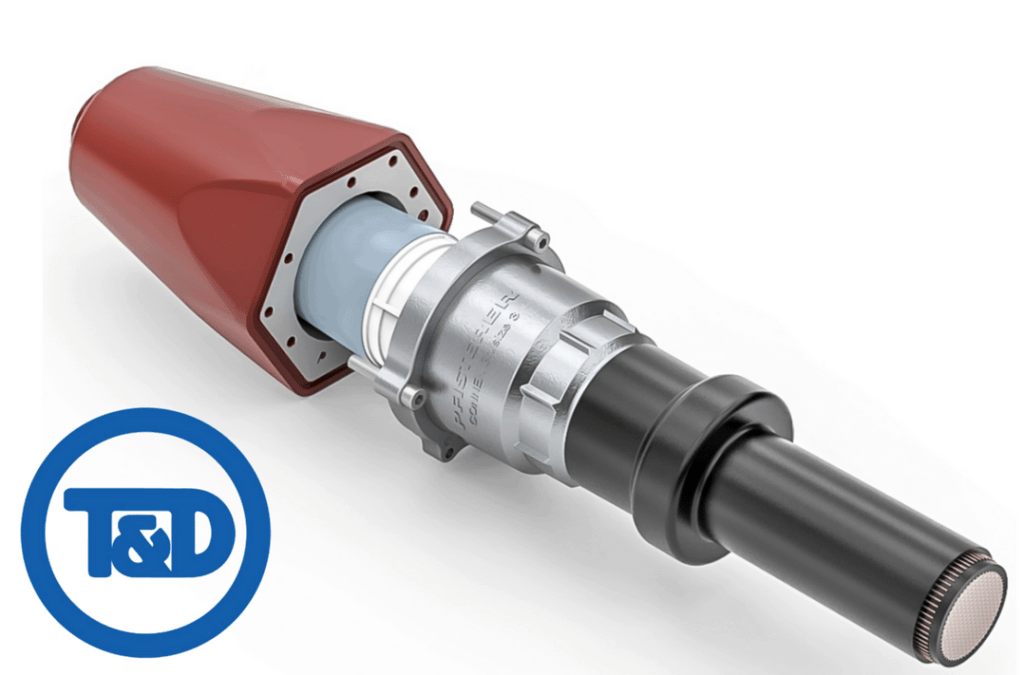
Thorne & Derrick stock and distribute PFISTERER CONNEX Connectors for medium / high voltage cable connection and termination to electrical systems up to 33kV – we provide competitive prices for PFISTERER CONNEX connectors used to terminate and connect polymeric insulated MV-HV cables into gas insulated switchgear and electrical equipment from extensive UK stocks.
Thorne & Derrick are national distributors of LV, MV & HV Cable Installation, Jointing, Substation & Electrical Equipment – servicing businesses involved in cabling, jointing, substation, earthing, overhead line and electrical construction at LV, 11kV, 33kV, 66kV and EHV. Supplying a complete range of power cable accessories to support the installation and maintenance of low/medium and high voltage cable systems:
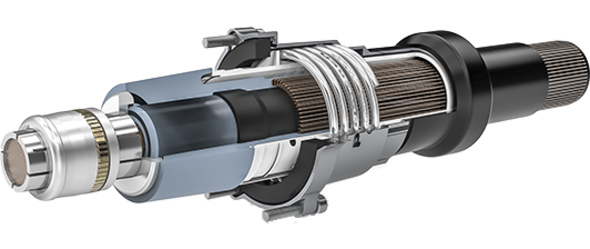
The SEANEX inner cone solution is an offshore variant of the successful Connex HV connection system that is specially adapted for 66kV inter-array cabling.
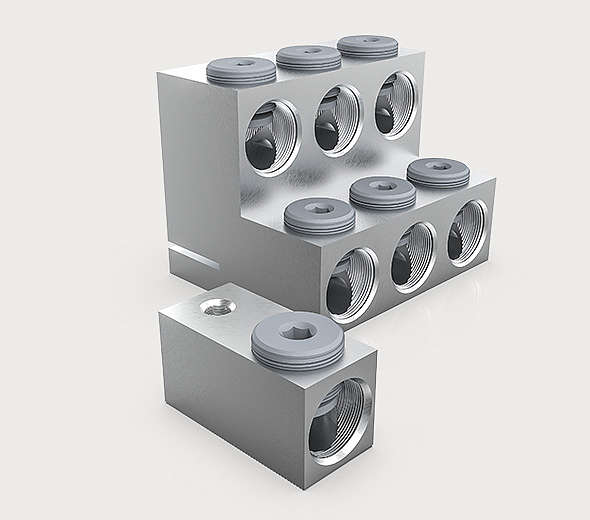
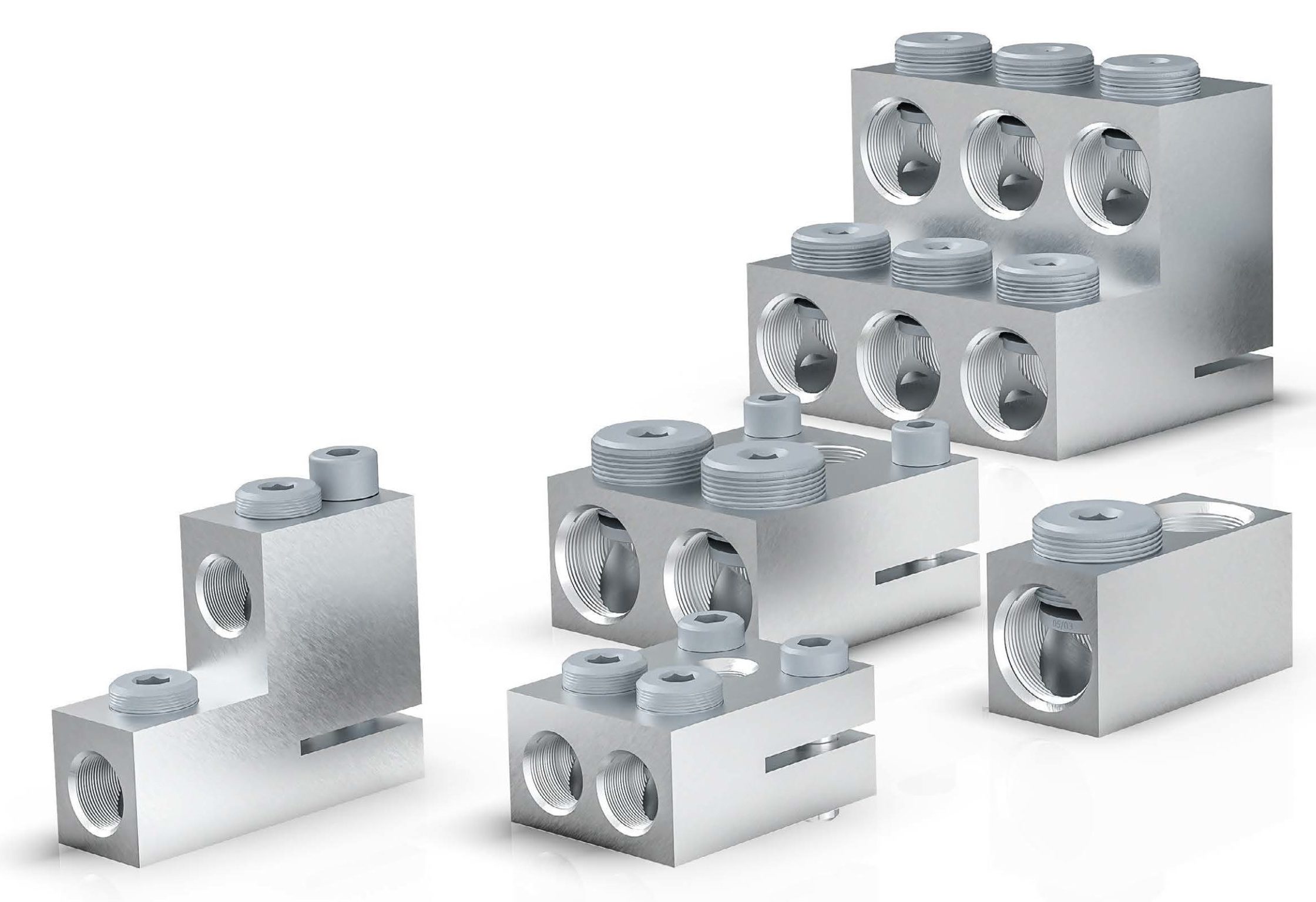
In modern substation engineering, cable connections are increasingly implemented using screw technology. The 2DIREKT terminal clamp by PFISTERER is a solution for connections to transformers and busbars.
2DIREKT combines simple installation with a compact, cost-effective design.
Almost 100 years of contact technology experience and innovations for easy and safe installation are in every 2DIREKT terminal block.
Connects directly to transformer bushing or busbar
The 2DIREKT clamp is connected directly to the distribution transformer. It screws onto the transformer bushing and is secured via a clamping groove and clamping screw. This reduces the amount of installation work and the risk of connection errors.
No cable lugs have to pressed on, and no wire-end ferrules have to be fitted. There are fewer points of contact and transition resistance is minimised.
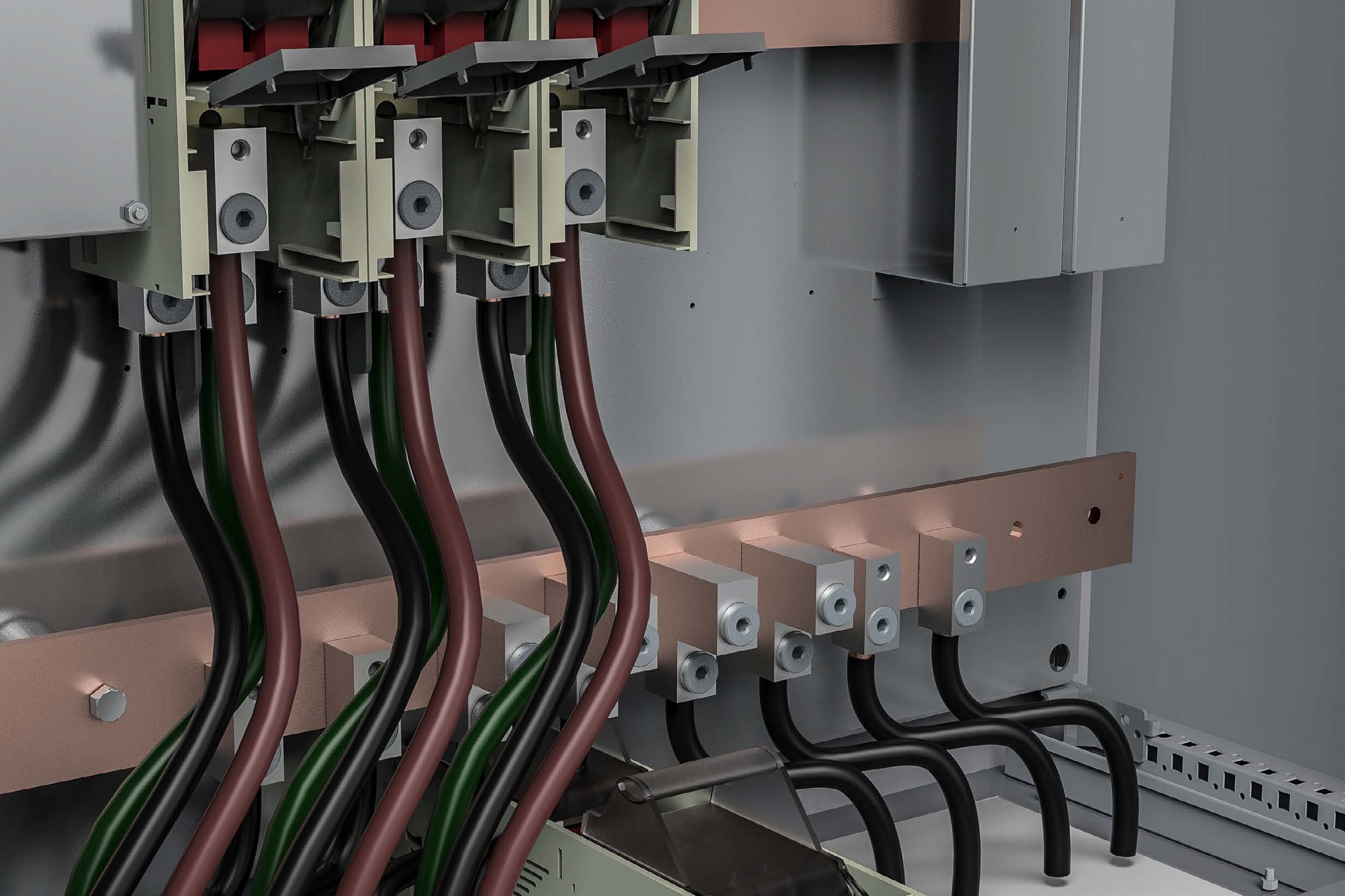
The 2DIREKT A version allows cables to be connected directly to busbars. Fine grooves on the underside of the clamp enables connection without additional components directly on the busbar.
The 2DIREKT is connected directly to the distribution transformer, making palm terminals, cable lugs, sleeves and nuts redundant
Safety during installation and operation
The patented conductor connection system eliminates damage to the conductor during installation. A rotating plate on the base of the clamping bolt prevents individual fine-wire conductors from being damaged or even cut off. During operation, the plate functions like a spring and ensures constant contact pressure.
One clamp for all cross-sections
The 2DIREKT clamp can be used for multiple cross-sections. Various versions are available for cross-sections of 16-95 mm², 35-240 mm² and 185-400 mm². All forms of class 1, 2 and 5 copper conductors as well as class 1 and 2 aluminium conductors can be connected.
This makes the 2DIREKT not only practical but also cost-effective. The right clamp is always available on site, and stock keeping is much simpler. 2DIREKT clamps are electrically type-tested in accordance with IEC 61238-1 class A.
Compact, sophisticated design
2DIREKT offers two cable outlet directions in one body. The clamping channel and the threaded hole for the clamping screw are identical, so the conductor can be connected at a 90° angle if required. This ensures easy installation even in confined environments.
2DIREKT
Benefits
Conductors can be connected vertically and/or horizontally
Connection without wire-end ferrule or cable lug
Individual strands are not damaged
Reduced space requirements
Removable connection
Installation with standard tools, no compression required
Range-taking: fewer different types means simpler stock keeping
2DIREKT Facts
Voltage: up to 1 kV
Current: up to 4 kA
Conductor cross-section: 16 to 400 mm²
Conductor: aluminium class 1 and 2, copper class 1, 2 and 5 (fine wire)
Transformer clamp for bushings per DIN EN 50386
Connection for busbars
The 2DIREKT A version allows cables to be connected to busbars. The clamp is mounted directly on the busbar. Fine grooves on the underside of the clamp make line contact, ensuring very good power transmission that remains stable over time with minimal contact resistance. Depending on the installation situation, 2DIREKT A is available with a through hole, threaded hole or stud bolt.
Thorne & Derrick stock and distribute PFISTERER CONNEX Connectors for medium / high voltage cable connection and termination to electrical systems up to 33kV – we provide competitive prices for PFISTERER CONNEX connectors used to terminate and connect polymeric insulated MV-HV cables into gas insulated switchgear and electrical equipment from extensive UK stocks.
Thorne & Derrick are national distributors of LV, MV & HV Cable Installation, Jointing, Substation & Electrical Equipment – servicing businesses involved in cabling, jointing, substation, earthing, overhead line and electrical construction at LV, 11kV, 33kV, 66kV and EHV. Supplying a complete range of power cable accessories to support the installation and maintenance of low/medium and high voltage cable systems:
The SEANEX inner cone solution is an offshore variant of the successful Connex HV connection system that is specially adapted for 66kV inter-array cabling.
Branch Terminals for LV Cables & House Service Connections
Practical installation, good occupational safety and high levels of operational reliability are fundamental criteria for home power connections. ISICOMPACT by PFISTERER – the inventor of multi-conductor cable branch technology is the perfect solution.
With the invention of the compact screw terminal in 1968, PFISTERER set the standard in house connection technology. Well over 20 million SCK have been installed since then. Fast forward 30 years and the time had come for further development – ISICOMPACT technology.
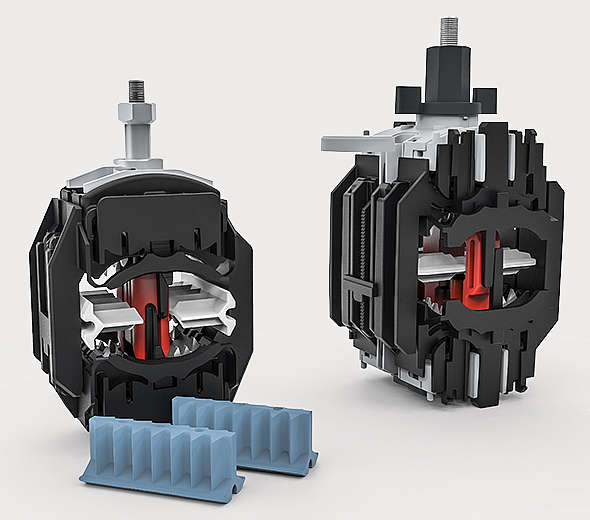
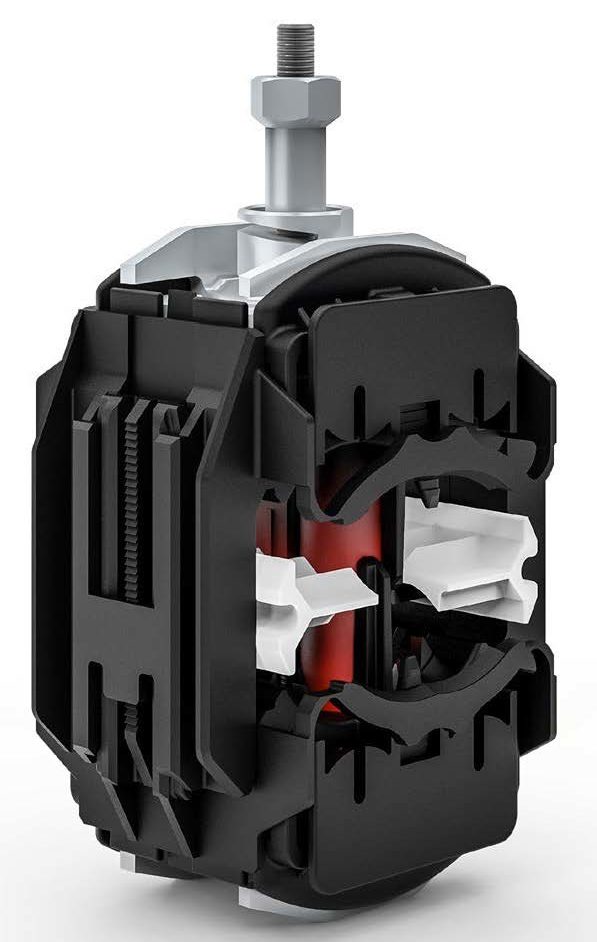
The ISICOMPACT establishes all contacts for a 4-conductor cable branch using a single screw connection. When the screw connection is tightened, contact is established by piercing the insulation on the main line and branch lines.
Once the required clamping force has been achieved, the screw shears off and thereby ensures successful installation. By providing protection against contact and thus against electrical hazards, the ISICOMPACT is designed for live line work.
It is currently the only cable tap connector that also meets the strict requirements of BSI 862 – a German approval that enables a process for live line work without additional PPE and requires LLW electricians to undergo special training and the LV power network provider to be approved.
Six screws become ONE
ISICOMPACT reliably creates a branch connection from the supply cable to the end customer with just one screw. This simplifies and speeds up installation.
Where as conventional “clamping rings” have at least six screws, one or more of which are usually poorly accessible, the single screw on the ISICOMPACT can be placed on the cable to suit conditions, and conveniently tightened from above or from the side.
Simple & safe installation
Tightening the screw establishes all conductor contacts reliably and safely to form the cable branch. Insulation does not have to be removed from the conductor; contacts are established by piercing the insulation.
Spring pressure plates on both sides of the clamp ensure permanent contact force. The design and installation sequence ensure protection against contact with live parts throughout all work steps.
Live line working
Providing shock-proof protection against electrical hazards, ISICOMPACT is designed for live line working. The “green” version ISICOMPACT plus is the only cable tap connector approved by employer’s liability insurance association BG ETEM for live line work without additional PPE. It meets the strict requirements of DGUV Information 203-031 (formerly BGI 862).
ISICOMPACT – Reliable home connection with just one screw
High flexibility
Compared to conventional cable tap connectors, ISICOMPACT offers significantly larger clamping ranges and high flexibility in use. Altogether there are two standard sizes and seven variants. ISICOMPACT multi combines the S, M and 3 1/2 variants in one product.
As a result, electricians are equipped for all eventualities. At the same time, the smaller number of variants reduces the risk of using the wrong type and cuts inventory costs.
Unique shear-off technology
ISICOMPACT features a specially developed shear nut which performs two tasks during fitting. It defines the installation end-point and minimises the clamp’s dimensions. Once the optimal contact force is reached, the shear nut operates and the protruding section of the screw breaks away burr-free. Subsequently, ISICOMPACT fits into all commercially available cast resin joints.
Currently used by all major energy suppliers. ISICOMPACT cable branch technology
Everything from a single source
Clamping ring and cast resin joints from the inventor of multi-conductor cable branch technology. As a contact technology specialist and solution-oriented system provider, PFISTERER offers a wide selection of cast resin joints to complement the ISICOMPACT connection system, as well as complete matching sets comprising a cast resin joint and the cable tap connector. Our proven two-component cast resins with excellent flow characteristics are available in tins or in a practical two-chamber bag.
ISICOMPACT Benefits
No stripping of conductors
Insulation does not have to be removed from the conductor
Shock-proof protection against electrical hazards
One-Screw solution with defined shear torque
Consistent operational reliability, tested to DIN VDE 0220 part 3
Reduced range of variants due to large area of application
Thorne & Derrick stock and distribute PFISTERER CONNEX Connectors for medium / high voltage cable connection and termination to electrical systems up to 33kV – we provide competitive prices for PFISTERER CONNEX connectors used to terminate and connect polymeric insulated MV-HV cables into gas insulated switchgear and electrical equipment from extensive UK stocks.
Thorne & Derrick are national distributors of LV, MV & HV Cable Installation, Jointing, Substation & Electrical Equipment – servicing businesses involved in cabling, jointing, substation, earthing, overhead line and electrical construction at LV, 11kV, 33kV, 66kV and EHV. Supplying a complete range of power cable accessories to support the installation and maintenance of low/medium and high voltage cable systems:
The SEANEX inner cone solution is an offshore variant of the successful Connex HV connection system that is specially adapted for 66kV inter-array cabling.
Special Thanks To Ian Griffiths – Earthing System Design HV – Original ArticleHere
In this Guest Blog from Ian Griffiths (GreyMatters Principal Partner) we learn how what the difference is between grounding, earthing and bonding? That’s a question our readers and clients ask often.
Also, we’re asked quite a bit about earthing and bonding in general. So, there’s an unusually large amount of confusion around the term Earthing and Bonding. Or, for our friends in the states; you might come across the term grounding and bonding.
Therefore, in this piece, I aim to clarify the difference between – what is grounding, Earthing and what is bonding and whether there is a difference.
Breaking things down into simple terms; Earthing – grounding can mean all things to all people. Hence, it is more realistic to think of Earthing as the ‘electrode’ itself. Also, known as the Earth Termination. This reference refers to the physical hardware, such as the copper conductors, rods, etc., that sits buried directly in the geology itself.
Alternatively, Bonding on the other hand usually refers to the above-ground interconnections between the equipment or structures to be bonded.
What’s The Difference Between Earthing & Grounding?
There’s a lot of unnecessary confusion surrounding the difference between the discipline of Earthing and Grounding, which is kind of crazy, because, for the most part, the two are the same.
Earthing is the term used primarily by previous British colonies, whereas, Grounding is used more by those countries where the British had less influence.
So you might see the term Ground Potential Rise (GPR) or Earth Potential Rise (EPR) – both refer to the same thing! It’s purely a localism that has developed over time.
Difference Between Earthing & Bonding – Summary
So, to summarise Earthing and Bonding difference can be categorised as follows:
Earthing is the stuff ‘in’ the ground, and;
Bonding is the stuff ‘above’ ground.
Thus, knowing that some earthing system “stuff” is going to sit above ground level. And some will be below ground is a useful way of thinking about E&B (earthing and bonding). It’s also imperative to understand as part of an E&B design strategy that each item has a subtly different purpose.
One thing is for sure, E&B is a safety-critical aspect on all HV networks, including Rail Network electrification schemes. And as part of GreyMatters mission to help save lives while making life as easy as possible to deal with us, you’d expect us to jump through some crazy-hard hoops in the process, right?
Sentinel
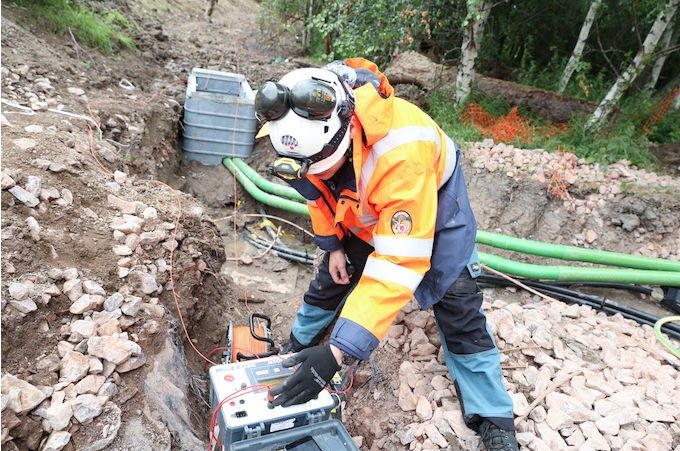
As a result, one such ‘hoop’ Sentinel. I have to confess, and it’s quite a significant commitment to making initially (November 2017)to become the only Earthing Consultancy on the planet to my knowledge to offer full Sentinel sponsor status for Network Rail E&B projects. This status means PTS certified engineers get trackside in the UK easily without any faff or hassle and full RISQS compliance comes built-in to keep the regulators happy on the governance side.
Not only that but we also made some eye-watering (for us) investment in high-energy testing equipment. Furthermore, the readings we take do not suffer from the common, yet not fully recognised rail-related external influences.
Often these sources of error usually cause no-end of uncertainty in a rail environment, i.e. lots of lovely conductive structures that run in parallel for miles. Incidentally, these are quite a headache as a source of interference, when testing using the conventional equipment. Again, this attention to detail is something that makes GreyMatters entirely different. As a result, it’s also something that other sectors can benefit from – not just rail.
Anyway, hopefully, this piece clears up the confusion regarding E&B (Earthing and Bonding) you might have held previously and given a small insight into E&B testing headaches on rail projects too.
ABOUT GREYMATTERS
GreyMatters specialise in High Voltage Earthing System Design for earthing systems 1kV-765kV to meet EN 50522 and and international specifications, including 11kV, 33kV and 66kV power systems.
Protecting critical assets and life from the harmful effects of high voltages and lightning strikes globally since 1995
Focussing on high voltage electrical earthing system design, earthing measurement and surveys, lightning protection design, training and policy formulation
THORNE & DERRICK are national distributors of LV, MV & HV Cable Installation, Jointing, Duct Sealing, Substation & Electrical Equipment – we service UK and global businesses involved in cable installations, cable jointing, substation earthing, overhead line and electrical construction at LV, 11kV, 33kV and EHV.
Since 1985, T&D have established an international reputation based on SERVICE | INTEGRITY | TRUST.
Contact us for 3M Electrical, ABB, Alroc, AN Wallis, CATU Electrical, Cembre, Centriforce, CMP, CSD, Elastimold, Ellis Patents, Emtelle, Euromold, Filoform , Furse, Lucy Electric & Zodion, Nexans, Pfisterer, Polypipe, Prysmian, Roxtec, Sicame, WT Henley.
A custom solution for a global problem:how Slingco integrated fixed-eye cable pulling socks onto existing cables.
Cable Pulling Socks
Thorne & Derrick distribute a complete range of Cable Pulling Products to support the safe installation of LV, MV & HV cables into underground ducts, conduits and trenches. Cable socks and support grips are available for a wide range of applications such as the installation of 33kV & 66kV array cables prior to Jointing & Terminating in windfarm towers, turbines and offshore substations.
THE PROBLEM
Slingco teamed up with one of the world’s leading cable manufacturers to devise a way to integrate a fixed eye pulling loop on to cables manufactured for the global market. During initial consultations with the client, we identified several historical lead time and reliability issues experienced using their existing method and product.
THE SOLUTION
Slingco applied its proven New Product Development process (NPD) to create a solution that provided the client a superior solution. The key to the NPD process is our ability to listen to the client’s needs, understand the challenge and react promptly to provide a viable solution at a competitive price.
The Slingco team of cable management experts identified ways to create a more reliable and less expensive method to install their cables. With Slingco’s manufacturing and supply chain expertise, we were able to shorten the customer’s lead times and stock out issues.
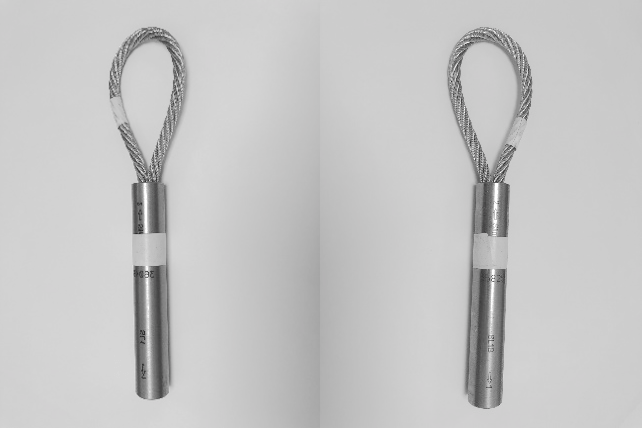
Fixed eye crimp-on cable socks are easy to install, minimise the length of cable being impacted by the pulling device and are a secure way to pull and manage the cable during the manufacturing and spooling process.
Crimping the pulling eye onto the cable is quick and easy using a Slingco hydraulic crimper, which securely holds the cable during all pulling and cable management processes.
Slingco were able to demonstrate an effective design, manufacture and standardise the product used today, and able to provide an impeccable service via a robust manufacturing supply chain. Our ongoing quality assurance processes ensure the continuous reliability of the product delivered.
Main Improvements:
Material specification analysed to reduce fatigue / cracking.
Colour coding for easy identification. Not just pulling eyes but tooling as well to ensure the correct tool is used.
New tooling and standardised swage diameters introduced to prevent over crimping. Reduce the number of sharp burrs.
Improved marking of product for easy-to-read identification purposes and easy positioning of the product for swaging.
Box weights and quantity batch size introduced for ease of lifting and movement.
Acceptable minimum order quantities and reorder levels introduced.
Ongoing testing support for new cable designs introduced by client to check compatibility of Slingco fittings.
CABLE SOCKS & PULLING PRODUCTS LV MV HV
Complete range of LV, MV and HV cable pulling products for installation and enabling cable jointing in trench or ducts including LV, 11kV/33kV medium voltage (MV), 66kV/132kV high voltage (HV) and EHV transmission and distribution cables up to 400kV.
Thorne & Derrick distribute the most extensive range of Cable Installation & Electrical Distribution Equipment to the Power Transmission & Distribution industry in the onshore and offshore wind, solar, rail, oil/gas, data centre, battery storage and utility sectors.
We service UK and international clients working on underground cables, overhead lines, substations and electrical construction at 11kV and up to and EHV transmission and distribution voltages.