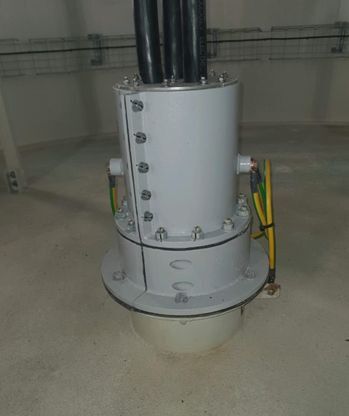
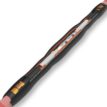
In this guide, Harvey Ross (HV Harv) demonstrates the key stages of a33kV T-boot termination on a NexansGT1 incomer. This process requires accuracy to ensure a watertight seal, maintain insulation integrity, and meet manufacturer specifications. Using specialist tools – including the Ripley Tools, US15 Pro Max, US02 & US10, as well as the ALROCLH2 – Harvey shows how each stage can be completed efficiently and to a high standard. All tools featured are available from Thorne & Derrick, jointing tool stockists, suppliers & distributors, trusted by HV professionals worldwide. The video below shows the full process, with our step-by-step breakdown following.
jointing Tools Used in This T-Boot Termination
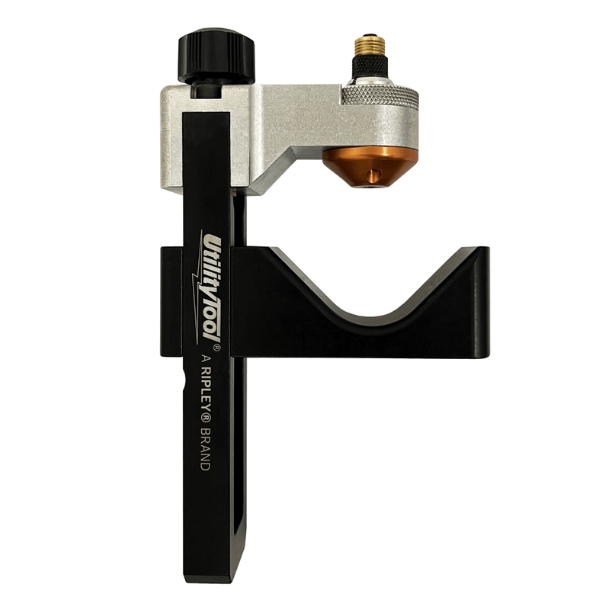
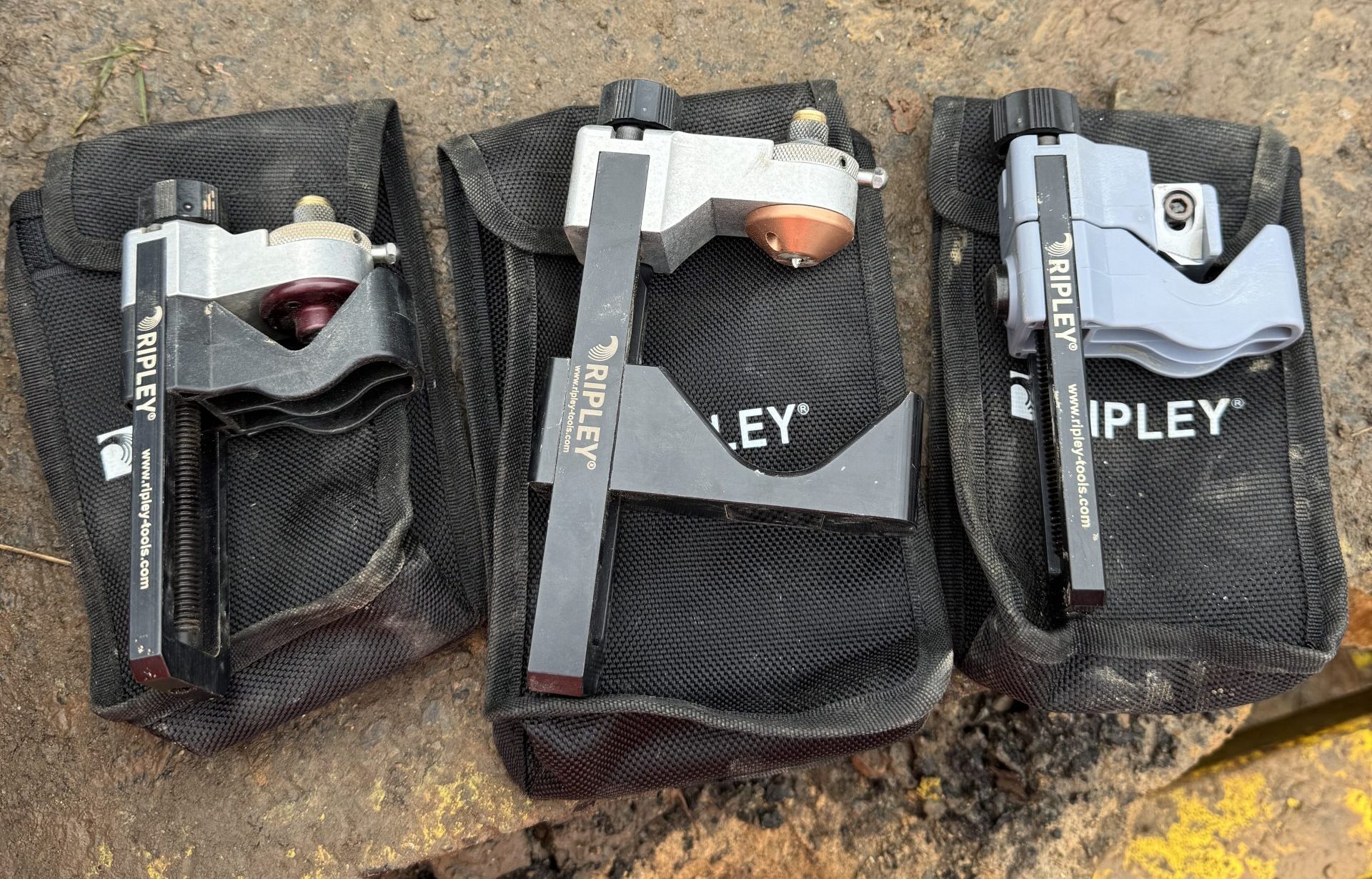
Ripley US15 Pro MAX
High-precision insulation removal tool designed for fast, consistent results on medium and high-voltage cables.
All of these tools are available from Thorne & Derrick (Power and Cables) – trusted by LV, MV & HV professionals for safety, precision, and performance.
Cable Preparation & Initial Measurements
Measure the Bushing
Begin by measuring the bushing depth.
Measure back 285mm from the bushing end.
Sand 65mm of insulation to ensure a watertight seal.
Clean the Surface
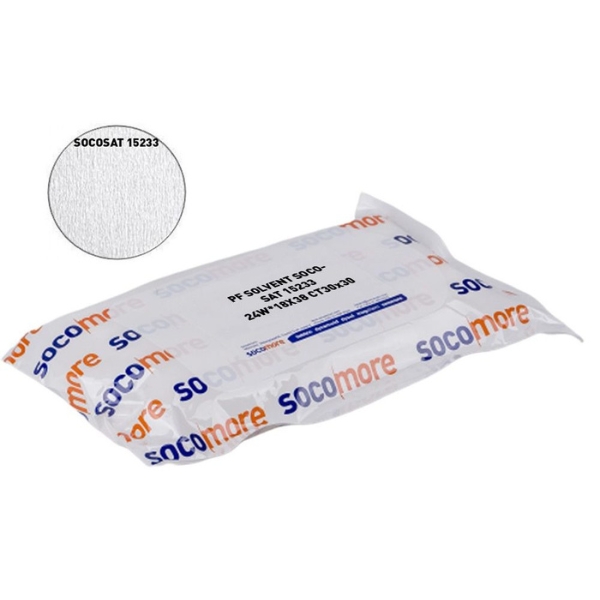
Wipe the prepared surface thoroughly with a PF cleaning wipe.
XLPE Insulation Removal with Ripley US15 Pro Max
Remove Outer Insulation
Use the Ripley US15 Pro Max to make a circumferential cut, then transition to a spiral cut.
This tool excels in tight spaces and removes thick insulation with ease.
Finish the Cut
Use a hooked cable knife (a “hold-to-fall knife”) to flick out the final insulation section.
Remove Water Barrier & Copper Tape
Strip off the water blocking layer.
Remove the copper binding tape.
Clean the outer sheath again with a PF wipe.
Install Mastic & Prepare the Screen
Apply Water Mastic
Apply mastic around the cable as per kit instructions.
Bend Back Copper Screen Wires
Fold the screen wires back neatly in preparation for earth bonding.
Stress Control & Semi-Con Removal
Measure for Stress Control Tube
Mark 65mm from the screen cut to guide the positioning of the stress control tube.
Remove Semicon Layer
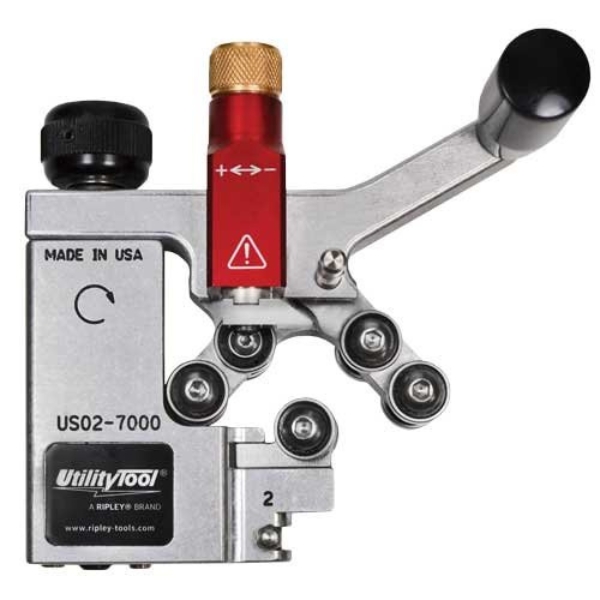
Use the Ripley US02 to remove the semi-conductive layer down to 30mm.
Tie off and sand as necessary for a smooth surface.
Cable Stripping & Chamfering
Strip Primary Insulation
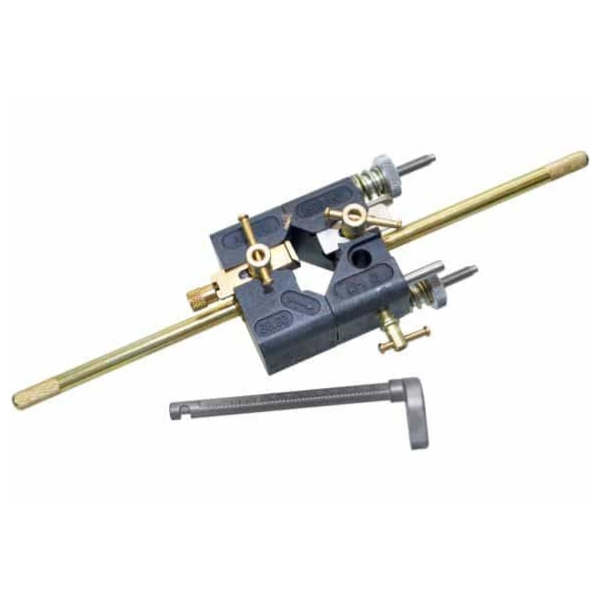
Using the ALROC LH2, set the blade to the depth of the lug barrel.
Strip the insulation cleanly.
Chamfer the Conductor
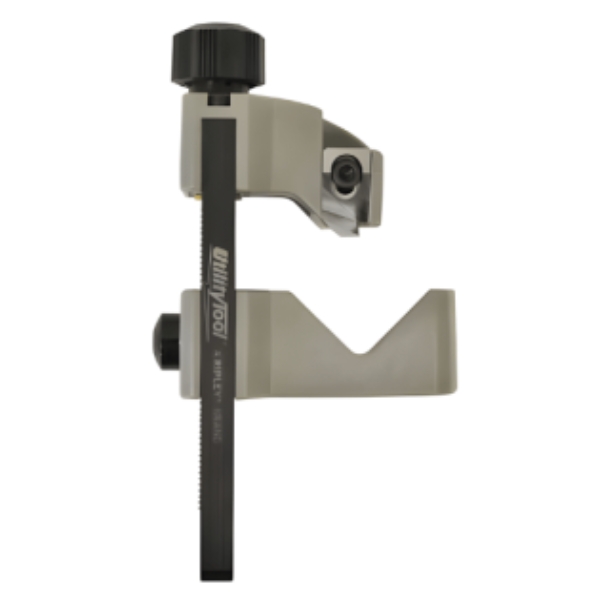
Use the Ripley US10 to add a smooth chamfer to the end of the insulation.
This compact tool creates a clean finish, reducing stress points.
Prep Conductor
Tape the conductor end to prevent strand splay.
Clean the insulation and apply the termination grease (usually supplied with the kit).
Connector Assembly & Final Termination
Install Stress Control Tube
Slide it down to the 65mm marker created earlier.
Install Lug
Prep the conductor.
Slide on the lug and shear it off according to manufacturer torque ratings.
Clean and reapply grease.
Fit the T-Boot
Apply termination grease to:
The lug
Stress control tube
Inside of the T-body boot
Slide the boot on facing the correct direction.
Final Steps: Earth Bonding and Securing
Mount the Termination
Push the booted termination onto the bushing.
Fit the cleat to secure the assembly.
Dress Earth Wires
Straighten and align the copper screen wires.
Use one wire to wrap and secure the bundle for a clean finish.
Complete 33kV T-Boot Termination
What you now have is a fully installed Nexans 33kV T-boot termination, completed with precision using high-quality Ripley cable preparation tools.
A must have for your cable jointing tool box, the Ripley US15 PRO MAX is the perfect solution for precise safe cable outer sheath jacket removal from LV MV HV power cables. Whether the cable is thin or thick, the US15 PRO MAX performs fully adjustable cuts on cable diameters from 38mm to 80mm, whilst maintaining the underlying layers of the cable.
The professional heavy-duty cable sheath jacket stripping tool can cut through many types of insulated material, including PE, XLPE, PVC, EPR, EPDM, TGGT, Silicone Rubber and Sealpic, creating clean ring, spiral and longitudinal cuts. Ultimately, the Ripley US15 eliminates the need for basic cable cutting tools, improving safety, preventing possible cable damage, and delivering reliable results.
Flexible and adjustable blade position and cutting depth
Suitable for hard and soft insulated power cables with diameter of 38mm – 80mm
Compatible with a number of varied insulated materials
How do I remove the cable outer sheath after cutting? The Ripley US15-7020 Cable Sheath & Jacket Lifting Tool is the safest solution for lifting a jacket from a LV MV HV power cable, rather than using a standard knife.
Thick Cable sHEATH rEMOVAL, Close Quarters, No Problem!
The Ripley US15 PRO MAX made this job effortless. Challenged with an incredibly thick cable outer sheath jacket (around 65mm diameter) in a small space, Harvey selected the US15 PRO MAX to solve the limited flexibility hurdle.
Starting with a circumferential cut, then seamlessly switching to a spiral cut and pushing up to create a quick, easy and effective slice. Due to the power cable being in an awkward position and thick insulation, the cable was difficult to bend. Using the Ripley US15 PRO MAX was the ideal tool to spiral the cable and manoeuvre the debris. In this case, Harvey used a standard knife to pop and unwrap the cable outer sheath jacket from the cable.
RIPLEY Tools
Experts in Cable Jointing Tool Design
Founded in 1936, Ripley are market-leaders in manufacturing equipment, tools and technology for specialised applications. Offering a pioneering approach to product design, has enabled Ripley to create innovative tools that solve the everyday challenges faced by linemen, cable engineers, technicians and installers. Including complete ranges of FO LV MV HV cable preparation tools, designed to enable the stripping and removal of cable sheath/jacket, and LV MV HV cable jointing tools, purposed for the jointing of LV HV HV power cables.
As well as the Ripley US15 PRO MAX, Thorne & Derrick are also stockists and suppliers of the complete Ripley Tools range, including Ripley US15-7000 (10mm to 60mm cable diameter) and Ripley US15-7010 PRO (10mm to 60mm cable diameter) Cable Sheath Jacket Stripping Tools. We offer competitive pricing, excellent customer service and fast worldwide delivery, for a seamless buying experience.
Contact our experts and discuss your cable tooling requirements.
Do You Need Cable Cleats in Data Centres?
In an increasingly digital world, Cable Cleats in Data Centres are crucial in support of the backbone of global connectivity. Every click, transaction, and streamed video relies on complex Data Centre infrastructures operating seamlessly. As the demand for high-speed data and reliable uptime continues to grow, so too does the need for robust electrical infrastructure. Among the often-overlooked yet crucial components of Data Centre design is cable management – ensuring that LV MV HV Power Cables and data cables are installed, protected, and maintained to the highest standards.
What is a Cable Cleat?
Cable Cleats are devices used to secure, fix, strap and support electrical power cables in an installation, ensuring safe operation and prevention of damage or injury, specifically in the event of a short circuit. Cable Cleats in Data Centres are ultimately purposed to increase/enhanced safety, organisation, cable protection, containment and ensure optimal performance. Typically, Cable Cleats are designed to be attached to various surfaces, such as ladders, trays, struts, rails, or beams.
LV MV HV Power Cable Management in Data Centres
Modern data centres are high-density environments where vast amounts of power are distributed through extensive cabling systems. These installations face several key challenges:
High Power Demand: Data Centres require vast amounts of electrical power, leading to high-capacity cabling systems that must be properly supported and secured.
Thermal Management: Poor cable management with no Cable Cleat usage can obstruct airflow, leading to overheating and reduced efficiency.
Fire Safety: Electrical faults, if not properly contained, can pose a serious risk to critical infrastructure and personnel. Regulations require secure cable installation to prevent short circuits and mitigate fire hazards.
Maintenance and Upgrades: Well-organised cabling simplifies maintenance and reduces downtime as data centres are continually evolving.
Cable Cleats Critical Role in Ensuring Safety and Performance
Cable Cleats, Clamps & Hangers play a fundamental role in securing electrical power cables, particularly in high-voltage environments. While they may be a small component of the overall electrical system, their importance cannot be overstated. Cable Cleats in Data Centres provide vital protection by:
Protection during Short Circuits and Electrical Failures: In the event of a fault, the forces generated by high-powered electrical cables can be immense. Without proper restraint, power cables can move violently, leading to catastrophic failures. Cable Cleats hold cables in place, mitigating these risks.
Ensuring Compliance with Industry Standards: International regulations, such as IEC 61914Power Cable Standards, set stringent requirements for cable fixing and restraint systems. High-quality cable cleats ensure compliance with these safety standards.
Aiding Thermal Management: Securely spaced cables allow for improved airflow and more efficient heat dissipation, contributing to the overall energy efficiency of a Data Centre.
Enhancing Longevity and Reliability: Properly restrained cables experience less wear and tear over time, reducing the likelihood of maintenance issues and unplanned outages.
How Do You Choose the Right Cable Cleats for Data Centres?
Not all Cable Cleats are created equal, and selecting the right product for a Data Centre environment requires careful consideration to provide optimal LV MV HV power cable support. Key factors include:
Performance Under Fault Conditions: Cleats must be tested under high short-circuit conditions to ensure they provide adequate restraint in the event of a fault.
Material Selection: Corrosion-resistant materials such as stainless steel or high-strength polymers are ideal for ensuring longevity.
Installation Flexibility: Data centres often require custom cable arrangements, so cleats should allow for easy installation and adaptability to different configurations.
Cable Cleats, Clamps & Hangers
Cable Cleats in Data Centres aren’t necessarily the most visible component. However, Cable Cleats, Clamps & Hangers play an indispensable role in securing the power supply that keeps the digital world running from Data Centres. A well-designed support system incorporating compatible Cable Cleats protects infrastructure while contributing to operational efficiency and regulatory compliance.
Cable Clamps | Single & 2 Hole Clamps | Aluminium & Plastic | No-Bolts Cleats Stackable & Boltless LU Approved
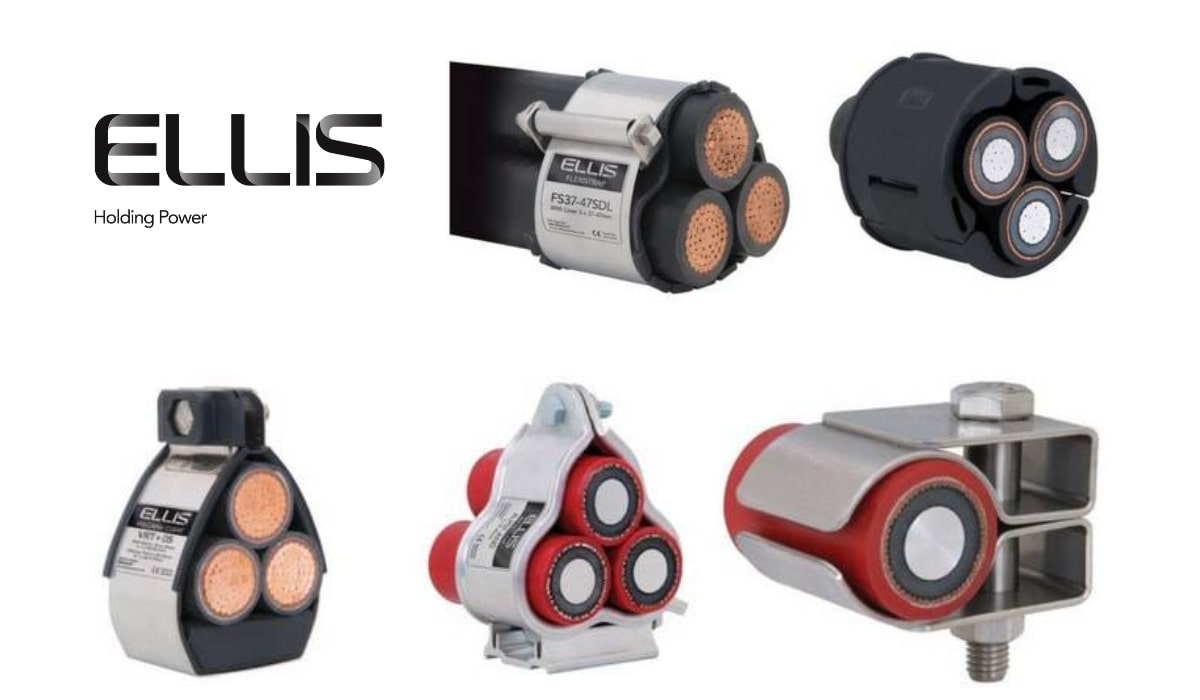
Thorne & Derrick are stockists and suppliers of a complete range of Cable Cleats used to clamp and retain low, medium and high voltage cables in the event of a short circuit, including 11kV/33kV MV HV power cables – single-way cable cleats, trefoil cable cleats, quadrofoil cable cleats, emperor cable cleats and multiple bundled cable configurations can be cleated using Ellis Patents and Prysmian manufactured Cable Cleats in a choice of materials including nylon, stainless steel and aluminium.
Resin Type Hang-Off Removal | Case Study Credit: Mark Kinder at Kintech Energy
Can You Remove A Resin Type Hang-Off After The Resin Has Cured?
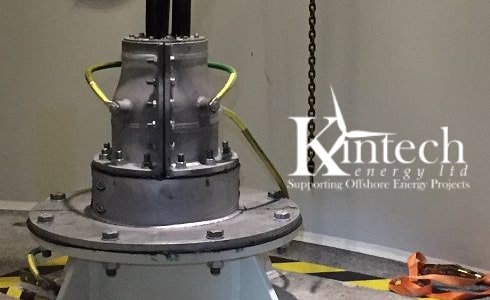
After discovering damage to a power cable or identifying that it has reached the end of its operational life, it may require removing Resin Type Hang-Offbefore the cable can be replaced. The question is, is Resin Type Hang-Off Removal possible after the resin has cured, without offshore expenses and time consumption becoming extreme? The following Resin Type Hang-Off Removal case studies explore the complexities of removal from a LV MV HV offshore marine cable and why Resin Free Hang-Off (RFHO) solutions by Kintech Energy are essential to avoid these barriers in future projects.
Resin Type Hang-Off Removal Case Studies
Case Study #1
Several cables had to be removed and replaced shortly after installation, but the problem was discovered after the resin in the hang-off had cured. A dive team were mobilised to cut the cable at the exit of the CPS, then the entire hang-off was detached from the TP flange and lifted.
The cable and hang-off had to be held in position above the TP flange and the power cable, cut into short sections to be removed. Due to resin contamination, none of the parts could be re-used. The operation required many teams of offshore personnel, including dive spread and the supporting vessels, as well as associated sub-contractors working around the clock. The cost of the removal operations resulted in millions in costs.
Case Study #2
A damaged power cable needed to be removed to allow for a new cable installation, with the existing power cable being secured by a Resin Type Hang-Off. Using a range of power tools, the offshore teams worked on one Resin Type Hang-Off Removal for several days, working 8 hour shifts to complete the job.
Resin Type Hang-Off Removal Solution/Alternatives
The Subsea Cable Hang-Off Systems supplied by Kintech Energy are free from harmful resin and the removal process is the reverse of the installation process, ultimately removing any reliance on using marine grade resins to maintain an airtight seal. Holding a demonstrable track record, the Kintech Resin Free Hang-Off has been installed in Offshore Windfarms around the UK and Europe on 33kV and 66kV subsea power cables.
Hassle free power cable removal with no Resin Type Hang-Off Removal, allows for cable repair or parts of the hang-off to be re-used or recycled, which eliminates disposal issues when dealing with contaminated parts by the cured resin.
The Kintech Resin Free Hang-Off (RFHO) protects the health and well-being of the cable installation teams, reduces the inevitability of substantial costs and time consumption, and can be easily recycled (or re-used).
Kintech Energy
The Market Leader of Resin Free Subsea Cable Hang-Off Systems
Working on more than 15 Offshore Windfarm projects around the UK, Europe, the Far East and USA, Kintech Energy Limited was created in 2013 to provide technical support for the design, manufacture, testing and installation of subsea power cables and Umbilicals.
Kintech Energy are also creators, developers and testers of the first and only Subsea Cable Hang-Off System, completely free from resin.
Kintech Energy provide a wide range of services and support for offshore energy projects, including Subsea Power Cables Design Verification, Project Management and Consultancy, Manufacturing Surveillance and Expediting, Onshore and Offshore Support, Engineering and Supply of the Resin Free Hang-Off and Engineering Analysis.
Cable TERMINATION, JOINTING, PULL-IN & Tooling UP TO 66KV
Thorne & Derrick supply LV MV HV Electrical Cable Joints, Terminations, Connectors, Tools & Power Distribution Equipment up to 66kV to the UK and international Offshore & Onshore Wind & Renewable industry – we hold several Framework Supply Agreements with international energy providers, wind turbine manufacturers and High Voltage Power Energy Companies. Thorne & Derrick specify and supply from extensive stocks market-leading brands in Cold Shrink, heat-shrink, silicone and EPDM rubber technology to support the energisation of High Voltage Power Cable Systems,11kV, 24kV, 33kV, 66kV.
Based in the UK, we are highly customer responsive and absolutely committed to providing a world-class service. Since 1985, we have provided expert technical support and express delivery from extensive UK stocks to world-wide destinations.
P66 cONNECTOR
660 Amps | 1100V
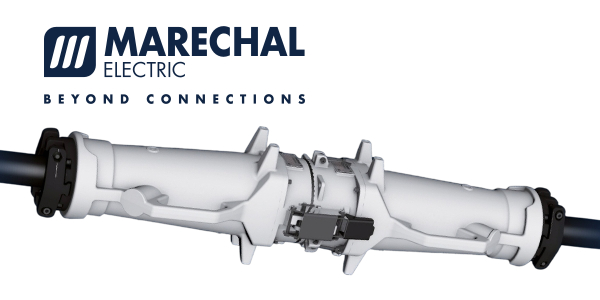
MARECHAL P66 Connector is the highest performance plug and socket-outlet which has now secured extensive specifications for power distribution applications across industry with a market-leading current rating up to 660A and voltage capacity of 1,100V.
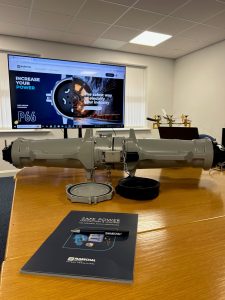
Thorne & Derrick, the UK Stockist & Channel Partner for Marechal Electric, recently welcomed Ross Allan (Area Sales Manager) for a Training Session with our Technical Sales Engineers to support the industry with innovative industrial power connection solutions.
Click ‘GET A QUOTE‘ to enquire for the P66 Connector and ‘Electrify Your Industry’:
P66
HV Connector | Rated For 660A High Current & 1100V High Voltage Distribution
The high voltage plugs and socket-connectors withstand harsh conditions and integrate into industrial high power systems requiring maximum reliability and performance.
High current – 660A
High voltage – 1100V (1.1kV)
8 Auxiliary contact + 2 pilots
Metal casing IK10
T °C : -40 °C / +80 °C
Safe pre-wired – Reed sensor switch
Robust – IP66/IP67 & IK10
User friendly connectors – drawing mechanism
Compact plug and socket – designed to fit in minimal confined space
Ease of installation – multiple mounting and wiring configurations
The P66 Connector is modelled to be all-purpose, whether it’s straight or angled, handles can be offered with a threaded plate to suit different cable diameters, allowing configuration variations – the high voltage power connector is lightweight, high-technology and easy to wire providing optimum versatility to international electrical safety standards.
MARECHAL | Plug, Sockets & Connectors
Established over 70 years ago, MARECHAL Electric are currently one of the worlds largest manufacturers of industrial electrical Plugs, Sockets & Connectors for commercial, industrial, hazardous area and high voltage applications. With over 500+ employees worldwide and a consolidated turnover of nearly €100 million, MARECHAL are established market-leaders in the manufacture of LV Power & Electrical Distribution Connection products.
600V to 66kV| Substation to Socket Connections for LV & HV Electrical Power
Heat shrink, cold shrink, push-on and slip-over cable accessories enable the jointing and connection of 11kV/33kV and 66kV-/132kV cables to oil, air or gas insulated switchgear, transformers, motors and overhead lines distributing electricity at medium/high voltages.
Compound Box Filling Compound end boxes rarely get attention — until one fails. Across ageing networks, replacement of compound-filled end boxes is becoming more frequent, particularly where original insulation systems have deteriorated and air insulation is not practical because...
Nexans 240–300mm² Multi-Joint – Medium Voltage Cable Joint Installation Medium voltage cable jointing requires reliability, consistency and safe installation practices. The Nexans 240–300mm² Multi-Joint is designed to simplify medium voltage jointing while maintaining high electrical performance for demanding power...