Climate change and global warming will drastically impact daily life in the coming years and make it possible to work, travel, and safely extract and transport raw materials in the Arctic.
Recent US Geological Survey studies estimate that the Arctic accounts for about 13% of undiscovered oil, 30% of undiscovered natural gas, and 20% of undiscovered liquefied natural gas. Alaska-based mining is a $1 billion dollar business (largely from zinc), while Canada produces half a billion dollars of zinc, gold, lead, silver and iron ore.
A new Canadian mining project will build 150 km of railways and two new ports to access some $23 billion worth of iron ore 300 miles inside the Arctic Circle. Meanwhile, Northwest Russia continues to mine 25% of the world’s known minerals in hundreds of deposits.
The Arctic is currently the source of 10% of the world’s oil production and 25% of its gas production, with Russia alone producing 80% of its oil and 90% of its gas in high northern latitudes. Already, hundreds of oil and gas production sites are operating offshore and onshore in the North American and Eurasian Arctic regions.
ICEFLEX Cable from Nexans
The Far North contains 22% of the world’s undiscovered recoverable resources. Dozens of geographical sectors are now being prospected in the Mackenzie Delta−Beaufort Sea Basin, the Sverdrup Basin and the Barents Sea (e.g. the vast Shtokman field).
Once new resources are found, special technologies will be needed to adapt to Arctic conditions to assure safe and secure production, both off and onshore, and ensure environmental safety.
Accessibility to resources via northern shipping lanes requires a new generation of tankers, containerships, LNG carriers, deep-sea drilling and FPSO ships, supply ships, prospect and scientific vessels and even cruise ships for tourism. Also, oil & gas and mining needs rolling stock and port facilities which can function safely and reliably under extreme cold conditions.
Nexans ICEFLEX Cable
Technical Specification
Cable Construction Details
Conductor
stranded tinned annealed copper as per IEC 60228, Class 2 and Class 5
Insulation
halogen-free ethylene propylene as per IEC 60092-360, HF-EPR
Inner sheath/Bedding
extruded flame retardant halogen free compound (Inner sheath: halogen free thermosetting compound as per IEC60092-360, SHF2)
Armor
metal wire braid as per IEC 60092-350
Outer sheath
flame-retardant thermosetting compound PKCK: halogen-free thermosetting com-pound as per IEC 60092-360, SHF2
A Cable For All Seasons, Conditions & Applications
As a ship designer, engineer, shipyard, installer, or offshore/onshore refinery, you want high-performance marine cables that will:
meet the challenge of severe cold, storms and iceberg threats
operate reliably in icy, snowy conditions for a variety of technical applications
survive in exposed conditions onboard, topside or in frozen ground or permafrost
adapt to abrupt temperature variations during the Spring and Autumn period
safeguard the Arctic environment from chemical and biological threats
protect crew, platform workers and personnel from fire, smoke and dangerous gases
assure higher productivity and competitiveness in tough conditions
support all exploration, extraction, refining and transportation activities
provide sustainable new technologies for the economic viability of Arctic projects
Meet The Arctic Challenge
The Nexans Research Center has already developed various rubber-based cable products to operate at very low temperatures for shipbuilding, offshore, rolling stock, and wind turbine applications.
Understanding and mastering the factors determining the low-temperature resistance of halogen-free flame retardant rubbers was the key to success.
To meet the Arctic challenge, Nexans introduced the innovative ICEFLEX technology for ultra-cold cables. This is the first marine energy cable on the market qualified for use at -50°C. Normally cables become stiff and brittle in intense cold. However, this rubber-based cable remains highly flexible and resistant, while ensuring advanced fire performance.
ICEFLEX ultra cold cable meets the Arctic Challenge
ICEFLEX operates reliably in icy, snowy conditions for a variety of technical applications. It can survive in exposed conditions onboard, topside or in frozen ground or permafrost, and can adapt to abrupt temperature changes during the spring and autumn period, while protecting crew, platform workers and personnel from fire, smoke and corrosive gases.
The ability to comply with impact and bending tests at very low temperature, to withstand the aggression of chemical substances (from gear, hydraulic fluids to mineral oils) and not propagate fire are other outstanding achievements.
ICEFLEX will ensure that resources are extracted and transported safely to assure the sustainable development of the Arctic North. Nexans has already helped ice-protect the Prirazlomnaya stationary oil platform in the Barents Sea with ICEFLEX.
ICEFLEX for shipbuilding & offshore/onshore
Nexans new ultra-cold-resistant rubber cable was designed for all shipboard and offshore/onshore applications. Not only can it maintain its properties down to -65°C, it is also fire-retardant and resists oils and aggressive chemicals and fluids.
The ability to withstand these environmental constraints is a major technical achievement which will make it easier to safely develop new oil and gas fields, shipping routes and refineries in the High Arctic.
ICEFLEX HFFR cable
Halogen-Free Flame & Fire Retardant (HFFR) cable is widely specified in shipbuilding and the oil and gas industry.
This product is fully certified by RMRS and is now commercially available to shipyards and refinery builders worldwide.
Benefits of Nexans ICEFLEX ultra-cold cable
flexibility and high mobility is maintained down to -65°C and more for the life cycle of the cable
EPR hydrocarbon rubber insulation combines unique electrical performance with mechanical toughness and resistance to atmospheric agents (ozone, UV, heat, etc.)
EVA elastomer in the outer sheath resists the deteriorating influence of oils, chemicals, heat and extreme weather aggression
fire-retardancy: the cables do not propagate smoke, fire, or generate toxic gases for personnel, and corrosive gases which can damage equipment
fire-resistance: they maintain power supply for vital safety equipment (emergency lighting, alarm systems, fire pumps, communication circuits, etc.)
high impact-resistance at ultra-cold conditions, meaning that they will neither crack nor break when subjected to sustained or violent physical shock (vibration, operational stress, iceberg impact)
safety and security for all exploration, extraction, refining and transportation activities
Thorne & Derrick
T&D are Specialist Distributors to UK Distribution Network Operators (DNO’s), NERS Registered Service Providers, ICP’s and HV Jointing Contractors of an extensive range of LV, MV & HV Jointing, Earthing, Substation & Electrical Eqpt– this includes 11kV/33kV/66kV joints, terminations and connectors for both DNO and private network applications.
Contact our UK Power Team for competitive quotations, fast delivery from stock and technical support or training on all LV-HV products.
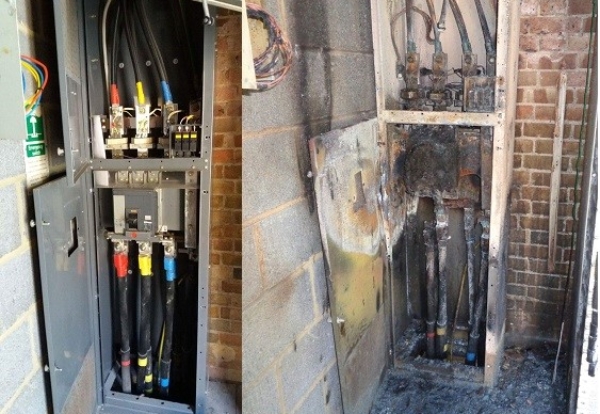
Arc Flash Inflicts Serious Electrical Burns- HSE Image Of Accident Scene
By Grant Prior for Construction Enquirer
Construction Enquirer is an online only magazine focusing on the latest news stories, contract opportunities and job vacancies – Completely Free.
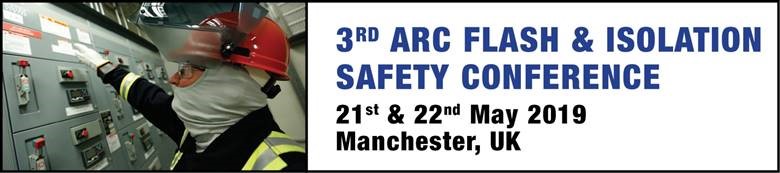
Arc Flash
Two companies have been fined after a worker received serious electrical burns caused by an arc flash during demolition work.
Chelmsford Magistrates Court heard how on April 12 2017, two demolition workers employed by sub-contractor R B Haigh & Sons were removing electrical distribution equipment from a switchgear room at the former Molecular Products site in Thaxted, Essex.
Alan Banks had been told by the principal contractor that the electrical equipment had been isolated. To reassure his colleague that it was safe he threw a crowbar at the 400V ac equipment.
This came into contact with live exposed wires, causing a flashover and temperatures of several thousand degrees, followed by a subsequent fire.
As a result Banks suffered serious burn injuries and was immediately hospitalised.
An HSE investigation found that the task being undertaken had not been properly planned and suitable control measures were not implemented to ensure the isolation of the electrical power supply.
The principal contractor, A J Wadhams & Co Ltd failed to follow the clear procedures outlined in their risk assessments and method statements, which identified all equipment must be treated as live unless written authorisation proved otherwise.
Russell Haigh and Stuart Haigh (Partners of R B Haighs & Sons) of Thaxted, Essex, pleaded guilty to safety breaches and were fined £80,000 and ordered to pay costs of £3882.65.
AJ Wadhams & Co Limited trading as Wadham Homes of London also pleaded guilty to safety breaches and was fined £80,000 and ordered to pay costs of £3816.60.
After the hearing HSE inspector Adam Hills said “This incident has had a significant impact on Mr Banks life and the injuries could so very easily have been fatal.
“Had the companies followed the control measures outlined in their respective risk assessments, then this incident would not have occurred.
“Never assume that an electrical supply is disconnected. Always check with the Distribution Network Operator or a qualified electrician to obtain written proof of isolation before commencing work.”
ARC FLASH STATISTICS
30,000 Arc flash incidents per year
7,000 Burn injuries per year
2,000 Hospitalisations per year
400 Fatalities per year
“30,000 Arc Flash Incidents per year” Source: ISHN
How To Protect Yourself Against Arc Flash
Arc flash protection is provided by specialist clothing and garments for “head-to-toe” protection – everything from arc flash coveralls to arc flash trousers.
Enhanced and effective arc flash protection is safely achieved by wearing layers of protective clothing and garments manufactured from inherent fibres and which feature specific Arc Flash resilient components. Without the correct high-quality garments, arc protection levels will be compromised.
uploaded by Chris Dodds - Thorne & Derrick Sales & Marketing Manager
STFF
Smoke, Toxicity, Flame, & Fume Protection For Cable Joints
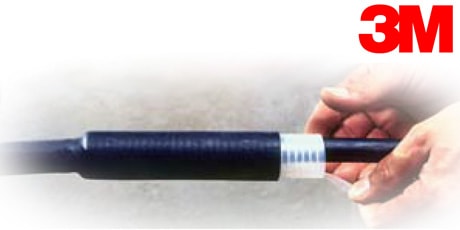
3M STFFShield products are designed for use with all inline polymeric cold shrink and resin cable joints – this includes LV, 600/1000 volts, 3.3kV, 6.6kV, 11kV and 33kV cable joints and cable abandonment kits. 3M STFF Shield is suitable for single and three core polymeric cold shrink joints, as well as for cable abandonment applications at low voltage.
The addition of the 3M STFF Shield will allow standard cable joints and accessories to be installed in areas such as underground rail, tunnels and any application where flame retardant, low toxicity cable jointing solutions are required with fire resistance.
3M STFF Shield products have been approved for London Underground LU Standard 1-085 and the universal joint protection system complies with Section 12 of the London Underground Network – the product range is commonly known as the Smoke, Toxicity, Fire and Fumejoint sleeve or STFF.
S– Smoke
T– Toxicity
F – Fire
F – Fume
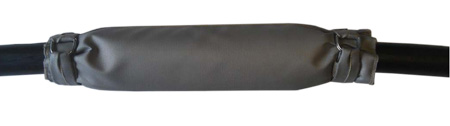
The 3M STFF joint protection sleeve include standard sleeve for cable joints, a closed-end sleeve for cable abandonment applications as well as a retrofit wrap to wrap around cable joints that have already been installed.
Fire Resistant Shield for Joints & Cables In Rail Tunnels
3M STFF Shield Product Features & Benefits
3M STFF Shield products are made up of layers of woven glass fabric, and high temperature silica to enable flame resistance, and prevention of smoke, and toxic fumes
Halogen Free
Manufactured in several sizes enabling compatibility with a wide range of 3M Cable accessories
Easily secured in place with integrated fastening straps, no need for cable ties or tools
3M STFF are available as a sleeve design for covering cable joints, or a closed end covering for cable abandonment applications
Available as a wrap around design for retrospective fitting around cables already installed
Used with Cold Shrink Joints Manufactured by 3M Electrical
3M STFF used in conjunction with Cold Shrink joints provide halogen free and fire resistant joints suitable for installation onto cable containment – the STFF joint is compact and smooth profile with reduced space displacement and weight impact.
This type of cable joint is not suitable for direct burial (underground) as the STFF protective shield will absorb moisture.
LCI Joint Kit 16.2mm-33.1mm – Order Code 3M LC1-STFF13
LC2 Joint Kit 16.2mm-33.1mm – Order Code 3M LC2-STFF13
LC3 Joint Kit 16.2mm-33.1mm – Order Code 3M LC3-STFF13
LC4 Joint Kit 24.9mm-56.4mm – Order Code 3M LC4-STFF14
LC5 Joint Kit 37.8mm-84.3mm – Order Code 3M LC5-STFF14
LC6 Joint Kit 37.8mm-84.3mm – Order Code 3M LC6-STFF14
Cold Shrink LC Joints by 3M Electrical
Network Rail & London Underground Approvals
Compliant with London Underground Engineering Standard 1-085. Product Approval List No: 1106
Network PADS Approved Product: PA05/04396
Smoke Emissions and Toxic Fume Emission testing has been carried out to BS EN50268-2:2000 and BS 6853:1999 Annex B.2 respectively.
3M STFF Cable Joint Shield
Installation
The STFF Shields are supplied only as part of the cable joint / accessory kit from 3M. The sleeve is slipped onto one of the cables ready to be joined and parked back along the cable.
The cable joint is made off in the normal way and the STFF sleeve is now slid over the joint and held in place by two stainless steel cable ties, one at each end.
Full installation instructions are supplied with each 3M Electrical kit.
LV Cable Joints (Low Voltage Cables)
Thorne & Derrick stock and distribute LV Joints in Cold Shrink, Heat Shrink or Resin Cast technologies – multicore and multi-pair cable joints are available for immediate backfill and energisation of Low Voltage power, control and instrumentation cables 600V/1000V 3.3kV.
uploaded by Chris Dodds - Thorne & Derrick Sales & Marketing Manager
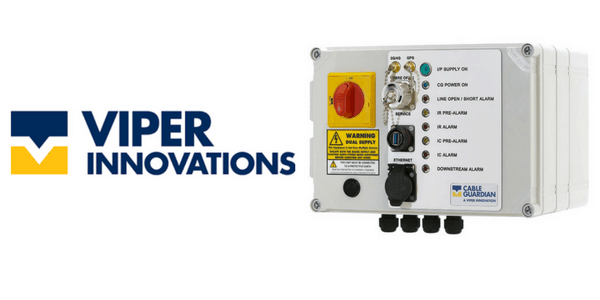
Fault locator to offer proactive monitoring, detection and location of both insulator and conductor faults on live low voltage unearthed power distribution systems.
CableGuardian by Viper Innovations allows for quick electrical fault location on rail signalling power systems and displays them clearly on a user-friendly interface.
The cable fault locator traces both insulation and conductor faults as multiple units can be connected can isolating insulation faults to a section of cable and pinpointing the location of the conductor fault.
CableGuardian has the ability to send notifications via e-mail, SMS, and even voice call for serious faults such as open circuits, short circuits and intermittent faults reducing the time spent trying to locate the fault due to Spread Spectrum Time Domain Reflectometry (SSTDR).
The modular nature of CableGuardian allows for remote compliance with the Network Rail M003 Maintenance and Testing requirements.
The cable fault detector is suitable for the following locations including rail industry signalling power systems, legacy system equipment upgrades and electrical power distribution systems with ungrounded (Isolation Terra) AC pairs at working low voltages of up to 750V on Network Rail infrastructure.
CableGuardian – Cable Fault Location & Detection
CableGuardian
Cable Fault Location & Detection
Features & Benefits
Distributed and intelligent infrastructure for cable health monitoring
Integrity alarms and fault information direct to asset stakeholders
Helps to avoid injury and reduce downtime through early fault detection and cable location
Analytics facilitate proactive, rather than reactive, maintenance
Enables faster and more accurate repair, minimising service outage
Permits a move from a frequency based inspection regime to one driven by actual asset condition and performance
Immediately locates and alarms the first cut during cable theft
Enables compliance with the requirements of the Network Rail standard for Insulation Monitoring NR/L2/SIGELP/27725
Fault tolerance built in – each CableGuardian node is a “slave” to the “Supervisor and Analytics System” – no “Master” node required
Automatic configuration of CableGuardian nodes added or removed from the system
Inbuilt GPS for auto-location on installation (option)
Provides “data hub” for interfacing with IOT nodes such as weather centres and IP enabled cameras
CABLEGUARDIAN – Product specification
Electrical
Input Power Supply (wiring options):
110V AC 47/63Hz “domestic supply”
230V AC 47/63Hz “domestic supply”
Direct from Line Supply being
monitored
Line Supply Conditions:
Voltage: 300V to 750V 1
AC
Frequency: 47Hz to 63Hz
Capacitance: Up to 500μF
Power Consumption:
25W typical
30W maximum
Earth Connections:
“Reference Earth” and “Protective Earth”
wired connections via cable gland to
internal Earth terminal
Input supply on
Internal power on
Line open / short circuit alarm
IR pre-alarm (Warning)
IR alarm (Fault)
IC pre-alarm (Warning)
IC alarm (Fault)
Downstream IR alarm
The CableGuardian system may consist of a single node or multiple nodes, depending on the system monitoring requirements and the level of fault location granularity desired.
Thorne & Derrick stock an extensive range of 400V-33kV Rail Cable Accessories & Power Distribution Sytems including feeder pillars to contractors undertaking Low Voltage Power Distribution, HV Electrification & Substations, DC Traction & Networks, OLE and Track Feeder Cable Renewals– complete range of Network Rail PADS approved track terminations, cable joints, cable repair and connection products up to 25kV, including 3M Cold Shrink, Pfisterer CONNEX and Nexans Euromold products.
Developed in the 1970’s by 3M, Cold Shrink technology has been found to be a safer, more reliable and easier to install technology for the jointing, terminating and abandoning of low voltage power cables.
Helping MV HV Contractors Make The Change
In order to help cable contractors, cable jointers and engineers make the change out of heat shrink and into 3M Cold Shrink, we feature a YouTube Video Playlist covering the installation of cable joints, terminations and abandonment kits using 3M Cold Shrink.
Cables must be jointed and terminated accurately, safely and quickly – T&D & 3M can provide cable jointer training to further reduce the risk of cable failure caused by poor workmanship.
5 Good Reasons To Switch From Heat Shrink To 3M Cold Shrink
Reduced danger of damaging XLPE cable material – no scorching
Less room for cable jointer error – no skill-sensitive multiple layer heat shrinking, single part construction
No special site permits required – cold applied joints/terminations, no “hot-working”
No cooling time needed before power energising – reduced outage periods and downtime
Thorne & Derrick stock and distribute LV Joints in Cold Shrink, Heat Shrink or Resin Cast technologies – multicore and multi-pair cable joints are available for immediate backfill and energisation of Low Voltage power, control and instrumentation cables 600V/1000V 3.3kV.
klauke ekm60unv – universal cutting, crimping & punching tool The Klauke EKM 60 UNV is a versatile battery powered hydraulic universal tool engineered that can be used as a battery powered cable crimping tool and battery operated cable cutting tools that comes...
INDUSTRIAL LABEL PRINTING SOLUTIONS When clear, durable and professional identification is required across control panels, cable systems, production facilities and industrial installations, print quality, reliability and ease of use are critical. Cembre industrial label printers are designed to support...