T&D’s marketing team can help generate new business leads and opportunities by targeting organic search terms and ensuring your brand/product is providing lead generating organic ranks on Google for specific keywords.
Unbranded open spec inquiries could be coming your way with our dedicated SEO campaigns that are supported by our digital marketing strategy.
All pages can be tracked extensively via Google Analytics so you can see exactly how many clicks a specific search term is receiving. Working together we can tailor a plan which best suits your needs.
In a nutshell
What T&D Can Do For You?
Ensuring your product range/brand is well optimised via targeted keywords on our websites
Blogs campaigns (including guest blogs) help to support the overall keyword purpose
Opportunity to gain Google Snippets increasing click through rates
Improve your organic ranks for search terms of your choice
Real time analysis and detailed data capture from Google Analytics
Increase web traffic with anchor text links back to your website
Examples of T&D SEO Strategy
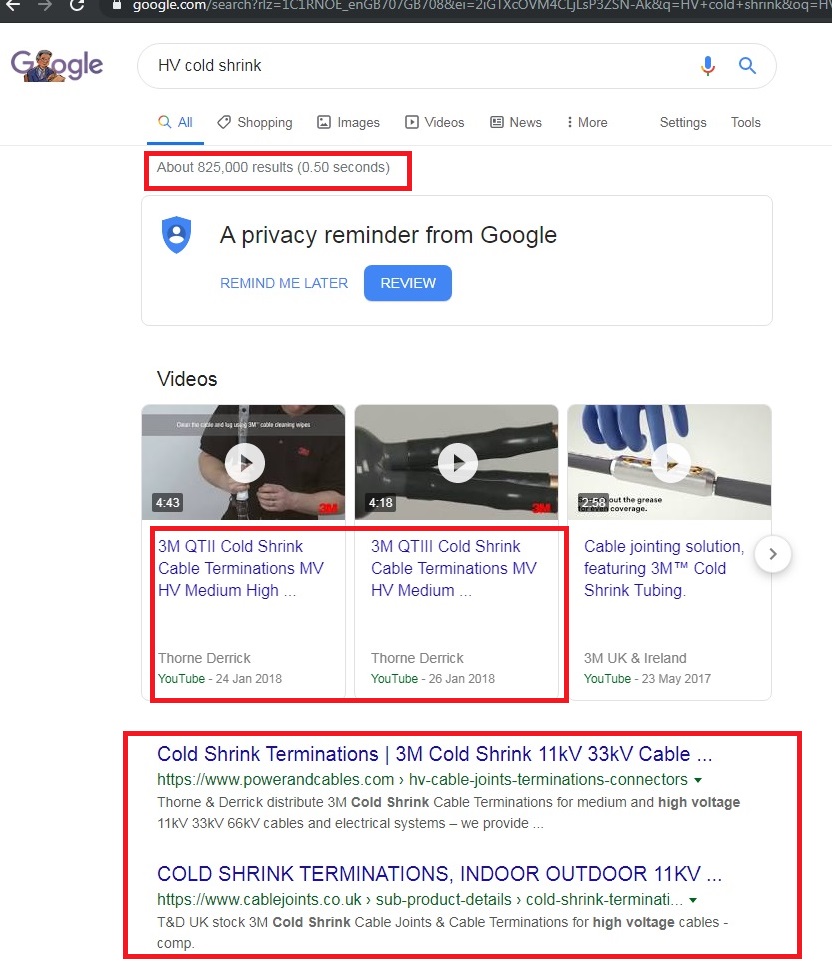
T&D are able to dominate the top results on Google for specific keyword search terms:
Below shows T&D organically ranking 1st and 2nd on Google and also occupying the top 2 positions for YouTube videos.
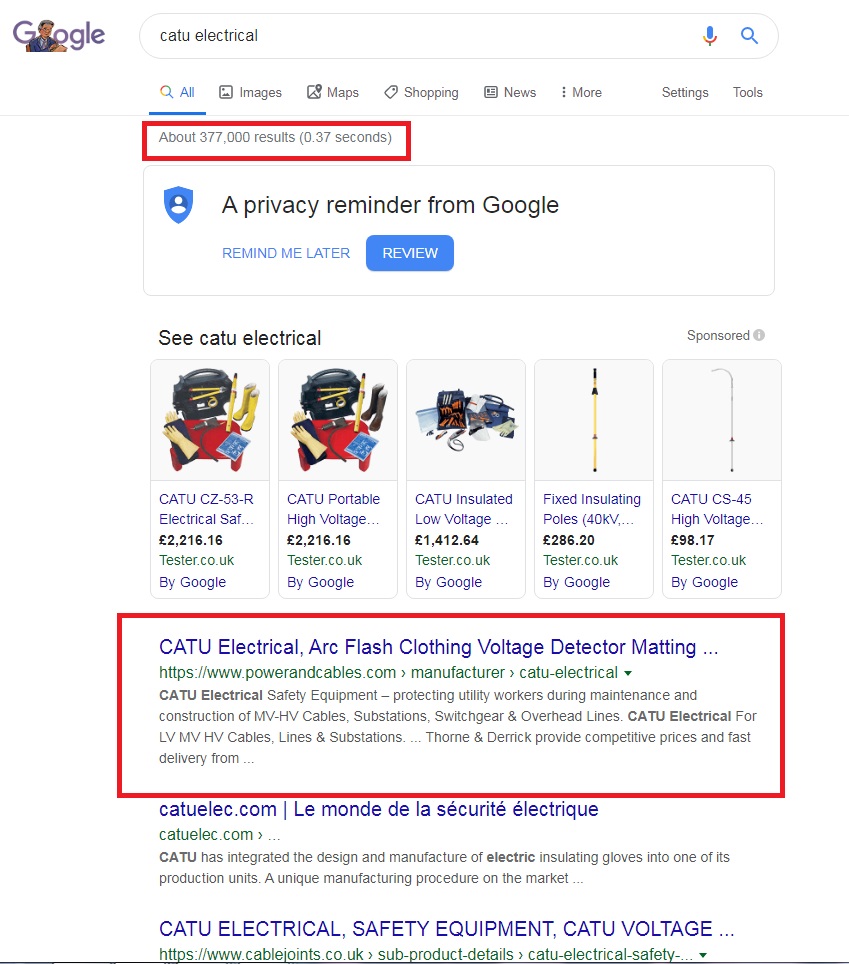
Or T&D can drive traffic to your supplier page on our website:
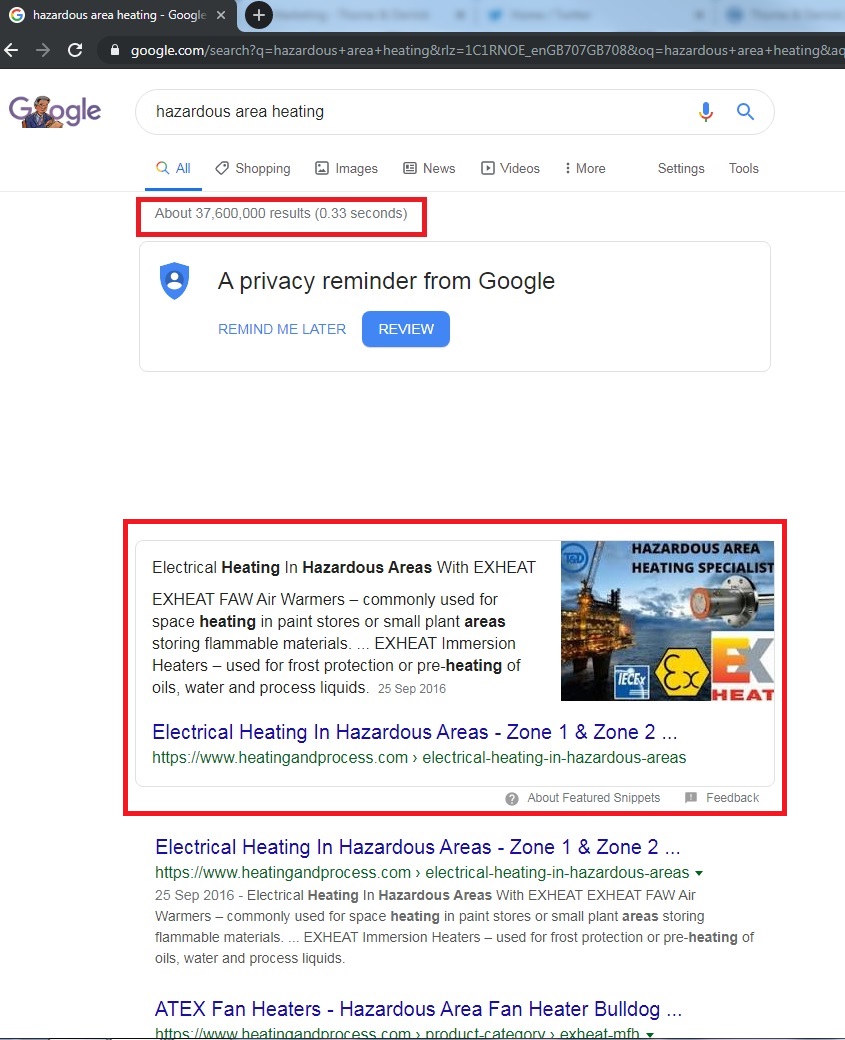
Featured Snippets are another important Google development that can help drive more traffic to a certain webpage for a specific search term:
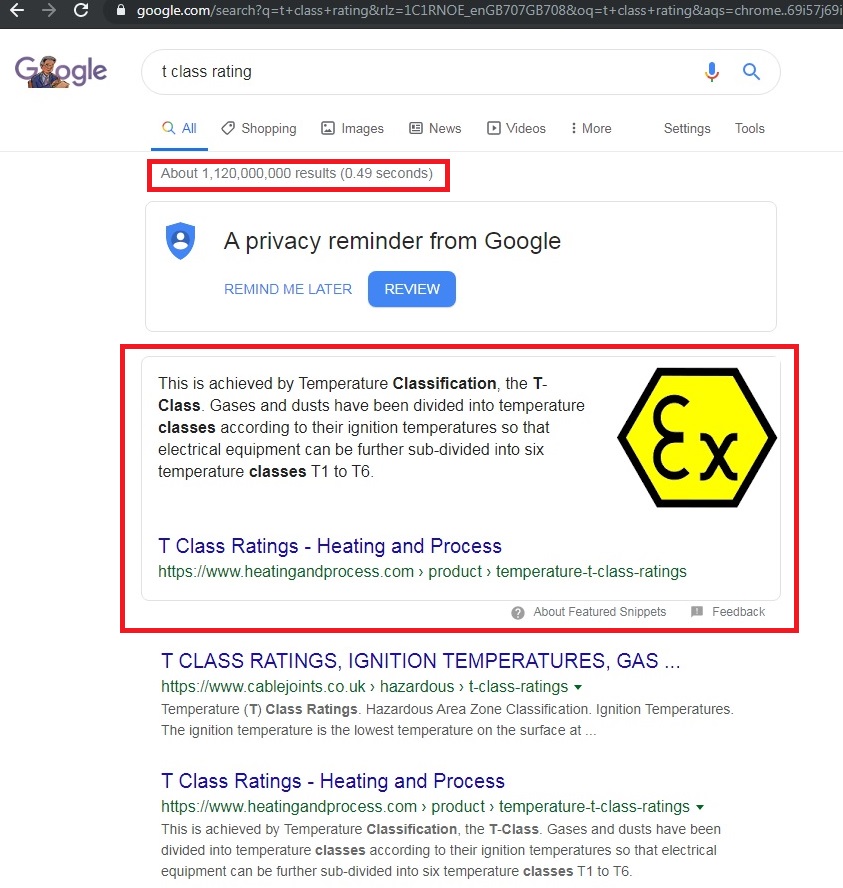
Not only to we get featured snippets for products and brands but also key industry based search terms:
T&D can provide detailed analysis of targeted keywords and show web traffic curves via Google Analytics. Below shows the Google Analytics Curve for www.powerandcables.com since launch and the record number of visitors on the website at one time.
uploaded by Chris Dodds - Thorne & Derrick Sales & Marketing Manager
Cold Shrink Tubes
Thorne & Derrick International, based in the UK, are the largest stockist and supplier of Cold Shrink Tubes manufactured by 3M Electrical – contact us for competitive prices, stock availability and delivery to UK and overseas destinations.
This video by 3M Electrical shows how to apply Cold Shrink Tubes safely and correctly.
3M Cold Shrink Tubes are a series of open-ended, tubular rubber sleeves, which are factory expanded and assembled onto a removable core. They are supplied for field installation in a pre-stretched condition and used by electrical engineers, installers and cable jointers to carry out electrical cable insulation, cable sheath repair and splice joints on cable containment or cable trench applications.
The 3M video shows how to install the cold shrink tubes by unwinding the removable core allowing the tube to shrink and form a tight waterproof seal to prevent water or humidity ingress into the cable. Quicker, easier and with enhanced installer safety benefits compared to heat shrink tube alternatives without a requirement for a heat source or tooling.
Cold Shrinking – the installer should use a gentle unwinding motion to release the expanded Cold Shrink tube from the core maintaining a consistent and even technique resisting temptation to snatch and pull as this will snag the plastic tail within the cold shrink tube. The outer core should remain relatively stationary while unwinding the inner core – the live memory action of the specially formulated 3M Cold Shrink material ensures a permanent, durable environmental seal and insulation. The tough, durable, EPDM rubber construction ensures 3M Cold Shrink tubes withstand operating temperatures of -40 to 194 degrees F (-40 to 90 degrees C).
Black EPDM Cold Shrink Tubing Manufactured by 3M Electrical
Hazardous Areas
Consequently, cold shrink tubes have been adopted by the hazardous area industries (oil, gas and petrochem) for safe cable sealing and environmental protection in potentially explosive atmospheres and confined spaces where flammable gases or combustible vapours combined with “hot-working” could ignite the “Fire Triangle”.
Suitable for hazardous area cable repair, however where installation location is exposed hydro carbons a complete range of ATEX cable joints are available for jointing cables in hazardous areas, Zone 1 and Zone 2.
Safe Cable Protection & Jointing In Hazardous Areas & Potentially Explosive Atmospheres – cold shrink is safe to use where “hot-working” is precluded
The absence of a naked flame requirement eliminates fire risk and removes the danger of incurring heat, burn or scorch damage to cable sheath by over-heating with gas torches.
The core is removed manually by a simple clockwise unwinding of a tail piece of the inner former – after the cold applied tube has been positioned for installation over an inline connection, cable terminal lug or other similar application the cold shrink is collapsed to form an effective cable seal.
Faster to install for use on LV, MV or HV cables where working access is possible to an open cable end either by cable cutting or disconnecting from supply point.
Other possible applications include electrical installation, cable repair, mechanical protection and moisture sealing barrier – providing a constant radial seal and pressure even under thermal cyclical load.
No playing with fire when installing Cold Shrink by 3M
Selecting Cold Shrink Tubes
Cold shrink tubes are supplied in a range of sizes with specified minimum/maximum tolerances per tube – the selection of the correct 3M tube requires the outside diameter of the cable to ideally be midway between the recommended min/max range of the shrink tube. Once installed the tubes are immediately energisable and suitable for direct burial, overhead or submersed applications on 1000 volt cables located in indoor/outdoor locations in both safe (non-hazardous) and hazardous area cable locations.
Cold shrink tubes are available in EPDM and Silicone.
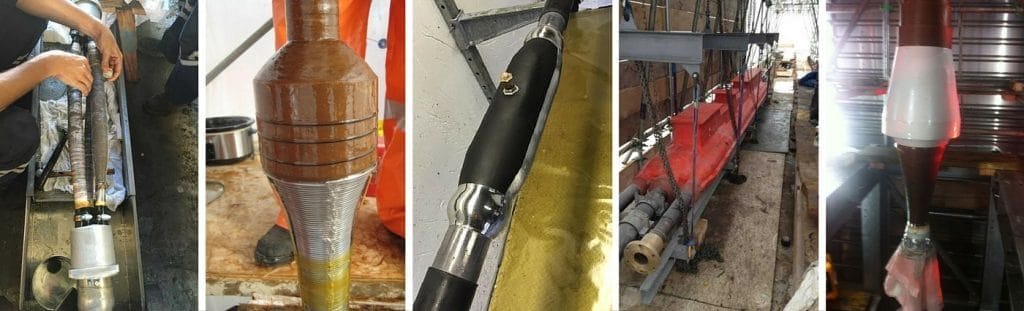
Cold Shrink – invented by 3M over 40 years ago and now the preferred technology for heat-free jointing, terminating, sealing and abandonment of LV HV cables
We hope you find this video informative and educational, contact T&D for technical support, quotations and stock availability for 3M Cold Shrink Tubes.
Silicone Cold Shrink – Fire resistant & Low Smoke Zero Halogen
Silicone cold shrink tubes are open ended, silicone rubber, tubular sleeves installed onto cables, pipes and umbilicals to provide a watertight seal with additional resistance for fire, acids, ultra violet light, moisture and flame – the cold shrink tube is inherently low smoke zero halogen (LSOH).
No heat source or naked flames are required to install cold shrink – specified for cable joint, repair or cable splice work in hazardous area locations or potentially explosive atmospheres.
The 3M 8440 series of silicone tubes are outlined in the below table to enable correct selection – call should you require any assistance.
The silicone cold shrink tubes manufactured by 3M Electrical provide primary electrical insulation on solid dielectric (rubber EPR and plastic XLPE) insulated low voltage LV cables up to 1000 volts.
➡ Visit 3M Electrical for further information about 3M cable joints, terminations, tapes and insulation to seal, repair, splice and connect LV MV HV cables.
In order to safely and professionally prepare medium/high voltage cables a complete set of cable jointing tools are required to enable the stripping and removal of the 11kV triplex cable sheath, insulation and screen – this includes Alroc tools used by jointers for MV/HV cable preparation and Cembre tools to cleanly cut and crimp cables.
The jointers have used cable cleaning wipes to carefully remove debris, dust or contaminants from the Triplex cables to ensure the overall reliability of the 11kV heat shrink cable terminations.
Lucy Switchgear
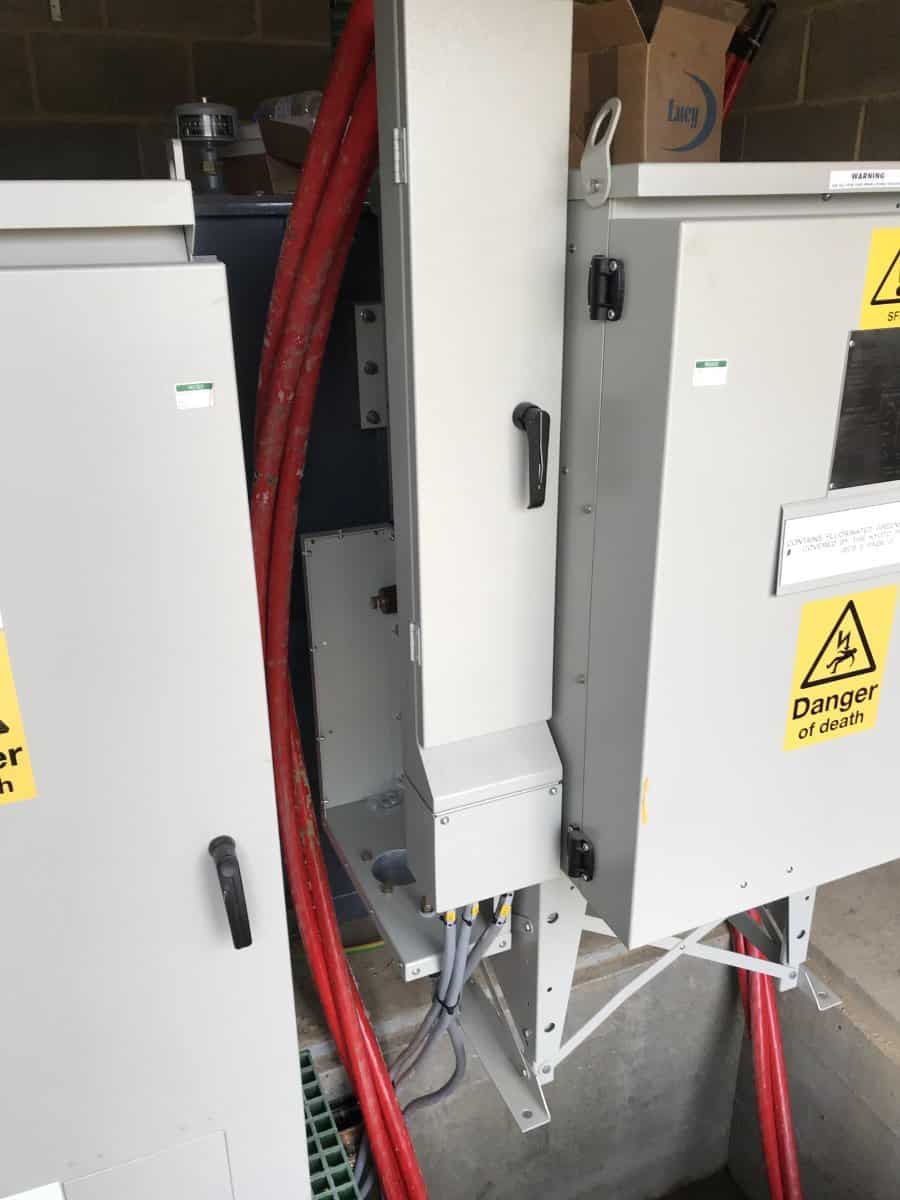
11kV cables are shown terminated using heat shrink terminations into Lucy VRN2a SF6 Ring Main Unit with a 200A Circuit Breaker to UKPN specification – the Sabre range of RMU’s manufactured by Lucy Switchgear are non extensible ring main units for outdoor high voltage substations. Along with low voltage distribution cabinets, these RMU’s can be easily coupled to the distribution transformer forming a compact outdoor package substation.
The 11kV heat shrink terminations are crimped using mechanical shearbolt cable lugs and bolted to the interface bushings of the air insulated cable box.
Terminating Triplex Using Cold Shrink
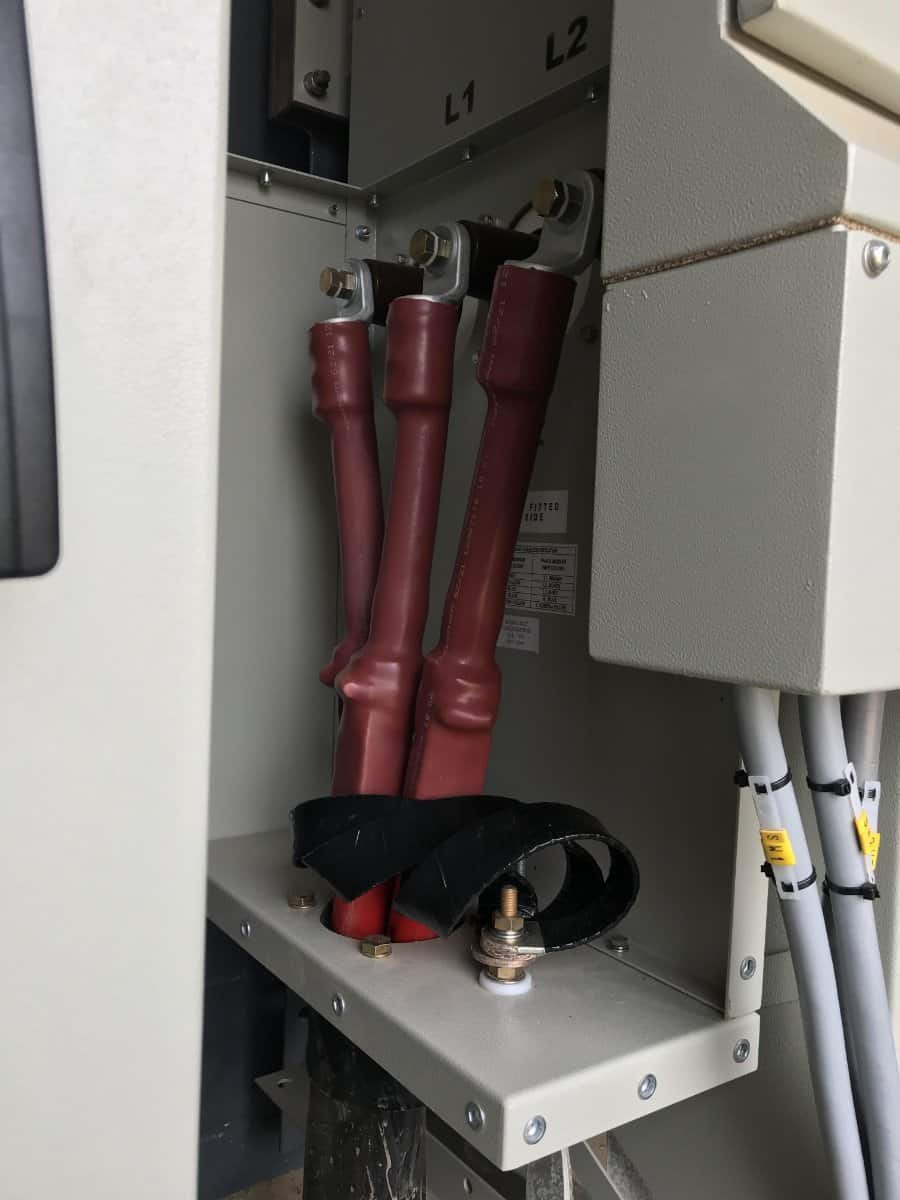
Here, the 11kV Triplex cables are shown terminated into a high voltage cable termination box using 3M Cold Shrink terminations – the concertina style bushing boot is cold-applied and suitable for both straight or right-angled 11kV switchgear connections, part code 3M 92EE717-1.
The bushing boots insulate the cable lug connection onto the bushing interface located on the electrical equipment. The Triplex copper wire screens are shown bonded to earth using brass mechanical shearbolt cable lugs.
The unarmoured Triplex cables are provided with mechanical cable retention and moisture ingress protection using heat shrink cable glands – the glands provide a watertight and fume-tight cable seal where the Triplex cables enter high voltage connection boxes, switchgear, bulkheads, or other enclosures.
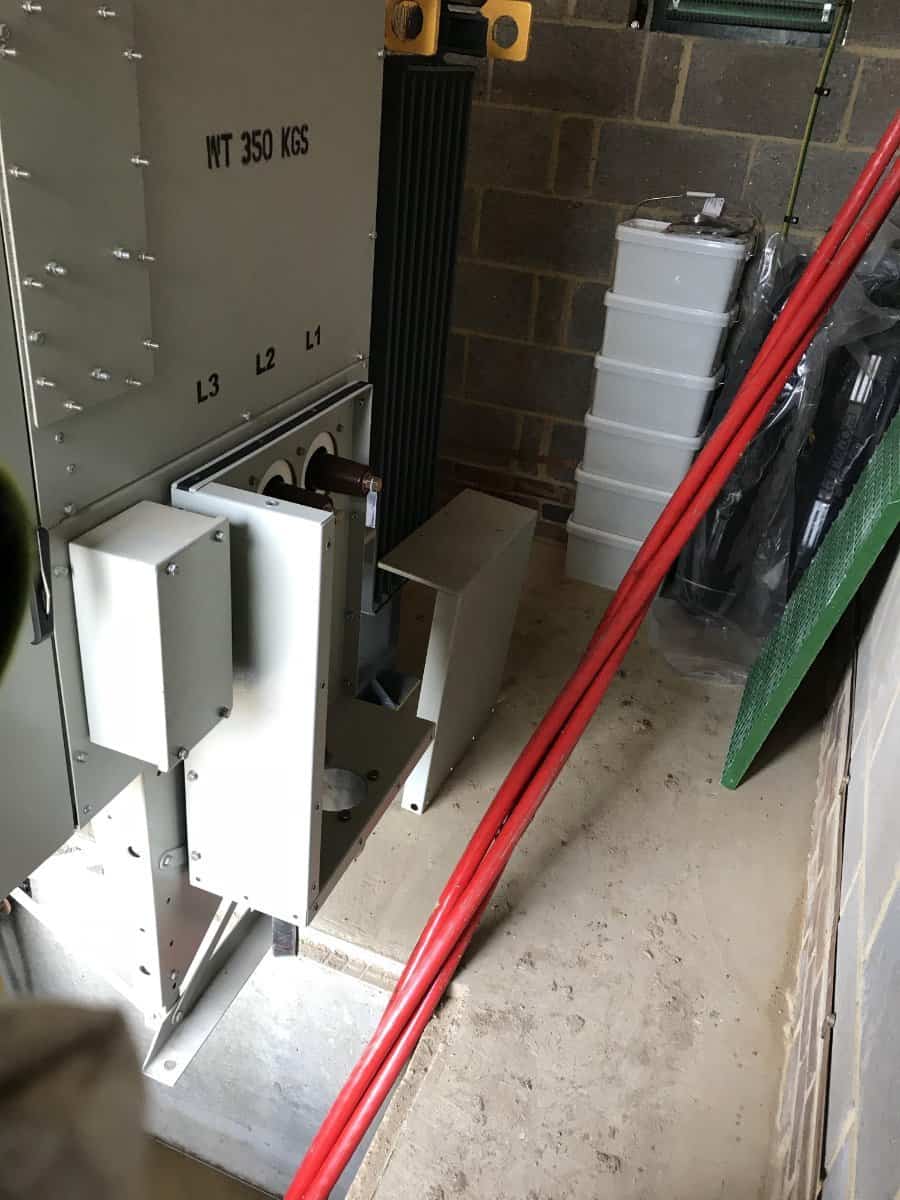
The HV cables are cable ducted within the hot zone and a stand-off insulator is mounted in each HV cable box. The cable sheath is shown terminated to an earth bar mounted onto the stand-off insulator.
Image: NPG Northern Powergrid
Triplex Cable Sheath Earthing Arrangement 11kV
Should you require any assistance with the selection or specification of 11kV triplex cables or 11kV cable lugs please do not hesitate to contact us.
T&D distribute the most extensive range of LV, MV & HV Cable Jointing, Terminating, Installation & Cable Pulling Equipment – we service UK and international clients working on underground cables, overhead lines, substations and electrical construction at LV, 11kV, 33kV and EHV transmission and distribution voltages.
by Chris Dodds - Sales & Marketing Manager Thorne & Derrick
Prior to jointing cables in confined spaces control measures and risk assessment must be undertaken. This picture was taken from outside the manhole once the cable joint was complete – the looped cables were spliced using 3M Scotchcast cable joints to effect a repair to damaged cables in a confined space.
Initially the cable jointers bump test their gas detectors then gas sample the manhole with the lid on for the presence of harmful, flammable or toxic gas.
If all is safe to proceed the jointers remove the lid. Next the working space is vented with forced air while the jointers constantly monitor the confined space with their gas detectors. Access to the manhole is via a wooden ladder with the cable jointers wearing a rescue harness – a tripod and winch are positioned and a gate guard around the manhole is erected to prevent trips, falls or accidents.
The cable is jointed within the manhole to prevent overbending strains on the low voltage cable when fed back into the manhole if jointed at ground level – cable duct seals can be used to prevent the migration of flammable gas or flood waters into the manhole.
3M cable joints use Scotchcast resins for the low voltage jointing of cables with XLPE, EPR, PVC or PILC insulation up to 3.3kV. Resin cable joints specially modified with high performance hydrocarbon resistant, low smoke zero halogen, fire resistant and flame retardant resins are available to withstand harsh operating and environmental conditions in industrial and hazardous area locations. The 3M cable joints are specified throughout ther oil, petrochemical, gas, mines, telecoms, rail and industrial cables are available – suitable for direct burial (underground) or exposed onto cable containment.
3M SCOTCHCAST LV RESIN CABLE JOINTS – Benefits
Resin Cable Joints – Features & Benefits Of 3M Scotchcast Cable Jointing Systems
Contact Thorne & Derrick to discuss your application for jointing LV cables – we can provide expert technical support, training and specification advice to ensure the correct supply of electrical LV cable joints to suit industrial and hazardous area location cables.
Should you require any assistance with the selection or specification of cable joints or terminations using 3M Cold Shrink on MV-HV cables please do not hesitate to contact us.
T&D distribute the most extensive range of LV, MV & HV Cable Jointing, Terminating, Installation & Cable Pulling Equipment – we service UK and international clients working on underground cables, overhead lines, substations and electrical construction at LV, 11kV, 33kV and EHV transmission and distribution voltages.
uploaded by Chris Dodds - Thorne & Derrick Sales & Marketing Manager
There are a lot of misconceptions about arc flash clothing and protection levels required including what actually is a flash of light or an arc of fire. Similar to an electric shock but not the same as usually there is not direct contact with electricity.
Arc flash is a serious issue with more than 30,000 incidents that result in 400 fatalities every year. So how can you protect your hands from this deadly killer and do insulating gloves provide arc flash protection? Or are special application arc flash gloves required?
The below Blog from Scanwear delves deeper into the issue.
One question that comes up all the time during electrical safety training is whether or not an electrician’s rubber insulating gloves offer any protection from Arc Flash?
Interestingly enough, even though you probably won’t find a label on the insulating glove that says so, rubber insulating gloves used in conjunction with leather protectors do offer sufficient protection from arc flash burns.
Now we are talking about arc flash protection but don’t forget why you are wearing the gloves in the first place. That needs to be your primary concern when it comes to protecting your hands. Once you’ve got that taken care of you can worry about arc flash.
Is This Legitimate?
The industry standard for electrical safety, NFPA70E, does not offer much information about how to size your gloves for arc flash protection or how to determine the incident energy rating for your gloves but we are led to believe that they have done some testing and feel comfortable saying that the rubber insulating gloves with leather protectors will protect you from an arc flash.
Here is what it says in the standard:
“If rubber insulating gloves with leather protectors are used, additional leather or arc-rated gloves shall not be required. The combination of rubber insulating gloves with leather protectors satisfies the arc flash protection requirement.”
That note applies to an arc flash PPE category of 4 which requires a minimum of 40 cal/cm2 protection. So that gives the user a good level of comfort that the gloves offer great protection from arc flash.
How Can You Prove It?
Up until June 2013, the amount of arc flash protection was determined by the thickness of the leather protectors. That year though a new standard for testing gloves was approved and testing started immediately. Because thickness of the gloves was not part of the criteria for meeting the standard manufacturers are now coming out with thinner leather gloves that still offer the maximum protection against arc flash.
Something you might want to look into with your supplier of arc flash clothing, garments and protection including helmets and gloves.
Also, traditional rubber insulating gloves with leather protectors were tested alongside some of the arc flash gloves which you may now see on the market and it was proven that they offer fantastic protection from arc flash. In case you are curious, the standard for testing gloves for arc flash is ASTM F2675-13.
Just remember, the main reason you are wearing the rubber insulating gloves is to protect against shock hazards. Fortunately, your regular rubber insulating gloves with leather protectors offer an excellent protection from an arc flash hazard and should always be worn, when there is a risk of a shock or an arc flash event.
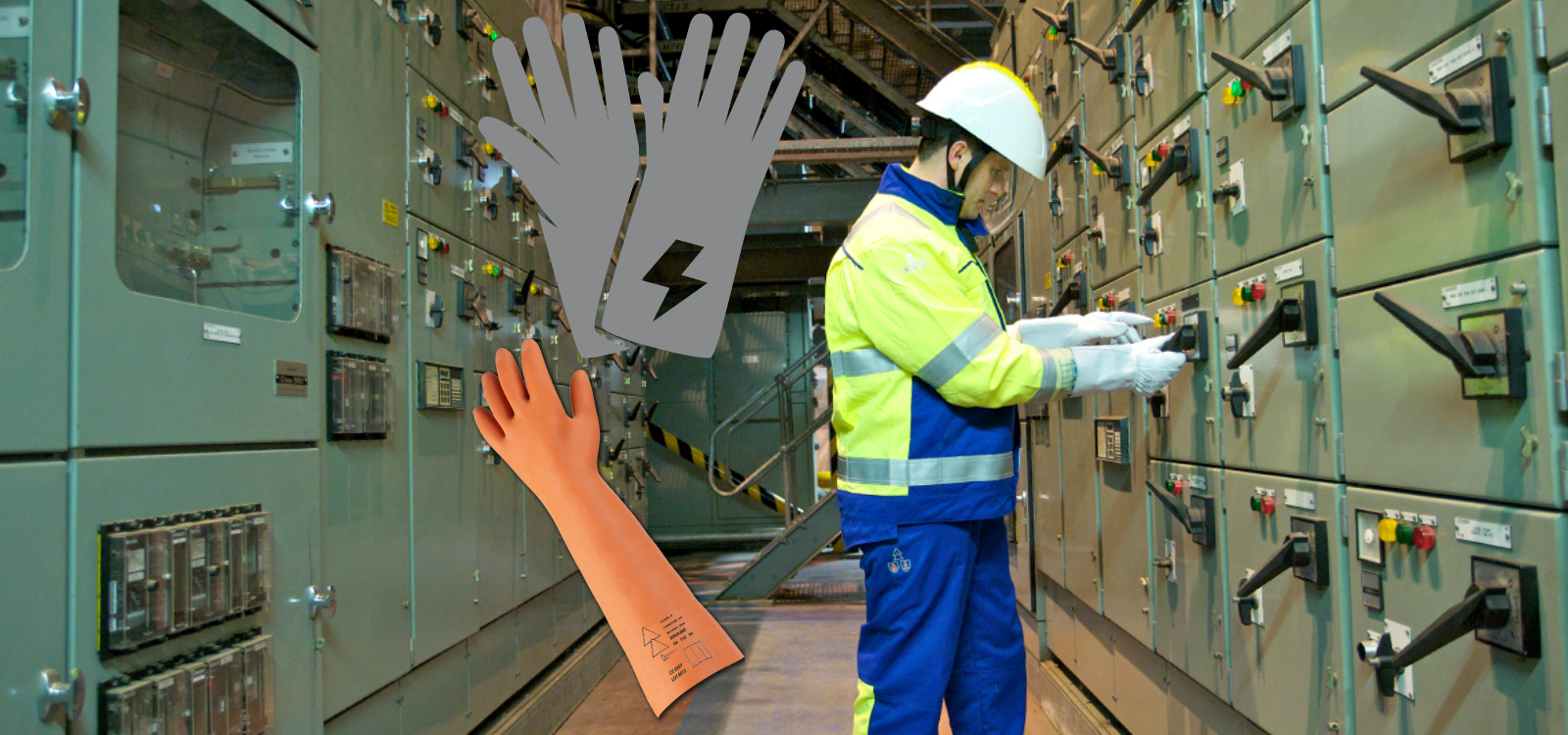
Insulating gloves should be selected according to their class which corresponds to the voltage level used – additionally the gloves are classified into categories according to environmental resistance properties detailed below.
Class
Voltage
Product colour
Size – between 7-12 for either male of female use
Classifications and standards
When selecting the correct insulating gloves all of the above factors are vital to consider in order to achieve the adequate level of protection required.
In addition, some gloves will also require an under-glove for comfort or a leather over-glove to maintain product longevity.
Inspection and storage of insulating gloves is also a vital factor to consider as all gloves must be visibly inspected after each inflation and before each use.
This is to make sure there are no tears or abrasion to the gloves prior to use, maintaining their dielectric properties.
Insulating rubber gloves are also categorised by environmental resistance properties for protection against acid, oil, o-zone and very low temperatures.
A – Acid
H – Oil
Z – O-Zone
R – Acid, Oil and O-Zone
C – Very Low Temperatures
INSULATING GLOVES – CLASS & CATEGORY
The following gloves manufactured by CATU Electrical and T&D would normally recommend for mechanical protection they be used with silicon leather glove covers or over-gloves but in light of the above this might all change.
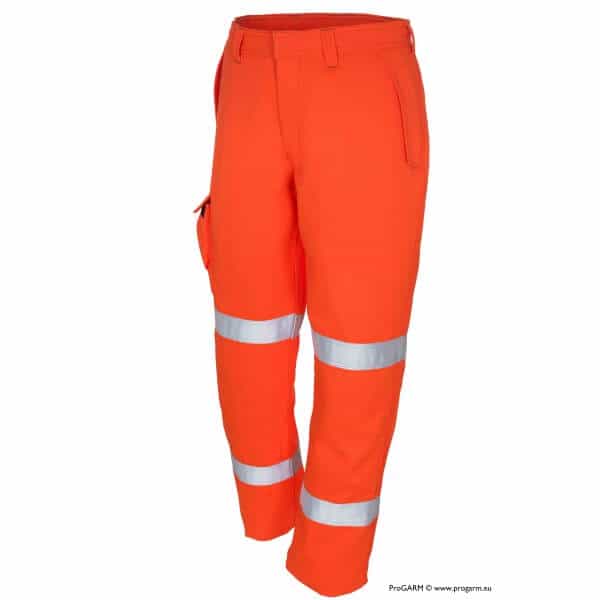
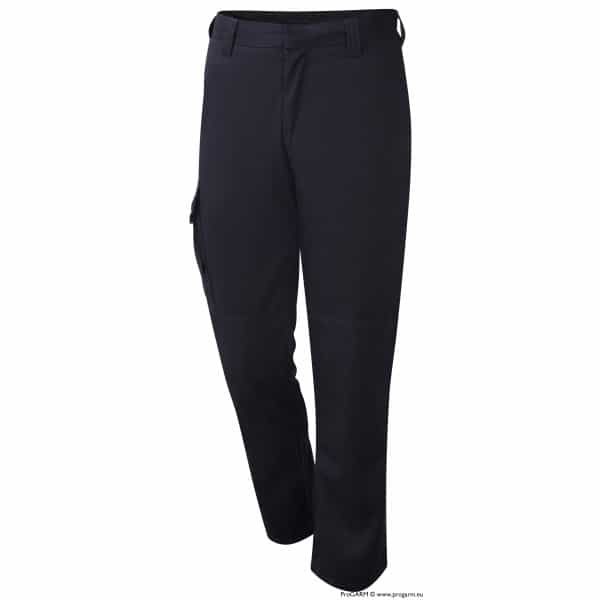
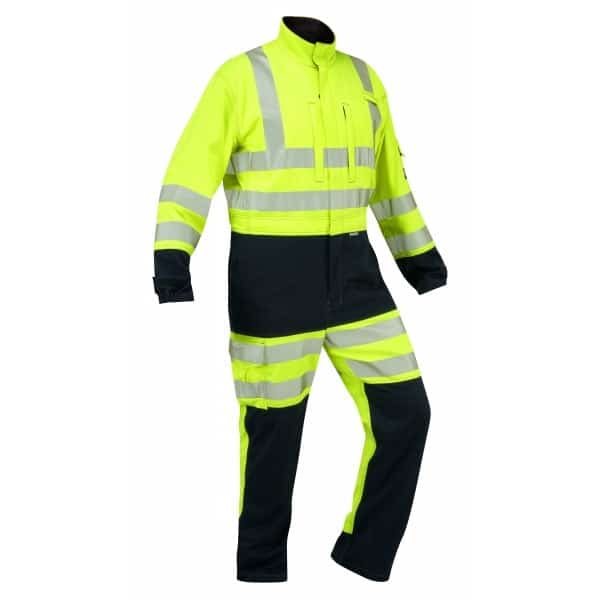
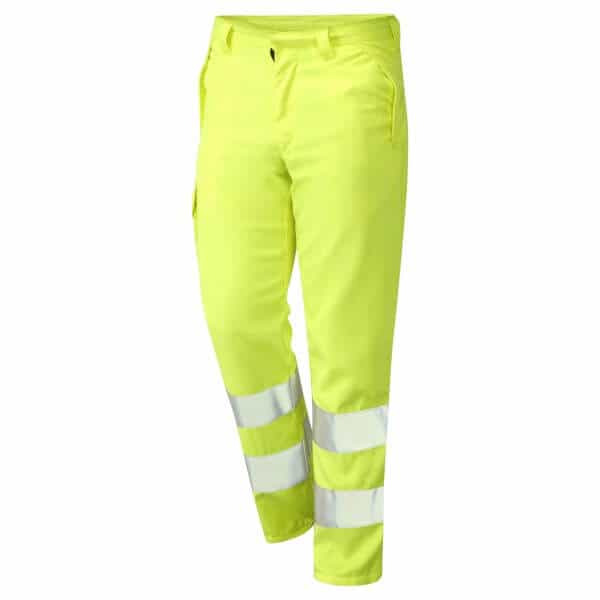
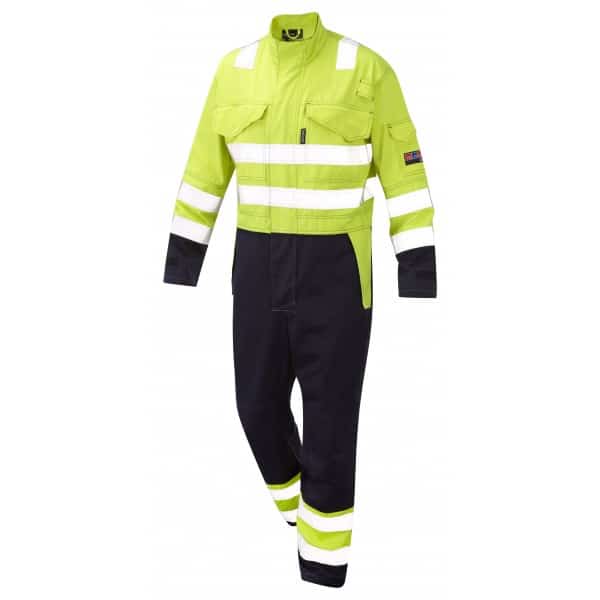
Thorne and Derrick are proud to be distributors of ProGARM arc flash coveralls and protection.
We can help – should you require arc flash calculators or advice on the type of clothing and protection available please do not hesitate to contact us.
klauke ekm60unv – universal cutting, crimping & punching tool The Klauke EKM 60 UNV is a versatile battery powered hydraulic universal tool engineered that can be used as a battery powered cable crimping tool and battery operated cable cutting tools that comes...
INDUSTRIAL LABEL PRINTING SOLUTIONS When clear, durable and professional identification is required across control panels, cable systems, production facilities and industrial installations, print quality, reliability and ease of use are critical. Cembre industrial label printers are designed to support...