uploaded by Chris Dodds - Thorne & Derrick Sales/Marketing Manager
Safe Electrical Isolation
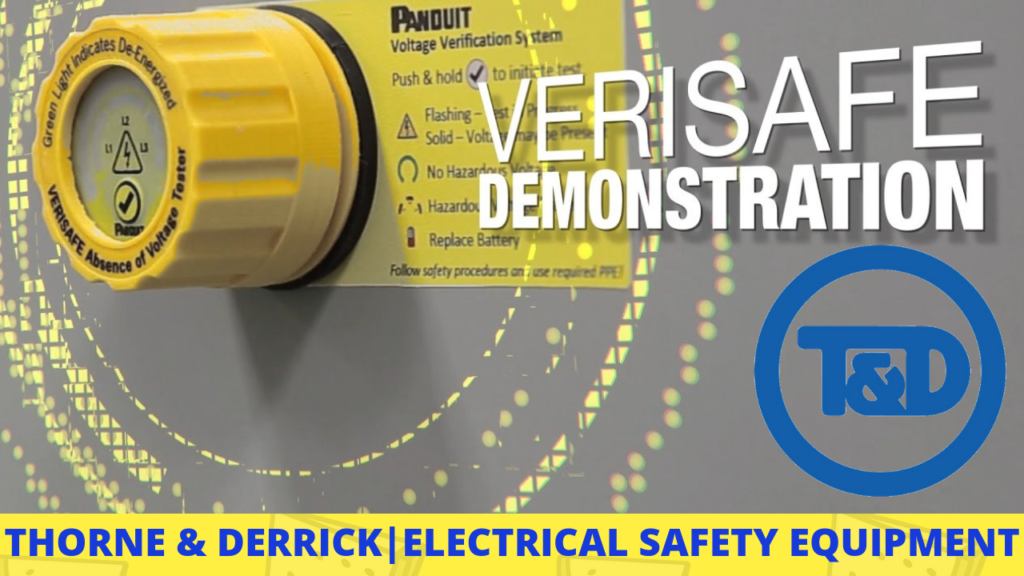
Thorne & Derrick International, a Panduit Channel Partner, based in the UK and Specialist Distributors of Electrical Safety Equipment are delighted to provide this following Product Endorsementof Panduit Verisafe by Craig O’Neill of Steve Willis Training Ltd.
Initially sceptic but nevertheless open-minded Craig wanted to learn more – so we arranged a product demonstration.
” Verisafe is an electrical safety product manufactured by Panduit that automatically isolates electrical control panels and distribution boards.The risk of arc flash is an incredibly dangerous problem – arc flash incidents and blasts can vaporise someone in a split second. Having worked in substations for the early part of my career I was always terrified of being responsible for electrical isolation. One false move and it’s too late.” comments Craig.
“Verisafe eliminates 99.999% of this risk and should be implemented to every panel as a first step to isolation procedures. My concerns initially was the device picking up inductive back emf and other induced currents but the demonstration carried out by Glen Bate (Panduit IEI Account Manager) proved it can detect these.”
“Verisafe even detects when a phase has lost connection!”
“I am very good at finding product faults or shortcomings but so far I’ve found none.”
“The electrical safety device needs maintenance like any product but if put in a professional environment, this could easily be implemented into regular checks. Safe electrical isolation is a lesson we drum into our learners at Steve Willis Training Ltd because high standards of professionalism is at the heart of what we do. Electrical safety is at the forefront of being a professional and so it fits right in with our ethics and we were very pleased to have Glen Bate visit and discuss it with us. The students really had a good think about safe isolation after he left and it really helped move the us up a peg on the professional ladder.”
SWT Specialists In Building Engineering Services Training
Who Are Steve Willis Training Limited?
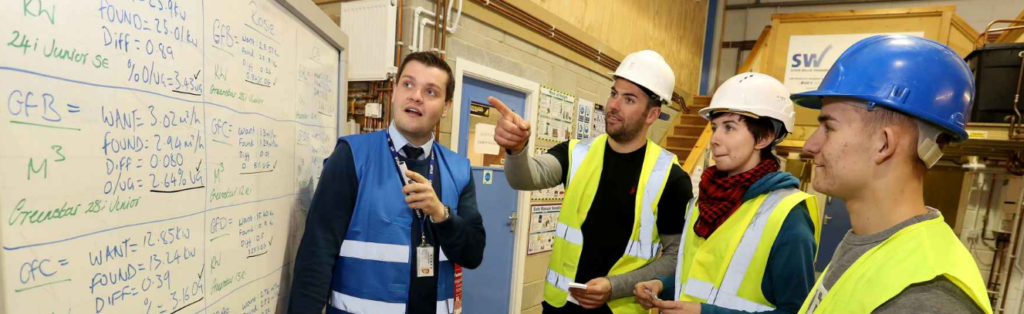
We are specialists in building engineering services training with over 18 years’ experience at our first class training centres in Burgess Hill, West Sussex and Portchester, near Portsmouth. Our training ranges from short courses for tradespeople to full apprenticeships and retraining for those leaving the armed services.
We treat you as an individual, finding the perfect course to suit your needs based on your requirements, experience and qualifications – we’ll never sell you a course you don’t need. We have an excellent reputation – most of our business comes from repeat customers and personal recommendation – and we are approved by all the industry bodies.
We are proud to be an EU Skills approved centre for our IGEM/IG/1 compliant gas managed learning programme, City & Guilds approved for our electrical training, and an OFTEC approved oil training centre.
Steve Willis Training Ltd
Unit F2, Sheddingdean Industrial Estate
Marchants Way, Burgess Hill
West Sussex, RH15 8QY
— SteveWillisTraining (@Steve_WillisLTD) June 12, 2019
Thorne & Derrick
T&D are Specialist Distributors to UK Distribution Network Operators (DNO’s), NERS Registered Service Providers, ICP’s and HV Jointing Contractors of an extensive range of LV, MV & HV Jointing, Earthing, Substation & Electrical Eqpt– this includes 11kV/33kV/66kV joints, terminations and connectors for both DNO and private network applications.
Contact our UK Power Team for competitive quotations, fast delivery from stock and technical support or training on all LV-HV products.
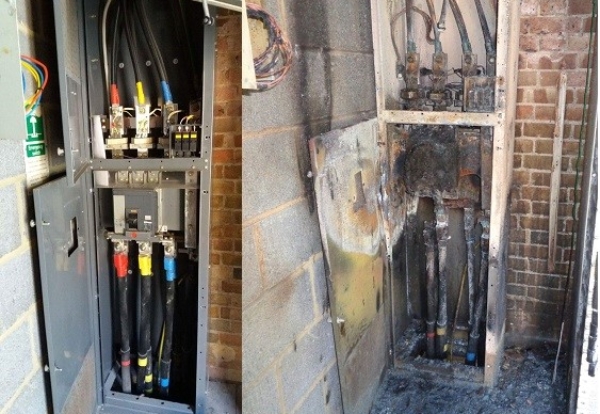
Arc Flash Inflicts Serious Electrical Burns- HSE Image Of Accident Scene
By Grant Prior for Construction Enquirer
Construction Enquirer is an online only magazine focusing on the latest news stories, contract opportunities and job vacancies – Completely Free.
Arc Flash
Two companies have been fined after a worker received serious electrical burns caused by an arc flash during demolition work.
Chelmsford Magistrates Court heard how on April 12 2017, two demolition workers employed by sub-contractor R B Haigh & Sons were removing electrical distribution equipment from a switchgear room at the former Molecular Products site in Thaxted, Essex.
Alan Banks had been told by the principal contractor that the electrical equipment had been isolated. To reassure his colleague that it was safe he threw a crowbar at the 400V ac equipment.
This came into contact with live exposed wires, causing a flashover and temperatures of several thousand degrees, followed by a subsequent fire.
As a result Banks suffered serious burn injuries and was immediately hospitalised.
An HSE investigation found that the task being undertaken had not been properly planned and suitable control measures were not implemented to ensure the isolation of the electrical power supply.
The principal contractor, A J Wadhams & Co Ltd failed to follow the clear procedures outlined in their risk assessments and method statements, which identified all equipment must be treated as live unless written authorisation proved otherwise.
Russell Haigh and Stuart Haigh (Partners of R B Haighs & Sons) of Thaxted, Essex, pleaded guilty to safety breaches and were fined £80,000 and ordered to pay costs of £3882.65.
AJ Wadhams & Co Limited trading as Wadham Homes of London also pleaded guilty to safety breaches and was fined £80,000 and ordered to pay costs of £3816.60.
After the hearing HSE inspector Adam Hills said “This incident has had a significant impact on Mr Banks life and the injuries could so very easily have been fatal.
“Had the companies followed the control measures outlined in their respective risk assessments, then this incident would not have occurred.
“Never assume that an electrical supply is disconnected. Always check with the Distribution Network Operator or a qualified electrician to obtain written proof of isolation before commencing work.”
ARC FLASH STATISTICS
30,000 Arc flash incidents per year
7,000 Burn injuries per year
2,000 Hospitalisations per year
400 Fatalities per year
“30,000 Arc Flash Incidents per year” Source: ISHN
How To Protect Yourself Against Arc Flash
Arc flash protection is provided by specialist clothing and garments for “head-to-toe” protection – everything from arc flash coveralls to arc flash trousers.
Enhanced and effective arc flash protection is safely achieved by wearing layers of protective clothing and garments manufactured from inherent fibres and which feature specific Arc Flash resilient components. Without the correct high-quality garments, arc protection levels will be compromised.
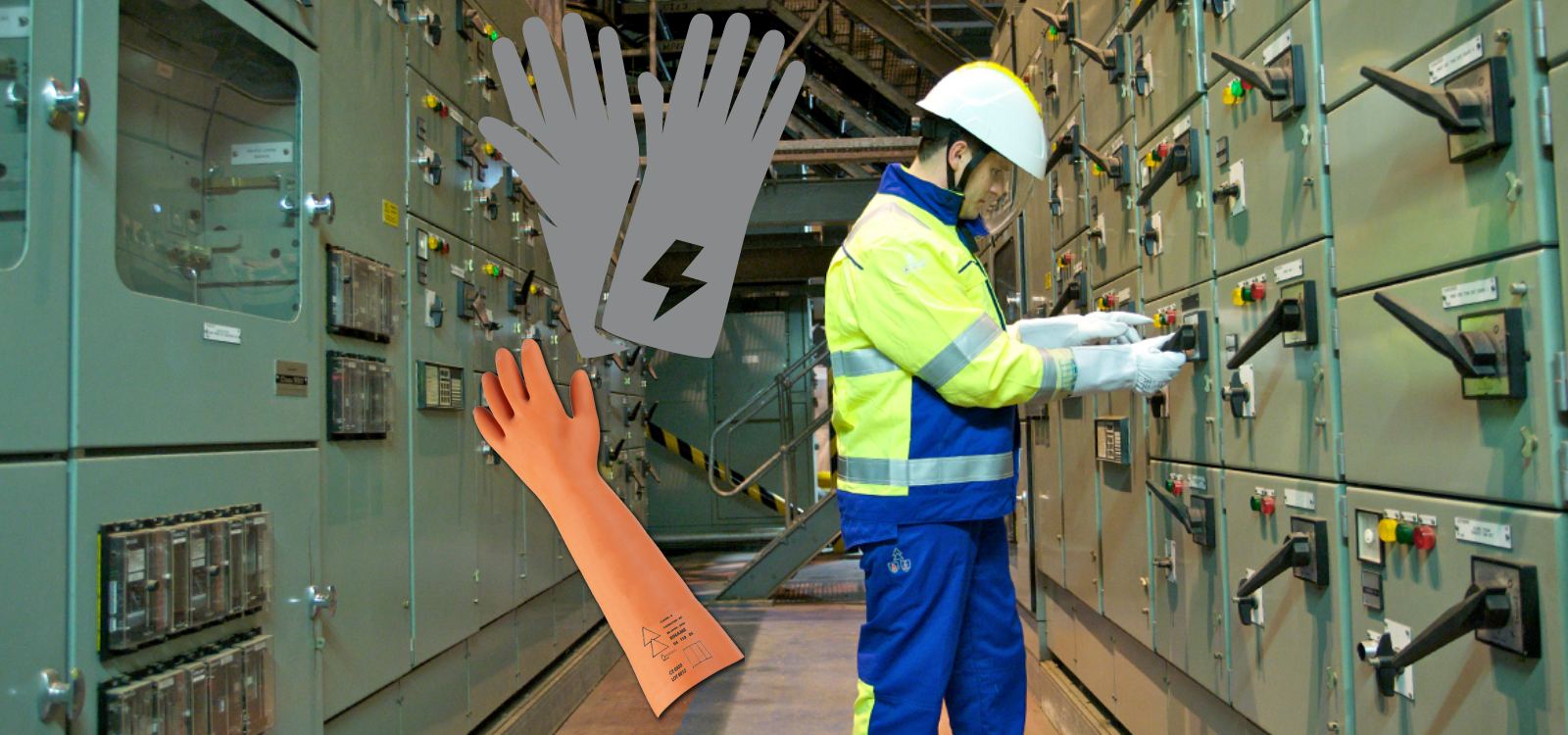
Insulated Gloves | Class 1 IEC 60903 Compliant Gloves
Article by SP Energy Networks
The following information is contained with SP Energy Networks document OPSAF-12-025 Issue No.6: Insulated Gloves for Electrical Purposes Other Than HV Rubber Glove Working.
IEC 60903
IEC60903 produced by the International Electrotechnical Commission is an internationally recognised electrical safety standard: Live Working – Electrical Insulating Gloves.
IEC 60903:2014 is applicable to electrical insulating gloves and mitts that provide protection of the worker against electric shock.
This standard also covers electrical insulating gloves with additional integrated mechanical protection referred to in this document as “composite gloves“. The third edition cancels and replaces the second edition of IEC 60903, published in 2002 and constitutes a technical revision which includes the following major changes:
clarification of the requirements and tests for long gloves
introduction of a new special property for gloves resistant to leakage current
removal of the requirement for an area to mark the date of inspection
the d.c. electric tests are no longer included in the normative part of the document but a proof test is suggested at the production level in a new informative Annex E
preparation of the elements of evaluation of defects, and general application of IEC 61318:2007
introduction of a new normative Annex H on classification of defects
introduction of a new informative Annex I on the rationale for the classification of defects
INSULATED GLOVES FOR ELECTRICAL PURPOSEs
SCOPE
This section of the Energy Networks Live Working Manual (LWM) details the rubber gloves to be used by all persons who are required to work or test on, or in close proximity to, Live LV Conductors and for certain switching and testing activities on the Live HV System (up to 33kV). For Company employees it also describes the process for issue and replacement.
The specification for the use and testing of rubber insulated gloves in connection with HV Rubber Glove Working is contained in OPSAF-13-001 (LWM 8.4) HV Rubber Glove Working techniques.
DEFINITIONS
Terms printed in bold type are as defined in the Scottish Power Safety Rules (Electrical and Mechanical) 4th Edition.
POLICY
Class 1 7.5kV insulated rubber gloves to the relevant IEC 60903 (2014) standard shall be issued to SP Energy Networks employees and its appointed contractors who are required to work or test on, or in close proximity to Live LV conductors. They are not meant to be the sole means of protecting those who work or test on Live LV conductors.
These IEC 60903 insulating gloves shall also be issued to personnel who are required to operate air-break switch disconnector handles, overhead Apparatus in substation outdoor compounds, link / fuse operating rods or to use moving-coilApprovedvoltage indicators on the HV System.
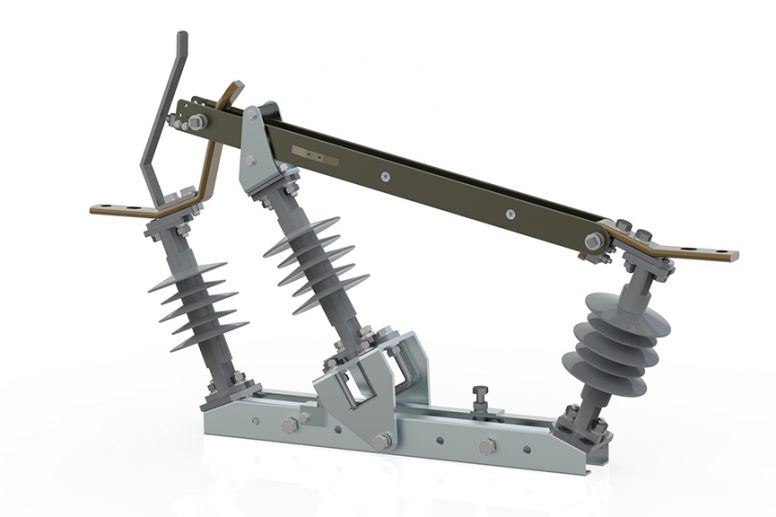
Pictured: Up to 36kV Air Break Switch Disconnectors
The Lucy Electric Rapier SAX Air Break Switch Disconnector range is compact and robust, providing a reliable, lightweight and flexible solution for network isolation and reinstatement. Incorporating a modular design switch that can be configured to suit a variety of applications, the range combines high performance and reliability and is particularly suited to rural environments.
Air-Break Switch DisconnectorS | 33kV 36kV Lucy Electric
Class 1 insulated gloves shall not be used for HV Rubber Glove Working on Live HVconductors.
Note: although Class 0 rubber gloves are rated for 1000V and would be appropriate for Live LV systems, experience has found them to be prone to damage when the gloves are not used with gauntlets. Class 1 gloves are thicker and more suitable to be worn without gauntlets if required.
Class 0 gloves shall not be used by SP Energy Networks employees or its appointed contractors on the SP Energy Networks System.
The SP Energy Networks specification TSE-03-044 for rubber gloves according to IEC 60903 require a high level of electrical arc flash protection. It is strongly recommended that insulating gloves provided by contractors provide an equivalent level of protection.
It is recommended that a leather protective outer gauntlet be used while operating on the HV System to prevent premature damage. Gauntlets shall be available for Persons with a preference to use them while working or testing on, or in close proximity to Live LV conductors.
Leather gauntlets also provide electrical arc protection which augments that provided by the rubber glove.
A protective wallet, to the relevant SP Energy Networks standard for the storage of rubber gloves shall be issued to all Persons issued with rubber gloves.
SP ENERGY NETWORKS GLOVE REPLACEMENT POLICY
This section describes the SP Energy Networks policy for replacement of damaged or time-expired insulating gloves to IEC 60903.
Contractors shall implement their own policy which may complement or differ from the Energy Networks policy.
The rubber insulating gloves shall be replaced before re-testing is required.
Class 1 7.5kV insulated rubber gloves shall be replaced twice per year, i.e. at 6 monthly intervals.
When the insulated gloves are first removed from the sealed bag in which they are delivered, the date of opening shall be written on each glove along the edge of the cuff using a ball-point pen or similar.
All IEC 60903 rubber gloves shall be replaced in pairs.
The leather gauntlets and protective wallet need not be replaced at the time of replacement of rubber gloves, but only as required.
At the time of replacement, all gloves shall be destroyed by having the fingers cut off. Gloves which exceed 12 months from the manufacturer’s test date shall be destroyed in the same manner.
Individual pairs of insulating gloves may be issued at other times as required.
Insulated gloves issued must have the manufacturers test date stamped on each individual glove. Insulated gloves shall only be in use within 12 months of the test date. Gloves shall not be in use for more than a 6 month period.
Insulated gloves remaining in the store, which have not been issued and have been stored appropriately, can be issued for the remaining duration of the 12 month period from the manufacturers test date as long as it does not exceed 6 months of use.
ORDERING
The quantities of IEC 60903 gloves required shall be determined far enough in advance of the period of issue to permit an order to be placed and delivery taken immediately prior to the period of issue.
If supply chain difficulties prevent delivery of adequate supplies of replacement gloves, the Operational Assurance Manager (or nominee) may approve a temporary extension of use.
STORAGE
IEC 60903 gloves shall be kept in store unfolded in the containers in which they are delivered. They shall be kept in dry conditions, away from strong light.
SAFETY REQUIREMENTS IN USE
When issued, but not in use, gloves shall be kept in the protective wallet, which shall be used only for storing the gloves. The wallet shall be kept away from moisture, strong light, and the risk of mechanical or chemical interference.
On each occasion before use, insulated gloves shall be examined by the user to ensure that they are safe for use. The examination shall include the following:
Check that the manufacturer’s test date on the gloves is not more than 12 months old
Check that gloves have not been in use for more than 6 months
Check that gloves are clean and dry, both outside and in
Check that the rubber does not show blisters or abrasions
Stretch the gloves by hand and check for tears, cuts and punctures
Complete an air test to confirm no punctures
Replace immediately, if either of a pair of gloves shows signs of not being safe. Both gloves shall be replaced
If, as a result of the examination, either or both of the gloves is found to be unsafe, then the pair shall not be used.
PRECAUTIONS IN USE
Insulated gloves shall not be allowed to remain soiled or unnecessarily exposed to heat or light or allowed to come into prolonged contact with oil, grease, turpentine, motor spirit or strong acid.
Gloves shall be wiped clean on completion of work to remove any surface contamination.
When insulated gloves become heavily soiled, they should be thoroughly washed with soap and water then dried. If insulating compound such as tar or paint still adhere to insulating gloves, then those parts affected should be cleaned with approved cable cleaners or degreasant and then immediately washed and treated as described above.
Petrol, paraffin, or white spirit shall not be used to remove such compounds. Rinse the gloves with clean water after washing.
Any insulated glove, which becomes wet in use or through washing shall be thoroughly dried. Where heated air is blown into the glove, it shall not cause the temperature of the glove to exceed 55ºC.
IEC 60903
Insulated Gloves – Class & Category
The following gloves manufactured by CATU Electrical do not provide mechanical protection and must be used with silicon leather glove covers or over-gloves.
A multi-award winning second generation family owned business, Rock Fall has positioned itself at the forefront of the electrical safety footwear industry as a leading manufacturer of linesmans boots and dielectric insulating boots to meet the ever-changing demands of the power transmission and distribution industry.
Recognising the strong growth and focus on clean energy and sustainability around the world Rock Fall have developed the first Electrical Safety Trainers available in Europe.
Certified against European and International Electrical Hazard standards the safety trainers are designed to protect wearers against electrical risks up to 18kV in accordance with the ASTM F2412-11 test method.
The range is in stock in the UK and available exclusively from the largest PPE resellers in the UK, including Thorne & Derrick.
The range, which has already been recognised by the industry for Innovation at the recent Professional Clothing Awards is driving quick and significant growth in Australia and New Zealand, with major electrical contractors specifying the products for their electrical operations.
The electrical hazard trainers comply with European and American Standards:
EN ISO 20345:2011 SB P E FO WRU SRC
ASTM F 2413-11 1/75 C/75 EH PR
Electrical Hazard Trainer
Speaking about the development, Richard Noon said:
“Electrical risks are increasing as the prominence of hybrid and fully electric vehicles continues to grow. In manufacture, service and at the end of life these vehicles must be handled safely using correctly specified electrical safety equipment.
Electric Vehicles aren’t the only driver for this, as we increase the pressure on our electricity networks, there will be even greater demand for preventative maintenance and work on live lines.
Increased pressure can cause accidents and to have an additional item of PPE to be the last line of defence, in our opinion is critical.
We have seen from the great improvements in Safety Management during the Crossrail project.
With HS2 electrification high on the agenda, from the view of a Electrical Safety Equipment manufacturer it’s important that our industry makes the most of these major infrastructure projects.”
ARC FLASH PROTECTION, CLOTHING & PPE FOR LINESMEN, JOINTERS & UTILITY WORKERS
Thorne & Derrick International are specialist distributors of LV, MV & HV Cable Installation, Jointing, Duct Sealing, Substation & Electrical Equipment – servicing UK and global businesses involved in cable installations, cable jointing, substation, overhead line and electrical construction at LV, 11kV, 33kV and EHV.
uploaded by - Chris Dodds Thorne & Derrick Sales & Marketing Manager
WPD’s Safety Footwear Solution
Electrical Safety Equipment LV MV HV
Western Power Distribution are the electricity distribution network operator for the Midlands, South West and Wales. They deliver electricity to over 7.8 million customers over a 55,500 square kilometres service area. A network which consists of 220,000 km of overhead lines and underground cables, and 185,000 substations resulting in the employment of over 6,500 staff.
Rock Fall design and develop electrical hazard linesmens boots and shoes to impede the flow of LV MV HVelectricity through the shoe and to the ground reducing the likelihood of electrocution, in accordance with ASTM F2413-11.
Below is a case study of how Rock Fall and Western Power Distribution have achieved an electrical safety footwear solution meeting all the necessary standards.
The problem
WPD felt they had a few problems with their electrical safety footwear solution. These included:
Missing specification
High costs
Requirement for bespoke design choices
The story
Western Power Distribution approached Rock Fall to develop a range of styles to protect them from the electrical risks that they face. WPD were fully aware that these styles are designed as secondary protective equipment for use in addition to other electrical hazard protection equipment i.e. insulating gloves. Key features of these electrical safety products are:
Certified to 18kV protection in accordance with ASTM F2413-11
Waterproof tested for 100 hours
New design features including yellow collar and lacing and new outsole mould compatible with climbing irons
Rock Fall supplied wearer trials to several operatives across a variety of business units.
The trialled products were:
Rock Fall RF800 & RF900 certified to ASTM F2413-11 as well as EN ISO 20345:2011
Ortholite® Climate breathable footbed – reduces foot swelling and provides anti-fatigue and moisture wicking properties
IMPACT SHIELD™ Internal Digging Plate – reduces impact into the under-foot and increases stability
Finally, Rock Fall have added a yellow collar, meaning that wearers can be identified to be wearing the correct EH Footwear from a distance by Health and Safety and Site Managers.
Linesmens Boots
solution
Following a diligent trial and development process the RF800 PowerMax and RF900 Power were specified on the Western Power Distribution safety footwear tender that took place during Q4 of 2017.
The linesmen boots are on the ground and wearer feedback is continually being monitored.
Matthew Noon, Director at Rock Fall and Lucine Evans, Safety Advisor at Western Power Distribution worked together on the project.
Matthew said “We are thrilled to have had the opportunity to work with Western Power Distribution on such an important project for both them, and the industry. Rock Fall has positioned itself as the go to manufacturer for end-users when they need something brand new. Working with WPD has been a pleasure from start to finish and we are proud of the results.”
Lucine said “As a business we had been waiting for an electrical hazard boot which was CE marked to come on to the market, so we were more than happy to work with Rock Fall on the development of these work boots. Throughout the process Rock Fall have listened to our feedback and the result is two styles of work boot that are fit for purpose, comfortable, robust and meet WPD’s minimum standards for footwear.”
Rock Fall are eager for ongoing user feedback so their electrical hazard footwear and dielectric boots can be reviewed to ensure the continual performance and value for money is achieved.
ARC FLASH PROTECTION, CLOTHING & PPE FOR LINESMEN, JOINTERS & UTILITY WORKERS
Thorne & Derrick International are specialist distributors of LV, MV & HV Cable Installation, Jointing, Duct Sealing, Substation & Electrical Equipment – servicing UK and global businesses involved in cable installations, cable jointing, substation, overhead line and electrical construction at LV, 11kV, 33kV and EHV.



 centres in Burgess Hill, West Sussex and Portchester, near Portsmouth. Our training ranges from short courses for tradespeople to full apprenticeships and retraining for those leaving the armed services.