Electrical Safety
IEC 60903 Gloves | Class 1 Insulating Gloves – Compliance Notes
April 26th, 2019
Insulated Gloves | Class 1 IEC 60903 Compliant Gloves
- Article by SP Energy Networks
The following information is contained with SP Energy Networks document OPSAF-12-025 Issue No.6: Insulated Gloves for Electrical Purposes Other Than HV Rubber Glove Working.
IEC 60903
IEC60903 produced by the International Electrotechnical Commission is an internationally recognised electrical safety standard: Live Working – Electrical Insulating Gloves.
IEC 60903:2014 is applicable to electrical insulating gloves and mitts that provide protection of the worker against electric shock.
This standard also covers electrical insulating gloves with additional integrated mechanical protection referred to in this document as “composite gloves“. The third edition cancels and replaces the second edition of IEC 60903, published in 2002 and constitutes a technical revision which includes the following major changes:
- clarification of the requirements and tests for long gloves
- introduction of a new special property for gloves resistant to leakage current
- removal of the requirement for an area to mark the date of inspection
- the d.c. electric tests are no longer included in the normative part of the document but a proof test is suggested at the production level in a new informative Annex E
- preparation of the elements of evaluation of defects, and general application of IEC 61318:2007
- introduction of a new normative Annex H on classification of defects
- introduction of a new informative Annex I on the rationale for the classification of defects
INSULATED GLOVES FOR ELECTRICAL PURPOSEs
SCOPE
This section of the Energy Networks Live Working Manual (LWM) details the rubber gloves to be used by all persons who are required to work or test on, or in close proximity to, Live LV Conductors and for certain switching and testing activities on the Live HV System (up to 33kV). For Company employees it also describes the process for issue and replacement.
This document deals with gloves which comply with IEC 60903 (2014) Class 1.
The specification for the use and testing of rubber insulated gloves in connection with HV Rubber Glove Working is contained in OPSAF-13-001 (LWM 8.4) HV Rubber Glove Working techniques.
DEFINITIONS
Terms printed in bold type are as defined in the Scottish Power Safety Rules (Electrical and Mechanical) 4th Edition.
POLICY
Class 1 7.5kV insulated rubber gloves to the relevant IEC 60903 (2014) standard shall be issued to SP Energy Networks employees and its appointed contractors who are required to work or test on, or in close proximity to Live LV conductors. They are not meant to be the sole means of protecting those who work or test on Live LV conductors.
These IEC 60903 insulating gloves shall also be issued to personnel who are required to operate air-break switch disconnector handles, overhead Apparatus in substation outdoor compounds, link / fuse operating rods or to use moving-coil Approved voltage indicators on the HV System.
Pictured: Up to 36kV Air Break Switch Disconnectors
The Lucy Electric Rapier SAX Air Break Switch Disconnector range is compact and robust, providing a reliable, lightweight and flexible solution for network isolation and reinstatement. Incorporating a modular design switch that can be configured to suit a variety of applications, the range combines high performance and reliability and is particularly suited to rural environments.
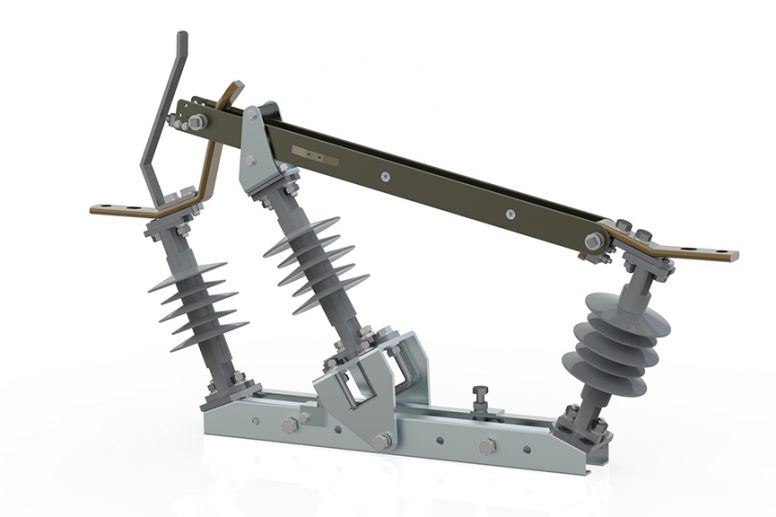
Air-Break Switch DisconnectorS | 33kV 36kV Lucy Electric
Class 1 insulated gloves shall not be used for HV Rubber Glove Working on Live HV conductors.
Note: although Class 0 rubber gloves are rated for 1000V and would be appropriate for Live LV systems, experience has found them to be prone to damage when the gloves are not used with gauntlets. Class 1 gloves are thicker and more suitable to be worn without gauntlets if required.
Class 0 gloves shall not be used by SP Energy Networks employees or its appointed contractors on the SP Energy Networks System.
The SP Energy Networks specification TSE-03-044 for rubber gloves according to IEC 60903 require a high level of electrical arc flash protection. It is strongly recommended that insulating gloves provided by contractors provide an equivalent level of protection.
It is recommended that a leather protective outer gauntlet be used while operating on the HV System to prevent premature damage. Gauntlets shall be available for Persons with a preference to use them while working or testing on, or in close proximity to Live LV conductors.
Leather gauntlets also provide electrical arc protection which augments that provided by the rubber glove.
A protective wallet, to the relevant SP Energy Networks standard for the storage of rubber gloves shall be issued to all Persons issued with rubber gloves.
SP ENERGY NETWORKS GLOVE REPLACEMENT POLICY
This section describes the SP Energy Networks policy for replacement of damaged or time-expired insulating gloves to IEC 60903.
Contractors shall implement their own policy which may complement or differ from the Energy Networks policy.
The rubber insulating gloves shall be replaced before re-testing is required.
Class 1 7.5kV insulated rubber gloves shall be replaced twice per year, i.e. at 6 monthly intervals.
When the insulated gloves are first removed from the sealed bag in which they are delivered, the date of opening shall be written on each glove along the edge of the cuff using a ball-point pen or similar.
All IEC 60903 rubber gloves shall be replaced in pairs.
The leather gauntlets and protective wallet need not be replaced at the time of replacement of rubber gloves, but only as required.
At the time of replacement, all gloves shall be destroyed by having the fingers cut off. Gloves which exceed 12 months from the manufacturer’s test date shall be destroyed in the same manner.
Individual pairs of insulating gloves may be issued at other times as required.
Insulated gloves issued must have the manufacturers test date stamped on each individual glove. Insulated gloves shall only be in use within 12 months of the test date. Gloves shall not be in use for more than a 6 month period.
Insulated gloves remaining in the store, which have not been issued and have been stored appropriately, can be issued for the remaining duration of the 12 month period from the manufacturers test date as long as it does not exceed 6 months of use.
ORDERING
The quantities of IEC 60903 gloves required shall be determined far enough in advance of the period of issue to permit an order to be placed and delivery taken immediately prior to the period of issue.
If supply chain difficulties prevent delivery of adequate supplies of replacement gloves, the Operational Assurance Manager (or nominee) may approve a temporary extension of use.
STORAGE
IEC 60903 gloves shall be kept in store unfolded in the containers in which they are delivered. They shall be kept in dry conditions, away from strong light.
SAFETY REQUIREMENTS IN USE
When issued, but not in use, gloves shall be kept in the protective wallet, which shall be used only for storing the gloves. The wallet shall be kept away from moisture, strong light, and the risk of mechanical or chemical interference.
On each occasion before use, insulated gloves shall be examined by the user to ensure that they are safe for use. The examination shall include the following:
- Check that the manufacturer’s test date on the gloves is not more than 12 months old
- Check that gloves have not been in use for more than 6 months
- Check that gloves are clean and dry, both outside and in
- Check that the rubber does not show blisters or abrasions
- Stretch the gloves by hand and check for tears, cuts and punctures
- Complete an air test to confirm no punctures
- Replace immediately, if either of a pair of gloves shows signs of not being safe. Both gloves shall be replaced
If, as a result of the examination, either or both of the gloves is found to be unsafe, then the pair shall not be used.
PRECAUTIONS IN USE
Insulated gloves shall not be allowed to remain soiled or unnecessarily exposed to heat or light or allowed to come into prolonged contact with oil, grease, turpentine, motor spirit or strong acid.
Gloves shall be wiped clean on completion of work to remove any surface contamination.
When insulated gloves become heavily soiled, they should be thoroughly washed with soap and water then dried. If insulating compound such as tar or paint still adhere to insulating gloves, then those parts affected should be cleaned with approved cable cleaners or degreasant and then immediately washed and treated as described above.
Petrol, paraffin, or white spirit shall not be used to remove such compounds. Rinse the gloves with clean water after washing.
Any insulated glove, which becomes wet in use or through washing shall be thoroughly dried. Where heated air is blown into the glove, it shall not cause the temperature of the glove to exceed 55ºC.
IEC 60903
Insulated Gloves – Class & Category
The following gloves manufactured by CATU Electrical do not provide mechanical protection and must be used with silicon leather glove covers or over-gloves.
| Insulating Gloves Class | CATU Electrical Code | Category | Thickness | Length | Colour | AC | kV | DC |
| Class 00 | CATU CG-05 | AZC | 0.5mm | 360mm | Beige | ≤ 500V | 0.5kV | 750V |
| Class 0 | CATU CG-10 | AZC | 1mm | 360mm | Beige | ≤ 1000V | 1kV | 1500V |
| Class 1 | CATU CG-1 | RC | 1.5mm | 360mm | Bi-Colour | ≤ 7500V | 7.5kV | 11,250V |
| Class 2 | CATU CG-2 | RC | 2.3mm | 360mm | Bi-Colour | ≤ 17000V | 17.5kV | 25,500V |
| Class 3 | CATU CG-3 | RC | 2.9mm | 360mm | Bi-Colour | ≤ 26500V | 26.5kV | 39,750V |
| Class 4 | CATU CG-4 | RC | 3.6mm | 410mm | Bi-Colour | ≤ 36000V | 36kV | 54,000V |
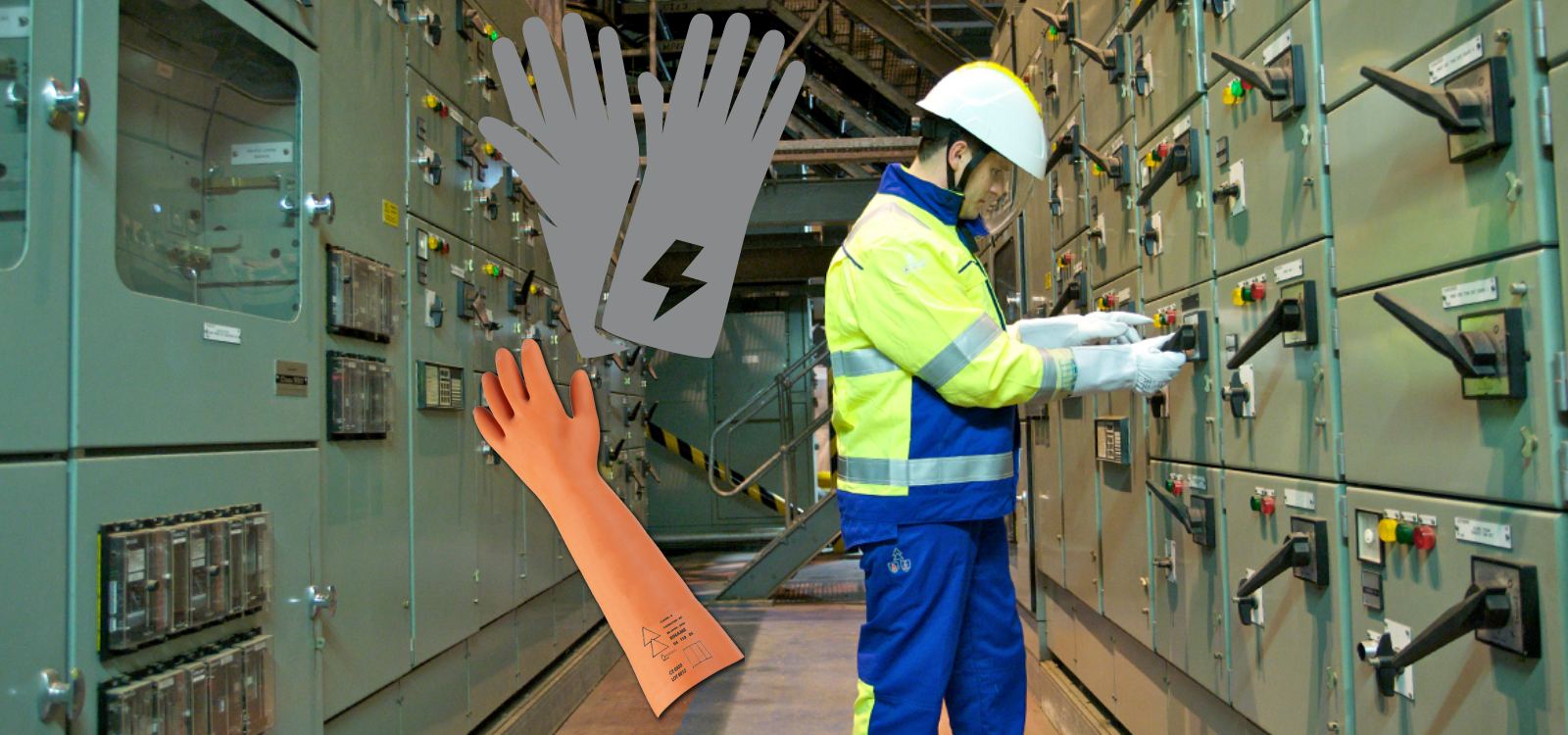
Insulated Gloves


Specialist Distributors Of LV MV HV Electrical Equipment
We supply Product Categories: Duct Seals | Cable Cleats | Cable Glands | Electrical Safety | Arc Flash Protection | Cable Jointing Tools | Cable Pulling | Earthing | Feeder Pillars | Cable Joints LV | Joints & Terminations MV HV

Ellis Patents | Nexans Euromold | Pfisterer CONNEX | Prysmian – Distributors
A European First | Electrical Safety Trainers – Protect Wearers Against Electrical Risks Up To 18kV
April 15th, 2019
Electrical Safety Trainers – Protect Wearers Against Electrical Risks Up To 18kV
-
uploaded by - Chris Dodds Thorne & Derrick Sales & Marketing Manager
Electrical Safety Trainers
Rock Fall has developed what it said is the first Electrical Safety Trainer available in Europe.
A multi-award winning second generation family owned business, Rock Fall has positioned itself at the forefront of the electrical safety footwear industry as a leading manufacturer of linesmans boots and dielectric insulating boots to meet the ever-changing demands of the power transmission and distribution industry.
Recognising the strong growth and focus on clean energy and sustainability around the world Rock Fall have developed the first Electrical Safety Trainers available in Europe.
Certified against European and International Electrical Hazard standards the safety trainers are designed to protect wearers against electrical risks up to 18kV in accordance with the ASTM F2412-11 test method.
The range is in stock in the UK and available exclusively from the largest PPE resellers in the UK, including Thorne & Derrick.
The range, which has already been recognised by the industry for Innovation at the recent Professional Clothing Awards is driving quick and significant growth in Australia and New Zealand, with major electrical contractors specifying the products for their electrical operations.
The electrical hazard trainers comply with European and American Standards:
- EN ISO 20345:2011 SB P E FO WRU SRC
- ASTM F 2413-11 1/75 C/75 EH PR

Electrical Hazard Trainer
Speaking about the development, Richard Noon said:
“Electrical risks are increasing as the prominence of hybrid and fully electric vehicles continues to grow. In manufacture, service and at the end of life these vehicles must be handled safely using correctly specified electrical safety equipment.
Electric Vehicles aren’t the only driver for this, as we increase the pressure on our electricity networks, there will be even greater demand for preventative maintenance and work on live lines.
Increased pressure can cause accidents and to have an additional item of PPE to be the last line of defence, in our opinion is critical.
We have seen from the great improvements in Safety Management during the Crossrail project.
With HS2 electrification high on the agenda, from the view of a Electrical Safety Equipment manufacturer it’s important that our industry makes the most of these major infrastructure projects.”
ARC FLASH PROTECTION, CLOTHING & PPE FOR LINESMEN, JOINTERS & UTILITY WORKERS

Coveralls | Helmets | Gloves | Insulating Gloves | Insulating Matting | Electrical Safety Equipment MV HV

LV, MV & HV Jointing, Earthing, Substation & Electrical Eqpt
Thorne & Derrick International are specialist distributors of LV, MV & HV Cable Installation, Jointing, Duct Sealing, Substation & Electrical Equipment – servicing UK and global businesses involved in cable installations, cable jointing, substation, overhead line and electrical construction at LV, 11kV, 33kV and EHV.
THORNE & DERRICK Product Categories: Duct Seals | Cable Cleats | Cable Glands | Electrical Safety | Arc Flash Protection | Cable Jointing Tools | Cable Pulling | Earthing | Feeder Pillars | Cable Joints LV | Joints & Terminations MV HV
Electrical Safety Footwear – Cable Jointers & Linesmens Boots | WPD Case Study
April 15th, 2019
Electrical Safety Footwear – Jointers & Linesmens Boots
-
uploaded by - Chris Dodds Thorne & Derrick Sales & Marketing Manager
WPD’s Safety Footwear Solution
Electrical Safety Equipment LV MV HV
Western Power Distribution are the electricity distribution network operator for the Midlands, South West and Wales. They deliver electricity to over 7.8 million customers over a 55,500 square kilometres service area. A network which consists of 220,000 km of overhead lines and underground cables, and 185,000 substations resulting in the employment of over 6,500 staff.
Rock Fall design and develop electrical hazard linesmens boots and shoes to impede the flow of LV MV HV electricity through the shoe and to the ground reducing the likelihood of electrocution, in accordance with ASTM F2413-11.
Below is a case study of how Rock Fall and Western Power Distribution have achieved an electrical safety footwear solution meeting all the necessary standards.
The problem
WPD felt they had a few problems with their electrical safety footwear solution. These included:
- Missing specification
- High costs
- Requirement for bespoke design choices
The story
Western Power Distribution approached Rock Fall to develop a range of styles to protect them from the electrical risks that they face. WPD were fully aware that these styles are designed as secondary protective equipment for use in addition to other electrical hazard protection equipment i.e. insulating gloves. Key features of these electrical safety products are:
- Certified to 18kV protection in accordance with ASTM F2413-11
- Waterproof tested for 100 hours
- New design features including yellow collar and lacing and new outsole mould compatible with climbing irons
Rock Fall supplied wearer trials to several operatives across a variety of business units.
The trialled products were:

Rock Fall RF800 & RF900 certified to ASTM F2413-11 as well as EN ISO 20345:2011
Rock Fall RF800 PowerMax Linesmen Boots
- EN ISO 20345:2011 SB P CI E FO WRU WR SRC.
- ASTM F 2413-11 I/75 C/75 EH PR.
- AS/NZS 2210.3:2009 SB P CI E FO WRU HRO WR SRC.
Rock Fall RF900 Power Linesmen Boots
- EN ISO 20345:2011 SB P CI E FO WRU WR SRC.
- ASTM F 2413-11 I/75 C/75 EH PR.
- AS/NZS 2210.3:2009 SB P CI E FO WRU HRO WR SRC.
This gave them 2 highly durable products that are designed for both Linesmen and Jointers.
Rock Fall brought together a range of advanced components used in their existing market leading products. Including:
- FORCE10® Scuff Cap and Brand New Outsole – tested to extraordinary performance levels
- R-TEN™ Abrasion Resistant Thread – Chemically inert and highly abrasion resistant
- Ortholite® Climate breathable footbed – reduces foot swelling and provides anti-fatigue and moisture wicking properties
- IMPACT SHIELD™ Internal Digging Plate – reduces impact into the under-foot and increases stability
Finally, Rock Fall have added a yellow collar, meaning that wearers can be identified to be wearing the correct EH Footwear from a distance by Health and Safety and Site Managers.

Linesmens Boots
solution
Following a diligent trial and development process the RF800 PowerMax and RF900 Power were specified on the Western Power Distribution safety footwear tender that took place during Q4 of 2017.
The linesmen boots are on the ground and wearer feedback is continually being monitored.
Matthew Noon, Director at Rock Fall and Lucine Evans, Safety Advisor at Western Power Distribution worked together on the project.
Matthew said “We are thrilled to have had the opportunity to work with Western Power Distribution on such an important project for both them, and the industry. Rock Fall has positioned itself as the go to manufacturer for end-users when they need something brand new. Working with WPD has been a pleasure from start to finish and we are proud of the results.”
Lucine said “As a business we had been waiting for an electrical hazard boot which was CE marked to come on to the market, so we were more than happy to work with Rock Fall on the development of these work boots. Throughout the process Rock Fall have listened to our feedback and the result is two styles of work boot that are fit for purpose, comfortable, robust and meet WPD’s minimum standards for footwear.”
Rock Fall are eager for ongoing user feedback so their electrical hazard footwear and dielectric boots can be reviewed to ensure the continual performance and value for money is achieved.
ARC FLASH PROTECTION, CLOTHING & PPE FOR LINESMEN, JOINTERS & UTILITY WORKERS
Coveralls | Helmets | Gloves | Insulating Gloves | Insulating Matting | Electrical Safety Equipment MV HV
LV, MV & HV Jointing, Earthing, Substation & Electrical Eqpt
Thorne & Derrick International are specialist distributors of LV, MV & HV Cable Installation, Jointing, Duct Sealing, Substation & Electrical Equipment – servicing UK and global businesses involved in cable installations, cable jointing, substation, overhead line and electrical construction at LV, 11kV, 33kV and EHV.
THORNE & DERRICK Product Categories: Duct Seals | Cable Cleats | Cable Glands | Electrical Safety | Arc Flash Protection | Cable Jointing Tools | Cable Pulling | Earthing | Feeder Pillars | Cable Joints LV | Joints & Terminations MV HV
VIDEO How To Verify Total Absence of Voltage By The Push Of a Button
April 11th, 2019
-
Guest Article by Glen Bate (Panduit Account Manager)
VeriSafe voltage tester
When servicing LV MV HV electrical equipment, workers must comply with safety regulations that require a voltage verification test to validate the absence of voltage.
This process requires strict adherence to prevent accidents and bodily injury, but includes many stages that can be complex and time-consuming when using hand-held portable test instruments.
This paper examines the costs and limitations involved with using a manual absence of voltage tester. It also describes a new technology for the factory floor that automates the process, reducing time, complexity, and costs.
VeriSafeTM by Panduit is the first-of-its-kind voltage tester that determines the absence of voltage with just a push of a button. This revolutionary 2018 NFPA 70E compliant product automates the required six-step testing process in about ten seconds, enabling your plant to operate faster, safer, and more efficiently.
Simplify electrical safety with the superior technology of VeriSafe.
Historical Costs of Checking for Absence of Voltage
Numerous studies exist pertaining to injuries resulting from electric shock and arc flash events. These studies recognise that establishing the economic payoffs of prevention is a critical factor in promoting workplace safety. Besides personal injury, the costs of property and equipment damage need to be considered.
Although estimates vary, studies have shown that the average direct cost of an electrical injury ranges from about US $50,000 to US $80,000′, while the indirect cost can exceed the direct cost by a factor of nearly four2. Direct costs include lost wages or workers’ compensation payments, medical expenditures, and legal expenses.
Indirect costs include:
- wages paid during work stoppage
- administrative costs related to injury
- property damage and repair
- training and compensation for replacement workers
- lost productivity with less experienced workers
- fines related to workplace safety violations
- potential increase in absenteeism
- decrease in morale
Electrical injuries have one of the highest average workers’ compensation costs, second only to motor vehicle accidents3.
Injuries from contact with exposed wiring, transformers, or other electrical components frequently occur in the workplace and involve construction, installation, maintenance, and repair workers. These injuries are often costly and serious, as demonstrated by the number of days away from work; 51% of workers missed over one week of work due to these injuries, with 40% missing two weeks or more4.5.
Limitations of Using a Handheld Voltage Tester
Verifying the absence of voltage is part of the process to establish an electrically safe work condition. Step 5 of NFPA 70E-2015 Article 120.56 describes this process:
Use an adequately rated test instrument to test each phase conductor or circuit part to verify it is de-energized. Test each phase conductor or circuit part both phase-to-phase and phase-to-ground. Before and after each test, determine that the test instrument is operating satisfactorily through verification on a known voltage source.
This process usually involves a portable, hand-held voltage test instrument. To be effective, it is critical to perform each step of the process in sequence, and it requires taking the necessary precautions, such as the proper use of personal protective equipment (PPE) (Figure 1).
Competent & Authorised Persons
Note Panduit recommend that VeriSafe should be used by competent and authorised people. As VeriSafe is a new and innovative solution to make the Absence of Voltage Testing, we recommend that the people who will use this device, have to be trained in order to understand how it works and how to use it properly.
Please be aware that with this product there is no risk of having hazardous voltage on the indicator module and on the door, as they are isolated from the main power by the isolation module which is located inside the panel. This means that there is less than 5 volts (just enough to power the LEDs on the indicator) present at the device located on the door and used to launch the test procedure.

Figure 1. Absence of Voltage Test Using Handheld Voltage Test Instrument

VeriSafe – Request a Demo
Complexity
Adhering to this process prevents electrical injuries, but the process is complex and time consuming. Portable instruments are susceptible to mechanical and electrical failure and misuse by the person using the device. In addition, because the process of using a hand-held tester is dependent on human input, interaction, and interpretation, it is vulnerable to mistakes and errors.
Training Costs
Training on the selection, maintenance, and use of test instruments is crucial as are systems for inspecting and maintaining voltage test instruments. However, training and maintaining the test equipment incur the additional expenses of time and cost.

The Risks of Voltage Testing

Portable Handheld Voltage Detector in Action
Electrical Safety

Traditional Method – Determining absence of voltage with handhled testers presents a risk of exposure to electrical hazards
A disadvantage of implementing a voltage verification test with a hand-held tester is that the person performing it may be exposed to electrical hazards while verifying that the tester is working prior to and after the test, and during the test if the equipment was not de-energized.
With such a significant emphasis on performing work only on de-energized equipment, it is ironic that best practice relies on PPE and exposure to hazards before de-energized work begins. The need for PPE is a significant contributor to the overall time to carry out this process because the worker must first determine the required PPE, then obtain, inspect, dress, and properly store it after use. Additionally, PPE can be misused or not used at all, especially when there are time constraints.
When processes are overly complex or time-consuming, workers tend to become complacent and develop shortcuts as practices become routine. A normalization of deviance—small, gradual deviations from an established practice—may occur over time. With the lack of negative consequences, the lower standard eventually becomes the norm”.
Even when hazards are part of the everyday routine, deviations from a safety procedure can slowly become accepted practice. These deviations are particularly evident when there are time pressures, which is often the case when electrical maintenance causes unplanned or excessive downtime. If either training or enforcement of administrative procedures is lacking, the effectiveness of the procedures will diminish.
A More Efficient Way to Test for Voltage VeriSafeTM Absence of Voltage Tester (AVT)

VeriSafe AVT – Prevents direct exposure to electrical hazards and determines voltage status before equipment is accessed
The VeriSafeTM AVT automates the voltage verification process and is the first AVT tailored for electrical enclosures (Figure 2). By automating this process, the VeriSafeTM AVT features the following:
- Tests without exposure to harmful voltages/currents
- Self-contained; no additional meters or tools are needed
- Built-in pre-/post-verification test
- Tests phase-to-phase and phase-to-ground
- Automated test sequence
- Active indication for absence of voltage
- Supports compliance with NFPA 70E-2018 Article 120.5
- Rated safety integrity level (SIL) 3 per IEC 61508
The VeriSafeTM AVT is applicable for several applications:
- Equipment with a single source of incoming power
- High risk associated with access
- Equipment with high incident energy
- Remote or difficult to access locations — Outdoor, mezzanine, catwalk
- Sites with temporary or intermittent power
- Equipment with stored electrical energy — VFDs, capacitors, etc.
- Equipment frequently serviced by third-party technicians or contractors

Figure 2 VeriSafe AVT
NFPA 70E
One of the major changes to the 2018 edition of NFPA 70E involves the new requirements that allow an installed AVT to be used instead of a hand-held voltage tester. When the VeriSafe– AVT is used in conjunction with a Lockout/Tagout Program, it meets the requirements for the process described in NFPA 70E-2018 Article 120.5:
Exception No. 1: An adequately rated permanently mounted test device shall be permitted to be used to verify the absence of voltage of the conductors or circuit parts at the work location, provided it meets the following requirements:
- It is permanently mounted and installed in accordance with the manufacturer’s instructions and tests the conductors and circuit parts at the point of work
- It is listed and labeled to verify the absence of voltage
- It tests each phase conductor or circuit part both phase-to-phase and phase-to-ground
- The test device is verified as operating satisfactorily on any known voltage source before and after verifying the absence of voltage

Figure 3 Comparison of the VeriSafe AVT and Portable Device Testing Methods
VeriSafe AVT – The Safe, Efficient, Accurate Way to Verify
Integrating the VeriSafe™ AVT is a vital improvement to absence of voltage testing. A solid testing method helps create a reliable, safe, cost-effective system that workers can use as needed. The VeriSafe™ AVT verifies the absence of voltage before equipment is accessed, making it easier for qualified electrical workers to determine an electrically safe environment in a fraction of the time required by hand-held portable test instruments.

VeriSafe AVT – Verification Steps

VeriSafe AVT – Safe, Efficeint & Accurate Way To Detect Voltage

VeriSafe Award Winning Panduit Product
- B. Campbell and D. A. Dini, Occupational Injuries from Electrical Shock and Arc Flash Events. Quincy, MA: Fire Protection Research Foundation, 2015.
- F. A. Manuele, “Accident costs: Rethinking ratios of indirect to direct costs,” Prof. Safety, pp. 39-47, Jan. 2011.
- I. B. Horwitz and B. P. McCall, An epidemiological and risk analysis of Virginia workers’ compensation burn claims 1999 to 2002: Identifying and prioritizing preventative workplace interventions,’ Occup. Environ. Med., vol. 49, no. 12, pp. 1376-1385. 2007.
- Bureau of Labor Statistics. Injuries, illnesses, and fatalities. [Online]. Available: http://www.bls.gov/iif/data.htm
- U.S. Department of Labor. Bureau of Labor Statistics census of fatal occupational injuries. [Online]. Available: http://www.bls.gov/iif/oshcfoi1 .htm
- Standard for Electrical Safety in the Workplace 2015 Edition, NFPA 70E, 2015.
- L. Floyd and B. J. Nenninger, Personnel Safety and Plant Reliability Considerations in the Selection and Use of Voltage Test Instruments: IEEE Transactions on Industry Applications, vol. 33, no. 2, pp 367-373, 1997.
- A. Johnson. (2011- Nov. U. Not an easy task. Safety+ Health. [Online]. Available: http://www.safetyandhealthmagazine.com/articles/not-an-easytask-2
- ‘J. Wettstein. (2013, Oct. 241. When safety shortcuts become the norm. [Online]. Available: http://www.safetyrisk.net/when-safety-shortcutsbecome-the-norm/
- “Only AVTs listed to UL 1436 as an AVT meet this requirement.

VeriSafe – Request a Demo
Thorne & Derrick International, based in the UK, are Official Distributors for the Panduit range of cable ties for industrial and hazardous area management of data, telecoms, control, instrumentation and power LV MV HV cables in industrial and hazardous area industries including oil/gas, petrochemical, rail, renewable, construction and mining/quarrying industries – this includes stainless steel cable ties used to clamp and cleat cables located in medium/high voltage MV HV onshore and offshore substations.
CATU Insulated Tools for Live Line Working to IEC 60900 up to 1000 Volts
February 7th, 2019
-
uploaded by Chris Dodds - Thorne & Derrick Sales & Marketing Manager
Insulated Tools
Live Line Working Tools – LV Cable Jointers Tools
Electrical Safety Equipment
The CATU Electrical range of insulated tools comply with the NF EN 60900 and IEC 60900 standards – these insulated tools are used by cable jointers and electrical engineers for live working and jointing cables up to 1000 volts.
CATU insulated hand tools are dielectrically tested to 10,000 volts AC by electrical testing and severe mechanical tests including impact tests, tearing tests and puncture tests to meet these standards and are for working live at nominal voltages up to 1kV AC and 1.5kV DC.
Contact us with your Sales Enquiries for the following product ranges – we stock and distribute the most extensive range of IEC 60900 insulated tools:
- Insulated Tool Kits

- Insulated Pliers & Cutters
- Insulated Spanners
- Insulated Sockets & Accessories
- Insulated Saws & Knives
- Insulated Screwdrivers
- Insulated Nut Spinners
- Insulated Link Extractors
- Insulated Hexagon Keys
- Insulated Box Spanners
- Other Insulated Tools
- Insulated Gloves

CATU Tools
IEC 60900:2018
♦ Live Working Tools – Hand Tools For Use Up To 1000 V AC and 1 500 V DC

CATU Isomil insulated tools for live working cover all electricians and cable jointers requirements. Insulated tools are used by live working cable jointers on utility cables during connection, disconnection and cable fault repair of PILC, Consac, Waveform and XLPE SWA low voltage cables, 415V-600V.
From stock Thorne & Derrick can also supply complete LV Jointers Tool Sets and Jointers Tents to provide weather protection for utility workers carrying out maintenance, repair or installation services to both de-energised or energised power systems – for overhead line and pole working on cables and conductors we can supply a selection of insulating ladders compliant with EN 131 safety standards.
CATU Isomil Dual Material
Layer Insulating Tools

DUAL MATERIAL INSULATED TOOLS – FEATURES & BENEFITS
- Suitable for work on live cables, particularly low voltage (30cm area of a live bare wire, cable or conductor)
- Ergonomic hand tools
- Dual material with non-skid “softgrip” injected material for operator comfort
DUAL LAYER INSULATED TOOLS – FEATURES & BENEFITS
- Extensive product live for work on live cables; mainly used by LV Live Line Working teams
- Ergonomic insulated tools
- Dual-layer with a white insulating layer
- High mechanical strength in the layers due to dipping technique
- Steel with high mechanical properties

from CATU Electrical
CATU Electrical LV Live Line Working Tool Range
- IEC 60900 Insulated Pliers
- IEC 60900 Insulated Screwdrivers
- IEC 60900 Insulated Cutters
- IEC 60900 Insulated Hacksaws
- IEC 60900 Insulated Stripping Knives
- IEC 60900 Insulated Spanners
- IEC 60900 Insulated Ratchet Handles
- IEC 60900 Insulated Wrenches
- IEC 60900 Insulated Sockets
Electrical Safety Overhead Lines & Underground Cables
CATU Electrical Safety Equipment protects Senior Authorised Persons (SAP’s), Linesmen, Cable Jointers and Electrical Engineers during electrical construction and maintenance work on underground cables and overhead lines – typical applications include LV-HV cable jointing, fuse pulling, racking circuit breakers, electrical switching and live working.
For instance, insulating gloves offer personal protection against electrocution – durable, flexible, high dielectric and mechanical strength insulating gloves from 500V – 33kV.
The CATU MO-180-ARC is part of our range of arc flash helmets which is comfortable and safe when in use with insulating protection of the shell, shockproof for the head and eye and face protection againstof thermal effect. Easy to use – taking only 3 Seconds To Install.

Arc Flash Safety Helmet with Integrated Face Shield – CATU MO-180-ARC4


Pfisterer | Nexans Euromold | Prysmian | Cable Joints & Terminations MV HV