Blog
BS7609 | Crimping Cables With Cembre Cable Lugs & Tools
August 9th, 2018
Cembre Cable Lugs & Tools
-
uploaded by Chris Dodds - Thorne & Derrick Sales & Marketing Manager
BS7609 Code Of Practice For Installing Uninsulated Connectors With Copper Or Aluminium Conductors
BS7609
The BS7609 code is a British Standard which sets out what is best practice for the installation and inspection of uninsulated compression and mechanical connectors for power cables with copper or aluminium conductors – this effectively ensures the compliance with recommended workmanship when crimping cables using cable lugs to avoid built-in points of future failure in cable joints, terminations and electrical connectors at LV MV HV.
Incorrectly installed or crimped cable lugs can lead to “hot-spots” and the dangerous burning out of electrical cables causing devastating power failures and in worst cases fire.
Under-crimped cable lugs installed with uncalibrated crimping tools will lead to loose electrical connections triggering a disastrous domino effect: resistance restricts the ability of the current to flow effectively and consistently through the electric cable.
Thermal build-up in cable systems due to poor workmanship or poor quality cable lugs will inevitably cause cable joint or termination failure.
This problem is prevalent and amplified where cable systems and lug terminations are subject to high levels of in-rush current for standby power generation systems.
Remember – LOOSE WIRES CAUSES FIRES
Observance of BS7609 by electrical engineers, cable jointers and substation workers safeguards the reputation of the installer, their company and the manufacturer of the cable lugs or connectors – in this post we are working with Cembre the leading Italian based and one of the largest European manufacturers of electrical compression connectors, cable lugs and related crimping tools.
What Is Cable Crimping?
Crimping is the method of attaching the metal terminal or cable lug (typically copper or aluminium) around an electrical conductor to provide an excellent electrical connection.
Using the correct tool such as a Cembre cable crimping tool the cable lug is effectively bonded or compressed to the electrical conductor of the cable using high compression forces generated by the crimping tool.
Cable lugs are often over-looked in the specification and performance of LV HV electrical distribution systems, however under-specified or incorrectly installed cable lugs are major contributors to switchgear failures and power outages. Although arguably the lowest cost component of a cable installation, whether LV, 11kV or 33kV, the actual cost of cable lug failure in terms of loss of power and reputation is immeasurable.
Hydraulic Tools v Battery Crimping Tools
| Crimping Tool Type | Tool Reference | Crimping Range | Crimping Force | Tools |
| Hydraulic | Cembre HT131-C | up to 400sqmm LV HV Cable Lugs | 230kN | 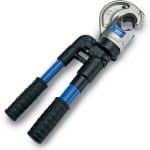 |
| Battery Operated | Cembre B500E | up to 630sqmm LV HV Cable Lugs | 63kN |  |
| Crimp Head + Foot Pump | Cembre ECW-H3D + PO7000 | up to 630sqmm LV HV Cable Lugs | 230kN | 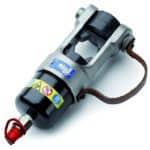 |
Crimping Cables – 6 Steps
Failure to observe these precautions can result in a compression connector, cable lug, cable joint or termination that fails in service.
- Choose a manufacturer providing crimp tooling, die set and crimp lugs matched to work together to give assured crimping performance. Avoid “cross-crimping” where a “dolly mixture” approach to the choice of lugs, tools and dies introduces a cocktail of often incompatible different manufacturers into the crimping process. Achieve a systemised approach i.e. crimp lugs + crimp tools + crimp dies = 1 brand.
- Each crimp lug should be marked with a reference on the barrel or palm – this shows that the cable lug selected is the correct size and type for the conductor. Refer to the die selector to select correct Cembre dies.
- Prepare the conductor by stripping the insulation back. The strip length should be equal to that of the cable lug barrel. Take care to avoid damaging the conductor strands – exposed cable strands should be cleaned to remove any remaining insulation from the LV MV HV cables.
- Fully insert the conductor into the barrel of the cable lug – check the cable conductor is fully inserted using the inspection hole provided.
- Using the manufacturers instructions, crimp the cable lug – paying careful attention to the positioning of the crimp die on the barrel of the lug. If multiple compressions are required pay attention to the sequence in which they are made.
- Use the following 6 points to check the completed crimp:
- Marking on the cable lug shows it is correct for the conductor type and size.
- The marking on the cable lug shows the correct crimping die set was used.
- No insulation is trapped in the cable lug barrel.
- Excess grease is removed from insulation and cable lug.
- If an inspection hole is provided, the conductor has been fully inserted.
- It is not over-compressed or under-compressed. Both of these can have a detrimental effect on the performance of the joint.Incorrect compression can cause excessive flash or burrs. If in any doubt, samples should be produced for test purposes.

In addition to the requirements of BS7609, Cembre advises the following when crimping cables – it is important that the crimped cable installation is not compromised by a poor choice of copper tube lug, or by the use of a ‘mismatched’ crimping system:
- Cembre supports the Approved Cables Initiative (ACI) Code of Practice to ensure that the conductor used is both third-party approved and appropriately marked.
- The cable lug should have an equal current carrying capacity to that of the conductor. Copper tube lugs designed and manufactured by Cembre achieve maximum electrical conductivity with minimum resistance by the use of high purity, electrolytic copper having a cross sectional area equivalent to that of the conductor.
- Beware cable lugs are manufactured from thin wall copper tube as they have the potential to cause elevated temperatures when the conductor is carrying high levels of current.
- Recommended procedures for conductor preparation and crimping Cembre copper tube lugs, including number, position and sequence where multiple compressions are required.
- Cembre copper tube lugs are also fully annealed after pressing to alleviate residual stresses within the palm area and ensure optimum mechanical and electrical performance at the connection interface.
- Ensure Cembre crimp tooling is certified as calibrated regularly and serviced correctly and all equipment, particularly die sets, is inspected for damage or wear and maintained in good condition.

Cembre Crimp Lug Correct Installation
Cable Crimping
Some best practise requirements:
- Approved cable conductor correctly prepared
- Conductor strip length = cable lug barrel length
- Manufacturer and size shown on crimp lug
- Cable lug and conductor have equal copper content
- Crimp tool optimises performance of dies
- Crimp dies matched to tool, lug type and size
- Correct number, position and quality of crimps
- Cable lug marked to check correct dies used
Choosing the correct Cembre die set:
- ALWAYS refer to the Cembre die selection chart. A die selection guide booklet is also included with every new Cembre crimp tool, whether hydraulic crimping tools or battery crimping tools.
The number and sequences of compressions per cable lug:
- The number and sequence of compressions shown in the die selection guides are specifically determined for Cembre lugs from the lug type and design, the force applied by Cembre crimp tooling and the bite width of the matched die set.
- ALWAYS apply the correct number of compressions as per the die selection guide in order to assure the performance of the joint after cable crimping.
- Apply each compression in the correct sequence to avoid distorting the cable lug.
Which Cable lug & die combination to use when crimping extra flexible conductors?
- Cembre copper tube lugs for extra flexible conductors 35sqmm to 185sqmm have the same cross sectional area of copper as standard Cembre A-M lugs for LV applications, but with a slightly wider inner diameter to more easily accommodate the fine strands.
- Above 185sqmm it may not be possible to use the correct size standard lug with an extra flexible conductor. For example, say a 240sqmm lug does not fit on a 240sqmm extra flexible conductor, it is acceptable and common practice to use the next larger size of lug, here 300sqmm.
- The lug MUST however be crimped with the die set appropriate to its size, 300sqmm, since using a 240sqmm die set will distort the cable lug and be detrimental to performance.
Which Cable lug & die combination to use when crimping compacted conductors?
- For low voltage applications use Cembre A-M Copper tube lugs. Matched crimp tooling and hexagonal die sets MUST be used.
- Always apply the rule that the cross sectional area of the lug should at least equal that of the conductor so, when using compacted conductor it is essential that the correct size lug be used, even if the fit appears ‘loose’ prior to crimping.
- The apparent ‘loose’ fit is due to the air between conductor strands having been ‘compacted out’ during manufacture, causing a slight reduction in the diameter of the conductor. The resulting gap between conductor and cable lug barrel wall is fully taken up during the crimping process.
- Do not be tempted to move down a lug size to obtain a tighter fit, as there will then be insufficient copper in the shoulder or palm of the cable lug. As an example, for 185sqmm compacted conductor use A37 lug, ME37-C die set and appropriate Cembre crimping tool.

Cembre
T&D are Main UK Stockists for the Cembre range of compression connectors (cable crimp lugs and splices) for all low and high voltage crimping applications of power, control and instrumentation cables with either copper or aluminium conductors.
Cembre copper, aluminium and bimetallic cable lugs and splices are designed for high voltage cable crimping applications including 3.3kV, 6.6kV, 11kV and up to 33kV. Cembre 2A HV cable lugs and splices are made from high purity copper, annealed and tin plated with extended barrels for reliable high voltage electrical connections.
Cembre electrical connectors are the market leading crimping system for reliability, consistency and peace of mind performance – specify Cembre to crimp, splice and terminate your vital high voltage electrical circuits.
A Quality Comparison – Cembre v Unbranded Cable Lugs
Both of the below copper cable lugs in picture 1 are specified by their respective manufacturers to crimp and terminate 400sqmm stranded copper cables – pictured right is the Cembre cable lug, note the CE Marking. CE marked cable lugs guarantee product compliance with EU safety, health and environmental requirements. Clearly the Cembre lug has increased barrel length and a thicker cable lug wall for an advanced standard of electrical connection with excellent conductivity due to high copper content – the thinner wall cable lug pictured alongside which is a imported and unbranded product is lighter weight and dimensionally smaller than Cembre brand lugs.
When terminating either armoured, unarmoured or braided cable types we recommend only to use branded type cable terminations such as Prysmian cable glands.
Quality – Cembre crimp lugs and splices are manufactured from electrolytic copper tube – the copper tube dimensions are designed to obtain the most efficient conductivity and mechanical strength to resist vibration and pull out. This includes electrical connectors for LV 600/1000V and MV HV cables operating at 11kV/33kV.
Strength – Cembre cable lugs are annealed to guarantee optimum ductility which is an absolute necessity for crimp connectors which must withstand the severe deformation arising when compressed by hydraulic crimp tools. In electrical installations subject to vibration, crimp terminals must perform a reliable connection – annealing avoids cracking or breaks between the cable lug palm and barrel. This applies especially to Marine & Shipboard cables in offshore installations subject to high levels of movement and mechanical stress.
Reliability – Cembre cable lugs feature an extended barrel design facilitating full insertion of the the copper conductor into the crimp lug – the cable lug barrel length has been designed to allow easy and accurate positioning of the dies during the crimping operation.
Note the distinctive quality differentials between the Cembre brand transformer lugs and unknown, unbranded type.

1. Cable Lugs – Low Voltage Single Hole 400sqmm.

2. Transformer Cable Lugs – Cembre Brand

3. Transformer Cable Lugs – Unbranded
Further Reading
- Crimping Aluminium Cables Using Cembre RHU131-C Presshead
- Selecting & Positioning Dies In Cembre ECW-H3D Presshead Tool
- Replacing Cembre Cable Cutting Tool Blades – Model TC055
- Ensuring Optimum Performance Of Cembre Crimping Tool – Model HT131-C
- Cembre B1350-CE v. B135-C Crimping Tools Performance Comparison

Thorne & Derrick – Stickists & Suppliers of MV HV Joints, Terminations & Connectors
Thorne & Derrick
T&D are Specialist Distributors of an extensive range of LV, MV & HV Jointing, Earthing, Substation & Electrical Eqpt – this includes 11kV/33kV/66kV cable joints, terminations and connectors for both UK DNO, private network applications and international cable specification and standards.
Contact our UK Power Team for competitive quotations, fast delivery from stock and technical support or training on all LV-HV products.
Key Product Categories: Duct Seals | Cable Cleats | Cable Glands | Electrical Safety | Arc Flash Protection | Cable Jointing Tools | Cable Pulling | Earthing | Feeder Pillars | Cable Joints LV | Joints & Terminations MV HV

Concentric & Split Concentric Cable Stripping Tools
August 8th, 2018
Alroc Tools – Cable Jointing Tools (LV MV HV)
-
uploaded by Chris Dodds - Thorne & Derrick Sales & Marketing Manager
Thorne & Derrick, Specialist Distributor of LV HV Jointing & Cable Installation Equipment are working with Alroc to improve the efficiency of cable preparation for Jointers working on LV MV HV electrical distribution systems.
The innovative Alroc DBT compact cable stripping tool is used by LV Jointers employed by NERS Accredited Independent Connection Providers (ICP’s) for the removal of the PVC outer cable sheath and primary insulation over the stranded copper or solid aluminium  conductor on BS7870 Concentric & Split Concentric cables.
These LV aluminium and copper cables are approved by UK Distribution Network Operators (DNOs) including Scottish Power Energy Networks (SPEN), Scottish & Southern Energy (SSE) and UK Power Network (UKPN).
Concentric and split concentric cables have been adopted as standard for use by DNOs to provide the final connection to residential properties. Additional cable functionality includes use for LV sub-main distribution and installation within high-rise buildings (LSZH Low Smoke Zero Halogen type) and street lighting systems.
The choice between Concentric and Split Concentric cable is determined by the supply type: TN-C-S supply for Concentric and TN-S supply for Split Concentric.
Concentric Cables
Concentric cables are used for power supplies with Protective Multiple Earthing (PME) systems, where a combined Protective Earth (PE) and Neutral (N) – together known as the PEN – connects the combined neutral-and-earth to real earth at multiple locations to reduce the risk of electric shock in the event of a broken PEN.
Split Concentric Cables
Split Concentric Cables are used when the power supply has separate PE & N conductors and are only combined as PEN near the power source. The Protective Earth and Neutral are not connected after the building entry point.
Jointers Tools
Alroc DTB cable end strippers enable the user to remove the outer sheath insulation of LV cable ranging from 16sqmm up to 150sqmm. The ruler engraved in the cable jointing tool sets the length of the XLPE insulation to be removed. The DTB cable end strippers are compact, light and heavy duty and are available for different cable sections – 16-25sqmm, 35-54.6sqmm and 70-150sqmm.
Alroc offer a range of low voltage cable preparation splicing and stripping tools suitable for use prior to cable joint and termination installation.
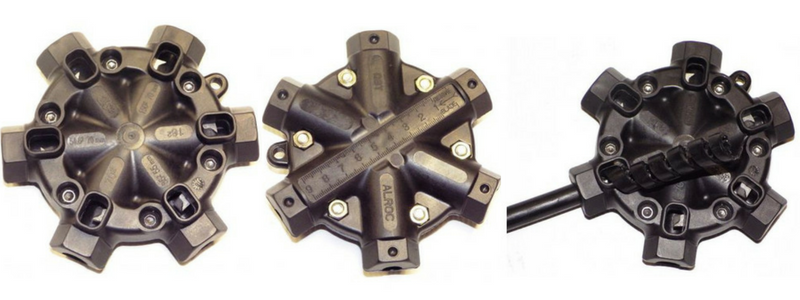
➡ Watch the following Video which demonstrates the ease and simplicity the Jointer can remove the cable sheath and insulation from the Concentric cables prior to installing the cable joints onto the distribution network.
Split Concentric & Concentric Cable Stripping Tool
♦ PDFs Courtesy & Property of Eland Cables

Alroc Tools are used and recommended by PFISTERER for MV HV cable preparation of cables prior to installation of their market-leading CONNEX plug terminations for connection to gas insulated switchgear and substations.
Thorne & Derrick
T&D are Specialist Distributors to UK Distribution Network Operators (DNO’s), NERS Registered Service Providers, ICP’s and HV Jointing Contractors of an extensive range of LV, MV & HV Jointing, Earthing, Substation & Electrical Eqpt – this includes 11kV/33kV/66kV cable joints, terminations and connectors for both DNO and private network applications.
Contact our UK Power Team for competitive quotations, fast delivery from stock and technical support or training on all LV-HV products.
Key Product Categories: Duct Seals | Insulated Tools | Cable Cleats | Cable Glands | Electrical Safety | Arc Flash Protection | Cable Jointing Tools | Cable Pulling | Earthing | Feeder Pillars | Cable Joints LV | Joints & Terminations MV HV
Pilot Cable Joint – Transition Joint PILC SWA To Multipair Jelly Filled Cable
July 26th, 2018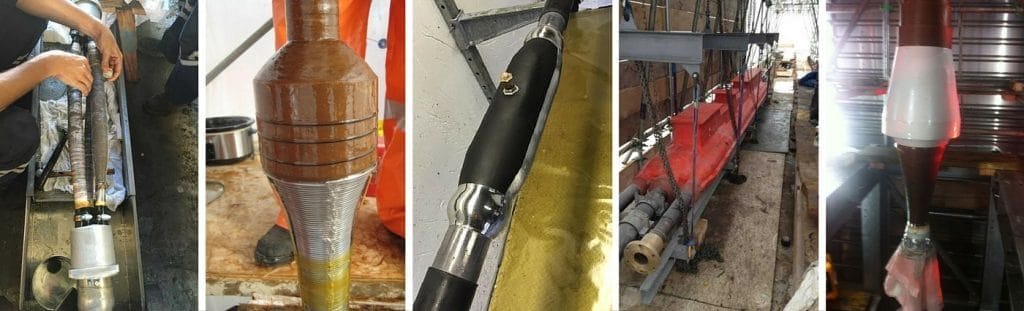
- Application: Transtion Joint PILC SWA To Multipair Jelly Filled Cable
- Cable Type: Pilot Cable Joint
- Cable Jointer: Darren Street Cable Jointer at D+R Jointing Services
Pilot Cable Joint
The pilot cable joint pictured below is twisted and tipped type.
The cable jointer had to improvise the installation due to the absence of a type tested manufactured cable joint which caters for this specific LV cable configuration – it would be usual to use a resin cable joint for standard straight jointing of pilot cables up to 100 pair.
Pictured jointed is a 30 core PILC armoured cable to 2 x 7 pair jelly filled steel wire armoured (SWA) telephone cables with PE insulation.
The Jointer used a small LV branch joint shell as a mould for resin which provided both mechanical and moisture protection. The connection of the cable cores was by soldering and then small lengths of heatshrink tubing were used to insulate the cable joint.
The Jointer established earth continuity of the lead sheath to wire armours on the plastic cable with constant force roll springs and tinned copper braid – to remove traces of petroleum jelly from the pilot cables 3M recommend use of their cable jointers and cleaning wipes.


Should you require any assistance with the selection or specification of pilot cable joints please do not hesitate to contact us.
Thorne & Derrick Specialist Electrical Distributor
LV ♦ MV ♦ HV
T&D distribute the most extensive range of LV, MV & HV Cable Jointing, Terminating, Installation & Cable Pulling Equipment – we service UK and international clients working on underground cables, overhead lines, substations and electrical construction at LV, 11kV, 33kV and EHV transmission and distribution voltages.
- Key Products: MV-HV Cable Joints & Terminations, Cable Cleats, Sealing Cable Ducts, Cable Transits, Underground Cable Protection, Cable Jointing Tools, Feeder Pillars, Cable Ducting, Earthing & Lightning Protection, Electrical Safety, Cable Glands, Arc Flash Protection & Fusegear.
- Distributors for: 3M, ABB, Alroc, Band-It, Catu, Cembre, Centriforce, CMP, Elastimold, Ellis Patents, Emtelle, Furse, Lucy Zodion, Nexans Euromold, Pfisterer, Polypipe, Prysmian, Roxtec.

LV – Low Voltage Cable Joints, Glands, Cleats, Lugs & Accessories (1000 Volts)

MV HV – Medium & High Voltage Cable Joints, Terminations & Connectors (11kV 33kV EHV)

Cable Laying – Underground Cable Covers, Ducting, Seals & Cable Pulling Equipment
More…
T&D’s Power Blog covers: LV MV HV & EHV Transmission & Distribution, Substations, Switchgear, Cable Jointing & Termination, Cable Fault & Repair, Underground Cables.
♦ See also – ABB 132kV Surge Arresters
➡ Visit Power Blog.

ABB NKT SMPGB Straight Cable Joint 420kV
July 26th, 2018
- Application: ABB NKT SMPGB Straight Joint 420kV 3 Piece
- Cable Joint: SMPGB Straight Joint 420kV 3 Piece
- Cable Jointer: Andy O’Malley (IBEW 258 EHV Cable Jointer / Cable Splicer – Allteck)
- Featured Manufacturer: ABB NKT
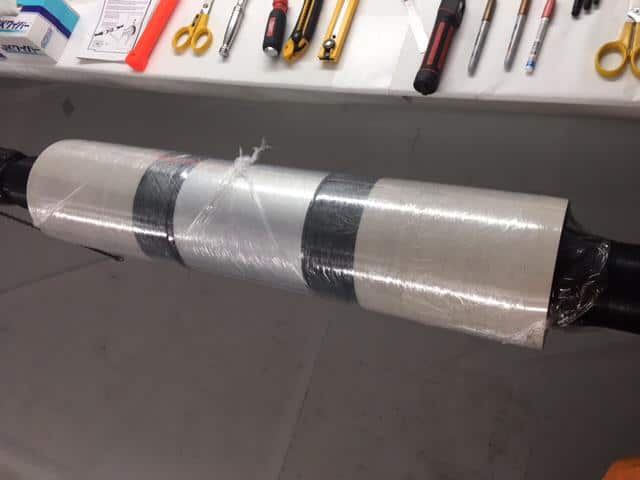
ABB NKT SMPGB Straight Joint
SMPGB straight joints manufactured by ABB are for jointing EHV XLPE and EPR insulated transmission cables with aluminium or copper conductors. The cable joints are suitable for jointing two cables that have different dimensions or screen sheath designs. The cable joint consists of a pre-moulded rubber tube with two pre-moulded rubber adapters, a bolt connector and a prefabricated PUR casted copper casing as outer protection for the joint.
In this instance it is recommended to use Alroc Tools for sheath, screen and insulation removal, however the correct cable jointing tool to use is dependent on the length of the chamfer and the EHV Joint product that is being installed.

Should you require any assistance with the selection or specification of cable joints or terminations please do not hesitate to contact us.
Thorne & Derrick Specialist Electrical Distributor
LV ♦ MV ♦ HV
T&D distribute the most extensive range of LV, MV & HV Cable Jointing, Terminating, Installation & Cable Pulling Equipment – we service UK and international clients working on underground cables, overhead lines, substations and electrical construction at LV, 11kV, 33kV and EHV transmission and distribution voltages.
- Key Products: MV-HV Cable Joints & Terminations, Cable Cleats, Duct Seals, Cable Transits, Underground Cable Protection, Cable Jointing Tools, Feeder Pillars, Cable Ducting, Earthing & Lightning Protection, Electrical Safety, Cable Glands, Arc Flash Protection & Fusegear.
- Distributors for: 3M, ABB, Alroc, Band-It, Catu, Cembre, Centriforce, CMP, Elastimold, Ellis Patents, Emtelle, Furse, Lucy Zodion, Nexans Euromold, Pfisterer, Polypipe, Prysmian, Roxtec.
♦ See also – ABB 132kV Surge Arresters
LV – Low Voltage Cable Joints, Glands, Cleats, Lugs & Accessories (1000 Volts)
MV HV – Medium & High Voltage Cable Joints, Terminations & Connectors (11kV 33kV EHV)
Cable Laying – Underground Cable Covers, Ducting, Seals & Cable Pulling Equipment
More…
T&D’s Power Blog covers: LV MV HV & EHV Transmission & Distribution, Substations, Switchgear, Cable Jointing & Termination, Cable Fault & Repair, Underground Cables.
➡ Visit Power Blog.
3M Scotch Tapes – PVC Vinyl Electrical Tapes
July 26th, 2018
A series of How-To videos for repairing, jointing and terminating cables using 3M Cold Shrink & Scotchcast products.
-
uploaded by Chris Dodds - Thorne & Derrick Sales & Marketing Manager
Scotch Tapes
This video by 3M Electrical shows the benefits of 3M Scotch Electrical Tapes.
3M Scotch tapes are used to cable joint, splice, repair damaged cables, seal and protect cables against abrasion, fire and corrosion – this includes protection of LV-HV (11kV-33kV) cables and connections.
Please contact T&D should you require assistance with selecting the correct 3M Scotch tape.
The 3M video explains the benefits of using Scotch electrical tape over alternative tapes.
Extreme Heat or Cold Applications For Scotch Tapes
Watch the video to see how Scotch tapes perform and endure installation and service conditions at temperatures down to 0°F and up to 220°F temperatures with cracking or unwinding. Scotch tapes will not degrade overtime when subject to temperature extremes, weathering, moisture or chemicals.
3M Scotch tapes demonstrate strong adhesion and excellent durability ensuring they are ideal for permanent jobs such as insulating and protecting electrical cable connections – once wound properly it remains wound.
3M Scotch tapes can also be used in zero degree temperatures and withstands high temperature up to 220ºF unlike other vinyl electrical tapes which would crack and unwind.
A greater stretch and tape elasticity provides a smooth, professional wrap and the coloured coded and fade resistant design ensures permanent and clear cable identification using 3M Scotch vinyl electrical tapes.

Scotch Tapes Manufactured By 3M Electrical For Professionals
The Scotch brand of PVC vinyl electrical tapes, manufactured by 3M Electrical, provide distinct competitive advantages over unbranded poor quality tapes which may have a superficial low price but actual high cost associations – since plastic vinyl tapes hit the mass-market in the 1940’s 3M Scotch has been the choice brand of the professional electrician for tapes with excellent electrical and mechanical properties.
For instance, 3M Scotch Super 33+ is the market-leading “fit and forget” vinyl electrical tape for providing cable protection, insulation and repair in industrial and hazardous area installations – this includes chemical (resists acids and alkalies), offshore (resists abrasion and corrosion) and industrial outdoor (resists UV ultraviolet light) applications.
As standard Scotch 33+ is coloured black so for colour-coding, phase marking and identification applications go with 3M Scotch 35 – same product specification as Scotch 33+ but with a colour spectrum of red, yellow, blue, brown, grey, white, green, orange and violet.
For cold weather and extreme low temperature applications select 3M Scotch 88 for continuous service down to 0 Degrees Celsius – Scotch 88 by 3M features excellent pliability and adhesion.
A varnished cambric tape is “off-the-shelf” for high puncture and cut-through resistance with Class A thermal stability – contact sales and ask about 3M Scotch 2510 for further information.
The protection of medium/high voltage cables and joints demands heavy-duty electrical tapes – substandard and under specified tapes pose risk and danger to power systems and life. Here, upgrade your tape choice to 3M Scotch 22, recommended by 3M Electrical for outer sheath and cable jacket protection or repairs to high voltage power cables and joints with rubber or polymeric cables. That’s XLPE and EPR in “cables-speak”.
Where cost is King but a good quality and general purpose PVC electrical tape is required contact us to place an order for 3M Temflex 1500.
All 3M Electrical Tapes are super stretch and strong for holding power in place without fail.
Due to the physical properties of 3M Scotch the tapes provide moisture-tight, chemical resistant electrical sealing of cables, connections and cable joints.
So overall, Thorne & Derrick distribute an extensive range of electrical tapes including fire proofing tapes with arc protection, see 3M Scotch 77 and high specification fire resistant tapes manufactured by Nexans.
Further details on the complete range of 3M Scotch Electrical Tapes can be found here:
- 3M Scotch Insulation Tapes
- 3M Scotch Self Amalgamating Tapes
- 3M Scotch Mastic Tapes
- 3M Scotch Corrosion & Fire Protection Tapes
- 3M Scotch Glass Cloth Tapes
- 3M Scotch 24 Tape – Electrical Shielding Earthing Tape
- 3M Scotch 25 Tape – Electrical Shielding Earthing Tape

Cold Shrink – invented by 3M over 40 years ago and now the preferred technology for heat-free jointing, terminating, sealing and abandonment of LV HV cables
We hope you find this video informative and educational, contact T&D for technical support, quotations and stock availability for 3M Scotch Electrical Tape.
➡ Visit 3M Electrical for further information about joints, terminations, tapes and insulation to seal, repair, splice and connect LV MV HV cables.

Cold Shrink | Joint | Terminate | Seal | Repair | Splice | LV MV HV Cables | 3M
-
-
- 3M Electrical Products Stocked By Thorne & Derrick International
-