Cable Crimping – Lugs & Tools
ENERGYx2020 | Interview With Paul Morrow From Klauke
July 16th, 2020
ENERGYx2020
with Paul Finnegan & Louise Purcell (Energy Network Events)
Exhibiting at ENERGYx2020 in this informative interview Paul Morrow, UK & Ireland Manager for Klauke, part of the Emerson Group and world class manufacturers of cable cutting and crimping tools, discusses electrical safety and the recent launch of the KLAUKE Orange range of fully insulated tools that have set the standard within the global utility industry.
Health & Safety is a main pillar of Energy Network Events and the KLAUKE Orange range is a huge leap forward in the development of battery-powered cabling tools for the cutting and crimping of overhead lines and underground cables.
You can view the complete range of KLAUKE Orange tools here ➡ insulated cable crimping and cutting tools.
Energyxtra Interview
Paul Morrow describes how Klauke was started in 1879 by two brothers in Germany originally making high quality pliers for the watch-making industry employing only 5 people. In 1960 when electrification become more popular Klauke shifted to developing cable lugs.
In 2018 they were acquired by Emerson and along with Greenlee and Rigid, Klauke can now service all the mechanical, electrical and plumbing requirements in the market.
For even more safety, Klauke has now developed the world‘s first battery hydraulic crimping and cutting tools with Tri-Insulation Barrier.
Cable Cutting & Crimping
Insulated Tools & Total Safety
The world‘s first battery hydraulic crimping and
cutting tools with Tri-Insulation Barrier technology that provides users with 1.000V protection against
electrical shocks.
There have been several recent advances in cable cutting and crimping tool technology including data recording, bluetooth remote controls and pressure sensors.
All tools have become more compact making them more efficient for jointing and terminating cables in confined spaces as well as enhancing safety features.
Training, supervision, testing and PPE are all standards but what the KLAUKE Orange implements is another layer of electrical safety into the process.
➡ Download Brochure Klauke Cutting & Crimping Tools
- You frequently work in close proximity of live lines and parts. You cannot take any chances.
- You have ergonomic issues due to use of manual insulated tools. You want to work safe but with faster and more ergonomic tools.
- Cables you perceive as not live, can turn out to be live. You want to be protected at all times.
- Live line cutting is one of your safety critical tasks. You have to use safer tools for more protection.
Tri Insulated Barriers on Klauke Tools
During the interview, Paul stresses the importance of safe working practices including the physical aspect of the tool e.g. the body insulation of the cable crimping or cutting tool. The new Orange Line Tool uses a 3 level or tri-insulation system – the 3 level includes creepage distance, insulation material and oil within the system.
 Klauke EKM 60/22 ID ISM VDE battery powered hydraulic crimping tool 6 – 300 mm² |
 Klauke EKM 60 ID ISM VDE battery- powered hydraulic crimping tool 10 – 240 mm² |
 Klauke ES 20 ISM VDE battery-powered hydraulic cutting tool 20 mm dia. |
 Klauke ES 32 ISM VDE battery-powered hydraulic cutting tool 32 mm dia. |
 Klauke ES 25 ISM VDE battery powered hydraulic cutting tool 25 mm dia. |
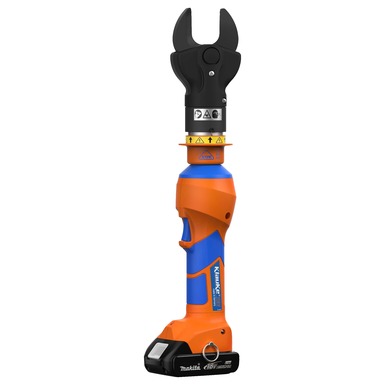 Klauke ESM 35 ISM VDE battery powered hydraulic cutting tool 35 mm dia. |
 Klauke ESM 50 ISM VDE battery powered hydraulic cutting tool 50 mm dia (copper + aluminium cables) |
|
➡ View the KLAUKE Orange and to hear the full interview with Paul.
Further Reading
Review other Blogs in this series of articles about Cable Lugs, Crimping Cables & Tools:
- Cable Lugs – Crimping Applications & Standards
- Copper Cable Lugs For Special Applications
- Indent Crimping Of Cables – Benefits & Limitations
- Cable Lugs & Crimping Using The Hexagonal Crimp Method
- DIN Standard – Crimping & Compressing Aluminium Cable Lugs & Connectors
- Copper & Aluminium – Crimping CU-AL Cables
- Electrically Driven Crimping Tools For High Volume Applications
About ENERGYx2020

ENERGYx2020 is the best Electricity Industry Event of its kind in Europe for distribution network operators, private network operators, energy transmission, renewable energy, telecommunications, and rail companies. This Net Zero event combines Overhead Lines, Plant and Cables over 2 days on the 24th and 25th of November 2020 at Chester Racecourse.
The event is about the drive to Net Zero and future innovations within the electrical industry, whether that be in the short or long term. It is attended and supported by a wide mix of people working in Electrical Utilities, Network Operators, DNOs, Railway Companies, Transport Specialists, Renewable Companies, Civil Works, Health & Safety, Telecom, Data Centres and Industrial Manufacturers with private networks.
Special thanks to event sponsors Nexans & Lucy Electric.


Specialist Suppliers of High Voltage Electrical Equipment & Cable Accessories
LV, MV & HV Jointing, Earthing, Substation & Electrical Eqpt
Thorne & Derrick International are specialist distributors of LV, MV & HV Cable Installation, Jointing, Duct Sealing, Substation & Electrical Equipment – servicing UK and global businesses involved in cable installations, cable jointing, substation, overhead line and electrical construction at LV, 11kV, 33kV and EHV.
THORNE & DERRICK Product Categories: Duct Seals | Cable Cleats | Cable Glands | Electrical Safety | Arc Flash Protection | Cable Jointing Tools | Cable Pulling | Earthing | Feeder Pillars | Cable Joints LV | Joints & Terminations MV HV

Thorne & Derrick | Stockists & Suppliers | Joints Terminations Connectors up to 66kV
Schneider Electric Crimp Lugs for Copper & Aluminium Cables
April 4th, 2019
-
uploaded by Chris Dodds - Sales & Marketing Manager | Thorne & Derrick
Electric Crimp Lugs for Copper & Aluminium Cables
Compact & Vigicompact Crimp Lugs
Thorne & Derrick International, based in the UK, distribute the most extensive range of cable lugs in both crimp/compression and shearbolt types from leading manufacturers including Cembre and Pfisterer Sicon.
Cable lugs are available to connect, terminate and joint copper and aluminium conductor cables into control panels, junction boxes, feeder pillars, switchgear and transformers distributing electrical power at LV (Low Voltage), MV (Medium Voltage) and HV (High Voltage).
This article covers the Schneider Electric range of cable crimp lugs for copper and aluminium conductors with following cross section area: 120sqmm, 150sqmm, 185sqmm.
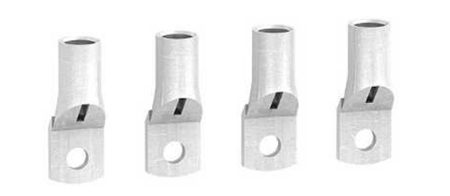
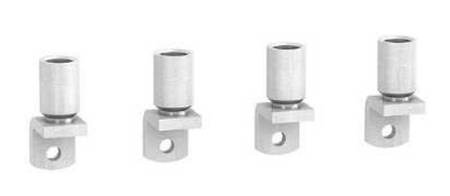
Crimp Lugs for Copper Cable
Schneider Electric Crimp Lugs
For Copper Cable Specifications
➡ see further information about copper cable lugs.
| Product Type | Cable Size | No. Of Lugs In Set | Poles Description | Rated Current | Crimp Lug Image |
| Schneider Electric LV429252 Crimp Lug | 120 mm² | 3 | 3P | 250A | 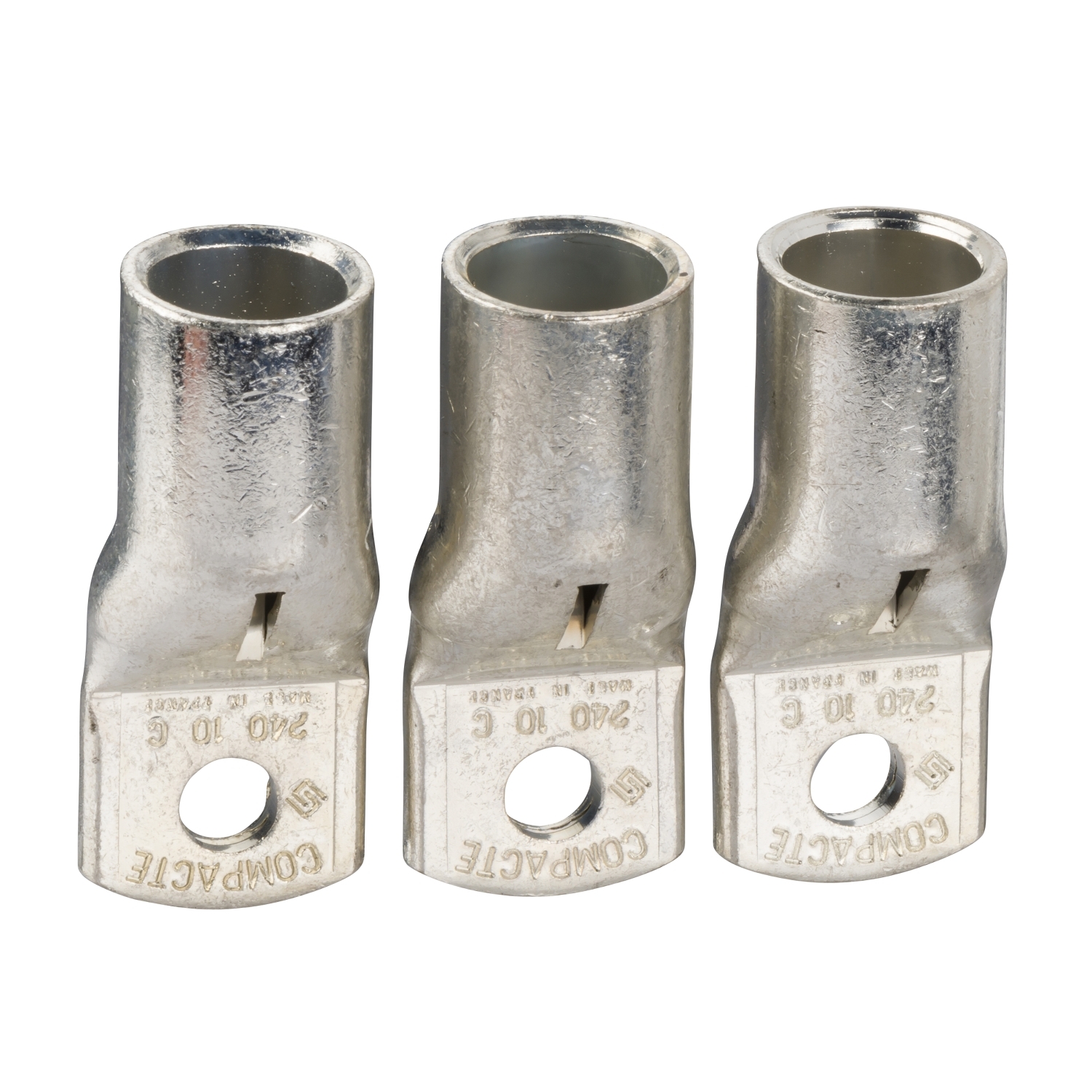 |
| Schneider Electric LV429256 Crimp Lug | 120 mm² | 4 | 4P | 250A | 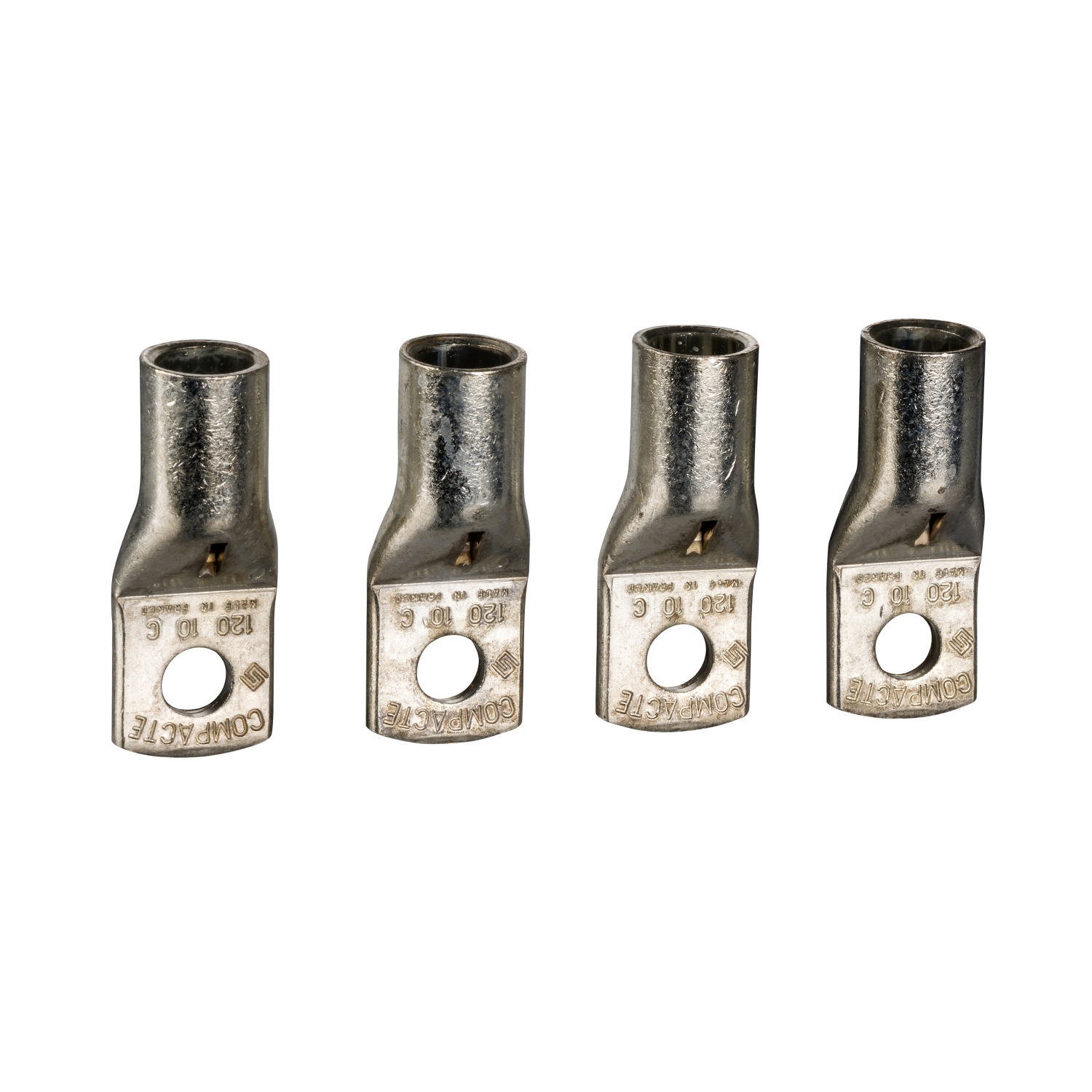 |
| Schneider Electric LV429253 Crimp Lug | 150 mm² | 3 | 3P | 250A | 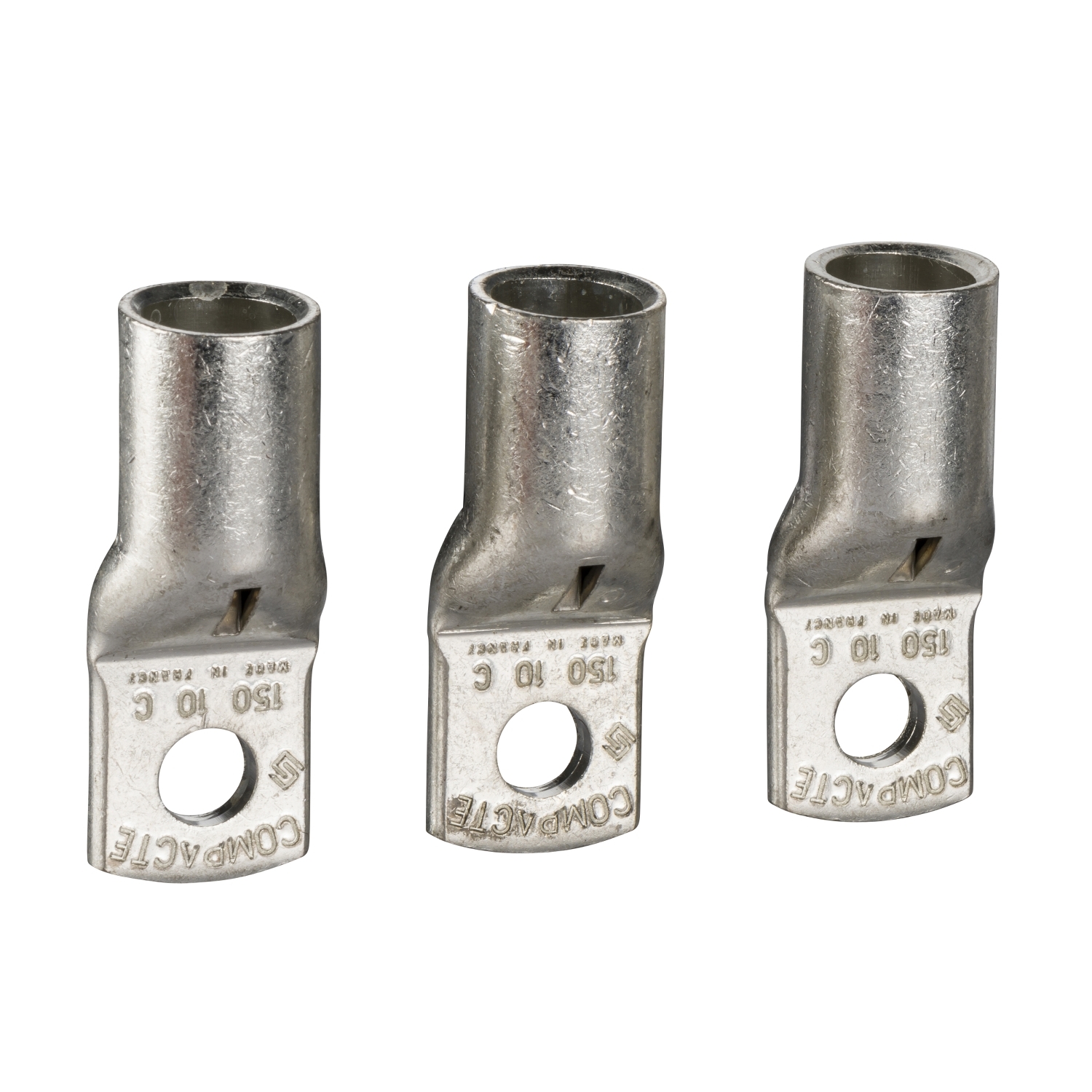 |
| Schneider Electric LV429257 Crimp Lug | 150 mm² | 4 | 4P | 250A | 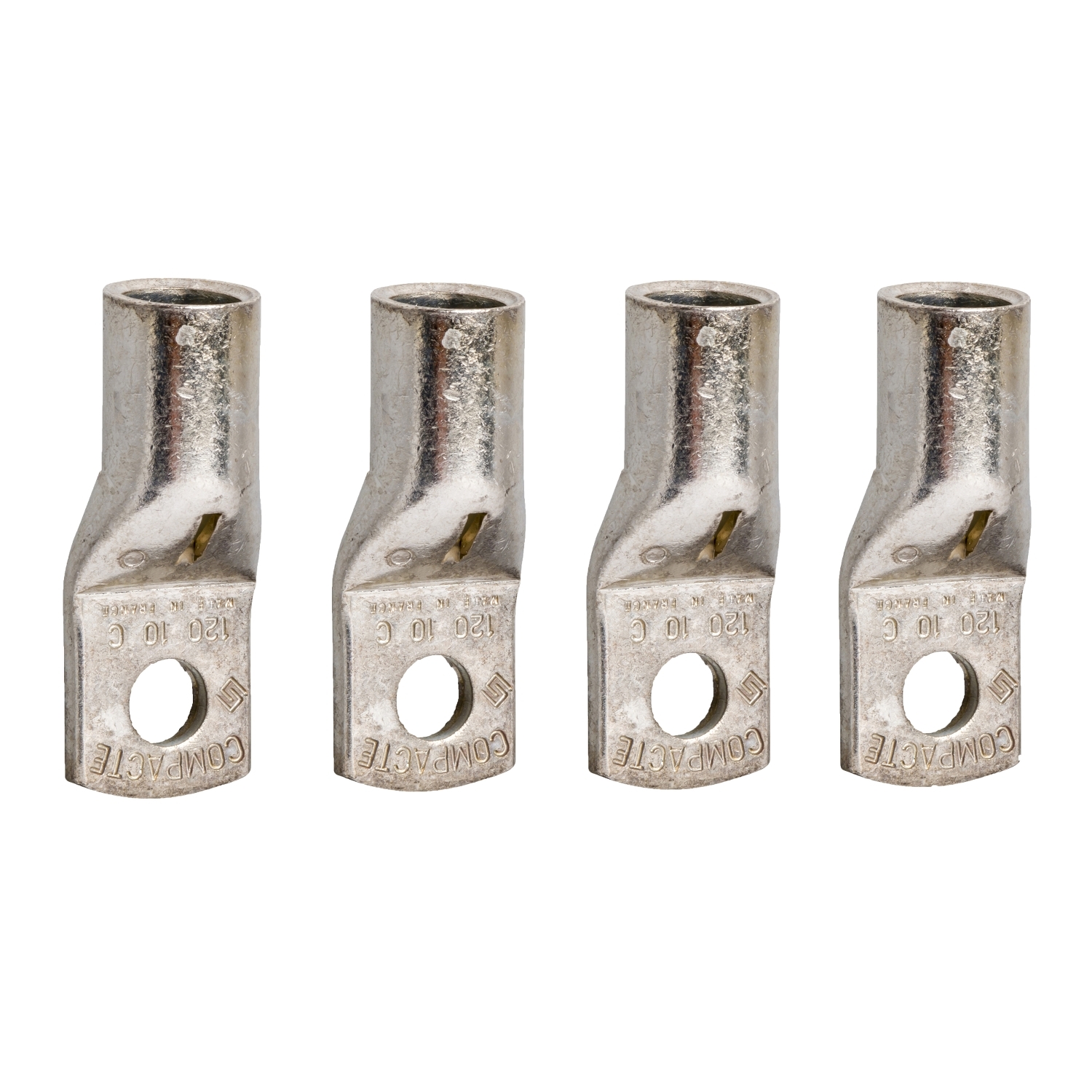 |
| Schneider Electric LV429254 Crimp Lug | 185 mm² | 3 | 3P | 250A | 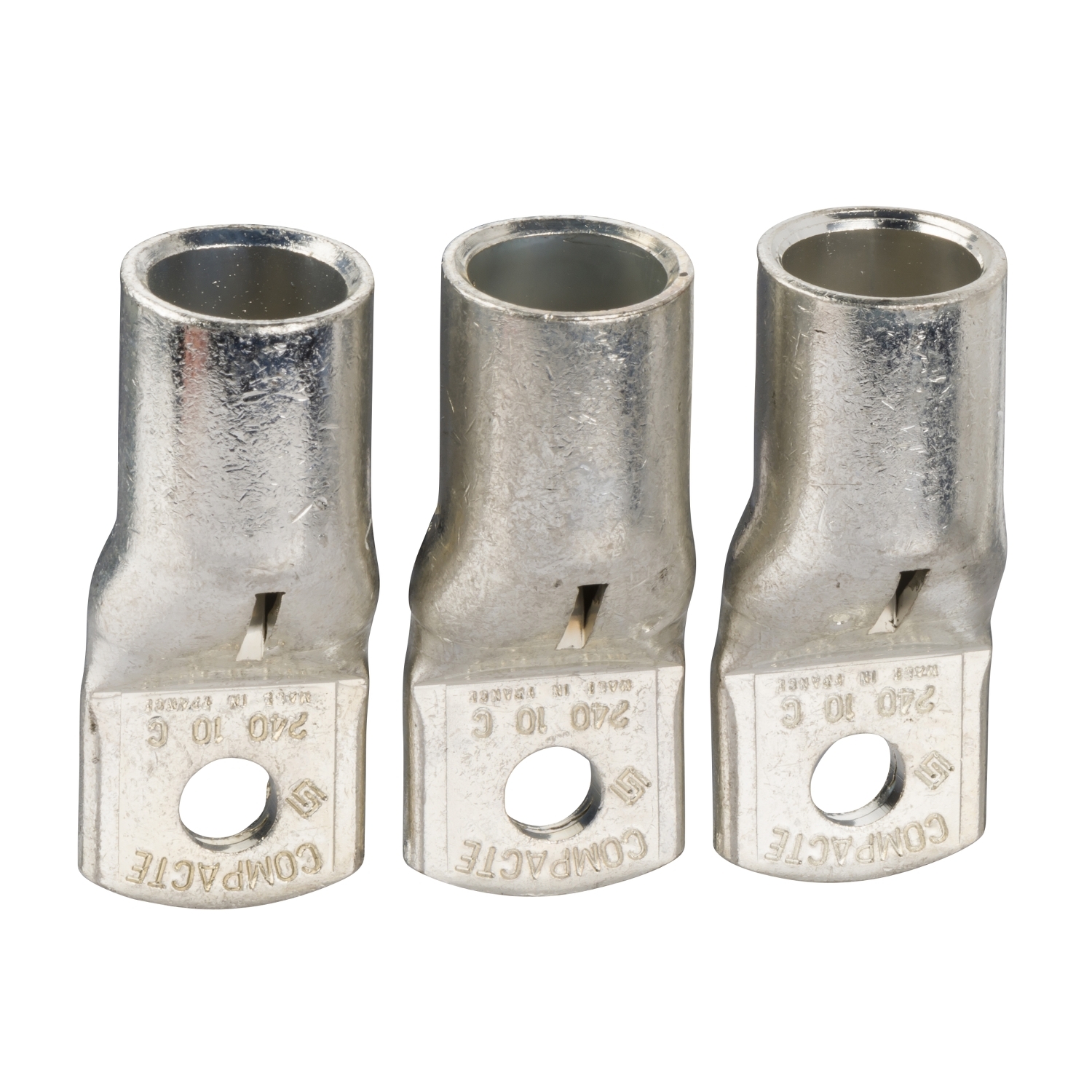 |
| Schneider Electric LV429258 Crimp Lug | 185 mm² | 4 | 4P | 250A | 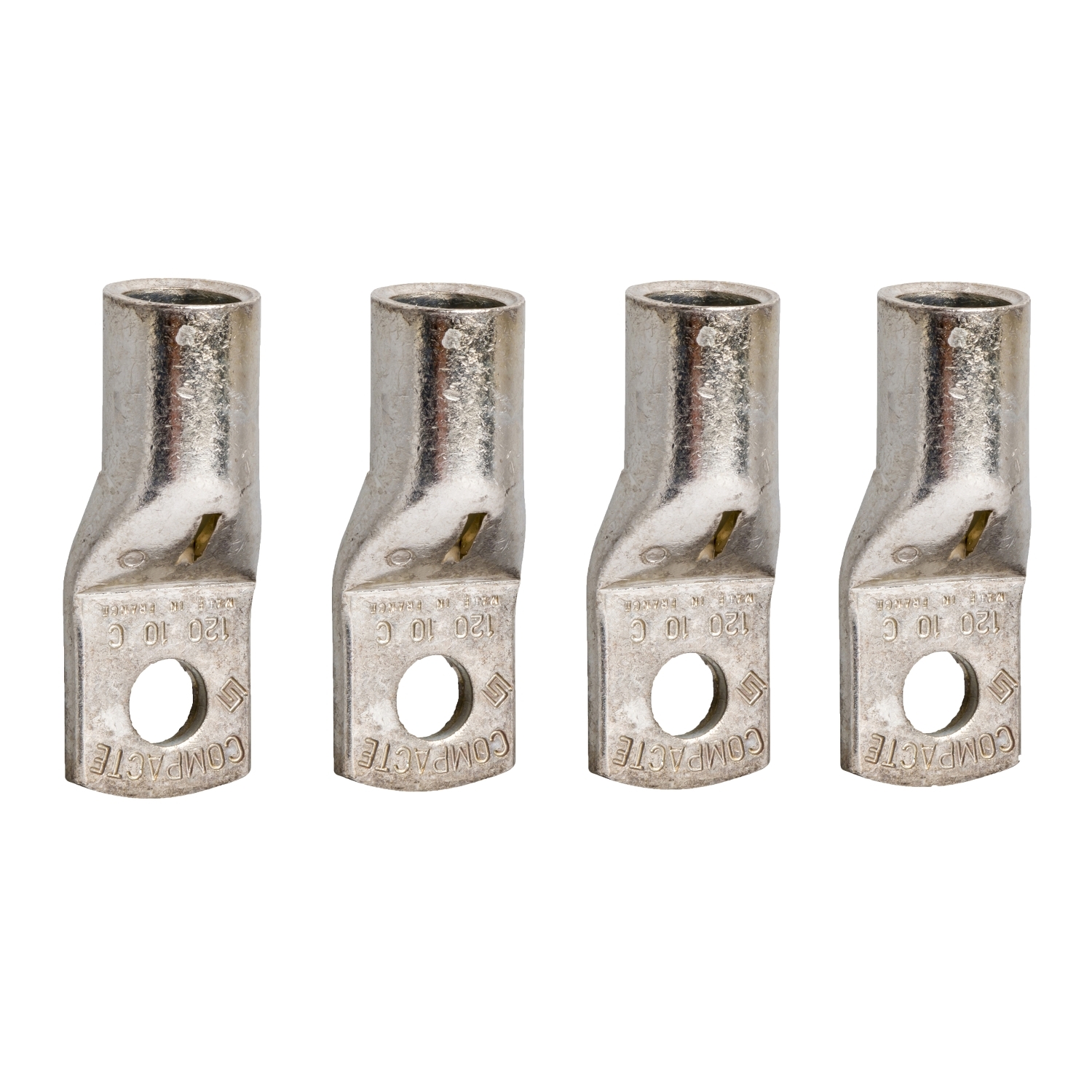 |
Crimp Lugs for Aluminium cable
Schneider Electric Crimp Lugs
For Aluminium Cable Specifications
➡ see further information about aluminium cable lugs.
| Product Type | Cable Size | No. Of Lugs In Set | Poles Description | Rated Current | Crimp Lug Image |
| Schneider Electric LV429504 Crimp Lug | 150mm² | 3 | 3P | 250A | 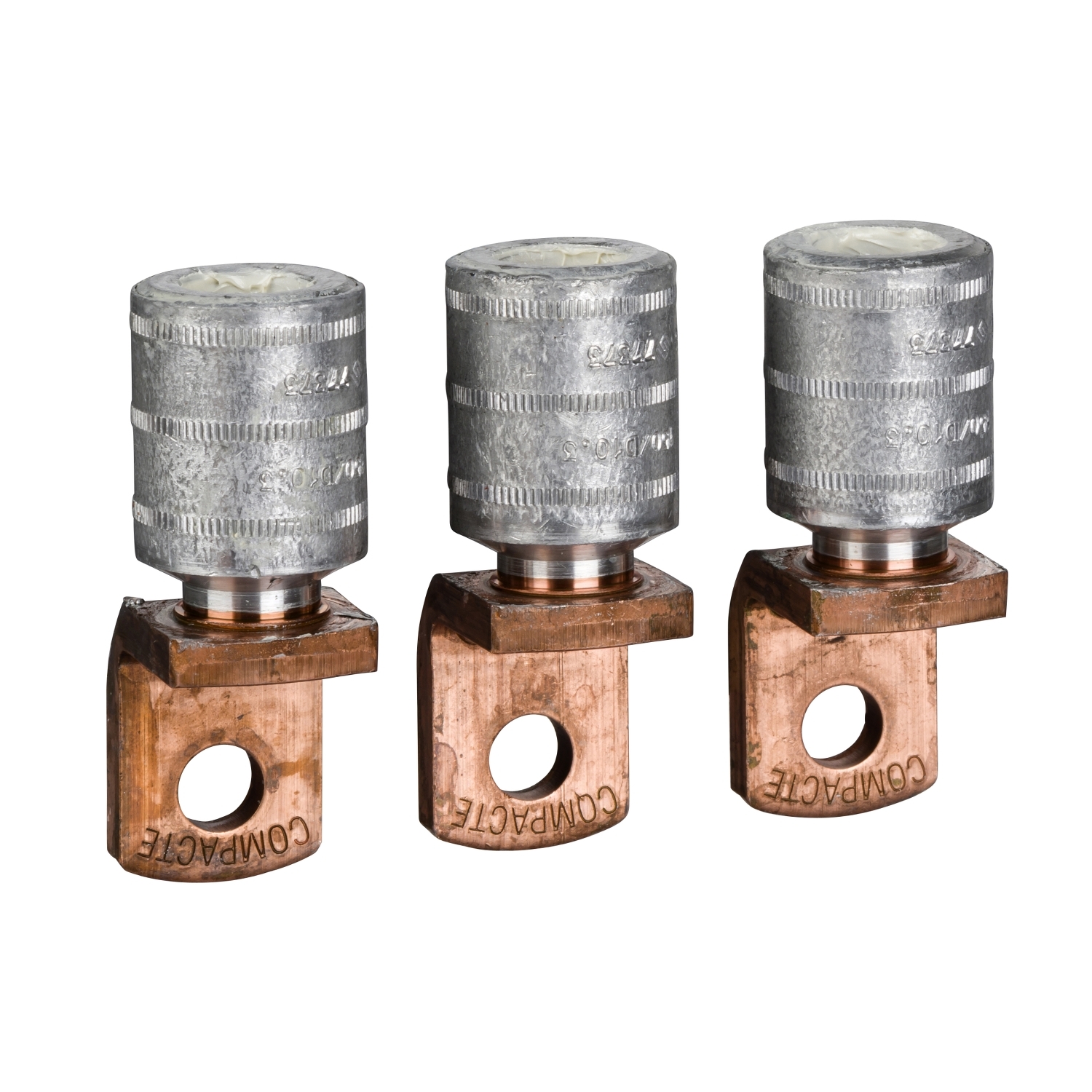 |
| Schneider Electric LV429505 Crimp Lug | 150mm² | 4 | 4P | 250A | 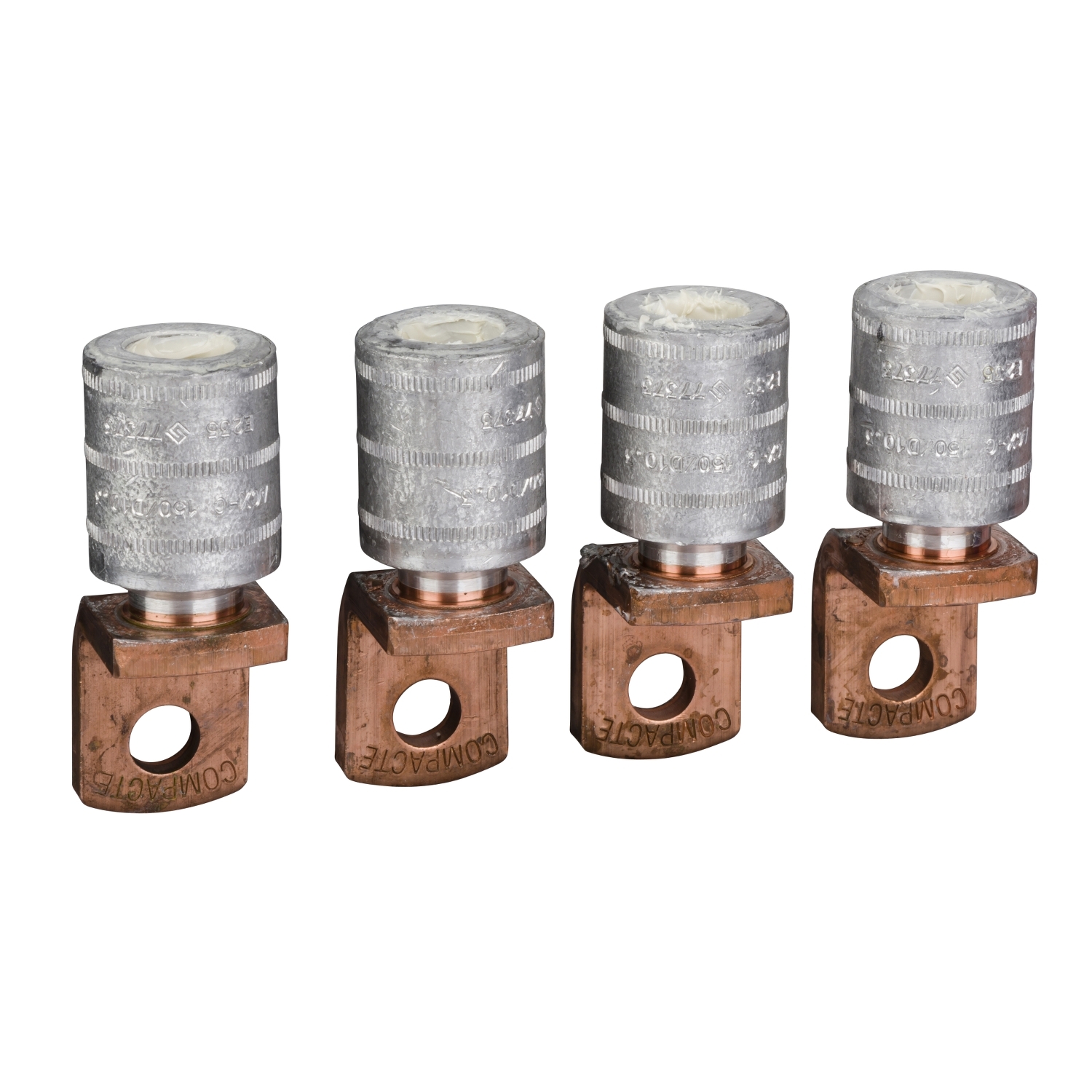 |
| Schneider Electric LV429506 Crimp Lug | 185mm² | 3 | 3P | 250A | 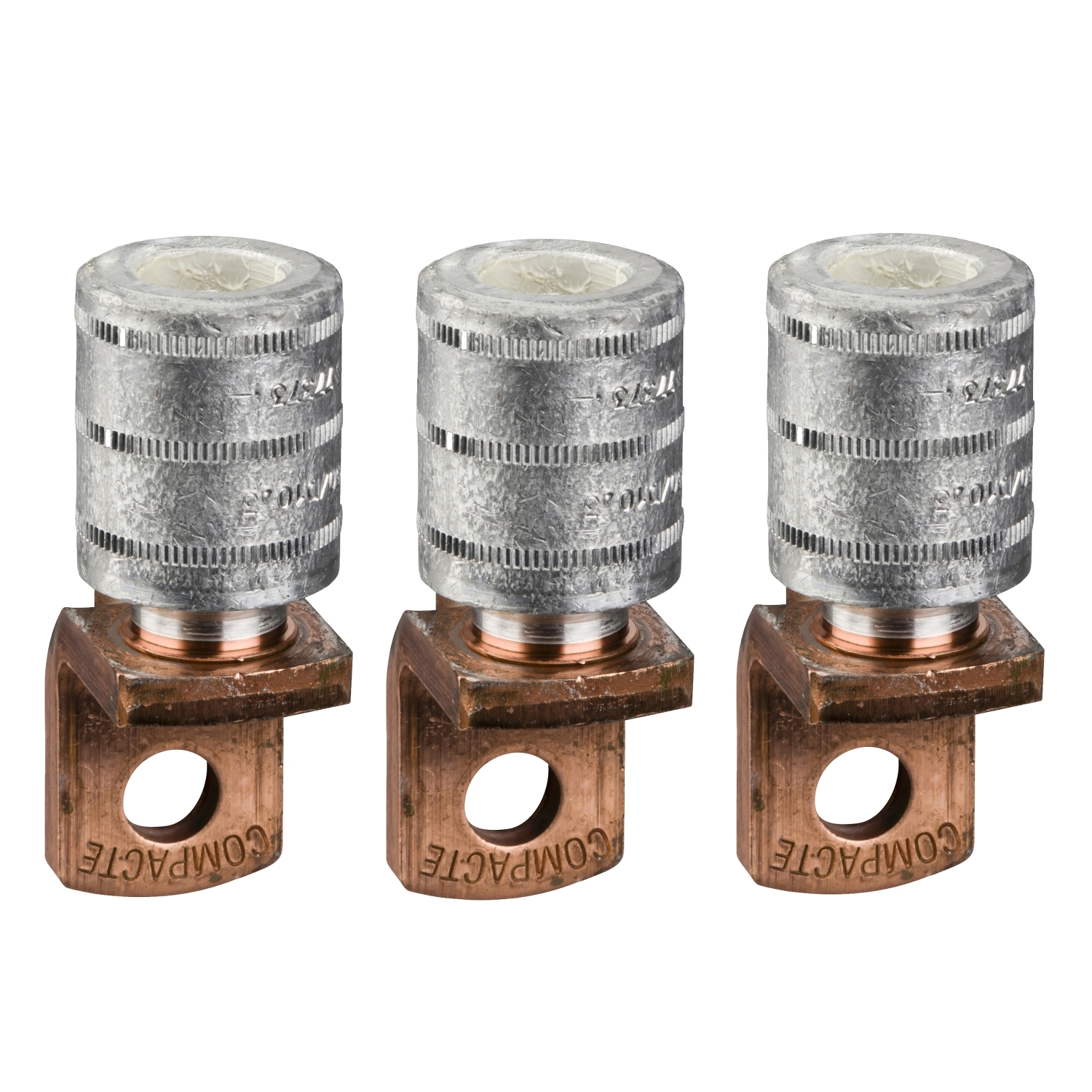 |
| Schneider Electric LV429507 Crimp Lug | 185mm² | 4 | 4P | 250A | 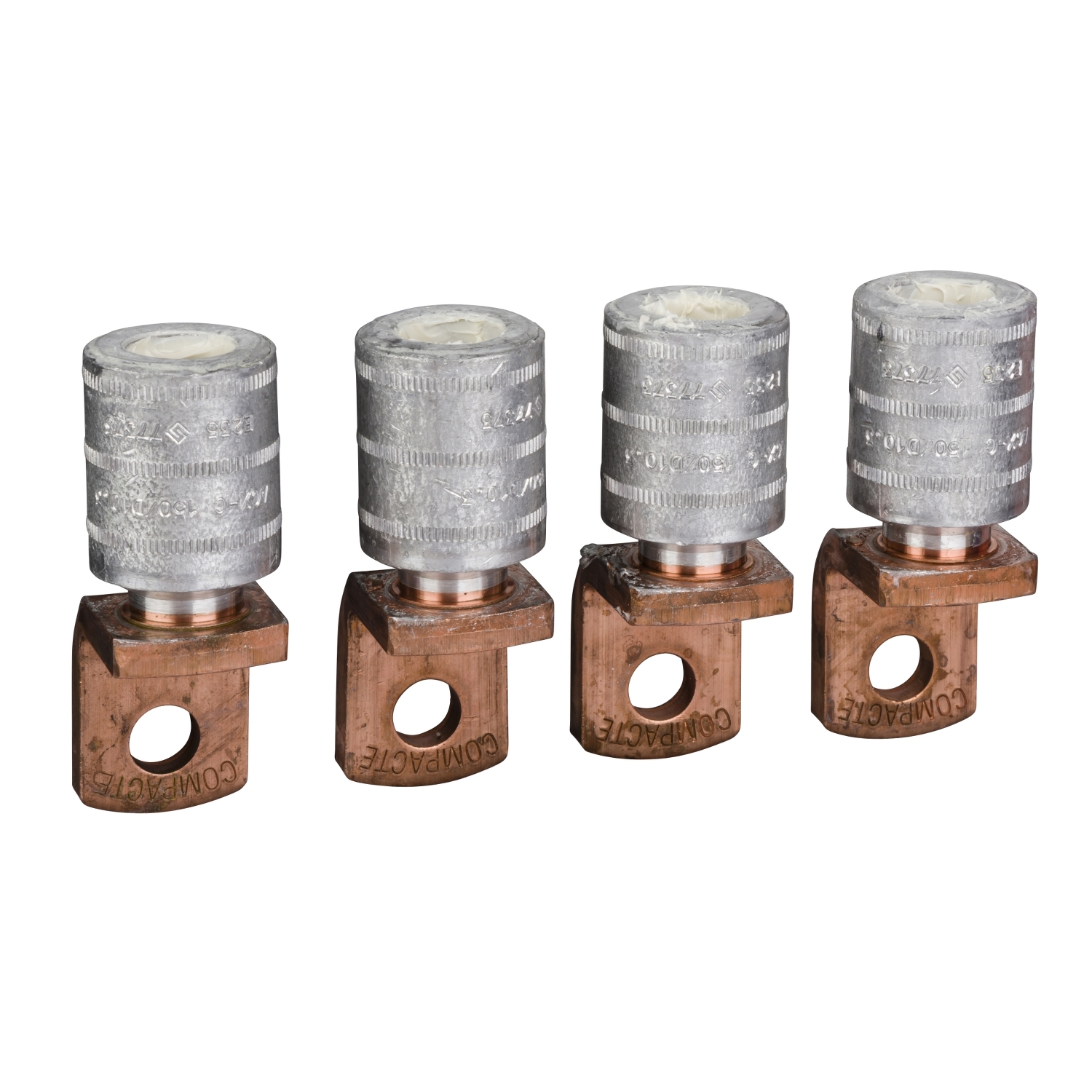 |
Review other Blogs in this series of articles about Cable Lugs, Crimping Cables & Tools:
- Copper Cable Lugs For Special Applications
- Indent Crimping Of Cables – Benefits & Limitations
- Cable Lugs & Crimps – Hexagonal v Indent Methods of Crimping
- Cable Lugs & Crimping Using The Hexagonal Crimp Method
- DIN Standard – Crimping & Compressing Aluminium Cable Lugs & Connectors
- Copper & Aluminium – Crimping CU-AL Cables
- Electrically Driven Crimping Tools For High Volume Applications
LV Cable Joints (Low Voltage Cables)
Thorne & Derrick stock and distribute LV Joints in Cold Shrink, Heat Shrink or Resin Cast technologies – multicore and multi-pair cable joints are available for immediate backfill and energisation of Low Voltage power, control and instrumentation cables 600V/1000V 3.3kV.
Complete range of LV Cable Accessories ➡
Cable Breakouts | Cable Caps | Cable Lugs | Cable Cleats | Cable Trough | Cable Duct | Feeder Pillars | for 11kV/33kV/66kV networks see MV HV Joints & Terminations

Pfisterer | Nexans Euromold | Prysmian | Cable Joints & Terminations MV HV

Cold Shrink by 3M | Joints | Abandonment | Terminations | Low Voltage LV Cables
BS6360, IEC 60228 & VDE 0295 – Cable Stranding and Resistance Charts
November 19th, 2018-
uploaded by Chris Dodds - Thorne & Derrick Sales & Marketing Manager
Class 1 & 2: Shows the obligatory number of strands
Class 5 & 6: Shows the maximum strand diameter, may be fewer strands as long as the maximum ohms/km is not exceeded
Ohms Ω/km: Shows the maximum resistance in that is permissible for untinned copper conductors in the stranding classes indicated
| Area sqmm | Stranding Class 1 |
Stranding Class 2 |
Ohms Ω/km |
Stranding Class 5 |
Stranding Class 6 |
Ohms Ω/km |
| 0.14 | 18 x 0.10 | 18 x 0.10 | 138.0 | |||
| 0.25 | 14 x 0.16 | 32 x 0.10 | 79.0 | |||
| 0.34 | 19 x 0.16 | 42 x 0.10 | 57.0 | |||
| 0.5 | 1 x 0.80 | 7 x 0.30 | 36.0 | 16 x 0.21 | 28 x 0.10 | 39.0 |
| 0.75 | 1 x 0.97 | 7 x 0.37 |
24.5 | 24 x 0.21 | 42 x 0.16 | 26.0 |
| 1.0 | 1 x 1.13 | 7 x 0.43 | 18.1 | 32 x 0.21 | 56 x 0.16 | 19.5 |
| 1.5 | 1 x 1.38 | 7 x 0.53 | 12.1 | 30 x 0.26 | 84 x 0.16 | 13.3 |
| 2.5 | 1 x 1.78 | 7 x 0.67 | 7.41 | 50 x 0.26 | 140 x 0.16 | 7.98 |
| 4.0 | 1 x 2.26 | 7 x 0.85 | 4.61 | 56 x 0.31 | 224 x 0.16 | 4.95 |
| 6.0 | 1 x 2.76 | 7 x 1.04 | 3.08 | 84 x 0.31 | 192 x 0.21 | 3.30 |
| 10.0 | 1 x 3.57 | 7 x 1.35 | 1.83 | 80 x 0.41 | 320 x 0.21 | 1.91 |
| 16.0 | 1 x 4.51 | 7 x 1.70 | 1.15 | 128 x 0.41 | 512 x 0.21 | 1.21 |
| 25.0 | 7 x 2.14 | 0.72 | 200 x 0.41 | 800 x 0.21 | 0.78 | |
| 35.0 | 7 x 2.52 | 0.524 | 280 x 0.41 | 1120 x 0.21 | 0.554 | |
| 50.0 | 19 x 1.78 | 0.387 | 400 x 0.41 | 705 x 0.31 | 0.386 | |
| 70.0 | 19 x 2.14 | 0.268 | 356 x 0.51 | 990 x 0.31 | 0.272 | |
| 95.0 | 19 x 2.52 | 0.193 | 485 x 0.51 | 1340 x 0.31 | 0.206 | |
| 120 | 37 x 2.03 | 0.153 | 614 x 0.51 | 1690 x 0.31 | 0.161 | |
| 150 | 37 x 2.25 | 0.124 | 765 x 0.51 | 2123 x 0.31 | 0.129 | |
| 185 | 37 x 2.52 | 0.099 | 944 x 0.51 | 1470 x 0.41 | 0.106 | |
| 240 | 61 x 2.25 | 0.074 | 1225 x 0.5 | 1905 x 0.41 | 0.081 | |
| 300 | 61 x 2.52 | 0.060 | ||||
| 400 | 61 x 2.85 | 0.046 | ||||
| 500 | 61 x 3.20 | 0.036 |

LV, MV & HV Jointing, Earthing, Substation & Electrical Eqpt
Thorne & Derrick International are specialist distributors of LV, MV & HV Cable Installation, Jointing, Duct Sealing, Substation & Electrical Equipment – servicing UK and global businesses involved in cable installations, cable jointing, substation, overhead line and electrical construction at LV, 11kV, 33kV and EHV.
THORNE & DERRICK Product Categories: Duct Seals | Cable Cleats | Cable Glands | Electrical Safety | Arc Flash Protection | Cable Jointing Tools | Cable Pulling | Earthing | Feeder Pillars | Cable Joints LV | Joints & Terminations MV HV

Hexagonal v Indent Methods of Crimping – Cable Lugs, Crimps & Tools
November 19th, 2018
Cable Lugs & Crimps – Hexagonal v Indent Methods of Crimping
-
uploaded by Chris Dodds - Thorne & Derrick Sales & Marketing Manager
Crimping Cables
Thorne & Derrick International, based in the UK, are leading suppliers of cable lugs and associated crimping tools for Low, Medium & High Voltage Cables and Power Systems – this series of articles by Klauke discusses the theory and practise of installing compression type cable lugs and connectors for use with copper and aluminium conductors.
Klauke cable lugs and crimping tools are used by Jointers, Linesmen, Panel Builders and Electrical Engineers to install underground cables and overhead line conductors on power, transmission and distribution networks including LV MV & HV systems, 11kV-33kV.
➡ Download 2018 Klauke Cable Lugs catalogue and see the complete range of tools for cutting and crimping cables.
In this Article we cover both hexagonal crimping and indent crimping of cables including the following:
- The hexagonal crimp: the most common type of crimp for cable lugs and connectors
- Indent crimps representing the traditional electrical cable crimp profile
- Intensive indent crimp is guaranteed a permanent and “deep acting” connection
- Quad point crimps: the advantage is the way the centric force is applied and that no crimping tool dies are needed
- Gastight oval crimps are being used predominantly in aggressive environments
➡ See DIN Standard Cable Crimping for information about connecting and terminating cables in accordance with the German national organisation for standardisation – see DIN 48083 for specific information about lugs, die sets and crimping tools for hexagon compression type cable termination.
Which Cable Crimping Method Is Correct?
Indent of Hexagonal?
Cable crimp types and cable lugs at a glance.
Initially the subject covering crimping profiles seems complicated; the electrical installer is confronted with a number of different cable types, each requiring different cable lugs or connectors and a professional crimping method and associated crimp tools.
This combination depending on material, design and application requires the correct crimping profile to be used.
The following will give a review of the most common cable crimp profiles the electrician or cable jointer should be familiar with when crimping copper or aluminium cables:
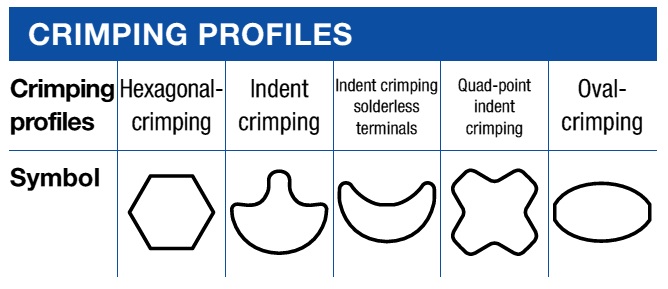
Cable Crimping Profile Chart
Cable Lugs For Copper & Aluminium Cables
Hexagonal Crimps
The most common type of crimping for copper and aluminium cables, lugs and connectors is the hexagonal crimp as this crimp profile is suitable for both copper and aluminium conductors.
The range of applications covering hexagonal crimps includes the crimping of conductors as per VDE-0295-categories 2, 5 and 6 and the processing of non-tension connections of aluminium cables using aluminium splices per DIN48201 (Copper Stranded Conductors) Part 1 and aluminium ropes per DIN EN 50182 (Conductors for Overhead Lines – Round Wire Concentric Lay Stranded Conductors).
Note
DIN VDE 0295 VDE 0295:1992-06 Standard (Conductors of Cables, Wires & Flexible Cords for Power Installation) is now Withdrawn and replaced by DIN EN 60228 VDE 0295:2005-09 Standard (Conductors of Insulated Cables).

A hexagonal crimp is suitable for both copper and aluminium conductors. The advantage is the central force which is applied consistently from all directions by the crimping tool.
The advantage of a hexagonal crimp is the central force which is applied consistently from all directions and over a larger area during the crimping operation. During this crimping operation the individual strands of the conductor are being homogeneously compressed preventing any damage.
The result is a strong mechanical connection. Due to the even compression the hexagonal crimps are also suitable for application in medium and high voltage cable terminations, connections and joints. However, these advantages are faced with some limitations.
The complete compression of wire strands using a hexagonal crimp and standard crimping dies is not possible. This means standard hexagonal crimps are not gas-tight (see gas-tight oval crimps at the end of this article).
Therefore it should be observed that a professional hexagonal crimp requires the use of crimping dies which are matched exactly with material (aluminium or copper) and dimensions (cross section area and conductor construction).
Hexagonal Crimps – DIN Type
Copper & Aluminium
Hexagonal crimps differ in two versions: one relates to the standard hexagonal crimp in accordance with DIN 48083 Part 4 and the other to the manufacturers related hexagonal crimp. The standardised hexagonal crimp allows cable lugs and connectors according to DIN 46235 to be crimped with certified crimping dies per DIN 48083 Part 4.
DIN 46235 defines the fields of application, dimensions and the marking of compression cable lugs – compression cable lugs to DIN 46235 standard can be used for single, multi-fine and superfine stranded conductors.

The standardized hexagonal crimp allows cable lugs and connectors per DIN 46235 to be crimped with certified crimping dies per DIN 48083 part 4.
Marking on DIN cable lugs provide essential information as to manufacturer, dimensions and design of the cable lug. These markings indicate for instance which crimping tools and crimping dies need to be used to achieve a DIN compliant crimp. This designation is next to the manufacturers’ marking.
For instance “KL 18…” stands for KL: manufacturer (in this case Klauke) and 18 for the die code. The correct die code is a condition of a professional DIN crimp: crimping dies used in the crimping tool need to comply with the die code shown on the cable lug. The mirror image of the die code can be seen on the surface of the crimping dies. After the crimping operation the die reference code can be seen on the barrel of cable lug as part of a visible and recordable quality control procedure.
The die code corresponds approximately to the tube diameter of the cable lug.
The range of copper lugs is approximately from 6 to 58 which correspond with the cross sections from 6sqmm to 1000sqmm. Hexagonal crimping dies per DIN 48083 Part 4 for aluminium lugs and connectors are described in accordance with the tube dimensions of lugs per DIN 46239 and connectors per DIN 46267 Part 2 (Non Tension-Proof Compression Joints For Copper Conductors).

LV Lugs & Connectors – complete range of copper crimp connectors suitable for use with joints and terminations for low voltage cables | Cable Lugs | Cable Splice Connectors | Aluminium Lugs | Aluminium Splices | Bi-Metallic Cable Lugs
The alternative
Apart from DIN standard hexagonal crimps the crimping of copper and particularly of cable types per VDE 0295 Classification 2 (Conductors Of Cables, Wires & Flexible Cords For Power Installation) also allows for a manufacturer related hexagonal crimp to be used.
Prestigious manufacturers such as Klauke provide hexagonal crimping dies tested and approved to IEC 1238 (Compression & Mechanical Connectors For Power Cables With Copper or Aluminium Conductors – Part 1: Test Methods & Requirements) for crimping standard copper cable lugs as per BS EN 13600 (Copper & Copper Alloys – Seamless Copper Tubes For Electrical Purposes). For commercial reasons such cable lugs are often used in control and switch cabinets. Despite offering cost benefits, there is no reduction in cable termination quality.
Important: The use of manufacturer related crimping dies and cable lugs are not con-trolled through the die codes. Instead it depends more on the cross section of the cable being used indicated in sqmm, the cable lug and the die reference. The square mm size is mirror printed on the crimping surface of the crimping dies.
Every manufacturer is responsible for the electrical and mechanical durability of connections crimped with there own tools. As a safe and professional crimp is dependent on accurately matching suitable crimping dies to the cable lugs, Klauke always recommends using the manufacturers approved crimping tools.
Proven & Tested – Indent Crimp Lugs
The indent crimp represents the oldest electrical crimp profile. This crimp profile is solely suitable for the processing of copper and is often used in control panels and switch cabinets operated within a range of 1000V.
The permissible cable range includes stranded conductors per VDE 0295 Classification 2 and also fine stranded and compacted conductors per Classification 5 and 6sqmm up to 400sqmm. These conductors can be processed with R and F series tubular cable lugs.
Generally two different types of indent crimps are used: the W-profile for cross sections from 0.5sqmm up to 16sqmm and the classic single indent crimp for cross sections from 6sqmm up to 240sqmm.
Klauke crimping tools offer the possibility to indent crimp cross sections up to 400sqmm.
The characteristics of both versions are identical: indent crimps are always special crimping operations particularly required for fine stranded and compacted conductors to secure a permanent connection.

Indent (side indent) are always special application crimps which are primarily used for crimping fine stranded and compacted conductors to secure a permanent connection. The applied crimp profiles depend on the cross section of the conductor and type of cable lug.
The real benefit of indent crimping is the simple operation and procedure for which normally hand operated crimping tools can be used. The applied crimp profile depends on the cross section of cables, cable lugs and connectors to be used.
Since the indent crimp does not represent a standardised crimp it is imperative to only use high quality materials and tools approved per IEC 1238 originating from one manufacturer.
Only in this case the electrician is safeguarded utilising cable lugs, connectors and tools which are matched to each other and which provide and guarantee a safe connection.
copper & insulated materials
Indent Crimps
Indent crimps have been specifically developed for processing connections of cable lugs according to DIN 46234 and connectors per DIN 46341 part 1, form A+B, which in turn are suitable for conductors of VDE 0295 Classification 2, 5 and 6.
Cable lugs and connectors complying with these standards feature a particular large outside diameter which will accept all types of cables without any problem.
The intense indent crimp ensures that despite of the large outside diameter a long lasting and “deep acting” crimp is achieved.

Class 1 round single-stranded (rs) conductor (commonly known as solid conductor. Class 2 round multi-stranded (rm) conductor. Class 5 fine-stranded conductor 5 (commonly known as flexible conductor. Class 6 ultrafine-stranded conductor 6 (commonly known as highly-flexible conductor.
The permitted cross sections range from 0.5sqmm up to 240sqmm. An indent crimp is also suitable for Klauke F-type cable lugs ranging from 10sqmm up to 300sqmm.
F-type cable lugs feature a larger diameter, funnel shaped tube to accept fine stranded and compacted types of cables per VDE 0295 Classification 5 and 6 without any splitting.
An indent crimp is also suitable to crimp pre-insulated terminals in accordance with DIN 46234 where the crimp pierces the cable insulation. To avoid that the insulation is damaged during the cable crimping operation it is imperative to only use cable lugs with a high quality insulation and appropriate crimp profiles.

The intensive indent crimp is only guaranteed when matched materials are used despite the large outside diameters a permanent and “deep acting“ connection will be achieved.
The indent and the side indent are also non-standard types of crimp but can also be used for standard cable lugs such as terminals per DIN Standard 46234. For this reason here it is also important to use crimping tools and materials from a single quality manufacturer. Materials incorrectly matched are disadvantaged further due to the extreme stresses applied during use. Once a single strand has been lost mechanical and electrical failures in the connection may become inevitable leading to cable failures.

Cable lugs with a high quality insulation and appropriate crimp profiles ensures that the insulation does not become damaged during the cable crimping operation.
No dies required – Quad point Cable crimps
The quad point crimp originates in the USA and is being used mainly in panels and switch cabinets up to 1000V. These are also used in other electrical connections i.e. in drive systems for locomotives where this type of crimp offers the perfect cable termination solution.
This crimp profile is suitable for cable lugs and connectors ranging from 10sqmm up to 300sqmm in combination with cables per VDE 0295 Classification 2, 5 and 6.

The quad point crimp is suitable for cable lugs and connectors with cross sections ranging from 10sqmm
up to 300sqmm in combination with cable types per VDE 0295 classification 2, 5 and 6.
Attention: Application for use with pre- insulated cable lugs and connectors is not allowed. The advantage over a simple indent crimp is the way the centric force is applied and that no crimping dies are needed. This means that with just one crimping tool all the above mentioned cross sections can be processed. The quality of the crimp depends solely on the force and quality of the crimping tool used.
Gastight Oval crimp Lugs
Gastight oval crimps are being used pre-dominantly in the motor industry and in aggressive environments such as agricultural operations or chemical industries with potentially explosive atmospheres characterised by flammable gases in hazardous areas. A gastight cable termination connection means that both conductor and cable lug or connector is compacted together so tightly that no notable gap exists to prevent gas migration.

Gastight oval cable crimps provide for a permanent connection and electrical conductivity. The ingress of fluid or a gas is not possible under normal atmospheric conditions. An oxidation of the individual crimped strands is prevented and an increase in resistance is avoided.
This means that the ingress of fluid or a gaseous medium is not possible under normal atmospheric conditions. An oxidation of the individual crimped strands is prevented and an increase in resistance is avoided.
For this reason gastight oval crimps provide for a permanent cable connection and good electrical conductivity.
A gastight connection can be tested by inspecting the polished cross section of the cable lug. There is no restriction to specific types of cables; therefore all types of conductors are suitable for gastight oval cable crimps.
To meet the high technical requirements of gastight connections it is absolutely imperative to use only high quality branded crimping tools and connecting material.

HV Lugs & Connectors – complete range of copper crimp connectors suitable for use with joints and terminations for medium/high voltage cables | Cable Lugs | Transformer Lugs | 2 Hole Lugs | Pin Stalk Connectors | Through Connectors | 11kV 33kV
Outlook: Which crimp profile for the professional solution?
To ensure that durable crimping connections are achieved, specific crimping operations are required. In our next edition we will feature the various crimp profiles in detail and will explain what needs to be observed to obtain professional high quality connections, joints and cable terminations.
Further Reading
Review other Blogs in this series of articles about Cable Lugs, Crimping Cables & Tools:
Cable Lugs – Crimping Applications & Standards
Copper Cable Lugs For Special Applications
Indent Crimping Of Cables – Benefits & Limitations
Cable Lugs & Crimping Using The Hexagonal Crimp Method
DIN Standard – Crimping & Compressing Aluminium Cable Lugs & Connectors
Copper & Aluminium – Crimping CU-AL Cables
Electrically Driven Crimping Tools For High Volume Applications
LV MV HV Cable Accessories & Substation Electrical Equipment
Thorne & Derrick are Specialist Distributors of leading manufacturers of Cable Accessories, Jointing & Installation Equipment.
LV MV HV cable accessories used to joint, terminate, connect, cleat and gland power cables to air and gas insulated substations, transformers, switchgear and overhead line networks.
Hover over our Interactive Logo Grid to learn more about our product ranges.
LV 600/1000V ◊ MV 11kV 33kV ◊ HV 66kV 132kV
 |
 |
 |
 |
 |
 |
 |
 |
 |
 |
Substation & Overhead Line Electrical Safety Equipment
Manufactured by CATU Electrical to enable the safe construction, maintenance and repair of underground cables and overhead lines network up to EHV (400kV).

T&D - CABLES ♦ JOINTS ♦ TERMINATIONS ♦ CONNECTORS ♦ GLANDS ♦ CLEATS ♦ CRIMPS & LUGS ♦ DUCT ♦ SEALS ♦ ARC FLASH PPE
EARTHING ♦ FEEDER PILLARS ♦ JOINTERS TOOLS ♦ CABLE CUTTING & CRIMPING TOOLS ♦ COLD SHRINK ♦ HEAT SHRINK ♦ FUSES
Crimping Copper & Aluminium Cables
November 12th, 2018
Copper & Aluminium – Crimping CU-AL Cables
-
uploaded by Chris Dodds - Thorne & Derrick Sales & Marketing Manager
Cable Crimps
Thorne & Derrick International, based in the UK, are leading suppliers of cable lugs and associated crimping tools for Low, Medium & High Voltage Cables and Power Systems – this series of articles by Klauke discusses the theory and practise of installing compression type cable lugs and connectors when jointing and terminating copper or aluminium cables at Low (LV), Medium (MV) or High (HV) voltages.
Klauke cable lugs and crimping tools are used by Jointers, Linesmen, Panel Builders and Electrical Engineers to install underground cables and overhead line conductors on power, transmission and distribution networks including LV MV & HV systems, 11kV-33kV.
➡ Download 2018 Klauke Cable Lugs catalogue and see the complete range of tools for cutting and crimping cables.
In this Article we cover the following:
- Crimping copper and aluminium conductors integral to LV MV HV cables up to 33kV
- Types of bi-metallic cable lugs for connecting aluminium cables to copper busbars
- Aluminium conductors – 4 different types which require cable preparation for crimping
- Connecting compound for aluminium connecting material to improve contact properties
- Al/Cu connectors for a correct crimp connection of aluminium and copper conductors
Accurately Crimping
Copper & Aluminium Cables
Copper, due to its outstanding electrical conductivity properties, is always the first choice when selecting a conductor for an electrical connection.
A practicable alternative in many cases is aluminium particularly because of its low weight and easy application. In practice however the electrician can find it challenging to connect both these materials in a professional and electrically safe manner using crimping tools.
A copper-aluminium connection is used for instance in an industrial estate where local businesses use copper conductor power supply cables which are then fed off an aluminium ring main unit. But also in LV MV HV electrical substations it is necessary to connect aluminium conductors to copper busbars.
The main problem here is that connecting aluminium and copper is not straightforward – to ensure a safe and correct connection the use of special aluminium/ copper cable lugs and connectors is essential.

Use of an incorrect crimping die and/or an incorrect crimp will result in an over compression (right) or an under compression (left) and in the worst case in fire.
Infographic: Properties & Uses of Copper Materials For Electrical Applications

Property of https://copperalliance.org.uk/
Aluminium-Copper: A problematic connection
Generally aluminium is a reactive material that oxidises easily, but in practice it has proved to offer good corrosion resistance. This characteristic is due to a chemical reaction that takes place when in contact with atmospheric oxygen resulting in a very thin but also very resistant oxide layer being formed (oxide barrier).
When metals are connected to those with a higher electrical potential such as copper in the presences of an electrolyte (condensed water) will result in an electrochemical reaction taking place.
During this process the differences caused in electrochemical potential can have a significant impact. An electrical circuit is generated by the copper electrode (anode), the electrolyte (water) and the aluminium electrode (cathode).
The voltage generated in this copper and aluminium circuit “semi metallic” state results in a short circuit. As a result of the current generated the aluminium surface breaks down causing the metal to electrolytically decompose.
This destructive process is visible as a kind of blooming oxidation and begins already with the existence of tiny copper particles on the aluminium; this ongoing reaction itself does not cause the copper to corrode.
In an electrical connection however the resistance is increased leading to increased temperatures which then in the worst case lead to a fire. Therefore when connecting copper and aluminium it is important to ensure that no moisture can enter the connections.
In an environment where moisture is present the contact points between the copper and aluminium need to be protected by using accurate operating procedures.

The construction of Al/Cu cable lugs prevents any gaps which would allow the accumulation of liquid to take place which would start the oxidation process.
Primarily this requires the use of aluminium/ copper cable lugs and connectors. Due to the design of these cable lugs areas where moisture could accumulate and where the oxidation process could start have been avoided. For this reason aluminium/copper cable lugs and connectors are specified for the use in offshore wind power stations.
Aluminium/copper compression cable lugs
Leading manufacturers of high quality compression cable lug such as Klauke or Cembre, for connecting aluminium connectors with copper bus bars consist of an electrolytic aluminium (E-Al) compression and are joined to a copper palm (to EN 13600).

A professional connection of an aluminium conductor with a copper busbar is done by means of an aluminium cable lug and a copper palm.
The available cross sections range from 16sqmm up to 400sqmm. The field of application covers in principle all non-tension connections of aluminium cables acc. to DIN 48201, Part 1, and aluminium ropes acc. to DIN 50182 (Conductors For Overhead Lines – Round Wire Concentric Lay Stranded Conductors).
Specifications and processing of aluminium/copper compression cable lugs are the same as those for pure aluminium versions. Quality products manufactured by market leaders such as Klauke feature a consistent material thickness, exact diameters and correct fit and are a prerequisite for ensuring high electrical safety standards are always met.
Like aluminium cable lugs conforming to DIN 46239, aluminium/copper compression cable lugs feature a barrier design allowing the use of oil soaked and paper insulated cables which prevents oil leakage.
Aluminium Cable Conductors At A Glance
Aluminium conductors are available in four different versions which require in some cases special processing.
These are:
- round solid cable conductors (re)
- sector solid cable conductors (se)
- round stranded cable conductors (rm)
- sector stranded cable conductors (sm)

Different types of aluminium conductors
These abbreviations will be found next to other markings on all Al/Cu compression cable lugs and identify which conductors will suit the appropriate cable lug.

The markings on the cable lug provide information relating to the crimps, the manufacturer, cross section and allocation of cable.
Markings on the product provide the installer with essential information. Marking “16 KL25 150 rm/sm 185 re/se” stands for
- 16: Metric bolt size for connecting bolt – size M16
- KL: Manufacturer (in this case Klauke)
- 25: Die code
- 150: Cross section of conductor in sqmm
- rm/sm: for round multi-stranded and sector stranded conductors
- 185: Cross section of conductor in sqmm
- re/se: for round single stranded solid and single sector solid conductors
The die code also needs special consideration. For an accurate and safe crimp the die reference should be the same as that shown on the cable lug. The die code can be seen on the die face as a mirror image so that after compression the die code is visible on the cable lug for final control and inspection.
For an accurate processing of Al/Cu cable lugs it is generally recommended to use hexagon crimping dies acc. to DIN 48083 Part 4. In order to ensure an accurate and professional crimp avoiding over or under compression is the use of appropriate crimping tools.
Poor crimps can result in an increase in joint resistance and temperatures that can lead to fires. To prevent such issues Klauke solely recommend using the manufacturers crimping tools to crimp their cable lugs.
For instance the special crimping dies for aluminium have a crimp width of 7mm, i.e. 2mm wider than the crimping dies for copper cable lugs and connectors. This, however, only applies to 60 kN crimping dies.
The reason for this is that cable crimping dies with a larger crimp width are able to connect a wider conductor surface area with the cable lugs and balance the poor conductivity of aluminium. To easily identify which die should be used, Klauke manufactures aluminium dies in a silver colour while dies for copper are yellow-gold coloured.
Connecting compound for aluminium connecting material
All cable lugs and connectors for aluminium conductors come with a special compound.

High quality aluminium cable lugs come with a special compound which improves the contact properties and ensures a perfect electrical connection.
This aggravates the non-conductive oxide layer which is quickly formed on the surface of the cable lug – this compound improves the electrical contact properties of the cable crimped lug and enables a perfect electrical connection preventing further oxygen penetrating the contact joints where further oxidation could take place.
To maintain the functional capability of the compound all leading brand cable lugs are sealed with a plastic plug to prevent the compound from drying-out and leakage.
Al/Cu Connectors & Joints
For a correct connection of aluminium and copper conductors leading manufacturers such as Klauke offer reduction compression joints with a cross section range from 10sqmm up to 300sqmm.

Aluminium and copper conductors with different cross sections are being connected using reduction sleeves.
These products serve mainly the reconstruction of power lines, i.e. non-tension connections of aluminium conductors acc. to DIN EN 60228 resp. aluminium wires acc. to DIN EN 50182 with copper cables acc. to DIN 48201, part 1 and copper conductors acc. to DIN EN 60228.
These compression joints consist of interconnected aluminium (E-Al) and copper parts (acc. to EN 13600).
Normally the aluminium part of the cross section has a much larger diameter to compensate for the poor conductivity of aluminium.

Normally the aluminium section (right) has a larger diameter than the copper section (left) to equalize the poor conductivity of aluminium.
As with the cable lugs here too plastic plugs are used to prevent drying-out and leakage.
Important: The use of Al/Cu compression joints requires that the correct processing guidelines for copper and aluminium are observed.
Consequently the aluminium section needs to be crimped like an aluminium compression cable lug (see picture on the below).
Characteristically for Al/Cu compression joints are the different crimping marks which are 7mm on the aluminium section and 5mm on the copper section for crimping dies up to 60kN. The procedure for the copper section is absolutely identical as on copper compression cable lugs. The crimping marks on the product give detailed information as to origin and application of the Al/Cu compression joints.
The marking “KL14 50 rm/70 re/se” signifies:
- KL: Manufacturer (in this case Klauke)
- 14: Die code
- 50: Cross section of designed conductor in sqmm
- rm/sm: for round stranded and sector stranded conductors
- 70: cross section of solid conductor in sqmm
- re/se: for round solid and sector solid conductors
The marks on the copper section also indicate the correct procedure. The standard suggests crimping dies acc. to DIN Standard 48083 Part 1, 3 and 4 for solid, fine and fine stranded conductors; for braided round wires the standard refers to specifications of the manufacturer.
Generally Klauke recommends using hexagon crimping dies according to DIN 48083 Part 4 for processing the copper section of their compression joints.
Advice: When using crimp connections in the ground it should be strictly observed that the connecting joints should be protected against moisture. For this application Klauke recommends use of resin cable joints.

When used in the ground cast-resin joints, such as Scotchcast, protect the connections against moisture. It is important to consider that the connection is not subject to bending to avoid the risk of fracture.
Should you require guidance or technical support to use the correct cable lug or connector using either compression or shearbolt technology please do not hesitate to call us.
Further Reading
Review other Blogs in this series of articles about Cable Lugs, Crimping Cables & Tools:
Cable Lugs – Crimping Applications & Standards
Copper Cable Lugs For Special Applications
Indent Crimping Of Cables – Benefits & Limitations
Cable Lugs & Crimps – Hexagonal v Indent Methods of Crimping
Cable Lugs & Crimping Using The Hexagonal Crimp Method
DIN Standard – Crimping & Compressing Aluminium Cable Lugs & Connectors
Electrically Driven Crimping Tools For High Volume Applications
LV MV HV Cable Accessories & Substation Electrical Equipment
Thorne & Derrick are Specialist Distributors of leading manufacturers of Cable Accessories, Jointing & Installation Equipment.
LV MV HV cable accessories used to joint, terminate, connect, cleat and gland power cables to air and gas insulated substations, transformers, switchgear and overhead line networks.
LV 600/1000V ◊ MV 11kV 33kV ◊ HV 66kV 132kV
|
|
|
|
|
|
|
|
|
|
Substation & Overhead Line Electrical Safety Equipment
Manufactured by CATU Electrical to enable the safe construction, maintenance and repair of underground cables and overhead lines network up to EHV (400kV).
T&D - CABLES ♦ JOINTS ♦ TERMINATIONS ♦ CONNECTORS ♦ GLANDS ♦ CLEATS ♦ CRIMPS & LUGS ♦ DUCT ♦ SEALS ♦ ARC FLASH PPE
EARTHING ♦ FEEDER PILLARS ♦ JOINTERS TOOLS ♦ CABLE CUTTING & CRIMPING TOOLS ♦ COLD SHRINK ♦ HEAT SHRINK ♦ FUSES